Tag: Al Jazeera

  • Al Jazeera to pursue legal action ‘until the end’ over Israel ban

    Al Jazeera to pursue legal action ‘until the end’ over Israel ban

    Doha (AFP) – Al Jazeera will look to pursue all possible legal action “until the end” to challenge Israel’s ban on its operations there, the TV network’s news director told AFP in an interview.

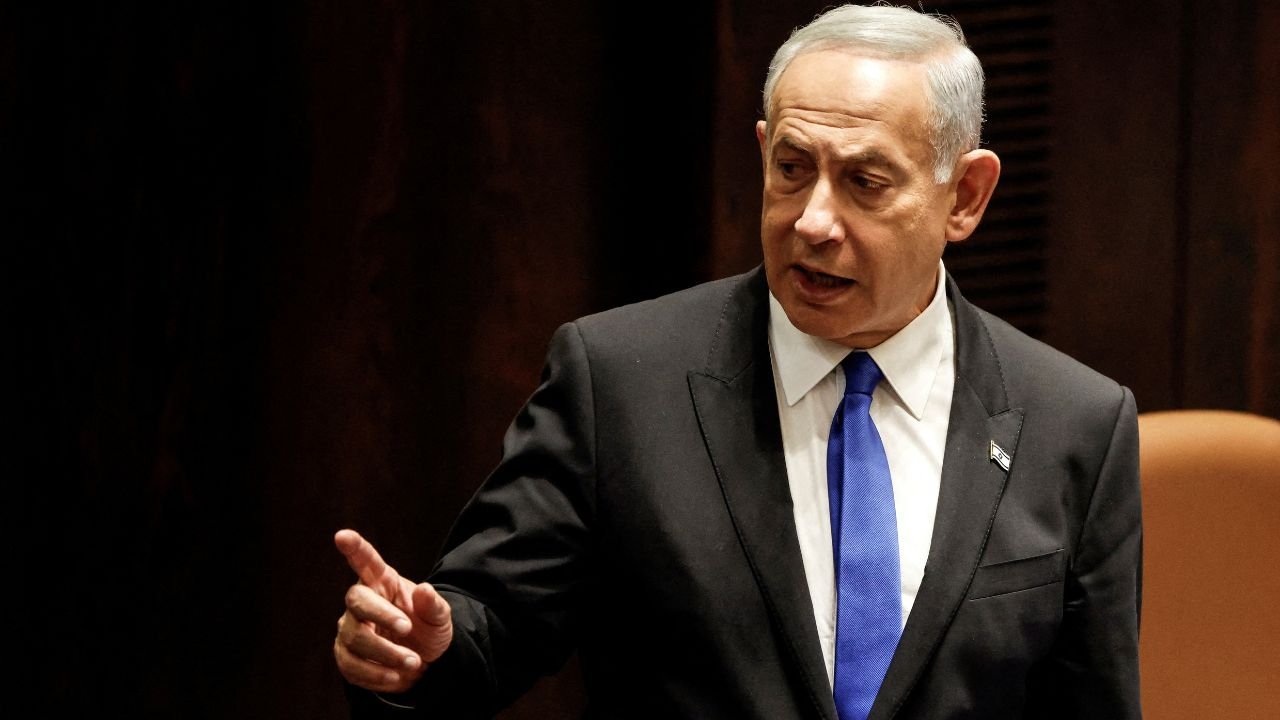
    The Qatar-based station was taken off air in Israel after Prime Minister Benjamin Netanyahu’s government voted on Sunday to shut it down over its coverage of the Gaza war.

    Speaking on Monday, Al Jazeera English news director Salah Nagm said the network would “follow every legal path”, adding: “If there is a possibility of challenging that decision we are going to pursue it until the end.”

    Under a cabinet decision which Netanyahu said was “unanimous”, Al Jazeera’s Jerusalem offices were shuttered, its equipment confiscated and its team’s accreditations pulled.

    “The equipment which was confiscated, the loss that we suffered from stopping our broadcast, all of that is subject matter for legal action,” Nagm said.

    The Israeli government on Sunday said the order was initially valid for 45 days, with the possibility of an extension.

    Hours later, screens in Israel carrying Al Jazeera’s Arabic and English channels went blank, apart from a message in Hebrew saying they had “been suspended in Israel”.

    ‘An action from the 60s’

    The shutdown does not apply to the Israeli-occupied West Bank or Gaza Strip, from which Al Jazeera still broadcasts live on Israel’s war with Hamas.

    Al Jazeera immediately condemned Israel’s decision as “criminal”, saying on social media site X that it “violates the human right to access information”.

    But Najm downplayed the ban’s impact on Al Jazeera’s coverage of the war and on the public’s ability to access its content, even with its website now blocked in Israel.

    “It’s an action from the 60s rather than the 21st century to take such a decision of shutting down,” he said, explaining the channel could rely on other sources for information without “people on the ground”.

    “I know people that have VPN can see us online anytime,” the news director said referring to virtual private networks that establish protected internet connections and can allow users to access the internet as if they were in a different country.

    The decision came after Israel’s parliament last month voted to pass a new national security law granting senior ministers powers to ban broadcasts by foreign channels over threats to security.

    In his statement on Sunday, Netanyahu charged that “Al Jazeera correspondents have harmed the security of Israel and incited against IDF (Israeli military) soldiers”.

    ‘Arbitrary decision’

    But Nagm questioned which Al Jazeera broadcasts the Israeli government considered a security threat, calling the ban an “arbitrary decision”.

    Since the start of the Gaza war, Al Jazeera’s office in the Palestinian territory has been bombed and two of its correspondents killed.

    “Al Jazeera has lost a few people, their families have suffered so that’s really different from other conflicts in this sense,” Nagm said.

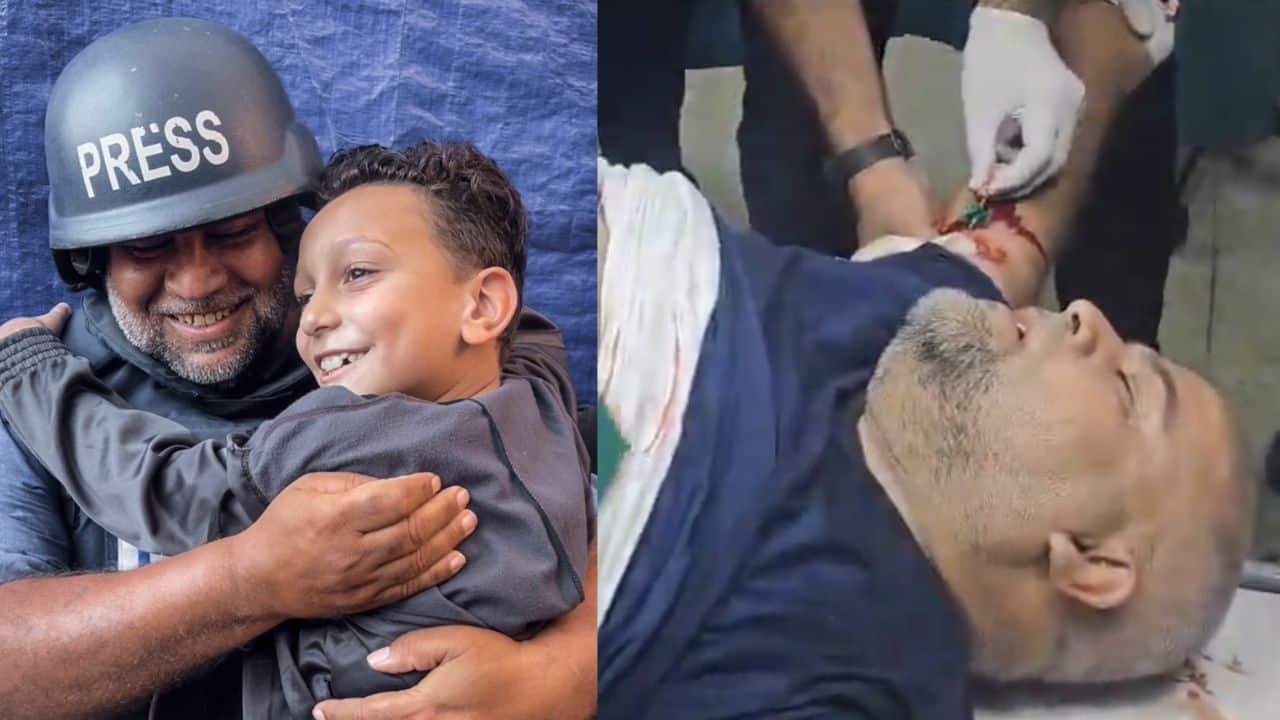
    Al Jazeera’s Gaza bureau chief Wael al-Dahdouh was wounded in an Israeli strike in December that killed the network’s cameraman.

    Dahdouh’s wife, two of their children and a grandson were killed in October in a bombardment of central Gaza’s Nuseirat refugee camp.

    And Dahdouh’s eldest son, an Al Jazeera staff journalist, was killed alongside another journalist in Rafah in January when an Israeli strike targeted the car they were travelling in.

    At least 97 journalists and media workers have been killed since the war began, among them Palestinians, Israelis and Lebanese, according to the Committee to Protect Journalists.

    “That’s not something that we can just report politely,” Nagm said.

    “We have to be wary and careful and alert the people of the nature of the war that’s going on and how deadly it is for the people and also for us as a profession.”
  • Israeli PM vows to ban Al Jazeera broadcasts

    Israeli PM vows to ban Al Jazeera broadcasts

    Israeli Prime Minister Benjamin Netanyahu pledged Monday to use a fresh national security law passed by parliament to ban news channel Al Jazeera from broadcasting in the country.

    The law, passed on Monday by 70 votes to 10, grants top ministers the power to ban broadcasts by foreign channels deemed a national security threat and to shut their offices.

    Netanyahu was quick to single out Qatar-based channel Al Jazeera, with which his government has a long-running feud that predates Israeli genocide in Gaza.

    “The terrorist channel Al Jazeera will no longer broadcast from Israel. I intend to act immediately in accordance with the new law to stop the channel’s activities,” Netanyahu said on X, formerly Twitter.

    The broadcaster slammed the ban as “part of a series of systematic Israeli attacks to silence Al Jazeera”, including the killing of one of its most prominent journalists in the region while covering an Israeli raid in May 2022.

    In a statement, the network said Netanyahu had launched a “frantic” and “disgraceful” campaign of accusations against the network, vowing to continue its “bold” coverage of the war.

    Two network correspondents have been killed during the conflict and the broadcaster’s office in the besieged Palestinian territory has been bombed.

    The New York-based Committee to Protect Journalists said the law “contributes to a climate of self-censorship and hostility toward the press, a trend that has escalated since the Israel-Gaza war began”.

    At least 95 journalists and media workers have been killed since the war began after an unprecedented attack by Hamas on October 7, according to the group, marking “the deadliest period for journalists since CPJ began gathering data in 1992”.

    In January, Israel said an Al Jazeera staff journalist and a freelancer killed in an air strike in Gaza were “terror operatives”.

    The following month, it accused another journalist with the channel who was wounded in a separate strike of being a “deputy company commander” with Hamas.

    Al Jazeera has fiercely denied Israel’s allegations and accused it of systematically targeting Al Jazeera employees in the Gaza Strip.

    Hamas said in a statement that the ban showed that Israel “desperately seeks to obscure the truth of its heinous crimes”.

    White House spokeswoman Karine Jean-Pierre said “if it is true, a move like this is concerning”.

    Broadcasting in both English and Arabic, Al Jazeera bills itself as the “first independent news channel in the Arab world”.

    Launched in Doha in 1996, the network says it has more than 70 bureaus around the globe, with 3,000 employees and an audience in 430 million homes.

    Qatar, which funds Al Jazeera, also serves as a base for Hamas leader Ismail Haniyeh.

    Tensions between Israel and Al Jazeera have only grown since the latest Israel-Hamas conflict erupted on October 7.

    Al Jazeera’s bureau chief in Gaza, Wael al-Dahdouh, was wounded in an Israeli strike in December that killed the network’s cameraman.

    His wife, two of their children and a grandson were killed in the October bombardment of central Gaza’s Nuseirat refugee camp.

    His eldest son was the Al Jazeera staff journalist killed in January when a strike targeted a car in Rafah.

    Israel has launched a relentless air and ground campaign after October 7 that has reduced much of Gaza to rubble and killed at least 32,845 people, mostly women and children, according to the Gaza health ministry.

  • Palestinians forced to loot aid trucks as hunger crisis worsen

    Palestinians forced to loot aid trucks as hunger crisis worsen

    Intensified Israeli attacks on Gaza continue after more than two months since the October 7 attacks.

    Al Jazeera’s Hani Mahmoud from Rafah reported on increasing hunger in the Gaza strip as available resources are not enough to compensate for food requirements and other necessities for the locals who are now on “survival mode”.

    A video from Sunday shows Palestinians jumping onto aid trucks to get their hands on food and other supplies in the Rafah area near the border with Egypt.

    As the aid truck drove by, the locals tried to stop it, climbed up on it, pulling or pushing down containers of food and water, “carrying them off or passing them off to crowds below”.

    Al Jazeera reports that some trucks were guarded by masked people with sticks.

    “The humanitarian situation has become very desperate, not only for the residents of Rafah city but also for the one million displaced Palestinians here who are becoming hungry, thirsty and traumatised as the war pounds on,” said Hani Mahmoud.

    “People are without anything – without a home, without access to food, without water and without medical supplies,” he said.

    “So, the scenes at Rafah crossing are a natural response: When people starve to death, when they are hungry, this is what we will see happening.”

  • After losing his family, Wael Dahdouh targeted in Israeli attack

    After losing his family, Wael Dahdouh targeted in Israeli attack

    Al Jazeera journalist Wael Dahdouh is currently in critical condition after being targeted by Israel in a reported targeted attack while he was covering news near Haifa school in Khan Younis.

    Another journalist was also reportedly severely injured in the attack. On October 25, Wael Aldahdouh, one of the most prolific journalists in Gaza, buried his wife, son, daughter, and grandson, who had been killed in an Israeli air raid that hit the house they were sheltering in.

  • ‘Deliberate’ Israeli strike on journalists in Lebanon warrants ‘war crime’ investigation: watchdogs

    ‘Deliberate’ Israeli strike on journalists in Lebanon warrants ‘war crime’ investigation: watchdogs

    The Israeli strike that killed one journalist and wounded six others in Lebanon merits a “war crime” investigation, rights groups Amnesty International and Human Rights Watch (HRW) told AFP on Thursday.

    Reuters journalist Issam Abdallah, 37, was killed instantly in the strike on October 13 in the south of the country near the Israeli border.

    The others present — two more Reuters journalists, two from Al Jazeera, and two from AFP — were all injured.

    AFP photographer Christina Assi, 28, was seriously wounded, later had a leg amputated and is still in hospital.

    Independent investigations by both rights groups concluded, like an AFP investigation published earlier on Thursday, that the first strike that killed Abdallah and severely wounded Assi was most likely a tank round fired from Israel.

    Amnesty said the strikes “were likely a direct attack on civilians that must be investigated as a war crime”.

    “Those responsible for Issam Abdallah’s unlawful killing and the injuring of six other journalists must be held accountable,” said Aya Majzoub, Amnesty’s deputy regional director for the Middle East and North Africa.

    “No journalist should ever be targeted or killed simply for carrying out their work. Israel must not be allowed to kill and attack journalists with impunity.”

    HRW said the two Israeli strikes “were apparently deliberate attacks on civilians, which is a war crime”.

    Under international humanitarian law, “it is forbidden in any circumstances to carry out direct attacks against civilians”, it said.

    The group’s investigation indicated that the journalists were “well removed from ongoing hostilities, clearly identifiable as members of the media, and had been stationary for at least 75 minutes before they were hit”.

    Amnesty said images it verified showed “the seven journalists were wearing body armour labelled ‘press’, and that the blue Reuters crew car was marked ‘TV’ with yellow tape on its hood”.

    “The evidence strongly suggests that Israeli forces knew or should have known that the group that they were attacking were journalists,” HRW’s Lebanon researcher Ramzi Kaiss said.

    “This is an unlawful and apparently deliberate attack on a very visible group of journalists,” he said.

    ‘Justice and accountability’

    Speaking at a press conference in Beirut, Dylan Collins, the other AFP journalist wounded in the attack, said: “I know they (the investigations) won’t bring Issam back to life. I know they won’t help Christina walk again.

    “But what I do hope is that they at least will mark the start of some sort of process of justice and accountability,” he said.

    He shared a message from Assi that said: “We chose journalism with a mission to deliver the truth, and despite the inevitable costs, our commitment remains unwavering. Nothing can silence us.”

    Lebanese Prime Minister Najib Mikati said in a statement his government would “take all measures to include” the conclusions of the investigation “in the complaint filed before the UN Security Council”.

    Since Israel’s bombardment of Gaza started after Palestinian fighter group Hamas struck Israel in a surprise attack on October 7, 63 journalists and media workers have been killed — 56 Palestinians, four Israelis and three Lebanese, the Committee to Protect Journalists says.

    The New York-based rights group on Thursday called for “an immediate, independent, and transparent investigation that holds the perpetrators to account” for the strike on journalists in Lebanon.

  • ‘No to War’: Thousands of Russian citizens protest against their government for the Ukraine invasion

    ‘No to War’: Thousands of Russian citizens protest against their government for the Ukraine invasion

    Protests are taking place across Russia in different cities against the invasion of Ukraine by the Russians on Thursday.

    Most of the people were seen chanting “No to War” and raising slogans against the invasion. Thousands of Russians gathered on Thursday night to show a strong reaction against their own government.

    The protestor is holding a placard that says, “No To War”. This man is standing at Pushkinskaya Square on Thursday night in Moscow

    While talking with Al-Jazeera, one of the young protestors said, “I have no words, it’s just disgusting,” she added, “What is there to say? We feel powerlessness, anguish.”

    Several journalists, reporters, media figures, and independent media outlets, including the BBC, have signed a petition against the Russian military operation.

    Government workers of the municipal department from different cities of Russia signed a letter to the citizens of Russia, urging the citizens not to participate in the operation or stay silent.

    “We, the deputies elected by the people, unreservedly condemn the attack of the Russian army on Ukraine,” read the letter.

    The letter further added that the military operation is an atrocity that cannot be justified at any cost.

    Protestors raised slogans against their President, Putin.

    “Putin is a killer! Putin is the shame of Russia!” they shouted. “Ukraine! Ukraine!”, reports Al-Jazeera.

    Some were chanting and clapping in support of Ukraine as well in the protest.

    “Ukraine is not our enemy!”

    Police have arrested thousands of protestors who were taking part in the demonstrations against the invasion.

    After months of tensions with Ukraine, and its western allies, Russian President Vladimir Putin launched a full-scale military operation by sea, land, and air on Thursday.

  • New Zealand denies re-entry of pregnant national, Taliban offers refuge

    New Zealand denies re-entry of pregnant national, Taliban offers refuge

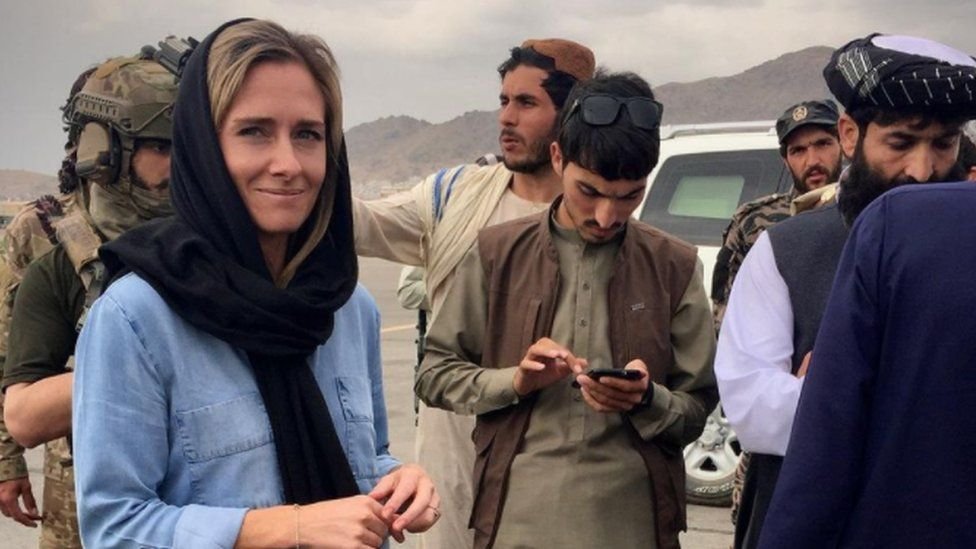
    A former Al Jazeera pregnant journalist, Charlotte Bellis, who is a New Zealand national, was denied re-entry by her home country on the basis of strict Covid-19 protocol. She was offered refuge by the Taliban government in Afghanistan.

    While speaking to Radio New Zealand(RNZ) from Kabul, she said, “This just feels like such a breach of trust.”

    Bellis said that the Taliban told her, “We’re happy for you, you can come and you won’t have a problem”.

    She did not get to know about her pregnancy until she returned back to the Al-Jazeera headquarter in Doha, Qatar.

    She kept quiet about her pregnancy as it is unlawful to conceive a baby out of wedlock in Qatar.

    She left Al Jazeera in November 2021 while working in Afghanistan as a journalist and went to Belgium, the home country of her partner, Jim Huylebroek. As Bellis is not a resident of a country, she could not stay for a longer period.

    She was left with only one option: to travel to Afghanistan with her partner as they had visas. She is currently in Afghanistan.

    Meanwhile, she started her preparation to return back to New Zealand.

    Her application was rejected by authorities in New Zealand for an emergency return.

    New Zealand’s Covid-19 response minister, Chris Hipkins, said on Monday, “I understand she wanted to return on a specific date and that officials reached out to her for more information shortly after looking at her application. The emergency allocation criteria includes a requirement to travel to New Zealand within the next 14 days. Ms Bellis indicated she did not intend to travel until the end of February and has been encouraged by MIQ (Managed isolation and quarantine) to consider moving her plans forward.”

    Bellis applied for a MIQ option through the medical treatment pathway however authority asked her to sign up under the different category where its nationals are in a location that is under serious risk to their safety, she told to RNZ.

    Currently, she is in contact with officials in New Zealand who claimed her rejected application is under review now.

    The New Zealand government has closed down its borders after the emergence of the omicron variant, including for its nationals who want to return back to the country except for special circumstances.

  • Six Muslim students wearing hijab banned from Indian college, forced to sign false statements

    Six Muslim students wearing hijab banned from Indian college, forced to sign false statements

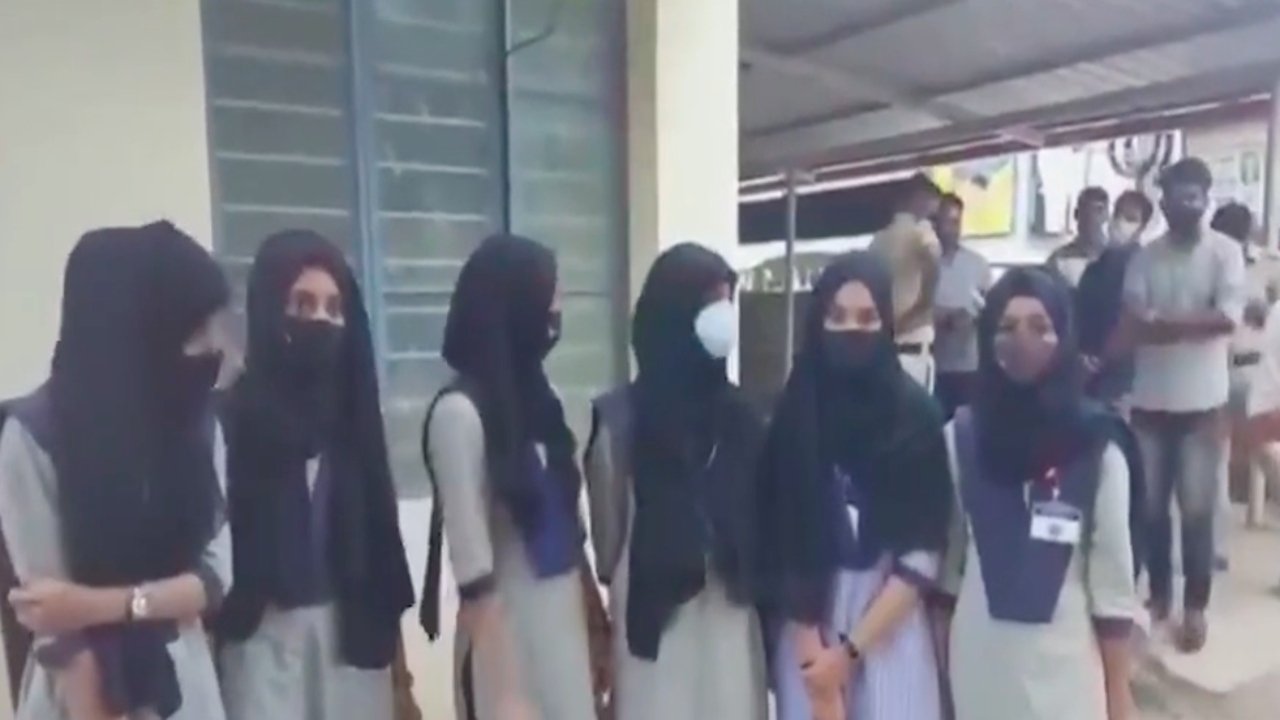
    A group of muslim students at a college in the southern Indian state of Karnataka were stopped from attending classes for weeks after the principal refused to allow them to wear headscarves in the classroom.

    “When we arrived at the door of the classroom, the teacher said we cannot enter with the hijab,” one of the students told Al Jazeera

    “She asked us to remove it.”

    The college is a government-run women’s college in Udupi district of India’s Karnataka state in the south. The students were forced to sit outside the classroom because the college administration alleges they are “defying the rules” since hijab is not part of the uniform.

    The girls told Al Jazeera the hijab is “part of their faith” and wearing it is “their right guaranteed under the law”.

     The girls have been marked as absent since December 31 despite visiting the college daily.

    “We are not going to budge, no way,” Aliya Assadi, who is a part of the group, told Al Jazeera.

    A photo has gone viral on social media of the students clad in hijab and college dresses sitting on the steps outside their classroom.

    “It is because of this photo that our issue got highlighted in the media,” said Assadi.

    Their protest has riled up the college administration which, according to the group, forced them to write a letter accepting they missed the classes by staying home on their own.

    “We tried to refuse but the principal and the teachers threatened us that they would ruin our careers,” Muskan Zainab, another student, told Al Jazeera.

  • Gaza under attack

    Gaza under attack

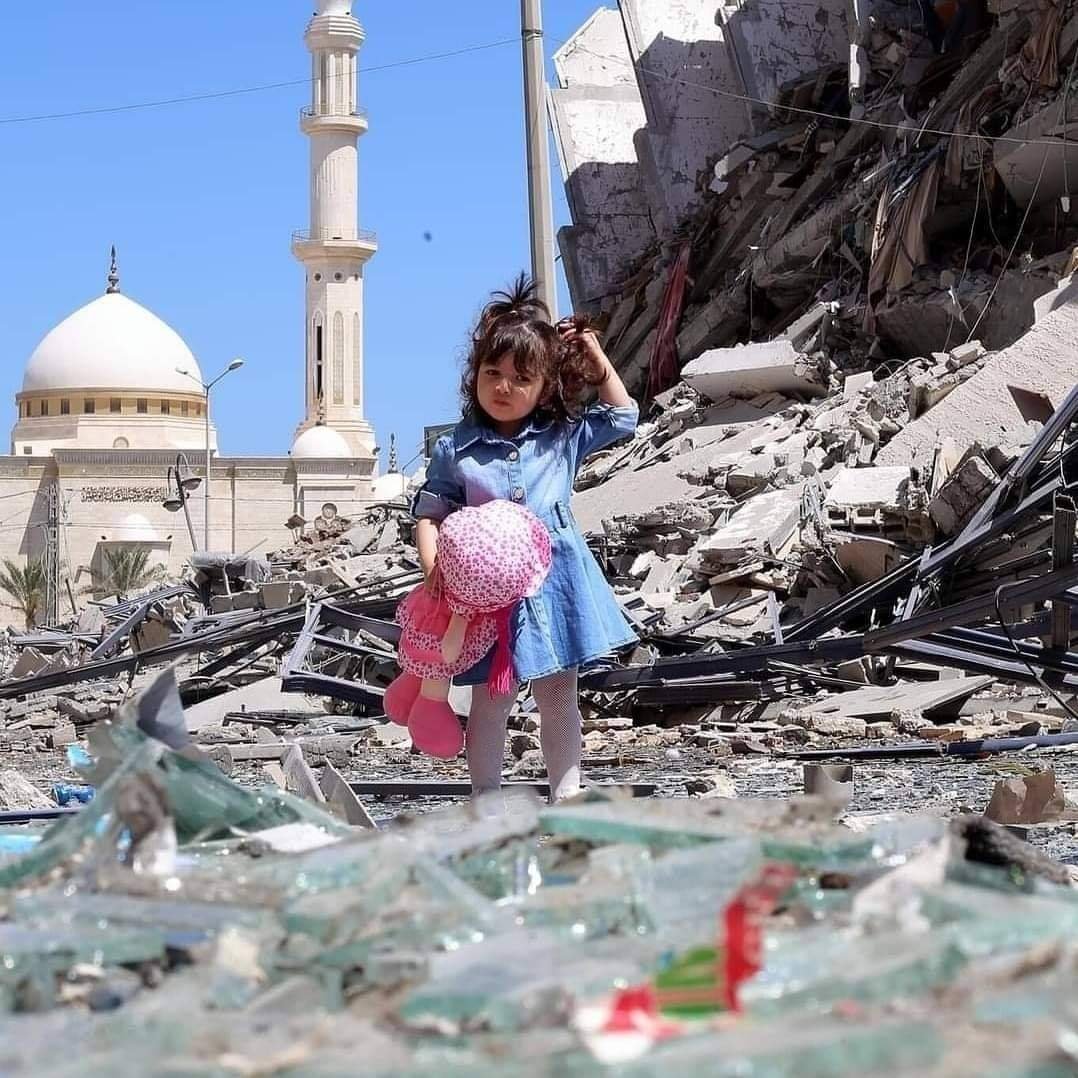
    Israeli airstrikes on Gaza City demolished three buildings and killed at least 33 people on Sunday, including12 women and eight children. This has been one of the deadliest attacks since the start of the recent attacks against Palestinians by the Israeli forces.

    On May 12, Israeli airstrikes a building in Gaza that housed the offices of 14 media organisations. According to a report in TRT World, on May 7 and May 10, Israeli security forces fired rubber bullets and injured at least eight Palestinian and international journalists covering the protests at the Temple Mount complex and Al Aqsa mosque.

    Yesterday, Israeli forces a building in Gaza that housed several media outlets, including Al Jazeera and the Associated Press (AP). A statement by AP President and CEO Gary Pruitt said: “We are shocked and horrified that the Israeli military would target and destroy the building housing AP’s bureau and other news organisations in Gaza.” White House Press Secretary Jen Psaki tweeted that the US government “communicated directly to the Israelis that ensuring the safety and security of journalists and independent media is a paramount responsibility”.

    These words by the White House Press Secretary sound hollow because ever since the Israelis started attacking hapless Palestinians during the Holy month of Ramzan, the international community, especially the US, has not condemned Israel for its aggression. We did not hear the US or others condemn the attack on journalists when Arab journalists in Palestine were being attacked by the Israeli forces. The way the Al Aqsa mosque was stormed by the Israeli forces during the final Friday prayers in Ramzan, the way the unarmed Palestinians were sprayed with rubber-coated steel bullets and tear gas, the world community should have condemned it unequivocally. But what do we hear: US President Joe Biden saying: “Israel has a right to defend itself.” There was no mention of how Israel is an occupying force that will continue to attack and kill unarmed civilians, including children.

    In a report released last month, the Human Rights Watch said Israeli authorities are committing crimes against humanity of apartheid and persecution. The 213-page report titled, ‘A Threshold Crossed: Israeli Authorities and the Crimes of Apartheid and Persecution’, should be read by every world leader in order to understand the gravity of the situation. Today, the Organisation of Islamic Cooperation (OIC) has opened an emergency meeting over the situation in Palestine. Several countries that are part of the OIC have recently had recognition deals with Israel. No wonder we have seen a muted response from those countries. Pakistan has been asking the world to come to the aid of Palestine and stop this madness. Unfortunately, the world has become a silent spectator when it comes to Israel’s war crimes. Silence is not an option. We all must speak up for Palestine.