Apparently, there is a general consensus among viewers that Pakistan’s drama industry, though extremely successful, needs better writing. Many writers lack training, relying on natural talent alone, critics say, adding that it leads to repetitive stories and characters. To improve, writers need training to craft engaging stories.
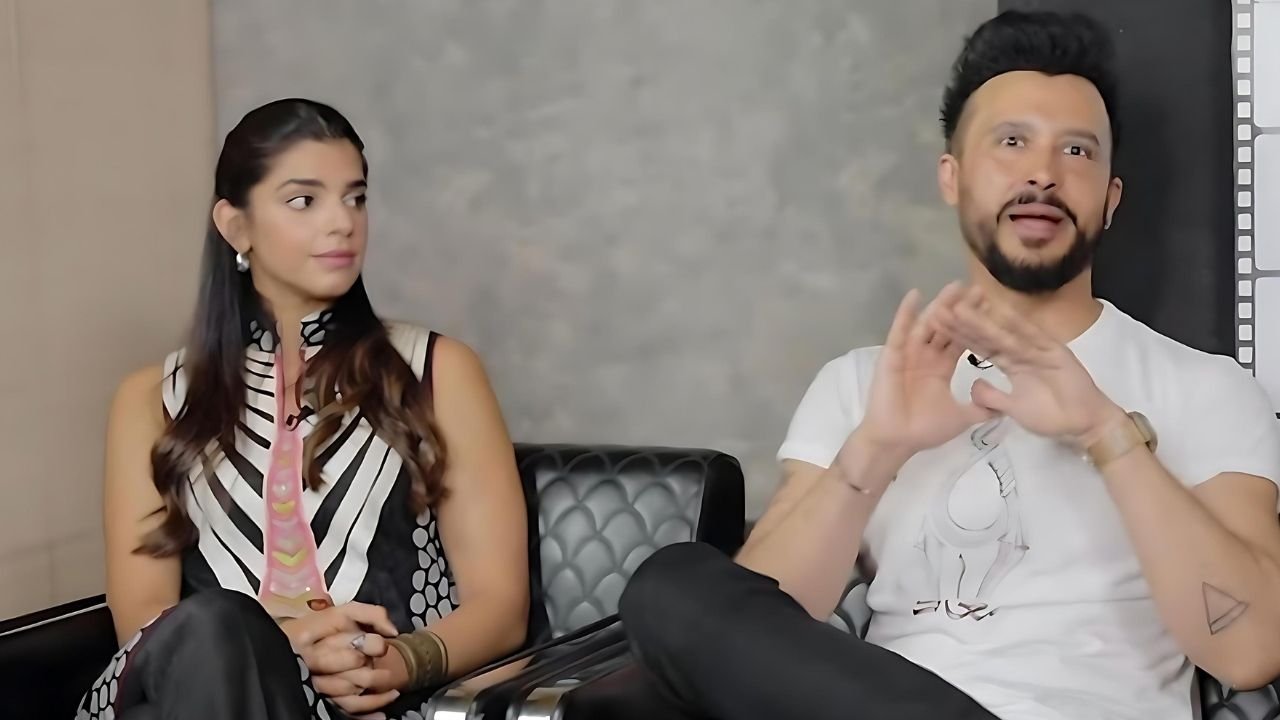
The host of the interview ‘Fuchsia Magazine’ asked Actors Sanam Saeed and Ali Kazmi, where they talked about the industry’s neglect of drama films and the lack of visible efforts to enhance their quality.
The host asked, “Why isn’t the film industry focusing on the things that we’re trying to change, and why aren’t we seeing any efforts to improve those aspects?”
Ali Kazmi said, “That’s the problem, it’s become a dying art. There are very few writers now who are amazing. The rest, they have outsourced.”
Sanam Saeed elaborated, “Come on, even the films you are watching, one out of a hundred hits the chord. Most of what we see on OTT platforms is unwatchable, a waste of time. And then you find that one gem among the millions.”
Discussing the issue of training for writers, Sanam Saeed said , “It’s a universal issue, but in our country, the problem is the lack of training.” Ali Kazmi added, “Creative writing is a course in universities. We need writers who have done courses and can show us their skills.”
Ali Kazmi also shared his personal journey, saying, “I too went to Toronto Film School in the early 2000s because there wasn’t a film school here. I wanted to show my parents and my old PTV training that I am qualified in this field and moving forward.” Sanam Saeed concluded, “Actors want to go to Napa, writers want to go to Karachi Film School or take online courses from their favorite writers abroad.”
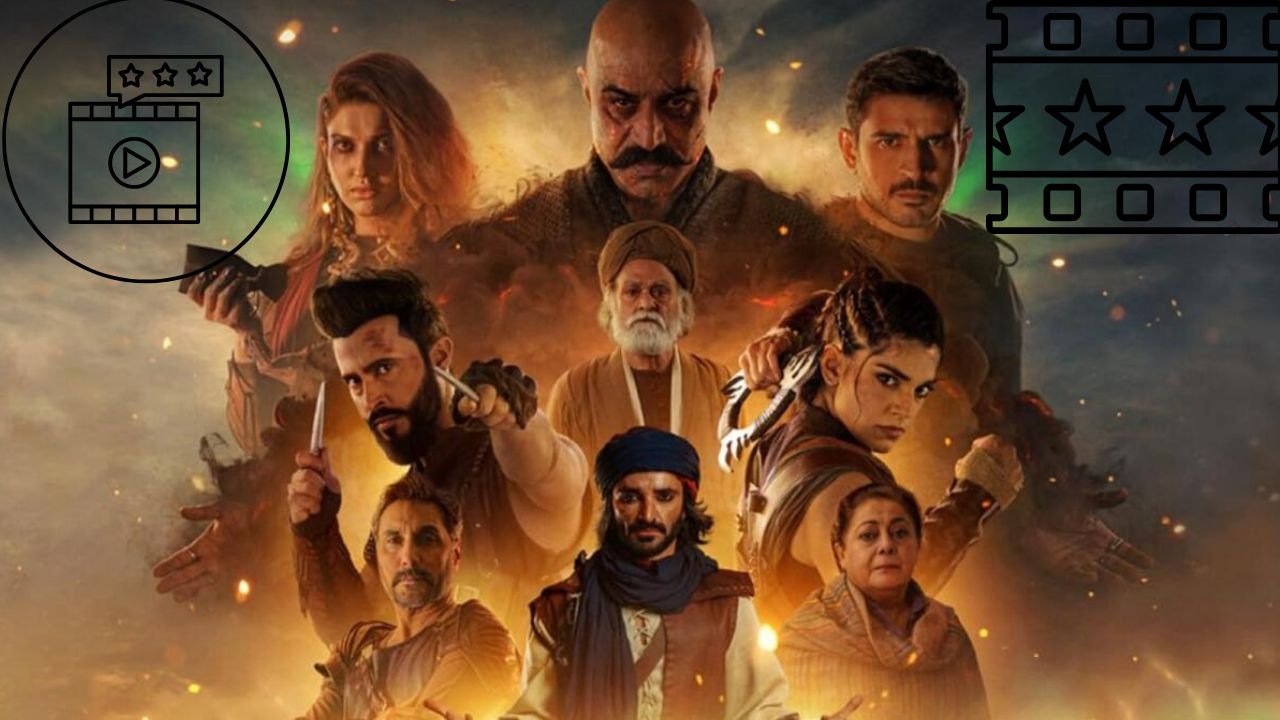
Sanam Saeed and Ali Kazmi are currently starring in films like ‘Umro Ayyar’ which is now screening in cinemas.
Ali Kazmi is the son of two well-known actors, Rahat Kazmi and Sahira Kazmi.
Umr-o-Ayyar is everything I could not have imagined: badly written fanfic and a thrilling display of VFX-laden action unknown to Pakistani films.
Invited to the premier on behalf of The Current, I recalled all I had ever known about the character of Umr-o-Ayyar. Having been an avid reader of the legendary series of Dastaan-e-Ameer-i-Hamza and Talism Hoshruba, I was a fan of the conniving, quirky character of Umr-o-Ayyar, a friend and close confidant of the protagonist, Ameer-i-Hamza, but a legend in himself. The expectations were a little too high. The reality was a bit of a downer.
It was a marriage of convenience between the magical world of Harry Potter and the legendary period drama of Ertugrul.
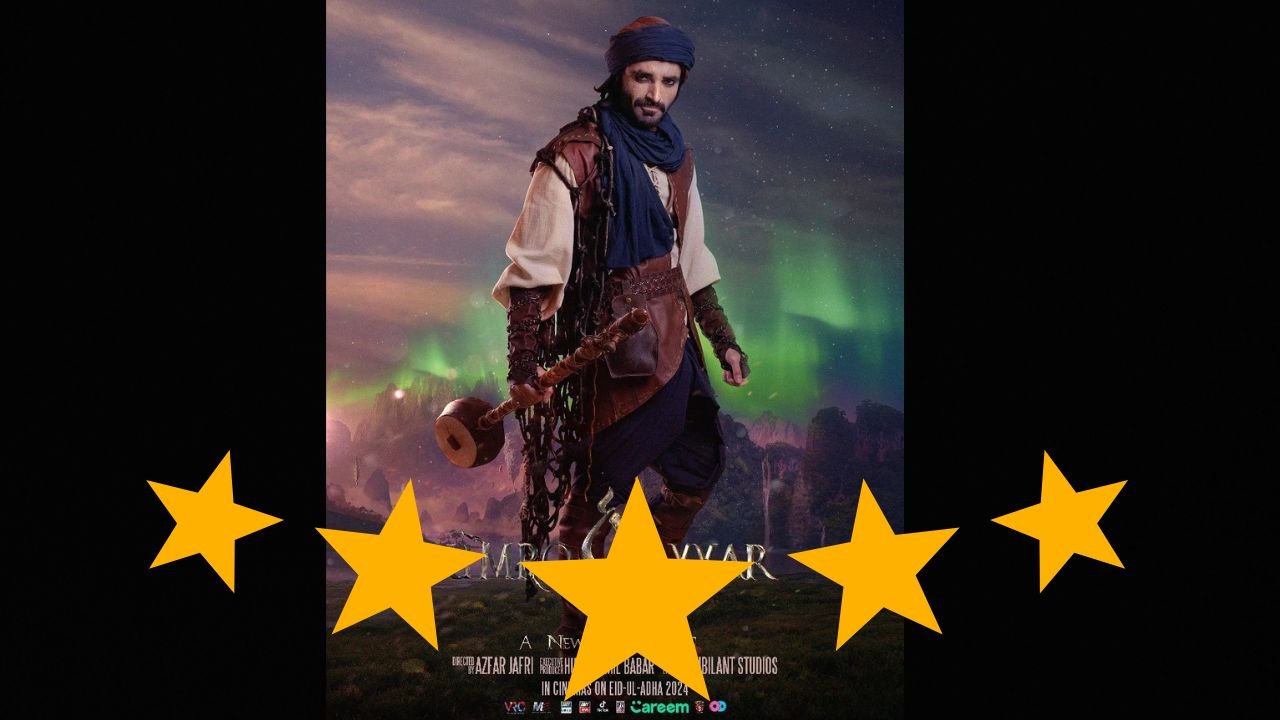
My father, a master in Arabic language and literature, always told me that the name’s correct pronunciation was Ammar-Ayyar and not Umr-o-Ayyar, as per the rules of the Arabic language. Ammar, the protagonist played by Usman Mukhtar, really marked the right box with the name, but unfortunately, that’s about it.
His portrayal of the ‘clueless chosen one’ who remained true to character till the end made him look stupid more than likeable. Just like it was said about Harry Potter that magic still surprised him, Usman embodied the same traits, keeping his quintessential baffled expression intact whether it was his Schrodinger phase or him as an Ayyar.
The hero’s entourage, comprised of Ali Kazmi Salman Shaukat and Sanam Saeed, did leave their mark. It was the story that let them down. Manzar Sehbai’s Guru is there to mentally prepare the chosen, pure-blood Ammar Ayyar just like Master Shifu did with Po in Kung Fu Panda, but his styling, like that of Ertugrul’s Ibn Arabi, seemed out of place in the uber-cool setting. His verbose speeches and boasting of the power to know it all led to an all too predictable ending.
Director Azfar Jafri, known for family entertainers like Janaan and Heer Maan Ja falls short on this period cum super-hero cum action genre. Despite the fact that the two legends featuring the titular character are quite internalised in our language and culture, the movie comes across as an adaption of foreign celluloid. It has elements of Harry Potter’s pure-bloodedness, Voldemort’s black magic, inconsequential mention of physics, a motor-bike chase, Marvel’s VFX, fight sequences, and a world of supernatural elements ironically being dealt with both guns and knives. Consequently, the original plot, if there was any, got lost.
A sign of a flawed storyline is that the movie does not reflect much on the very conflict of the plot as to why the two parties are at war with each other. Ayyars, weak enough to get possessed, riding on bikes, and combating magic with internal powers, guns, and daggers made it all funny, even funnier than the comic reliefs in the film.
The best thing about the movie was the villains. The plot was driven by Sana’s Cheno, inspired by Bellatrix Lestrange, and Laqqa-a desi Voldemort- played by Faran Tahir. They were visibly ominous, and however flawed their dialogues were, their actions made more sense as they acted their part well. At one point in the film, Laqqa, the villain, has his first showdown with Ammar Ayyar, the hero, where the former says to the latter, “I am extremely disappointed after meeting you.” As an audience, you agree with him because such is the extent of Ammar’s incorrigibility. While it is not a well-written character, it performed even worse.
Hamza Ali Abbasi’s styling and acting take the cake. During those five minutes of his guest appearance, you are reminded of the beauty of the original tale. His portrayal of the OG, vivacious and witty Umr-o-Ayyar, who has especially come to knock some sense in the hero, made me reminisce about the accessories he owned, such as “zanbeel,” a satchel he used to carry everywhere that contained all the things under the sun, including the jinns he had entrapped. Alas! Its a lost opportunity.
While the storyline keeps boggling the mind, VFX in the final showdown really gives that larger-than-life experience. It deserves all the praise for being groundbreaking in Pakistani cinema. It’s the story which is the hamartia, a fatal flaw of this presumed epic of a film. The title, Umr-o-Ayyar-A New Beginning, indicates that the makers intend to make a series under the same banner. The next effort should not be as frivolous as this one. Overall, the movie is a good one-time watch that really lacks originality.