Tag: analysis

  • Eid-ul-Fitr 2022: Here’s why Pakistan is paying a lot more than last year for clothes, food

    Eid-ul-Fitr 2022: Here’s why Pakistan is paying a lot more than last year for clothes, food

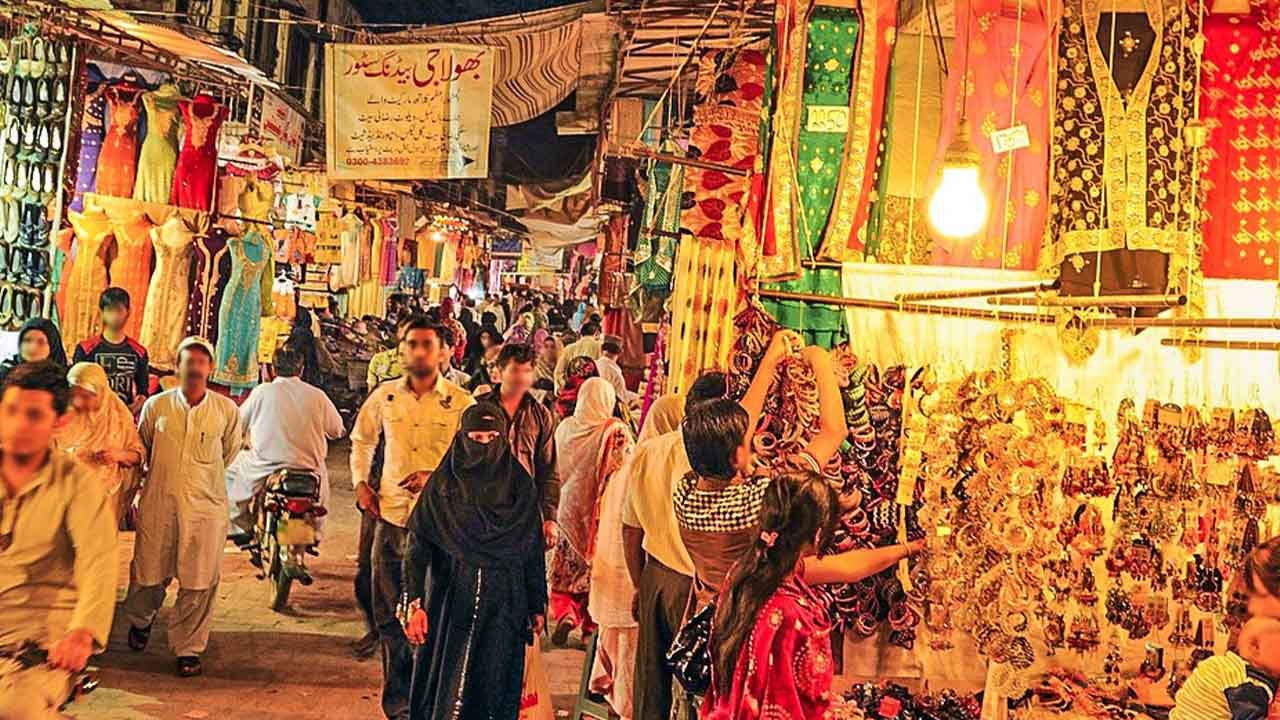
    Cities are decked with spectacular illumination around shopping malls, major streets, and side lanes as Eid shopping begins. Despite growing inflation, there is a lot of hustle in commercial areas.

    But do you know how much higher we are paying for everything this year, from food to clothing, than we did last year?

    Undoubtedly, the PTI-led government struggled to contain inflation, which experts said, was the outcome of record-high global commodity prices and 51 per cent devaluation of the Pakistani rupee (PKR).

    In January 2022, inflation climbed by 13 per cent year on year basis compared to 12.3 per cent in the previous month and 5.7 per cent in January 2021. It is pertinent to mention that inflation reached an all-time high of 14.6 per cent in January 2020.

    The Consumer Price Index (CPI) accelerated in March 2022 over the same month a year ago, according to the inflation bulletin released by the Pakistan Bureau of Statistics (PBS). The index remained higher compared to the preceding month during five out of the past six months.

    Inflation Comparison – January 2022

    General CPI inflation, increased by 13.0 per cent on a year-on-year basis in January 2022 as compared to an increase of 12.3 per cent in the previous month and 5.7 per cent in January 2021. On a month-on-month basis, it increased by 0.4 per cent in January 2022 as compared to decrease of -0.02 per cent in the previous month and a decrease of -0.2 per cent in January 2021.

    Urban CPI inflation, increased by 13.0 per cent on a year-on-year basis in January 2022 as compared to an increase of 12.7 per cent in the previous month and 5.0 per cent in January 2021. On a month-on-month basis, it increased by 0.1 per cent in January 2022 as compared to an increase of 0.3 per cent in the previous month and a decrease of -0.2 per cent in January 2021.

    Rural CPI inflation, increased by 12.9 per cent on a year-on-year basis in January 2022 as compared to an increase of 11.6 per cent in the previous month and 6.6 per cent in January 2021. On a month-on-month basis, it increased by 0.9 per cent in January 2022 as compared to a decrease of -0.5 per cent in the previous month and a decrease of -0.3 per cent in January 2021.

    Wholesale Price Index (WPI) inflation on a year-on-year basis increased by 24.0 per cent in January 2022 as compared to an increase of 26.2 per cent a month earlier and an increase of 6.4 per cent in January 2021. WPI inflation on a Month-on-month basis increased by 0.6 per cent in January 2022 as compared to a decrease of -0.2 per cent a month earlier and an increase of 2.5 per cent in a corresponding month i.e. January 2021.

    Urban Consumer Price Index (UCPI)

    The Urban Consumer Price Index of January 2022 increased by 0.06 per cent over December 2021 and increased by 12.99 per cent over the same month of the last year (January 2021).

    Month-on-Month Inflation

    Main contributors to month-on-month and year-on-year percentage changes are mentioned below:

    Increase in prices of food items: Pulse Masoor (6.13 per cent), Gram whole (4.79 per cent), Fruits (4.11 per cent), Besan (3.82 per cent), Pulse Gram (3.44 per cent), Pulse Mash (3.37 per cent), Wheat (2.68 per cent), Pulse Moong (1.88 per cent), Meat (1.78 per cent) and Rice (1.28 per cent).

    Increase in prices of garments and other items: Woolen Readymade Garments (6.67 per cent), Solid Fuel (5.16 per cent), Hosiery (1.93 per cent), Motor Fuel (1.75 per cent), Cleaning & Laundering (1.59 per cent), Washing soap/Detergents/Match Box (1.46 per cent) and Liquefied Hydrocarbons (1.29 per cent).

    Year-on-Year Inflation – January 2021

    Edible items

    Increased: Cooking Oil (54.33 per cent), Vegetable Ghee (47.4 per cent), Mustard Oil (46.68 per cent), Pulse Masoor (41.3 per cent), Fruits (28.35 per cent), Gram Whole (24.7 per cent), Meat (22.38 per cent), Chicken (17.08 per cent), Pulse Gram (15.67 per cent), Beans (15.37 per cent), Pulse Mash (12.46 per cent) and Vegetables (11.58 per cent).

    Garments and others

    Increased: Electricity Charges (56.20 per cent), Liquefied Hydrocarbons (53.35 per cent), Motor Fuel (36.22 per cent), Footwear (25.47 per cent), Cleaning & Laundering (22.03 per cent), Washing soap/Detergents/Match Box (17.95 per cent), Motor Vehicle Accessories (14.04 per cent), Woolen Readymade Garments (13.03 per cent) and Plastic Products (11.72 per cent).

    Year-on-Year Inflation – March 2022

    CPI National for the month of March, 2022 increased by 12.72 per cent over March, 2021. The Urban CPI recorded an increase of 11.94 per cent while Rural CPI recorded an increase of 13.88 per cent.

    Edible items in urban areas

    Increased: Tomatoes (148.65 per cent), Mustard Oil (59.91 per cent), Vegetable Ghee (49.56 per cent), Cooking Oil (48.05 per cent), Pulse Masoor (38.32 per cent), Vegetables (34.92 per cent), Fruits (32.00 per cent), Gram whole (25.37 per cent), Meat (23.68 per cent), Chicken (19.59 per cent) and Beans (13.62 per cent).

    Edible items in rural areas

    Increased: Tomatoes (158.82 per cent), Cooking Oil (63.47 per cent), Mustard Oil (57.2 per cent), Vegetable Ghee (56.43 per cent), Vegetables (45.62 per cent), Fruits (37.80 per cent), Pulse Masoor (37.46 per cent), Meat (25.19 per cent), Beans (17.38 per cent), Wheat Flour (16.22 per cent), Chicken (15.09 per cent) and Tea (11.74 per cent).

  • Pakistan’s forex reserves inch up to $17.05 billion

    Pakistan’s forex reserves inch up to $17.05 billion

    The State Bank of Pakistan’s (SBP) foreign reserves saw inflows of $36 million in the week ending April 16, 2022, representing a 0.3 per cent increase week over week.

    According to the SBP weekly update posted on Thursday, the country’s total liquid foreign exchange reserves increased by $16.9 million (+0.1 per cent) to $17.045 billion on April 16, 2022, up from $17.028 billion the previous week. SBP reserves rose by $36.1 million to $10.88 billion (+0.3 per cent), up from $10.85 billion the week before.

    Likewise, commercial banks’ net foreign reserves stood at $6.1 billion, down $19.3 million (-0.3 per cent) on a weekly basis.

    Read more: Pakistani rupee plunges by Rs1.05 against the US dollar

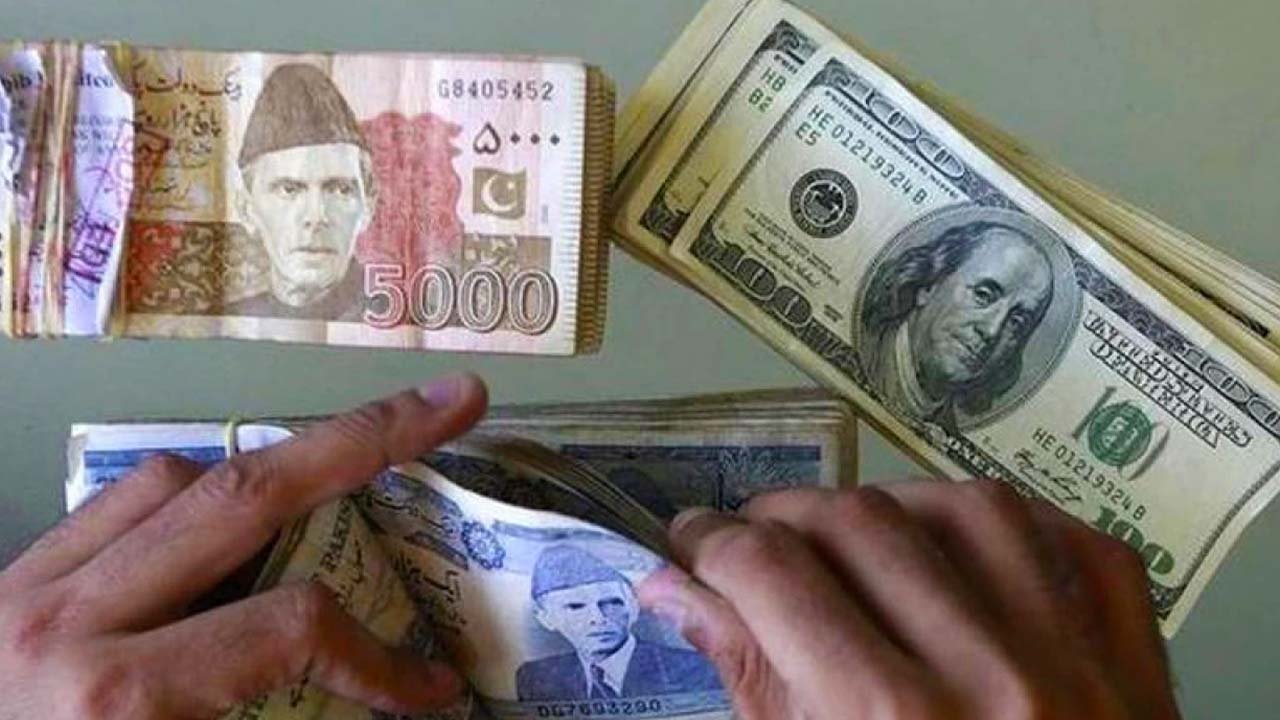
    In the interbank market on Thursday, however, the Pakistani Rupee (PKR) resumed its downward trend versus the US Dollar (USD). It fell by Rs1.04 to the dollar, Rs1.15 to the Australian Dollar (AUD), Rs2.04 to the Canadian Dollar (CAD), Rs2.42 to the Pound Sterling (GBP), and Rs2.96 to the Euro (EUR).

  • Pakistani rupee records impressive gains against US Dollar, highest single-day gain

    Pakistani rupee records impressive gains against US Dollar, highest single-day gain

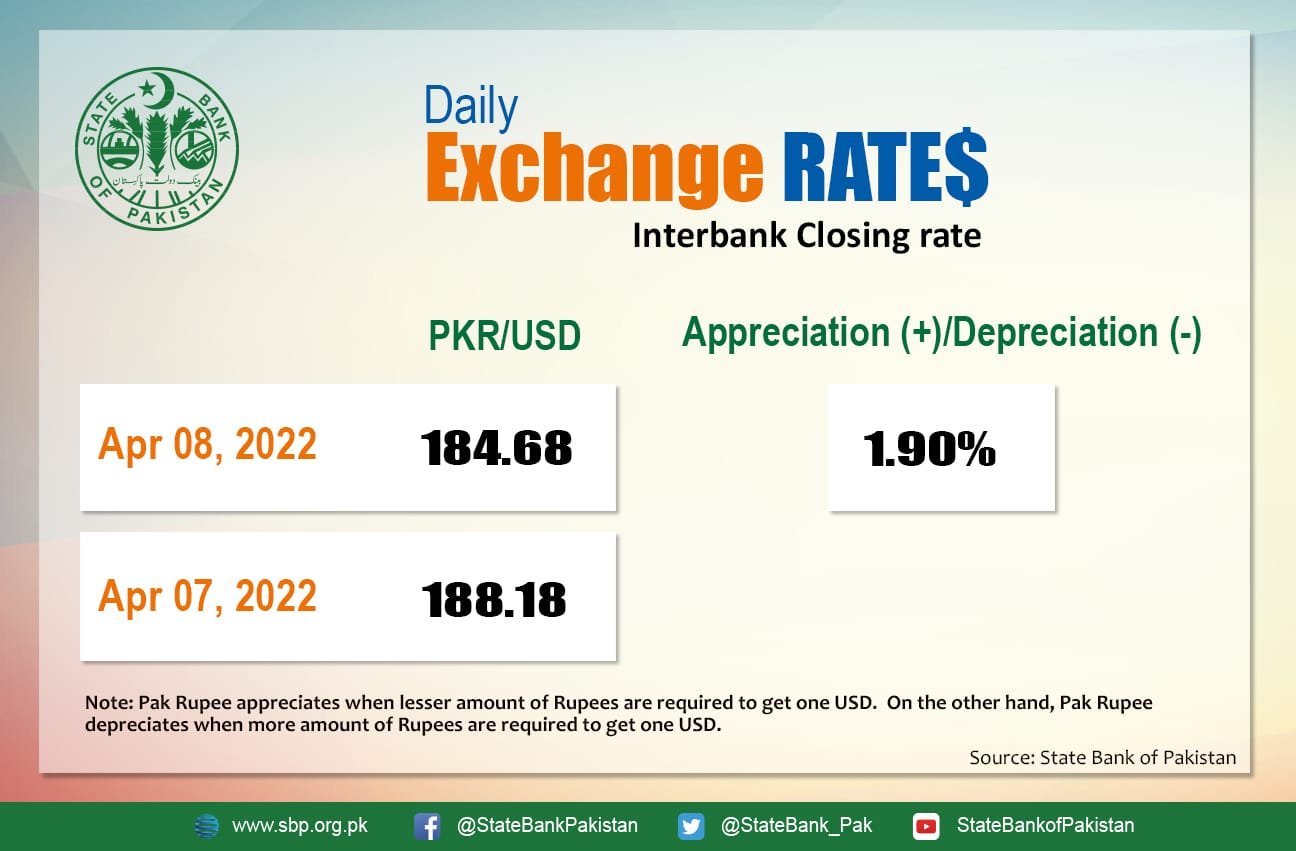
    In the intra-day trade on Friday, the Pakistani rupee (PKR) gained an impressive Rs3.5 against the US dollar, the highest single-day gain in two years after the Supreme Court (SC) pronounced the National Assembly (NA) deputy speaker order unconstitutional and restored the NA.

    The US dollar is currently trading at Rs185, as per foreign currency dealers, after weakening Rs3.5 versus the local currency in early trade. The USD is currently trading for above Rs186 on the open market.

    On Thursday, the rupee concluded at Rs188.18 against the USD in the interbank market.

    Consequently, the Pakistan Stock Exchange’s (PSX) benchmark KSE-100 index, reversed its downtrend shortly after starting on Friday and surpassed the 44,000 mark, a day after the Supreme Court of Pakistan annulled the deputy speaker’s decision against a no-confidence motion.

    Considering the trading which continued at 44, 198 on the Pakistan Stock Exchange, the KSE-100 benchmark index gained 411 points.

    The stock market has been under pressure since April 4, when it crumbled, losing over 900 points amid Pakistan’s ongoing political crisis, which arose after the National Assembly deputy speaker declared Prime Minister Imran Khan’s no-confidence resolution unconstitutional.

    SBP’s rate increase of 250 basis points and establishment of cash margins on 177 commodities is a marker that the economic system is in a slump and that prior initiatives were inadequate. This protective approach will aid in limiting the import of certain products, consequently bolstering the balance of payments.

  • State Bank of Pakistan hikes interest rate to 12.25% in an emergency meeting

    State Bank of Pakistan hikes interest rate to 12.25% in an emergency meeting

    Following an emergency meeting, the State Bank of Pakistan (SBP) raised interest rates by 250 basis points, as mounting political uncertainty and rising worldwide oil prices threaten to drive the country into a full-fledged economic catastrophe.

    The key rate is now 12.25 per cent, as per the latest statement released by the central bank on Thursday. According to the report, this makes the real rate “mildly positive” and will assist maintain external and price stability.

    The judgment came a few hours before the Supreme Court was due to rule on the constitutionality of Prime Minister Imran Khan’s disputed move to dissolve parliament and hold new elections. Pakistan may find it difficult to persuade the International Monetary Fund (IMF) to grant a much-needed loan tranche due to the political limbo.

    At the recent briefing, SBP governor, Reza Baqir, said, “We thought it’s important to take decisive action”.  He added that the body does not intend to do anything else.

    The central bank claimed that intensified domestic political turmoil contributed to the rupee’s 5 per cent loss and caused a jump in local bond rates, as well as Pakistan’s Eurobond yields and Credit Default Swap (CDS) spreads. Oil prices are likely to remain elevated, and the Federal Reserve of the United States is expected to compress sooner than expected, according to the report.

    The PKR broke all records on Thursday, selling at more than Rs189 per dollar in intraday trading in the interbank market, continuing a slump that has witnessed its decline of more than 10 per cent since March 4.

    Read more: Pakistan to import 32.7 million barrels of oil to cover petroleum needs

    Pakistan’s political instability, in addition to money from the IMF, is causing delays in a planned $1 billion green bond offering. A refinancing from China is also expected; the repayment in recent weeks caused Pakistan’s foreign-exchange reserves to plummet to their lowest level since records began in 2010.

    In a meeting last month, SBP cautioned that it might convene earlier than planned to avoid a crisis. It revised its average inflation prediction for the fiscal year ending in June from 9 per cent to little more than 11 per cent.

  • Nearly everyone on earth is breathing polluted air: WHO report

    The World Health Organization (WHO) announced Monday that 99 per cent of people on Earth breathe air that comprises numerous contaminants, citing poor air quality for millions of deaths each year.

    According to new data from the UN health organization, air pollution affects every part of the globe, albeit the problem is far worse in developing nations.

    “Almost the entire global population (99 percent) breathes air that exceeds WHO air quality limits, and threatens their health,” the organization said in a statement.

    WHO had already established that about 90 per cent of the world’s population was impacted in its previous report from 2018, but it has subsequently expanded its boundaries.

    According to the WHO, the evidence base for the harm caused by air pollution is quickly advancing, and even low levels of certain air pollutants can cause serious illness.

    Despite UN statistics suggesting that pandemic lockdowns and travel restrictions improved air quality for a short time in 2021, WHO warned that air pollution continues to be a major threat.

    The WHO report includes data on air quality from over 6,000 cities and communities in 117 countries. Keeping in view the frightening statistics, the organisation emphasised the need to immediately limit the usage of fossil fuels.