Tag: animals

  • Govt ministers come forward to aid elephant Noor Jehan, address poor facilities at Karachi Zoo

    Social media got together to raise its voice for Noor Jehan, one of the elephants at Karachi Zoo, who was suffering from a joint and bone disease which had left her hind legs completely paralyzed. Pictures of the distressed elephant emerged on Twitter, prompting animal rights activists to demand that the government help with proper treatment and for her to be sent to an elephant sanctuary.

    Government officials have responded with Salman Sufi, Head of Prime Minister of Pakistan’s Strategic Reforms, and Sindh Local Government Minister Syed Nasir Hussain Shah pledging to provide immediate medical aid, as well as monitor reports of poor facilities at Karachi Zoo.

    Sufi shared a screenshot of Noor Jehan’s medical test on Twitter, writing that Karachi administration was keeping in touch with Four Paws, a global animal welfare organization that focuses on improving the living conditions of animals.

    “Thank you to everyone who keeps raising voice for #NoorJehan Her tests are being conducted regularly and so is the checkup. Karachi administration has assured of their cooperation with four paws. Team from Punjab wildlife is also arriving this week. We will keep pursuing.”

    The Current reached out to Sufi to ask how Noor Jehan is being provided with medical treatment and his response was:

    “Four Paws have been invited to assess the elephant and Wildlife Punjab has also been sent to assist them. Safari Park Karachi special room is also being constructed for her and regular tests are also being conducted.”

    When asked about whether the government is taking action on reports of negligence, especially food supply because of which many animals and birds were reportedly left to starve, Sufi said:

    “We are monitoring those reports and have requested the Karachi administration. Government of Sindh is actively pursuing this issue as well.”

    In regards to the vocal call by activists to shift Noor Jehan to an elephant sanctuary, Sufi responded that they would be following the doctor’s orders on what is best for the elephant.

    Nasir Hussain Shah visited Karachi Zoo on Monday, where he stated that an inquiry regarding the reports that food supply for animals had been cut off had been initiated and revealed that no such issues were found. He said that a team of doctors is arriving from Vienna. The government is in contact with them to provide the elephant with all the resources she needs.

    Yesterday, The News reported that Sindh Governor Muhammad Kamran Khan Tessori made a visit to Karachi Zoo, where he told reporters that allegations regarding political support to the zoo staff was false, and action shall be taken against anyone found guilty for spreading this rumor. Moreover, Tessori also revealed that the government was holding an inquiry over the treatment and care of Noor Jehan.
  • Elephant kills woman, later crashes her funeral

    Elephant kills woman, later crashes her funeral

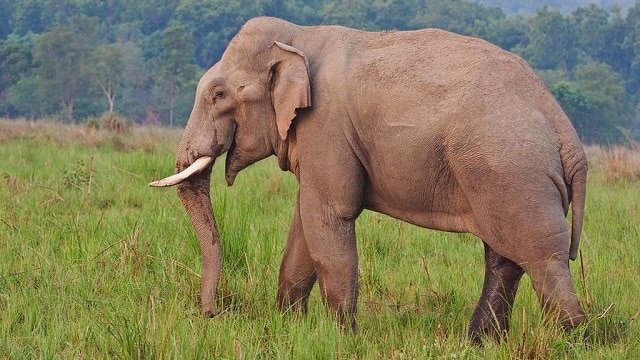
    A 70-year-old Indian woman was killed by an elephant in Odisha, India, while she was collecting water from a tube-well, reports The Print.

    The elephant trampled Maya Murmu. As a result, she sustained serious injuries and was rushed to the hospital where she breathed her last.

    When the family members were performing Maya’s last rituals, the elephant returned and took the corpse from the pyre. It trampled her body again and fled after throwing it. 

    However, Maya’s last rites were finally conducted a few hours later. The elephant had wandered off from the Dalma Wildlife Sanctuary.

    According to official data, as many as 3,300 people have been killed in attacks by wild elephants in India in the last seven years. Odisha has suffered the most deaths, with nearly 600 killed between 2014-2021.

  • Karachi child dies after eating poisonous sweets placed to kill dogs

    Karachi child dies after eating poisonous sweets placed to kill dogs

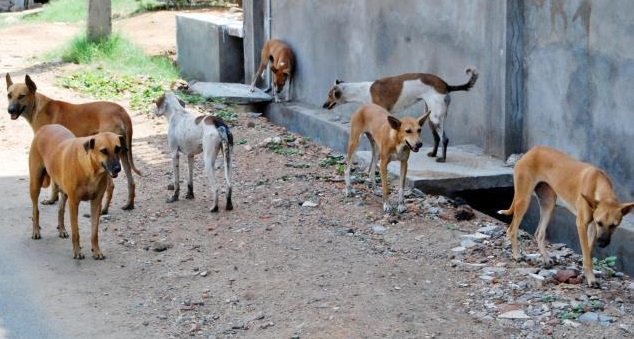
    A two-year-old child died on Monday night in Karachi’s Korangi Town after swallowing poisonous sweets left by local authorities to kill stray dogs in the area.

    Senior Superintendent of Police (SSP) Korangi has confirmed the incident, saying, “One of the children breathed his last while being shifted to a hospital while five others are said to be in a critical situation.”

    As per the statement of the deceased’s father, his son picked up sweets from a motorbike placed in the local area. “It belonged to a local government employee,” he added.

    Karachi Administrator Murtaza Wahab has taken notice of the death and instructed the police to conduct an investigation.

    On November 13, the Islamabad High Court during a hearing against “brutally murdering” and “poisoning” of stray dogs in Islamabad, questioned the Capital Development Authority (CDA) and Islamabad Wildlife and Management.

  • Animals removed from Shahid Afridi’s residence

    Animals removed from Shahid Afridi’s residence

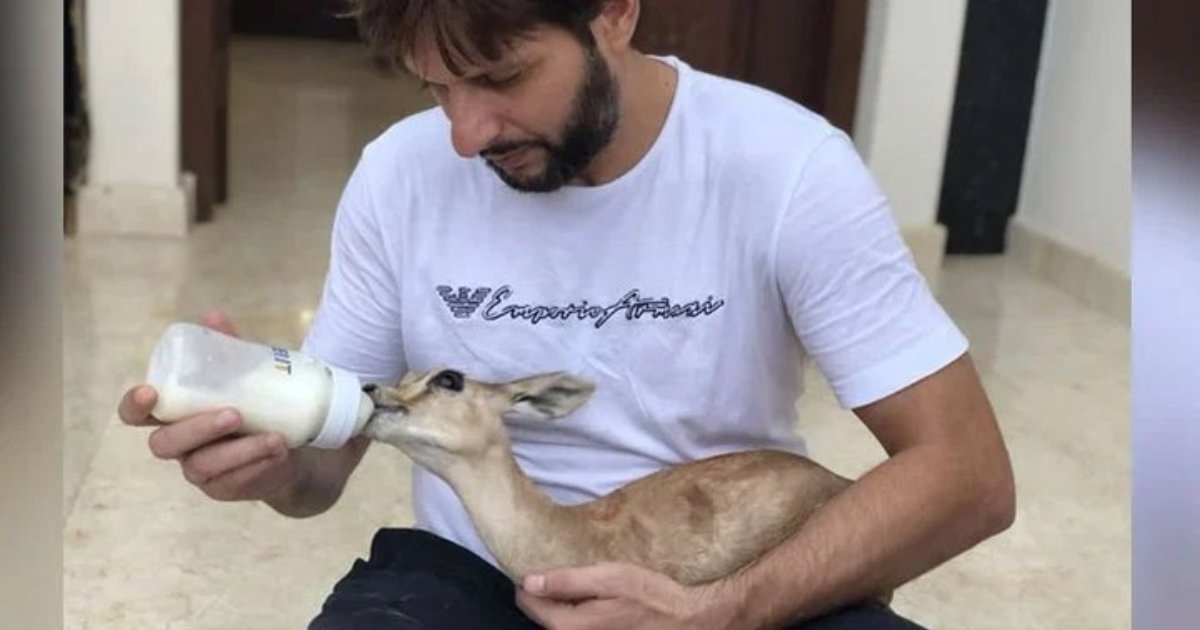
    A housing society in Karachi removed animals from former cricketer Shahid Afridi’s residence.

    According to GEO News, the residents of Defence Housing Authority (DHA) have filed a complaint over former national cricket team captain Shahid Afridi keeping animals at his house. One of the animals taken from his house is a deer. The details of the other animals are unknown.

    The DHA administration then, got the animals removed from Afridi’s house. The authorities also said they had asked the former cricketer to remove other supplies for livestock from his house.

    In 2018, Afridi had a lion at his house and after a complaint was filed by a citizen, the Wildlife Department had launched an inquiry into it.

  • Influencer under fire for using lion as a prop at a birthday party

    A video was posted by Project Save Animals in which a lion was being used as a prop at a birthday party.

    “Lions were shackled left and right and paraded as if they were a new decoration piece, which they’re not, obviously,” the caption of the post read.

    “Why do we tend to forget that these are living, breathing beings that have the capacity to feel just like you?”

    The post further added, “How would you feel if someone sedated you, tied you up and thrust you in an environment with loud music and screaming people? It’s ironic how humans are the first ones to forget their humanity,” adding, “Animals are NOT decor that you can use to show your wealth and status at your events.”

    “You DO NOT get to violate another being at the expense of your leisure, I have had enough of this and I refuse to be quiet about this.”

    “These influencers have big audiences that follow them and that leaves them with a bigger responsibility to make the right choices because it’s not just ONE birthday party. It’s the message that you are portraying and the precedent that you are setting.”

    “With countless cubs and lions being mistreated in Pakistan, we cannot afford to showcase behaviour that seeks to normalize this atrocity. I deal with so many people who have alot of complains when it comes to adopting strays but we don’t bat an eye at this monstrosity?”

    “This needs to stop and it won’t until we stand up against this highly problematic behaviour and call those out who are responsible for it.:

    “Enough is enough,” the post concluded.

    Earlier this year, a video of TikToker Kashif Zameer beating his pet lion surfaced on social media. JFK Animal Rescue and Shelter shared the video of Zameer beating his pet lion as two women stood on the side and watched him. Zameer scammed  Ertuğrul star Engin Altan Düzyatan.

  • Two rare Persian leopards spotted in Balochistan

    Two rare Persian leopards spotted in Balochistan

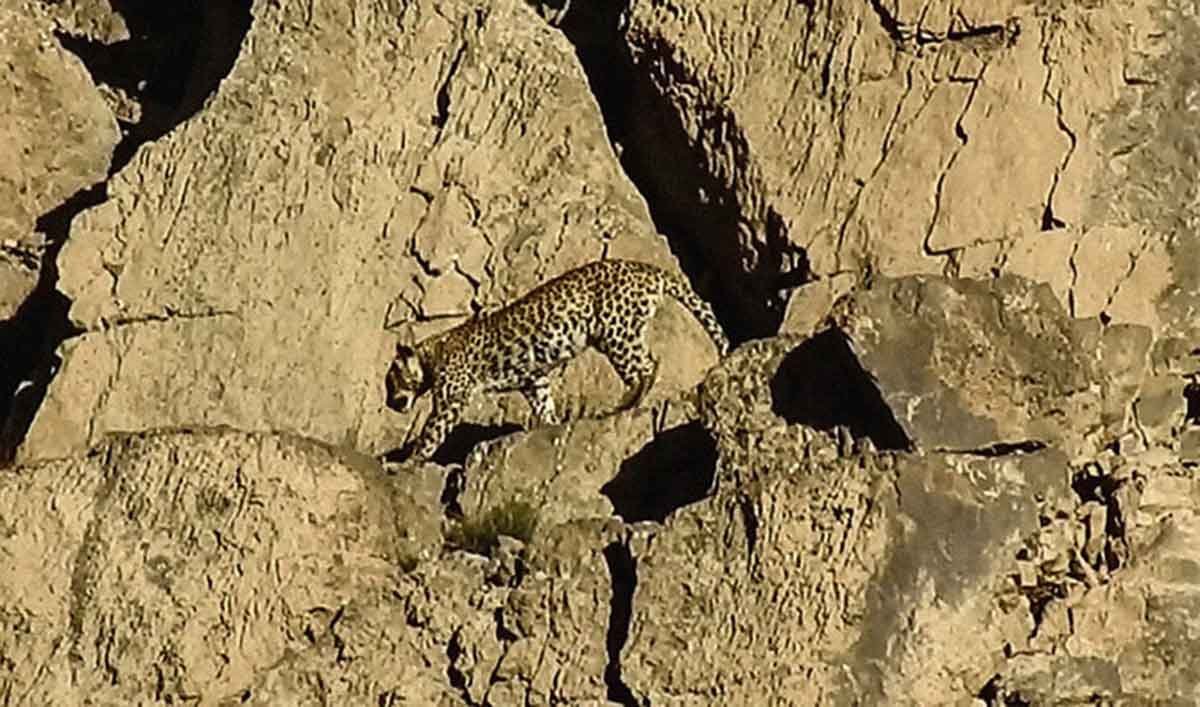
    A pair of rare Persian leopards sighted in Pakistan for the first time last year have been filmed and photographed in the wild, officials said Friday.

    Sharifuddin Baloch, a senior conservation official in Balochistan province, said the pair were first spotted by rangers on Mount Chaltan in the Hazarganji Wildlife Park six months ago.

    Adult leopards are solitary in the wild and pair only to mate.

    “We equipped our staff with cameras and binoculars to film the pair and take photos,” Baloch said. “This month our staff succeeded.”

    Persian leopards are a panther sub-species native to Turkey, Iran, Afghanistan and the Caucasus. They are extremely rare, however, and listed by the International Union for Conservation of Nature (IUCN) as endangered.

    Fewer than 1,000 are believed to exist in the wild, with another 200 in captivity.

    “We are taking steps to protect the rare species,” Baloch told AFP, adding officials were sharing data with the IUCN.

    Video shot by park officials shows one of the leopards beautifully camouflaged on a rugged, rocky hillside until it stands up and pads away.

    Baloch said there was no previous record of the creature ever being sighted in Pakistan.

    Panthera tilliana is bigger and has a different spot pattern to the more common Indian leopard (panthera fusca) found across Pakistan.

    Pakistan is also home to vulnerable snow leopards (panthera uncia) in the northern Himalayas.

  • PETA India names cow after Kim Kardashian to honour her dairy-free diet

    PETA India names cow after Kim Kardashian to honour her dairy-free diet

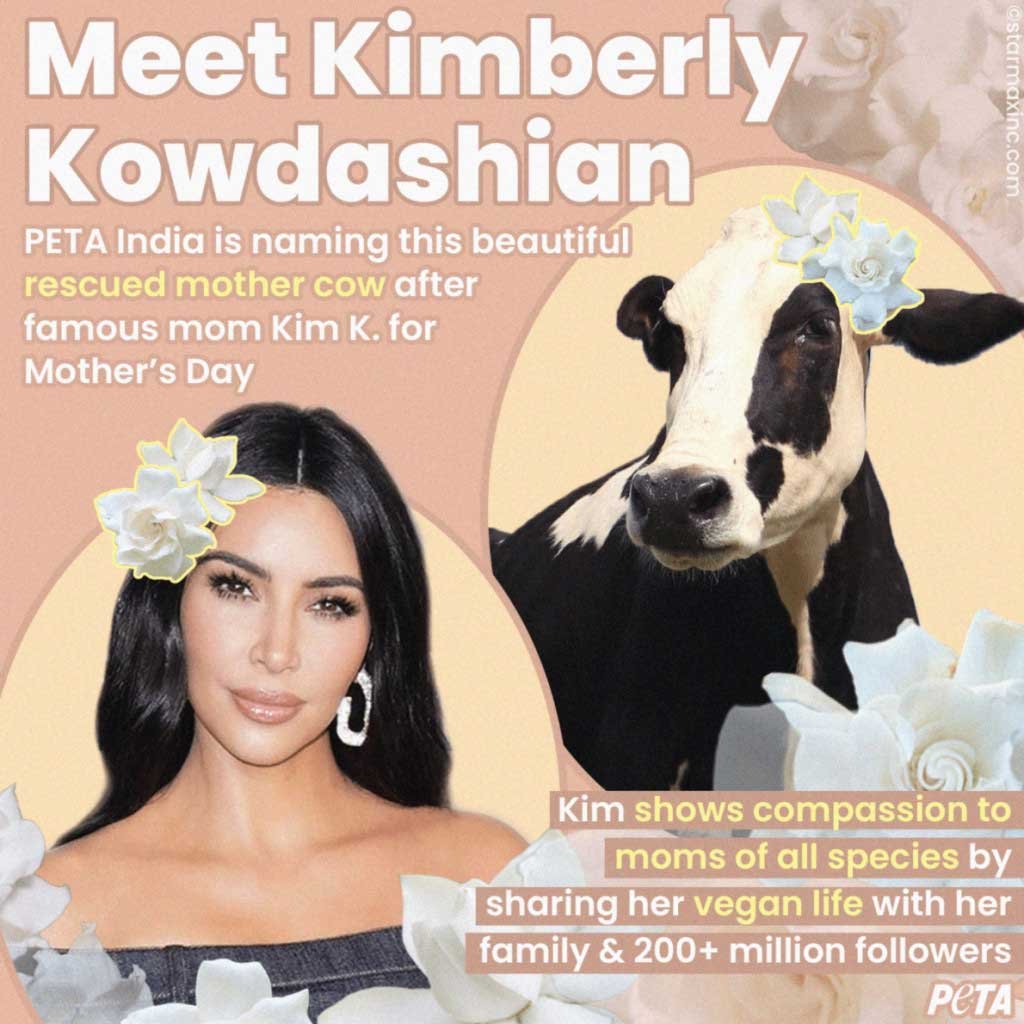
    The People for the Ethical Treatment of Animals (PETA) India has honoured billionaire lifestyle guru Kim Kardashian’s “dairy-free diet” by naming a cow after her.

    “For Mother’s Day, PETA India names rescued mother cow ‘Kim Kowdashian’ after reality TV star Kim Kardashian,” tweeted the animal rights advocate’s India branch.

    “Thanks for promoting a dairy-free diet Kim,” it added.

    In a statement, PETA India said that they wanted to “thank the mother of four for showing compassion to mums of all species by promoting a dairy-free diet to her more than 200 million followers.”

    The bovine, which was described as having “striking eyes and long, dark eyelashes” was chosen as she is just like her 40-year-old celebrity namesake.

    ‘Kim Kowdashian’ was reportedly rescued by a PETA-approved sanctuary after the animal rights boy caught her being abused on the streets by her former owner.

    Read more – Kim Kardashian slammed for lavish 40th birthday celebrations amid pandemic

    Meanwhile, Kardashian has been very vocal about her no-meat, nearly vegan lifestyle. She is also believed to have converted three family members, including sister Kourtney, to a plant-based diet.

    Earlier this year in February, Kim posted an Instagram picture in which she flaunted her chiseled abs.

    “Plant based does a body good,” she captioned the post.

  • Two lions to be put to rest in Lahore Zoo

    The Lahore Zoo administration has decided to euthanise a pair of lions because they are suffering from a terminal illness.

    According to reports, the administration considering their health conditions has decided to put them to rest, as the pair has reached their maximum age limit.

    “Both of them are ill from the past several days and could not be treated or cured,” said an official of the zoo, adding that x-ray and ultrasound reports of the pair present proof of their poor health conditions.

    The official further said that “a tiger, brown bear and a zebra are also suffering from a crippling disease and a decision to euthanise them will be taken in the next meeting.”

    Earlier, in February, two white tigers cubs aged three months died in Lahore Zoo. They were reportedly suffering from COVID-19.

    Meanwhile, this is not the first incident of mistreatment of animals by zoo authorities in Pakistan. In December 2020, Peshawar Zoo lost its fourth giraffe in 2020, just a few days after a black bear’s death.

    On the other hand, Islamabad’s Marghazar Zoo — which drew international condemnation for its treatment of lonely elephant Kaavan — shut down in December 2020 after its final occupants Babloo and Suzie were relocated to Jordan.

  • Beat Monday blues with these adorable pictures of animals interrupting wildlife photographers

    It is not uncommon for us to start the week with a bit of sadness. If you are one of those who find Monday unbearable, The Current has something that might cheer you up and help you beat the blues.

    These pictures of animals interrupting wildlife photographers will definitely put a smile on your face.

    https://twitter.com/JoaquimCampa/status/1350843550628458496?s=20

  • Illegal falcon trade on the rise in Pakistan

    Illegal falcon trade on the rise in Pakistan

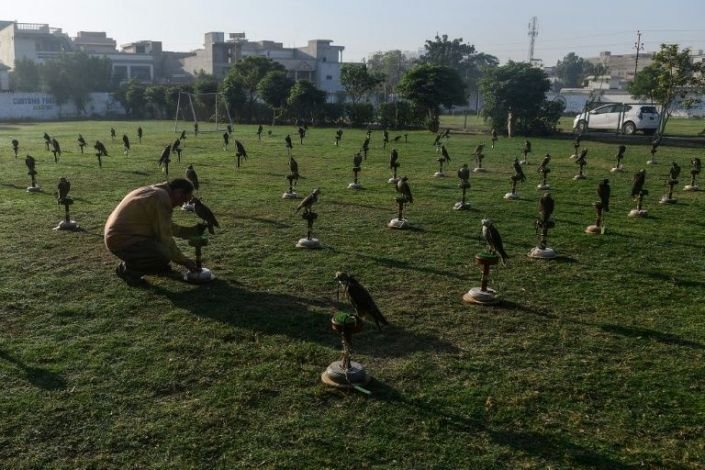
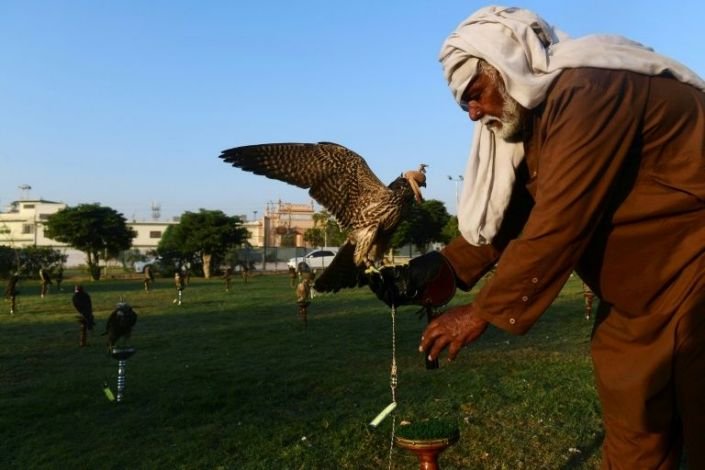
    Since learning to capture birds as a teen, Muhammad Rafiq has amassed a small fortune in Pakistan trapping and trafficking falcons — including some endangered species — for wealthy Gulf Arabs.

    A single falcon can fetch up to tens of thousands of dollars on the black market, which allowed Rafiq to renovate his family home.

    “Every season, dealers come from Karachi and leave their contacts with us, and we call them back if we catch something,” said the 32-year-old, from a nearby coastal village.

    He recently trapped a peregrine falcon on a one-week hunting mission.

    “I desperately needed money,” he told AFP. “And God has listened to me.”

    For years, Pakistan has stood at the nexus of the falcon trade, both as a source of the birds of prey, and then as a destination to hunt with them.

    Falcon poaching is officially banned, but demand for the birds is rising, according to the World Wildlife Fund in Pakistan.

    It estimates that up to 700 falcons were illegally smuggled out of the country last year alone, often by organised criminal networks.

    Their destination is normally Gulf countries, where falconry is a treasured tradition.

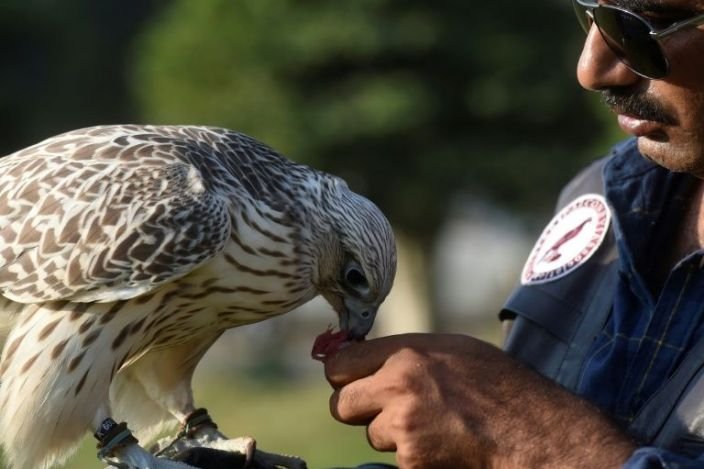
    Owners treat the birds “like their own children”, said Margit Muller, the director of Abu Dhabi’s falcon hospital, which treats 11,000 falcons annually, a number that has more than doubled in the past 10 years.

    One conservationist told AFP an Arab falconer usually owns around five to six hundred birds, most of which will be captured in the wild in Pakistan or Mongolia.

    Wild birds are prized over those bred in captivity because they are believed to be better hunters, though there is no evidence to support those claims.

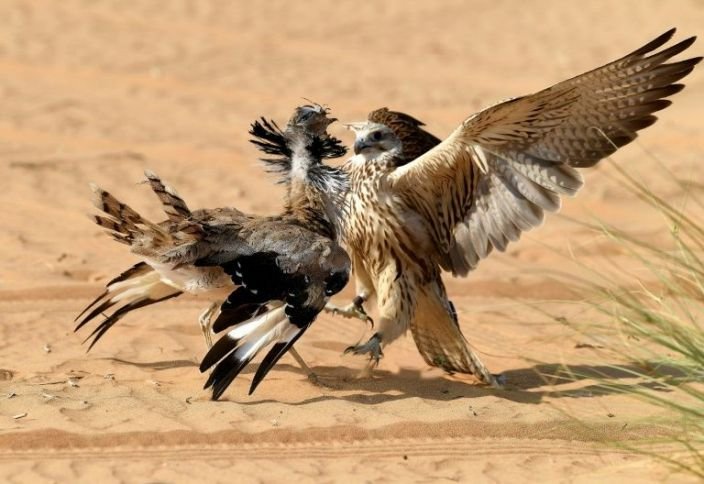
    Every winter, lavish hunting parties from the Gulf flock to Pakistan’s sprawling deserts, where they are given permits to use their falcons to hunt the houbara bustards, a migratory bird wrongly prized as an aphrodisiac and classified as vulnerable by conservationists.

    These excursions have cast a spotlight on the deep ties between Pakistan and its allies in the Gulf. For decades, the Gulf states have propped up Islamabad’s ramshackle finances with generous loans, with one of the expectations being that they can continue to use Pakistan as a hunting playground.

    Saudi Crown Prince Mohammed bin Salman and two other royals were granted permission to catch bustards by Prime Minister Imran Khan’s government in December last year, a soft diplomacy tactic that Khan had openly disagreed with when he was in the opposition.

    The government also presents falcons as gifts to world leaders.

    “Our officials are working like pimps for the Arabs,” a government official requesting anonymity told AFP.

    A brief ban on the bustard hunts was overturned in 2016 by the Supreme Court, but conservationists are now pushing for the export of falcons to be regulated in an ongoing case at the Islamabad High Court.

    Every year, falcons escape the harsh Siberian winter and fly thousands of miles to warmer regions, including southern Pakistan.

    During the migratory season, wildlife traffickers descend on villages along the Arabian Sea coastline, offering fishermen cash to briefly abandon their boats and try their hand at poaching.

    “We pay them in advance, send food to their families and if they catch a bird that is precious, we happily give them motorbikes,” said one trafficker who spoke to AFP on the condition of anonymity.

    A range of tactics can be employed — sticky liquids, net traps or, most commonly, using smaller birds as bait.

    Poachers especially target the peregrine falcon, whose populations remain stable — but also the saker, which is endangered.

    Bob Dalton, a veteran falcon conservationist, helped oversee the rehabilitation of dozens of falcons seized by Pakistani authorities in October, with officials estimating the cache to be worth well over $1 million.

    “The illegal trade is growing, there is more money being spent, more pursuit from the Gulf,” he told AFP.

    “With the exception of one or two species, most falcon populations are in decline or on the point of being unstable.”

    With ongoing efforts to curtail rampant poaching failing, some officials in Pakistan have suggested regulating the falcon trapping market, inspired by a scheme involving another rare native species, the markhor — an elusive mountain goat with striking twisted horns found in Pakistan’s mountainous north.

    Every year, foreigners shell out tens of thousands of dollars for a handful of trophy hunting permits, providing a financial incentive for communities to prevent poaching. Naeem Ashraf Raja, the director of the biodiversity at the ministry of climate change, said markhor numbers have rebounded as a result of this controversial conservation method.

    With hunting parties set to descend on Pakistan again over the next few months, Kamran Khan Yousafzai, the president of Pakistan’s Falconry Association, said the country desperately needs to implement a sustainable wildlife programme.

    “Arab falconers can’t resist coming to Pakistan. They have been coming to these hunting grounds for generations, and unless they face any real problems, they are not going to search for new destinations.”