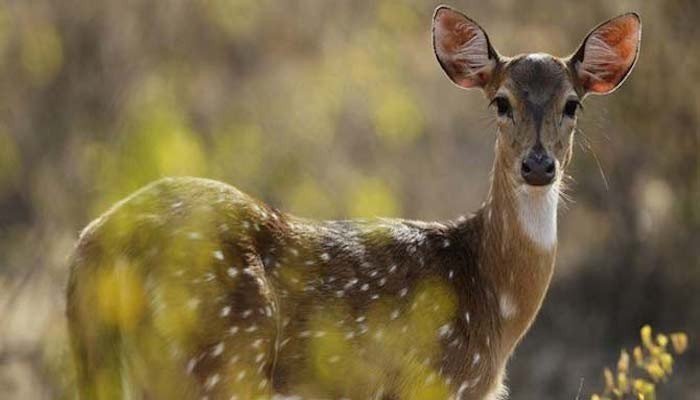
Seven rare deer were reported dead in Bahawalpur Zoo on Saturday.
According to reports, it is suspected that the animals died after eating poisonous fodder. At least 12 other deer at the zoo are in critical condition.
The deer who died were of a rare breed.
The zoo management claimed that dozens of deer suddenly started falling ill. Seven of them died within a short period after falling ill while 22 were rescued and treated.
“12 are still in critical condition,” added the management.
According to the administration, the cause of the deaths has not yet been ascertained. Their samples have been sent to Lahore for further investigation.
The Bahawalpur Zoo curator said the cause of death will only be known after an autopsy.
With little legislation to safeguard animal welfare, zoos across Pakistan are notorious for their poor conditions. Recently, the Peshawar Zoo lost its fourth giraffe in 2020, just a few days after a black bear’s alleged death. Similarly, the Sindh High Court, earlier this week ordered the Karachi Zoo management to shift Rano from her 25-foot wide Victorian ‘grotto’ pit to another open cage.
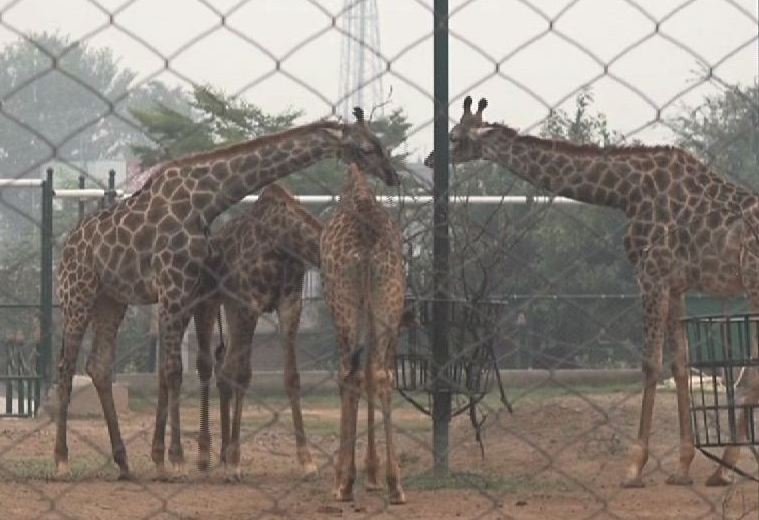
Peshawar Zoo lost its fourth giraffe in 2020 on Monday, just a few days after a black bear’s alleged death.
According to details, the male giraffe had been suffering from an intestinal infection for one week and was under treatment in the zoo. Zoo officials said that samples were collected from the dead body and sent to the National Veterinary Laboratory, Islamabad, and Veterinary Research Institute, Peshawar, for examination and to ascertain the exact cause of the death.
A three-year-old giraffe was earlier found dead in June, while the other two died in April and May.
“The earlier three died of shooting diarrhoea while this one now had a somewhat different cause of death,” stated Project Director of the Peshawar Zoo, Ishtiaq Wazir. “We had provided antibiotics to the giraffe but it did not recover,” added the official.
He further said that giraffes are fragile animals and the symptom of their disease appears at the time when preventive intervention cannot succeed in treating them.
Officials said the zoo was left with two female giraffes only.
Animal rights activists have been campaigning for the condition of animals kept in Peshawar zoo. A petition about issues of the Peshawar zoo, including animal deaths and qualification of staff members, especially veterinarians, is also pending with the Peshawar High Court.
Islamabad zoo shuts down after last animals moved
Meanwhile, Islamabad’s Marghazar Zoo — which drew international condemnation for its treatment of lonely elephant Kaavan — shut down on Wednesday after its final occupants Babloo and Suzie were relocated to Jordan.
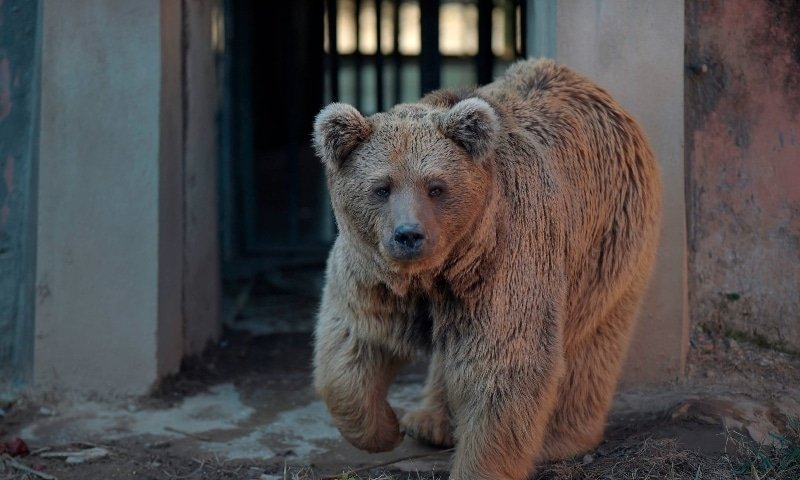
Babloo
The two Himalayan bears were the last to leave the Islamabad facility, almost three weeks after the country’s only Asian elephant was flown to a wildlife sanctuary in Cambodia.
“The Islamabad zoo is now completely closed for both public and officials,” said Saleem Shaikh, a spokesman for Pakistan’s ministry of climate change.
Mehwish Hayat has requested authorities to close all zoos across the country, saying “animals are born free”.
Sharing a news article about the relocation of animals from Islamabad Marghazar Zoo, Mehwish commented: “In a country where we’re still fighting for human rights, animal rights are a long way off.”
Hinting towards Kaavan’s recent relocation to Cambodia after an intense campaign led by US pop icon Cher, Mehwish further wrote: “Why do we only take action when foreign celebrities get involved?”
“This is so embarrassing,” she added.
In a country where we’re still fighting for human rights,animal rights are a long way off. But come on,why do we only take action when foreign celebrities get involved?This is so embarrassing.Animals are born free- the authorities must shut these zoos now!https://t.co/jY6MzNXu7W
Meanwhile, Islamabad Zoo’s last remaining animals Bubloo and Suzie are all set to leave for Jordan on December 17. The Islamabad High Court in its order had stated that the zoo was not fit enough for animals and had requested authorities to move all animals there to temporary sanctuaries.
We are happy that the Ministry of Climate Change & the IWMB took yet another decision in favour of animal welfare. This week we will bring the bears to its Jordanian sanctuary Al Ma’Wa for Nature and Wildlife, which is run together by Princess Alia Foundation.
At least 513 animals are reported to have gone “missing” from Islamabad’s Marghazar Zoo.
According to a report in The Express Tribune, the Islamabad Metropolitan Corporation (IMC), which was managing the zoo in July 2019, in a report had stated that there were a total of 917 animals of and birds of different species present at the zoo at the time. In May, the Islamabad High Court (IHC) handed over the zoo’s management to the Islamabad Wildlife Management Board (IWMB) with directions to shift the animals in the zoo to shelters.
Following the IHC’s orders, the handover documents dated July 16, 2020, and signed by the Zoo Deputy Director Dr Bilal Khilji, Ministry of Climate Change Biodiversity Director Naeem Ashraf Raja and the takeover authority, IWMB Chairman Dr Anisur Rehman, showed that only 404 animals have been handed over to the new management.
A comparative analysis of the reports showed that the numbers of animals in both reports are different. While some animals decreased in numbers or went missing, others such as the Barking Deer or Hog Deer showed an increase.
As per the details available, the population of the spotted deer fell from 12 to 11 in a year, while the Chinkara Gazelle decreased from seven to three. Similarly, the Black Buck Gazelle fell from four to three, Urials from 11 to four, Nilgai (Blue Bull) from 18 to 16, Zebras from five to four, Mallard Ducks from 108 to 74 and Rose Ringed Parakeet from 136 to 30.
Meanwhile, common doves, which were counted at 255 last year, completely disappeared from the handover document.
While it is not clear as to what happened to these missing animals, a report quoting sources said that the animals have either died or have been stolen.
A few weeks earlier, the Islamabad Zoo’s management had come under fire for burning two lions to death while attempting to force them out of their cage so they could be transported to a sanctuary in Lahore. Animals at the zoo are being relocated to temporary sanctuaries after the IHC while hearing Kaavan’s case, ruled that the zoo is not fit enough for them and lacks the necessary facilities.
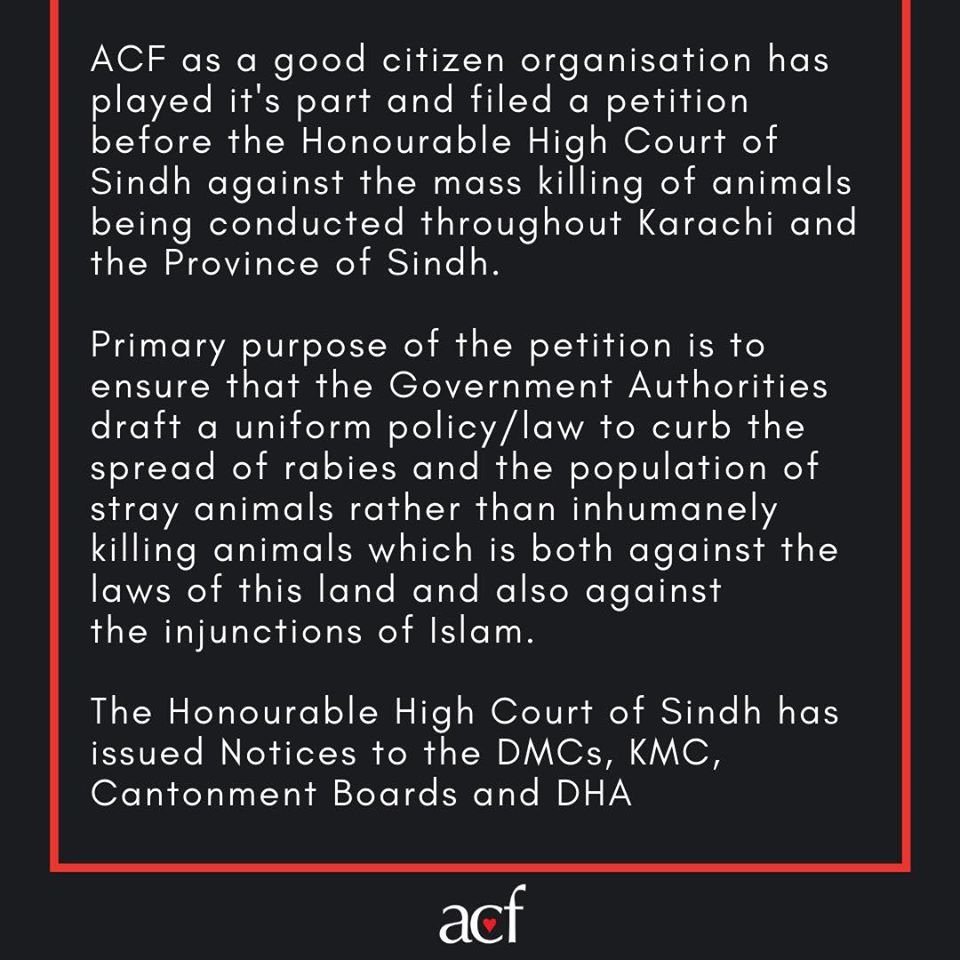
The Ayesha Chundrigar Animal Rescue has filed a petition in the Sindh High Court against the mass killing of animals being conducted throughout Karachi and Sindh after their rehabilitated dogs were found dead. In an announcement, the foundation shared that the primary purpose of the petition is to ensure that Government Authorities draft a uniform policy on how to contain the population of dogs in the city.
Prior to filing a petition, Ayesha, who is the founder of the animal shelter, shared an emotional video in which she shared that people were brutally killing dogs they had rehabilitated and released back on the streets.
Explaining the rehabilitation process, Ayesha said that when strays or injured dogs come to the shelter, they are taken care of, vaccinated and neutered and when they recover completely there are released into far off areas, such as Malir, marked as safe zones. These areas have less human population and are away from the city. Ayesha explained that once they are released, members and volunteers of the shelter keep an eye on the dogs and make sure they are doing fine.
Sharing a particularly harrowing incident, Ayesha said that her team found two of their dogs dead with their legs tied up. According to her, the dogs were given poison after which their legs were tied together so that they don’t run away for help. The wounds on their bodies indicated that they were also tortured and beaten.
Ayesha added that she has no idea how to keep the remaining dogs safe. She said that this was not an isolated incident and dogs across the city are being killed and poisoned regularly. She said sometimes they are skinned and their meat taken. The activist further said that in such incidents, it is impossible to track the perpetrators and hold them accountable.
“Where is our society going,” questioned Ayesha. “It seems all these DMCs want to literally drive us to suicide. They are well aware that we are in Malir yet instead of working with us as we have asked them to countless times, they do this.”
“We can’t take it anymore. They win. We’ve fallen apart, trying like absolute fools in this lawless city of millions. Can’t do it anymore. We’re tired and hopeless and can’t keep looking for ways out,” she continued.
https://www.instagram.com/p/CBnj90MpmWK/
To know more about ACF Animal Rescue and Ayesha Chundigar, watch The Current‘s feature on the shelter.
Following the incident, Feroze Khan requested his fans to be kind to animals.
https://www.instagram.com/p/CByWGyXB7vd/
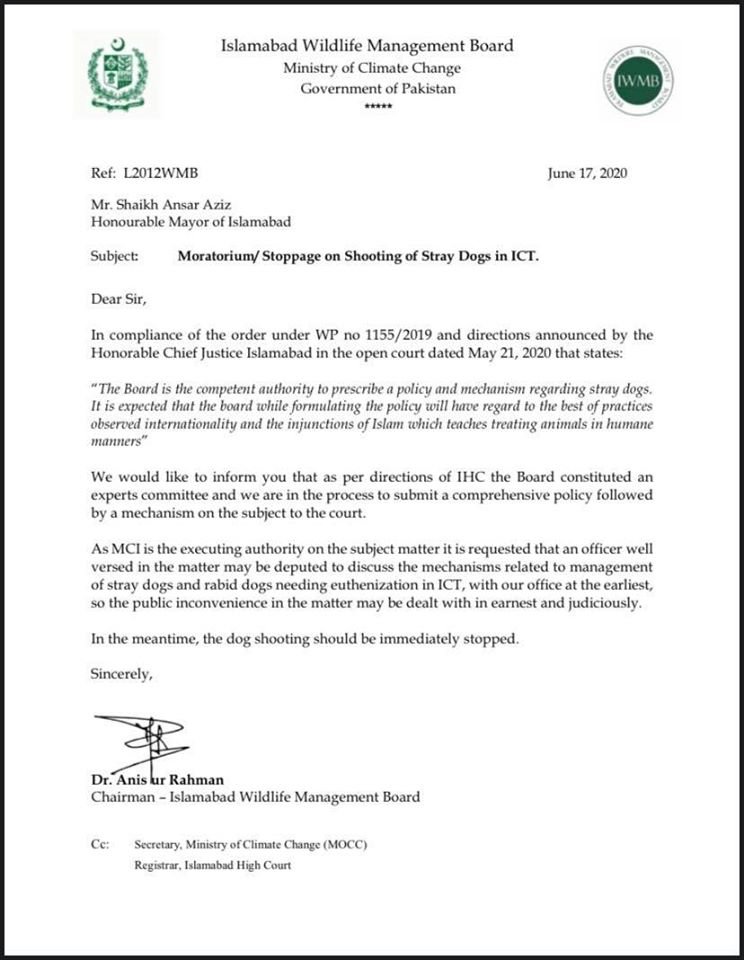
Meanwhile, earlier, while hearing a case against the Marghazar Zoo, Chief Justice Islamabad High Court banned dog culling in the city.
Meanwhile, KP has introduced a more humane way to contain the population of stay dogs. The KP Livestock Department has set up a special centre to neuter and vaccinate stray dogs. They are offering a cash reward to whoever brings in a stray dog.
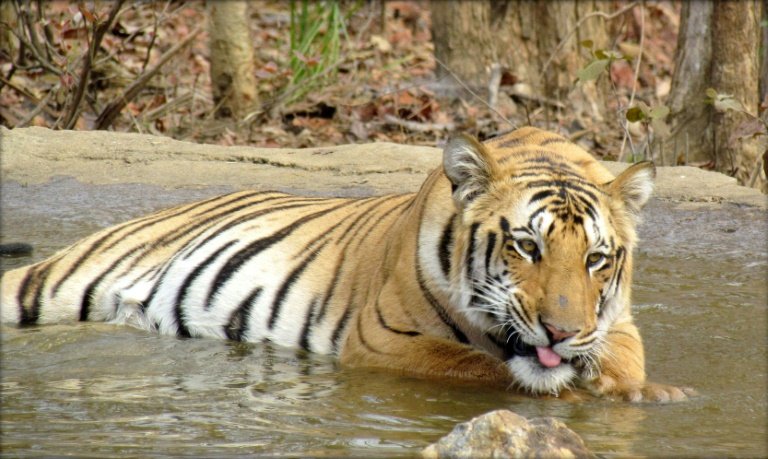
A tiger accused of killing three people will spend the rest of its life in captivity, Indian officials said Sunday, saying the big cat was “too dangerous” to be allowed to roam free.
According to AFP, the five-year-old male predator, also blamed for attacking cattle, had embarked on a trek more than 500 kilometres (310 miles) long from western Maharashtra state to central India’s Betul district in Madhya Pradesh state in 2018.
“We gave it several chances to re-wild but it habitually went into human habitations,” said Madhya Pradesh’s chief wildlife warden, S.K. Mandal.
“The only option left was to put it in captivity to ensure both the tiger and humans are safe.”
The tiger — dubbed the “vagabond” or “nomad” by some local media — was first trapped in December 2018 after its long journey and held in captivity for two months.
The big cat was eventually fitted with a tracking collar and shuttled between a tiger reserve and a national park.
Officials however said it repeatedly strayed and hunted near human settlements, attacking cattle and endangering humans.
Finally the tiger was tranquilised and sent to a zoo in Madhya Pradesh capital’s Bhopal on Saturday.
Officials said the decision to capture the adult tiger was taken a few months ago, but was delayed due to the novel coronavirus lockdown.
“It will take sometime for him to adjust to the new environment. We will be monitoring his behaviour,” Bhopal’s Van Vihar National Park director, Kamlika Mohanta shared.
“As of now it will remain in solitary confinement. A decision to put it on display at the zoo or send it to a (fenced) safari will be taken later.”
Human encroachment on tiger habitats have increased in recent decades in the nation of 1.3 billion people, leading to deadly conflicts with the animals.
Nearly 225 people were killed in tiger attacks between 2014 and 2019, according to government figures.
More than 200 tigers were killed by poachers or electrocution between 2012 and 2018, the data showed.
India is home to around 70 percent of the world’s tigers. Last year, the government said the tiger population had risen to 2,967 in 2018 from a record low of 1,411 in 2006.
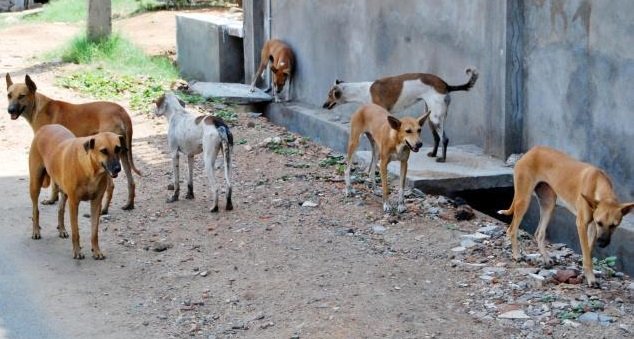
To control the increase in the population of stray dogs in Peshawar, the Peshawar Livestock Department has decided to neuter the animals instead of culling them and is offering a cash reward of Rs 200 to anyone who brings in a stray dog to the department.
According to a report in The Express Tribune, the decision was taken after residents of the provincial capital complained about an increase in the population of stray dogs in the city. According to a survey by the Water and Sanitation Services Peshawar (WSSP), there are approximately 7,500 to 10,000 stray dogs in the Peshawar district alone.
KP Livestock Department Director Dr Syed Masoom Ali Shah, while discussing the matter said: “We have to change the mindset of killing stray dogs, which is a common practice.” He added that the population of stray dogs can be controlled by neutering them.
Dr Masoom revealed that a special centre, which can operate up to 100 dogs in a day, has been set up for this purpose.
He shared that the dogs will be neutered and sterilised by conducting an operation and will then be released back onto the streets. Before releasing the dog, a collar with reflectors will be fixed around its neck and a tattoo would be printed on its ear as a mark that the dog has been operated upon.
“The project is first ever in Pakistan and will not only serve in maintaining public health through containing rabies but would also stop the cruel practice of culling of stray dogs through shooting and poisoning,” Dr Masoom said.
Dr Masoom further remarked that “the objective of the cash reward is to involve those who have lost livelihoods due to the coronavirus lockdown in an activity that aims at ensuring better public health and safety.”
However, the doctor advised people to be careful while catching a dog as it can bite them. He said a stray dog can easily be coaxed by offering it some food, patting on the head and then tying it with a rope.
While stray dogs are a “nuisance” to the public across the country, the recommendation to cull them had sparked outrage across the country with activists and animal lovers demanding the government to adopt more humane measures to control their population.
With a decrease in human activity all over the world, animals, some which have rarely been seen before, are coming out of their hiding places and exploring their surroundings without an interference.
Recently, WWF-Pakistan released a never seen before footage of the Himalayan lynx, captured on the steep rocky cliffs of Chitral Valley, Pakistan. According to officials, this is the first time that the nocturnal hunter and highly elusive animal has been filmed in the area.
Follow along as we share multiple videos and photographs in the coming days of this unique and powerful animal and get a glimpse into the life of some of Pakistan’s most iconic species.
The video which is intense and chilling shows the cat observe and successfully hunt her prey.
“While filming a group of markhor grazing in the Tooshi-Shasha Wildlife Conservancy recently, our field production team and the Khyber Pakhtunkhwa Wildlife Department spotted this lynx crouching in a camouflaged position behind a rock, about to begin a hunt,” shared the animal protection organisation. “What followed was a dramatic scene few have ever witnessed – a lynx stalking and successfully killing a yearling markhor.”
Watch the full video here:
According to WWF, “the Himalayan lynx is one of the most elusive and powerful cats living in these mountains, rivaled only by the famous snow leopard. As an apex predator, the lynx plays an essential role in maintaining the balance and health of this complex mountain ecosystem.”
The lynx is considered to be rare species and is known to be present in Chitral and other northern areas of Pakistan, including Gilgit-Baltistan, although its exact distribution and range are not known.
Earlier, a brown bear was also spotted in Laspur Valley in Chitral by the locals.
A brown bear was recently spotted in Laspur Valley by locals. As human activity in the area has decreased significantly, wildlife can be seen more commonly now than before. #KPWidlifepic.twitter.com/Ihk7Vr6k6Y
After being forced shut due to the coronavirus pandemic, a zoo in northern Germany is facing so much financial pressure it may end up feeding its animals to each other in a worst-case scenario.
According to reports, Neumünster zoo, in Schleswig-Holstein, has been closed since March 15. The zoo relies entirely on donations and entry fees to feed some 700 animals which include arctic foxes, maned wolves, seals and Germany’s biggest polar bear Vitus. It has not yet received any emergency aid promised by the federal government.
Zoo director Verena Kaspari told the media, “If — and this is really the worst, worst case — if I run out of money to buy food, or if it should happen that my food supplier can no longer deliver due to new restrictions, I would slaughter animals to feed the other animals.”
“We currently have funds that would bring us by around mid-May,” she added.
As part of Kaspari’s worst-case-scenario plan, goats and deer would be killed first and the polar bear Vitus — which stands nearly 12 feet tall — would be the last animal to go. She assured that none of the animals slaughtered would be an endangered species.
On March 31, the association representing 56 major zoos in Germany, including Neumünster, called on the government to release $100 million to save the industry.
Meanwhile, a spokesperson for animal rights organisation People for the Ethical Treatment of Animals (PETA), Yvonne Würz, told DW that “population management” was “nothing new for zoos.”
“Zoos are funded through and live from tiny baby animals. When there is not enough space for the animals they are often killed for food [for other animals],” said Würz.
She explained that some zoos are transparent about the numbers of animals they kill each year. The European Association of Zoos and Aquaria estimates between 3,000 and 5,000 animals are killed in European zoos each year.
As the lockdown to curb the spread of coronavirus stays in place and animal rights activists voice concerns over strays starving to death, a heartwarming video over the internet has shown a Punjab Police cop buying food and feeding stray dogs by the side of a road.
“If only people considered us policemen as humans. Forgive our mistakes. We are your servants. We deserve that much love,” wrote Lahore’s Deputy Inspector General (DIG) for Investigation Dr Inam Waheed as he tweeted the video that showed the cop, namely Ishtiaq, buying food and feeding it to dogs.
Earlier, amid appeals by activists to take care of strays during the lockdown, heartwarming stories had surfaced of people helping animals suffering and adjusting to the changes caused by the coronavirus outbreak.
“During the lockdown, animals have been abandoned in cages in markets and pet stores in Karachi. Many have starved and died. Dr Sheila is a vet working tirelessly to help collect, vaccinate and find shelter for these poor animals. Please, please, please donate. And share,” tweeted a user.
During the lockdown, animals have been abandoned in cages in markets and pet stores in Karachi. Many have starved and died. Dr. Sheila is a vet working tirelessly to help collect, vaccinate, and find shelter for these poor animals. Please, please, PLEASE donate. And share. pic.twitter.com/W9gwRoCo5T