A group of armed men stormed a music video shoot and raped eight models in Johannesburg, South Africa. The horrific incident took place in a small town called Krugersdorp, situated in the West of Johannesburg.
Out of the 20 suspects, three have been arrested by the police so far.
The group attacked the models as they were setting up the set for the shoot.
According to the police, the women were aged between 18 and 35. One of the survivors was raped by 10 men and another by eight.
“It appears that they (the suspects) are foreign nationals,” said the police, adding that they are illegal miners in South Africa.
South African President Cyril Ramaphosa had ordered the police minister to make sure the perpetrators were “apprehended and dealt with”.
A new committee against rape was announced by the Law Ministry on Friday in an effort to combat the worrying increase in sexual violence cases across the nation. The special committee’s primary responsibility will be to aid sexual assault victims in getting legal representation, in addition to attempting to stop cases of rape against children.
Former senator Ayesha Raza Farooq will head the committee.
Other members include Mehnaz Akbar Aziz, chief secretaries of Punjab, Khyber Pakhtunkhwa, Balochistan, and Sindh, representatives of the National Database and Registration Authority (NADRA), Pakistan Electronic Media Regulatory Authority (PEMRA), and the law ministry, ex-prosecutor general Punjab Ehtisham Qadir, ex-additional inspectors general Kamaluddin Tipu, Taimoor Ali Khan, advocate Ismat Mehdi, Khalid Parveen, Ambreen Qureshi, Ghazala Yasmeen, Nida Ali and Sharafat Ali, development consultant Valerie Khan, Mohammad Ali Nekokara, Zainab Mustafa, anchor Maria Memon, police surgeon Sumayya Syed and forensic expert Ayesha Sarwar.
Earlier this year in June, Punnjab Home Minister Attaullah Tarar announced that the Punjab government will declare an emergency following an increase in rape and sodomy cases in the province.
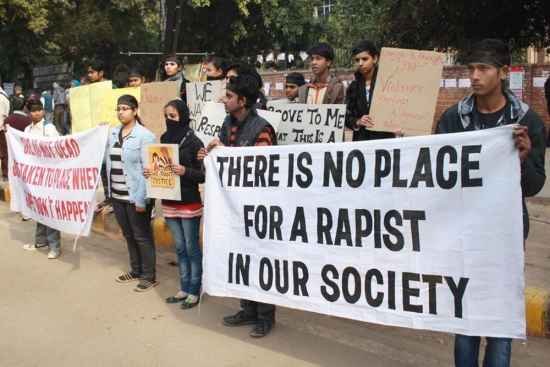
The Current records the tally of rape cases that are reported in news outlets on a daily basis to highlight the alarming situation. We have used many different sources as listed. When will it stop?
The Senate Standing Committee on Law and Justice, chaired by Senator Syed Ali Zafar, on Wednesday approved the Anti-Rape (Investigation and Trail) Bill, 2021 stipulating the formation of special courts to hear rape cases.
The National Assembly passed the bill on June 10 after that it was moved by Law Minister Dr Farogh Naseem on June 15. It will now be tabled in the Senate for approval, as perDAWN.
The Senate standing committee for Law & Justice passed the Anti-rape(investigation & trial) Bill. A great win for women across Law Minister @Farogh_NaseemPK & PM @ImranKhanPTI are the real force behind this. Credit to members of opposition members for a constructive role.
The provision of the virginity test has been removed.
If one is proven guilty, they could face a death sentence, life imprisonment, or undergo chemical castration.
Investigation officials could also face a penalty if they tried to mislead case proceedings in any capacity.
The suspects will be provided facilities to prove their innocence.
Instead of retired ones, serving judges will be appointed to the special courts.
Opposition reaction
PPP’s Mustafa Nawaz Khokhar suggested that the parliament must monitor the performance of special courts means that the legislature could make changes to the law if issues continue to transpire.
His party mate Raza Rabbani said he didn’t believe that constitution of special courts was required for hearing rape cases.
Furthermore, Azam Nazeer Tarar of the PML-N said similar courts were also established in the past, but they didn’t very helpful.
Prior to this last year after the motorway incident, President Arif Alvi approved the anti-rape ordinance and had said that special courts would be established throughout the country for speedy trials of sexual assault suspects. The courts would have to wrap up the cases within four months.
2020 has pretty much been all about COVID-19 and the pandemic. The year has perhaps been one of the most challenging ones in recent times and has been difficult for everyone. As the year nears its end, The Current decided to look back and reflect upon some happy moments which brought a smile to our faces.
Kaavan’s Relocation to Cambodia
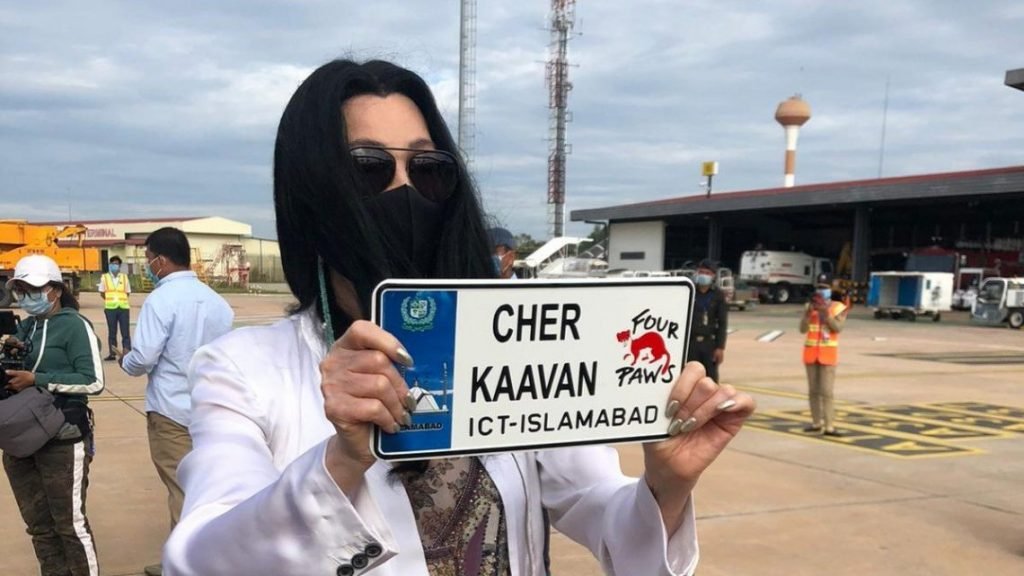
After spending years chained in Islamabad Zoo, the world’s former ‘loneliest elephant’ Kaavan was relocated to a local sanctuary in Cambodia where he will spend the rest of his days in the open and among his own. Kaavan’s freedom was assisted by American singer Cher, who came to Pakistan to personally see Kaavan off. She also welcomed the elephant in Cambodia with a very cute nameplate.
As per the latest details, Kaavan has found new friends in Cambodia and has been spotted enjoying himself at his new home.
Kavaan’s case and relocation also paved the way for other animals to be relieved of their plight. A few weeks after he left, two brown Himalayan bears at the Islamabad Zoo Suzie and Babloo were sent to a sanctuary in Jordan where they will be rehabilitated and nursed to health. Following their departure, the Islamabad Zoo was shut down.
Tough anti-rape law
The federal cabinet approved tough new anti-rape law under which special courts will be established to speed up rape trials and convicted rapists and perpetrators will be chemically castrated. It also prohibits the disclosure of the identity of rape victims and will create a national sex offenders’ register.
Increased exports
Pakistan’s exports for the month of November passed the $2 billionmark amid a resurgence of economic activity after the coronavirus lockdown. As per reports, Pakistan’s move to loosen pandemic restrictions early has helped the nation’s exports emerge stronger than its South Asian peers including India and Bangladesh.
Construction of Hindu Temple
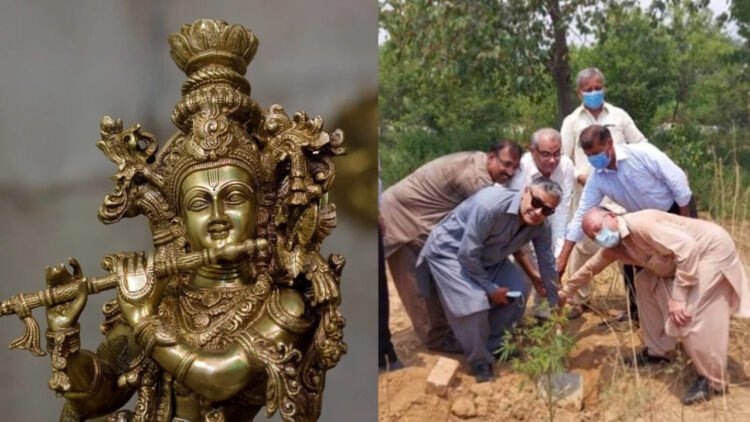
The Council of Islamic Ideology (CII) approved the construction of a new temple for minority Hindus, ruling that Islamic law allows minorities a place of worship. The CII also allowed the government to hand over the temple site as well as its adjoining Dharamshala (community centre) in Saidpur village of Islamabad to the Hindu community “so that it can offer religious rites as per their beliefs”. Many people including celebrities like Hamza Ali Abbasi lauded the initiative.
Mahira Khan, Dr Sania Nishtar among BBC’s ‘100 women of 2020’
Special Assistant to the Prime Minister (SAPM) on Poverty Alleviation and Social Protection Dr Sania Nishtar and Mahira Khan were listed among BBC’s ‘100 women of 2020‘. According to the publication, the list included “100 inspiring and influential women from around the world for 2020”.
“This year 100 Women is highlighting those who are leading change and making a difference during these turbulent times,” said the publication.
While Mahira was lauded for her outspoken views against sexual violence, refusal to endorse skin-lightening creams and supporting the fight against racism, Dr Nishtar was honoured for “spearheading the transformative Ehsaas Poverty Alleviation programme, which has improved the livelihoods of millions of Pakistanis by providing mobile banking and savings accounts, and other basic resources.”
It is pertinent to add here that Mahira was also part of the inaugural Forbes Asia’s 100 Digital Stars list, along with Aiman Khan and Atif Aslam. The list highlighted celebrities from across the Asia Pacific region who have taken the digital world by storm.
Have more good news to share? Let us know in the comments.
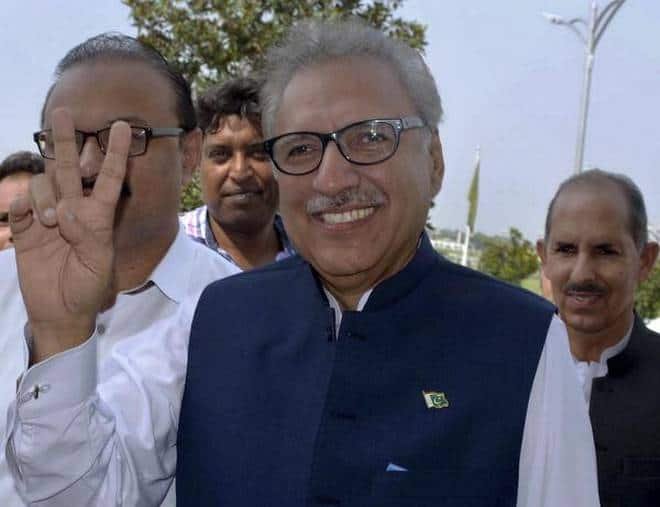
President Dr Arif Alvi on Tuesday approved Anti-Rape Ordinance 2020, under which special courts will be set up across the country to expedite trials of rape cases on a priority basis and award harsher sentences, such as chemical castration.
The special courts will dispose of the rape cases within four months, as per the ordinance that also abolishes the ‘two fingers’ virginity test in the rape cases.
The ordinance also suggests setting up of anti-rape crisis cells under the supervision of the prime minister, which will be authorised to conduct medico-legal examination within six hours of the incident.
A record will be prepared at the national level with help of National Database and Registration Authority (NADRA) to register the perpetrators of sexual abuse. The ordinance prohibits revealing of the identity of rape victims, making it a punishable offence.
Police and government officials who show negligence in investigating the cases would be jailed for three years along with the imposition of fines. Additionally, police and government officials who provide false information would also be punished.
On Nov 7, the Cabinet Committee for Disposal of Legislative Cases had approved two ordinances to introduce harsher punishments, including chemical castration, for sex offenders.
According to a statement issued by the law ministry at the time, the Anti-Rape (Investigation and Trial) Ordinance, 2020 and the Criminal Law (Amendment) Ordinance, 2020 would introduce the concept of chemical castration mainly as a “form of rehabilitation”.
Responding to the new ordinances after their approval by the cabinet in November, PPP Senator Sherry Rehman had expressed her displeasure over lowering the statutory age for rape to 13 from 16.
“The age of alleged ‘consent’ has been moved to 13 from 16 in the new ordinance, which is terrible,” commented the lawmaker. “How will an adolescent be responsible for ‘consent’. This makes younger children even more vulnerable.”
The federal cabinet has approved a law that proposes chemical castration as a punishment for convicted rapists.
In a meeting chaired by Prime Minister Imran Khan on Tuesday, the Ministry of Law and Justice presented a draft of an anti-rape ordinance. The draft proposes a fast-track trial in rape cases, effective involvement of women in matters pertaining to gender-based violence, maintaining a database of serial rapists, and witness protection.
During the meeting, the prime minister said the government will not tolerate any lax attitude in the implementation of anti-rape laws and added that the safety of all citizens was the utmost priority of the government. The premier said the legislation will be clear and transparent with strict enforcement. He said the rape survivors will be able to register complaints without fear, adding that the government will protect their identity.
During the meeting, some ministers also proposed public hanging for rapists, but the premier postponed this suggestion for another time.
According to PM’s aide Senator Faisal Javed, the government needs to bring tougher laws to curb crimes against women. He said the new proposed legislation will be presented before parliament for approval.
It may be noted here that Pakistan reported over 120 rapes from Oct 12 to Nov 24, according to a tally kept by The Current. Legal experts say that the rape conviction rate in Pakistan can be as low as 2 per cent, so instead of bringing harsher punishments, the government must focus on strengthening its criminal justice system to punish such crimes.
From Oct 12-Nov 24: 123 rape cases and 11 death
“The conviction rate drops even lower in cases where a minor has been raped. That is one of the reasons that rape is rarely reported,” the experts observed. They blamed social stigma attached to sex crimes and the ‘abhorrently misogynistic attitude’ of many police officials for the underreporting of rape cases.