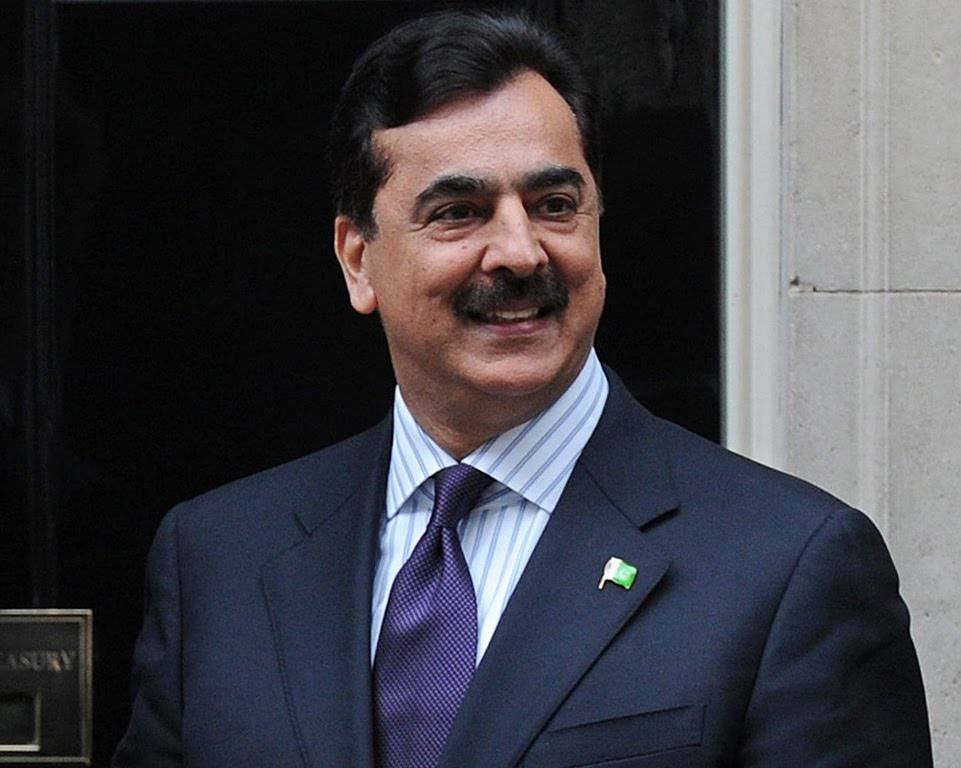
Pakistan Peoples Party (PPP) has nominated former prime minister and party loyalist Yousaf Raza Gillani as its candidate for the slot of Senate Chairman on Thursday.
Jamil Soomro, political secretary of PPP chairman Bilawal Bhutto Zardari, issued a notification on Thursday, putting to rest all speculation that the party will nominate another former Prime Minister, Anwaar Kakar, for the covered post.
Following an agreement between the PPP and Pakistan Muslim League-Nawaz (PML-N) on certain positions, like the post of president, Senate chairman, and governorship of Punjab and Khyber Pakhtunkhwa, were given to the PPP. However, the posts of Senate deputy chairman, National Assembly speaker, and governorship of Sindh and Balochistan were provided to PML-N.
The former prime minister has the support of a total 54 senators, including 24 from the PPP, 19 from PML-N, four from the Balochistan Awami Party (BAP), three from the Awami National Party (ANP), three independents, and one from the National Party.
However, if he gets the support of three MQM-P and five JUI-F senators, this number will become 64, which means Yousaf Raza Gillani will be in a comfortable position to get elected to the seat of Senate Chairman.
On the other hand, the PTI has the support of 20 senators and one each from the BNP and PML-Q, taking the tally to 22.
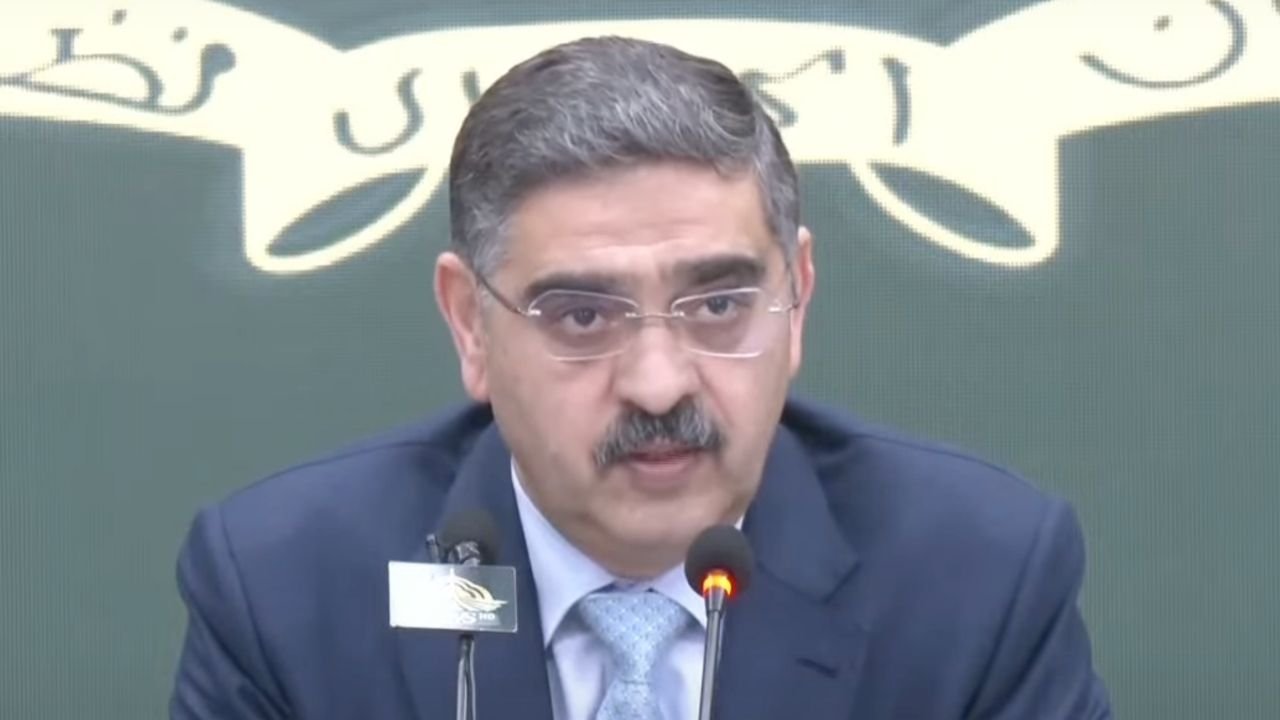
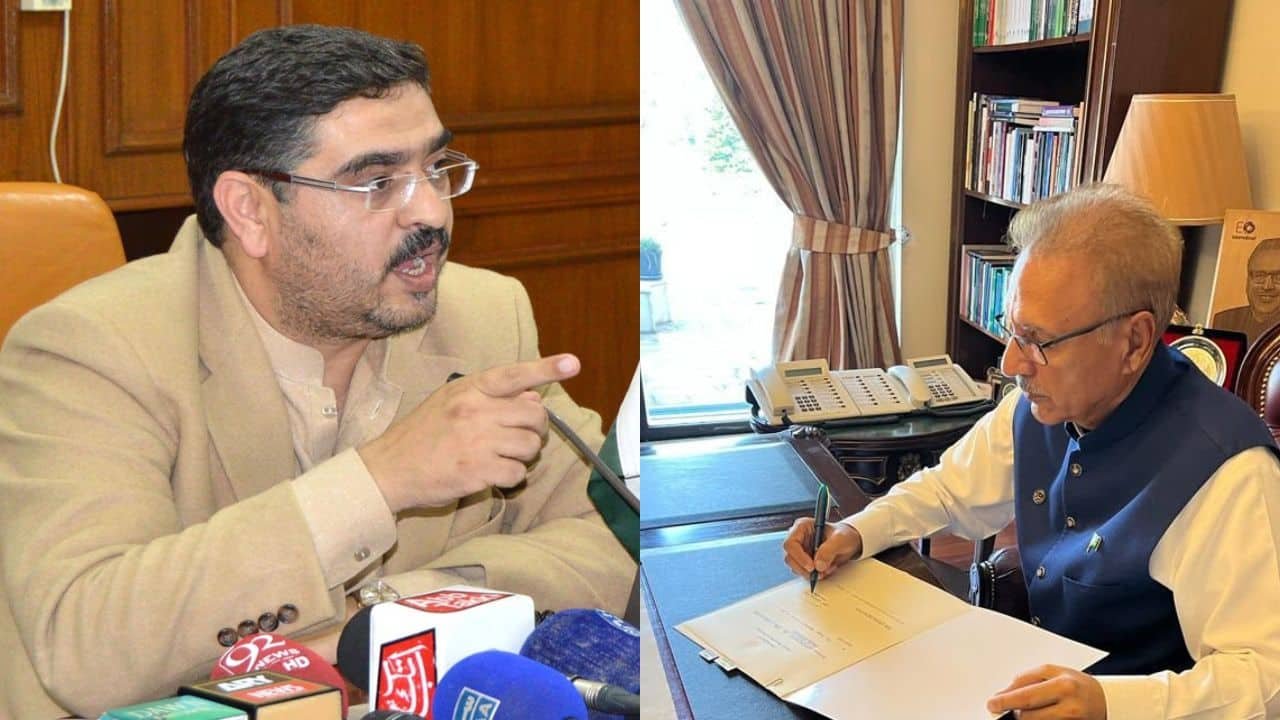
In a recent press conference, interim Prime Minister Anwaar-ul-Haq Kakar strongly defended the delay in announcing election results, citing security concerns as the primary reason.
He was asked during the press conference by a journalist, “Probably this is your last press conference, on a lighter note: who told you how long you’ll be Caretaker Prime Minister?”
To this PM Kakar said, “I am disappointed after giving you a chance. Do I have cancer? As this is my last press conference according to you.”
While discussing the disruption in mobile services, Kakar emphasized, it was a necessary measure to ensure the safety of voters and prevent terrorist attacks.
“We could afford delay, but terrorist attacks, we could not […] delay does not mean rigging,” Kakar, whose government was appointed to oversee the country through elections until an elected set-up takes charge, said during a post-election press conference.
Kakar’s remarks came amidst mounting criticism from various political parties, including Pakistan Tehreek-e-Insaf (PTI), Jamaat-e-Islami (JI), and Jamiat Ulema-e-Islam (JUI-F), who protested the delay in election results, labeling it as potential rigging.
More than three days have passed since polling day and the complete election results are still pending, with one seat yet to be decided.
The prime minister informed journalists that in 2018, the entire result-gathering process took 66 hours; however, in 2024, it was completed in 36 hours. The official Election Commission of Pakistan’s (ECP) deadline is around nine hours.
The premier compared Pakistan’s election process to that of other countries, citing instances of delayed results in Sweden and Indonesia, suggesting that such delays are not uncommon in large-scale elections.
In response to criticism from foreign governments, Kakar asserted that Pakistan would conduct its investigation if necessary, rather than succumbing to external pressures.
“These friendly countries, unfortunately, frame their initial assessment on the fabricated and fractured information available on social media and the digital space,” he said.
“A responsible government should take time and then have a position; that would have been better. If we have to investigate, we will not do it on the demand of the United States, United Kingdom, or the EU,” he further added.
Kakar noted that Pakistan has its law and will deal with it accordingly. “We did not ask a judicial inquiry on Capitol Hill riots. It is not for us to demand it and it is not for them. For me, the demand of a PTI individual than the US, UK, and EU combined.”
Acknowledging the possibility of irregularities, Kakar assured that appropriate forums were available for addressing complaints.
To a question, PM Kakar said that the upcoming elected parliament would decide about the use of Electronic Voting Machines (EVMs) in the elections. “There should be an open discussion on EVMS.”
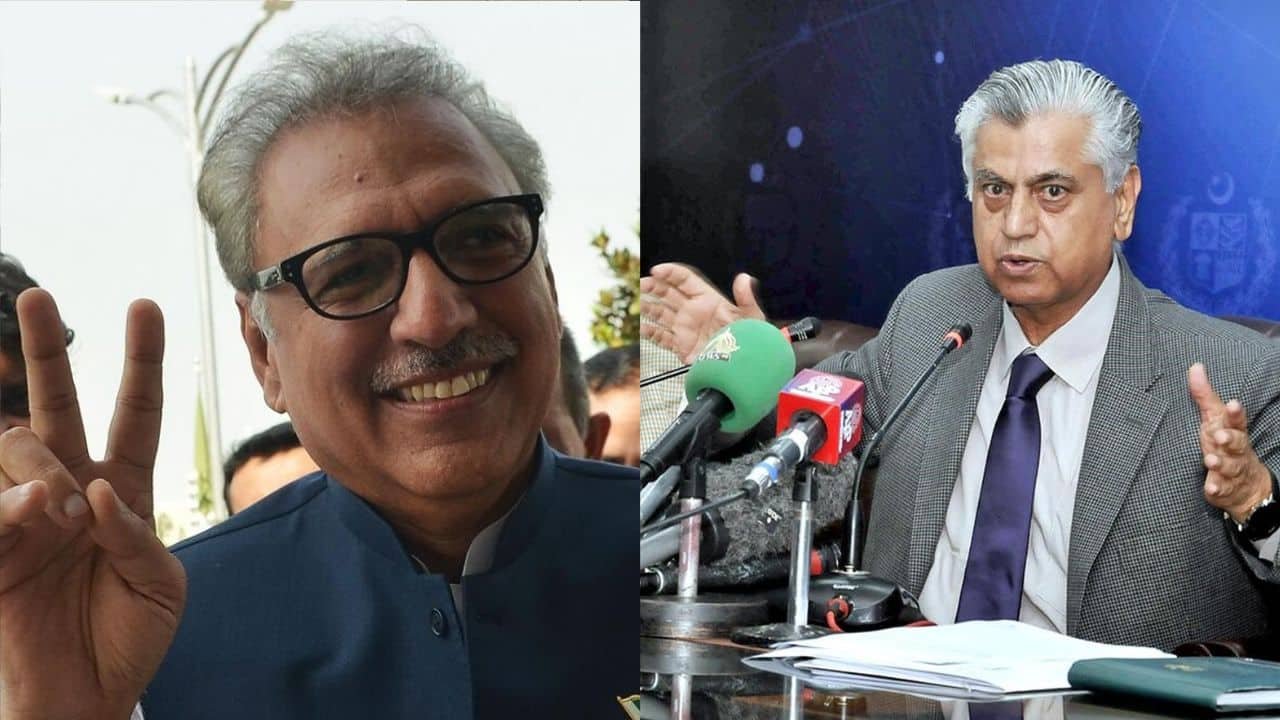
Two days back, expressing his annoyance over the delayed election results, President Dr Arif Alvi had said that the country would have been spared the ongoing crisis if the EVMs had been used during the February 8 general elections.
Remember ‘our’ long struggle for Electronic Voting Machines. EVM had paper ballots that could be counted separately by hand (like it is being done today) BUT it also had a simple electronic calculator/counter of each vote button pressed. Totals of every candidate would have been…
It is pertinent to mention here that the ECP’s new Election Management System (EMS) fell flat despite the commission’s tall claims. Taking to his X handle, the president had said: “Had EVMs been there today, my dear beloved Pakistan would have been spared this crisis.”
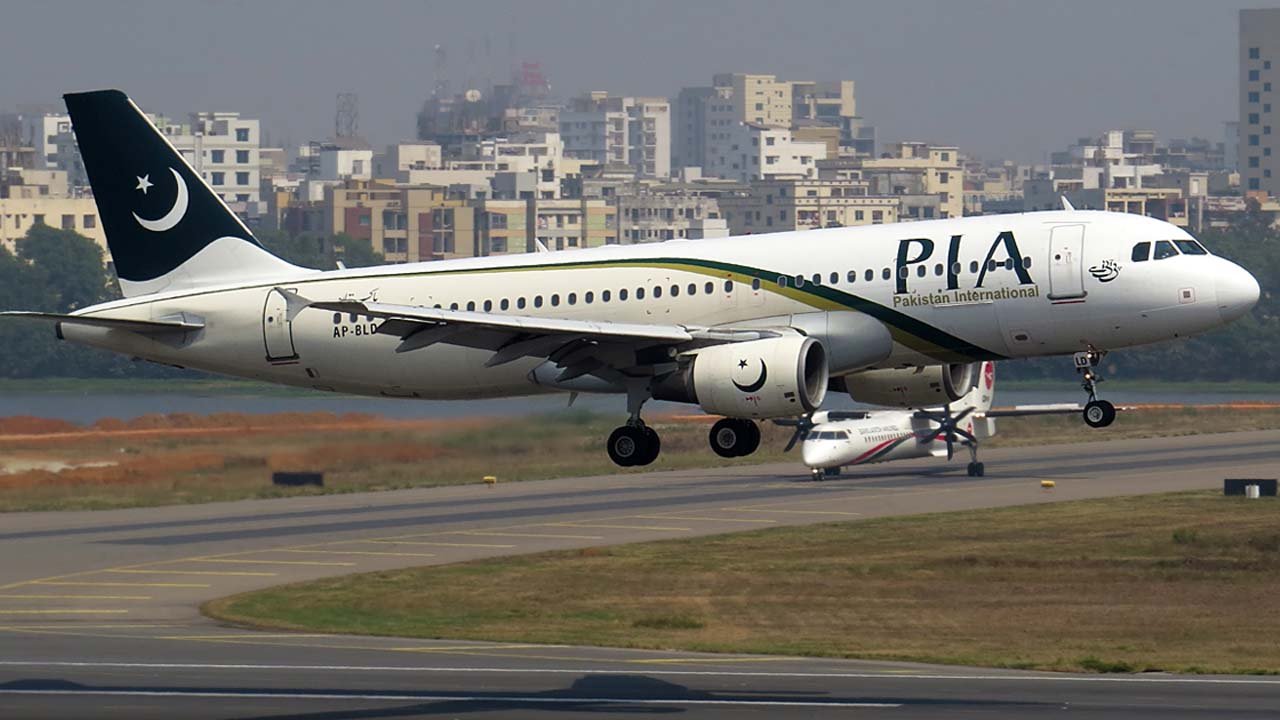
In a significant development, the caretaker federal cabinet has granted approval for the restructuring of Pakistan International Airlines (PIA) and the privatisation of First Women Bank Limited.
This decision, based on recommendations put forth by the Privatisation Division, aims to address the financial challenges faced by PIA in recent years.
The pivotal meeting of the federal cabinet, presided over by Caretaker Prime Minister Anwaar ul Haq Kakar, saw the submission of restructuring recommendations by the Privatisation Division.
It was highlighted during the session that PIA has been grappling with financial losses over an extended period.
Previous cabinet meetings had already endorsed the appointment of a financial advisor, whose role is integral to the financial and administrative restructuring of PIA.
The cabinet was briefed on the progress, indicating that the financial advisor has devised a comprehensive financial restructuring plan aligned with international norms.
Under this plan, PIA is set to undergo a division into two distinct entities: Top-Co and Hold-Co. The core operations of PIA, including engineering, ground handling, cargo, flight kitchen, and training, will be consolidated under Top-Co.
On the other hand, entities such as Precision Engineering Complex, PIA Investment Limited, properties, and other subsidiaries will find their place within Hold-Co.
This strategic restructuring aims not only to address the financial challenges faced by PIA but also to attract potential investors.
The cabinet has been briefed on the measures undertaken to enhance the attractiveness of PIA for investment, laying the groundwork for a positive trajectory in the airline’s future.
Ayesha Omar is all set to sparkle in the film ‘Dhai Chaal’ where she’s taking on the role of a high-profile journalist unraveling the story of Indian spy Kulbhushan Yadav’s conviction in Pakistan. Ayesha’s versatility and enthusiasm for the project shine through while she got to experience working in Quetta.
The film’s producer, Dr. Irfan, played a crucial role in convincing Ayesha to embrace the character, and she saw working with a new team as an exhilarating adventure.
On X (formerly Twitter) there is a tweet urging Caretaker Prime Minister Anwaar ul Haq Kakar to watch ‘Dhai Chaal’ as it counters Indian-sponsored terrorism in Balochistan. It’s great to see independent productions shedding light on untold stories.
Pakistan and the United Arab Emirates (UAE) signed several multi-billion dollar Memorandum of understanding (MoUs) in a range of areas on Monday.
According to the press release issued by the Prime Minister’s office, Caretaker Prime Minister Anwaar-ul-Haq Kakar and the President of the UAE Sheikh Mohammed bin Zayed Al Nahyan witnessed the signing of MoUs between Pakistan and UAE.
Chief of Army Staff (COAS) General Syed Asim Munir was also present at the meeting.
In a video message, Kakar said that the goal of MoUs is to enhance economic, regional, and strategic cooperation between both nations.
The interim prime minister extended congratulations to the people of Pakistan and the UAE, highlighting that the foundation of friendship with Pakistan was established by Sheikh Zayed bin Sultan Al Nahyan in the 1970s. He further said that this legacy has been advanced by his son, ushering in a new era of bilateral cooperation.
In a separate statement, the Prime Minister’s Office (PMO) reported that interim PM Kakar engaged in a bilateral meeting with His Highness Sheikh Mohamed bin Zayed Al Nahyan, the President of the United Arab Emirates, in Abu Dhabi. The meeting was also attended by the Army chief.
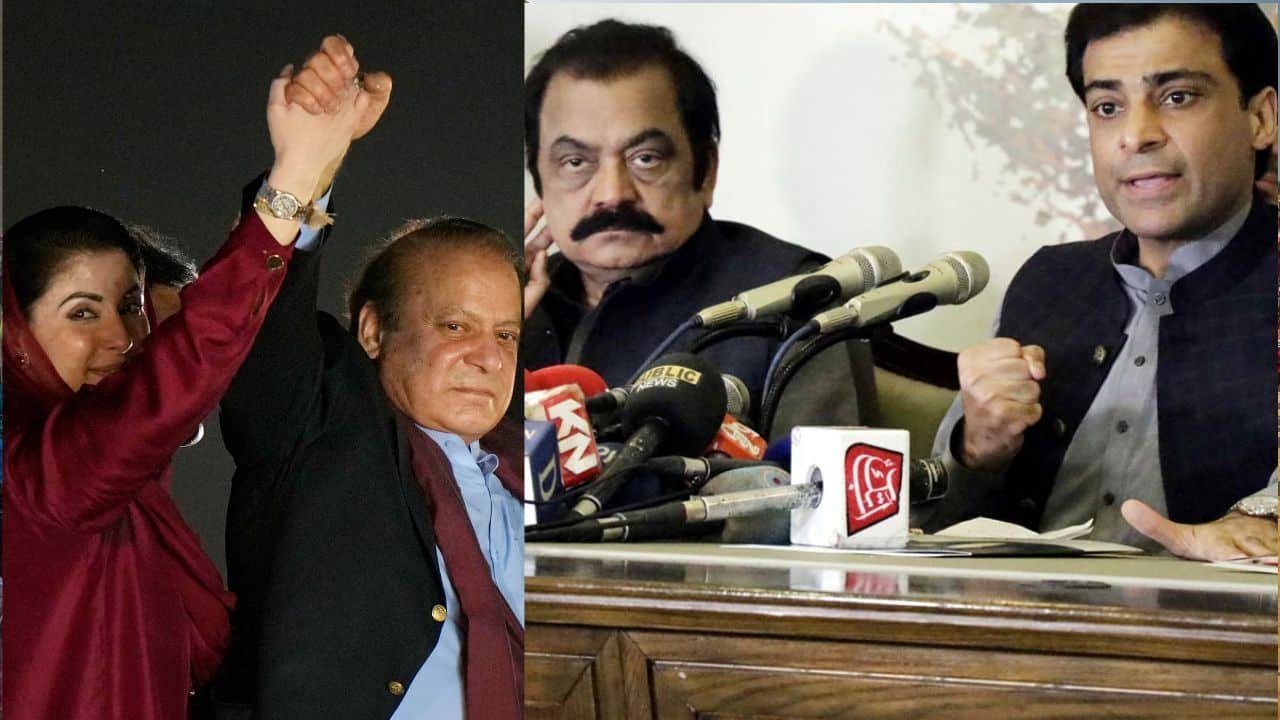
Pakistan Muslim League-Nawaz (PML-N) supremo Nawaz Sharif has successfully garnered the support of more than 30 influential electables from Balochistan, Geo News reports.
The seasoned politician, who recently returned to Pakistan after a four-year self-imposed exile, orchestrated the feat during his visit to Quetta.
Accompanied by PML-N President Shehbaz Sharif and Chief Organiser Maryam Nawaz, Nawaz engaged in discussions with leaders from various political factions during his visit to Balochistan.
قومی سیاسی منظرنامے میں بڑی ہلچل
پاکستان مسلم لیگ (ن) کے قائد محمد نواز شریف کا دورہ کوئٹہ
درجنوں ممتاز سیاسی شخصیات کا مسلم لیگ (ن) میں شمولیت کا اعلان
سابق وزیر اعلی جام کمال، سابق وفاقی وزراء سردار فتح محمد حسنی، مجیب الرحمن محمد حسنی، میر عاصم کرد، میر دوستین ڈومکی مسلم… pic.twitter.com/fYxtbdliq7
Following these deliberations, over 30 individuals from diverse backgrounds, including Balochistan Awami Party (BAP), Balochistan National Party–Mengal (BNP-M), National Party (NP), Pakistan Tehreek-e-Insaf (PTI), and the Pakistan Peoples Party (PPP) joined the ranks of PML-N.
From BAP, former Balochistan chief minister Jam Kamal Khan, Mir Saleem Khosa, Noor Mohammad, Baba Buledi, Sardar Masood Luni, Rubaba Buledi, Sardar Abdul Rehman Khetran, Shoaib Nosherwani, Ramin Jan Muhammad Hassni and Muhammad Khan Lehrijoined the PML-N ranks.
PPP leaders Saeedul Hassan Mandokhail, Sardar Fateh Muhammad, and Faiq Jamali jumped ship to join the PML-N. From the National Party, Mujib Mohammad Hassni and former senator Dr Ashok Kumar, while Zeenat Shahwani of BNP-M and PTI’s Muhammad Jamali and Sardar Atif Sanjrani also joined the PML-N.
The PML-N delegation, which held discussions with a BAP delegation led by Nawabzada Khalid Magsi, also marked a noteworthy reconciliation between the historically contentious parties. BAP, founded in 2018, has roots in political dissidents from both PML-N and the PML-Q.
To strengthen its position in the province, PML-N is reportedly exploring electoral alliances, including with the Balochistan Awami Party (BAP) and Jamiat Ulema-e-Islam Fazal (JUI-F).
Talks suggest that, if successful, the parties may jointly contest the general elections, with a shared decision on the chief minister’s candidacy.
Sources said that the JUI-F has also put forward the name of Maulana Abdul Ghafoor Haideri conditioning their support if he is made the province’s chief executive.
The development comes as earlier this month the PML-N and Muttahida Qaumi Movement-Pakistan (MQM-P) announced their electoral alliance to jointly contest the upcoming general elections in Sindh.
In response to these developments, Pakistan Peoples Party Chairman Bilawal Bhutto-Zardari offered a suggestion to Nawaz Sharif, urging him to “focus on Lahore,” on Tuesday.
“Mian sahab has been adviced to visit other provinces. I would suggest that he should stay in Lahore and focus on its problems,” said the PPP chairman during a presser in Mithi, calling on PML-N to do politics on its own and stop relying on others.
In the run-up to the February 8 general elections in Pakistan, Pakistan Muslim League Nawaz (PML-N) supremo Nawaz Sharif is embarking on a two-day visit to Balochistan, following the party’s strategy to form alliances in all provinces.
The move aligns with the recent invitation extended by senior MQM-P leaders to the party to forge an alliance against the Pakistan Peoples Party (PPP) in Sindh.
Sources reveal that during a visit to Lahore, Balochistan leaders urged Nawaz Sharif to visit Quetta and align with them for the upcoming polls, as per Dawn.
“Since some of the BAP leaders earlier remained with the PML-N and incumbent Prime Minister Anwaarul Haq Kakar, a former member of BAP, had a good working relationship with PML-N, the party of Sharifs may not face much problems in exploring strategic partners in Balochistan ahead of the polls,” they said.
The party is eyeing at least 25 sardars/electables from Balochistan, crucial players in the region’s elections.
PML-N Balochistan chapter president Sheikh Jaffar Khan Mandokhail said Mr Sharif would hold meetings with PkMAP Chairman Mehmood Khan Achakzai, National Party President Dr Malik Baloch, former CM Jam Kamal and BAP leaders, including Nawabzada Khalid Magsi, Sardar Muhammad Saleh Bhootani and some of the party’s senators, ex-MNAs and MPAs.
Nawaz Sharif will also attend an event in which various ‘electables’ will announce joining PML-N, including former MNAs and MPAs belonging to BAP.
Tension arises in PMLN
Meanwhile, in Muzaffargarh, internal tensions arise within the PML-N as former municipal committee chairman Akram Chandia and his brother Ajmal Chandia join the party, potentially securing tickets for the upcoming elections.
The move has irked former PML-N MPA Hamad Nawaz Tipu, who announced his candidacy, vying for both MPA and National Assembly seats.
On the National Assembly seat, he lost to PPP’s Mehr Irshad Sial, who received 53,054 votes, with the runner-up being Jamshed Dasti securing 50,566 votes. Mr Tipu stood third with 47,642 votes. The MPA election also witnessed a close contest where winner Abdul Hayee Dasti received 17,686 votes, followed by Ajmal Chandia with 17,669 votes and Mr Tipu with 16,358 votes.
Ajmal Chandia was a candidate for PP-270 as a candidate of Jamshed Dasti’s party in the 2018 elections and stood as the runner-up behind Abdul Hayee Dasti.
While Mr Tipu and the Chandia brothers are in contention for the PML-N ticket, former MPA Chunnu Laghari has also announced joining the PML-N, and he is unlikely to face any resistance in obtaining an MPA ticket under Basit Sultan’s National Assembly constituency in Jatoi tehsil.
‘Toughest elections’
PML-N President Shehbaz Sharif’s son Hamza Shehbaz said the Feb 8 polls were going to be the most difficult ones in the country’s history.
Talking to journalists in Lahore on Monday, the PML-N leader said all parties should work together to steer the country out of crisis.
In reply to a question about the role of the establishment and the PML-N’s relations with it, he said it was a good sign if the establishment supported the government.
“It is also a good thing if there are cordial relations with the establishment,” Hamza added.
Asked whether Nawaz Sharif was new blue-eyed of the military establishment, Hamza said: “When I was in the opposition, the people would call Imran Khan their blue-eyed.”
Caretaker Minister for Information and Broadcasting and Parliamentary Affairs, Murtaza Solangi, has said that President Dr. Arif Alvi should represent all political parties in accordance with the law and the constitution, to foster unity in the country.
Talking to the media on Sunday, Solangi said that the President’s role was not limited to one party, urging him to speak on behalf of all political parties.
“If the president continues to speak for one political party, it would undermine his own credibility,” he said.
Highlighting the essence of democracy as a platform for dialogue, Solangi dismissed concerns over complaints and grievances, stating that every party and individual had the right to voice their concerns at appropriate forums including courts and the election commission.
As regards the upcoming elections, Solangi pledged the caretaker government’s full cooperation and assistance to the Election Commission of Pakistan (ECP), in accordance with the law and the constitution.
He commended the competence and the sense of responsibility shown by the current ECP management, noting that they adhered to the action plan outlined for the elections.
The people of Pakistan will determine the country’s future course on February 8, 2024, a date slated for the elections, he added.
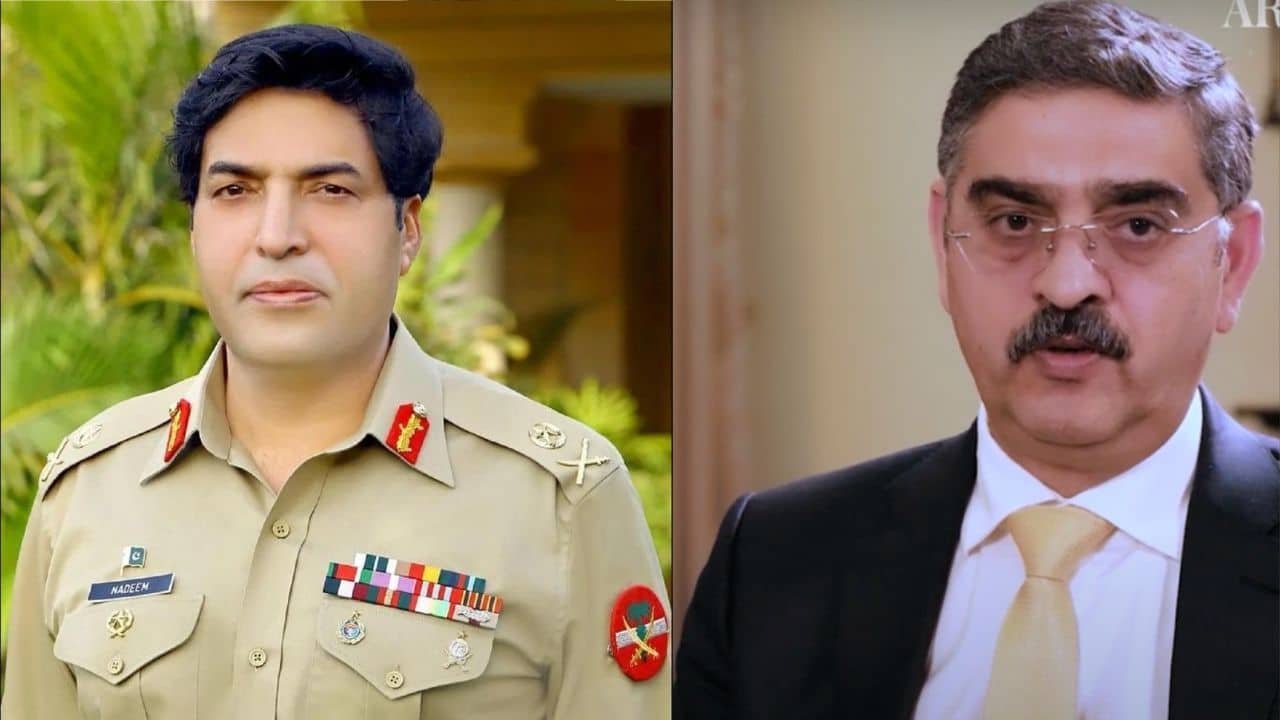
Prime Minister Anwar-ul-Haq Kakar has said that the service tenure of the current Director General of Inter-Services Intelligence (ISI) Lieutenant General Nadeem Ahmed Anjum Sheikh has been extended to preserve the “continuity” of policy at a time when the country is facing increasing militant attacks.
This is the first time a Pakistani official has publicly addressed the extension, which comes at a critical juncture for the nation grappling with heightened security challenges.
“Try to understand the point on continuity [of policy]. Any system prefers and supports the idea of continuity,” Kakar told Arab News in an interview with Mehreen Zahra Malik this week when asked why Anjum was given an extension.
#WATCH: In first public comments on extension of DG ISI Lt Gen Nadeem Anjum, Pakistani Prime Minister Anwaar-ul-Haq Kakar tells Arab News: “Try to understand the point on continuity [of policy], any system prefers and supports the idea of continuity.” –https://t.co/7ZO8YgbUU7pic.twitter.com/fRGryJhSMp
“You want to have a continuation of the process, and for you the continuation of that process is important so that idea or practice or brand gets entrenched,” the PM added, without disclosing specific details of the policies the government and military wanted Anjum to continue to implement.
“So, in that context at times in many institutions, you do feel, or the political dispensation feels, that some individual has to continue for any security benefit or otherwise, and they [the state] have got the discretion to do that [grant extension]. There’s nothing unusual and abnormal about it.”
Lt. Gen. Anjum, initially scheduled to retire later this month, will now continue to lead the ISI for at least another year. While the military has yet to formally announce the extension, speculation has been rife in Pakistani media for weeks that the General will serve for another year.
The Director General of the ISI holds a pivotal role at the crossroads of national politics and foreign relations, overseeing efforts to counteract militant threats.
The agency’s influence is not without controversy, as it has played a historical role in military coups and the management of political affairs, leading civilian politicians to regard it with a certain degree of apprehension.
The last ISI chief to receive such an extension was Lt. Gen. Ahmad Shuja Pasha, coinciding with major anti-militant offensives in the country’s northwest.
Lt. Gen. Anjum’s extension occurs against the backdrop of a surge in militant activities by groups like Daesh and Pakistan’s indigenous Taliban movement, the TTP. The latter, emboldened by the rise of the Afghan Taliban in neighboring Afghanistan, has intensified its activities, posing a significant security challenge for Islamabad.
Lt. Gen. Anjum assumed the role of DG ISI on November 20, 2022. Since then, the Tehrik-i-Taliban Pakistan (TTP) has renounced a cease-fire with the government, leading to a resumption of attacks on various military and civilian targets, including police compounds and security convoys.
President Arif Alvi has penned a letter to Interim Prime Minister Anwaarul Haq Kakar, expressing the concerns of the Pakistan Tehreek-e-Insaf (PTI) regarding the “erosion of fundamental rights and a level playing field for all political parties” in the upcoming general elections.
This communication follows the announcement of elections being held on February 8, 2024, stirring political activity across major party lines.
The details mentioned on X (formerly Twitter) account state, “President Dr. Arif Alvi has conveyed to the Care-taker Prime Minister, Mr. Anwar ul Haq Kakar, the concerns of Pakistan Tehreek-e-Insaf (PTI) on the erosion of fundamental rights and level playing field for all political parties.”
He also forwarded a letter addressed to him by the General Secretary of PTI, Mr. Omar Ayub Khan, to the Prime Minister containing the concerns of the party.
In his letter, the President stated that it was of utmost importance that the caretaker government under the Prime Minister’s leadership made efforts as a neutral entity to provide a level playing field for all political parties.
President Dr. Arif Alvi has conveyed to the Care-taker Prime Minister, Mr. Anwar ul Haq Kakar, the concerns of Pakistan Tehreek-e-Insaf (PTI) on the erosion of fundamental rights and level playing field for all political parties.
“In this context, it was reassuring to hear your recent statements whereby you stated that it was the caretaker government’s policy that all registered political parties should have equal rights and opportunities to contest the forthcoming elections”, he wrote.
He said that “there was a resonance in Pakistan that for free, fair and credible elections, all political parties and leaders had right to contest and it was up to people to decide.”
In his letter, President Alvi said that he was constitutionally “duty-bound, along with the prime minister and all institutions, to protect the rights of the citizens”.
He said that in his missive, the PTI secretary general had conveyed the party’s concerns and allegations regarding the “erosion of fundamental rights, with particular reference to enforced disappearances, forced conversions of political loyalties, absence of level playing field for major political parties, crackdown on media and mistreatment of female political activists through prolonged illegal detentions”.
In response to the concerns, PM Kakar has offered assurances that individuals affiliated with PTI Chairman Imran Khan, currently incarcerated in connection with the cipher case and convicted in the Toshakhana case, will be permitted to participate in the upcoming polls.