Tag: Apple

  • Breaking: Barack Obama,  Bill Gates, Elon Musk, Apple, and others hacked in unprecedented Twitter attack

    Breaking: Barack Obama, Bill Gates, Elon Musk, Apple, and others hacked in unprecedented Twitter attack

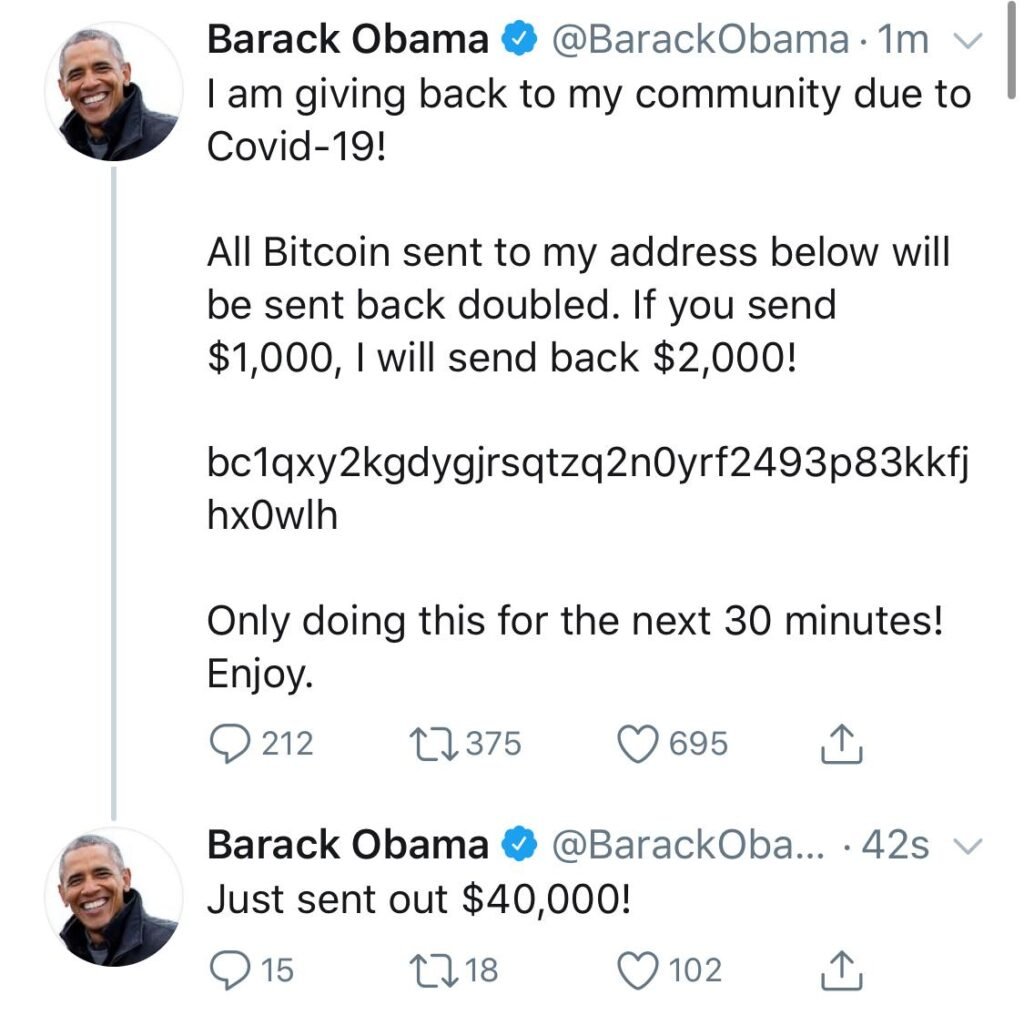
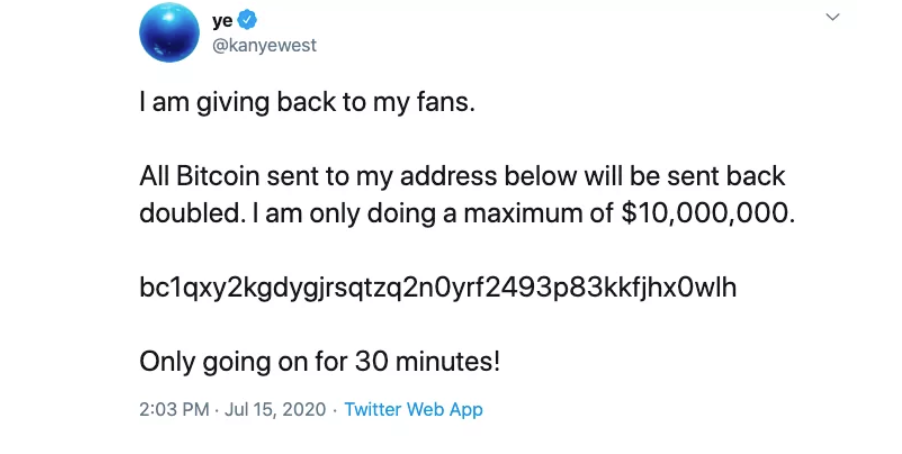
    The Twitter accounts of major companies and individuals have been compromised in one of the most widespread and confounding hacks the platform has ever seen, all in service of promoting a bitcoin scam.

    It all began when Elon Musk’s Twitter account was seemingly compromised by a hacker intent on using it to run a bitcoin scam.

    Microsoft co-founder bill gates also had his account hacked by the same hackers, who posted a similar message with an identical bitcoin wallet address. Both accounts continued to post new tweets promoting the scam almost as fast as they are deleted.

    A spokesperson for Gates tells Recode’s Teddy Schleifer, “We can confirm that this tweet was not sent by Bill Gates. This appears to be part of a larger issue that Twitter is facing. Twitter is aware and working to restore the account.”

    Shortly after the wave of tweets from Gates and Musk’s accounts, the accounts of Barak Obama, Apple, Uber, Amazon CEO Jeff Bezos, Democratic presidential candidate Joe Biden, hip-hop mogul Kanye West, and former New York City mayor and billionaire Mike Bloomberg, among others, were also compromised and began posting the scam.

    The origin of the scam appears to be when Musk’s account issued a mysterious tweet at 4:17PM ET reading, “I‘m feeling generous because of Covid-19. I’ll double any BTC payment sent to my BTC address for the next hour. Good luck, and stay safe out there!” The tweet also contained a bitcoin address, presumably one associated with the hacker’s crypto wallet.

    The investigation is going on but Twitter has taken security measures to prevent further attacks. Twitter has locked the compromised accounts. They will be restored once the company will be confident about security measures.

    Most of the accounts will be able to operate normally and the company is working to streamline their services.

  • As economies fall, Apple ‘quietly’ launches new, only $399 iPhone

    As economies fall, Apple ‘quietly’ launches new, only $399 iPhone

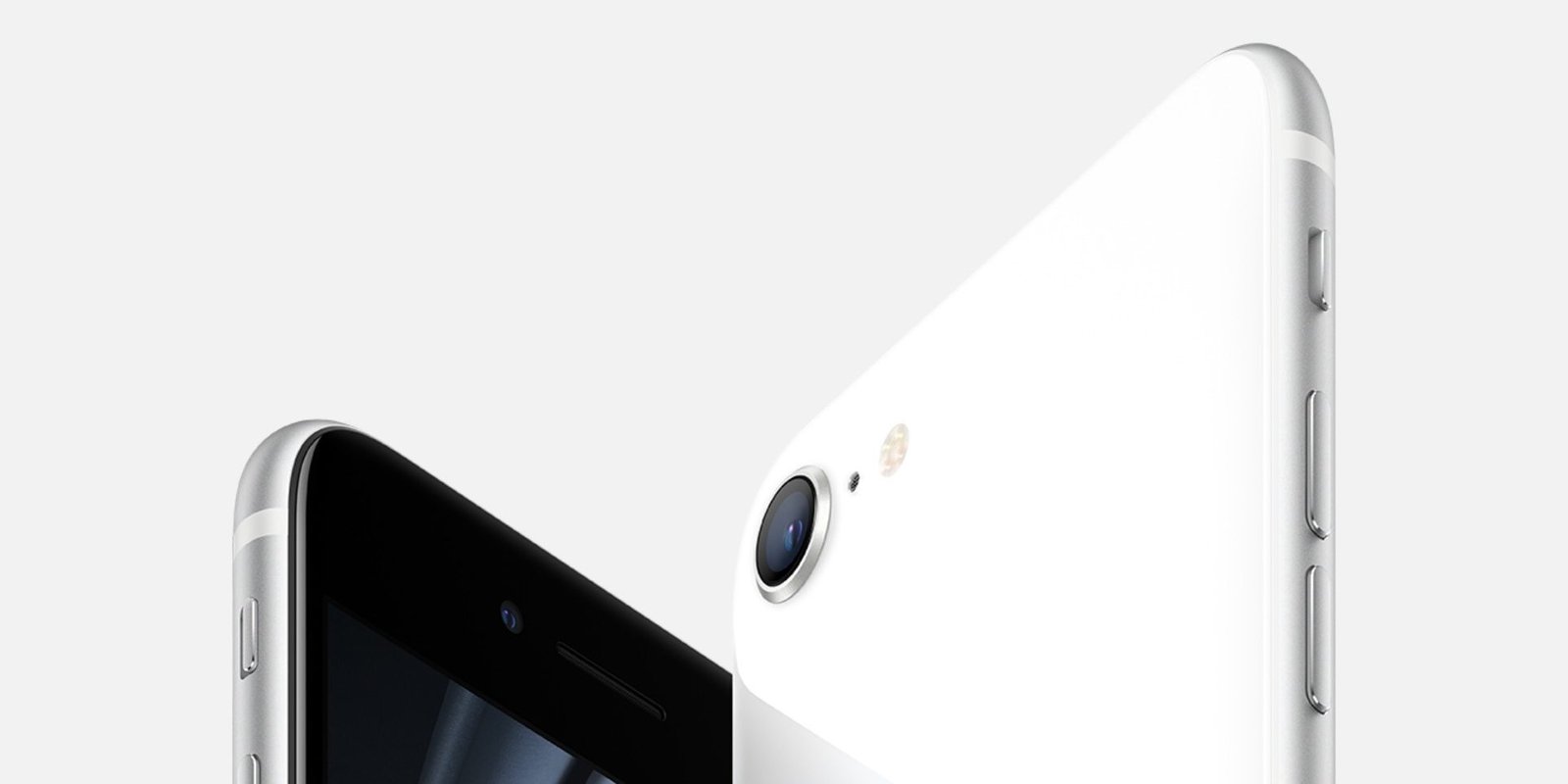
    Apple has “quietly” — without fanfare — unveiled a new entry-level iPhone, aiming to appeal to consumers facing a suddenly bleaker economic backdrop.

    The updated iPhone SE will start at $399, or less than half the price of its flagship devices, and be available for order as of today (Friday) in more than 40 markets.

    Apple made the announcement in a statement, forgoing the normal splashy product launch events of the past few years.

    https://www.youtube.com/watch?v=SQIbeAk-bFA

    The screen is on the small side for smartphones, measuring 4.7 inches diagonally — bigger than the first-generation iPhone SE but smaller than the newest phones — yet boasts high-definition graphics for rich visuals.

    Apple trimmed coasts by leaving out some of high-end features such as facial recognition, giving iPhone SE a fingerprint sensor and a home-screen button which fans will remember from previous generations.

    While the iPhone had been in the works for months, the launch comes amid a pandemic-induced economic slump which has hammered the smartphone market and hit consumer sentiment.

    “It is incredibly fortuitous timing,” said Bob O’Donnell, analyst with Technalysis Research.

    “This is the exactly the phone a large percentage of people will want. It’s hard to justify spending $1,200 on a smartphone in this economic climate, yet people still depend heavily on their phones and a lot of people want to upgrade.”

    O’Donnell said the new device is also likely to appeal to consumers seeking a small-format handset, and in countries where consumers may have not been able to afford iPhones.

  • Apple, Nike and Samsung among 83 brands using Uyghur Muslim ‘forced labour’

    Apple, Nike and Samsung among 83 brands using Uyghur Muslim ‘forced labour’

    Tens of thousands of Uyghur Muslims, who face persecution in neighbouring China, have been transferred out of the country’s western Xinjiang province and delivered as workers to major factories as part of a government scheme, a report by The Independent has claimed while citing the Australian Strategic Policy Institute (ASPI).

    As per the details, the Australian think tank has identified 83 global brands, including Apple, Nike, Samsung and Sony among others whose supply chains in China are employing Uyghur Muslims in conditions that could amount to forced labour.

    China has been accused of detaining more than a million Uyghurs in Xinjiang as part of what it calls a campaign to tackle Islamic extremism. It initially denied this, before recently saying that all those in the “vocational centres” had “graduated” and been given jobs.

    The ASPI report, based on analysis of government documents and local media reports, said the Uyghurs continued to live “a harsh and segregated life” once they entered the workforce of major factories.

    More than 80,000 Uyghurs had been transferred far from their homes to work in at least 27 factories across nine provinces, it said.

    There, the workers continued to be subject to surveillance, banned from practising their religion, forced to take part in mandarin language classes and restricted in their travel back to Xinjiang.

    “Under conditions that strongly suggest forced labour, Uyghurs are working in factories that are in the supply chains of at least 83 well-known global brands in the technology, clothing and automotive sectors, including Apple, BMW, Gap, Huawei, Nike, Samsung, Sony and Volkswagen,” the think-tank said in the introduction to its report.

    While ASPI describes itself as an independent think-tank whose core aim is to provide insight for the Australian government on matters of defence, security and strategic policy, the Chinese government has denied violating the rights of its workers, describing the report as “following along with the United States’ (US) anti-China forces that try to smear China’s anti-terrorism measures in Xinjiang”.

  • Apple is closing all offices and stores in China through February 9

    Apple is no longer closing just one store in China over coronavirus worries — Apple is closing them all. The company is shutting down all its corporate offices, stores, and contact centres in mainland China through February 9, according to a statement provided to Bloomberg’s Mark Gurman.

    The deadly coronavirus outbreak that has killed over 200 people in China and infected nearly 10,000 worldwide, has been declared a global health emergency by the World Health Organisation (WHO). It has triggered the first mandatory CDC quarantine in the United States in 50 years and prompted a ban on foreign nationals returning from China. In addition, airlines have been forced to temporarily suspend all flights to the country. In these circumstances, it makes sense for Apple to shut down its stores and offices in China.

    However, Apple says its online store will remain open.

    Meanwhile, it’s not clear if Apple’s Chinese factories, run by Foxconn, will also be shutting down and more factory workers dismissed. Foxconn, on Tuesday, had said that it would be “operating on a holiday schedule and didn’t anticipate any impact in production”.

    Nintendo, which manufactures its consoles in China, has said that the coronavirus is already impacting the production of the Nintendo Switch game console.

  • 5 products of this decade that transformed the tech world

    5 products of this decade that transformed the tech world

    The year 2020 is almost here, marking the end of this dacade, but it surely brought a lot of new technology and gadgets which range from latest mobile applications to mobile phones, computers to smart devices, and much more in the internet of things.

    But not every product that is created in the past ten years has the same impact on the society. It takes some serious innovation and cultural adoption to really change the tech world.

    We have listed here a few tech innovations that truly changed tech and were hailed as the most revolutionary products this in this decade.

    WhatsApp:

    Launched in November 2009, WhatsApp is a social media messaging platform that is owned by Facebook and its impact on society was significant enough to be mentioned here.

    WhatsApp specializes in cross-platform messaging, it is a free service that lets users message one another seamlessly between mobile and desktop devices. It is known for its enhanced privacy features, like end-to-end encryption, and its free audio and video international calling services.

    Apple iPad:

    When Steve Jobs first revealed the iPad in early 2010, many wondered whether there was a room for a product that was bigger than a smartphone, but lighter than (and more limited in features than) a laptop.

    Apple originally designed this new device to occupy a new product category between the iPod touch/iPhone and the Mac and by late 2012, over 100 million iPad devices had been sold worldwide and around 71 million iPads were sold in 2013 alone.

    It runs the same version of operating system as the iPod touch and iPhone. Similarly, the iPad devices are compatible with the vast majority of mobile applications written for the iPhone and iPod touch as well.

    Uber:

    Launched in 2012, ther ride-hailing service Uber has become the most recognized alternative to the traditional taxi services around the world. The service is available in over 700 cities including around the world including Pakistan, and this number is set to increase even more.

    This service allows its users to order a cab from a mobile application by just mentioning the pickup and drop-off locations.

    However, with expansion the problems in the service also increased. Wired has reported that the company’s relationship with its drivers is fraught and the company also refuses to classify its drivers as employees. Moreover, it is has also been criticized for skimping on driver background checks.

    Apple iPhone 4S:

    The original iPhone was launched in 2007 and it was one of the most influential events of our modern era. But the launch of the iPhone 4S in October 2011, was the big game-changer for Apple company’s business.

    Its new design and being the first iPhone mobile device to boast a front-facing selfie camera with the launch of FaceTime and Apple’s video chat service, the device captured the market in an instance.

    Oculus Rift:

    Oculus Rift is a virtual reality headset, designed to connect to a high-powered PC to enable advanced computations and graphics rendering. The original prototype of this device was created in 2011 by the (then) 18-year-old Palmer Luckey in his parents’ garage in Long Beach, California.

    But what captured the comsumers’ interest was the launch of an HD (high-definition) version of the device in 2012. Later, in the fall of 2012, the company raised over two million dollars through its kickstarter crowdfunding campaign which is significantly higher that the $250,000 the startup sough.

    Oculus Rift’s constellation positioning technology uses gaze tracking and IR LED sensors to identify the user’s position while interacting with the virtual environment. It allows users to move freely within their physical environment, where they can sit, stand, walk, turn, duck and dodge as they desire.


  • Saudi Arabia’s energy company ‘Aramco’ worth’s $1.7 trillion after a historic IPO

    Saudi Arabia’s energy company ‘Aramco’ worth’s $1.7 trillion after a historic IPO

    Saudi Arabia has recently turned Aramco (Arabian-American Oil Company) in publicly owned enterprise. By making it a public entity – that investors can buy and sell shares in the stock market.

    Shaybah

    In the Initial Public Offering (IPO) phase, the worth of the company has plunged to $1.88 trillion that break all the records of the recent decades.

    The offering price of Armaco shares were 32 Riyals ($8.53) and people bought the shares of $25.6 billion – eclipsing Alibaba’s $25 billion IPO of 2014.

    Moreover, seconds after the debut on Riyadh’s Tadawul exchange, the price per stock rose to 35.2 riyals. This development further boosted the energy giant’s valuation.

    Haradh Gas Plant (Aramco)

    On the launch ceremony, the Chairman of Aramco Yasir Al-Rumayyan said “Today the kingdom of Saudi Arabia is no longer the only shareholder of the company. More than five million shareholders have joined including citizens and residents, in addition to Gulf countries and international investment institutions. The kingdom is immensely proud of this day.”

    It was the strategy of Crown Prince Mohammad Bin Salman to overhaul the oil-reliant economy.

    The IPO process had put the energy giant’s value at $1.7 trillion, far ahead of other firms in the trillion-dollar club, including Apple and Microsoft.

    The listing of Aramco, with its huge capital value, boosts the Saudi bourse — known as Tadawul — to the ranks of the world’s top ten.

  • Apple cuts prices, launches cheap iPhone 11

    Apple cuts prices, launches cheap iPhone 11

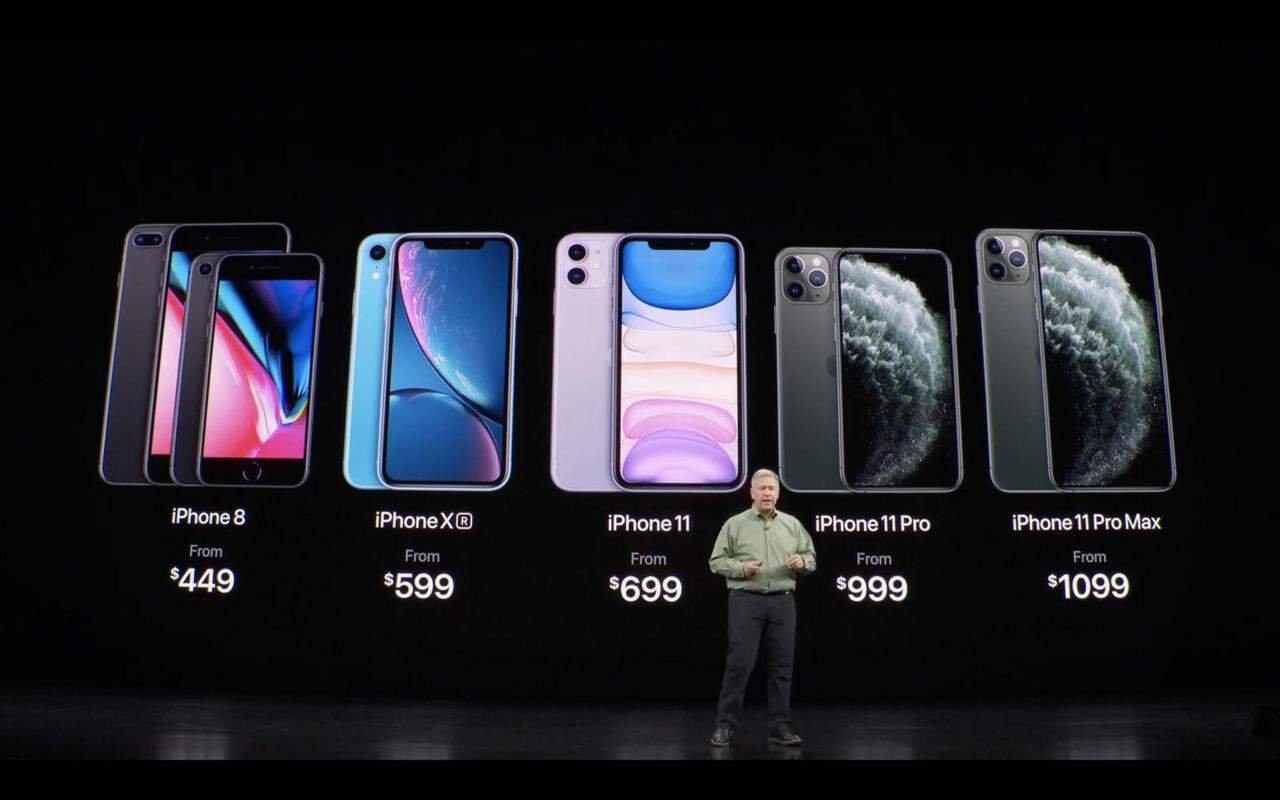
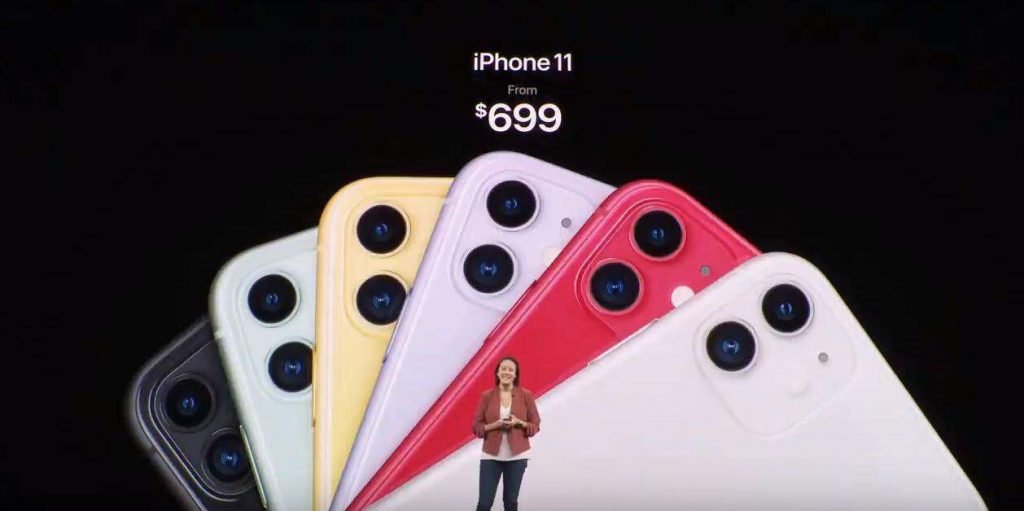
    Apple has announced its three new iPhone models iPhones 11, iPhone 11 Pro and iPhone Pro Max for 2019 with prices starting at $699 (Rs.109466), $999 (Rs.156448) and $1,099 (Rs.172108), respectively.

    These new iPhone models pick up a fresh palette of colors, longer battery life and a A13 Bionic processor inside that promises faster performance.

    But more than any other features, it’s the camera hardware and software that take the headlining role. There are three cameras on the back of the two Pro models and two on the back of the simple iPhone 11.

    iPhone 11:

    The new iPhone 11 comes with a 6.1-inch Liquid Retina display, which is the same size as the screen on 2018’s iPhone XR. The notch remains at the top of the screen and it weighs in at 194 grams.

    It features a 12MP wide camera with a 26mm lens, paired with a 12MP ultra-wide lens with 120 degree field of view, and the selfie camera comes with a 12MP TrueDepth lens to take wider images.

    It is available in Purple, White, Yellow, Green, Black and Product Red. The rear of the phone is glass, and there’s a Lightning connector on the bottom edge. It’s also water resistant, meaning it can survive in up to two meters of water.

    The iPhone 11 comes with a A13 Bionic chipset which the company claims that it will provide faster performance. The device will come running iOS 13 software out of the box immediately that comes with a system-wide Dark Mode for the first time.

    It will be available in 64GB, 128GB or 256GB options, however, the prices can vary with different storage options.

    The iPhone 11 is the “affordable” iPhone in Apple’s new lineup, which also includes two high-end iPhone 11 Pro models. The iPhone 11 Pro and 11 Pro Max replace last year’s iPhone XS and XS Max. The new models come with triple rear cameras that include an ultra wide angle lens and a telephoto lens. All three 12MP sensors can shoot in 4K at 60fps and the phones also come with Night mode.

    iPhone 11 and 11 Pro Max:

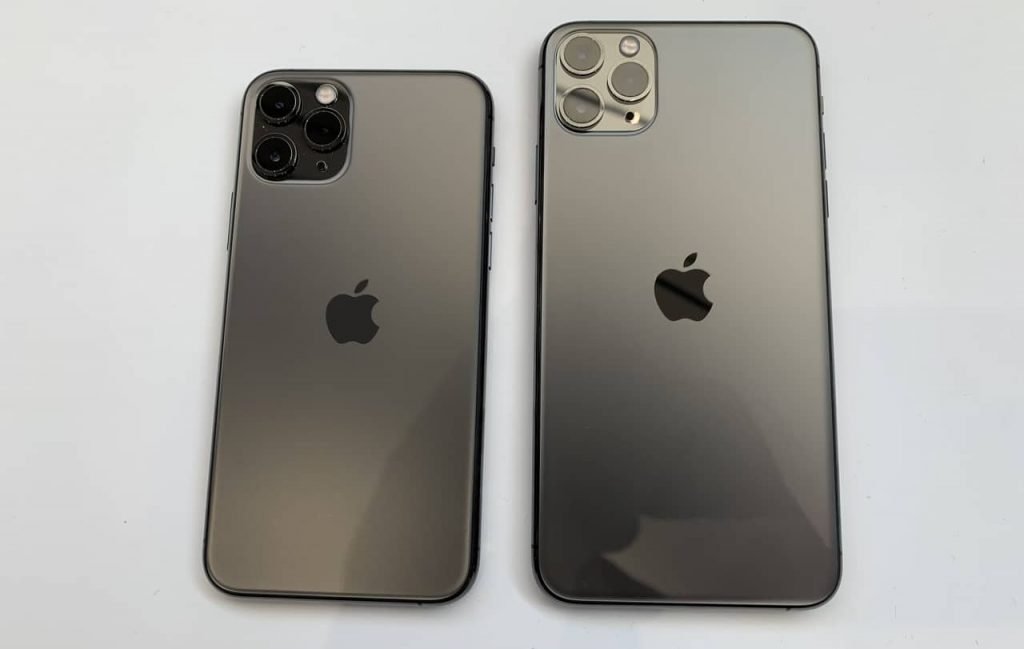
    Apple has also launched the pro models for iPhone 11 as well, which is iPhone 11 Pro and iPhone 11 Pro Max. The Pro models offer a 5.8-inch OLED display, while the iPhone 11 Pro Max gets a large 6.5-inch OLED screen, which Apple calls Super Retina XDR display.

    Like the iPhone 11, the iPhone 11 Pro models also feature the A13 Bionic chipset. The company also claims 4 hours extra battery life on the Pro model as compared to its predecessor and 5 hours more battery life with the 11 Pro Max.

    On the rear side both feature three-camera lenses, a 12MP telephoto lens, a 12MP ultra-wide lens, and a 12MP wide lens. Apple has included a new Deep Fusion feature which aims to take on the Google Pixel’s portrait mode. 

    The high-end iPhone 11 Pro and 11 Pro Max both start with 64GB inbuilt storage space

  • Bye Bye Apple iTunes

    Bye Bye Apple iTunes

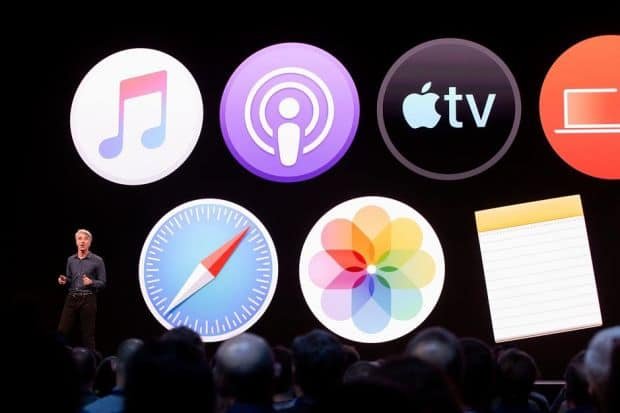
    Apple
    has officially decided to discontinue its iTunes music service and offer three
    separate applications for music, television, and podcasts.

    One of the biggest questions that longtime users of iTunes have is “What would happen for your existing music”

    During the announcement for the new macOS Catalina operating system that revealed the separate apps, it was revealed that Apple doesn’t intend to let the back catalogs of their users disappear.

    Technology
    and Telco editor at Finder, Alex Kidman said,

    “That’s
    data that Apple already makes available to your existing iOS devices, and
    there’s no real reason to think that it won’t take this approach with split
    apps under MacOS. If you’ve got content purchased through Apple, it’ll still be
    on record with them and should be accessible on compatible devices. For PC
    users, we’ll have to wait and see what Apple’s replacements will be, but again,
    it’s not like Apple wants to lose consumers who have Apple Music subscriptions,
    or those who buy or rent movies or TV shows through Apple. That’s still a
    lucrative revenue source for them.”

  • Apple unveils new iPod model

    Apple unveils new iPod model

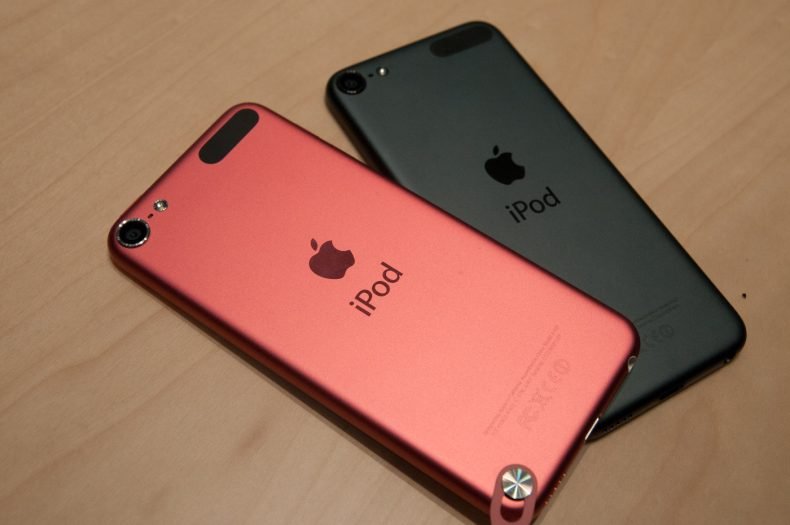
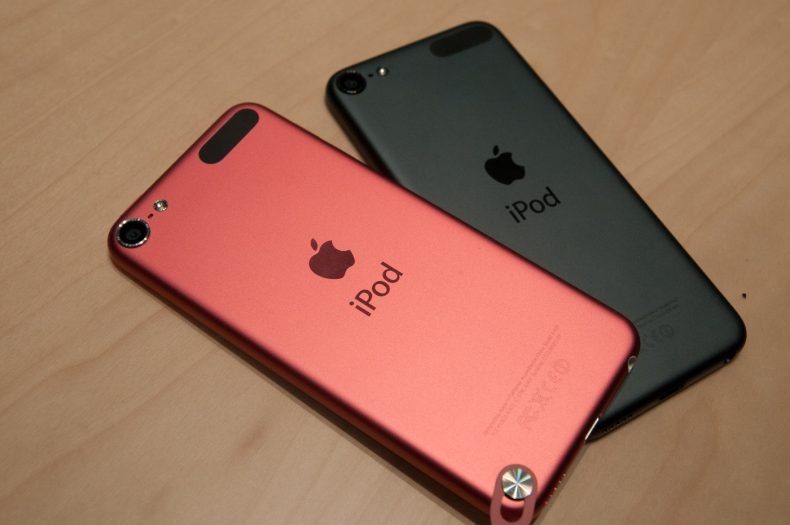
    Apple introduced its first new iPod model in four years, highlighting music and games. The new-generation iPod touch is available in more than two dozen countries at Apple´s online shop starting at US 199 (Rs 31,000).

    The ultra-thin and lightweight design of iPod touch has always made it ideal for enjoying games, music and so much more wherever you go.

    The iPod touch became popular with
    people, particularly parents of internet-wanting children, who wanted mobile
    devices for games and music  without the
    cost of telecommunications services.

    The mobile devices can connect to
    the internet using Wi-Fi hotspots.