Tag: Arif Habib Limited

  • Pakistan’s CPI-based inflation predicted to decline to 20%

    Pakistan’s CPI-based inflation predicted to decline to 20%

    Consumer Price Index (CPI)-based inflation in Pakistan is forecasted to witness a further decline, potentially settling at approximately 20 per cent on a year-on-year (YoY) basis for March.

    This projection marks a decrease from the 23.1 per cent recorded in February, as indicated by a report from Arif Habib Limited (AHL) released on Thursday.

    The anticipated headline inflation rate for March 2024 is projected to stand at 20.2 per cent YoY, reflecting a notable downturn from the preceding month’s figure of 23.1 per cent YoY.

    AHL’s report also highlights a substantial drop compared to the same period in the previous year, March 2023, when the YoY inflation rate was registered at 35.4 per cent.

    Consequently, it is envisaged that the average CPI for the first nine months of the fiscal year 2023-24 will hover around a 27.2 per cent YoY level, consistent with the figures observed during the same period last year (SPLY), according to the brokerage house.

    On a monthly basis, AHL’s projections for March 2024 suggest a modest increase of 1.3 per cent, contrasting with the average month-on-month (MoM) rise of 1.7 per cent recorded over the first eight months of the fiscal year.

    This upturn in monthly inflation is primarily attributed to rises in key indices, notably the food index (+1.3 per cent MoM), transport index (+1.5 per cent MoM), and housing index (+2.9 per cent MoM), the report stated.

    The brokerage house attributed the increase in the food index to the impending Ramadan season, foreseeing a month-on-month surge in prices of fresh fruits, potatoes, onions, and tomatoes.

    Meanwhile, the housing index is expected to see an uptick primarily due to increases in gas tariffs and LPG prices.

    Additionally, the transport index is anticipated to remain elevated owing to a month-on-month rise in petroleum product prices, according to AHL.
  • Petrol price may drop by Rs41 per litre: AHL

    Petrol price may drop by Rs41 per litre: AHL

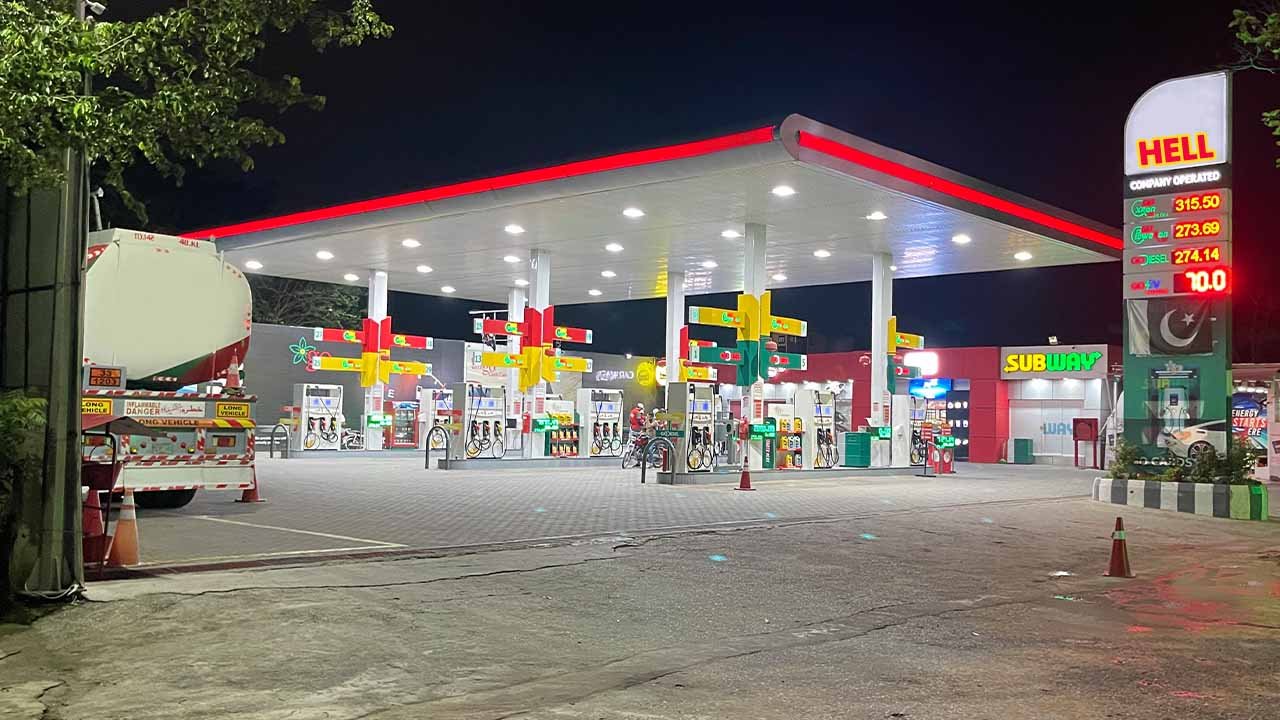
    Petroleum prices may decrease in the upcoming announcement due to a significant drop in global oil prices and the strengthening of the Pakistani rupee against the US dollar, according to Arif Habib Limited (AHL), a brokerage house.

    In the next fortnightly pricing cycle starting on October 16, 2023, AHL predicts a reduction of Rs41 per litre for petrol and Rs19 per litre for diesel in local prices.

    AHL’s projection is based on several factors. International oil prices have fallen considerably in the past week due to concerns about demand, a stronger US dollar, inflationary pressures, and increased oil supplies. 

    The prices of WTI, Brent, and Arab Light have dropped by approximately 9 per cent to 11 per cent compared to the previous fortnightly averages. International gasoline (MS) prices have plummeted by 15 per cent to $84.3 per barrel, while high-speed diesel (HSD) prices have dipped by 10 per cent to $110.6 per barrel compared to the previous fortnightly averages.

    Additionally, the Pakistani rupee has appreciated by 2.7 per cent against the US dollar, standing at 283.87 compared to the previous fortnightly average of 291.65. 

    AHL’s calculations, factoring in these price changes and the assumption of stable international prices and currency rates over the next 10 days, suggest that local petrol and diesel prices are expected to decrease by Rs41 per litre and Rs19 per litre starting on October 16, 2023.

    AHL also mentioned that in the previous fortnightly pricing, there was an exchange rate adjustment of Rs11.9 per litre for MS and a negative adjustment of Rs2.8 per litre for HSD. 

    Even assuming similar currency adjustments for MS and no adjustment for HSD in the upcoming fortnightly prices, AHL anticipates that MS and HSD prices will decrease by Rs28.6 per litre and Rs19.3 per litre, respectively.

    In terms of inflation, AHL revised its October CPI inflation estimate to 27.5 per cent. Last week, the interim government announced a reduction of Rs8 per litre for MS and Rs11 per litre for HSD, resulting in new prices of 323.38 and 318.18 per litre for petrol and diesel, respectively, effective from October 1.

  • Pakistan Stock Exchange surges to 21-month high as KSE-100 index crosses 47,000 mark

    Pakistan Stock Exchange surges to 21-month high as KSE-100 index crosses 47,000 mark

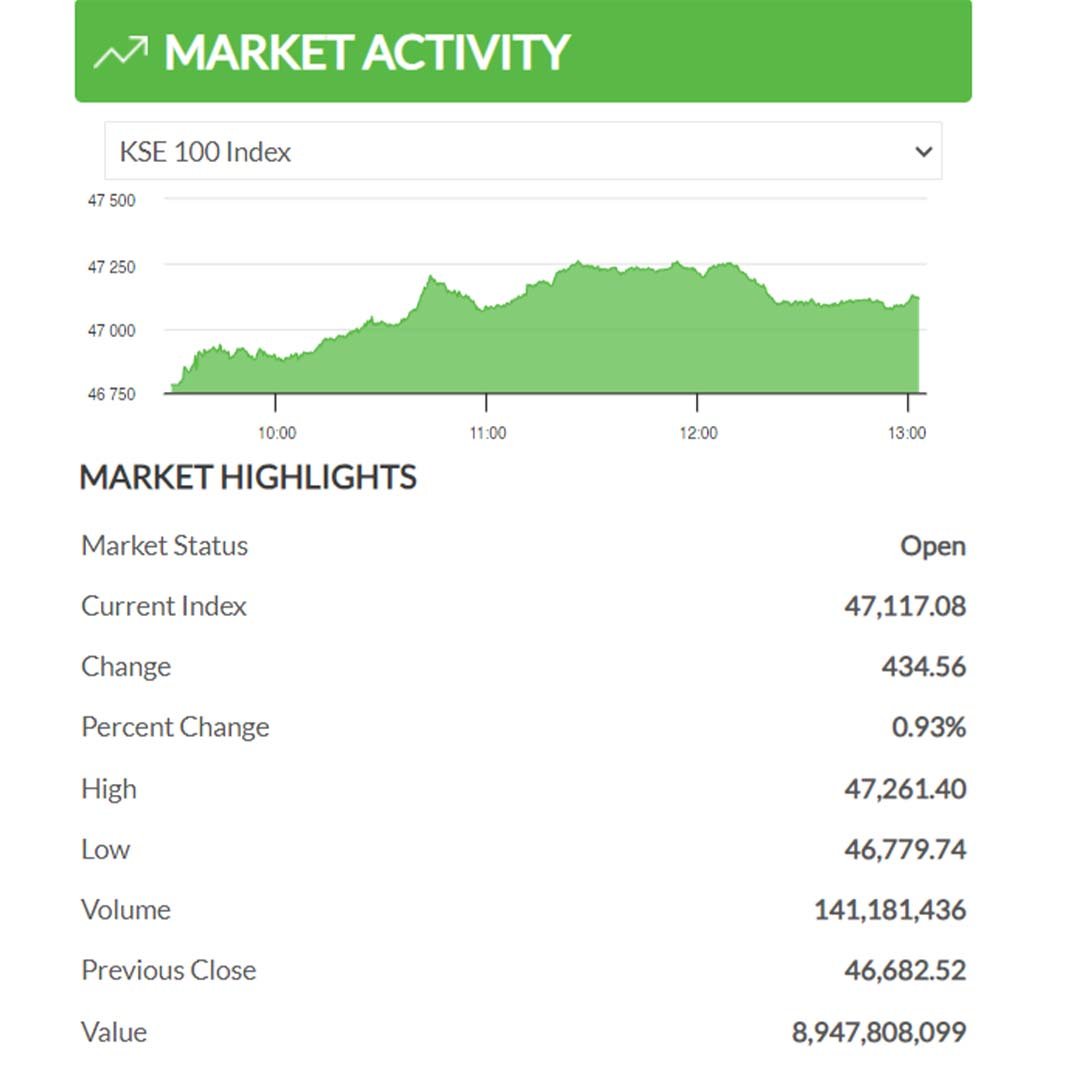
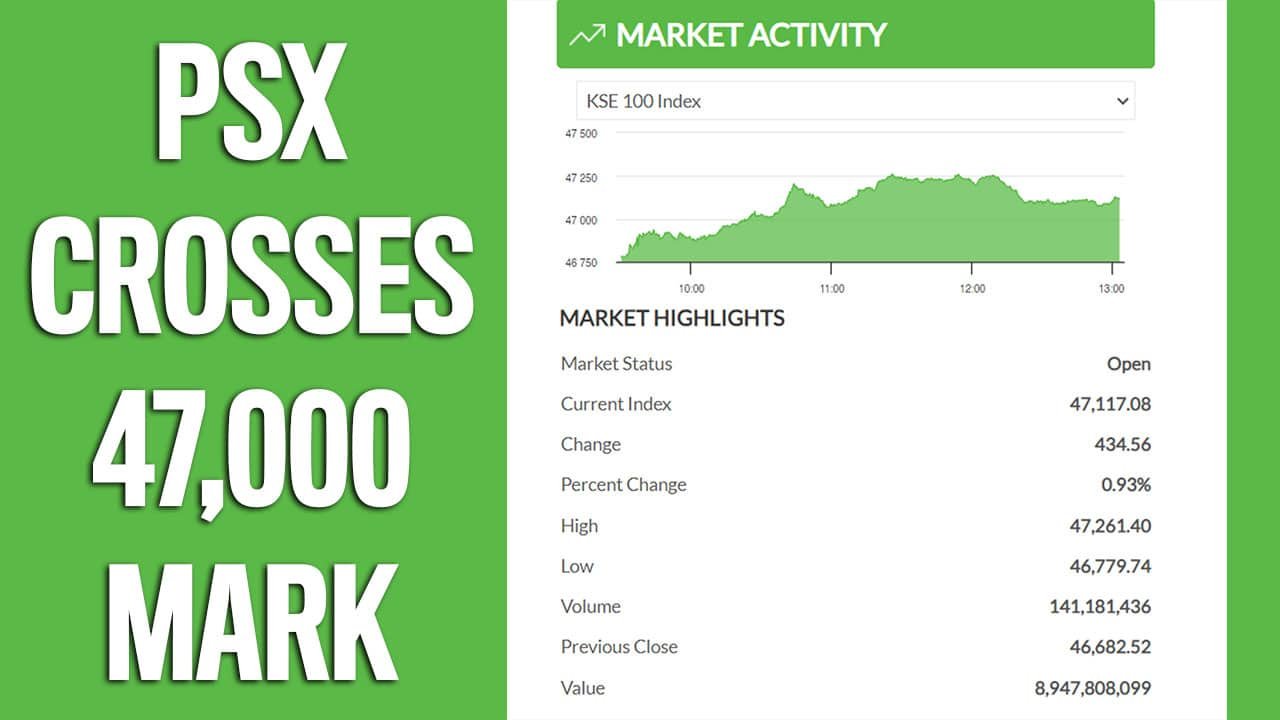
    The Pakistan Stock Exchange witnessed a significant surge as the benchmark KSE-100 index surpassed the 47,000 milestone on Thursday, reaching its highest point in 21 months. This remarkable upswing was fueled by positive market sentiment following the recent International Monetary Fund (IMF) deal.

    Notably, the bullish position was further fortified by impressive corporate performance, particularly within the index-heavy sectors. At 12:10 pm, the benchmark index surged by 560 points, settling at 47,242.9 points, marking its peak since November 8, 2021, as reported by Arif Habib Limited (AHL), a prominent brokerage firm.

    AHL emphasized that the market had recorded a noteworthy gain of 5,751 points (13.9 per cent) since the staff-level agreement with the IMF for the $3 billion Standby Agreement (SBA).

    This positive momentum was attributed to increased valuations after securing the IMF SBA facility, as explained by Tahir Abbas, AHL’s Head of Research, in an interview with Geo.tv. He highlighted that the current Price-Earnings Ratio (PER) of the KSE-100 stands at 3.7x, which is relatively lower compared to the lowest recorded during the previous financial crisis in 2008 (3.9x).

    Abbas asserted that the market remains attractive, and as a result, the positive momentum is expected to continue. Analyst Saad Ali, an expert in the capital market, attributed the market’s favorable performance to the combination of IMF optimism and the outlook for enhanced macro stability, which has been complemented by strong corporate results during the present result season. Despite facing challenging macroeconomic conditions, several banks and companies have managed to surpass expectations in terms of earnings and payouts.

    Last month, Pakistan signed a short-term deal with the IMF, a crucial step that helped the country avert a potential default and bolster its foreign exchange reserves. This move has played a pivotal role in supporting the current bullish trend in the stock market.

    In conclusion, with the positive impact of the IMF deal and encouraging corporate results, the Pakistan Stock Exchange’s benchmark KSE-100 index has achieved substantial growth, positioning itself at a 21-month high. The market outlook remains promising, and experts predict further gains ahead.

  • Pakistan’s auto sector records 98% sales growth in March despite high prices

    Pakistan’s auto sector records 98% sales growth in March despite high prices

    Despite high car prices, Pakistan’s auto sector has seen a growth of 98 per cent in March, selling about 7,201 units compared to 3,642 units sold in the previous month. The increase has provided a ray of hope to the auto sector, which has picked up some pace after several months.

    However, car sales, including sales of non-Pakistan Automotive Manufacturers Association (PAMA) vehicles, plunged 68 per cent in March compared to the same month last year, due to non-production days and a decline in purchasing power.

    The monthly growth is due to better volumetric sales of Pak Suzuki Motor Company (PSMC) and Indus Motors, which increased by 475 per cent and 6 per cent respectively on a month-on-month basis. Arif Habib Limited also stated that due to rising inflationary pressure, consumers have switched to affordable vehicles of below 1000cc, which increased by 423 per cent.

    Despite the recent growth, fears of a slowdown still exist due to measures taken by the State Bank of Pakistan (SBP) to curb imports, resulting in production limitations as auto assemblers require prior permission to import completely knocked-down (CKD) units and raw materials.

    Sales of all other variants of cars, jeeps, tractors, pick-ups, three-wheelers and two-wheelers have also witnessed a year-on-year decline in March 2023, according to data released by PAMA a day earlier.

    In the first nine months of fiscal year 2022-23, 85,776 units were sold, down 50 per cent from 172,612 units sold during the same period in FY22. Sales of 1300cc and above cars were recorded at 2,913 units, down 67 per cent compared to the same month of the previous year’s sales of 9,280 units. In March 2023, 1,000cc cars recorded sales of 964 units, including 475 units of Suzuki Cultus and 489 units of Suzuki WagonR, against 2,410 units in the same month last year.

    Further breakdown of the data reveals that below 1000cc vehicles recorded a sale of 3,324 units, lower by 70 per cent than 11,109 units sold last year. Suzuki’s new Alto sold 2,542 units in March 2023 compared to 9,814 units in March 2022.

    Buses and trucks saw a decrease to 308 units in March from 565 units in the same month last year, while sales of jeeps and pick-ups decreased to 2,150 units from 4,403 units sold during the same period last year. Sales of tractors dropped to 2,984 units from 5,651 units in March 2022, while sales of rickshaws and motorbikes also decreased to 84,307 units in March against 151,010 units in the same period last year.

    PSMC recorded a jump of 475 per cent on a monthly basis to 5,628 units primarily due to the availability of CKD parts amid an easing of LC issues, while Indus Motors reported an increase of 6 per cent month-on-month to 1,912 units in March. However, Honda Car (HCAR) sales declined by 49 per cent month-on-month to 835 units in March due to the closure of the plant for 23 days on account of CKD issues.

    Hyundai sales were down 34 per cent month-on-month, with Tucson down 46 per cent month-on-month to 380 units and Sonata down 40 per cent month-on-month to 118 units in the period under review.