Tag: Army Act

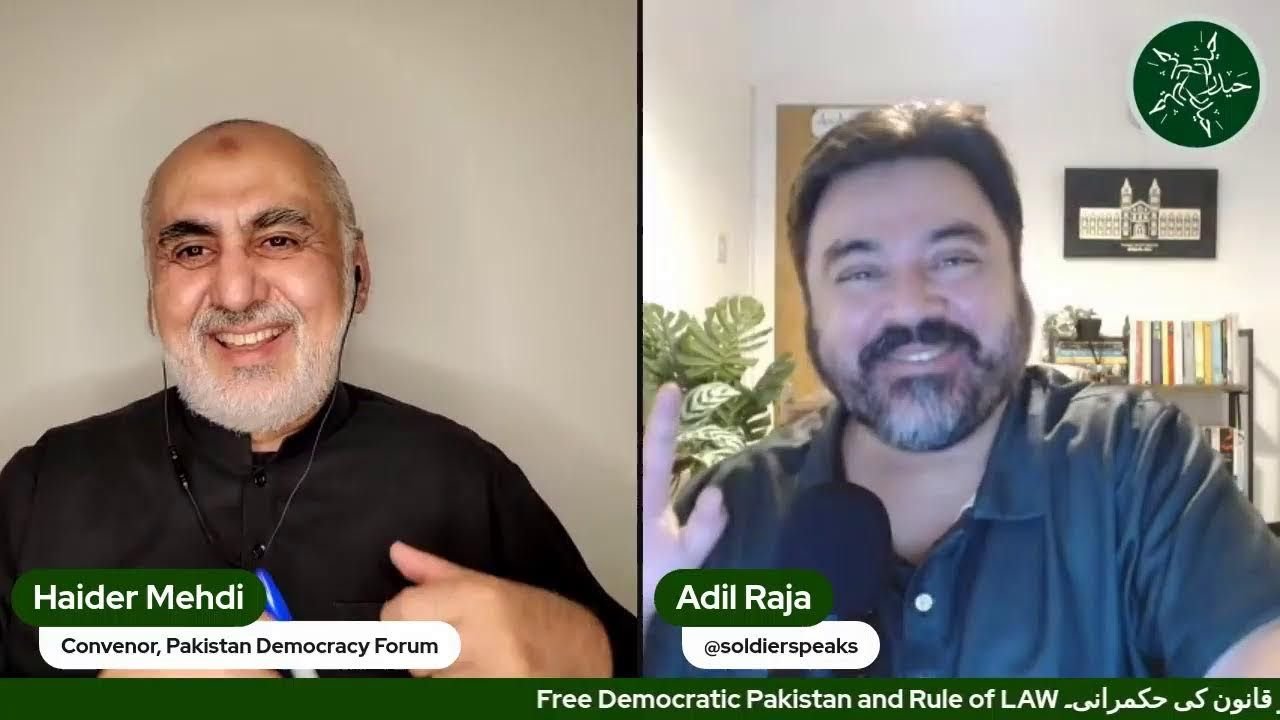
  • Adil Farooq Raja and Haider Raza Mehdi convicted for ‘inciting sedition’

    Adil Farooq Raja and Haider Raza Mehdi convicted for ‘inciting sedition’

    Two retired officers of the Pakistan Army have been convicted and sentenced for “inciting sedition” under the Army Act and violations of the provisions of the Official Secrets Act, according to a statement issued by the Inter-Services Public Relations (ISPR) on Saturday.

    “Major (Retired) Adil Farooq Raja and Captain (Retired) Haider Raza Mehdi, both retired officers of the Pakistan Army, were convicted and sentenced through Field General Court Martial (FGCM),” said the military’s media wing.

    “The retired officers have been sentenced under the Pakistan Army Act, 1952 for the charges of inciting sedition among army personnel from the discharge of duties and violation of the provisions of the Official Secrets Act, 1923 related to espionage and acts prejudicial to the safety and interest of the state.”

    The statement added that the court of competent jurisdiction convicted and adjudged both individuals on the date of 7th and 9th October 2023, through a due judicial process. Major (retd) Raja has been given 14 years of rigorous imprisonment while Captain (retd) Mehdi is awarded 12 years of rigorous imprisonment, it said.

    “Pursuant to the awarded sentence, the ranks of both officers have been forfeited on November 21, 2023,” added the ISPR.

  • ‘Army Act ke tehat kaarwaayi hosakti hai, magar nahin honi chaahiye’: PTI’s Ali Zafar on May 9th protesters

    ‘Army Act ke tehat kaarwaayi hosakti hai, magar nahin honi chaahiye’: PTI’s Ali Zafar on May 9th protesters

    Pakistan Tehreek-e-Insaf’s Senator Barrister Ali Zafar while talking to media about the May 9 protests, said that only those protesters can be prosecuted under Army Act who have actually attacked any military installations, adding that they should not be charged under a “conspiracy theory.”

    The Barrister continued by saying that action against those who attacked Army installations can be taken under Army Act. However, it should not happen because the matter is a political issue, adding that fair trial can only be provided in civil courts.

    He also condemned the attacks on Corp Commander House and other military installations, adding that he had told PTI Chairman Imran Khan the same thing.

    Read more: PDM be warned: allow Army Act trials and some day military laws might be used against you too

    A Special Corps Commander Conference held on Monday at the General Headquarters (GHQ), presided by Chief of Army Staff General Asim Munir, decided that the planners, instigators, abettors and perpetrators of the attacks on military installations and buildings during the protests led by Pakistan Tehreek-e-Insaf (PTI) supporters will be tried under relevant Pakistani laws, including the Army Act and Official Secret Act.

  • ‘Individual act of workers’: Waleed Iqbal says protesters should be dealt with Army Act

    ‘Individual act of workers’: Waleed Iqbal says protesters should be dealt with Army Act

    Senior leader of the Pakistan Tehreek-e-Insaf (PTI) Waleed Iqbal, who is also the grandson of 20th-century poet and philosopher Allama Iqbal, has said that he saw PTI workers inside Lahore’s Jinnah House at the time of the attack on the building on May 09. He however, said that these were iindividual acts of party workers and they should be charged according to the Army Act or any other applicable law.

    He made the comments on Waseem Badami’s programme on ARY on Tuesday evening.

    He continued by saying that the party had not made announcement in this regard nor had a policy of violence.

    A Special Corps Commander Conference held on Monday at the General Headquarters (GHQ), presided by Chief of Army Staff General Asim Munir, decided that the planners, instigators, abettors and perpetrators of the attacks on military installations and buildings during the protests led by Pakistan Tehreek-e-Insaf (PTI) supporters will be tried under relevant Pakistani laws, including the Army Act and Official Secret Act.

  • Who will be the new COAS and CJCSC?

    Who will be the new COAS and CJCSC?

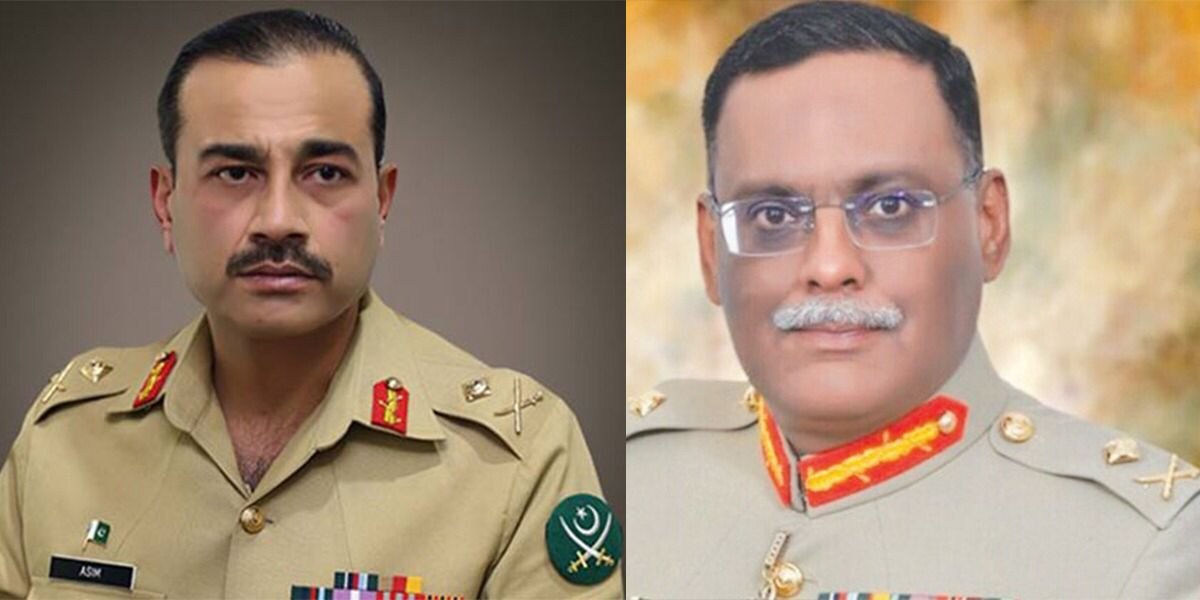
    Lieutenant General (Lt Gen) Asim Munir has been promoted to now become the new chief of the Pakistan Army by Prime Minister (PM) Shehbaz Sharif. A summary in this regard has been sent to the President. This has been confirmed by Information Minister Marriyum Aurangzeb in a tweet.

    Who is Asim Munir?

    PM Shehbaz Sharif has picked Lieutenant General (Lt Gen) Asim Munir to succeed outgoing army chief Gen Qamar Javed Bajwa. Lt-Gen Munir is the senior-most among the names given in the summary. He was promoted to the rank of a three-star general in September 2018.

    Lt- Gen Munir entered the service via the Officers Training School (OTS) programme in Mangla, and was commissioned into the Frontier Force Regiment. He has been a close aide of the incumbent COAS ever since he commanded troops in the Force Command Northern Areas as a brigadier under Gen Bajwa.

    He was later appointed Director General Military Intelligence in early 2017, and in October next year was made the ISI chief. However, he was replaced soon by Lt Gen Faiz Hameed within eight months, reportedly on the insistence of the then PM, Imran Khan. He was posted as Gujranwala Corps commander for two years, before being moved to the GHQ as Quartermaster General.

    Who is Sahir Shamshad Mirza?

    The following is a bio of the new Chairman Joint Chiefs of Staff, the second important role in the armed forces. While General Mirza’s bio is impressive, what was striking is that he was raised an orphan and has managed to reach the top. When he joined the army, he wrote ‘8 Sindh’ in the ‘Next of Kin’ option. It was the name of his Unit.

    The premier has picked Lieutenant General (Lt-Gen) Sahir Shamshad Mirza to be the next Chairman Joint Chiefs of Staff Committee (CJCSC). Lt-Gen Mirza came to fame as the director general military operations during Gen Raheel Sharif’s tenure. In that role, he was part of Sharif’s core team at the General Headquarters, which supervised the military operation against the banned Tehreek-i-Taliban Pakistan and other militants in North Waziristan. Moreover, Lt-Gen Mirza was closely involved in the intra-Afghan talks involving Pakistan, China, Afghanistan and the United States.

    He was also a member of the committee on reforms for Gilgit-Baltistan. He was appointed chief of general staff, effectively making him the second-most powerful person in the army after the chief of army staff. In that role, he was closely engaged in crucial decision-making related to national security and foreign affairs. He also joined former foreign minister Shah Mehmood Qureshi in strategic talks with Chinese Foreign Minister Wang Yi in 2021.

    In October 2021, he was posted as corps commander Rawalpindi to enable him to acquire operational experience and become eligible to be considered for top posts. The Joint Chiefs of Staff Committee is an inter-services forum that works for coordination among the three armed forces. The CJCSC also serves as the principal military adviser to the prime minister and the National Command Authority.

    General Asim Munir has been ‘retained’ under the Army Act?

    The Federal Government has retained Lieutenant General Asim Munir under the Army Act. Earlier, government decided to appoint Lt Gen Munir as new Chief of Army Staff (COAS).

    Gen Munir was scheduled to retire on November 27. He had submitted his retirement application to the defence ministry. However, the defence ministry did not accept the request for retirement and decided to retain Gen Munir.

    Meeting between Dr Alvi and Khan

    President of Pakistan, Dr Arif Alvi, has reached Zaman Park in Lahore to meet Pakistan Tehreek-e-Insaf (PTI) Chairman Imran Khan to consult him over the two key military appointments that were announced today.

    In an interview earlier this week, when asked about the appointment, Imran Khan said that he was maintaining contact with the President on this matter.

    President House will give an official handout around 7pm on army chief appointment

    PTI’s Fawad Chaudhry has said that the President House will give an official handout between 6:30 and 7pm about Dr Arif Alvi’s meeting with his party Chairman Imran Khan.

    A few hours ago, Alvi reached Lahore to meet Khan and to consult him over the two key military appointments.

    Earlier, the federal government announced that Prime Minister Shehbaz Sharif has appointed Lieutenant General Asim Munir as Pakistan’s next Chief of Army Staff and Lieutenant General Sahir Shamshad Mirza as Chairman of the Joint Chiefs of Staff Committee (CJCSC), with an official summary of both appointments sent to President Alvi for his signature.

    President Arif Alvi signs summary for the appointment of COAS and CJCSC: report

    President Dr Arif Alvi has signed the summary to appoint Lt Gen Asim Munir as the new army chief and Lt Gen Sahir Shamshad Mirza to be the next Chairman Joint Chiefs of Staff Committee (CJCSC). It is being reported that President Alvi and Prime Minister Shehbaz Sharif will be holding meetings with both new appointees shortly.
  • Right to appeal: Army Act to be amended for relief to Indian spy

    Right to appeal: Army Act to be amended for relief to Indian spy

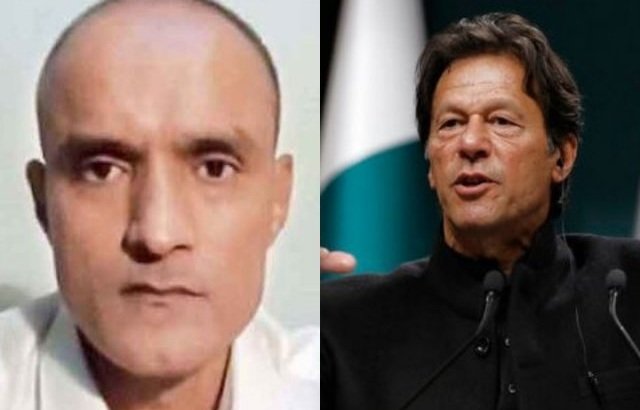
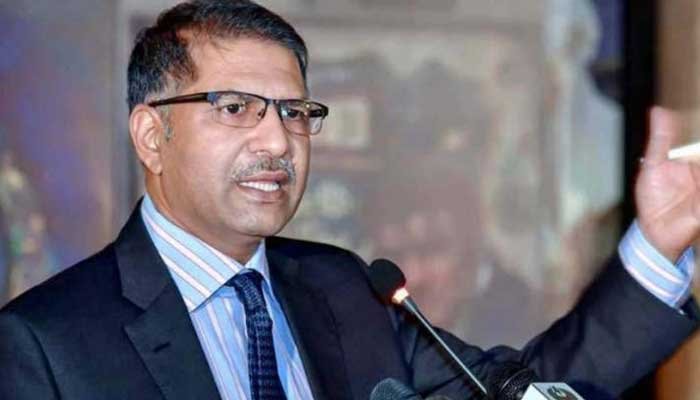
    The Pakistan Tehreek-e-Isnaf (PTI) government has decided to amend the Army Act so as to allow Indian spy Kulbhushan Jadhav to appeal against his conviction on charges of espionage before a civilian court, Dunya News reported.

    Jadhav of India’s Research and Analysis Wing (RAW) was arrested from Balochistan three years ago. In 2017, he was convicted by a military court in Pakistan and sentenced to death on charges of espionage and terrorism.

    The punishment was awarded by the Field General Court Martial (FGCM), a military court consisting of Pakistan Army officers.

    While Jadhav had confessed to working for the covert agency to destabilise Pakistan, India had rejected the charges and maintained that he was a former Indian Navy officer “kidnapped by Pakistani forces”.

    The Indian spy’s death sentence had later been challenged in the International Court of Justice (ICJ).

    After a long battle, the court, in its verdict, had rejected a number of Indian demands, including the annulment of the military court’s decision, Jadhav’s release and safe passage to India.

    It had, however, directed Pakistan to provide appropriate remedies to the spy, such as providing him effective review and reconsideration of his conviction and sentences according to its own justice system.

    The Army Act forbids any individuals or groups being tried in a military court from filing an appeal and seeking justice from a civilian court, but a special amendment is now reportedly being made for Jadhav.