Tag: art

  • Prisoner sells paintings to support sister’s wedding, mother’s umrah

    Prisoner sells paintings to support sister’s wedding, mother’s umrah

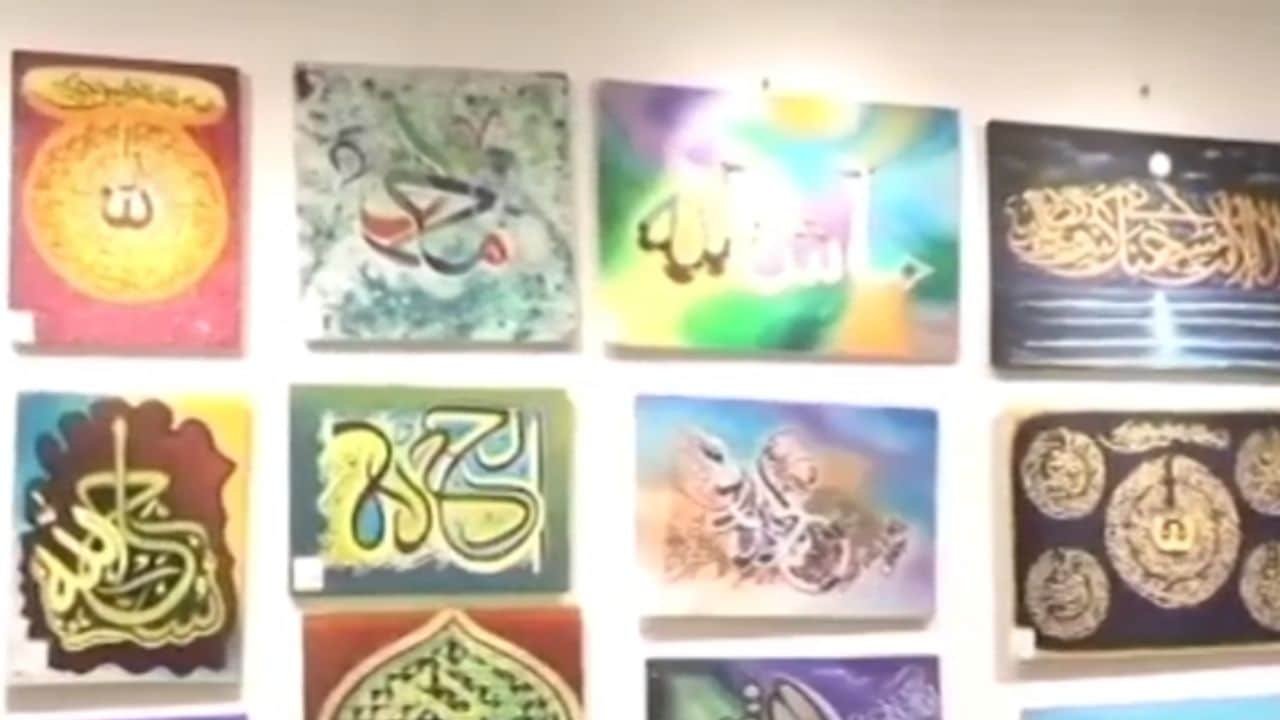
    Imprisoned for kidnapping for ransom, a man contributed financially to his sister’s marriage by making paintings in jail. From the sales, he earned enough for his mother to perform Umrah too.

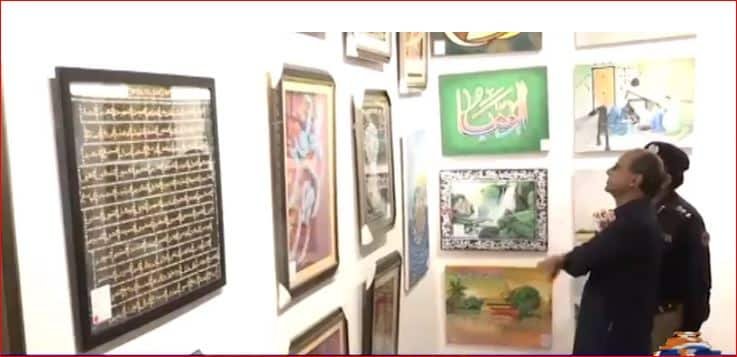
    While Ijaz was imprisoned in the Central Jail Karachi, he painted 23 works of art, some of which were displayed in the Arts Council.

    Ijaz is serving a 25-year sentence but has been able to manage to earn Rs 13 lacs from the sale of art pieces. Ijaz gave one million rupees to his mother and three lakh to his sister.

    Courtesy: Geo News
  • ‘Take the money and run’; Danish artist submits blank canvasses to museum

    ‘Take the money and run’; Danish artist submits blank canvasses to museum

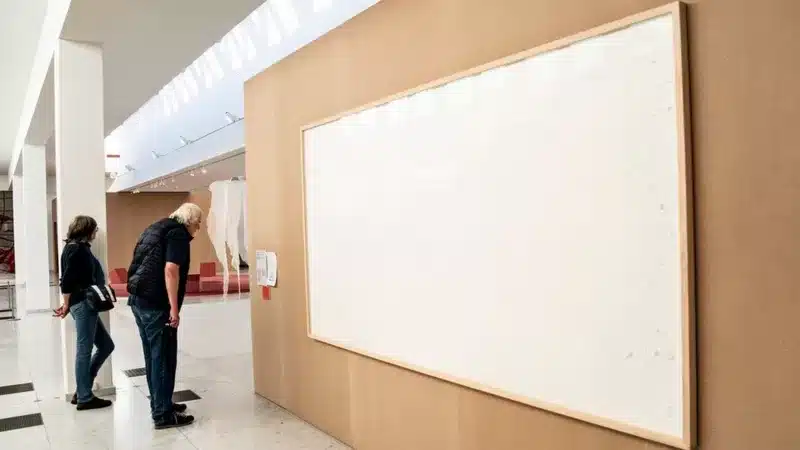
    A Danish artist owes around 500,000 kroner (Rs14,408,870) to Kunsten museum in Aalborg after submitting two blank canvasses as part of a project called “Take the Money and Run”.

    Conceptual artist Jens Haaning presses upon the issues of power and inequality through his work and one of his projects was commissioned by by the Kunsten Museum of Modern Art in Aalborg, Denmark, in 2021 in which he had to recreate banknotes in two pieces.

    Haaning, instead, gave two blank canvasses.

    He said, “The work is that I have taken their money.”

    While the museum did put his work on display, Haaning refused to return the money which he owes. Resultsntly, the museum has taken legal action against the artist.

    A court has now ordered him to return the cash – but keep some for expenses.

    The court has deducted artist fee and mounting fee from the total sum and order Haaning to refund 492,549 kroner.

    BBC spoke with Museum director Lasse Andersson who said that he had laughed out loud when he first saw the two blank canvasses in 2021, and decided to show the works anyway.

    “He stirred up my curatorial staff and he also stirred me up a bit, but I also had a laugh because it was really humoristic,” the museum’s director, Lasse Andersson, told BBC’s Newsday programme in 2021.

    Haaning, on the contrary, said that he did not intend to pursue the case any further, “It has been good for my work, but it also puts me in an unmanageable situation where I don’t really know what to do.”

    While talking to TV2 Nord on Monday, Hanning said that the museum had made “much, much more” money than what was invested because of publicity.

  • From prisoner to artist: Guantanamo Bay detainee showcases work at Karachi exhibition

    From prisoner to artist: Guantanamo Bay detainee showcases work at Karachi exhibition

    Ahmed Rabbani, a 53-year-old Pakistani who was recently released after 20 years of detention at Guantanamo Bay, turned to painting to satisfy his artistic yearnings. When he ran out of paint, he used whatever he could find, including dirt, coffee grinds, and spices such as turmeric from the prison canteen.

    “Through painting, I would feel myself outside Guantanamo,” he said at an exhibition of his work in Karachi. Rabbani was detained in September 2002 and handed over to the US Central Intelligence Agency for a bounty of $5,000. He was accused of being a notorious militant known as Hassan Ghul, but Rabbani always insisted it was a case of mistaken identity. He and his brother were never charged or faced trial during their detention.

    The US Senate published a Rendition Report in 2014, which revealed that Ghul was captured and brought to the same prison, only to be released back to Pakistan for “cooperating.” While Ghul went back to his terrorist ways and was killed in a drone strike in 2012, Ahmed got a one-way trip to Guantanamo Bay.

    Born in Mecca, Saudi Arabia, Rabbani moved back to Karachi as a teen and was a taxi driver at the time of his detention. He specialised in guiding visitors from the Middle East, which contributed to him being misidentified.

    While imprisoned in Guantanamo Bay, painting became an obsession for Rabbani, although years spent on hunger strike meant he was often too frail to even hold a brush. If he ran out of materials, he would improvise by using a piece of discarded or torn clothes as a canvas. He would also use coffee or turmeric as a medium.

    Around two dozen pieces of Rabbani’s artwork, which he was allowed to take from prison, are on display at “The Unforgotten Moon: Liberating Art from Guantanamo Bay” exhibition. The works are displayed alongside pieces by local artists who have “re-imagined” paintings that were confiscated. “He is someone who has lost so much of his life, so to produce images of this quality is a miracle… it’s remarkable,” said Natasha Malik, curator and organiser of the exhibition.

    Rabbani, sporting a salt-and-pepper beard and wearing a traditional shalwar kameez and waistcoat, was the centre of attention at the exhibition opening. He plans to publish a cookery book with his memoirs in it and wants to open a restaurant based on recipes he learned while in prison. He hopes to use funds raised from the sale of his artwork to achieve this.

    His artwork depicts his hopes and despair, and some pieces express his yearnings for freedom, such as nature seen through narrow openings, birds flying, and endless oceans. One painting shows a cage containing bright orange fish, the colour of overalls Guantanamo prisoners were forced to wear. “I spent many years in orange,” he said. “I never accepted their laws. I would always break their laws.”
  • Pakistani-American artist Shahzia Sikander criticises Fox News for calling her sculpture ‘satanic’

    Pakistani artist Shazia Sikandar made international headlines a few weeks ago when her statue ‘Havah…, to breathe, air, life’ was installed on the rooftop of the New York appellate courthouse .

    Conservative US news channel Fox News covered the installation of the statue in Tucker Carlson’s show where he criticized Sikander’s artwork and called it ‘satanic’. He also said that New York officials made a terrible decision to replace former President Thedore Roosevelt’s statue with Havah.
    On her Instagram page, Sikander posted a screenshot of the racist coverage, along with some of the hateful comments she had received over her artwork, calling out their misogyny. She clarified that ‘Havah’ was not a statue of late Supreme Court judge Ruth Badger Ginsberg, however, she did take inspiration from her.

    “Hot Under The Collar
    .
    @foxnews twisting it for their agenda.
    .
    NOW is women carrying their roots and histories wherever they may be, with a nod to RBG. It is not a statue of her.”

  • Amitabh pays 2.61 crore PKR as GST after selling his NFT  collection for 17 crore PKR

    Amitabh pays 2.61 crore PKR as GST after selling his NFT collection for 17 crore PKR

    The Bollywood superstar, Amitabh Bachchan has finally paid 2.61 crore PKR in GST for the sale of his non-fungible token (NFT) collection, which was auctioned for 17.16 crore PKR in the first week of November 2021.

    Some of the netizens may remember that Bachchan had received a warning from the Directorate General of Goods and Services Tax Intelligence (DGGI) to pay the imposed GST.

    Despite Bachchan’s deposit, the DGGI is expected to continue its probe into tax avoidance.

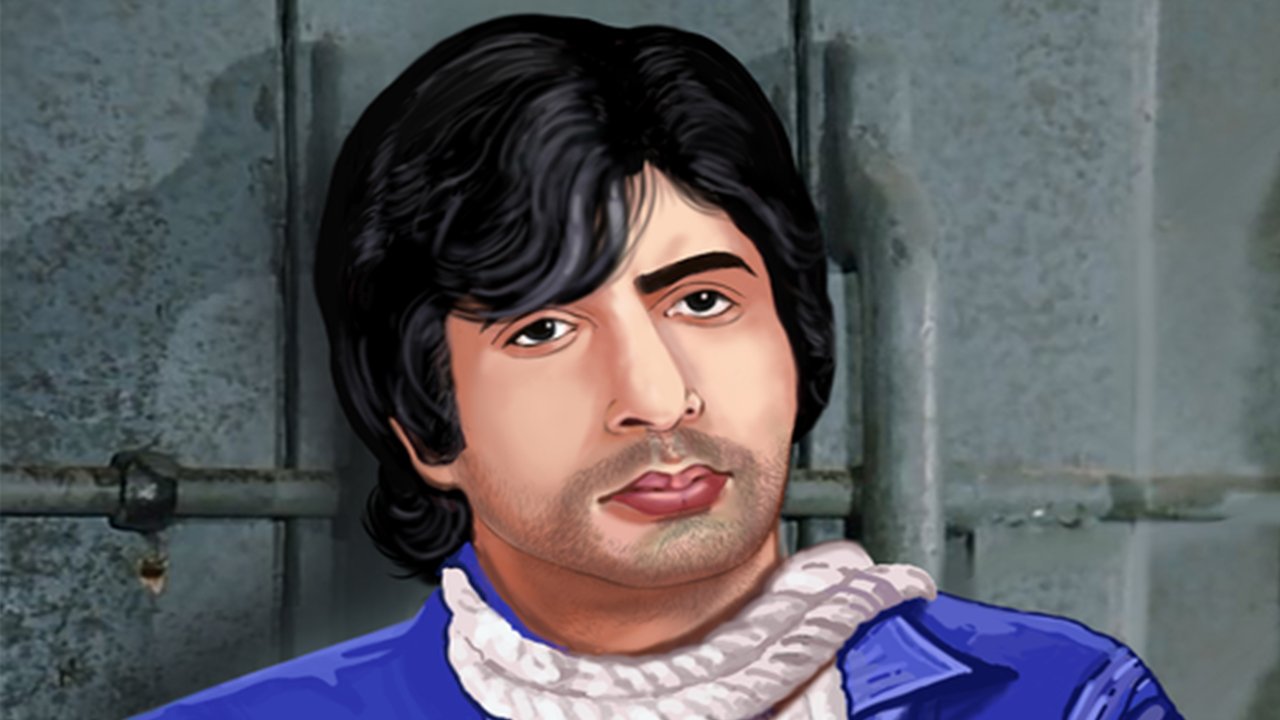
    An NFT venture stated in August 2021 that Bachchan’s NFT collection would be available on its platform. Bachchan had signed an agreement with ‘Rhiti Entertainment’ to convert some of his pictures or illustrations into digital assets.

    Interestingly, this also made Bachchan one of the first Indian actors to support digital art and NFTs.

    Apart from the photos and posters, a famous collection of poems written by Bachchan’s father and recorded in his own voice, ‘Madhushala’ was the most successful auction.

    The NFT auction had garnered 17.16 crore PKR and attracted 18 percent GST. Big B was bound to pay taxes worth 12.61 crore PKR from the sale, which has been now deposited by the actor.

    Read More: Crypto companies at risk of closure in the United Kingdom

    For those who do not know much about NFTs, it is a type of digital asset that represents real-world or sometimes abstract elements. This can be art, photography, meme, music, game characters or any graphic one can think of. This data unit is kept on a blockchain, a digital ledger that makes it non-transferable and unique.

  • Man eats $120,000 piece of art

    Man eats $120,000 piece of art

    The world truly has gone bananas.

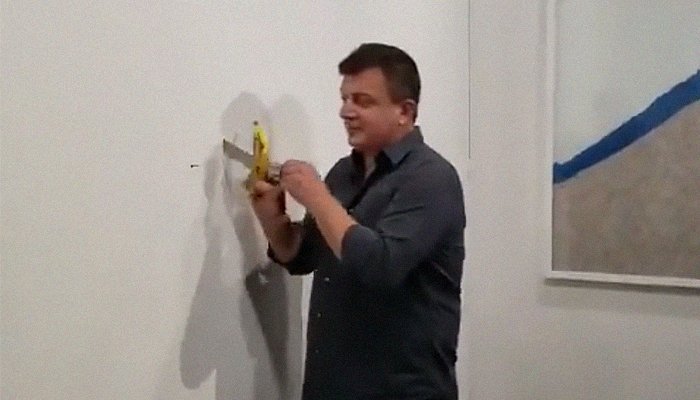
    A performance artist shook up the crowd at the Art Basel show in Miami Beach on Saturday when he grabbed a banana that had been duct-taped to a gallery wall and ate it.

    What’s interesting is that the banana was, in fact, a work of art by Italian artist Maurizio Cattelan titled “Comedian” and sold to a French collector for $120,000.

    In a video posted on his Instagram account, David Datuna, who describes himself as a Georgian-born American artist living in New York, walks up to the banana and pulls it off the wall with the duct tape attached.

    “Art performance … hungry artist,” he said, as he peeled the fruit and took a bite. “Thank you, very good.”

    https://www.instagram.com/p/B5yIFp2hyE-/

    Datuna’s action left some bystanders in fits. Soon after, a flustered gallery official took him in for custody. Luckily the matter was resolved amicably and no legal action was planned against him.

    As it turns out, the value of the work is in the certificate of authenticity – the banana is meant to be replaced.

    A replacement banana was taped to the wall about 15 minutes after Datuna’s stunt.

    Meanwhile, here’s what Mehwish Hayat has to say on the matter.