Tag: Article 370

  • Indian Supreme Court validates the revocation of Article-370

    Indian Supreme Court validates the revocation of Article-370

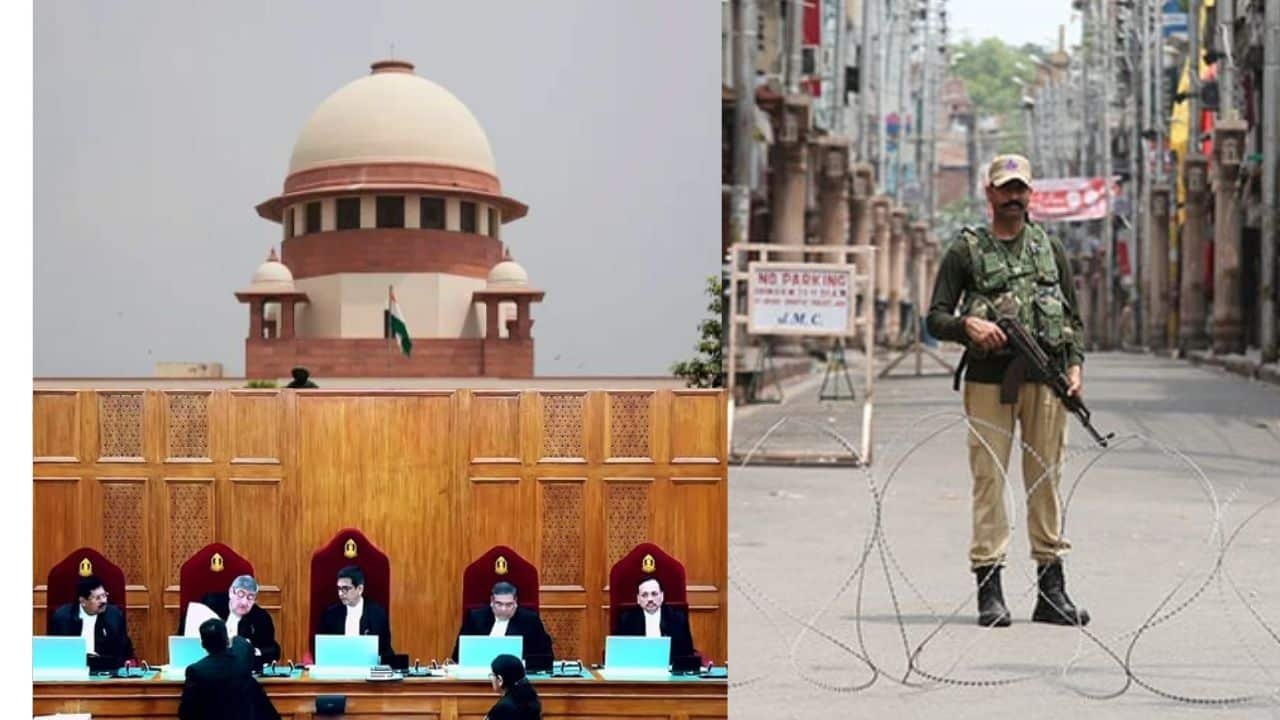
    A five-judge constitution bench, presided by Chief Justice of India DY Chandrachud, has given its verdict on the Union government’s 2019 move to amend Article 370 of the constitution, the abrogation of which ended the special status of Jammu and Kashmir.

    The decision was reserved earlier on September 5 this year, after 16 days of hearings.

    The unanimous verdict by the panel of five judges came in response to more than a dozen petitions challenging the revocation and a subsequent decision to split the region into two federally administered territories, the central government, on the other hand, had defended its action, asserting there was no “constitutional fraud” in nullifying the provision.

    Chief Justice said that Jammu and Kashmir held no internal sovereignty after accession to India. The court maintains that the president has the right to abrogate any of the articles in the Constitution. The same was carried out on August 5 2019.

    The order also declared that the reorganisation of the erstwhile state into Union Territories in 2019 was a temporary move, it directed the Centre for the restoration of statehood and for Legislative Assembly elections to be held.

    However, Justice Kaul recommended in his opinion that a Truth and Reconciliation Commission should be set up in Jammu and Kashmir, for the acknowledgement of acts of rights violations in the region.

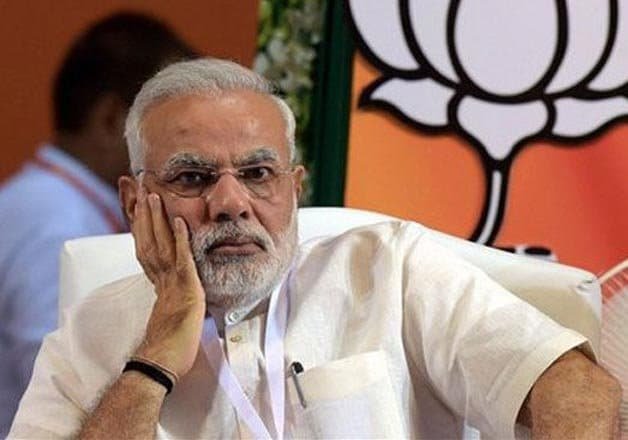
    The revocation was one of Mr Modi’s poll promises in 2019 and the court’s decision comes months before he seeks a third term. Local politicians in the region have expressed disappointment over the order.

    Former Chief Minister Omar Abdullah posted on X (formerly Twitter) that he was “disappointed but not disheartened”. An hour later, he also posted Faiz Ahmed Faiz poem, “Dil na umeed to nahi, na kaam he to hai”.

    Meanwhile, Narendra Modi, Prime Minister of India wrote this decision is “a resounding declaration of hope, progress and unity”.

    Amit Shah, a major proponent of Hindutva supremacy and Indian Home Minister, criticised India’s first Prime Minister, Jawaharlal Nehru, on the Kashmir issue, saying in Parliament, “I say this with full responsibility that Kashmir suffered due to two blunders by Nehru. First, the ceasefire (with Pakistan) was announced when our forces were winning…before winning the whole of Kashmir. The second blunder was to take the Kashmir issue to the United Nations.”

    Today he posted on Twitter that because of this decision “separatism and stone pelting are now things of the past.”

    Asaduddin Owaisi says, ” We are disappointed by this verdict.”

    “Pakistan categorically rejects the judgement announced by the Supreme Court of India on the status of Indian Illegally Occupied Jammu and Kashmir (IIOJK),” states the statement released by the Ministry of Foreign Affairs in Pakistan.

    Caretaker Foreign Minister of Pakistan Jalil Abbas Jilani posted on Twitter that “The judicial endorsement by the Indian Supreme Court has no legal value.”

  • ‘Ill-informed, ignorant, wanted to blame Pakistan for Pulwama’: Former Indian Governor on Modi

    ‘Ill-informed, ignorant, wanted to blame Pakistan for Pulwama’: Former Indian Governor on Modi

    Satya Pal Malik, the last governor of the now Indian Illegally Occupied Jammu and Kashmir (IIOJK) before it was divided has claimed that Indian Prime Minister (PM) Narendra Modi is extremely “ill-informed’.

    Malik, who was governor during the Pulwama terror attack of February 2019 and during the scrapping of Article 370 in August the same year, said that Modi is “ignorant” about Kashmir and told him [Malik] not to speak about the Union home ministry’s lapses which led to the killing of dozens of paramilitary troops in India-held Jammu and Kashmir.

    He said removing Jammu and Kashmir’s statehood was a mistake and it should be restored immediately. He said, “Modi mast hain apne mein – to hell with it! This is his attitude.”

    Conversing with acclaimed Indian journalist Karan Thapar, Malik said during the interview with The Wire, that he immediately realised that Modi wanted to use the Pulwama attack to blame Pakis­tan for the benefit of his government and the Bharatiya Janata Party (BJP).

    The former Indian governor said, “Mein safely keh sakta hoon Prime Minister ko corruption se bahut nafrat nahin hain” (‘I can safely say the PM has no real problem with corruption’). 

    He further revealed that the attack on the Central Reserve Police Force (CRPF) convoy in Pulwama was a result of “incompetence” and “carelessness” by the Indian system, specifically the CRPF and the home min­i­­stry. Malik gave details of how the CRPF had asked for aircraft to transport its personnel, but was refused by the home ministry.

    He said all of these lapses were raised by him directly when Modi called him from outside Corbett Park, shortly after the Pulwama attack. He said the prime minister told him to keep quiet about this and not tell anyone.

  • ‘Let us sit, have serious and sincere talks’: PM Shehbaz extends olive branch to Modi

    ‘Let us sit, have serious and sincere talks’: PM Shehbaz extends olive branch to Modi

    Prime Minister (PM) Shehbaz Sharif, extending an olive branch to his Indian counterpart PM Narendra Modi has said that both leaders should hold serious and sincere talks.

    “My message to the Indian leadership and Prime Minister Narendra Modi is that let us sit down on the table and have serious and sincere talks to resolve our burning issues like Kashmir,” said PM Shehbaz in an interview with Al Arabiya news channel.

    “In Kashmir, flagrant human rights violations are taking place day in and day out,” he pointed out.

    The Premier further added that the neighbouring country had usurped any semblance of autonomy given to the Kashmiris according to Article 370 of the Indian Constitution. The autonomy was revoked in August 2019.

    Reminding the world that both Pakistan and India were neighbouring countries who had to find a way to live together, Shehbaz Sharif said, ” “It is up to us to live peacefully and make progress or quarrel with each other, and waste time and resources. We have three wars with India and it only brought more misery, poverty and unemployment to the people. We have learnt our lesson and we want to live in peace provided we are able to resolve our genuine problems. We want to alleviate poverty, achieve prosperity, and provide education and health facilities and employment to our people and not waste our resources on bombs and ammunition, that is the message I want to give to PM Modi.”

    The Premier remarked that both countries are nuclear powers and armed to teeth. “If God forbid a war breaks out who will live to tell what happened,” he said.

    He said the leadership of the United Arab Emirates (UAE) could play a vital role in bringing Pakistan and India together., adding he would hold talks with the Indian leadership with sincerity of purpose.

    Meanwhile, Pakistan Tehreek-e-Insaf (PTI) leader, Fawad Chaudhry rejected PM Shehbaz’s approach of holding talks with Modi and tweeted, “Shehbaz Sharif cannot be allowed to sell Kashmir”.

    Later, Prime Minister’s Office (PMO) gave a statement on the issue and said, “The Prime Minister has repeatedly stated on record that talks can only take place after India has reversed its illegal action of August 5, 2019. Without India’s revocation of this step, negotiations are not possible.”

  • ‘Article 370’ details how horrific the Kashmir lockdown could be

    ‘Article 370’ details how horrific the Kashmir lockdown could be

    It has been a year since India revoked the special status of Indian Occupied Kashmir (IoK) and imposed a curfew in the region. To highlight Indian atrocities in the region and share a glimpse of life in lockdown, filmmaker Ibrahim Baloch has released a short film on the issue titled Article 370.

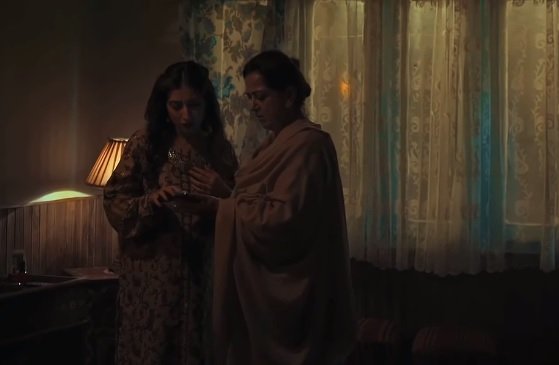
    The film tells the story of Gul-e-Rana (Mariyam Nafees), a pregnant girl living in IoK. She is awaiting the birth of her child when a complete lockdown is imposed in the region and her husband goes missing. The short 16-minute video touches a chord and your heart goes out to those living in the region.

    Speaking about the film, Baloch told a local media outlet that he wanted to highlight the human side of the political move.

    “I started following the situation in Kashmir after India announced its decision and realised that it was primarily debated from a political perspective,” he said. “I was more interested in the human side of the issue. So after doing some research, I came across stories of Kashmiri women in Srinagar who gave birth during the lockdown imposed by the Indian administration.”

    Meanwhile, the film’s official synopsis states: “An untold tale of people who have made sacrifices the world is unaware of, while they lived their lives in hell. Gul-e-Rana didn’t know her fairytale would end so soon and her blessing would turn into a curse.”

    Read more – PPP Senator Rehman Malik is making a movie on Kashmir

    The film has been produced by Madiha Majeed under the banner of ‘See Prime’.

    Watch the film below:

  • India decides to pull out troops from occupied Kashmir

    India decides to pull out troops from occupied Kashmir

    The Indian government has decided to pull out over 7,000 para-military troops from occupied Kashmir on account of the improvement in law and order situation there and also because the troops were on short-term deployment, Times of India reported.

    According to reports, of the nearly 7,200 troops being called back from the disputed region, 2,400 are from the Central Reserve Police Force (CRPF) and 1,200 each from Border Security Force (BSF) SSB, CISF and ITBP. They were all deployed in the state in view of the government’s decision to abrogate Article 370.

    The development in August had paved way for ethnic cleansing of Muslims in Kashmir, drawing strong reactions from the international community, especially Pakistan, as Kashmiris faced isolation amid curfew.

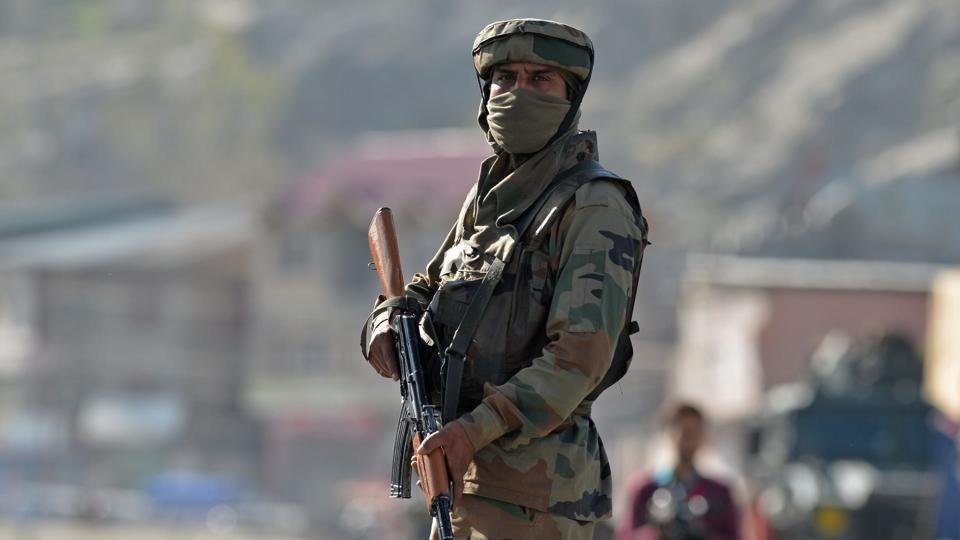
    As widespread protests continued across the valley, Indian occupying forces had converted it into a garrison by deploying hundreds of thousands of troops and paramilitary personnel in every street, line and by-lane to stop people from staging demonstrations.

    WHAT IS ARTICLE 370?

    Article 370 was the basis of Jammu and Kashmir’s accession to the Indian union at a time when former princely states had the choice to join either Pakistan or India after their independence from the British rule in 1947.

    The article, which came into effect in 1949, exempts Jammu and Kashmir state from the Indian Constitution.

    It allows IoK to make its own laws in all matters except finance, defence, foreign affairs and communications. The article established a separate constitution, a separate flag and denied property rights in the region to the outsiders.

    That means the residents of the state live under different laws from the rest of the country in matters such as property ownership and citizenship.

    WHAT IS ARTICLE 35A?

    Article 35A is a branch of Article 370, which was introduced through a presidential order in 1954 to continue the old provisions of the territory regulations.

    The article permits the local legislature in IoK to define permanent residents of the region. It forbids outsiders from permanently settling, buying land, holding local government jobs or winning education scholarships in the region.

    While Article 35A has remained unchanged, some aspects of Article 370 have been diluted over the decades.

    WHY WERE THEY ABOLISHED?

    The ruling Bharatiya Janata Party (BJP) and its right-wing allies have challenged Article 35A which it calls discriminatory. Earlier this year, a senior BJP leader had hinted that the government was planning to form exclusive Hindu settlements in the region.

    With the special status repealed, people from the rest of India would have the right to acquire property in IoK and settle there permanently.

    Kashmiris fear the move would lead to a demographic transformation of the region from majority-Muslim to majority-Hindu, paving way for Prime Minister (PM) Narendra Modi’s hardliner BJP in the disputed territory.

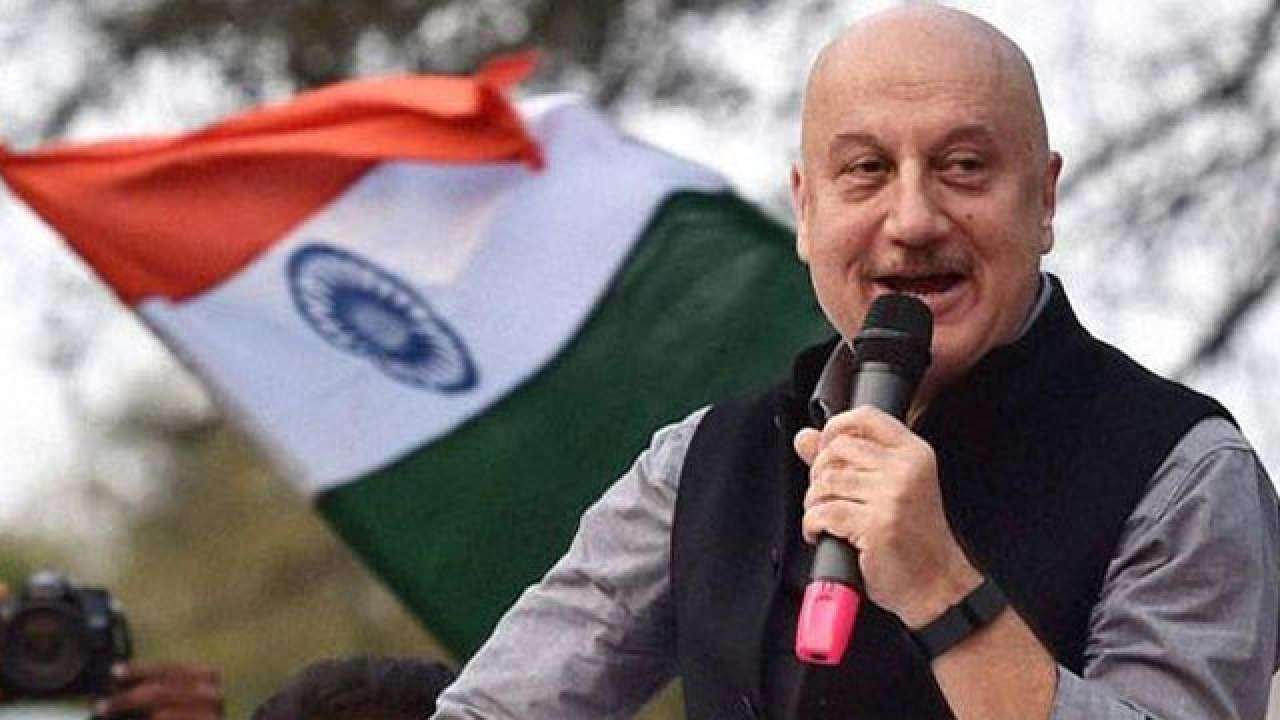
  • Anupam Kher believes Muslim genocide is ‘Kashmir solution’?

    Anupam Kher believes Muslim genocide is ‘Kashmir solution’?

    With tensions mounting in Indian occupied Kashmir (IoK) as the government revokes special status granted to the valley, calls in additional troops and orders tourists to evacuate the region, a statement by veteran Bollywood actor Anupam Kher has left people stunned.

    Prominent Hurriyat leader Syed Ali Geelani had on Saturday taken to Twitter to urge the global Muslim community to help “save their souls” from “the biggest genocide” India is about to launch in held Kashmir.

    With the situation in the Himalayan territory worsening as Indian armed forces martyr at least 10 Kashmiri youth within the last three days and the government announcing its decision to scrap Article 370 of the Indian Constitution, actor Anupam Kher believes that “Kashmir solution has begun”.

    Kher, a Kashmiri Pandit, has been seen supporting Prime Minister (PM) Narendra Modi on several occasions. His wife Kirron Kher is also a lawmaker of the hardliner ruling Bharatiya Janata Party (BJP).

    The veteran actor had earlier said that “all the issues in the valley will be resolved if Article 370, which provides special autonomous status to Jammu and Kashmir is abolished”.

    ARTICLE 370:

    Article 370 of the Indian Constitution is a “temporary provision” that grants special autonomous status to occupied Kashmir. All the provisions of the constitution that are applicable to other states are not applicable to the disputed territory.

    According to this article, except for defence, foreign affairs, finance and communications, the Indian Parliament needs the state government’s approval for applying all other laws.

    The residents of occupied Kashmir, therefore, live under a separate set of laws as compared to Indian citizens elsewhere in the country, including those related to citizenship, ownership of property, and fundamental rights.

    As a result, Indian citizens from other states cannot purchase land or property in occupied Kashmir. With the government moving to revoke the article, fate of IoK’s 13 million population hangs in balance.