Tag: Article 6

  • ‘I will impose Article 6 on you after coming to power’, Imran Khan’s threat to ECP

    ‘I will impose Article 6 on you after coming to power’, Imran Khan’s threat to ECP

    The inside story of Pakistan Tehreek-e-Insaf (PTI) founder Imran Khan’s trial in Adiala Jail, in the case of insulting the Election Commission (ECP), and Chief Election Commissioner, has come to light.⁠

    According to the sources who talked to GEO News, PTI founder Imran Khan became very angry during the indictment. Sources claimed that the former prime minister made a serious threat to members of the ECP during the hearing.

    Threatening the four members of ECP, Khan said, “I know your faces and names. I will impose Article 6 on you when I’ll come into power.”

    A hearing of the case against the PTI founder and former PTI leader Fawad Chaudhry proceeded on Thursday in Rawalpindi’s Adiala Jail. According to the charge sheet, Imran Khan and Fawad Chaudhry launched a planned derogatory campaign against the Election Commission in 2022.

  • Govt to file high treason case against PTI leaders

    Govt to file high treason case against PTI leaders

    The government has started preparing a high treason case against the former and the current PTI government officials on the basis of Article 6 for violating the Constitution, confirmed Deputy Secretary General PML-N Attaullah Tarar.

    According to Geo News’ sources, the people who are being named are President of Pakistan Dr Arif Alvi, Former Prime Minister (PM) Imran Khan, Former National Assembly (NA) Deputy Speaker Qasim Suri and Punjab Governor Omar Sarfraz Cheema.

    As per the news outlet, currently, the government is consulting legal experts. The current ministries of interior and law have started gathering evidence related to the case.

    Article 6 of Constitution of Pakistan, says any person who “abrogates or subverts or suspends or holds in abeyance the Constitution shall be guilty of high treason”.

    On April 3rd, Deputy Speaker Suri “dismissed” the no-confidence motion against Imran Khan, terming it against Article 5 of the Constitution. Then, Khan addressed the nation, saying he had advised President Alvi to dissolve NA, which the President approved.

    Later, the Supreme Court of Pakistan (SCP) declared the act unconstitutional, restored the assemblies and directed to hold the no-confidence motion in the House, which resulted in the removal of Khan’s government.

    A couple of weeks ago, PML-N Hamza Shehbaz was elected as the new CM of Punjab. However, his oath-taking ceremony is still hanging as the Governor of Punjab Omar Sarfraz Cheema declined to administer the ceremony multiple times. Despite Lahore High Court’s (LHC) order to do the ceremony, it is yet to take place.

    Many legal experts have argued that Punjab’s governor cannot decline to administer the oath to the chief minister-elect under any circumstances and termed it illegal.

  • Asad Qaiser summons NA session on March 25, Opposition calls for trial of Speaker under Article 6

    Asad Qaiser summons NA session on March 25, Opposition calls for trial of Speaker under Article 6

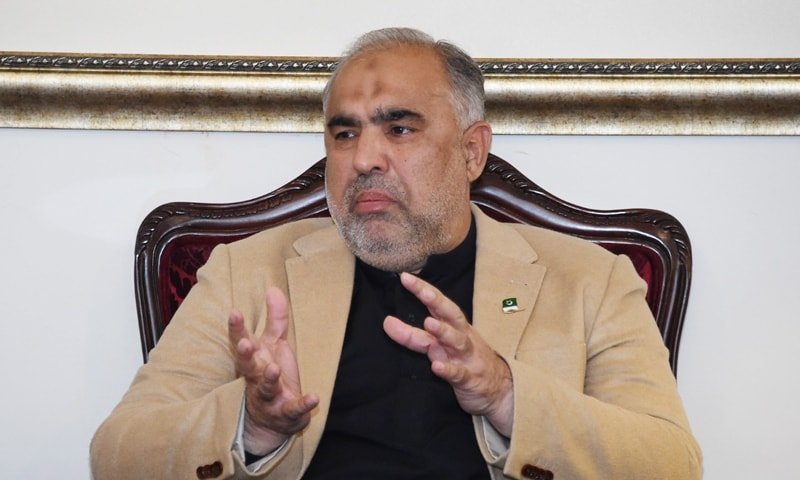
    National Assembly (NA) Speaker Asad Qaiser has summoned a session of the lower house of parliament on March 25. The NA session will be held at the Parliament House on Friday at 11am. The 14-day constitutional deadline to convene the NA session on the Opposition’s requisition will expire on March 21 (today).

    Sources told the media that the session will offer fateha for PTI MNA Haji Khayal Zaman who recently passed away, after which the Speaker has the “discretionary power” to continue or adjourn the session.

    Opposition parties on Sunday slammed Qaiser for not convening the assembly session within 14 days of its requisition, demanding that he should be tried under Article 6 of the Constitution.

    Pakistan People’s Party (PPP) Chairperson Bilawal Bhutto-Zardari expressed hope that the Supreme Court would take notice of the violation of the Constitution by the Speaker.

    “This coward captain [the PM] is running away from the vote of no confidence. He is escaping to the extent that he has made the speaker abrogate the Constitution,” said Bilawal.

    Article 6 of the Constitution of the Islamic Republic of Pakistan states, “Any person who abrogates or subverts or suspends or holds in abeyance, or attempts or conspires to abrogate or subvert or suspend or hold in abeyance, the Constitution by use of force or show of force or by any other unconstitutional means shall be guilty of high treason.”

    The second clause adds that any person aiding, abetting, or collaborating in the acts will also be considered guilty of high treason.

    Clause 2A says that an act of high treason cannot be validated by any court, including the Supreme Court (SC) and a High Court.”

  • Imran wants treason case against Fazl ‘for trying to topple PTI govt’

    Imran wants treason case against Fazl ‘for trying to topple PTI govt’

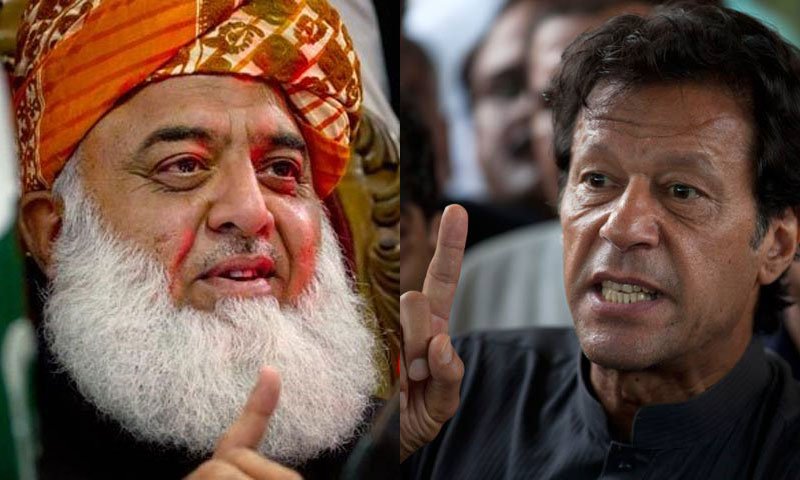
    Prime Minister (PM) Imran Khan reportedly wants Jamiat Ulema-e-Islam-Fazl (JUI-F) chief Maulana Fazlur Rehman tried under Article 6 of the Constitution “for trying to topple the government” back in November last year.

    According to media reports as well as some senior journalists, including Kamran Yousaf and Arshad Waheed Chaudhry, the premier wants Fazl tried under Article 6 — high treason — for the anti-government rally, dubbed by the JUI-F as ‘Azadi March’, towards Islamabad.

    While the rather disappointing finale of the Azadi March came just 18 days after it was launched, and without any of Fazl’s principal demands met, reports claim that PM Imran wants the leader of the religiopolitical party tried for trying to destabilise the country by ousting his government.

    Meanwhile, Twitterati are reminding Imran about his own infamous 126-day sit-in from 2014, when the Pakistan Tehreek-e-Insaf (PTI) had locked down Islamabad to oust the government of then PM Nawaz Sharif.

    JUI-F’S AZADI MARCH:

    Fazl had in June 2019 announced that his party would hold a long march towards Islamabad in the month of October. Four months later, the JUI-F chief had set October 27 as the date of the Azadi march but later deferred it to October 31.

    The JUI-F chief had demanded PM Imran’s resignation, blaming the premier for the country’s economic woes and other troubles. The PM, on the other hand, had said that Fazl’s march had a “special agenda”.

    Initially, other opposition parties had objected to the unilateral announcement about the Azadi March, but later extended their support to Fazl when he had taken them into confidence. The government had warned the opposition that anyone who tried to take the law into their hands would be dealt with strictly.

    ARTICLE 6:

    Article 6 of the Constitution of Pakistan, under which former military ruler Gen (r) Pervez Musharraf has also been found guilty, states: 

    “Any person who abrogates or subverts or suspends or holds in abeyance, or attempts or conspires to abrogate or subvert or suspend or hold in abeyance, the Constitution by use of force or show of force or by any other unconstitutional means shall be guilty of high treason.”

    The second clause adds that any person aiding, abetting or collaborating in the acts will also be considered guilty of high treason, while clause 2A says that an act of high treason cannot be validated by any court, including the Supreme Court (SC) and a high court.


  • Explainer: Musharraf’s crime, punishment as per law

    Former military ruler General (r) Pervez Musharraf on Tuesday was sentenced to death by a special court hearing the high treason case against him.

    The case was reigstered against the ex-dictator for imposing a state of emergency on November 3, 2007, by the Pakistan Muslim League-Nawaz (PML-N) government in 2013 under Article 6 of the counstitution.

    Here is what Article 6 says:

    “Any person who abrogates or subverts or suspends or holds in abeyance, or attempts or conspires to abrogate or subvert or suspend or hold in abeyance, the Constitution by use of force or show of force or by any other unconstitutional means shall be guilty of high treason.”

    The second clause of the article maintains that any person aiding, abetting or collaborating in the acts will also be considered guilty of high treason; while clause 2A states that an act of high treason cannot be validated by any court, including the Supreme Court (SC) and a high court.
    The last clause directs the parliament to provide for the punishment of persons found guilty of high treason, and according to the High Treason (Punishment) Act, 1973, the punishment is death or lifetime imprisonment.

    STATE OF EMERGENCY:

    On November 3, 2007, the then president and chief of army staff (COAS) Musharraf issued a proclamation of emergency, which held the constitution in a state of temporary suspension.

    While he later resigned as army chief 25 days into the emergency on November 28, the state of emergency and its responses are generally attributed to the controversies surrounding his re-election during the presidential election on October 6, 2007, including his holding of both offices of president and COAS at the time.

    Coming to power six years later, Nawaz Sharif had announced putting the former military ruler on trial for treason, saying the former president had committed treason by abrogating the constitution and should be tried under the law.