Tag: Article 63-A

  • ‘Want to get access to his Peer’: Usman Buzdar’s expected comeback sparks a meme fest

    ‘Want to get access to his Peer’: Usman Buzdar’s expected comeback sparks a meme fest

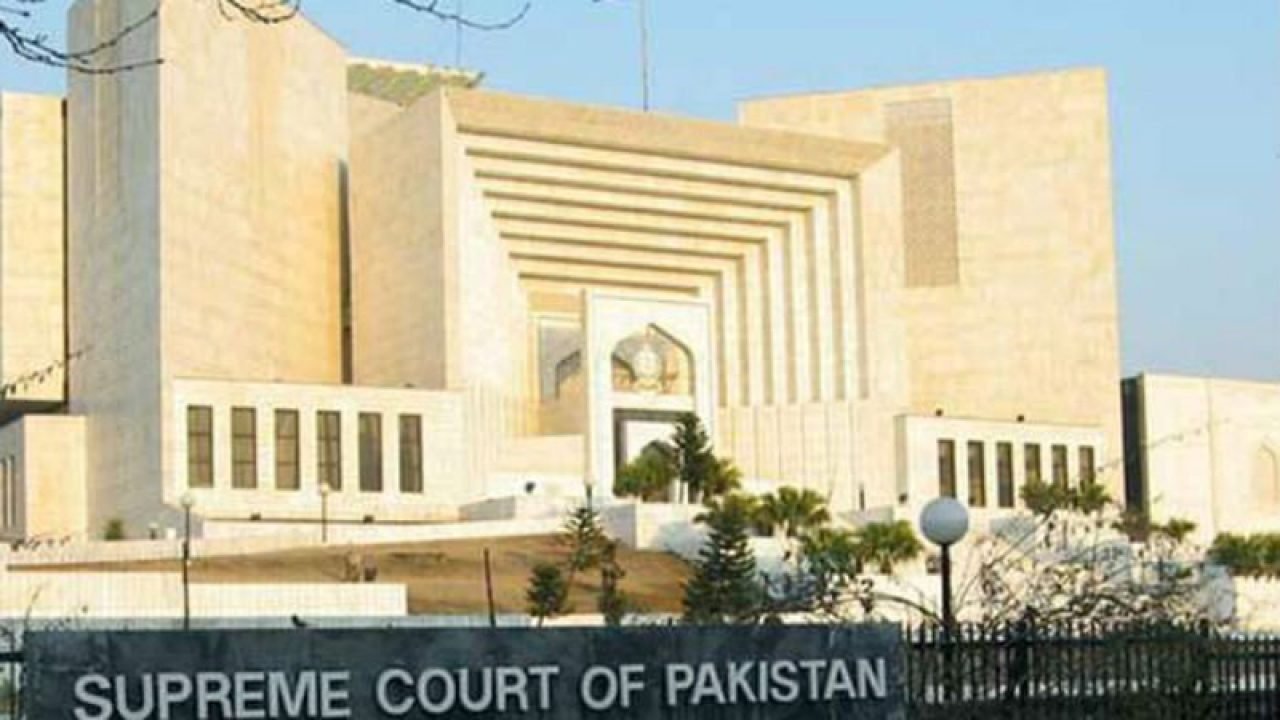
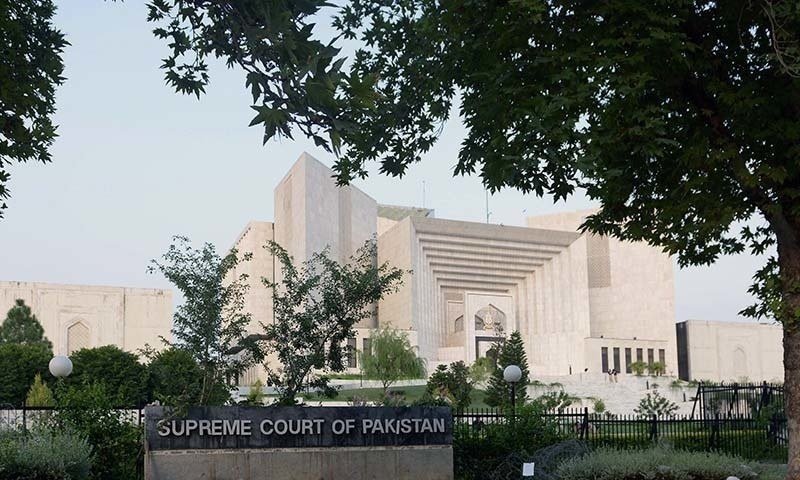
    The Supreme Court (SC) on Tuesday in its decision on a presidential reference seeking interpretation of Article 63-A of the Constitution, which is related to the status of defecting lawmakers, said the votes of defecting lawmakers will not be counted.

    Pakistan Tehreek-e-Insaf (PTI) supporters started celebrating the ‘expected’ comeback of Usman Buzdar by removing the current Punjab Chief Minister Hamza Shehbaz.

    The memes in relevance to Buzdar are hilarious.

    Seems like the Peer baba’s business is about to boom.

    Some questioned the short tenure of Hamza Shehbaz.

    Some declared Buzdar as the real danger.

    Some said Hamza might be a good player but Buzdar is the real coach.

    Some wished for the same luck as that of Buzdar.

    Some showed how Buzdar will make an entry at the CM House.

  • SC decides defecting lawmakers’ votes will not be counted

    SC decides defecting lawmakers’ votes will not be counted

    The Supreme Court (SC) on Tuesday in its decision on a presidential reference seeking interpretation of Article 63-A of the Constitution, which is related to the status of defecting lawmakers, said the votes of defecting lawmakers will not be counted.

    Chief Justice of Pakistan (CJP) Umar Ata Bandial, Justice Ijazul Ahsan, and Justice Munib Akhtar gave the majority verdict while Justice Mazhar Alam Khan Miankhel and Justice Jamal Khan Mandokhail were the dissenting judges.

    Question 1: Should Article 63-A have a limited or a broad, purpose-oriented interpretation?

    The short-order said that the first question was related to the proper approach to be taken for the interpretation and application of Article 63-A.

    “In our view, this provision cannot be read and applied in isolation and in a manner as though it is aloof from, or indifferent to, whatever else is provided in the Constitution,” the verdict stated.

    It said that Article 63-A was an “expression in the Constitution itself of certain aspects of the fundamental rights that inhere in political parties under clause (2) of Article 17,” adding that the two provisions were “intertwined”.

    “Defections rightly stand condemned as a cancer afflicting the body politic. They cannot be countenanced,” the order said, adding that 63-A must be interpreted in a “purposive and robust manner”.

    “The pith and substance of Article 63-A are to enforce the fundamental right of political parties under Article 17 […] It must therefore be interpreted and applied in a broad manner, consistent with fundamental rights,” the verdict said.

    Question 2: Will the defecting members’ vote be counted, given equal weightage?

    Giving its stance on the second question, the verdict said that the vote of any member of a parliamentary party in a house “that is cast contrary to any direction issued by the latter in terms of para (b) of clause (1) of Article 63-A cannot be counted and must be disregarded, and this is so regardless of whether the party head, subsequent to such vote, proceeds to take, or refrains from taking, an action that would result in a declaration of defection.”

    Question 3: Will the defectors be disqualified for life?

    “While it is for parliament to enact such legislation, it must be said that it is high time that such a law is placed on the statute book. If such legislation is enacted it should not amount to a mere slap on the wrist but must be a robust and proportionate response to the evil that it is designed to thwart and eradicate,” the order stated.

    Question 4: Measures that can be taken to prevent defection, floor crossing, and vote-buying

    On the question of the measures that can be taken to curb vote-buying, the verdict refrained from giving an opinion on the fourth question, submitted by the president was returned by the court as it was “stated in terms” that were “vague, and too broad and general”.

    What is Article 63-A?

    Article 63(A) of the Constitution of Pakistan deals with the defection of parliamentarians.

    According to the Article, a lawmaker can be disqualified on the grounds of defection if they vote or abstain from voting in the House contrary to any direction issued by the parliamentary party to which they belong.

    However, this is restricted to three instances where they have to follow the party’s directions:

    Election of the prime minister or chief minister;

    Vote of confidence or a vote of no-confidence;

    Money bill or a Constitution (amendment) bill.

    Per the Article, the head of the party is required to present a written declaration that the MNA concerned has defected.

    However, prior to presenting the declaration, the head of the party will have to give the MNA concerned a chance to explain the reasons for defection.

    Following that, the party chief will then forward the written declaration to the speaker, who would, in turn, hand it over to the chief election commissioner (CEC).

    The CEC will have 30 days at its disposal to confirm the declaration. Once confirmed, the MNA concerned will no longer be a member of the House and their “seat shall become vacant”.

  • ECP says PTI MNAs who ditched PTI can’t be disqualified

    ECP says PTI MNAs who ditched PTI can’t be disqualified

    The Election Commission of Pakistan (ECP) on Wednesday dismissed the Pakistan Tehreek-e-Insaf’s (PTI) references seeking the disqualification of its dissident members of the National Assembly (NA).

    A three-member bench headed by Chief Election Commissioner (CEC) Sikandar Sultan Raja reserved its decision after hearing arguments from all sides — the PTI and the lawyers of the dissident MNAs.

    The ECP stated that the declarations by the PTI against its lawmakers were not found to be in accordance with the Constitution.

    PTI’s lawyer Faisal Chaudhry requested the court to provide a copy of the reserved verdict, saying that he will appeal against it.

    While presenting his arguments, Noor Alam Khan’s lawyer Gohar Khan maintained that Article 63(A)1 does not apply to Noor.

    “The show-cause notice issued by the PTI secretary-general doesn’t have legal status. Therefore, Noor is still a PTI member,” Gohar argued, adding that the show-cause notice issued by the secretary-general was nothing more than a piece of paper as per the law. He maintained that as per the Supreme Court’s (SC) ruling, ECP’s full-court bench can give its verdict in the disqualification reference.

    The PTI filed references against 20 MNAs seeking their disqualification under Article 63-A of the Constitution ahead of the no-trust vote against then-premier Imran Khan.

  • CJP Bandial says not counting a vote during no-trust proceedings against Khan would be ‘contemptuous’

    Chief Justice of Pakistan (CJP) Umar Ata Bandial on Thursday observed that not counting a vote that has been cast during the no-confidence vote against Prime Minister (PM) Imran Khan would be “contemptuous”.

    CJP Bandial further questioned that for how long a dissident Member of the National Assembly (MNA) could be disqualified.

    He made the remarks during the hearing of a presidential reference seeking the Supreme Court’s opinion on Article 63-A of the Constitution.

    Earlier, during the hearing, Justice Mandokhail questioned whether the MNA’s vote could be counted in the proceedings conducted before he was de-seated, observing there was no mention of not counting a vote in the 18th Amendment.

    Justice Akhtar observed that the purpose of Article 63-A was to stop defection from party policies. “The party’s collective opinion is above an individual opinion. The collective opinion is important for the stability of democracy.” He said one interpretation of Article 63-A was that the vote of dissidents should not be counted.

    Attorney General of Pakistan (AGP) Khalid Javed Khan argued that the real issue was about clarifying Article 63-A(4). “Someone who violates the Constitution by defection cannot be praised. We cannot read what’s not written in the Constitution. Article 62(1)(f) states that an MNA should be honest and righteous.

    “Should defecting from the party be rewarded? Can those who are dishonest be considered righteous?” he asked.

    Justice Mandokhail replied that every MNA had the right to vote in accordance with Article 95, which deals with the procedure to bring in a no-confidence motion against the prime minister.

    “If vote can be cast, it can also be counted,” he observed, asking the AGP why the government was seeking the court’s opinion if it already had the answer. “If you agree with this point, then withdraw this reference,” he added.

    Earlier, SCBA submitted its response in the apex court, stating that voting is an individual right of an MNA instead of a political party’s collective right under Article 95.

    It declared the MNAs’ right to vote for the no-confidence motion against the prime minister to be an individual capacity in its response to the presidential reference for the interpretation on Article 63A of the Constitution Pakistan.

  • Supreme Court to take up presidential reference on Article 63-A today

    Supreme Court to take up presidential reference on Article 63-A today

    The Supreme court (SC) will take up the presidential reference seeking opinion on Article 63-A of the Constitution – which deals with the disqualification of parliamentarians over defection – at 1pm on Thursday, reports Dawn.

    A five-member bench of the SC comprising Chief Justice of Pakistan (CJP) Umar Ata Bandial will head the bench, which also includes Justice Ijazul Ahsan, Justice Mazhar Alam Khan Miankhel, Justice Munib Akhtar, and Justice Jamal Khan Mandokhail.

    Earlier, on Monday, a two-member bench of the apex court comprising CJP Bandial and Justice Akhtar took up the presidential reference and declared that a larger bench would hear the case.

    Justice Faez Isa “perplexed” over CJP Bandial’s decision to hear the presidential reference

    The senior-most judge of SC Justice Faez Isa has said that he is “perplexed” over CJP Bandial’s decision to hear the presidential reference for the interpretation of Article 63-A together with the SCBA petition over the no-confidence motion.

    In a three-page letter to the top judge, dated March 22, Justice Isa has questioned multiple legal aspects along with the formation of a larger bench “without the inclusion of senior-most judges”.

    “On 19 March 2022, a two-member bench headed by yourself and an hon’ble judge 8 in seniority, heard CP No. 2/2022 in Court on a Saturday, despite the filing of the petition on Thursday. On the said date it was ordered that CP No. 2/2022 be heard ‘along with a Reference, if any, that is filed under Article 186 of the Constitution and the petition and the proposed reference were ordered to be fixed together for hearing. I am perplexed as to how a matter which had not been filed was ordered to be fixed for hearing,” the letter said.

    Justice Isa further stated that the apex court rules demand that the constitution of a bench is done fairly and as per the law, referring to Article IV of the Code of Conduct, which says:

    “[…] a judge must avoid all possibility of his opinion or action, in any case, being swayed by any consideration of personal advantage, either direct or indirect.”

    “The Constitution specifically recognises the most senior Judge of the Supreme Court (including in Article 175A(3) and Article 180), and with seniority comes responsibility, which must not be shirked. The most senior Judge also ensures the continuity of the Supreme Court as an institution,” Justice Isa wrote.

    Better if the assembly’s fight is fought inside the assembly: CJP Bandial

    Justice Bandial on Monday heard a plea filed by the Supreme Court Bar Association (SCBA) about the lawful proceeding of the no-confidence motion in the National Assembly (NA).

    During the hearing, which was attended by three bigwigs of the Opposition — PML-N President Shehbaz Sharif, Pakistan People’s Party (PPP) Chairman Bilawal Bhutto-Zardari, and Jamiat-e-Ulema-Islam-Fazl (JUI-F) chief Maulana Fazlur Rehman, SCBA counsel argued that NA Speaker Asad Qaiser summoned the session 17 days after the submission of the no-confidence motion. However, according to Article 95, the session has to be called within 14 days.

    He further argued that the no-confidence motion could not be adjourned before voting. To this, CJ observed that it is an “internal matter” and it would be “better if the assembly’s fight is fought inside the assembly”.

    According to Justice Munib, a member’s individual vote has no “status”. Justice Munib Akhtar said after joining a political party, a member’s vote is considered a “collective” right.

    SCBA writes a reply to the apex court

    On Thursday, the SCBA submitted a written reply to the apex court ahead of today’s hearing in accordance with the court’s directives.

    In its reply, the SCBA said that the votes of MNAs “cannot possibly be construed as a collective right of a political party”, citing Article 95 of the Constitution, which deals with the procedure to bring in a no-confidence motion against the prime minister.

    Fawad Chaudhry responds to SCBA’s reply to the apex court

    Information Minister Fawad Chaudhry took to Twitter and reacted to SCBA’s response.

    Fawad said, “Reading SCBA’s answer, it seems that Supreme Court bar body is a subsidiary of Noon League,” says Fawad Chaudhry, adding, “Ordinary lawyers are dissatisfied with the role of lawyers’ organisations and the defeat of this group in the Lahore Bar elections is the result of the lawyers’ reaction.”

    Attorney General of Pakistan (AGP) Khalid Jawed Khan had submitted the reference seeking the SC’s opinion on Article 63-A of the Constitution on March 21.