Tag: Artificial Intelligence

  • PM Shehbaz urges FBR to modernise tax system without burdening honest taxpayers

    PM Shehbaz urges FBR to modernise tax system without burdening honest taxpayers

    Prime Minister Muhammad Shehbaz Sharif has directed the Federal Board of Revenue (FBR) to implement a strategy using the latest technology to expand the tax base without imposing additional burdens on honest taxpayers.

    During his visit to the FBR Headquarters, the Prime Minister underscored the government’s commitment to steering Pakistan towards economic progress and stability.

    Prime Minister Sharif highlighted the necessity of collective and individual efforts, sincerity, and sacrifices to prioritise national interests over personal gains.

    He described the recent staff-level agreement with the International Monetary Fund (IMF) as a positive development for the country’s economy and expressed optimism that the IMF board would endorse it.

    He urged the FBR to work diligently to ensure this IMF programme is the last one needed, paving the way for a prosperous future.

    Sharif emphasised the importance of taxing those who evade payments to alleviate the repeated financial strain on honest taxpayers, including government employees. He advocated for leveraging modern technologies, such as artificial intelligence, to digitise FBR operations, which he viewed as crucial for broadening revenue sources without unfairly burdening compliant taxpayers.

    The Prime Minister criticised the reliance on foreign debts, stressing that sustainable nation-building requires self-reliance and effective tax collection. He insisted that current FBR reforms be conducted objectively and transparently, prioritising national interests. Sharif also instructed FBR Chairman Malik Amjad Zubair Tiwana to bring any departmental issues to light promptly.

    Acknowledging FBR’s success in collecting 30% more revenue compared to the previous year, Sharif insisted that tax enforcement should focus on achieving set targets without causing undue difficulties for compliant businesses and industrialists.

    He recalled the introduction of agricultural tax in Punjab 27 years ago, which was subsequently adopted by other provinces, highlighting the need to address general sales tax collection issues.

    Upon his arrival at FBR Headquarters, Sharif was welcomed by key government officials, including Finance Minister Muhammad Aurangzeb and Minister of State for Finance Ali Pervaiz Malik. The Prime Minister paid homage to the FBR’s fallen heroes by laying a wreath and offering Fateha. He reiterated that the automation and digitisation of FBR are government priorities and authorised the immediate release of Rs2 billion to enhance the Web-Based One Customs System (WeBOC).

    The meeting, attended by several ministers and senior officials, included a briefing on ongoing FBR reforms and the progress of the digitisation strategy.

    The Prime Minister was informed of the completion of the first phase of the FBR Tajir Dost Mobile application, which simplifies tax return processes. Additionally, the use of advanced technology has identified approximately 4.9 million potential taxpayers.

    Sharif instructed the FBR to expand the tax net to include these identified individuals and to address the legitimate demands of flour mill owners through direct engagement.


  • UN chief ‘deeply troubled’ by reports Israel using AI to identify Gaza targets

    UN chief ‘deeply troubled’ by reports Israel using AI to identify Gaza targets

    UN Secretary-General Antonio Guterres on Friday expressed serious concern over reports that Israel was using artificial intelligence to identify targets in Gaza, resulting in many civilian deaths.

    According to a report in independent Israeli-Palestinian magazine +972, Israel has used AI to identify targets in Gaza — in some cases with as little as 20 seconds of human oversight.

    Guterres said that he was “deeply troubled by reports that the Israeli military’s bombing campaign includes Artificial Intelligence as a tool in the identification of targets, particularly in densely populated residential areas, resulting in a high level of civilian casualties.”

    “No part of life and death decisions which impact entire families should be delegated to the cold calculation of algorithms,” he said.

    The +972 report claims that “the Israeli army has marked tens of thousands of Gazans as suspects for assassination, using an AI targeting system with little human oversight and a permissive policy for casualties.”

    The report said that, according to “six Israeli intelligence officers”, a system dubbed Lavender had “played a central role in the unprecedented bombing of Palestinians, especially during the early stages of the war.”

    “According to the sources, its influence on the military’s operations was such that they essentially treated the outputs of the AI machine ‘as if it were a human decision’,” +972 reported.

    Two sources said “the army also decided during the first weeks of the war that, for every junior Hamas operative that Lavender marked, it was permissible to kill up to 15 or 20 civilians”.

    If “the target was a senior Hamas official… the army on several occasions authorized the killing of more than 100 civilians,” it added.

    The Israeli army, known as the IDF, on Friday rejected the claims.

    “The IDF does not use an artificial intelligence system that identifies terrorist operatives or tries to predict whether a person is a terrorist,” it said.

    Instead it has a “database whose purpose is to cross-reference intelligence sources… on the military operatives of terrorist organizations” to be used as a tool for analysts, it added.

    “The IDF does not carry out strikes when the expected collateral damage from the strike is excessive,” it said, using a term that includes civilian casualties.

    Israeli genocide in the Gaza Strip has killed at least 33,091 people since October 7, mostly women and children, according to the health ministry.

    The United Nations has warned of imminent famine in the besieged territory.

    Israel began hyping AI-powered targeting after an 11-day conflict in Gaza during May 2021, which commanders branded the world’s “first AI war”.

    The military chief during the 2021 war, Aviv Kochavi, told Israeli news website Ynet last year the force had used AI systems to identify “100 new targets every day”, instead of 50 a year previously.

    Weeks into the latest Gaza war, a blog entry on the Israeli military’s website said its AI-enhanced “targeting directorate” had identified more than 12,000 targets in just 27 days.

    An unnamed Israeli official was quoted as saying the AI system, called Gospel, produced targets “for precise attacks on infrastructure associated with Hamas, inflicting great damage on the enemy and minimal harm to those not involved”.

    But an anonymous former Israeli intelligence officer, quoted in November by +972, described Gospel’s work as creating a “mass assassination factory”.

    In a rare confession of wrongdoing, Israel on Friday admitted a series of errors and violations of its rules in the killing of seven aid workers in Gaza, saying it had mistakenly believed it was “targeting armed Hamas operatives”.

    Alessandro Accorsi, a senior analyst at Crisis Group, said the +972 report was “very concerning”.

    “It feels very apocalyptic. It’s clear… the degree of human control is very low,” he told AFP.

    “There are a thousand questions around this obviously — how moral it is to use it — but it is hardly surprising it is used,” he said.

    Johann Soufi, a human rights lawyer and former director of the UN Palestinian refugee agency UNRWA’s legal office in Gaza, said the +972 article described methods that were “undeniably war crimes”.

    They were “likely crimes against humanity” in view of the high civilian casualties, he added on X, formerly Twitter.

  • Apple abandons electric car project, shifts focus to AI

    Apple abandons electric car project, shifts focus to AI

    In a surprising turn of events, Apple has officially terminated its ambitious electric car project, according to a reliable source informed about the matter.

    The decision, revealed on Tuesday, marks the end of a decade-long effort initiated by the tech giant to venture into the electric vehicle industry.

    The abandoned project aimed to propel Apple into a new sector, potentially mirroring the triumphs of its iconic iPhone.

    However, the venture faced challenges and inconsistent progress throughout its existence.

    The cancellation aligns with a broader trend in the automotive industry, where global players are scaling back investments in electric vehicles amid a substantial drop in demand.

    Reportedly, several team members previously engaged in the electric car project will be reassigned to Apple’s artificial intelligence (AI) division.

    This strategic move aligns with Apple’s commitment to bolstering its presence in AI, a domain where it has been comparatively reserved.

    Apple has refrained from significant AI initiatives, contrasting sharply with industry giants like Alphabet and Microsoft, which seized an early advantage in integrating this transformative technology.

    Concerns have arisen that Apple’s cautious approach may leave it lagging behind in infusing AI into its product lineup.

    Ben Bajarin, CEO of Creative Strategies, commented, “If it is true, Apple will put more focus on GenAI, and that should give investors more optimism about the company’s efforts and ability to compete at a platform level on AI.”

    Last year, Apple experienced the smallest share gain among the so-called Magnificent Seven stocks, reflecting apprehensions about its stance on AI.

    Microsoft recently surpassed Apple as the world’s most valuable company, underscoring Apple’s struggle with weakening demand for its key products, particularly in significant markets like China.

    Simultaneously, the electric vehicle industry faces a slowdown in demand due to elevated interest rates, leading to job cuts and reduced production.

    Apple’s shift in focus to AI reflects a strategic pivot in response to market dynamics and underscores the company’s commitment to staying at the forefront of technological innovation.

    Apple has chosen to adapt its trajectory in a rapidly evolving landscape, signalling a nuanced strategy that aligns with emerging industry trends.

  • ChatGPT cranks out gibberish for hours

    ChatGPT cranks out gibberish for hours

    ChatGPT spewed nonsensical answers to user’s queries for hours Tuesday into Wednesday before eventually returning to its apparent senses.

    OpenAI did not explain what went awry with its generative artificial intelligence (AI) tool, considered the one to beat in the technology sector.

    “We are investigating reports of unexpected responses from ChatGPT,” OpenAI said on its status website when the software seemed to go wacky on Tuesday afternoon.

    ChatGPT was giving “peculiar” responses, generating nonexistent words, incomplete sentences and general gobbledygook, developers using the tool said in a discussion forum on the OpenAI website.

    “It gives me meaningless words followed by a bizarre list,” one developer lamented in the forum.

    “It feels as if my GPT is haunted or something has been compromised, either on my end or at OpenAI’s (end).”

    It wasn’t until more than 16 hours had passed that OpenAI updated the page with a message that ChatGPT was operating normally.

    The San Francisco based technology firm replied to an AFP query by directing it to the ChatGPT status page.

    OpenAI recently concluded a deal with investors that reportedly valued the start-up at $80 billion or more, after a roller-coaster year for the tech firm.

    The agreement, reported by the New York Times but not yet confirmed by OpenAI, would mean the value of the company — a world leader in generative AI — would have nearly tripled in under 10 months.

    OpenAI led a revolution in AI when it placed its ChatGPT program online in late 2022.

    The immediate success of the interface sparked tremendous interest in the cutting-edge technology, capable of producing text, sounds and images upon demand.

    OpenAI — which is also the maker of image-generating DALL-E — recently released a new tool named “Sora,” which can create realistic videos of up to a minute long via simple user prompts.

    Microsoft has invested some $13 billion in OpenAI, using the startup’s technology in Bing and other services.

    Microsoft is locked in fierce competition with Google to roll out new AI-infused tools, to the point that the US Federal Trade Commission in January launched an investigation into the enormous investments by Microsoft, Google and Amazon in such specialized start-ups.

  • IMF analysis reveals AI’s potential to disrupt 40% of jobs globally

    IMF analysis reveals AI’s potential to disrupt 40% of jobs globally

    In a recent comprehensive analysis, the International Monetary Fund (IMF) sheds light on the extensive impact of artificial intelligence (AI), unveiling its potential to disrupt nearly 40 per cent of all jobs worldwide.

    Kristalina Georgieva, the Managing Director of the IMF, expresses deep concerns about the consequences of widespread AI adoption, emphasising the likelihood of exacerbating existing inequalities.

    Georgieva underlines the urgency for policymakers to address this alarming trend, cautioning that unchecked deployment of AI could further widen social disparities and intensify tensions.

    The analysis indicates that the influence of AI on employment is expected to be particularly pronounced in advanced economies, with an estimated impact on approximately 60 per cent of jobs.

    While in about half of these cases, employees are poised to benefit from AI integration by enhancing their productivity and work capabilities, in other instances, AI may assume critical roles traditionally performed by humans.

    This shift in labour dynamics could lead to reduced demand for human workers, potentially affecting wages and, in some cases, resulting in job displacement.

    Contrary to the more significant impact projected for advanced economies, the IMF’s projections suggest that low-income countries may experience a comparatively lower impact, with AI affecting only around 26 per cent of jobs in these regions.

    Ms. Georgieva points out that many of these nations lack the necessary infrastructure or skilled workforces to harness the benefits of AI, raising concerns that the technology could exacerbate inequality among nations over time.

    This analysis aligns with a 2023 report by Goldman Sachs, estimating that AI has the potential to replace the equivalent of 300 million full-time jobs.

    However, the report also highlights the possibility of new job opportunities emerging along with a substantial increase in productivity.

    As the rapid proliferation of AI continues to spark intense debate, the global community faces the critical challenge of balancing the benefits and risks associated with this transformative technology.

  • ‘Death GPT’ is here to tell you when you will die

    ‘Death GPT’ is here to tell you when you will die

    Researchers at the University of Copenhagen and Northeastern University in Boston have developed an algorithm that can predict a person’s life course, including premature death, in much the same way that large language models such as ChatGPT can predict sentences⁠.⁠

    University of Copenhagen

    The death calculator, dubbed ‘DeathGPT’ by Financial Times, is based on narrative building just like it is in stories. According to scientists, each life story is the chronicle of a death foretold. By using Denmark’s registry data, which contains a wealth of day-to-day information on education, salary, job, working hours, housing and doctor visits, academics have developed an algorithm that can predict a person’s life course, including premature death, in much the same way that large language models (LLMs) such as ChatGPT can predict sentences. The algorithm outperformed other predictive models, including actuarial tables used by the insurance industry.

    The fact that our complex existences can be resolved in text is both exhilarating and confusing. Sune Lehmann, from the Technical University of Denmark, who led the research published last month in Nature Computational Science, does not find the idea discombobulating. “I think the similarity between text and lives is deep and multi-faceted,” he told Financial Times. “It makes sense to me that our algorithm can predict the next step in human lives.”

    Methodology

    For a first step, researchers compiled a “vocabulary” of life events, creating a kind of synthetic language, and used it to construct “sentences”. A sample sentence might be: “During her third year at secondary boarding school, Hermione followed five elective classes.”

    Loopholes

    While the paper claims that “accurate individual predictions are indeed possible”, the algorithm furnishes a probability of death over a certain period rather than an exact date. There are caveats: what applies in Denmark might not apply elsewhere, and the algorithm encodes biases in the training data. Even so, given its potential to fine-tune risk prediction, the impact on the insurance industry will be worth watching. For their part, the researchers don’t want their work to be used by insurers, and are keeping the algorithm and data under wraps for now.

    Outcomes

    In existing predictive models, researchers must pre-specify variables that matter, such as age, gender and income. In contrast, this approach swallows all the data and can independently alight on relevant factors (it spotted that income counts positively for survival, for example, and that a mental health diagnosis counts negatively). This could point researchers to previously unexplored influences on health — and may uncover new links between apparently unrelated patterns of behaviour. One of Lehmann’s growing concerns is privacy; he points out that companies such as Google are assembling muscular prediction machines, using an abundance of personal data filtered from the internet.

    This is an era of unparalleled predictability in human lives — and an era of unparalleled power for those who can read our stories before we have lived them.

  • Apple Watch import ban goes into effect in US patent clash

    Apple Watch import ban goes into effect in US patent clash

    A US import ban on certain Apple smartwatch models came into effect Tuesday, after the Biden administration opted not to veto a ruling on patent infringements.

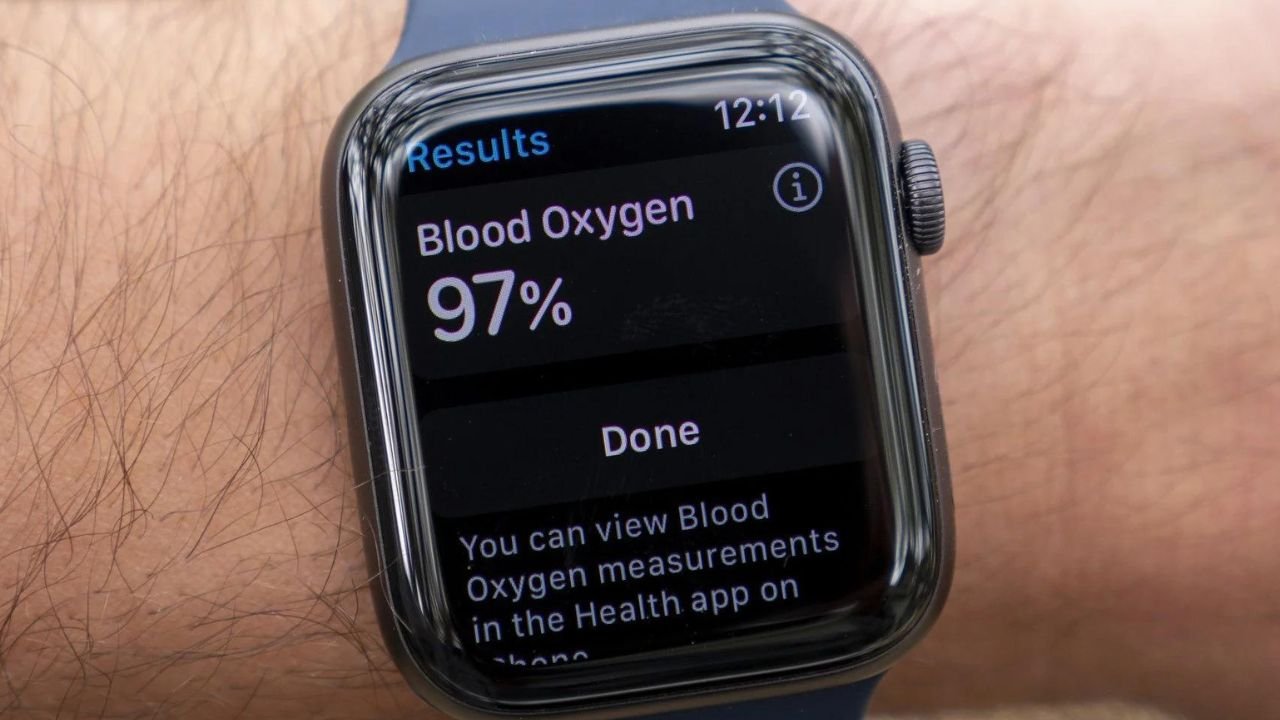
    The United States International Trade Commission (ITC) decided in October to ban Apple Watch models over a patented technology for detecting blood-oxygen levels.

    Apple contends that the ITC finding was in error and should be reversed, but last week paused its US sales of Apple Watch Series 9 and Apple Watch Ultra 2.

    The order stemmed from a complaint made to the commission in mid-2021 accusing Apple of infringing on medical device maker company Masimo Corp’s “light-based oximetry functionality.”

    “After careful consultations, Ambassador (Katherine) Tai decided not to reverse the… determination and the ITC’s decision became final on December 26, 2023,” the president’s executive office said in a statement on Tuesday.

    Apple has been steadily ramping up fitness and health features with each generation of its Apple Watch, which dominates the smartwatch category.

    In September, Apple released its Apple Watch Series 9, touting increased performance along with features such as the ability to access and log health data.

    “Our teams work tirelessly to create products and services that empower users with industry-leading health, wellness and safety features,” Apple said when the ITC ban was issued.

    “Masimo has wrongly attempted to use the ITC to keep a potentially lifesaving product from millions of US consumers while making way for their own watch that copies Apple.”

    In May, a trial of Masimo’s allegations ended in a mistrial after jurors failed to reach a unanimous verdict.

    Late last year, Apple filed two patent infringement lawsuits accusing Masimo of copying Apple Watch technology.

  • Judges in England and Wales allowed to use ChatGPT to write judgments

    Judges in England and Wales allowed to use ChatGPT to write judgments

    Judges in England and Wales have been allowed to use artificial intelligence (AI) tool, Chat GPT, to write judgments.

    The permission has been granted despite concerns that artificial intelligence could write references to cases that never happened.

    The Judicial Office has issued guidelines for the use of AI Chat GPT for thousands of judges in England and Wales, saying that artificial intelligence can help summarise long texts.

    Master of the Rolls Sir Geoffrey Voss has described artificial intelligence as a better, faster and cost-effective digital assistant for the justice system.

    Only earlier this year, two American lawyers were fined for citing fake cases created by ChatGPT.

  • Apple faces competition as Google releases Pixel 8 and AI-powered smartwatch

    Apple faces competition as Google releases Pixel 8 and AI-powered smartwatch

    The Apple iPhone 15 series now faces fresh competition as Google introduced its latest smartphone, the Pixel 8, on Wednesday, alongside a new smartwatch that seamlessly integrates advanced artificial intelligence (AI) technology into its core consumer devices.

    The enhancements made to the Pixel phones, which are particularly popular among photography enthusiasts and those who prefer a pure Android experience, have the potential to make them more appealing to shoppers as they plan their holiday season purchases.

    Google has upgraded the Pixel lineup by equipping it with the Tensor G3 mobile processor, which includes native machine learning and generative AI models. These AI features can assist users in various ways, such as improving photography, summarising web content, and blocking unwanted spam calls. This announcement was made during the Made by Google event held in New York.

    Additionally, the higher-end Pixel 8 Pro now features a temperature sensor, and Google has applied for approval from the Food and Drug Administration to enable a thermometer app for measuring body temperature.

    The Pixel 8 is priced starting at $699, while the Pixel 8 Pro starts at $999, making it $100 more expensive than the previous generation models. Both models will be available for purchase starting on October 12th.

    At the event, Google emphasized its commitment to mobile AI, a direction that IDC analyst Ryan Reith noted could have a significant impact on the industry, especially in the US, if accompanied by strong marketing efforts.

    Notably, in the previous month, Apple launched a new series of iPhones that included improvements in design and performance but did not increase prices, reflecting the ongoing challenges in the global smartphone market.

    According to IDC, Google’s Pixel ranks 12th globally in terms of smartphone shipments, holding a 0.9 per cent market share. The largest market for Pixel devices is the United States, accounting for approximately 39 per cent of global shipments, followed by Japan at 29 per cent and the UK at 9 per cent.

    In addition to the smartphone and smartwatch announcements, Google also revealed plans to integrate generative AI capabilities into its virtual assistant, enabling it to assist users with tasks like trip planning and email management while also asking follow-up questions.

    Furthermore, Google introduced the Google Watch 2, an upgraded version of its first smartwatch released in October of the previous year. It is priced at $349 and comes with a digital crown and advanced health tracking features powered by AI.

  • MoU signed between Pakistan, Saudi Arabia to promote digital economy

    MoU signed between Pakistan, Saudi Arabia to promote digital economy

    Pakistan and Saudi Arabia have signed a Memorandum of Understanding (MoU) to work together in communication and information technology, in a bid to promote the digital economy.

    According to Saudi Arabia’s official news agency SPA, the purpose of the memorandum is to establish cooperation in the fields of communication and information technology for digital transformation, promotion of innovation and development of digital infrastructure.

    This memorandum of understanding was signed by Saudi Arabia’s Minister of Communications and Information Technology, Engineer Abdullah Bin Amir Al-Sawaha and Pakistan’s Caretaker Federal Minister for Information and Communication Technology, Dr. Umar Saif.

    Under the MoU, the two countries will establish innovation hubs, centres of excellence and university branches for advanced technologies, as well as strengthen cooperation in the systems of small and medium-sized enterprises and emerging companies.

    They will also work on policies, technologies, systems and legislation in the field of digitization and electronic manufacturing.

    Both sides have pledged to focus on e-governance, smart infrastructure, e-health and e-education, the use of emerging technologies such as artificial intelligence, robotics, cloud computing, games and more.