Tag: Asad Qaiser

  • ‘Judges and generals can’t take decisions behind closed doors’: Fawad Chaudhry

    ‘Judges and generals can’t take decisions behind closed doors’: Fawad Chaudhry

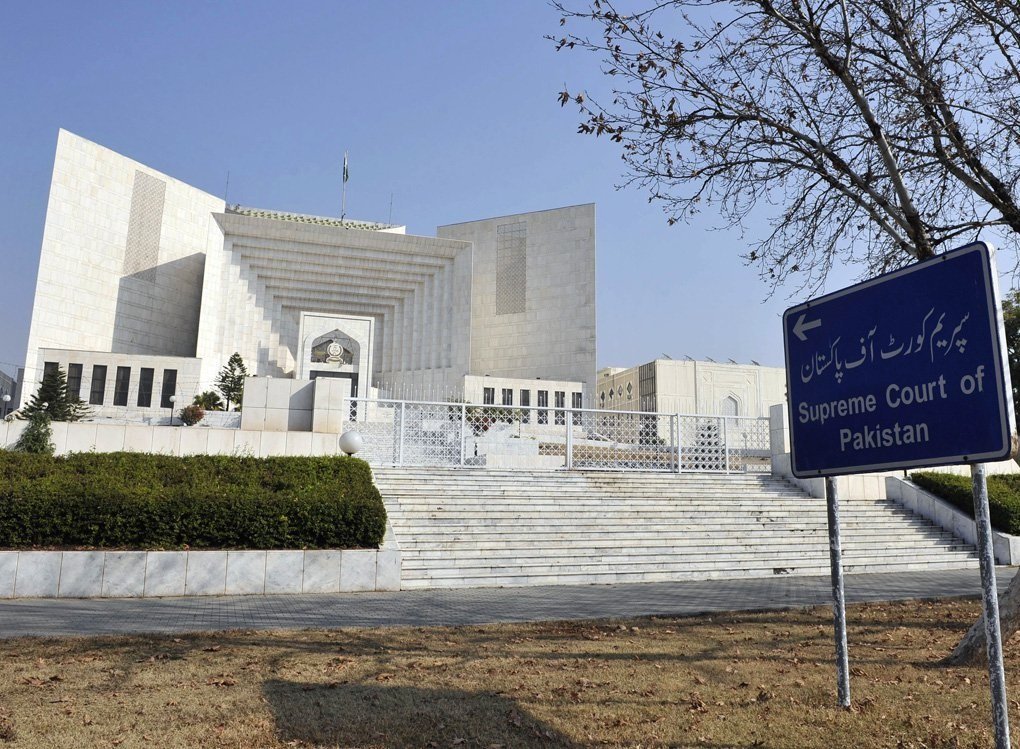
    Pakistan Tehreek-e-Insaf (PTI) leader Fawad Chaudhry criticised the Supreme Court’s detailed judgement given yesterday in a suo motu case on the ruling by former National Assembly Deputy Speaker Qasim Suri under Article 5 of the Constitution. 

    “The people should be given the right to make decisions. Judges and generals can’t change their policies every day. They can’t take decisions behind closed doors.”

    Fawad said that Chief Justice Umar Ata Bandial has the sealed cipher in his office. “Senior judges should ask the CJP why it was not shown to them,” said Fawad. 

    He further claimed that a letter from President Alvi is also with the Supreme Court suggesting the formation of a commission to investigate the matter. However, the court had not responded to Alvi’s letter.

    “Rather than forming a commission to properly investigate the matter, the Supreme Court has given its verdict without even reading the material that was given to it. Moreover, the timing of the ruling is self-explanatory.” 

    The PTI leader asked if the Supreme Court could issue the detailed judgement after three months, why did it not delay it a bit longer. He alleged that it was purposefully done in the wake of the upcoming by-elections in Punjab.

    Moreover, the PTI leader claimed that people are aware of why the SC “did not want to investigate the cipher”. Chaudhry was of the view that the top court “should read the cipher before penning the judgment”.

    He challenged the decision saying that when PTI comes back into power, it will quash the order through Parliament.

    Commenting on Mazhar Alam Miankhel’s additional note which said “if we begin to pursue cases under article 6, we will find there are more people to hang than there are nooses”.

    If I get permission, will get Imran Khan arrested: Rana Sanuallah

    Interior Minister Rana Sanaullah said that President Dr Arif Alvi should resign and that if he gets permission from the cabinet to file a case against Imran Khan, he [Khan] will be arrested.

    Rana Sanaullah said that the matter of reference against former Prime Minister (PM) Imran Khan, President Alvi, former Deputy Speaker Suri will be considered in the cabinet tomorrow. Sanaullah said that Khan “can go to any level for his personal interests”.

    He claimed that PTI is still receiving salaries from the National Assembly and they are still using government vehicles. He urged that they should be de-seated and disqualified.

    Replying to a question, Rana Sanaullah said that Sheikh Rasheed was supposed to be arrested during the long march but he could not be found as he was in hiding.

    PM Shehbaz’s reaction

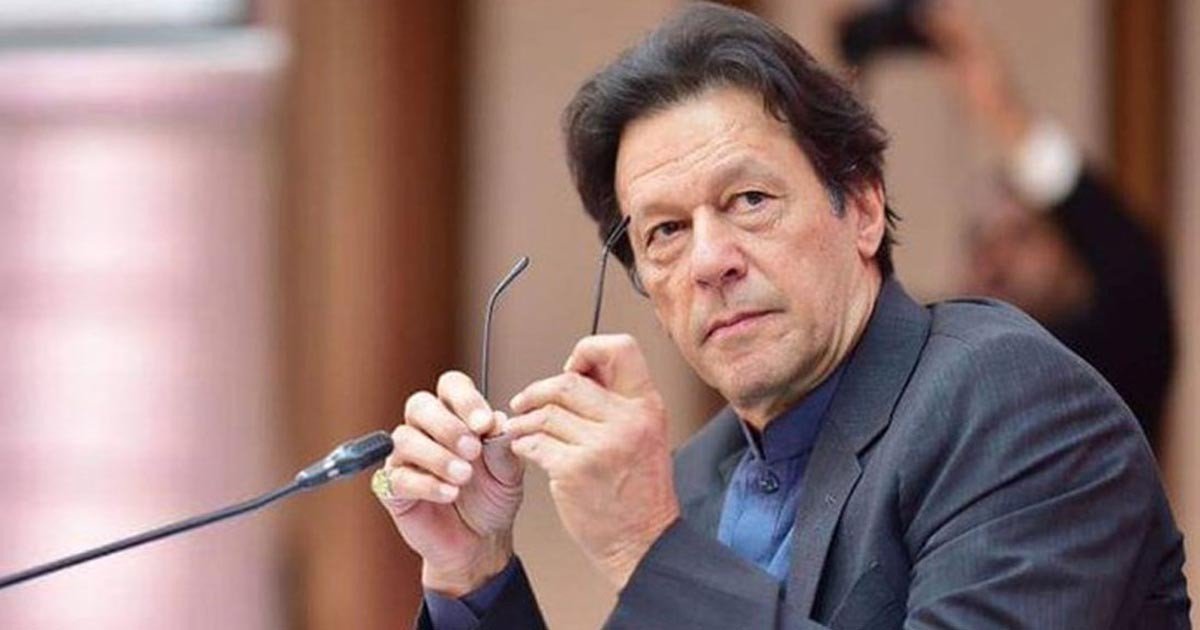
    Following the judgement, Prime Minister (PM) Shehbaz Sharif said that everyone should read the judgement. In a tweet, the preimer said, “Honourable Supreme Court’s detailed judgement on Vote of No Confidence exposes the lies and propaganda indulged in by Imran Khan and Co. utterly shameful how IK tried to undermine the Constitution and manufactured the lie of regime change.”

    PTI failed to produce any evidence to support claim of foreign conspiracy: Supreme Court

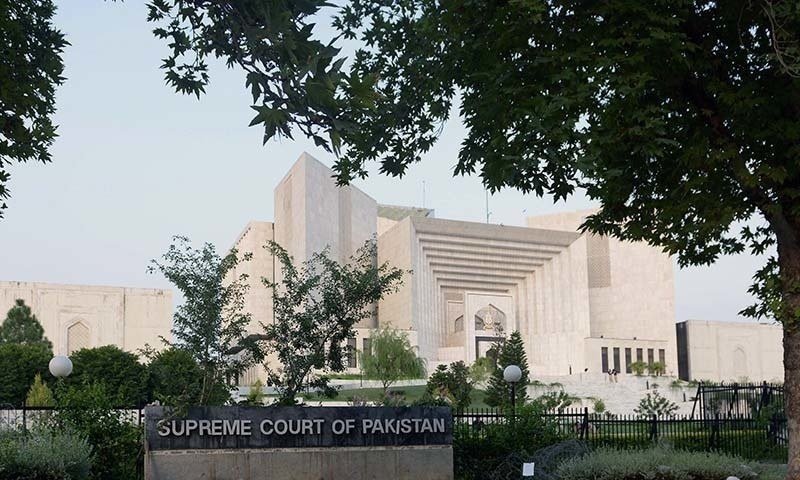
    The Supreme Court issued a detailed judgement on Wednesday (July 13) in a suo motu case on the ruling by the Deputy Speaker of the National Assembly under Article 5 of the Constitution.

    The court has said that the Pakistan Tehreek-e-Insaf (PTI) failed to “produce any evidence” before the court to support their claim of interference by a foreign force in the ousting of former Prime Minister (PM) Imran Khan through a no-confidence motion.

    In the judgement, the apex court revealed that the cipher was not even shown to it although its contents “were partially disclosed in the detailed reasons issued in support of the deputy speaker’s ruling”.

    On April 7, a five-member bench of the Supreme Court had declared Qasim Suri’s ruling on the dismissal of no-confidence motion against Imran Khan as unconstitutional and illegal. The bench unanimously ruled that President Dr Arif Alvi’s decision to dissolve the National Assembly is “illegal” and restored Imran Khan as Prime Minister as well as his cabinet ministers to face the no-confidence motion on April 9.

    No evidence

    The Supreme Court said that it rejected PTI’s plea to take suo motu action over the ‘breach of sovereignty’ allegation, citing “no precedence, absence of evidence and lack of jurisdiction”.

     Chief Justice of Pakistan (CJP) Justice Umar Ata Bandial observed that the action by the deputy speaker triggered a chain of events.

    Moreover, the SC noted that neither the Constitution nor the NA procedure rules have given the power to the Speaker and Deputy Speaker to dismiss a no-trust resolution “for being inadmissible or non-maintainable”.

    The judgement said, “It was a unilateral decision taken by the Deputy Speaker at the behest of the Law Minister.”

    High treason for President Alvi, Khan and others?

    Justice Mazhar Alam Miankhel stressed in his additional note that there must be consequences for President Alvi, ex-PM Imran, former Speaker Asad Qaiser, former Deputy Speaker Qasim Suri and former Law Minister Fawad Chaudhry because they prevented the elected representatives of the people “from voting on the resolution” and therefore it was a “blatant transgression of the Constitution”.

    “Whether the stated acts attract Article 6 of the Constitution is also left open to be determined by the Parliamentarians as to whether they leave open the doors for such unconstitutional acts or take suitable measures to stop such like mess in future,” Justice Miankhel suggested.

    Article 6 of the Constitution of the Islamic Republic of Pakistan states, “Any person who abrogates or subverts or suspends or holds in abeyance, or attempts or conspires to abrogate or subvert or suspend or hold in abeyance, the Constitution by use of force or show of force or by any other unconstitutional means shall be guilty of high treason.”

    Suri was biased

    Justice Jamal Khan Mandokhel observed in his additional note that the action of the Deputy Speaker was biased. He said that if at the time it was permitted to hold fresh elections, it would amount to giving license to an authority to misuse the extraordinary power of the doctrine of necessity.
  • ‘Didn’t show up because of the no-confidence motion against me’: Speaker Asad Qaiser clarifies stance

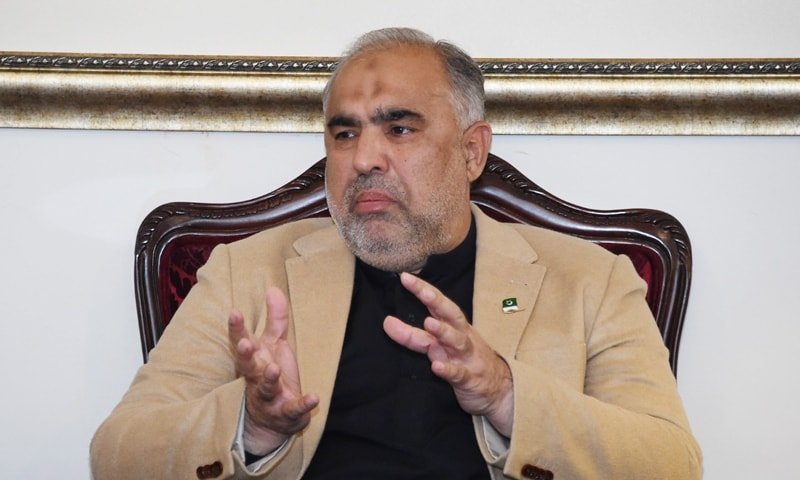
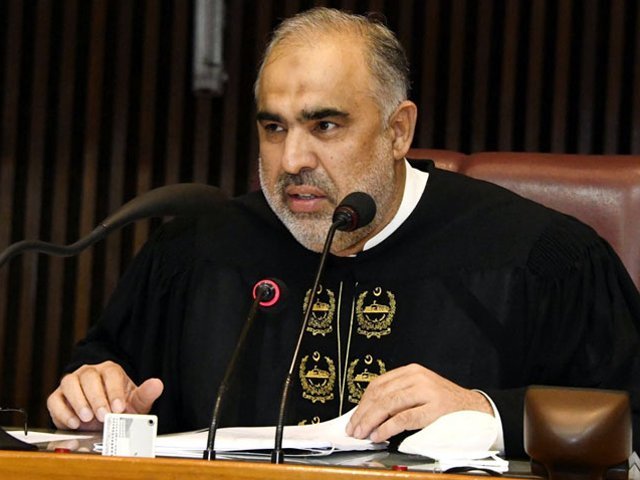
    ‘Didn’t show up because of the no-confidence motion against me’: Speaker Asad Qaiser clarifies stance

    National Assembly (NA) Secretariat in a statement has refuted all rumours circulating in the media in relevance to Speaker (NA) Asad Qaiser refusing to endorse the assembly dismissal on Sunday, April 3.

    “Qaiser decided not to preside over the meeting due to a no-confidence motion against him”, read the statement.

    Speaker Asad Qaiser had resisted the Pakistan Tehreek-e-Insaf (PTI) leadership’s script of rejecting the vote of no-confidence against Prime Minister (PM) Imran Khan under Article 5 of the Constitution, reports Geo News.

    On the day of voting, Qaiser did not preside over the lower house session. Instead, Deputy Speaker NA Qasim Suri conducted the session.

    Geo reports that sources privy to the matter have revealed that Qaiser reportedly was not ready to give a ruling under Article 5 of the Constitution to reject the no-trust motion against PM. The news outlet further reveals that the premier’s legal team tried hard to pursue Qaiser to foil the trust motion; however, he disagreed and refrained from attending the NA session.

    Qaiser responded with “no comments” on Geo News’ attempt to get his version. “The matter is in the Supreme Court of Pakistan, therefore I cannot talk on this,” he said.

    However, Qaiser tweeted the detailed ruling of the dismissal of the no-trust motion.

    It is pertinent to mention here that Pakistan is in a state of political chaos as the no-confidence motion against Khan was dismissed abruptly on Sunday. The move came after Suri termed it “unconstitutional”, saying that it was backed by “foreign powers”.

  • Speaker Asad Qaiser is ‘Imran Khan’s stooge’, says Opposition after Qaiser adjourns NA session till Monday

    Speaker Asad Qaiser is ‘Imran Khan’s stooge’, says Opposition after Qaiser adjourns NA session till Monday

    The much-awaited and critical National Assembly (NA) session on the vote of the no-confidence motion against Prime Minister (PM) Imran Khan was adjourned till Monday (March 28) by National Assembly Speaker Asad Qaiser.

    “Since this is the tradition of this house, that whenever a respectable member [of the assembly] passes away, the [NA] session is adjourned till the next [working] day in their honour,” said Qaiser. “This has happened for years and this had happened a total of 24 times in the past.”

    Addressing a press conference outside Parliament House right after the session was adjourned, Leader of the Opposition in NA Shehbaz Sharif said that the Speaker has become a “stooge” of PM Khan.

     “This was a constitutional obligation and he violated the Constitution by not doing this,” said Shehbaz adding, “The Constitution and the law is above tradition and voting should have been allowed … tradition aside, the Speaker should have taken up the motion [but] he did not listen and left.”

    Shehbaz tweeted, “This partisan behaviour does not suit the custodian of the House. U cannot stop the inevitable through such underhand tactics!”

    Pakistan People’s Party Chairperson Bilawal Bhutto-Zardari said that PM Khan was “fleeing the pitch”.

    Taking to Twitter, Bilawal wrote, “Speaker provided another weak excuse to avoid tabling the no-trust move.”

    “Imran can’t run forever. PM has no sportsman spirit and cannot face defeat with grace. The once great Kaptaan will go down like a rat on a sinking ship,” he said.

    Prior to the session, Information Minister Fawad Chaudhry tweeted, “Nothing will happen in the assembly session today.”

  • Supreme Court to take up presidential reference on Article 63-A today

    Supreme Court to take up presidential reference on Article 63-A today

    The Supreme court (SC) will take up the presidential reference seeking opinion on Article 63-A of the Constitution – which deals with the disqualification of parliamentarians over defection – at 1pm on Thursday, reports Dawn.

    A five-member bench of the SC comprising Chief Justice of Pakistan (CJP) Umar Ata Bandial will head the bench, which also includes Justice Ijazul Ahsan, Justice Mazhar Alam Khan Miankhel, Justice Munib Akhtar, and Justice Jamal Khan Mandokhail.

    Earlier, on Monday, a two-member bench of the apex court comprising CJP Bandial and Justice Akhtar took up the presidential reference and declared that a larger bench would hear the case.

    Justice Faez Isa “perplexed” over CJP Bandial’s decision to hear the presidential reference

    The senior-most judge of SC Justice Faez Isa has said that he is “perplexed” over CJP Bandial’s decision to hear the presidential reference for the interpretation of Article 63-A together with the SCBA petition over the no-confidence motion.

    In a three-page letter to the top judge, dated March 22, Justice Isa has questioned multiple legal aspects along with the formation of a larger bench “without the inclusion of senior-most judges”.

    “On 19 March 2022, a two-member bench headed by yourself and an hon’ble judge 8 in seniority, heard CP No. 2/2022 in Court on a Saturday, despite the filing of the petition on Thursday. On the said date it was ordered that CP No. 2/2022 be heard ‘along with a Reference, if any, that is filed under Article 186 of the Constitution and the petition and the proposed reference were ordered to be fixed together for hearing. I am perplexed as to how a matter which had not been filed was ordered to be fixed for hearing,” the letter said.

    Justice Isa further stated that the apex court rules demand that the constitution of a bench is done fairly and as per the law, referring to Article IV of the Code of Conduct, which says:

    “[…] a judge must avoid all possibility of his opinion or action, in any case, being swayed by any consideration of personal advantage, either direct or indirect.”

    “The Constitution specifically recognises the most senior Judge of the Supreme Court (including in Article 175A(3) and Article 180), and with seniority comes responsibility, which must not be shirked. The most senior Judge also ensures the continuity of the Supreme Court as an institution,” Justice Isa wrote.

    Better if the assembly’s fight is fought inside the assembly: CJP Bandial

    Justice Bandial on Monday heard a plea filed by the Supreme Court Bar Association (SCBA) about the lawful proceeding of the no-confidence motion in the National Assembly (NA).

    During the hearing, which was attended by three bigwigs of the Opposition — PML-N President Shehbaz Sharif, Pakistan People’s Party (PPP) Chairman Bilawal Bhutto-Zardari, and Jamiat-e-Ulema-Islam-Fazl (JUI-F) chief Maulana Fazlur Rehman, SCBA counsel argued that NA Speaker Asad Qaiser summoned the session 17 days after the submission of the no-confidence motion. However, according to Article 95, the session has to be called within 14 days.

    He further argued that the no-confidence motion could not be adjourned before voting. To this, CJ observed that it is an “internal matter” and it would be “better if the assembly’s fight is fought inside the assembly”.

    According to Justice Munib, a member’s individual vote has no “status”. Justice Munib Akhtar said after joining a political party, a member’s vote is considered a “collective” right.

    SCBA writes a reply to the apex court

    On Thursday, the SCBA submitted a written reply to the apex court ahead of today’s hearing in accordance with the court’s directives.

    In its reply, the SCBA said that the votes of MNAs “cannot possibly be construed as a collective right of a political party”, citing Article 95 of the Constitution, which deals with the procedure to bring in a no-confidence motion against the prime minister.

    Fawad Chaudhry responds to SCBA’s reply to the apex court

    Information Minister Fawad Chaudhry took to Twitter and reacted to SCBA’s response.

    Fawad said, “Reading SCBA’s answer, it seems that Supreme Court bar body is a subsidiary of Noon League,” says Fawad Chaudhry, adding, “Ordinary lawyers are dissatisfied with the role of lawyers’ organisations and the defeat of this group in the Lahore Bar elections is the result of the lawyers’ reaction.”

    Attorney General of Pakistan (AGP) Khalid Jawed Khan had submitted the reference seeking the SC’s opinion on Article 63-A of the Constitution on March 21.

  • Asad Qaiser summons NA session on March 25, Opposition calls for trial of Speaker under Article 6

    Asad Qaiser summons NA session on March 25, Opposition calls for trial of Speaker under Article 6

    National Assembly (NA) Speaker Asad Qaiser has summoned a session of the lower house of parliament on March 25. The NA session will be held at the Parliament House on Friday at 11am. The 14-day constitutional deadline to convene the NA session on the Opposition’s requisition will expire on March 21 (today).

    Sources told the media that the session will offer fateha for PTI MNA Haji Khayal Zaman who recently passed away, after which the Speaker has the “discretionary power” to continue or adjourn the session.

    Opposition parties on Sunday slammed Qaiser for not convening the assembly session within 14 days of its requisition, demanding that he should be tried under Article 6 of the Constitution.

    Pakistan People’s Party (PPP) Chairperson Bilawal Bhutto-Zardari expressed hope that the Supreme Court would take notice of the violation of the Constitution by the Speaker.

    “This coward captain [the PM] is running away from the vote of no confidence. He is escaping to the extent that he has made the speaker abrogate the Constitution,” said Bilawal.

    Article 6 of the Constitution of the Islamic Republic of Pakistan states, “Any person who abrogates or subverts or suspends or holds in abeyance, or attempts or conspires to abrogate or subvert or suspend or hold in abeyance, the Constitution by use of force or show of force or by any other unconstitutional means shall be guilty of high treason.”

    The second clause adds that any person aiding, abetting, or collaborating in the acts will also be considered guilty of high treason.

    Clause 2A says that an act of high treason cannot be validated by any court, including the Supreme Court (SC) and a High Court.”

  • ‘PM Khan will de-seat PTI turncoats before vote on no-trust motion’: Fawad Chaudhry

    ‘PM Khan will de-seat PTI turncoats before vote on no-trust motion’: Fawad Chaudhry

    Information Minister Fawad Chaudhry has said that the decision to summon a National Assembly (NA) session would be taken by NA Speaker Asad Qaiser and not Prime Minister (PM) Imran Khan.

    The minister while speaking with Dawn News said that the possible action against what he termed ‘Pakistan Tehreek-e-Insaf (PTI) turncoats’, would be that, “PM Khan has decided to de-seat them before voting on the no-trust motion.”

    The minister’s comments came after around 24 members of the PTI were reportedly found to be staying at the Pakistan People’s Party (PPP) run Sindh House.

    After the news became public on Thursday, PM Khan called a meeting attended by Attorney General of Pakistan Khalid Javed Khan and the NA Speaker.

    The premier directed Qaiser to commence the sitting of the lower house on March 21 and take action against “PTI’s possible turncoats”.

    The Election Commission of Pakistan (ECP) said that it is empowered to take action only after receiving a declaration from the NA speaker about the members voting against party policy or crossing the floor.

    In a joint press conference with the information minister and Energy Minister Hammad Azhar, PTI Secretary General Asad Umar said that PM Khan could also throw money at Opposition lawmakers, but would not do so because he does not stand for the “politics of blackmailing and bribery”.

    “Imran Khan is in politics not for himself, but for the nation,” he added. He also claimed some opposition MNAs were also in close contact with the government.

    “We want to make it clear that we will not do any deals and will not disburse ministries to stay in power. We will remain engaged with our allies but there will be no wheeling and dealing,” said Azhar.

  • ‘NA speaker has right to disqualify any PTI MNA who will vote for other party’: Sheikh Rasheed

    ‘NA speaker has right to disqualify any PTI MNA who will vote for other party’: Sheikh Rasheed

    Interior Minister Sheikh Rasheed on Thursday said National Assembly (NA) Speaker Asad Qaiser has the right to disqualify any Pakistan Tehreek-e-Insaf (PTI) Members of National Assembly (MNA) who “crossed floor” (to vote against your party) in the lower house and that “no one can challenge that”.

    According to the federal minister, all political parties gave this right to the Speaker in the 18th Amendment in an effort to stop horse-trading.

    “Let them [Opposition] fulfil their desire. Imran Khan is on his way towards winning. The Speaker has the right to disqualify any ruling party MNA who disrespects the votes they got due to IK,” he said.

    Talking to the media, the minister said the no-confidence move would be a “moment of satisfaction” for the premier. He also termed the week from March 23 to 30 as important.

    In a tweet, Rasheed urged PTI supporters to be present at Islamabad’s D-Chowk on the day of the vote to celebrate a “day of thanksgiving” for the PM’s success.

    Speaking on ARY News, Supreme Court lawyer Faisal Hussain gave a detailed analysis on the no-confidence motion and the government’s options.

    After submission of the no-confidence motion against PM Imran Khan, the government has come up with a strategy of not showing up on the D-Day. Asad Umar said that it is the Opposition’s job to show that they have the support of 172 MNAs and therefore government lawmakers would not attend the no-confidence vote.

    Talking to 92 News, Information Minister Fawad Chaudhry said the Speaker will not count the votes of PTI members who vote against the PM.

    https://twitter.com/FawadPTIUpdates/status/1501629055359143944
  • National Assembly ‘not available’ for no-trust move against PM Khan

    The National Assembly (NA) Hall and its lobbies are currently being renovated for the March 23 meeting of the Organisation of Islamic Cooperation (OIC).

    The Opposition may not be able to move the no-trust motion against Prime Minister (PM) Imran Khan due to the ongoing renovation.

    It is being said that the renovation will take another month to complete.

    Senior journalist Nasim Zehra tweeted about the renovation and added, “So no NA session. Some plan.”

    NA Speaker Asad Qaiser said that the National Assembly Hall is being prepared for the upcoming meeting of the OIC, which is going to be held on March 23, reports The News

    When asked what would happen if the Opposition parties move the no-trust motion in the next coming days, he said that he would ask his secretariat to consider where the session could be held in case of the non-availability of the National Assembly hall and its lobbies, reported the news outlet.

  • President Alvi calls off NA session without any official announcement

    President Alvi calls off NA session without any official announcement

    President Dr Arif Alvi called off the National Assembly (NA) session on Friday— the same day when Leader of the Opposition Shehbaz Sharif was to appear before a special court in Lahore, reports Dawn.

    A spokesperson for the Presi­dency said that the postponement of the session was not officially notified beforehand. According to the media outlet, Pak­istan Tehreek-i-Insaf (PTI) leaders gathered at NA Speaker Asad Qaiser’s residence several hours before the session on Thursday night and decided to have Friday’s session shelved.

    They believed that Pakistan Muslim League-Nawaz (PML-N) President Shehbaz Sharif and his son Hamza Shehbaz could possibly be arrested on Friday but the court deferred the indictment. The ruling party was of the view that the Sharifs should not be given an opportunity to seek an adjournment on the ground of attending the NA session.

    Upon hearing about the postponement, Sharif said the session had been put off as the government was hoping he would be indicted. He further added that it is unprecedented that a scheduled session of the NA has been shelved in such a manner.

    However, Information Minister Fawad Chaudhry dismissed this claim. Chaudhry said that Prime Minister (PM) Imran Khan’s visit to Russia on February 23 was one of the reasons for the postponement of the session.

    Other than this, some sources claim that the government wanted to promulgate some ordinances for which the session had been shelved.

    Sharif appeared before the court for his indictment in a money laundering case that was registered by the Federal Investigation Agency (FIA).

    As of yet, no new date has been announced for holding the postponed session of the lower house of parliament.

  • Joint parliamentary session: All you need to know about what happened

    Joint parliamentary session: All you need to know about what happened

    The much anticipated joint parliamentary session on Wednesday left dark clouds over the future of the country’s legislation system.

    Number game of parliamentarians:

    The government needed a majority in the joint sitting of houses to pass bills where the total strength was 440 members.

    The party position in parliament showed that the treasury had a majority of just two votes if the two Houses were combined together. According to party position, the number of Opposition members in the 440-member joint House came to 219 against 221 treasury members, 221 members of the government and its allies were present with 213 members of the Opposition.

    Bills to be reviewed:

    More than a dozen bills were presented in parliament.

    The major bills: Electronic Voting Machines (EVMs), Voting rights to overseas Pakistanis were passed in the absence of Opposition.

    The other bills include:

    The Anti-Rape (Investigation and Trial) Bill

    The Hyderabad Institute for Technical and Management Sciences Bill, 2021

    The State Bank of Pakistan Banking Services Corporation (Amendment) Bill, 2021

    The International Court of Justice (Review and Re-consideration) Bill, 2021

    Security arrangements:

    The in-house security of the National Assembly (NA) was made to stand in front of the Speaker dice to prevent the Opposition members from reaching the dice and cause a commotion.

    Pakistan People’s Party’s (PPP) leader Hina Rabbani Khar termed the situation as “martial law”.

    https://twitter.com/Hina_RKhar/status/1460907005141467141?s=20

    Ruckus in NA:

    During voting, things got heated up from both sides.

    In a video, PPP’s Qadir Mandokhel can be seen involved in a fight with the government representatives.

    The decorum of the House couldn’t stay still, copies of the agenda books were torn, pieces of paper were thrown at Speaker NA Asad Qaiser.

    A heated exchange of words took place between Qaiser and parliamentarians.

    Qaiser lashing out at the parliamentarians. “Stay within your limits, mend your way of talking.”

    Opposition walkout:

    The Opposition walked out of the House giving the government a chance to pass the bills. They argued that the Opposition’s votes counted were fewer than actual numbers and eventually walked out.

    Session now led by Senate Chairman:

    Speaker Asad Qaiser will no longer be chairing the proceedings after the passage of important legislation. Instead, Senate Chairman Sadiq Sanjrani will lead parliamentary proceedings.

    Reaction:

    Twitterati reacted to the heated situation in parliament.