Tag: Asian Development Bank

  • Pakistan’s total liquid foreign reserves increases to $14.68 billion

    Pakistan’s total liquid foreign reserves increases to $14.68 billion

    The Asian Development Bank (ADB) contributed to an increase of $1.517 billion in Pakistan’s foreign exchange reserves during the week ending October 28 to bring them to $14.679 billion, the central bank reported on Thursday.

    The State Bank of Pakistan’s foreign exchange holdings increased by $1.473 billion to $8.912 billion.

    “This increase is attributed to the receipt of US$ 1,500 million from ADB,” the SBP said in a statement.

    The SBP has enough reserves to cover imports for 1.29 months. Additionally, commercial bank reserves increased by $44 million to $5.766 billion.

    When the government is dealing with a balance of payments issue, the increase in foreign reserves is encouraging for the nation’s finances. At least $30 billion has been lost as a result of the country’s devastating floods this summer.

    A $500 million deal between Pakistan and the World Bank has been signed. The $200 million investment will be used to support an agricultural transformation project in Punjab.

    According to The News, another project in Khyber Pakhtunkhwa for $300 million in climate change projects will be funded by the World Bank.

  • ADB transfers $1.5 billion loan to Pakistan

    ADB transfers $1.5 billion loan to Pakistan

    Finance Minister Ishaq Dar said that the Asian Development Bank (ADB) had transferred a $1.5 billion loan to Pakistan on Wednesday.

    The loan would increase foreign exchange reserves and stop the devaluation of the rupee.

    The support from ADB will help increase the number of families receiving cash transfers from 7.9 million to 9 million, boost the enrollment of kids in primary and secondary schools, and improve the geographic reach of health services and nutritional supplies for infants under 2 years old and expectant and nursing mothers.

    With the transfer of ADB, Pakistan’s foreign exchange reserves held by the State Bank of Pakistan (SBP) have reached $9 billion.

    As of October 14, the nation’s total foreign exchange reserves were at $13.25 billion, which included SBP’s holdings of $7.597 billion, or almost five weeks’ worth of restricted imports.

    The $1.5 billion ADB loan is intended to encourage employment for people in the midst of disastrous floods and interruptions to the global supply chain while also promoting food security and social protection.

    Following the signing of the loan agreement, the ADB released a statement saying that the funding will give the government the fiscal breathing room it needs to implement its package, which is intended to help Pakistan’s poorest families, who are frequently disproportionately impacted during times of crisis.

    According to the bank, the government’s assistance includes specific initiatives to encourage gender empowerment and climate change adaptation, which have grown even more crucial in light of the most recent floods.

  • Pakistan’s default risk hits a 13-year-high, reflecting foreign investors’ lack of faith

    Pakistan’s default risk hits a 13-year-high, reflecting foreign investors’ lack of faith

    The risk of default for Pakistan, as determined by the 5-year credit default swap (CDS), increased on Tuesday by 3.07 percentage points in a single day to reach a 13-year high of 52.8 per cent, indicating that foreign investors no longer have confidence in the nation.

    Before the Covid-19 outbreak in Pakistan in February 2020, the CDS was between 5 per cent and 6 per cent.

    According to Express Tribune, owing to uncertainties surrounding the renewal of the International Monetary Fund (IMF) loan programme, it peaked at over 30 per cent in the middle of this year.

    Later, as the major lender resumed its $6.5 billion programme in late August 2022 and subsequently released a $1.2 billion tranche, the CDS experienced a small recovery.

    Today, meanwhile, it is rapidly rising once more, indicating that international investors now believe Pakistan will not be able to pay back its maturing debt.

    On December 5, 2022, the country is required to repay $1 billion to overseas investors against the maturity of the 5-year Sukuk.

    The 5-year Third Pakistan International Sukuk’s yield (rate of return) is quite high, hovering at 145 per cent. Before the Covid-19 epidemic, it was around 10 per cent.

    In addition, the yield on bonds due in 2024 and 2025 is currently high at 90 per cent and 57.5 per cent, respectively, up from a low of 10 per cent in the past.

    The country’s foreign exchange reserves have decreased by about $9 billion over the past 10 months, which has caused alarm among the foreign investors.

    They are currently only covering about 1.10 months’ worth of imports at $7.6 billion, down from $20 billion (three months’ worth of imports) in August 2021.

    Ishaq Dar, the finance minister, and Miftah Ismail, his predecessor, have taken every precaution to avoid the likely default.

    They have repeatedly reassured the foreign investors that when the time came, the nation would easily repay the maturing $1 billion in December as well as fulfil other international payment obligations.

    Foreign investors are receiving warnings from the situation that the nation may default.

    However, the leadership of the nation has fully secured the $36–40 billion needed from international lenders for the current fiscal year 2023 to pay off the nation’s approximately $21 billion in foreign debt, finance approximately $10–12 billion current account deficit, and increase its foreign exchange reserves to approximately $16 billion by June 30.

    According to experts, the country’s foreign exchange reserves will increase and confidence among foreign investors will be restored with the arrival of $1.5 billion from the Asian Development Bank (ADB) in a few days and another $500 million from the Asian Infrastructure Investment Bank (AIIB) in the current month.

    They continued by saying that the inflows should also aid in lowering bond and CDS yields.

    Experts said that Saudi Arabia was the destination of Prime Minister Shehbaz Sharif’s official visit. The host nation has declared that it is resuming its investment ambitions, which include establishing an oil refinery in Pakistan for an investment of $10 billion.

    The Kingdom’s investment choice coming to fruition will also aid in regaining the trust of foreign investors in Pakistan.

    When PM Shehbaz travels to the second-largest economy in the world in November, the nation is also anticipated to get a rollover loan from China worth $6.3 billion, they claimed.

  • ADB set to approve $1.5 billion loan for Pakistan today

    ADB set to approve $1.5 billion loan for Pakistan today

    A $1.5 billion programme loan for Pakistan is slated to be approved by the Asian Development Bank (ADB) on Friday (today) as part of the BRACE (Building Resilience with Active Countercyclical Expenditure) programme.

    According to Geo, the Board of the ADB will meet in Manila to discuss whether to approve a $1.5 billion programme loan for Pakistan. It is anticipated that this loan will be disbursed after receiving permission next week, assisting Islamabad in replenishing its depleting foreign exchange reserves.

    Additionally, it is anticipated that the Asian Infrastructure Investment Bank (AIIB) will approve $500 million in co-financing, bringing the total distribution to $2 billion for the current month.

    With a projected current account deficit of $10 to $12 billion and an external debt servicing obligation of $22.9 billion, Pakistan needs $34 billion for the current fiscal year. On the flip side, the terrible floods made the already bad situation with the economy even worse.

    Pakistan suffered losses of $32.4 billion, according to the group of international donors, which also included the World Bank, ADB, UNDP, and EU. Pakistan also needed $16.2 billion for building expenditures.

    An official document states that the $1.5 billion BRACE programme loan will assist Pakistan in responding to the deepening macroeconomic crisis exacerbated by the Russian invasion of Ukraine and the catastrophic floods that have affected close to 33 million people. Prior to the latest floods, Pakistani officials had already begun work on this programme loan.

    The amount of countercyclical actions taken by the government to lessen the negative effects of cumulative external shocks, particularly on the poor and vulnerable, comes to around $2.4 billion.

  • ADB to provide up to $2.5 billion under flood relief support to Pakistan

    ADB to provide up to $2.5 billion under flood relief support to Pakistan

    The Asian Development Bank (ADB) announced on Wednesday that it would provide support of $2.3–2.5 billion for relief efforts in the wake of disastrous floods that have left Pakistan severely damaged.

    The declaration was made during a meeting between Pakistan’s ADB Country Director Yong Ye and Finance Minister Ishaq Dar, as per a press release from the Finance Division.

    Ye offered his condolences for the loss of life and property as a result of the floods during the meeting and congratulated Dar on taking office.

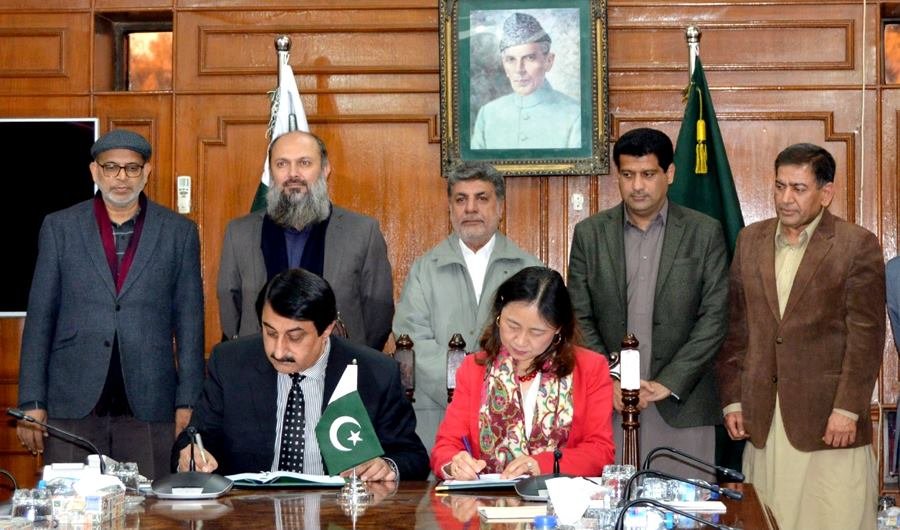
    According to Dawn, the Balochistan Rural Development and Community Empowerment Programme would receive $1.5 billion of the promised aid, according to the ADB country director, and the request will be presented to the bank’s board this month.

    According to a press release, it was discussed that the Country Partnership Strategy for Pakistan 2021–25 is in accordance with the government of Pakistan’s vision.

    The finance minister was quoted as saying that he welcomed the delegation and valued ADB’s assistance in advancing sustainable development in the nation. Dar also informed the delegation of the flood’s damages and financial consequences.

    The administration had stopped the economy’s slide and put it on the correct course with its “pragmatic policy initiatives,” he continued while acknowledging that the economy still faced enormous obstacles.

    The finance minister also gave the ADB team an overview of the government’s priorities.

    Dar hailed the ADB delegation for their steadfast support and assured them of full government cooperation for the expeditious implementation of the current and new programmes.

  • Pakistan may receive $2.5 billion loan from Asian Development Bank

    Pakistan may receive $2.5 billion loan from Asian Development Bank

    The Asian Development Bank (ADB) has hinted at providing $2.5 billion in additional loans to Pakistan. However, the government must obtain a good economic health certificate from the International Monetary Fund (IMF) in order to receive the loan. Following a meeting between Minister of State for Finance and Revenue Dr Aisha Ghous Pasha and ADB Country Director Yong Ye, a statement was released.

    “The ADB indicated the additional support of $2.5 billion for the next fiscal year, from which $1.5 billion to $2 billion can be available in the ongoing calendar year,” said the Ministry of Finance in a statement.

    The ADB has suggested that it could lend $1.5 billion under the Counter Cyclical Finance Facility and another $400 million via energy sector policy loans, according to sources in the finance ministry.

    On May 3, the ADB board of directors authorised the Counter Cyclical Finance Facility with Pakistan receiving a combination of concessional and commercial financing. However, the ADB board’s approval of the $1.5 billion loan will be conditional on Pakistan’s debt burden being manageable and the country’s fiscal policies not being reckless – two factors that will necessitate frantic efforts to meet.

  • Asian Development Bank to develop irrigation system in Pakistan

    Asian Development Bank (ADB) approves to develop an irrigation system in Pakistan.

    This irrigation system will boost agronomy and food security in Punjab province.

    “Given Pakistan’s vulnerability to the impacts of climate change, it is essential to build irrigation infrastructure for climate-resilient and sustainable agriculture,” said ADB Director General for Central and West Asia Yevgeniy Zhukov. “ADB’s support will help boost the supply of local produce and promote food security while increasing economic growth.”

    “By integrating infrastructure and agricultural interventions, this project directly supports smallholder farmers to manage their limited resources more efficiently and maximize the benefits from irrigated agriculture,” said ADB Principal Portfolio Management Specialist Natsuko Totsuka.

    “The project will strengthen the capacity of local authorities to maintain these irrigation systems, boost rural economic growth and help to reduce poverty in the province.”

    However, Pakistan is now facing scarcity of water and mismanagement of water resources because of very old irrigation systems.

  • Fifth-lowest growth rate in South Asia as inflation continues to rise in Pakistan: Asian Development Bank

    Fifth-lowest growth rate in South Asia as inflation continues to rise in Pakistan: Asian Development Bank

    The Asian Development Bank (ADB) on Wednesday projected that inflation in Pakistan would remain the highest in the region at 7.5 per cent, and the economy would grow by 4 per cent – the fifth-lowest growth rate among seven South Asian nations, contradicting the government’s claim of lowest prices in the country, reported Shahbaz Rana for The Express Tribune.

    Pakistan’s “economy is expected to continue recovering in the fiscal year 2021-22, with real GDP projected to rise by 4 per cent”, according to the ADB report.

    It was the fifth-lowest economic growth rate in the region as the economic growth rate in the Maldives (15 per cent) and India (7.5 per cent) remain the highest in the region. Bangladesh is projected to grow at 6.8 per cent and Nepal at 4.1 per cent in 2022, according to the ADB.

    The ADB said that the 4 per cent growth rate was contingent on the resumption of structural reforms later in the year in an ongoing programme under the International Monetary Fund (IMF) Extended Fund Facility.

    “The economic outlook is clouded, however, by high uncertainty because it is closely tied to the course of the pandemic in Pakistan and globally.”

    The ADB has also cautioned about a further increase in prices in Pakistan, provided the Pakistan-IMF deal collapses.

    “Risk of inflation higher than forecast derives from any unusual increase in oil prices or from potential currency depreciation in the wake of any early winding down of the ongoing IMF programme,” said the ADB.

  • ‘Pakistan has the potential to become an economic hub,’ says Asian Development Bank

    ‘Pakistan has the potential to become an economic hub,’ says Asian Development Bank

    The Asian Development Bank (ADB) has said that Pakistan has huge potential for economic progress given its strategic location and youthful growing population.

    In an interview, Country Director of ADB for Pakistan Xiaohong Yang said: “Pakistan has the potential to become a regional hub for trade and economic activity but the major impediment is weak connectivity and trade links. Moreover, the COVID-19 has pandemic caused a sharp downturn in 2020, and is likely to push more people into poverty.”

    Yang also said that ADB is taking major steps in providing critical finance to the government to implement it’s pro-poor fiscal and monetary policy, and to deal with the impacts of the pandemic, adding that ADB has also financed a $2 billion loans to help Pakistan overcome the pandemic challenges.

    ADB is working towards introducing best practices, sharing knowledge and trying to develop capacity building through partnerships will all stakeholders, says Yang.

    The bank has also devised a new partnership strategy (2021-2025) for Pakistan. It is designed to restore growth and economic stability by deploying sovereign and non-sovereign operations to support infrastructure, agribusiness, and finance sector investment.

    ADB will target reforms that boost competitiveness and private sector development, create jobs and drive market innovation.

  • KYA BOLA? (Aug 6): ‘Martial law se behtar Angrezo ki hukoomat hai’ to ‘substandard’ construction work of Peshawar BRT

    KYA BOLA? (Aug 6): ‘Martial law se behtar Angrezo ki hukoomat hai’ to ‘substandard’ construction work of Peshawar BRT

    Following are some snippets that stood out from Urdu newspapers on August 6, 2020, which The Current takes no responsibility for.


    ‘Martial Law Se Behtar Angrezo Ki Hukoomat Hai’

    It has been reported by Daily Dunya that Supreme Court’s Justice Qazi Faez Isa, who is known for being a critic of certain quarters, has taken notice of irregularities in the National Accountability Bureau (NAB) and remarked “Marshal law se behtar hai hukoomat Angrezo ko de di jaaye.”


    Kashmir Aik Namukamal Agenda Hai’

    Daily Jang has quoted Punjab Chief Minister (CM) Sardar Usman Buzdar as saying “Kashmir, Taqseeme Hind ka namukammal agenda hai. Aaj maqbooza Kashmir Pakistan k naqshay mein shaamil hua hai, kal yeh Pakistan ka hissa hoga.”

    Buzdar was referring to Pakistan’s new political map approved by Prime Minister (PM) Imran Khan on Tuesday. It shows the troubled valley as a part of Pakistan.


    ‘Substandard’ Construction Work of Peshawar BRT

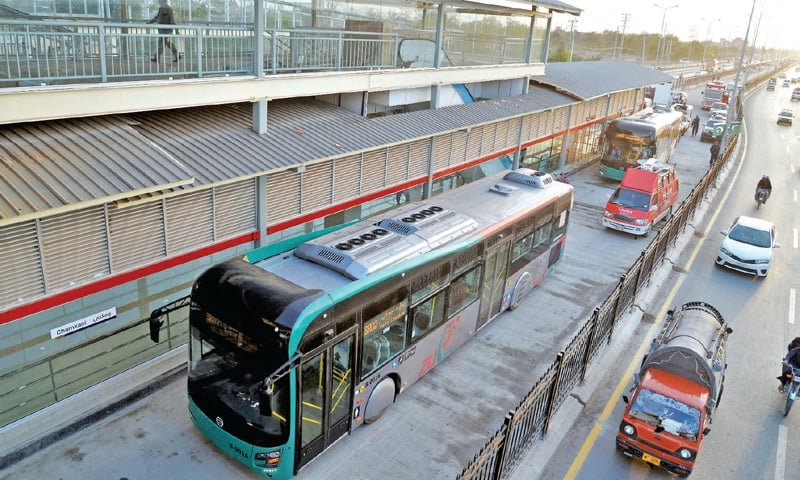
    According to Daily Dunya, Asian Development Bank (ADB), which is assisting the construction of Peshawar Bus Rapid Transit (BRT) project, has identified “substandard” construction work.

    The Peshawar BRT is rather infamous for its incompletion as the authorities concerned have failed to meet deadlines time and again. The government has now issued yet another deadline for completion of the much-delayed project, the cost of which has also swollen over the years.