Tag: astronomy

  • Pakistan mein ‘Super Blue Moon’ kis waqt daikhein?

    Pakistan mein ‘Super Blue Moon’ kis waqt daikhein?

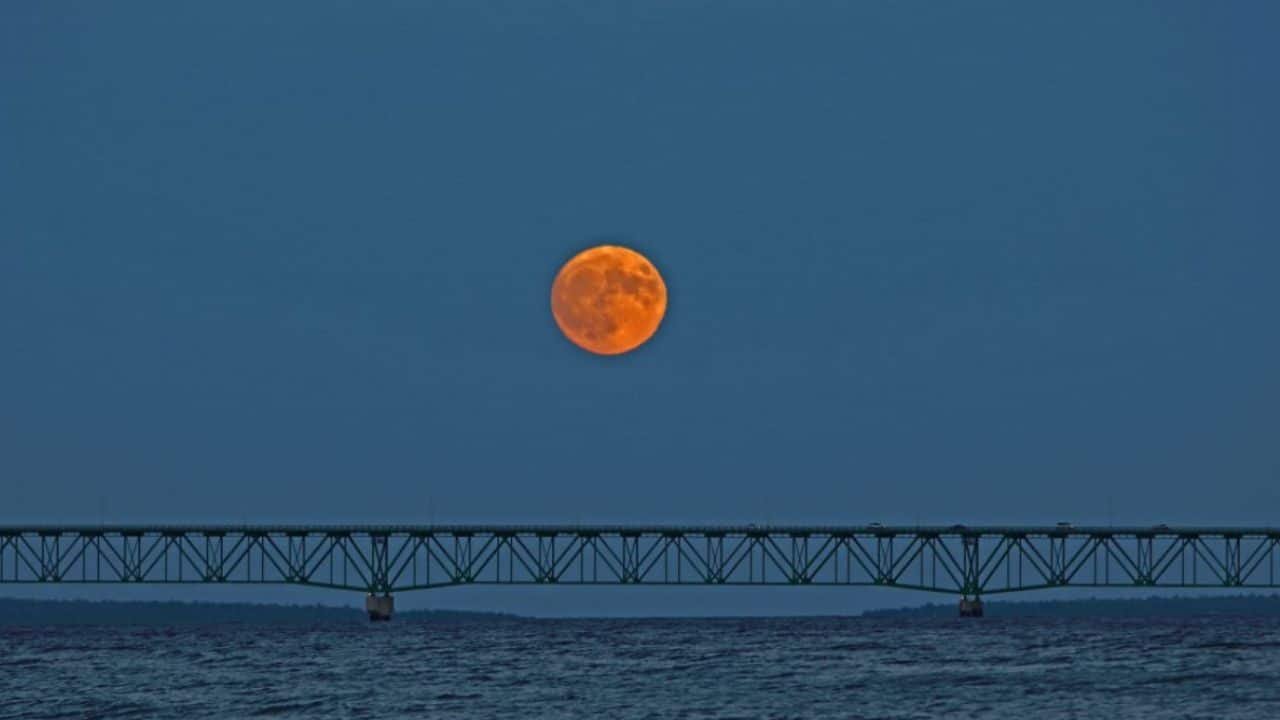
    Once in a blue moon is going to be a reality tonight. On the night of August 31, a celestial spectacle known as the ‘Blue Moon’ will captivate astro enthusiasts around the world. Despite its name, this unique event won’t unveil a blue-hued moon; instead, it will radiate a captivating shade of orange.

    The Super Blue Moon Experience

    During this event, the Super Blue Moon will be slightly larger and brighter than a typical full moon. Supermoons shine about 40 percent larger and 30 percent brighter than regular full moons. While the size difference may not be discernible to the naked eye, binoculars can enhance the view of this captivating phenomenon.

    When and How to Observe the Super Blue Moon

    In Pakistan, the spectacular view of the Super Blue Moon can be seen from 6:25 AM PKT till 6:40 AM. The moon will be full at 6:35 AM PKT.

    European viewers will have an extended opportunity to witness the moonrise, providing an additional chance to catch a glimpse of this celestial event. In London, the moon will rise at 8:08 PM BST. For those in New York, moonrise is set for 7:45 PM EDT, followed by moonset at 7:33 PM EDT, with the full moon radiating its brilliance at 8:37 PM EDT.

    In Los Angeles, both moonrise and sunset are scheduled for 7:36 PM PDT, and the full moon will grace the sky at 5:37 PM PDT. London residents can experience the Blue Moon at 7:52 PM BST during sunset and 8:24 PM BST, with the full moon’s appearance at 1:37 AM BST.

    Understanding the Blue Moon Phenomenon

    A Blue Moon is an extraordinary astronomical event that occurs when a supermoon or full Moon coincides with a perigee—when the Moon is closest to Earth in its orbit.

    While Blue Moons aren’t exceedingly rare occurrences, they remain intriguing phenomena in the world of astronomy. The most recent Blue Moon graced the skies in August 2021, as reported by Space.com. With the average lunar cycle spanning approximately 29.5 days, a year typically accommodates 12 lunar cycles, totaling 354 days. As a result, roughly every 2.5 years, a thirteenth full moon emerges within a given year.

    This upcoming event, the super blue moon, marks the final chapter of a four-part lunar sequence and is anticipated to be the third-largest moon visible throughout this year. It’s important to note that the term “blue moon” has no connection to the moon’s color; it merely signifies the occurrence of two full moons within a single calendar month.

    How rare is a blue supermoon?

    According to NASA, the blue supermoons are a very rare phenomenon. It mentions that these moons often only appear once every ten years due to astronomical conditions. But occasionally, the interval between blue supermoons can be as long as twenty years. While blue moons only account for 3% of full moons, supermoons account for around 25% of all full moons. Although the interval between super blue moons is highly erratic—it can be as long as 20 years—the average is often 10 years. The following super blue moons will take place in pairs in 2037, in January and March.
  • Kalpana K — the woman behind Chandrayaan-3

    Kalpana K — the woman behind Chandrayaan-3

    On Wednesday, August 23, India’s third lunar mission Chandrayaan-3, successfully landed on the south pole of the moon, the first landing of its kind.

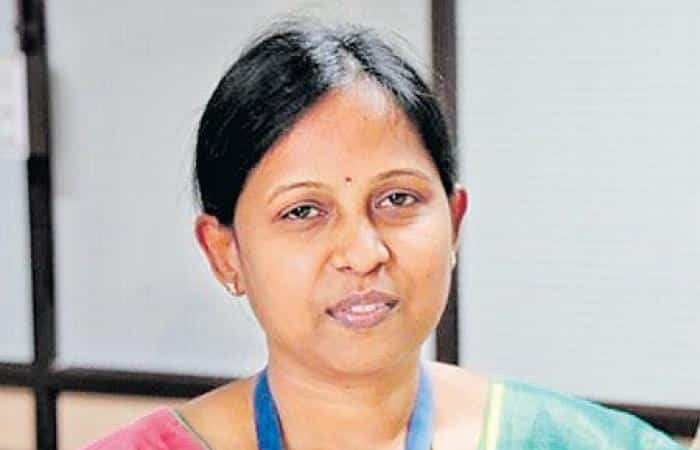
    Behind this feat is a team of five individuals who steered the mission towards success, among whom is Kalpana Kalahasti, the deputy project director, whose contribution is noteworthy.

    According to Gulte, Kalpana’s roots trace back to Thaduku in Puttur Mandal of Chittoor district. Her father, Muniratnam, worked as an officer in the High Court, and her mother, Indira, was also educated. Kalpana pursued her education in Chennai, studying B.Tech in Electronics and Communication at Madras University.

    She aspired to work at the Indian Space Research Organization (ISRO) since she was a child. After she completed her B.Tech in ECE, she was able to pursue her dream. She passed the intricate selection process and joined ISRO in 2000. She began her career as a radar engineer at the Space Center (SHAR).

    Five years later, she got transferred to the U R Rao Satellite Centre in Bangalore in 2005. The focus of her work then shifted towards satellite systems, and worked as an engineer in satellite building.

    She took up a major role as the deputy project director for the Chandrayaan 3 mission and she supervised the project through its minute details. She remained dedicated and ensured that the mission was not hindered despite the COVID-19 pandemic.

    After the successful landing Chandrayaan-3, Kalpana K addressed the Indian nation at the ISRO Telemetry Tracking and Command Network, expressing, “…this will remain the most memorable moment for all of us…from the day we started rebuilding our spacecraft after the Chandrayaan 2 experience, it has been breathe in-breathe out Chandrayaan 3 for the team.”

    She was also previously involved in the second lunar mission and the Mangalyaan mission.

    Other member of the team were ISRO chairman S Somanath, project director Veeramuthuvel, M Sankaran, director of U R Rao Satellite Centre where the satellite was constructed, and M Srikanth, the mission director.

  • Did water come to earth by asteroids?

    Did water come to earth by asteroids?

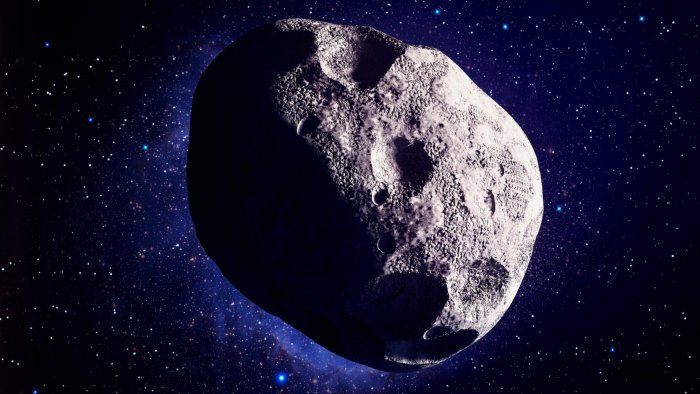
    Water may have been brought to Earth by asteroids from the outer edges of the solar system.

    A report in Deccan Herald (DH) suggests that scientists said this after analysing rare samples collected on a six-year Japanese space mission. Researchers scrutinised material brought back to earth in 2020 from the asteroid Ryugu.

    The 5.4 grams (0.2 ounces) of rocks and dust were gathered by a Japanese space probe, called Hayabusa-2, that landed on the celestial body and fired an impactor into its surface.

    In a new paper published in the journal Nature Astronomy, scientists said the Ryugu samples could give clues to the mystery of how oceans appeared on Earth billions of years ago.

    “Volatile and organic-rich C-type asteroids may have been one of the main sources of Earth’s water,” said a study by scientists from Japan and other countries.

    But the organic materials found “in Ryugu particles, identified in this study, probably represent one important source of volatiles”.

  • Space museum to be set up in Islamabad

    The Scientific Committee of the National Astronomical Observation Commission has decided to set up Pakistan’s first-ever space museum in Islamabad. Earlier, there was PIA Planetarium at Expo Centre in Karachi which used to give a virtual tour of the outer space.

    According to APP, Federal Minister for Science and Technology Fawad Chaudhry chaired the meeting in which the decision was taken to set up Pakistan’s first space museum in Islamabad. The federal minister announced that the first-ever space museum will be established within eight months.

    The meeting also decided to set up five astronomical observatories in Pakistan. It was unanimously decided that astronomical observatories would be set up in Islamabad and Gwadar at the initial phase.

    In a tweet, Fawad said that provincial governments have also been asked to established space museums in provincial capitals.

    “From looking at the moon to beyond the stars, you will be able to explore the universe in future”, he said.

    The Ministry of Science and Technology has been making great strides in development. Earlier, this week they also delivered a batch of locally-manufactured ventilators to the National Disaster Management Authority to fight COVID-19.