Tag: Athar Minallah

  • PML-N’s Hanif Abbasi resigns after court stops him from working

    PML-N’s Hanif Abbasi resigns after court stops him from working

    Pakistan Muslim League-Nawaz’s (PML-N) Hanif Abbasi resigned from his post as Special Assistant to the Prime Minister (SAPM) after Islamabad High Court (IHC) had stopped him “temporarily” from performing his duties.

    In a letter, the former federal minister addressed PM Shehbaz Sharif and said that he would be “unable to perform at present” and requested the premier to accept his resignation while thanking him for the opportunity.

    Read more- PML-N’s Hanif Abbasi has fled country, media reports claim

    IHC stopped Abbasi from working as SAPM

    Last month, IHC Chief Justice (CJ) Athar Minallah stopped Abbasi from working, saying that “a person convicted in any case is ineligible to hold any public office in the country.”

    He issued the directives while hearing a petition filed by former Interior Minister Sheikh Rasheed, who challenged Abbasi’s appointment as SAPM on grounds of his 2018 conviction in an ephedrine case.

    During the hearing, Hanif Abbasi’s counsel Muhammad Ahsan Bhoon argued that the post of SAPM is not similar to other public offices.

    Justice Minallah said he hoped Abbasi would not use public office till the next hearing.

    “The SAPM’s job is to advise the prime minister, he can do that without a notification as well,” he observed.

  • PTI’s Shahzad Akbar leaves for Dubai after name removed from ‘no-fly list’

    PTI’s Shahzad Akbar leaves for Dubai after name removed from ‘no-fly list’

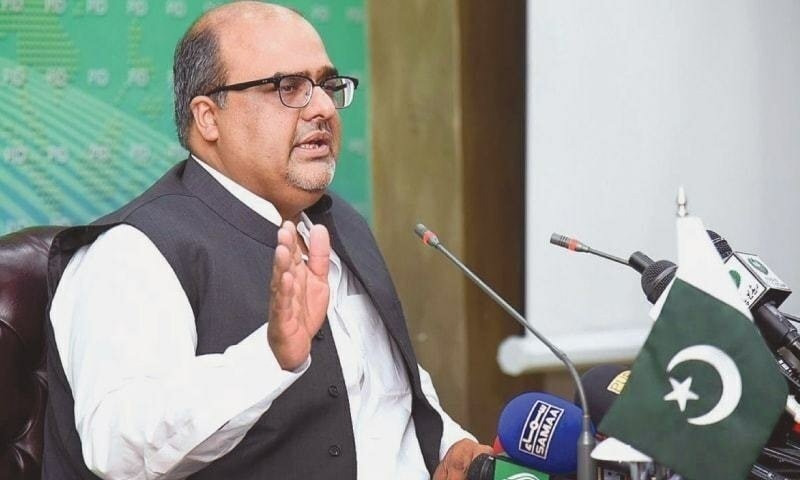
    Special Assistant to former Prime Minister (PM) Imran Khan on Accountability and Interior Shahzad Akbar left for Dubai on Sunday after his name was removed from the FIA’s ‘stop-list’ on the order of the Islamabad High Court (IHC).

    According to Express Tribune, Akhbar departed via Islamabad International Airport for Dubai on an international airline at 3:30 am, from where he is expected to depart for the United Kingdom (UK).

    Last week, the FIA had put names of four Pakistan Tehreek-e-Insaf (PTI) members including former aides — Shahzad Akbar and Shahbaz Gill on “no-fly list.”

    However, on April 12 the Islamabad High Court suspended the notification. IHC Chief Justice Athar Minallah remarked that the court has already declared the blacklist illegal.

    He said, “We have already issued a verdict that no one’s name can be placed on this list.”

    IHC also suspended the ban on three other persons— former principal secretary Azam Khan, Khan’s ex-focal person on Digital Media Dr Arslan Khalid and Punjab Anti-Corruption Establishment Chairman Mohammad Nafees Gohar.

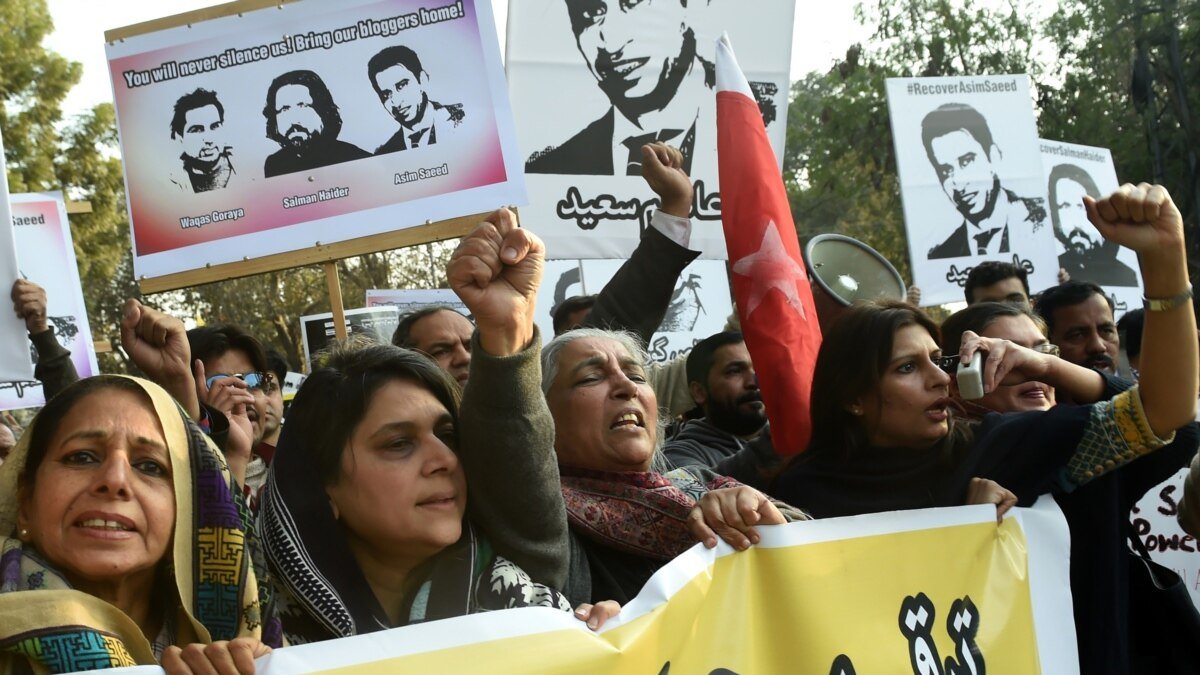
  • ‘Can anyone disappear without the govt’s will?’ IHC questions state of enforced disappearances

    ‘Can anyone disappear without the govt’s will?’ IHC questions state of enforced disappearances

    During a case hearing of missing Lahore journalist, Mudassar Naro at Islamabad High Court (IHC), Chief Justice (CJ) Athar Minallah said that enforced disappearances are ‘treason’.

    He said that such disappearances are not acceptable in a country that follows the Constitution. In the hearing, the additional attorney-general and judicial assistant appeared before the court.

    “Can anyone be disappeared without federal and provincial governments will? No,” the judge said. The judge then said that sections of the Anti-Terrorism Act are applied in such cases.

    The CJ asked if the inability to recover Naro is the failure of state agencies. He added that both governments should have looked into this matter.

    According to Geo News, Mudassar Naro has been missing since August 20, 2018. The disappearance occurred when he went to the northern areas with his wife and child. His wife and child returned but Naro has been missing ever since.

    His activist wife Saddaf Chughtai passed away last year due to a sudden cardiac arrest, leaving behind their four-year-old son.

    The Pakistan Federal Union of Journalists (PFUJ) has shown serious concern over the situation. They have also called upon Prime Minister (PM) Imran Khan and Minister for Human Rights Shireen Mazari to look into the case. However, after almost four years since his disappearance, his recovery hasn’t been made yet.

  • Court allows PML-N’s Khawaja Asif to cross-examine PM Khan

    Court allows PML-N’s Khawaja Asif to cross-examine PM Khan

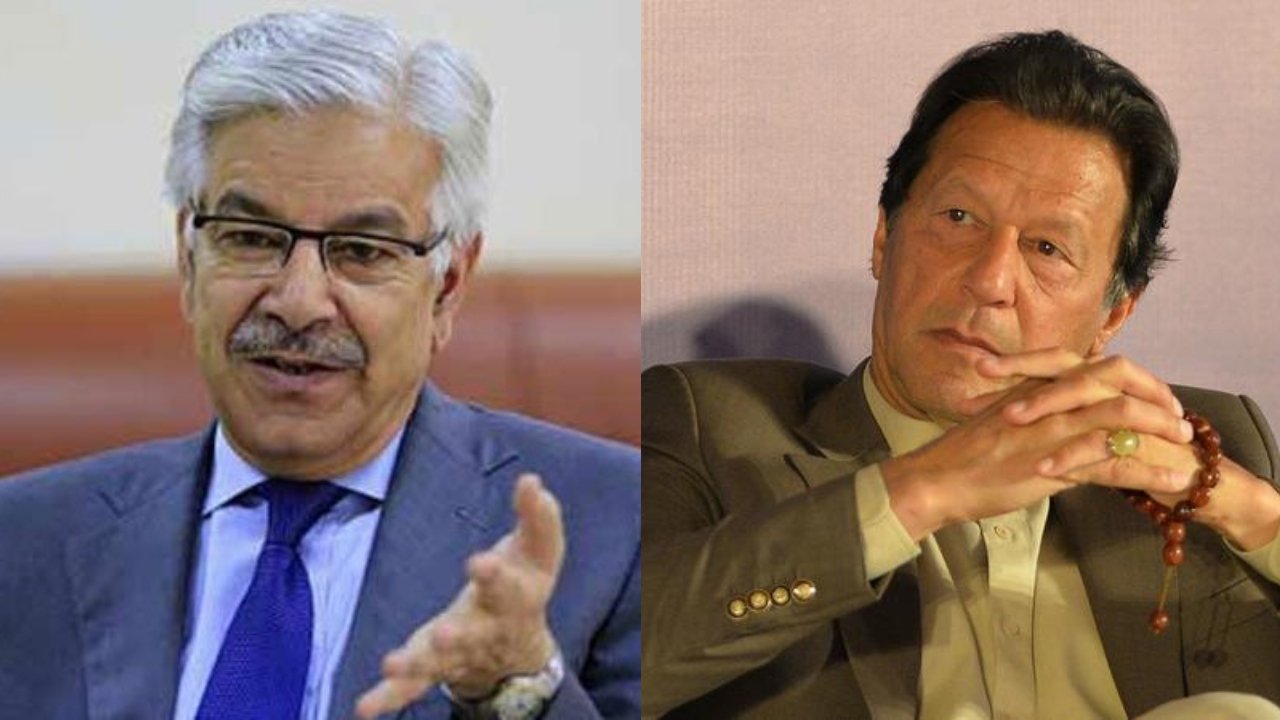
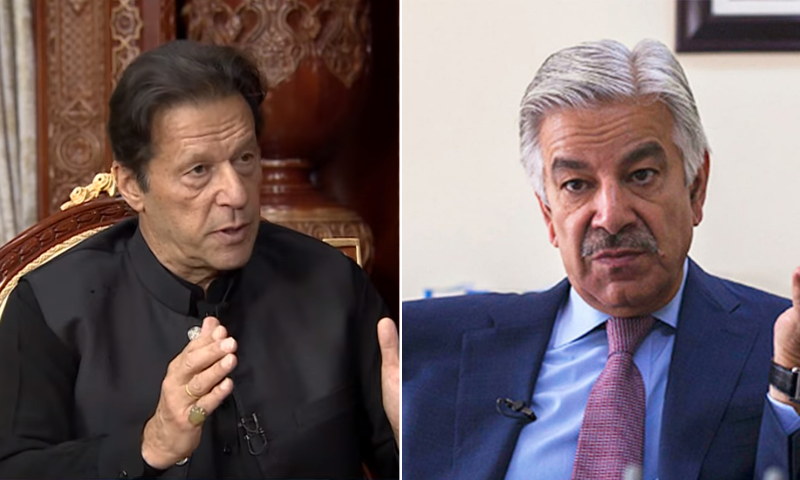
    The Islamabad High Court (IHC) has allowed Pakistan Muslim League-Nawaz’s (PML-N) Khawaja Asif to cross-examine Prime Minister (PM) Imran Khan with reference to the premier’s defamation case against him.

    During the hearing, headed by IHC Chief Justice Athar Minallah, the civil court directed to conclude the proceedings within two months, states Dawn.

    Barrister Haider Rasool, the counsel for Asif argued that since 2012 his client had sought adjournment 28 times while the court adjourned the proceedings on PM’s request on nearly 50 occasions.

    The court observed that it was the defendant’s [Khawaja] right to cross-examine the PM.

    Earlier this year, the high court had sought a reply from the premier.

    Back in 2012, the premier had filed the defamation suit against Asif for recovery of Rs10 billion as the latter at a press conference levelled allegations about misappropriation of funds and money laundering through the Shaukat Khanam funds.

  • IHC indicts ex-GB judge Rana Shamim in affidavit case, defers journalists’ indictment

    IHC indicts ex-GB judge Rana Shamim in affidavit case, defers journalists’ indictment

    The Islamabad High Court (IHC) on Thursday indicted former Gilgit-Baltistan Chief Judge Rana Shamim for allegations that he levelled against former Chief Justice of Pakistan (CJP) Saqib Nisar in a signed affidavit in London.

    IHC Chief Justice Athar Minallah has deferred the framing of charges against the media personnel who were also named in the case, including journalist Ansar Abbasi and Jang Group owner Mir Shakeel-ur-Rehman.

    The contempt of court case is in accordance with the publication of an affidavit containing allegations that Saqib Nisar attempted to influence a case against former Prime Minister Nawaz Sharif and his daughter, Maryam Nawaz, to bring Imran Khan into power.

    The IHC chief justice said the court had been disrespected and questioned whether anyone had any issue with the high court.

    Justice Minallah said the court could not give a license for anyone to disrespect it. “[It is] not even realised that there was an attempt to influence a case [that was being heard in court]. This court believes in open accountability and welcomes it. Has there been any order from July 2018 till now on which this perception [of judges being compromised] fits?”

    “The article is not related to Saqib Nisar but it has to do with this court. People have been told the judges of this court are compromised. A case was fixed for hearing two days later when the story was published,” Justice Minallah said.

    The chief justice addressed Judge Shamim and asked if he had heard any contempt cases himself during his tenure as a judge. Shamim responded in the negative, saying he had neither heard such cases nor believed in the concept of contempt.

    At this point, Justice Minallah gave Judge Shamim the opportunity to present the arguments made in his petitions. Shamim said that in the first petition he requested that a fact-finding inquiry be conducted into the case instead of framing the charges. In the other petition, he requested for the attorney general to be removed as the prosecutor.

    He also said it was important for the requirements of justice that former CJP Nisar’s reply was also made part of the inquiry and cross-examined. “This will not be a case of criminal contempt unless the facts stated in the affidavit are proven wrong,” he argued.

    The court proceeded to reject Shamim’s petitions and indicted him.

    Moreover, adjourning the indictment against the journalists, Justice Minallah said that if it was found during the trial that the news story was published deliberately, then action would be taken.

    After the arguments, Justice Minallah adjourned the proceedings till February 15 and asked Shamim to present his written response.

  • High Court seeks answer from PM Khan in defamation case against Khawaja Asif

    High Court seeks answer from PM Khan in defamation case against Khawaja Asif

    The Islamabad High Court (IHC) issued a notice to Prime Minister (PM) Imran Khan seeking his response in a defamation case against Khawaja Asif over the PML-N leader’s allegations about misappropriation of funds of Shaukat Khanam Memorial Trust, reports Dawn.

    In the hearing, Chief Justice (CJ) Athar Minallah inquired for how long this case of defamation was lingering in the court? The Additional District and Sessions Judge (ADSJ) Mohammad Adnan confessed that the delay was from both sides [PM Khan and Asif].

    Back in 2012, the premier had filed the defamation suit against Asif for recovery of Rs10 billion as the latter at a press conference levelled allegations about misappropriation of and money laundering through the Shaukat Khanam funds.

    Earlier, Imran Khan said he was the biggest individual donor of the Shaukat Khanam Hospital from 1991 to 2009. He said baseless allegations were made to undermine people’s confidence in the trust hospital.

    PML-N leader challenged the legality of the statement of Prime Minister Imran Khan recorded through a video link in a defamation suit

    The hearing was adjourned to January 12.

  • ‘Used’:Rana Shamim in trouble as court frame charges against ex-judge

    ‘Used’:Rana Shamim in trouble as court frame charges against ex-judge

    The Islamabad High Court (IHC) on Tuesday set January 7, 2022, as the date for framing charges against former Gilgit-Baltistan Chief Judge Rana Shamim and others in a case related to an affidavit that accuses former Chief Justice of Pakistan (CJP) Mian Saqib Nisar of colluding to deny bails to Pakistan Muslim League-Nawaz (PML-N) leadership prior to the 2018 elections.

    During the hearing today, CJ IHC Athar Minallah observed that Shamim’s written response submitted to the court had “laid the entire blame” on journalist Ansar Abbasi [the journalist who published the story accusing CJP Nisar], recalling that the former jurist had also maintained that he had not shared the affidavit with anyone.

    He added that in similar circumstances, courts in the United Kingdom asked journalists to disclose their sources but the IHC would not do so.

    “The judge [mentioned in] the affidavit was on leave at the time. Attempts were also made to cast doubt on the two judges on the bench,” Justice Minallah said.

    Justice Minallah said the matter had “nothing to do” with the former CJP. “Go and do what you want to do with Mian Saqib Nisar,” he remarked.

    He recalled that proceedings had started because of an attempt to cast suspicion on judges of the high court. “[This] perception is being created which everyone has started believing as true,” Justice Minallah said.

    “Where was that perception when bail was granted two weeks later by this same court?” he questioned.

    Attorney General of Pakistan (AGP) Khalid Jawed Khan said that the concerned document was very important in contempt of court case. Shamim’s counsel, Lateef Afridi, responded that Shamim had said the affidavit was a “private document” and was written at his wife’s request.

    “By now, even Rana Shamim must have come to know how sensitive this issue is,” Justice Minallah remarked.

    “Contempt of court cases were initiated against Firdous Ashiq Awan in [the IHC] and Imran Khan in the Supreme Court. What happened in those cases? Such cases are initiated and the court has to show mercy,” Afridi responded.

    Afridi said Shamim “did not know about the affidavit’s consequences when he wrote it”. The judge reiterated his question about who the beneficiaries were to which Afridi again responded that he did know and requested the court to not waste time on the issue since there were other cases pending.

    The chief justice remarked, “What if Kulbhushan Jadhav (Indian spy) submitted an affidavit saying his case should not be heard by this court since it is compromised? This is a serious matter. Understand the consequences of this affidavit.”

    Meanwhile, journalist Ansar Abbasi said that he had talked to Shamim a day before the report was published. “Rana Shamim also [messaged] me that what I read out was correct,” the journalist said.

    Subsequently, the attorney general requested the court to indict Shamim and others. Terming Shamim responsible since he was the one who wrote the affidavit, the AG said the ex-judge had committed contempt of court.

    “Since the past three days, there are [reports] that the affidavit was written in someone’s office. It is surprising that no denial has come forth,” the AG said.

    Shamim’s counsel responded that the matter had been denied in a TV interview. However, the AGP argued that no denials were made by those related to the matter.

    “Rana Shamim should accept that he was used and apologise. If he does, then I too will [ask the court] to not take action. If he doesn’t apologise, then set a date quickly for indictment,” the AG requested the court.

    Subsequently, the court set January 7, 2022, as the date for framing charges.
  • Zardari corruption case: NAB references busted, not in accordance with law

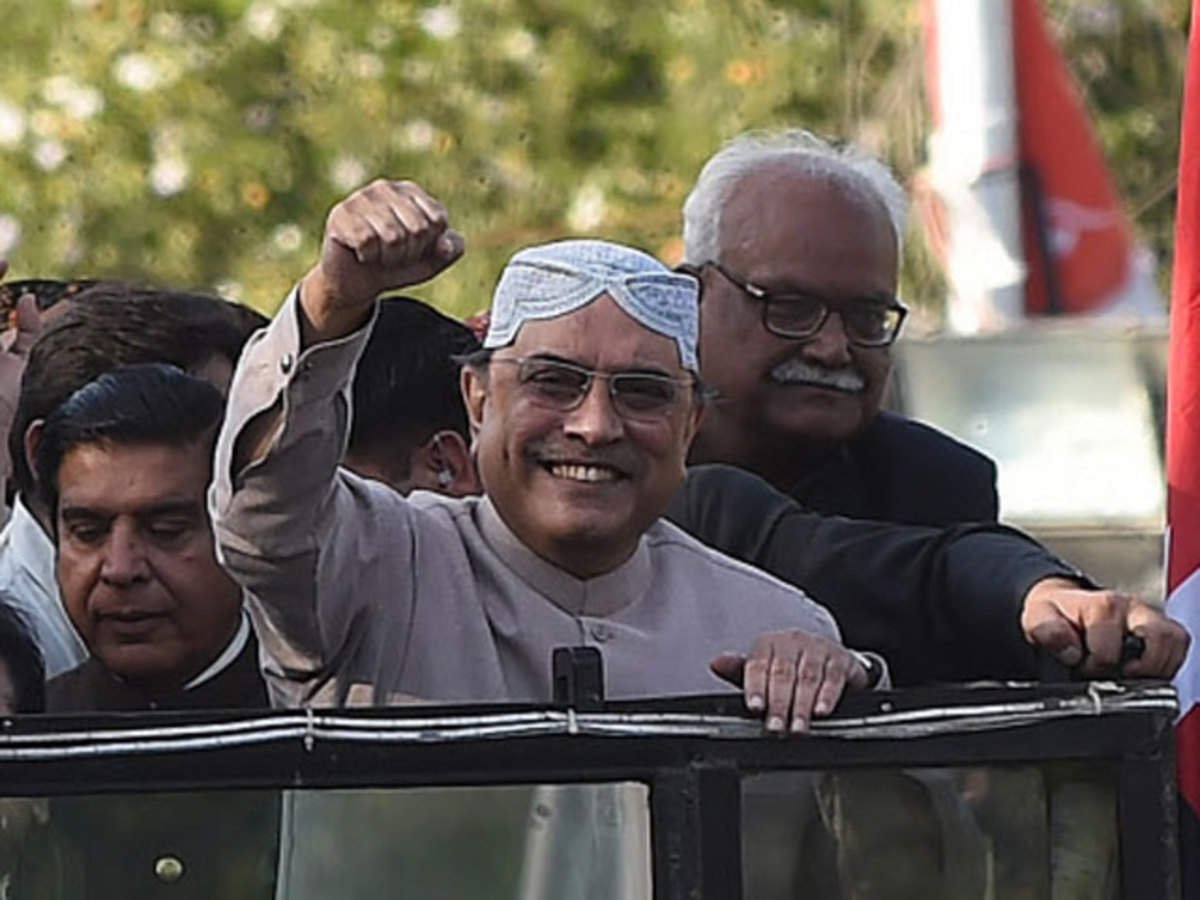
    The Islamabad High Court (IHC) on Tuesday declared the National Accountability Bureau (NAB) reference against former president Asif Ali Zardari ‘ultra vires and not according to the law’, reports The News.

    IHC Chief Justice (CJ) Athar Minallah condemned NAB authorities and said that all its references got busted for not being prepared as per law. He said that the Bureau was just wasting its time by making pointless references, adding that NAB was not above the law.

    “How the bureau could declare null and void the Income Tax Order by itself,” the CJ observed, adding that NAB did not have any jurisdiction to nullify the Federal Board of Revenue (FBR) Assessment Order.

    Earlier, IHC had noticed that NAB challenged the acquittal request of Zardari, without obtaining the original record of the case.

    The court noted that it took NAB seven years to realise that the appeals were filed without possessing the original record.

    CJ Minallah said NAB should now admit it had made a mistake by filing these references since it did not have proof against the former president.

    “And if indeed, there were no proofs, then the court will also take action against the former bureau chairman in whose tenure these cases had been filed,” said the IHC CJ.

  • Zardari case records went missing seven years ago during transportation

    Zardari case records went missing seven years ago during transportation

    The Islamabad High Court (IHC) on Thursday noticed that the National Accountability Bureau (NAB) has challenged the acquittal of former President Asif Ali Zardari without obtaining the original record of the case, reports Dawn.

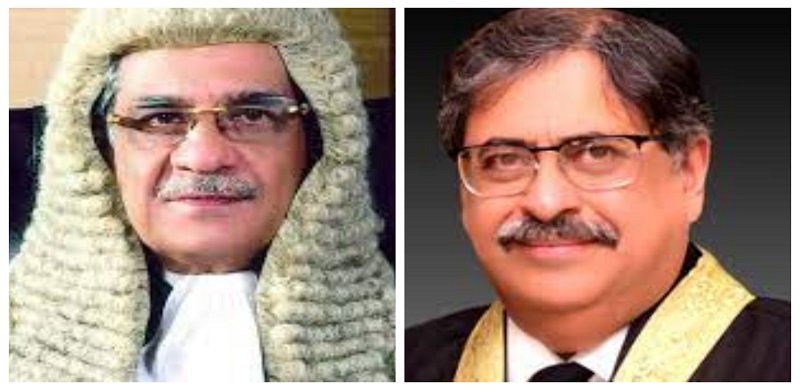
    A two-member bench comprising of Chief Justice (CJ) Athar Minallah and Justice Aamer Farooq was hearing NAB’s appeal against the acquittal of Zardari in a case.

    NAB Additional Prosecutor General Jahanzaib Khan Bharwana informed the bench that the original record of the reference had gone missing.

    The court noted that it took NAB seven years to realise that the appeals were filed without possessing the original record.

    Bharwana told the court the record had gone missing while it was being transported from the Lahore High Court to the Supreme Court.

    Justice Aamer Farooq questioned, “Please, tell us whether the anti-corruption watchdog is interested in pursuing its appeal or not?” reports The News.

    Farooq said that NAB’s cases do not have any substance, adding, “NAB’s job is to hold corrupt people accountable. Now it is time to hold it accountable.”

    CJ Minallah said NAB should now admit it had made a mistake by filing these references since it did not have proof against the former president.

    “And if indeed, there were no proofs, then the court will also take action against the former bureau chairman in whose tenure these cases had been filed,” said IHC CJ.

    Justice Minallah asked whether the NAB officials had any idea what cost the country’s economy had to pay for their rash steps. “Truth of the matter is that the bureau had failed to satisfy the accountability court with respect to allegations against Zardari,” he added.

  • Islamabad Chief Justice says no need to investigate audio recordings if evidence is not brought to court

    Islamabad Chief Justice says no need to investigate audio recordings if evidence is not brought to court

     The Chief Justice of Islamabad High Court (IHC), Athar Minallah on Wednesday remarked that why the court should investigate a case when the concerned appellants didn’t bring any audio before the bench, reports The News.

    The court was hearing the inquiry commission to probe into the alleged video of former Chief Justice of Pakistan (CJP) Saqib Nisar.

    The Attorney General of Pakistan (AGP) Khalid Javed said the petition has been filed under Article 199-C of the Constitution.

    “Why are people choosing only one prime minister and coming to court as their proxy? Thousands of people were sacked. No video in their respect came. It is a proxy war. Today everyone is saying he has two videos and he has four videos. This is the season of harassing and pressurising judges,” said AGP.

    “Sometimes an audio, sometimes some concocted affidavit is released,” the attorney general said, referring to an affidavit by former Gilgit-Baltistan Chief Judge Rana Shamim in which he accused ex-CJP Nisar of colluding to deny bails to Nawaz Sharif and Maryam Nawaz before general elections 2018.

    “If a facility is given to one PM, then why was it not given to Bhutto,” asked the AGP.

    Salahud Din Ahmed, president SHCBA, said the AGP was holding bar associations responsible for every case. “See the statements given by Prime Minister Imran Khan against the judiciary and judges. It is now being said to either do accountability of the last 70 years or not at all to divert attention.”

    The petitioner argued that the judiciary was being made controversial through different tactics and the court could stop this practice by probing the allegations against judges. At this, the attorney general responded that all matters of the past could be sent to parliament. “One appeal against conviction in the Avenfield Reference is being heard in this court. That one appeal has perplexed the entire judiciary,” Khalid Javed added.

    While acknowledging that those whose cases would be affected by the alleged audiotape had not approached the court, Ahmed said his stance was that courts were being made controversial. The judiciary could stop that from happening by ordering an inquiry, he added.

    The IHC chief justice observed that any audio or video could be constructed in today’s age of advanced technology. “Anybody can make audio and ask for an investigation. The court remarked if we declare the petition seeking an investigation into audio maintainable, then what will be the impact on the pending appeals?”

    Justice Minallah noted, however, that the matter of the affidavit was different because the person concerned — Rana Shamim — had himself approached the court. “You’re unsure yourself about the [authenticity of] the audiotape you’re mentioning. A commission can be formed when there are grounds. The people who have cases [which could be affected by it] have not brought the audiotape to the court. Why should we [take action]? Is there anyone to take ownership of the audiotape?” he questioned.