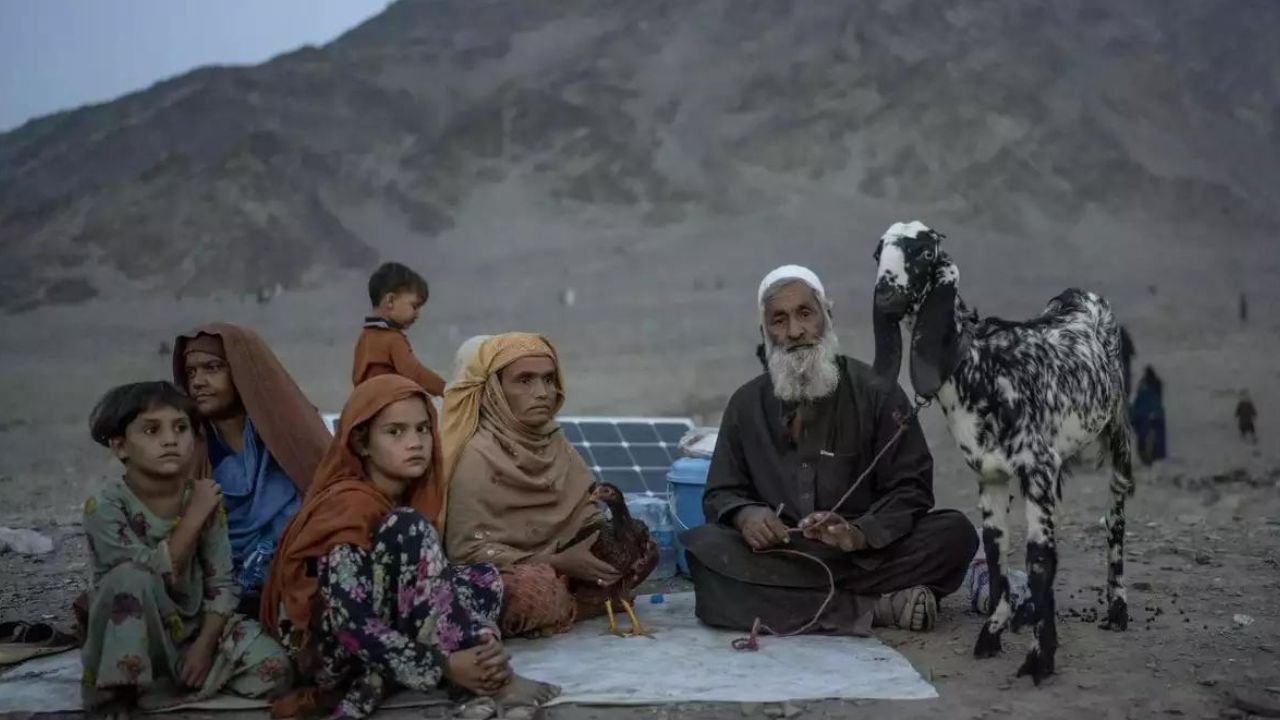
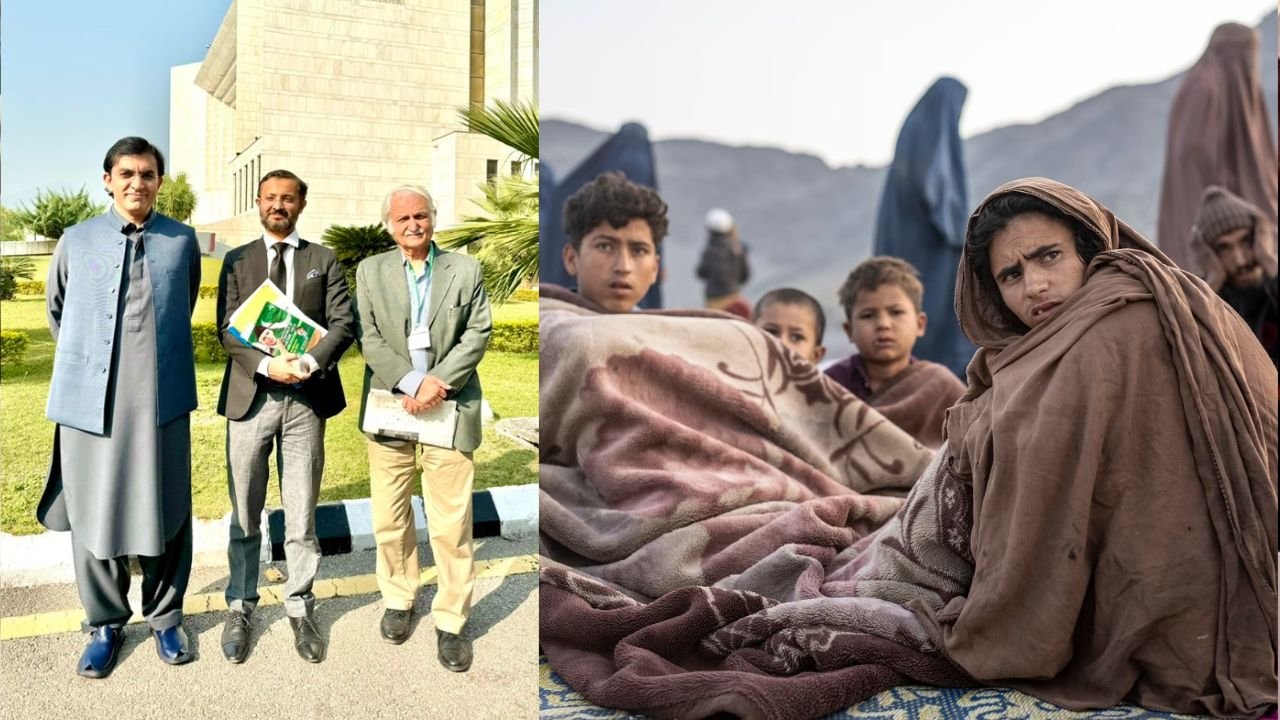
In a significant development on Monday, the Supreme Court decided to entertain a petition challenging the government’s move to force out Afghan refugees from the country. The decision comes after the Supreme Court Registrar’s Office initially raised objections to the petition’s maintainability, putting a temporary halt on its progress.
Despite the decision to entertain the petition, a specific date for the hearing is yet to be announced. According to sources, Justice Yahya Afridi of the Supreme Court heard the appeal against the objections in his chamber on Monday, as confirmed by a counsel for the petitioners.
Mohsin Dawar took to X (former Twitter) and said, “We appeared before Justice Yahya Afridi for the Chamber Appeal against the Registrar’s objection on our petition against the mass deportation of Afghan Refugees. Our appeal has been accepted and the petition will be heard by the Supreme Court.”
The petition, returned by the Supreme Court Registrar’s Office on November 8, faced objections related to its maintainability. One notable objection was the absence of a specific question of public importance regarding the enforcement of fundamental rights as guaranteed under the Constitution, warranting the invocation of Article 184(3).
In response to the objections, the petitioners contended that their case raised critical issues pertaining to fundamental rights enshrined in the Constitution. The appeal, filed by Umer Ijaz Gillani on behalf of human rights activists and politicians, argued that the issues presented in the petition are essential for safeguarding the rights guaranteed in the Constitution.
“The issues raised in the petition are critical for securing the fundamental rights enshrined in the Constitution,” stated the appeal. It emphasized the need to prevent constitutional promises from becoming mere rhetoric, asserting, “The promises contained in the Constitution must never be allowed to become mere verbiage, the harbingers of false hope.”
The petitioners include prominent figures such as Jamaat-i-Islami Pakistan Senator Mushtaq Ahmed, Human rights activist Amina Masood Janjua, National Democratic Movement Chairman Mohsin Dawar, lawyer Jibran Nasir, Rohail Kasi, Syed Muaz Shah, Pastor Ghazala Parveen, lawyer Iman Zainab Mazari, Ahmad Shabbar, Advocate Imran Shafiq, Luke Victor, and Sijal Shafiq.
The petitioners stated in their press release on Sunday, “After 18 days of eager wait and continuous legal struggle, the Supreme Court has finally fixed our Case against the Caretaker Government’s Mass Deportation drive for a preliminary hearing. The hearing will be conducted by a 1-member bench comprising Mr. Justice Yahya Afridi inside his Chamber. It is scheduled for 1:00 pm on Monday, 20th November, 2023.
Needless to say that under Article 184(3), the principal responsibility for taking charge of the situation and preventing systemic violation of fundamental rights vests in the Court itself. The petitioners’ role is that of informants who apprise the Court about what is happening and prick its judicial conscience.
What has been happening to scores of people since October 3, when this draconian Deportation Drive was launched by a government lacking all mandate, is clear to all and sundry. However, in order to assist the Court in discharge of its sacred duty, the counsel for the Petitioners will appear before the bench.”
The government of Pakistan decided to deport all the illegal aliens from the country early in October.
A vast majority of them are Afghans who were given a deadline of November 1 to leave the country voluntarily or else there would be a crackdown.
The government has identified phases in which these Afghan immigrants will be repatriated under the Illegal Foreigners Repatriation Plan.
There is a large number of 1.7 million Afgan refugees which the government aims to repatriate in the first phase of the plan. More than 200,000 of them have been repatriated until now.
Aurat March protests
Aurat March Lahore reiterated its demand that the Government of Pakistan immediately halt deportations of Afghan refugees, during a protest on Saturday.
The protestors further stated that the hastily imposed 1 November expulsion deadline is an authoritarian decision that exceeds the caretaker government’s limited constitutional mandate. It effectively overturned decades of refugee policy overnight without accountability or transparency.
Furthermore, the ill-thought-out decision has resulted in the denial of Afghan refugees’ rights to liberty,due process, and, in many cases, citizenship.
On 29 October 2023, Aurat March chapters from across the country marked their protest and addressed an open letter urging the caretaker Prime Minister, Anwar ul Haq Kakar, to reverse his decision.
However, this caretaker government has failed to yield to these demands and has since doubled down on its decision by announcing that the second phase of deportations will be of “documented” refugees.
Aurat March stated, “We refuse this insidious distinction between “documented” and “undocumented” refugees; all refugees have the non-derogable right to non-refoulement and deserve support, not persecution.”