Tag: aurat march

  • Supreme Court will hear petition against deportation of Afghan refugees

    Supreme Court will hear petition against deportation of Afghan refugees

    In a significant development on Monday, the Supreme Court decided to entertain a petition challenging the government’s move to force out Afghan refugees from the country. The decision comes after the Supreme Court Registrar’s Office initially raised objections to the petition’s maintainability, putting a temporary halt on its progress.

    Despite the decision to entertain the petition, a specific date for the hearing is yet to be announced. According to sources, Justice Yahya Afridi of the Supreme Court heard the appeal against the objections in his chamber on Monday, as confirmed by a counsel for the petitioners.

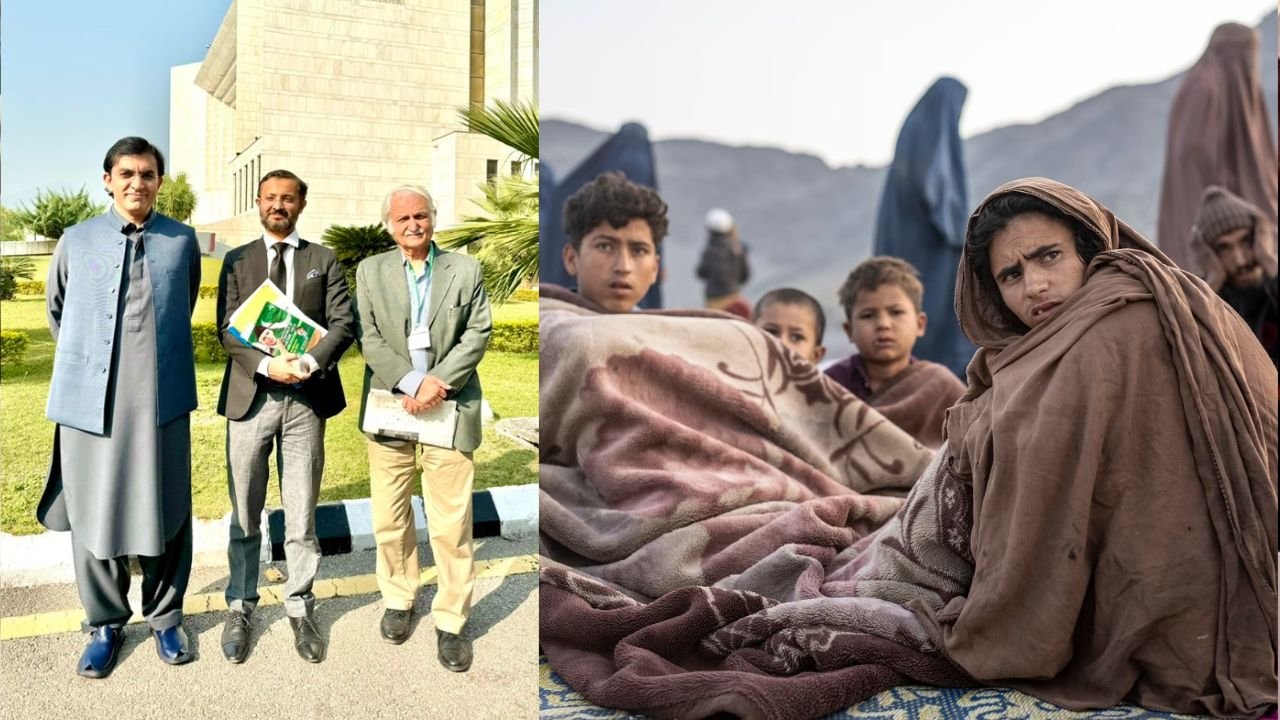
    Mohsin Dawar took to X (former Twitter) and said, “We appeared before Justice Yahya Afridi for the Chamber Appeal against the Registrar’s objection on our petition against the mass deportation of Afghan Refugees. Our appeal has been accepted and the petition will be heard by the Supreme Court.”

    The petition, returned by the Supreme Court Registrar’s Office on November 8, faced objections related to its maintainability. One notable objection was the absence of a specific question of public importance regarding the enforcement of fundamental rights as guaranteed under the Constitution, warranting the invocation of Article 184(3).

    In response to the objections, the petitioners contended that their case raised critical issues pertaining to fundamental rights enshrined in the Constitution. The appeal, filed by Umer Ijaz Gillani on behalf of human rights activists and politicians, argued that the issues presented in the petition are essential for safeguarding the rights guaranteed in the Constitution.

    “The issues raised in the petition are critical for securing the fundamental rights enshrined in the Constitution,” stated the appeal. It emphasized the need to prevent constitutional promises from becoming mere rhetoric, asserting, “The promises contained in the Constitution must never be allowed to become mere verbiage, the harbingers of false hope.”

    The petitioners include prominent figures such as Jamaat-i-Islami Pakistan Senator Mushtaq Ahmed, Human rights activist Amina Masood Janjua, National Democratic Movement Chairman Mohsin Dawar, lawyer Jibran Nasir, Rohail Kasi, Syed Muaz Shah, Pastor Ghazala Parveen, lawyer Iman Zainab Mazari, Ahmad Shabbar, Advocate Imran Shafiq, Luke Victor, and Sijal Shafiq.

    The petitioners stated in their press release on Sunday, “After 18 days of eager wait and continuous legal struggle, the Supreme Court has finally fixed our Case against the Caretaker Government’s Mass Deportation drive for a preliminary hearing. The hearing will be conducted by a 1-member bench comprising Mr. Justice Yahya Afridi inside his Chamber. It is scheduled for 1:00 pm on Monday, 20th November, 2023.

    Needless to say that under Article 184(3), the principal responsibility for taking charge of the situation and preventing systemic violation of fundamental rights vests in the Court itself. The petitioners’ role is that of informants who apprise the Court about what is happening and prick its judicial conscience.

    What has been happening to scores of people since October 3, when this draconian Deportation Drive was launched by a government lacking all mandate, is clear to all and sundry. However, in order to assist the Court in discharge of its sacred duty, the counsel for the Petitioners will appear before the bench.”

    The government of Pakistan decided to deport all the illegal aliens from the country early in October.

    A vast majority of them are Afghans who were given a deadline of November 1 to leave the country voluntarily or else there would be a crackdown.

    The government has identified phases in which these Afghan immigrants will be repatriated under the Illegal Foreigners Repatriation Plan.

    There is a large number of 1.7 million Afgan refugees which the government aims to repatriate in the first phase of the plan. More than 200,000 of them have been repatriated until now.

    Aurat March protests

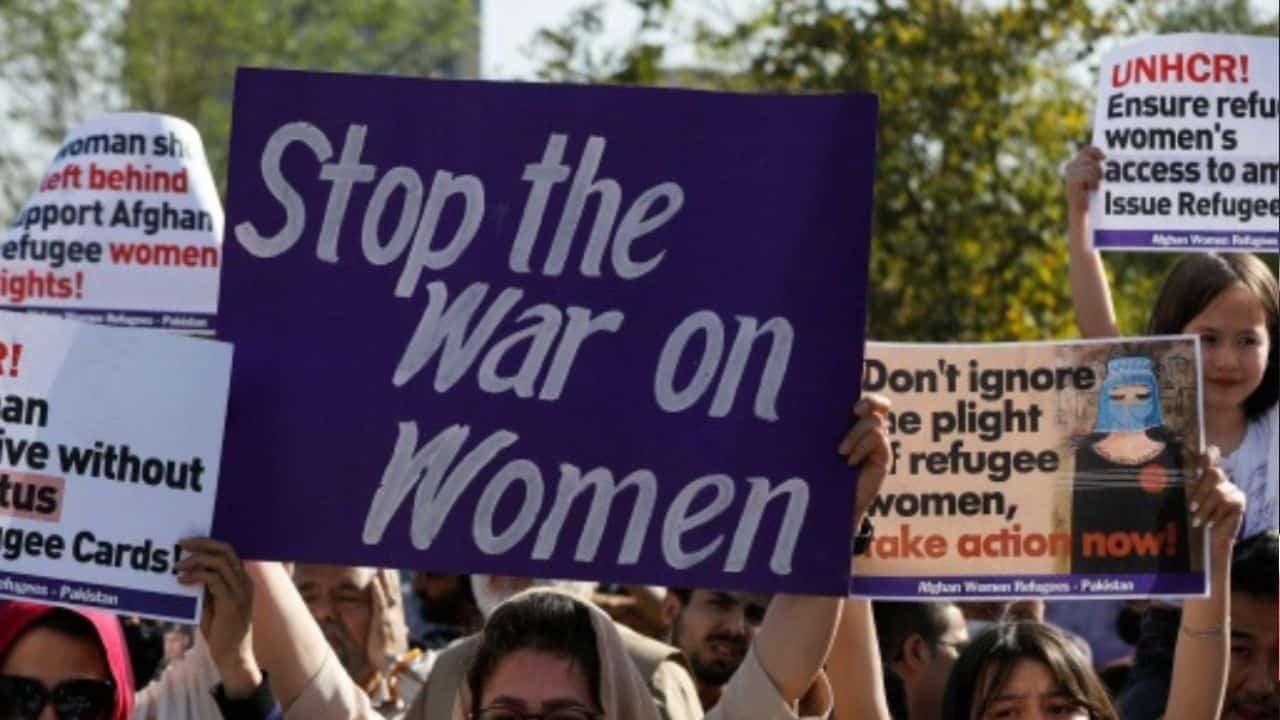
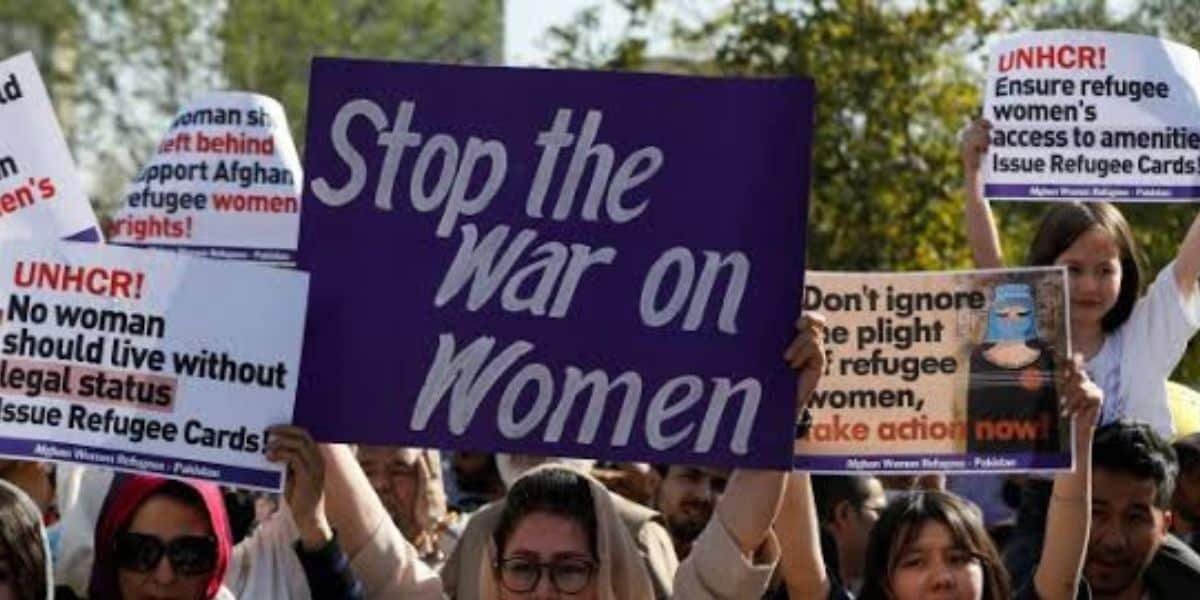
    Aurat March Lahore reiterated its demand that the Government of Pakistan immediately halt deportations of Afghan refugees, during a protest on Saturday.

    The protestors further stated that the hastily imposed 1 November expulsion deadline is an authoritarian decision that exceeds the caretaker government’s limited constitutional mandate. It effectively overturned decades of refugee policy overnight without accountability or transparency.

    Furthermore, the ill-thought-out decision has resulted in the denial of Afghan refugees’ rights to liberty,due process, and, in many cases, citizenship.

    On 29 October 2023, Aurat March chapters from across the country marked their protest and addressed an open letter urging the caretaker Prime Minister, Anwar ul Haq Kakar, to reverse his decision.

    However, this caretaker government has failed to yield to these demands and has since doubled down on its decision by announcing that the second phase of deportations will be of “documented” refugees.

    Aurat March stated, “We refuse this insidious distinction between “documented” and “undocumented” refugees; all refugees have the non-derogable right to non-refoulement and deserve support, not persecution.”

  • Misogyny rears its head once more with Mohib Mirza’s sexist comments

    Misogyny rears its head once more with Mohib Mirza’s sexist comments

    What is this, misogyny month?

    Another male actor has decided to raise the misogyny flag with a gross comment and this time, its Mohib Mirza. The actor was featured in a podcast for FHM Pakistan where he talked at length about his career and the controversy surrounding the actor’s marriage to Sanam Saeed. Everything was going well, and we were quite proud of how Mohib shut down allegations of cheating against his first wife Amina Sheikh.

    But this was all shot down when Mohib was asked about whether it was him or Sanam who controlled the house.

    To which Mohib responded:

    “If you’re a man you cannot be shareef. No one should remain in this delusion that a man can be innocent. A woman can be innocent but not a man. It can’t be possible because of genetics. The way it was made it’s not possible for that reason. Do you know how many cells you generate in THAT specific area? Billions! You are made like a machine so you are a machine.”

    Where do I even begin with this nonsense. Why do women need to deal with this?

    Sab say pehlay tou Mohib sir, equating manliness with strength and femininity with weakness is a relic of the past. If such a thing were real, then men wouldn’t be throwing around chairs and breaking television sets every time their favourite team lost a cricket match. And women wouldn’t be quietly toiling while suffering intense period pain. Have you ever had a chance, Mr Mohib, to read up on our history? Or even perhaps spoken with the women of this country? Sit down with an ordinary Pakistani woman who is not only working at a job, but also taking care of her children, cleaning her house and then dealing with her in-laws. While men in this country, who were apparently born with superior genes, can’t provide proper financial support for the family. The gender you’re calling weak by associating it with femininity is the one holding families together.

    And also sir, this is not the first time you and Sanam went viral with your sexist comments. Earlier this year, both Mohib and Sanam were guests on Fahad Mustafa’s show. Sanam was asked whether men need to be dealt with like babies, to which she responded: “You need to take care of men like they are children.” The statement reeks of entitlement and ignorance, and as a couple with a lot of power and social status, you need to be mindful of the kind of words you say publicly.

    But you’re lucky Mr Mohib, you’re not the only celebrity who made us want to slam our heads on the wall this week. Javed Sheikh decided it was super cool to publicly announce that he refuses to believe in the slogan ‘Mera Jism Meri Marzi’. He emphasised that a woman is beautiful when she is covered.

    Please tell us when and where did any woman ask you for your opinion? Did Haseena Moin ask you for reference when she cast you in her critically acclaimed drama ‘Ankahi’ where you acted opposite a head-strong, opinionated woman who didn’t need to cover up to demand respect from a man? Exactly, sit down.

    Why are we still addressing this topic? There’s a war in the Middle East. India is making more progressive movies like ‘Rocky and Rani’ centring around consent and holding men accountable for misogyny, and we’re still debating whether femininity makes a woman weak?

    All we will say is these are distractions from real issues, and we are done lecturing men on the basic elements of feminism. Which is why I didn’t bother to go into any details in this piece. Google is free, and at this point celebrities need to realise we can see through their PR attempts. We know what you’re doing when you bring up sexism because it will bring along another month’s easy coverage. Women don’t owe any man an explanation for why they deserve to be respected, and we’re done doing so as well.

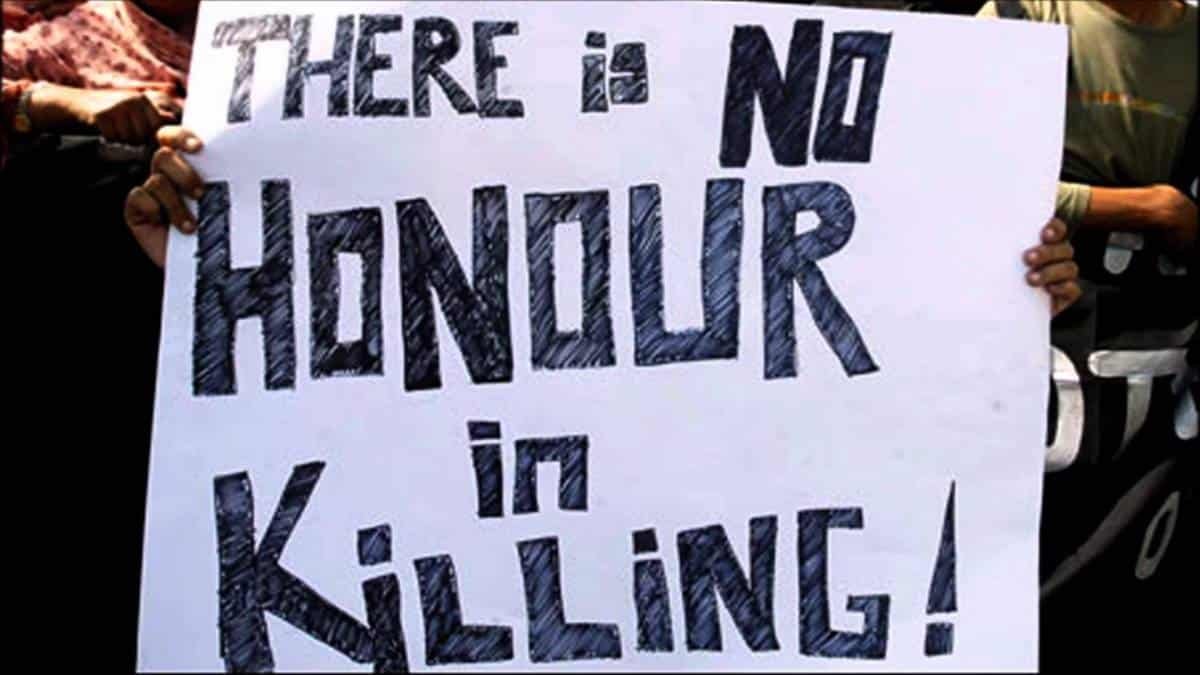
  • Five suspects granted bail in two honour killing cases

    Five suspects granted bail in two honour killing cases

    Peshawar High Court has granted bail in two separate cases involving honor killings.

    The first case involved Swat resident, Akhtar Ali, suspected of being involved in the killing of his wife and another man over three months ago.

    The bail was granted by Justice Shahid Khan of a single-member bench, who directed the submission of two surety bonds of Rs200,000 each for Ali’s release.

    The incident, which took place on July 22, 2023, was initially reported at the Shaheedan Wenai police station in Swat under sections 302 and 311 of the Pakistan Penal Code and Section 15 of the Arms Act.

    The complainant in the FIR, station house officer of the police station, Mohammad Zaib Khan, claimed that he along with a police team went to the crime site after learning about the murder of a man and a woman and found out that the deceased were killed by the petitioner, who suspected that the two had an extramarital affair

    During the hearing, the bench noted that the case lacked substantial evidence against Ali.

    It added that the complainant in the case had neither disclosed the name of the person who informed him about the involvement of the petitioner nor did he produce any other “cogent and reliable information, which could prima facie spoke about the guilt or otherwise of the petitioner.”

    Lawyers Saeed Khan, Askar Khan, and Dunya Zeb, representing the petitioner, emphasized the absence of witnesses and evidence connecting Ali to the crime.

    They added that the murders took place at nighttime and that there was no evidence to connect the petitioner with the commission of the offense.

    Similarly, the court also granted bail to Habib Khan and his three sons – Talim Khan, Owais Khan, and Zarif Khan – from Lower Dir district.

    It accepted the joint bail petition of suspects on the condition of furnishing two surety bonds of Rs100,000 each.

    They were arrested on suspicion of the honor killing of Habib’s daughter-in-law, Nish Bibi, whose body was found at their residence on Sept 23, 2023.

    An FIR was lodged by the mother of the girl, who alleged mistreatment and torture by her husband and in-laws.

    The complainant claimed that her daughter was married to Dawood six years ago but she didn’t have kids and she often asked her husband for medical treatment.

    She claimed that for the same reason, relations between the couple were strained and that she was mistreated by her husband and in-laws and was also tortured by them.

    Legal counsel Shabbir Khan Daulatkhel defended the petitioners, maintaining that the prosecution’s case was founded on rumors, lacking any concrete evidence against the accused.

    The initial bail application of the petitioners was rejected on Oct 12, 2023, by an additional sessions judge in the Chakdara area of Lower Dir district.

  • Aurat-March lambasts Nawaz Sharif over sexist remarks

    Aurat-March lambasts Nawaz Sharif over sexist remarks

    The Karachi chapter of women’s rights movement Aurat March has taken to X (former Twitter) to criticize former Prime Minister and Pakistan Muslim League-Nawaz (PML-N) Nawaz Sharif over his remarks delivered in a speech in Minar e Pakistan’s procession on Saturday.

    The tweet started with a sardonic tone, “Bohat Khoob”. It further criticised Nawaz Sharif for jibing at women’s politics. “He has not learnt up till now that categorising women as “good” or “bad” is a thing of ancient times.” The tweet said that raising questions over a woman’s character on the basis of dance is a “ghatiya harqat” [an extremely bad action].

    The tweets came in response to Nawaz praising the women at his rally for not dancing with the beat of drum, a thinly veiled swipe at arch rivals Pakistan Tehreek-e-Insaf (PTI). He asked the crowd to clap for him if they understood what he implied.

    Aurat March suggested to the PML-N leader to let go of misogyny.

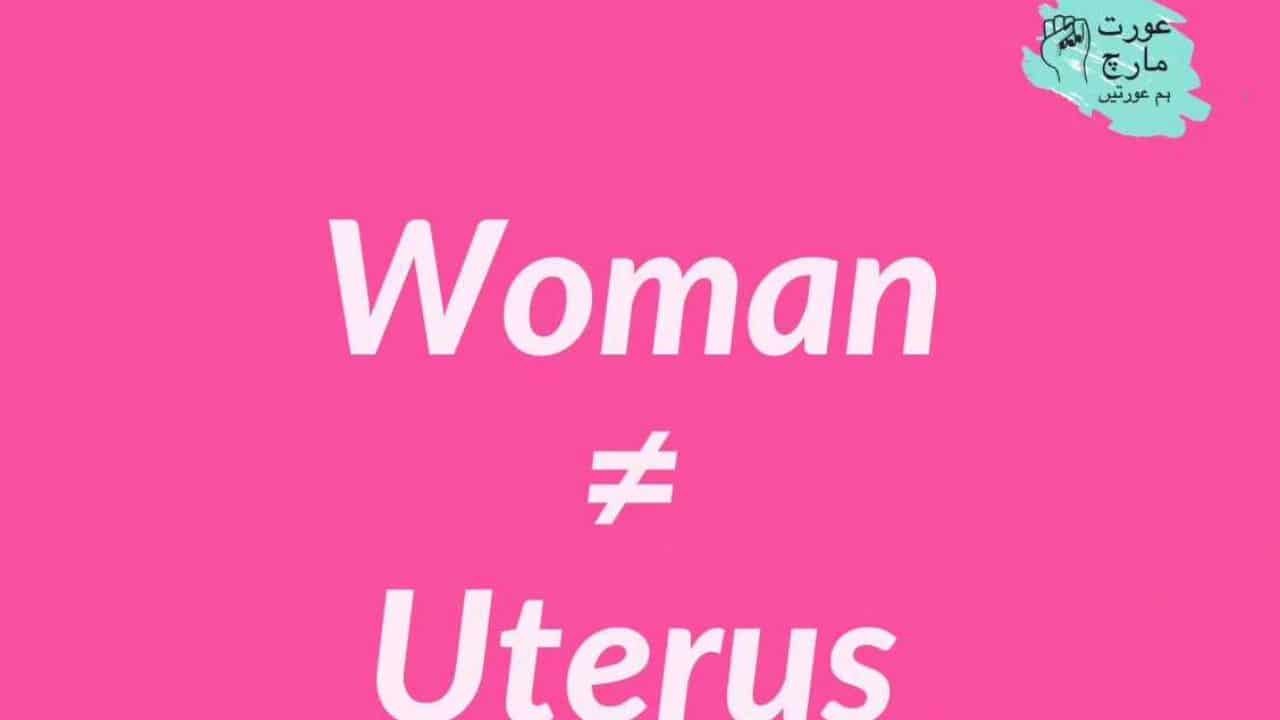
  • What was the backlash on Aurat March’s ‘people with uterus’ post all about? An organizer explains

    What was the backlash on Aurat March’s ‘people with uterus’ post all about? An organizer explains

    Three days ago, the women rights movement Aurat March’s Karachi page uploaded a detailed statement on their Twitter account addressing the backlash surrounding the term ‘people with uteruses’. The term was used in a statement announcing a feminist baithak a few days ago, where women and people of other genders were invited to discuss the topic “Mensturation and Misogyny”.

    In their statement, Aurat March explained why mensturation has less to do with gender, because it’s a biological process since the uterus, or the womb is the main organ involved in it.

    “Mensturation is a biological process, with the uterus or the womb being the main organ involved in it. Needless to say, it has to do with the sex a person is assigned at birth rather than their gender. It only makes sense, then, to call anyone who mensurates a ‘person with uterus’ or ‘mensturator’.”

    “This form of criticism revolves around the deeply ingrained, patriarchal belief that a woman’s identity is inherently tied to her uterus, other reproductive organs, and ability to conceive and bear children. It is deeply misogynist, especially in our context, where many CIS women are considered baby making machines and girls are married off at a young age (often even in their teenage) with the belief that they would bear more children, often at the cost of the girl’s health or even life.”

    In their next post, Aurat March detailed on the misogynist attitude towards periods- and how it affects every person, woman or not.

    “Given that the majority of uteruses bleed almost every month for four decades, it is crucial to realize that the misogynist attitudes towards periods affect every person who mensurates- whether woman or not. We use the word misogyny here because the patriarchy views mensuration as inherently feminine thing (and hence, as cause of inferiority); therefore, this misogyny extends also to non-binary and trans-masculine mensurators.”

    “The bottom line is that the uteruses of many women, transgender men and non-binary persons (who were assigned female at birth) have been bleeding for centuries and will continue to do so.”

    The statement was slammed by several Twitter users as misogynist towards women, with Youtubers like Muzamil stepping in to label the movement elitist. To get to the bottom of the controversy and how can we craft more spaces for women, and people from the transgender community, to talk openly about their mensuration without facing backlash, we spoke with Aurat March organiser *Rosa.

    Q. What inspired you to write this statement, and did you anticipate that there would be such backlash?

    Truth be told, we did not expect the response to be this big. Aurat March regularly hosts baithaks where we discuss our politics with the poeple but also amongst ourselves. The use of inclusive and misogyny-aware language is something we’ve been consistently using over the years. Our movement is feminist and takes pride in the fact that we stand for all genders that are suppressed under patriarchy. We think the fact the tweet started with the word “people with uteruses” is what had people read it and have it make rounds.

    Q. Given the criticism the post has received, do you feel Aurat March could have worded the statement differently or toned it down?

    No. The criticism for a feminist voice in the political space has been there since day one. People criticize us mindlessly for anything that we do. They place an unfair burden of championing every single feminist issue in the country while those same men might not have gotten off their horses of privilege to raise a single finger for the feminist cause. The criticism is bandwagon-ish, misogynistic and transphobic, and it shows how much work we have to do in terms of the discourse around menstruation, the people it impacts, and the trauma of internalized misogyny that women in Pakistan carry. The hate isn’t even necessarily centered around the statement; it’s centered around Aurat March and what it represents.

    Q. Several users, including the YouTuber Muzzamil, criticised the post saying its proof that Aurat March is an elitist movement, that doesn’t address the ongoing issues faced by women in Pakistan. Do you feel this perspective is justified? 

    We think its funny that out of all the people, Muzzamil came out to call the Aurat March an elitist movement while he sits and tweets this from Dubai. There are several tiers of responses as to how the perspective isn’t justified. 

    The burden to prove whether AM is an elitist movement is not just unfair in the first place, it’s impossible to prove as well. Our marches regularly pulls in more than half of its audience from the working class communities we work with. We go and visit these hidden, impoverished and disenfranchised communities all year round: Zia Colony, Mauripur, Orangi Town, Kausar Niazi, Mehran Town, Race Course, Shikarpur, Surjani, Ibrahim Hyderi, Lyari are only some of the names. We then arrange their transport from their communities to the march as well. 

    But not just that, all that one has to do see where our priorities lie as a movement is go through our Instagram. For the last month or so, we’ve been working with effectees from Jaranwala, raising voices and protesting for the rehabilitation, protesting at Teen Talwar for recovery of Hindu missing persons while a delegation from our team has been facing harassment and abuse from the police at Jaranwala as we speak. 

    But of course, men like Muzzamil wouldn’t see the groundwork that Aurat March has done because he’s never visited these places himself, or maybe he doesn’t have binoculars big enough that can help him see all the way from Dubai. The truth is, our politics doesn’t revolve around just creating a feminist discourse or space on twitter, but a lot of people see it that way. They like to think that politics that does not exist beyond this digital space, and we couldn’t care less about these keyboard warriors. The work that we do, impacts the people we work with and it makes a difference in their lives, and that is all that the feminist cause is at the end of the day.

    Q. The ongoing backlash surrounding menstruation can have some implications on the mental health of Pakistani women because they don’t feel its safe for them to express their concerns out loud, even on social media. How can we continue to create spaces to openly speak about the issues Pakistani women want to talk about.

    We think it’s important to clarify our politics and position in this context. We believe it’s important to see a woman beyond her uterus. In many instances, this “bachadani” holds more value than her life. Her worth is gauged up on her ability to reproduce, her identity is centered around her motherhood, and her final goal is set out to become a mother. So many women lose their lives in forced pregnancies, so many battle uterine cancer and so many see their childhoods end the moment their uteruses start bleeding, married off to a man twice or thrice her age. So of course, when AM tries to separate the woman’s identity from her uterus, people lose their minds.

    It’s funny people think ‘people with uterus’ is dehumanizing language when so many people see only a uterus when they look at a woman. To think about how this experience might not be inherent to their existence would then, of course, be thought of as radical. At that same time, it’s important to remember that many women don’t necessarily have a uterus either. Alot of them have their removed due to complications, while many are simply born without one; the language is inclusive of their womanhood and identity, too. All the while, we also acknowledge all the people that menstruate or have uteruses but might not necessarily identify as women either, such transmen or non binary folks. The movement is just as much as for them and by them as it is for any gender.

    And understandably so, it becomes difficult for a woman to voice out her concerns regarding her body on social media. When our comments section becomes places of spewing hate or become dominated by men who think they’re invited to share their opinions about women’s bodies, they drown out any chances of having an open engagement and discussion on these topics. 

  • Controversial coach Raja Ziaul Haq taken down from YouTube

    Controversial coach Raja Ziaul Haq taken down from YouTube

    Controversial Youtuber Raja Ziaul Haq’s channel has been taken down by YouTube on Wednesday, putting a temporary halt on the rise of the speaker well known for spewing sexist and transphobic comments.

    On various occasions, Haq criticised Aurat March and Commissioner Nazimabad Hazim Bangwar for what he thought was promoting LGBTQ values in Pakistan.

    On his Instagram account, which has around 448000 followers, Raja said his team are unaware of why his channel was shut down and were appealing to Youtube.

    “Our YouTube channel has been taken down or terminated. We have appealed it. We are checking what were the reasons that led to this. Inshallah, we are hopeful it will be restored, but obviously, there is some work to do on our part.”

    In an older clip of a discussion on Aurat March, Raja Ziaul Haq alleged that the movement was not interested in uplifting the rights of women or educating the masses, but were more interested in gaining sexual liberation and removing Islam’s influence from Pakistan.

    In a 2021 clip, Raja slammed the movement for going against Islam, citing the placcard ‘Mera Jism Meri Marzi’ as a reason.

    He had then claimed in 2022 that the movement did not lend their support for the Muslim girl in India who protested against the anti-burkha law implemented across schools.

    He also slammed leading transgender activists in Pakistan for setting up ‘Scrap Fest’, claiming that they were starting Muslim Pride. However, speaking to The Current, organiser Urvah Khan confirmed the event was not LGBTQ exclusive, but was supporting performances by minority communities in Pakistan.

    Haq also lashed out at the Green Entertainment show ‘College Gate’ on his Youtube channel, ranting that it was promoting feminist agendas. However, the creators addressed the controversies in a conversation with Arab News, stating that their show was not anti Pakistani culture, but was about a group of friends who tackle issues like peer pressure, and how friendships promote good values within each other.

  • TW: Policeman sets his 14-year-old wife on fire over dowry

    TW: Policeman sets his 14-year-old wife on fire over dowry

    TRIGGER WARNING: abuse, domestic violence

    A 14-year-old girl married to a policeman in Sialkot has been set on fire after her husband became unhappy with the dowry provided to him.

    According to the complaint filed with the Sialkot police by labourer Tariq Mahmood, his daughter Muneeb Fatima, was married to Constable Waqas Nazir, who was posted at the Satrah Police Station, of Pasrur Tehsil. The marriage took place five months ago, however , when he went to visit their home, he was told by his daughter’s in-laws that she was happy and did not want to meet him.

    Speaking to DAWN, Mahmood elaborated that when Fatima came back to visit him after five months, she revealed details of torture, including being burnt by a clothing iron and being kept in chains.

    Mahmood further reported that his daughter was set on fire by her husband after he sprinkled petrol on her. When the labourer confronted Waqas, he was shot at and given death threats.

    Mahmood said his daughter was tortured by both her husband and his sister, Sadaf.

    Muneeb Fatima is receiving treatment at Tehsil Headquaters Hospital, Pasrur.

    The abuser, according to Dawn, made calls to a journalist and threatened to have him killed. The police, under the orders of the DPO, made several threatening calls to the journalist.

    According to the a spokesperson for the Sialkot district police, Waqas Nazir has been suspended by the DPO, while an inquiry has been launched against him.

  • South Asian men becoming more violent with climate change, scientists claim

    South Asian men becoming more violent with climate change, scientists claim

    According to a study published by JAMA Psychiatry on Wednesday, the rising temperatures in South Asia caused by climate change has led to a rise in domestic violence inflicted upon women and girls.

    Researchers completed the study by gathering data of physical, emotional and sexual abuse from 194,871 girls and women between the ages of 15 to 49 from countries like India, Pakistan and Nepal between the years 2010 and 2018.

    Their results have shown that with every one degree rise in temperature, there was an eight per cent hike in physical violence, a 7.3 per cent rise in sexual violence, and a 4.9% increase in domestic violence.

    The study has warned that domestic violence is likely to rise by 21 per cent by the end of the century because of the “unlimited emissions scenario”, with India likely to see a 23.5 per cent increase, 14.8 per cent in Nepal and 5.9 per cent in Pakistan.

    A report by Amnesty International has called for global leaders to take action against rising heatwaves in Pakistan, stating that the country was on the “frontlines of the climate crisis” despite producing less than one per cent of planet-warming gases.

    “Despite their small contribution to climate change, its people face disproportionately severe consequences which are often life threatening. Tackling a climate crisis of this scale requires global attention and action. Wealthier countries must make no mistake about the important role they play,” said Dinushika Dissanayake, Amnesty’s deputy regional director in South Asia.

    The report revealed that after speaking to 45 people in the summers of 2021 and 2022 from Lahore and Jacobabad, where temperatures had reached 52C, the human rights organisation revealed that people complained about heatstroke, shortness of breathe and dizziness, with some needing hospital care.

    People who were interviewed for the study belonged to professions at a higher risk of exposure to heat, such as working in agriculture, brick kilns, factories or delivery men.

    The organisation also shared that 40 million Pakistanis suffer from constant power outrages, while others receive erratic power supplies due to lengthy outrages.

    “People living in poverty do not have access to, or are unable to afford, electricity for fans or air conditioning units and neither can they afford to buy solar panels,” the report said.

  • Survey resurfaces: 40 per cent Pakistani men believe beating wife justified five years ago

    Survey resurfaces: 40 per cent Pakistani men believe beating wife justified five years ago

    According to a resurfaced Demographic and Health survey taken in 2018 by the National Institute of Population Studies (NIPS), around 40 per cent men agreed that a husband is justified in beating his wife.

    However, the reasons for beating were as follows: If she burns his food, goes out without his permission, neglects his children or refuses to have sex with him. Surprisingly, 42 per cent women had also agreed with the statement. Around 34 per cent women, the report reveals, had experienced spousal violence, whether it was physical, sexual or emotional.

    The report states that 28 per cent married women had experienced physical violence since the age of 15, and 15 per cent women had experienced violence in the past year.

    Up to seven per cent married women admitted that they experienced violence during their pregnancy.

    On experiencing sexual violence, six per cent married women had experienced sexual violence and the most common perpetuator was revealed to be the husband, while 14 per cent women who were divorced, seperated or widowed had experienced sexual violence.

    Moving on to financial stability and empowerment, the survey reported that only 19 per cent married women had been working in the past 12 months, compared to 98 per cent married men.

    Half of the married women who are employed and earned an income, made independent decisions on how to spend their earnings, while 41 per cent made joint decisions with their husband. 76 per cent of working women reported making less money than their husband.

    The survey also found that only three per cent of ever-married women owned a house, alone or jointly, compared to 72 per cent ever-married men.

    The survey sampled from all four provinces including Punjab, Sindh, Khyber Pakhtunkhwa, Balochistan, including Azad Jammu Kashmir and FATA. A total of 12,364 women between the ages of 15-49 and 3,145 men had participated in the survey.

  • No, divorces are not rising because of Aurat March, but because women are recognising their right to live

    On Saturday, actress Nazish Jahangir set social media ablaze when during a podcast with controversial YouTuber Nadir Ali, the model turned actor claimed that she did not identify as a feminist, because apparently “not all crying women are truthful.”

     “…l believe in equality, and I still confidently say that not all crying women are truthful. I am always standing with the right person whether it is a woman or a man.”

    The abysmal part of this conversation begun when Nazish Jahangir went on to address Aurat March, saying that the movement is responsible for the rise of divorces in the country, adding that it was not a solution to any problem:

    “I don’t believe in these Aurat Marches. It’s not benefiting the women for whom we are fighting. They are not reaching the women they’re standing up for. Such poor women would be sitting in villages and making food while they chant slogans on the streets here. I think these fake feminist movements will never get you justice,”

    “I wonder who they are protesting for then. Are they protesting for us? Because our league knows everything about it. We know our rights and we know the value of equality. The ratio of khula has also increased after these marches,” The ‘Thays’ actor claimed. “I’m not asking women to bear cruelties or abuse. They can leave their houses if they like but at least give it a shot. Our parents are the biggest example of sacrificing and surviving relationships with patience and love. Because now women are getting divorced only after one month.”

    Yes this is a deeply messed up argument, there is a lot to unpack and a lot of myths to dissect which are once more churning up harmful stereotypes towards organisations working for women’s rights. Perhaps the worst statement was about Aurat March encouraging divorces in Pakistan. A sweeping statement Jahangir gave without any proof that it is true.

    In reality, Aurat March is not the reason why women are choosing divorce Aurat March is the solution to a long term issue: the limited support and neglect shown towards women in a patriarchal society that demands that everything be sacrificed for the sake of a marriage.

    Since Ms Jahangir is from the acting profession, and our dramas claim to know best about what women should want from a marriage, can we all collectively recall one drama that has portrayed a healthy marriage? Can we say that ‘Tere Bin’, which features a man stalking and slapping his wife was what women should look up to in order to understand how to keep their marriages intact?

    Furthermore, if Ms Jahangir is claiming that women who break away from their marriages do not understand sacrifice and hard work because Aurat March tells them to be less tolerant, then she needs to be aware that more women in Pakistan have died trying to stay married. Sara Inam was murdered by her husband in Islamabad after three months of marriage, was the murder her own fault? Qandeel Baloch‘s murderer, her brother, was pardoned by the court despite confessing his crime to authorities, only because his parents pardoned him. Just five days ago, another man walked free from a court in Karachi after murdering his daughter, because he was once again pardoned by his family. Another man in Lahore murdered his wife and then sent her body back to her family via a rickshaw.

    All these nameless women, the countless ways they were let down by the law and society in Pakistan. How is that we know about them, Ms Jahangir? It’s definitely not because of the family system, which continues to hide predators, and pardon them after unforgivable crimes. This heroic act solely belongs to Aurat March, which has time and time again raised placcards for countless women you claim it does not protect.

    You claim to say that Aurat March cannot help the women in villages because they’re too busy shouting slogans, but it is through Aurat March that we know these women’s names. Working class women like Dua Zehra, whose parents couldn’t make an announcement at a mosque because she was a Shia, and who was slammed by media organisatons, who claimed she had disohonored her family. It was local activists who pressurised authorities to take child abduction seriously, helping her come back home.

    Claiming that you’re unaware about a topic is one thing, but making sweeping generalisations about women’s rights, especially during a time when laws seek to further restrict women’s access to escaping abusive marriages, and more feminist activists are being trolled onine, it is incredibly disheartening to see a public figure as yourself talking without properly fact checking yourself.

    If you are still confused about how to be a well informed and articulate public figure, then take an example from Ayesha Omar and Kiran Malik, who carefully broke down why watching the rise in divorce rates is a good sign that more women are learning to stand up for themselves and escape their abusive marriages.