Tag: aurat march

  • ‘Sexist’: NADRA slammed for declaring men head of family

    ‘Sexist’: NADRA slammed for declaring men head of family

    Twitter users have slammed a sexist policy authorized by The National Database and Registration Authority (NADRA) after a user shared a screenshot of the message she received from the government organization that informed her that the husband was designated as the head of the household.

    The user went on to criticize NADRA as she had not nominated her husband as the head of the household, per the message stated.

    https://twitter.com/yougoglencocco/status/1640997625821380608?s=20

    The user further went on to question how this policy would become a threat for women trying to escape abusive marriages, because their private information is being sent to their spouses without their consent.

    Other women also slammed NADRA for refusing to recognize female agency, and pointed out how this policy alienates single parent households, especially with women who had escaped abusive relationships.

    Sharing their experiences of being turned away from offices while applying for their CNIC card, female tweeps blamed the policy that demands that a male guardian verify themselves as the head of their household.

    NADRA responded to the tweet by sharing that this policy was designed to guard family data from unauthorized access, because of which they had decided to inform the family head about procedures related to family data.

    “It is one of the security features to guard family data from unauthorised access. In order to maintain the integrity of family data, @NadraPak informs every family head about any processing through which someone becomes part of his family.”

    This tweet was bashed by Twitter users are regressive for refusing to recognize women as the head of their households, as activist and researcher Ammar Rashid tweeted that the government body should not have violated the privacy of women by leaking their data this way.

    “Maybe @NadraPak should try to institute measures to confirm identities that don’t openly violate the constitutional right to privacy of adult female citizens? Other countries seem to be managing data security just fine without such archaic rules.”

    Another user said: “A married woman is usually above the age of 18 and that makes her legally a citizen. She must have access to her OWN security features without having man govern her changes to the card.”

    https://twitter.com/dcfaiqalethal/status/1641077646548148227?s=20

    The Chairman of NADRA, Tariq Malik addressed the controversy in a tweet on Thursday, sharing that the policy did not discriminate against women from becoming the head of the household, and shared statistics that showed more women were nominated for this position than men.

    @NadraPak policy of declaring head of family is not gender specific. See thru lens of #realdata 28 million citizens declared their mother, 291,039 declared their sisters, 116,800 men declared their wife as head of family. And, 3.69 million females who are self head of family.”

    Malik further went on to reveal that the backlash to this policy has encouraged the department to reform it in order to prevent discrimination of any kind:

    “Declaring head of family is self reported event. I have directed our Public Engagement Department to sit down with social scientists and subject matter experts to bring reform in policies and SoPs. Suggestions welcomed. We have revamped quite a few since a year.”
  • Twitter users, activists condemn Mahira Khan, Anwar Maqsood’s sexist remarks about Maryam Nawaz, Marriyum Aurangzeb

    Social media was enraged yesterday at the comments made by Pakistan Muslim League-Nawaz (PML-N) senator Afnan Ullah Khan who remarked that Mahira Khan had mental health problems and Anwar Maqsood was a drunkard, in a tweet which celebrities and feminist activists slammed as sexist.

    What had prompted this reaction? It was a conversation at a session titled ‘An Evening With Mahira Khan’ held at the Arts Council of Pakistan in Karachi. In a clip that went viral, Mahira Khan was seen commenting about two females fighting and poisoning each other. To which Maqsood responded by saying that these two women were PML-N leaders Marriyum Aurangzeb and Maryam Nawaz.

    “I am restricted from talking about politics, I can’t say anything about anyone. Hopefully the situation will get better soon. What you said about poisoning, abusing each other so I gave an example, it is also happening in real life. Also both are actors, not character actors.”

    Can we condemn the disparaging comment made by the PML-N senator, whose party is currently under the leadership of a woman, and is also the one ruling the country? Absolutely, because how a politician comments about their critics reveals how thin-skinned and shallow-minded they are, especially when the critic is a woman.

    But to completely sideline the fact that Khan, who has been outspoken about gender inequality and the need to improve the way media represents women on screens, especially sitting next to a renowned leftist screen writer, could resort to making sexist jokes about female politicians whose views she doesn’t agree with? Twitter users could not over look this fact, and criticised Khan’s sexist behavior for directly targeting female politicians of the opposite party as a way to score points.

    Feminist activist Leena Ghani mentioned that it was male politicians who are consistently over-emotional, and behave in a horrible manner, but it’s astounding why Khan chose to overlook them and target Aurangzeb and Nawaz

    The Twitter page of Aurat March condemned Khan’s and Maqsood’s comments as ‘cringe’

    Twitter users like journalist Gharidah Farooqi criticised these comments as ‘shameful’:

    Zebunnisa Burki criticised both Khan and Maqsood for making such disgusting comments

    Another user wrote that it wasn’t proper for a woman to mock another woman politician in this manner

  • ‘Mera Jism Meri Marzi is more than just being about clothes’: Amna Ilyas

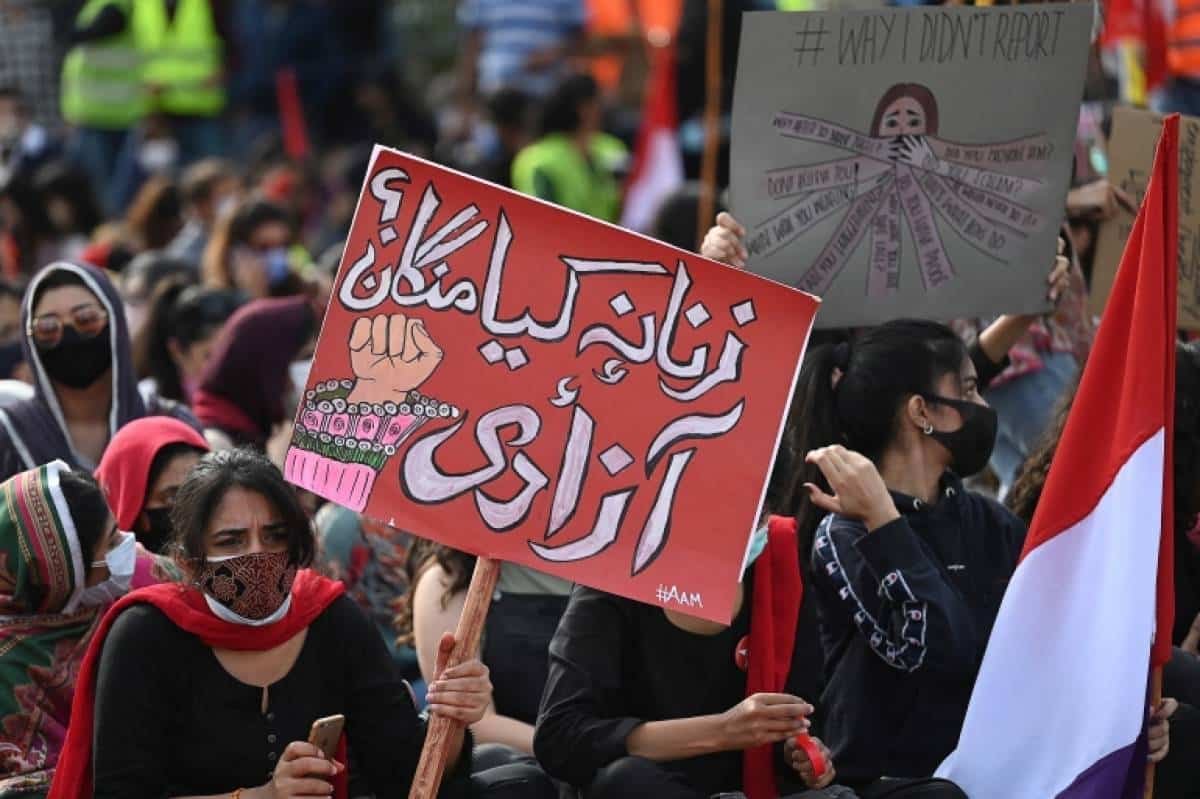
    Actor Amna Ilyas was a guest on “The Talk Talk Show’ where she opened up about being a feminist, and clarified the misinformation around the Aurat March slogan ‘Mera Jism Meri Marzi’.

    When the placcard was raised at the 2018 Aurat March, it caused outrage after many right-wing critics said that the chant supports promiscuity and challenges family values in Pakistan. Many religious clerics had used the placard as justification to call ‘Aurat March’ un-Islamic and accused it of promoting a Western agenda in Pakistan.

    Many feminist activists have defended the slogan for protecting women’s bodily autonomy, and now Ilyas has also done the same, as she explained that the slogan ‘Mera Jism Meri Marzi’ was more than about clothes, it’s about protecting the rights of women:

    “It’s about having body autonomy rights and consent. It’s about harassment, domestic violence, and concepts like, ‘No one has the right to touch me without my consent, even if I’m married to you’.”

    Ilyas went on to debunk the stereotype associated with feminism that women who support this ideology are promoting vulgarity, when in reality the ideology supports the rights of women to have the same opportunities as men:

    “Whenever I talk about feminism, people always object by saying ‘Oh, Amna is bold, of course, she will spread vulgarity as she’s from the industry, she wants all our daughters to be like her’. No, I don’t want that, I only do what I want to for myself.”

    “When we speak of equal rights, it’s about having the same opportunities to thrive in my career as the man beside me. If you’re a father of four children who excel in your profession, why can’t I do the same? Honestly, it’s not about whether you’re getting permission to wear jeans or not. What we truly need, is the space to work in a cerebral capacity,” she explained.

    Watch the complete interview here:

  • Mira Sethi meets boy who stood up to misogynist reporter at Aurat March

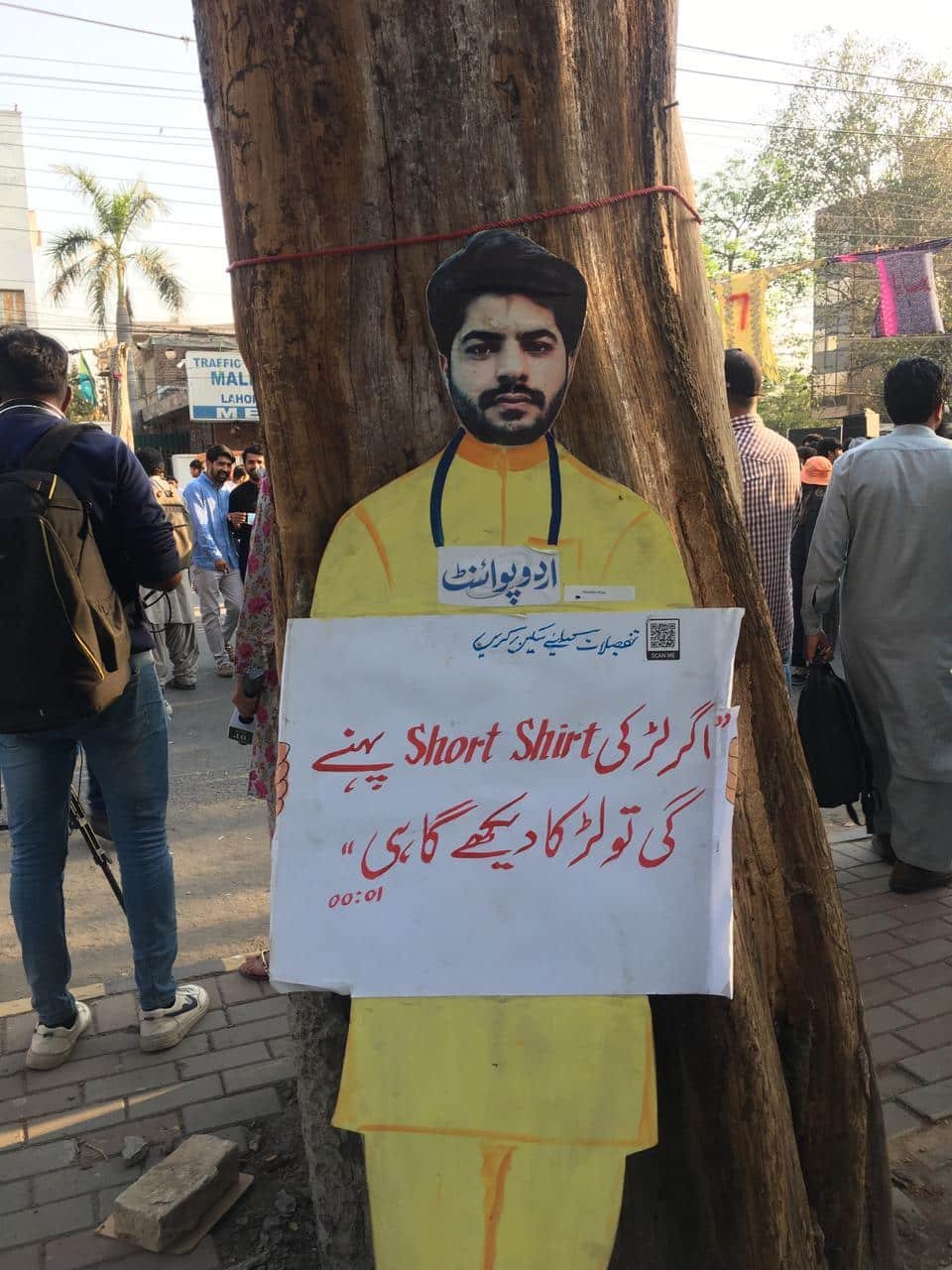
    At this year’s Aurat March, a boy went viral on Twitter when he was seen schooling a reporter by explaining to him why marching for women’s rights is incredibly important.

    Actress and writer Mira Sethi revealed yesterday that she had met the boy by tracing him down on Twitter, and described him as her ‘hero’.

    “Remember the kid who stood up to that vile reporter at Aurat March Lahore?” she wrote, “I found him on Twitter, asked if I could come over to express my gratitude and met his whole family. Muhammad Ali is only 20, but he radiates clarity and courage. I’m going to do whatever it takes to make sure his light is never dimmed. So full of gratitude today.”

    Syed Aly Jaffery also shared the interaction on his Twitter page and called her a ‘nice and amazing person’

  • ‘Stop lying’: Imaan Zainab, Aurat March protesters criticize Sherry Rehman for tone-deaf tweet

    At the Aurat March protest held in Islamabad on March 8, police officers were caught on camera assaulting female protestors and pushing them back by installing barbed wires.

    Politicians like the Minister of Climate Change, Sherry Rehman, condemned the clashes in a tweet and called for an inquiry on the conduct of the police officers who had brutally beaten the female protesters.

    Lawyer and activist Imaan Zainab Mazari-Haazir called Rehman out, writing in a tweet that the Minister had done nothing to prevent the police from preventing the peaceful protest from going on.

    “You came to the march for a photo-op and left after creating complete chaos which we were then dealing with for the next hour. You were rude to us in our meeting with you on 6 March and were aware of all the risks we were taking. Please save this drama for someone who believes it. Too little, too late.”

    Rehman responded to Mazari-Hazir’s tweet saying that she had left early due to a distress call, and offered an opportunity to meet all year round rather than just for a “one year episodic march”.

    “Oh please. I did not need your “photo op”; left a fully scheduled press con at PID (anyone can check) at 2.40 becoz I got a distress call. In my office I offered u a safe space thru the year to meet and build traction, not just a one year episodic march. With my broken shoulder I stood there but many were caught up in angry sloganeering. Have been the butt of many laathi charges but never behaved like this. Rudeness is never going to get u allies or grow solidarity. All the best”

    Mazari-Hazir then criticized Sherry Rehman for reducing Aurat March to a “one year episodic march”.

    “Calling it ‘just a 1 year episodic march’ shows what you really think of it. That in itself is sad. This ‘one year episodic march’ is a global practice- doesn’t mean collectives (or even individuals within them) are not working year round. Could have criticized what I said without punching down on movement.”

    Other Aurat March protestors also criticized the minister, calling her “condescending” for interrupting the trans performers present at the march.

    This user wrote: “You were extremely condescending to all of us whn we met u. You interrupted the Trans persons’ perfrmance by standing over them knowing fully well tht the media will follow u. U brought out the inner transphobes in the media persons who thn started strampling the trans performers”

    Another activist, Fauzia Yazdani tweeted how Rehman had refused to condemn the police officers who had started harassing and pushing back the protestors

  • Man behind viral Aurat March poster shares inspiring story about his mother

    Man behind viral Aurat March poster shares inspiring story about his mother

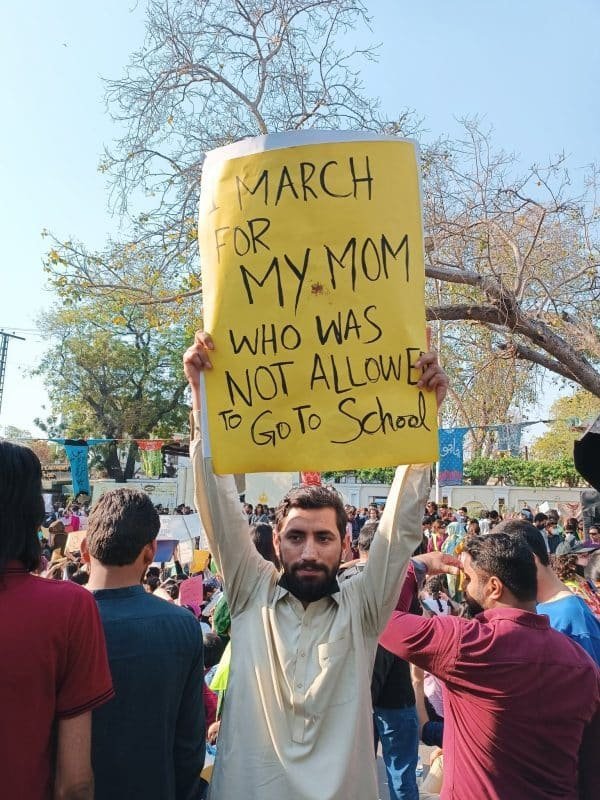
    ‘I march for my mom who was not allowed to go to school’; so stated a placard at the Aurat March, pictures of which went viral on Twitter.

    Now Ehtesham Hassan, the man behind the poster, has taken to Twitter to share the inspiring story of his mother.

    Hassan revealed that since the age of 10, his mother was fond of reading and writing and had wanted to go to school like her brothers did.

    When his mother expressed her desire to her grandmother, she purchased a takhti for her because of which the mother was able to go two school for two days. Hassan revealed that every night, his mother would clean the takhti with mud so that she could use it again the next day.

    However, Hassan said it was Maulana Fazal Rehman heard about his mother going to school and forbade her family from sending her because this way the girl would write letters to the men and violate the honor of her family.

    Hassan narrated that his mother was restricted from going to school, a fact that she is sorrowful about to this day. Hassan said that being deprived of her fundamental right to receive an education, and not being supported by her family is the reason why he choose to march today so that no other woman would be treated this way.

    Since the story was posted yesterday, women on Twitter have praised Hassan for pasionately defending the right of women to receive education, calling his thread a moving tribute to his mother.

    Many women said they had witnessed the same in their families.

    “This is the story of both my maternal & paternal grandmothers. They were both not allowed to go to school after 8th grade. They made sure their daughters were highly educated – they advocated for them against hell or high water,” this user wrote.

    Another user wrote: “Mother’s carried the burden of thier broken dreams and planted seeds of hope for future generations. She might not have gone to school but her son’s daughter would! Women have been forebearers of a silent revolution for generations.”

    We hope that more men out there step out of their bubble and follow the lead of Hassan to empower the women of their lives to never stop reaching for their dreams.

  • What was the significance behind the tunnel art installation at Aurat March?

    What was the significance behind the tunnel art installation at Aurat March?

    Aurat March has set up a performance art piece at their protests each year which highlights their central demand which is to create an equal space for both men and women in Pakistan.

    This year, the feminist movement revealed that a gaze tunnel titled “Chalien Auraton Ki Chaal” was installed at the march for men to pass through, in order to make them experience the kind of fear and claustrophobia women undergo when they are harassed on the streets.

    The March elaborated on the significance behind this art installation in a post:

    “The tunnel piece is an exercise in empathy, in conveying our gendered experiences of walking down the streets, in market places, through office doors. Ask any gender minority what they feel when they are in public spaces: each one of us will have many stories of harassment, of discomfort, of instances where the streets didn’t feel like ours. The art piece plays soundbites of our day-to-day public interactions. Aurat March is ultimately about reclaiming public spaces, of never settling for chaar-dewaris, but rather stretching ourselves more fully within and outside our homes. That demands introspection from men of them way they occupy public spaces. We hope this piece helps in that.”

    Another art installation ‘In Ko Viral Karo’ was also at display on the protest which featured pictures of Youtube bloggers along with the misogynist comments they made about participants.

    The movement addressed the significance behind this installation in the post:
    “The coverage of Aurat March we see on Youtube is far from reality. These Youtube ‘journalists’ sensationalized, misrepresented and harassed participants from Aurat March last year. We present direct quotes from their ‘coverage’”.

  • Khan’s rally in Lahore creates hurdles for Aurat March participants

    Khan’s rally in Lahore creates hurdles for Aurat March participants

    Pakistan Tehreek-e-Insaf (PTI) Chairman Imran Khan announced the start of his party’s election campaign in Lahore on Tuesday. He said that the campaign will start with a rally from March 8 which is celebrated as International Women’s Day. In honour of the day, many women and marginalised people participate in Aurat March.

    Despite the announcement of the rally, people came out in huge numbers to participate in Aurat March. However, many of them were stuck in traffic for hours, especially on Mall road, Lahore where police were deployed for Khan’s rally.

    https://twitter.com/ravenclueless/status/1633408523475271680?s=20

    Later in the evening on Wednesday, Khan called off the party’s rally in Lahore in the wake of the Punjab government’s crackdown on participants following the imposition of Section 144 in the provincial capital.

    Now, the Punjab Home Department has also banned “all kinds of protests, demonstrations and sit-ins” in Lahore for seven days, citing the “overall security situation” in the wake of recent “wave of terrorism and threat alerts”.

    Surprisingly, it has been reported that the home department sent a letter to PTI leader Dr Yasmin Rashid that public gatherings are not advisable as women march is also going to take place. But clearly, they didn’t care.

    Chairman Khan went ahead as always, leaving us wondering that didn’t PTI female leaders tell Khan about Aurat March.

  • Inspired by Aurat March, here are feminist songs suggested by women on Twitter

    Inspired by Aurat March, here are feminist songs suggested by women on Twitter

    Aurat March is a day of calling attention to the struggle for equality, as women march on the streets in cities across Pakistan to raise awareness about the numerous issues they face everyday. In spirit of this celebration, we have to pay homage to the powerful feminist anthems that have championed women to be fearless and have called for women to be raised to an equal bar with men.
    When this twitter user asked her followers to give suggestions about Pakistani feminist songs women could listen to in celebration of the day.

    https://twitter.com/apniISPdot/status/1632826963025973252?s=20

    Soon, women flooded her comment section with suggestions and we’re more than happy to share them with our audience!

    1 Hum Dekhien Gey by Iqbal Bano

    The celebrated poem by Faiz Ahmed Faiz was written to counter Zia’s brutal dictatorship who had imprisoned Faiz. Legendary singer Iqbal Bano held a performance at Alhamra where she wore a black sari and sung this poem in defiance of Zia’s ban on saris.

    2 Mujhe Apnay Jeenay Ka Haq Chahiye by Tahira Syed and Roshaneh Zafar ft Shabana Azmi

    Written by celebrated Urdu poet and writer Amjad Islam Amjad, this song served as the title OST for the drama ‘Akhri Station’. It gives voice to the struggles women face and their desire to break free from the chains of patriarchy.

    3 Intehai Shauq by Hadiqa Kiani

    Hadiqa Kiani is a beloved Pakistani actress and singer who has consistently acted in dramas that raised issues faced by women, and for her efforts to provide relief to the flood victims in Balochistan. This song was suggested by women on Twitter because it motivates people to overcome their struggles and setbacks to keep striving for a better future.

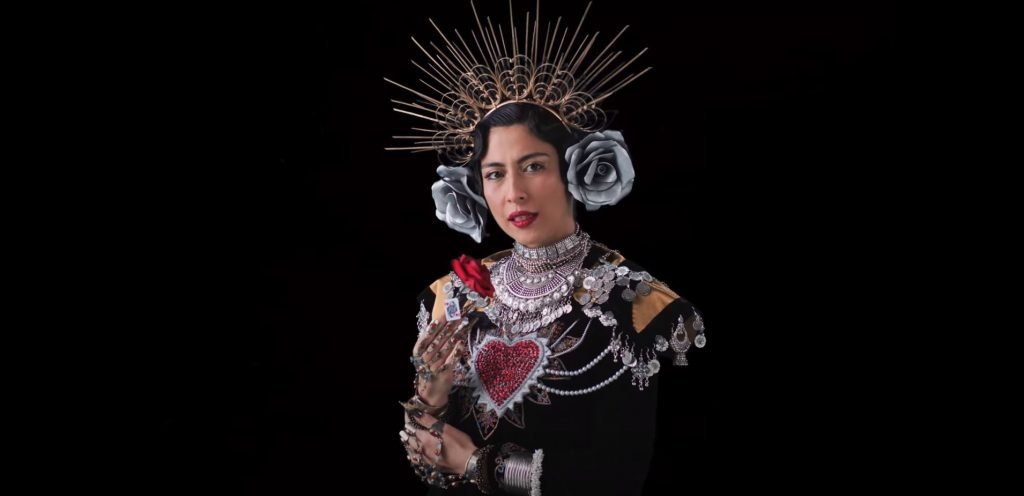
    4 Rajkumari by Meesha Shafi

    Actress and singer Meesha Shafi has always used her platform to raise awareness about sexual harassment, and providing easier access for women to file cases in court and hold their abusers accountable. Last year, she dropped this feminist anthem as a surprise, to champion women from everyday life to never forget that they’re queens!

    5 Izzat by Jaan-e-Haseena

    Hussain Zaidi who goes by ‘Jaan-e-Haseena’ on social media, is a transgender rapper who wrote this powerful anthem for the Sindh Moorat March, to demand spaces for more trans women in Pakistan.

    6 Chup by Zeb & Haniya

    Fans have loved the way female desire and playfulness is the central theme to the song, so this is a must add in our feminist playlist!

  • In spirit of Aurat March, watch these five dramas that champion powerful women

    In spirit of Aurat March, watch these five dramas that champion powerful women

    Azadi Mubarak, saheliyon.
    Today is Aurat March, the day when women march in the streets to champion social, economic and political issues for females across Pakistan. It’s an important day to celebrate the struggles of the feminist movement that called for equal rights for women everywhere in Pakistan.

    However, the struggles of women weren’t just present on the roads but have been recorded and displayed on our television screens for decades. Pakistani films and dramas are powerful tools to spread awareness on social issues, and have consistently given voice to the demands of women for years. Thanks to powerful women working in the entertainment industry like Bee Gul, Sania Saeed and Haseena Moin, there are several dramas that have spoken about feminist issues and also championed powerful women. So to set up your feminist-themed movie night, here are some dramas you should definitely give a watch!

    1 Dobara

    Pakistani dramas OST

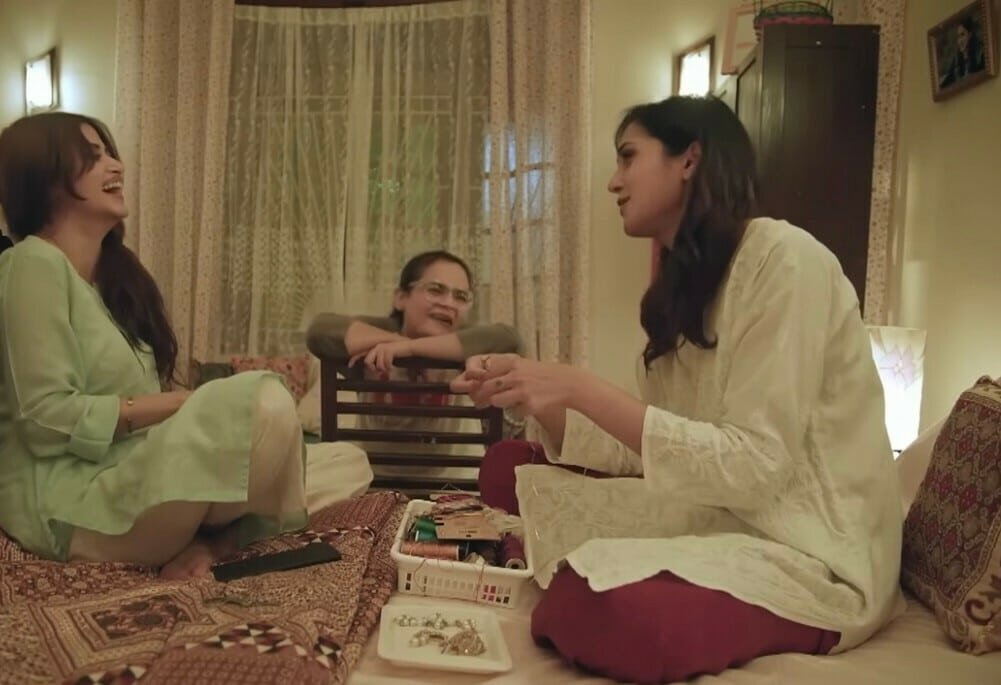
    Penned by Sarwat Nazir and starring the multi-talented Hadiqa Kiana, the drama explores the life of a middle-aged woman who gets a second chance at life after the death of her husband. Forced into marriage when she was only 16 years old, Mehru Nisa decides to take a stand and do everything she was restricted from such as taking tennis classes, jogging in the park and even dancing at her son’s wedding, despite the backlash she faces from her in-laws. This drama was lauded by fans for centering around the life of a middle-aged woman at a time when they are pushed to be relevant only as mothers or grandmothers.

    2 Kitni Girhain Baqi Hain

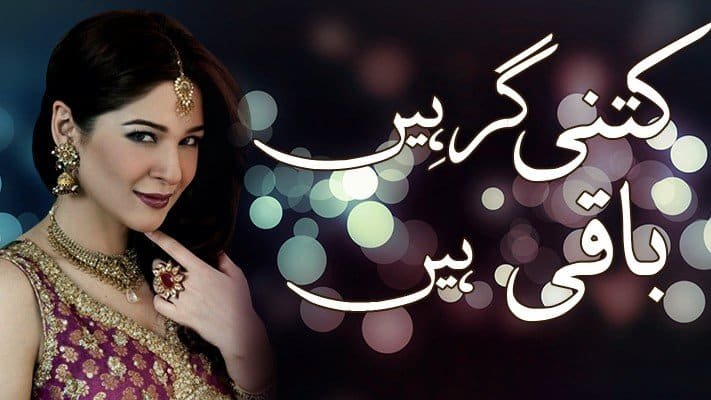
    Bee Gul has been celebrated by Pakistani women for championing the issues women face in her dramas, being upfront about bringing stories told by women to the screen and dismantling misogyny. The anthology series which debuted on Hum TV was a collection of short stories about women and the struggles they faced in Pakistani society, discussing issues like sexual assault, relationships and even homosexuality, which had gotten earned it a notice from PEMRA.

    3 Kuch Ankahi

    The powerful drama has been dominating conversations since its release because of how it completely changed how women’s stories are told in the entertainment industry. Focusing on a family living in Karachi, the series doesn’t shy away from discussing issues like forced marriages, child sexual assault, property rights of women and even body shaming.

    4 Sar-e-Rah

    Sar-e-Rah

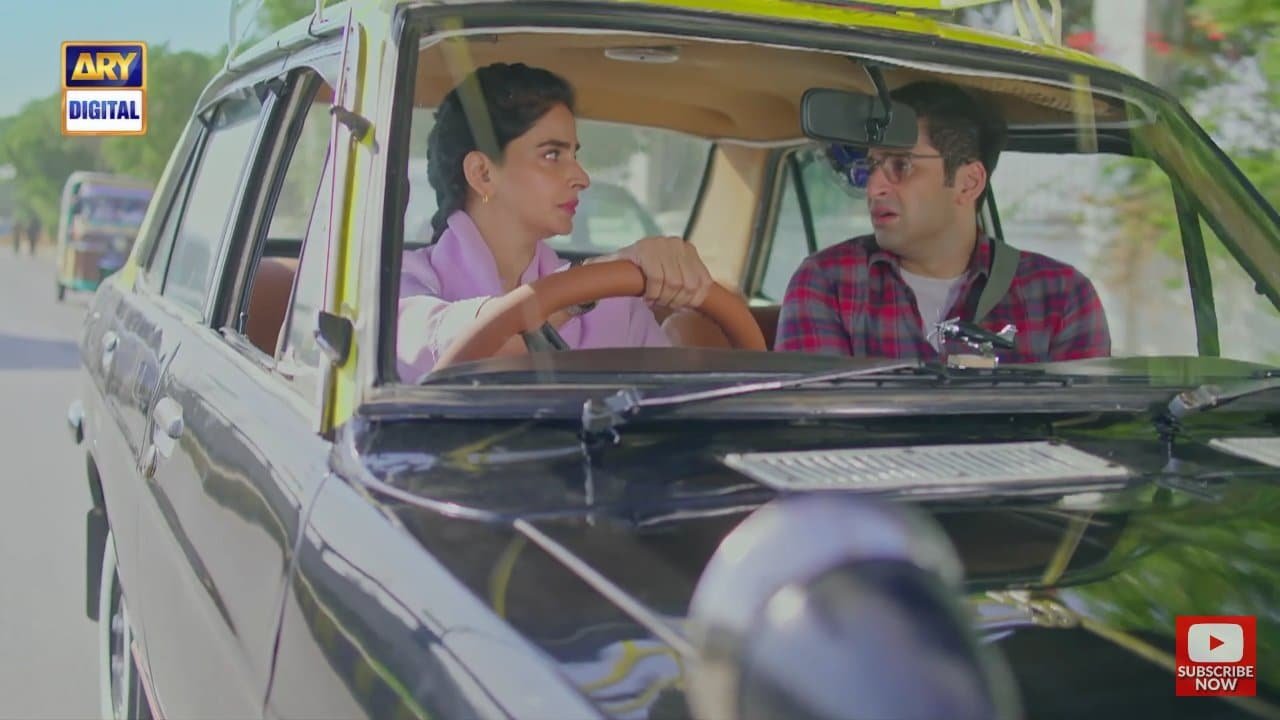
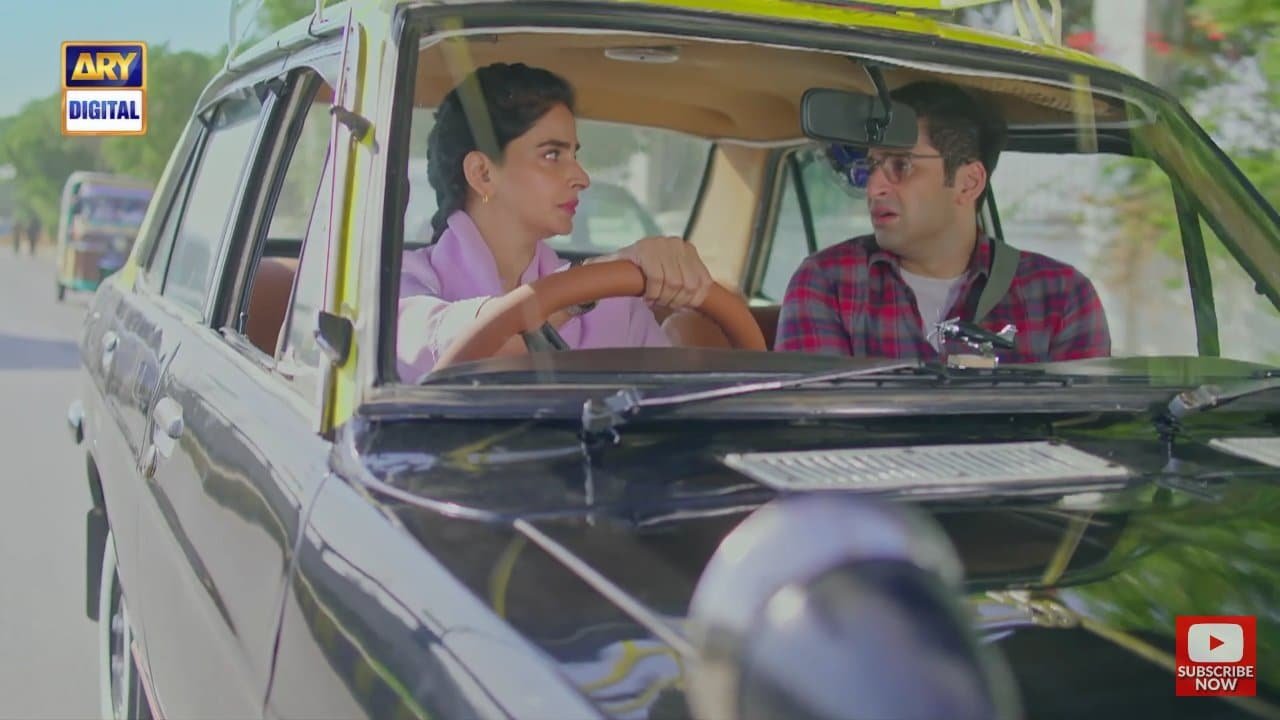
    Another drama that has been lauded by women for championing female friendships and showcasing how powerful women can become once they learn to be independent and make their own living. The limited series follows the life of Rabia, who decides to become the breadwinner of the family after her father suffers from a heart attack, and persists through despite being criticized by her family. With her journey, she comes across women from different backgrounds who face issues like infertility, social media trolling or harassment at the workplace, but Sar-e-Rah demonstrates how women can overcome anything with the help of another powerful woman.

    5 Tanhaiyaan

    Haseena Moin will always be remembered in history as a champion for women-centered stories. She did it fearlessly in the era of dictatorship of General Zia. Her drama ‘Tanhaiyaan’ is still celebrated as one of the finest feminist dramas that championed original, independent women on screen who didn’t just obsess around the men in their lives. It explores the lives of two sisters Sanya and Zara, who move in with their aunt after the death of their parents, and lose their house due to their father’s debt.