Tag: auratazadimarch

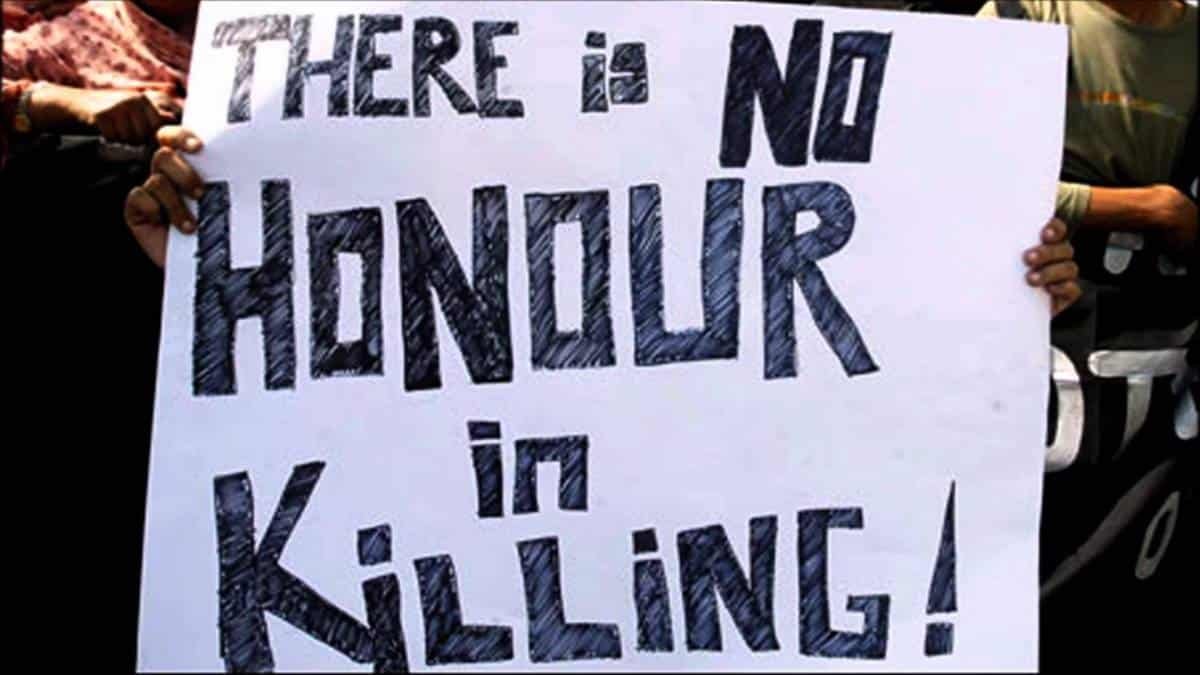
  • Five suspects granted bail in two honour killing cases

    Five suspects granted bail in two honour killing cases

    Peshawar High Court has granted bail in two separate cases involving honor killings.

    The first case involved Swat resident, Akhtar Ali, suspected of being involved in the killing of his wife and another man over three months ago.

    The bail was granted by Justice Shahid Khan of a single-member bench, who directed the submission of two surety bonds of Rs200,000 each for Ali’s release.

    The incident, which took place on July 22, 2023, was initially reported at the Shaheedan Wenai police station in Swat under sections 302 and 311 of the Pakistan Penal Code and Section 15 of the Arms Act.

    The complainant in the FIR, station house officer of the police station, Mohammad Zaib Khan, claimed that he along with a police team went to the crime site after learning about the murder of a man and a woman and found out that the deceased were killed by the petitioner, who suspected that the two had an extramarital affair

    During the hearing, the bench noted that the case lacked substantial evidence against Ali.

    It added that the complainant in the case had neither disclosed the name of the person who informed him about the involvement of the petitioner nor did he produce any other “cogent and reliable information, which could prima facie spoke about the guilt or otherwise of the petitioner.”

    Lawyers Saeed Khan, Askar Khan, and Dunya Zeb, representing the petitioner, emphasized the absence of witnesses and evidence connecting Ali to the crime.

    They added that the murders took place at nighttime and that there was no evidence to connect the petitioner with the commission of the offense.

    Similarly, the court also granted bail to Habib Khan and his three sons – Talim Khan, Owais Khan, and Zarif Khan – from Lower Dir district.

    It accepted the joint bail petition of suspects on the condition of furnishing two surety bonds of Rs100,000 each.

    They were arrested on suspicion of the honor killing of Habib’s daughter-in-law, Nish Bibi, whose body was found at their residence on Sept 23, 2023.

    An FIR was lodged by the mother of the girl, who alleged mistreatment and torture by her husband and in-laws.

    The complainant claimed that her daughter was married to Dawood six years ago but she didn’t have kids and she often asked her husband for medical treatment.

    She claimed that for the same reason, relations between the couple were strained and that she was mistreated by her husband and in-laws and was also tortured by them.

    Legal counsel Shabbir Khan Daulatkhel defended the petitioners, maintaining that the prosecution’s case was founded on rumors, lacking any concrete evidence against the accused.

    The initial bail application of the petitioners was rejected on Oct 12, 2023, by an additional sessions judge in the Chakdara area of Lower Dir district.

  • ‘Asal Insaaf’: Read the Aurat March manifesto

    Aurat March Lahore has released its manifesto for the year 2022. The theme of this year’s march is: “Reimagining Justice”, and the hashtag Asal Insaf is being used across different social media platforms.

    “Our existing legal system aims to treat everyone as equal while ignoring differences of power, and is unable to actually make litigating parties equal. We have seen in countless cases, such as Shahrukh Jatoi’s, Usman Mirza’s and Ali Zafar’s, that powerful accused parties exercise great influence outside court. This year, we strive to reimagine justice on our own terms, taking account of these power differentials and outside of the predetermined script written for us,” states the manifesto.

    Aurat March Lahore also did a Twitter space to discuss and explain the manifesto.

    The manifesto demands the following things, among others:

    Repair and reform is a difficult conversation–the sheer prevalence and spectrum of patriarchal violence requires that we seek to transform behaviours by giving perpetrators and harm-doers the opportunity to hold themselves accountable and repair the harm they have done.

    We want to invest in creating and fostering collective communities of care, building structures of support already found in our local communities. Ensure that resources are directed to strengthening local support systems geared towards mutual aid, bystander intervention and support groups.

    Immediate reduction of the use of fossil fuels by divesting products and industries which largely rely on such fuels and investing in renewable energy with Global North subsiding this lateral shift. The impact of this change on women and marginalised communities should be taken into account as women are forced to cook with fuels (such as wood, crop wastes, charcoal, coal and dung) and kerosene in the absence of adequate gas and electricity. We reject any policy that penalises marginalised communities for their use of traditional fuels, which does not explicitly contain measures for replacement/alternatives.

    Period Poverty is a prevalent issue in Pakistan due to the existing patriarchal hierarchy. However, when talking about increasing access to period products, we urge consideration in using and promoting environmentally safe products. 34 Taboos around periods must be removed so the proper use of products such as menstrual cups and reusable pads can be discussed openly. This conversation must be intersectional and inclusive by recognizing the different needs of transgender women, non-binary, intersex and disabled women. Access to water and sanitation must also be improved so that usage of better products can be facilitated.

    Acknowledge/value unpaid labour of women as being equally important as “paid” labour normally performed by men: Unpaid labour by women lies at the heart of the entire economy. In order for the “paid” economy to work, the unpaid labour of women in the form of childcare, housework, elder care etc is necessary. This unpaid labour is evaluated at $10.9 trillion / year .Measures taken to prevent the spread of COVID-19 have increased household tasks with more members of the family staying at home, and much of this burden has fallen unequally on women. However, mainstream economic discourse does not value or acknowledge this unpaid and unfair division of labour performed exclusively by women.

    Employers should improve facilities at the workplace to accommodate women: Women face gender-specific challenges at the workplace which prevents them from taking up employment. As women are disproportionately responsible for housework and childcare, workplaces should be required to daycare, paid maternity and paternity leave facilities for all employees. Basic facilities like separate toilets should be provided at every workplace.

    Aurat March has also released a charter of demands:

    Radical, structural reform of the justice system should be undertaken instead of superficial gender representation, such as the mere integration of more women or gender minorities into structurally patriarchal policing and judicial systems.

    Survivor-centric welfare institutions receive more funding and are strengthened to provide shelter, housing, healthcare, economic and psycho-social services to survivors of patriarchal violence. We reject austerity-based policies which have gutted public health and welfare institutions. Existing laws such as the Punjab Protection of Women against Violence Act 2016 be implemented with the establishment of crisis centers and adequate funding. Further, we demand the government’s Sehat Card cover mental health support and services.

    Punishments such as the death penalty and chemical castration not be considered as a solution to patriarchal violence as they are not a meaningful deterrent and only serve as short-term solutions to public pressure. We demand a radical shift to preventative policies: education, community building and social welfare should drive the solutions.

    We demand the immediate decriminalisation of defamation laws as they are a stark reminder of how the criminal justice system is actively anti-survivor.
    The immediate defunding of “safe city projects”, costing the public billions of Rupees and offering an ineffective and paternalistic vision of safety, and we agitate that those funds be redirected to survivor-support and welfare programs.

    The state engages in meaningful truth and reconciliation by holding itself accountable for enforced disappearances and providing justice to the affected families.
    Universal basic income and care work income be provided for all residents of Pakistan to ensure that everyone, regardless of whether they belong to the formal or informal sector or engage in paid or unpaid labour, is provided base-level resources as a right. We agitate for unpaid labour of women to be valued as equally important as “paid” labour normally performed by men.

    That the poor and marginalised not be made to bear the brunt of IMF-driven measures that have resulted in privatisation and unprecedented inflation. These measures are “anti-poor” and serve a vision of economic justice that only benefits global capitalism.

    Current attacks on the Transgender Persons (Protection of Rights) Act, 2018 be strongly resisted by the government in power, and proactive action be taken to ensure implementation of the law at the provincial level.

    The Government immediately pass appropriate legislation to stop forced conversions. We demand that the State go beyond merely criminalising forced conversions, addressing the social, economic and political power structures that allow for these conversions to take place with impunity.

    Displacement and migration due to the climate crisis be recognised as a public emergency and the State to provide housing for all as per Article 38 of the Constitution of Pakistan. We condemn “developmental” projects such as the RRUDP, hailed by PM Imran Khan, as fundamentally violent towards the economy and indigenous communities that farm and sustain these lands.

    Immediate measures should be taken to address Lahore’s deteriorating air quality which is making our cities unlivable and poses a public health crisis.
  • Fawad Chaudhry wants an inquiry against creators of fake Aurat March video

    Minister of Science and Technology Fawad Chaudhry has asked for an inquiry against those who committed the ‘grave offence’ of editing a fake Aurat March video, being widely circulated on social media.

    “Those who edited the video have committed a grave offence,” he wrote, “FIA should proceed against those responsible a trail will help agencies to trace who originated the fake video.”

    Meanwhile, female journalists and supporters are demanding a ‘public apology’ over ‘disinforminformation’ spread by some people.

    A document that is signed by female journalists and activists demands :

    1. “A public apology and immediate retraction by all the journalists and media houses who have shared disinformation about the Aurat Marches and that this is put out on the social media accounts, newspapers, television shows, etc”
    2. “That individual journalists and media organisations desist from spreading false and malicious information endangering the lives of Aurat March organisers and participants.”
    3. “That media houses stop inviting individuals with a history of repeatedly and deliberately spreading disinformation on their platforms”

    “These tweets with false information were shared by Ovais Mangalwala, Ansar Abbasi, and Orya Maqbool Jan,” stated the document.

    The hashtag #ApologizeToAuratMarch is trending on social media :

  • Women of the world, unite!

    Tomorrow is International Women’s Day, which is celebrated worldwide. In Pakistan, many events are organised to mark Women’s Day. Aurat March, which has been held since 2018, will be marked with rallies in several cities, including Lahore, Islamabad and Karachi.

    This year, Aurat March Lahore’s theme is women’s health and the issues faced by women and gender minorities. They are demanding that the health budget be increased to 5 per cent of the GDP. Aurat March organisers have highlighted how violence has always existed for women and gender minorities in Pakistan since before COVID-19 but the lockdowns and social isolation resulting from the pandemic have further exacerbated physical, emotional and sexual violence against them across the country.

    It is quite unfortunate that Pakistan ranks 151 out of 153 countries on the Global Gender Gap Index Report 2020 index, published by the World Economic Forum. The only two countries lagging behind Pakistan are Iraq and Yemen. This is not a surprise given the way our patriarchal society treats women. From blaming rape survivors to practices such as honour killing, vinni and swara (exchange of women, especially young girls, to settle disputes between families), child marriage, domestic violence and many other such anti-women practices, Pakistani society does not make life easy for women.

    Sexual harassment cases when reported or talked about are brushed under the carpet. We have seen how women don’t just face offline harassment and violence but online harassment of women has increased manifold. It is but a manifestation of the anti-women bias in society. Women politicians, journalists and activists are targeted online on a regular basis. But it is good to see Pakistani women breaking these chains and raising their voices for women empowerment and their rights.

    From leading lights such as Fatima Jinnah, Benazir Bhutto, Asma Jahangir, Malala and many others who paved the way for women and young girls in our society, the struggle continues. It will take a long time to achieve equal rights for women but there is no reason to lose hope. We have seen that when women take a stand, it leads to the betterment of society at large.

    For an inclusive, tolerant and progressive Pakistan, women have to be treated as equal human beings. Women of the world, unite, for you have nothing to lose but your chains.

  • QUIZ: Which Aurat March Poster Are You?

    Take the quiz to find out which poster suits your personality the most: