Tag: Austerity Measures

  • Blackboards to profit boards: Defunding public universities can save 61 billion rupees

    Blackboards to profit boards: Defunding public universities can save 61 billion rupees

    International lenders have informed lawmakers in Islamabad to defund public universities as part of the austerity measures of the new loan agreements. Businesses engaged in the provision of higher education are likely to eye these negotiations with great interest as they stand to benefit enormously if these measures are to be implemented by the government.

    If the Ministry of Finance makes this budget cut, large sums of money can be freed up for cash-strapped Pakistan. This is because the current budget to fund public universities stands at a staggering PKR 61 billion annually.

    While unpopular, the argument for budget cuts does have its merits: 80 per cent of public universities are expected to default in 3-4 years.

    Is it better to just cut losses and let the universities fend for themselves?

    International lenders certainly think so as they suggest that universities, after being defunded, should boost enrollment levels, fire unwanted staff and most importantly, increase tuition fees to stay afloat.

    In the absence of government funding, will these measures alone save public universities from going bankrupt?

    The provision of education is a multibillion-rupee business in Pakistan. Following these new developments, education businesses are preparing to mint money off of the wave of students that will likely come their way.

    If public universities are to implement fee hikes, students are likely to opt for private universities. This is due to the fact that private universities are more likely to possess better facilities than their public counterparts.

    Furthermore, if public universities start to default, private universities will get a further boost in enrollment levels, as students will be forced to switch institutions to continue their education. This migration of students from public to private universities will result in higher profit levels.

    This influx of students into these private institutions will serve to benefit their owners directly. However, the same cannot be said for students who will have to bear a higher cost to earn their degree. More concerningly, the closure of public universities might result in the monopolisation of the education sector as public institutions will cease to be valid alternatives.

    For now, all eyes are on the Ministry of Finance. Will public universities be defunded to appease international lenders, or will budget cuts be sought elsewhere?
  • IMF’s fiscal strategy for Pakistan criticised for overlooking debt restructuring

    IMF’s fiscal strategy for Pakistan criticised for overlooking debt restructuring

    The International Monetary Fund (IMF)’s current fiscal strategy for Pakistan, which focuses on strict fiscal consolidation—entailing reduced spending and increased revenue—has come under significant scrutiny.

    Critics, including Murtaza Syed, a former deputy governor of the State Bank of Pakistan and ex-IMF official, question the approach due to its lack of emphasis on debt restructuring.

    In his article “Debt Will Tear Us Apart (Again)”, Syed highlights the IMF’s omission of debt sustainability in recent discussions.

     Despite Pakistan securing a staff-level agreement with the IMF for the 24th time, this absence is surprising given the IMF’s near-declaration of Pakistan’s debt as unsustainable in May. Syed suggests that both Pakistan and the IMF might be shying away from a transparent evaluation of the debt burden.

    Syed warns that the current “extend and pretend” strategy could lead to severe repercussions. He argues that it will impose harsh austerity measures on a population already burdened by stagnant income, a historic cost of living crisis, and political instability.

    This approach may result in deeper losses for creditors and further damage the IMF’s reputation.

    The article provides stark figures illustrating Pakistan’s debt crisis. The country owes an average of $19 billion in principal repayments annually, which exceeds half of its export revenues.

    Additionally, Pakistan will require at least $6 billion per year to cover its current account deficit, bringing its total external financing needs to around $25 billion annually until 2029.

    Moreover, the government will need to allocate an average of 6.5 per cent of GDP for interest payments on existing debt over the next five years.

    Syed criticises the IMF’s optimistic forecasts for Pakistan’s economic variables, noting that previous predictions have often been unrealistic. He argues that fiscal consolidations, particularly in a weak global environment, tend to fail in making debt more sustainable.

    In his conclusion, Syed calls for a shift from harsh fiscal measures to a more balanced approach that includes debt restructuring, to reduce financial pressures and support economic development.

  • Govt hints at major taxation system overhaul in economic revival drive

    Govt hints at major taxation system overhaul in economic revival drive

    The federal government is contemplating significant changes to the tax structure in its economic revitalisation plan, with a particular focus on sectors like retail, agriculture, and real estate. Additionally, the plan includes the introduction of a wealth tax on movable assets. These proposed revisions were outlined in the Ministry of Finance’s September 2023 Economic Update and Outlook report. 

    Underpinning the economic recovery efforts are strategies aimed at enhancing revenue, which include not only tax adjustments but also the restriction of tax exemptions to essential sectors such as food and medicine. To streamline government expenses, the plan also incorporates austerity measures and a review of subsidies and grants. 

    Furthermore, the government is set to scrutinise the development plan and promote public-private partnership (PPP) initiatives. Compliance with quarterly budget targets and agreements with the International Monetary Fund (IMF), encompassing aspects like tax collection and debt management, will be a priority. 

    The plan adopts a 5Es framework—exports, equity, empowerment, environment, and energy—to address socio-economic challenges and stimulate export growth and business facilitation. The digitization of the economy and an expanded tax base through information technology are also on the agenda. 

    According to Business Recorder, state-owned enterprise (SOE) reforms, including the enactment of an SOE policy, are part of the plan. It involves the establishment of a Central Monitoring Unit (CMU) and the preparation of SOE performance reports. The implementation of a Treasury single account (TSA), remittance incentives, energy conservation, and price controls are among the planned actions. 

    Additionally, the Privatisation Commission aims to privatise select public sector enterprises through various methods, including assessing privatisation options for distribution companies (DISCOs) and restructuring options for PIA-CL while conducting unbundling studies for SNGPL and SNGPL. 

    To bolster non-bank finance and promote the capital market, corporate taxes will be reduced. Short-term measures for export enhancement include the implementation of the Weighted Average Cost of Gas (WACOG), the operationalization of the EXIM bank, and expedited sales tax refund processes. 

    Business facilitation and investment promotion will be addressed by the Board of Investment, with initiatives like the Asaan Karobar plan, which involves the establishment of a central e-registry and the development of the Pakistan Business Portal. 

    The plan also outlines measures to boost IT exports, stimulate telecommunications growth with a focus on 5G technology, and revitalise the maritime, railway, and highway sectors. Price reforms, attracting foreign investment, and combating theft are key objectives in the energy sector. 

    Recent administrative actions have already begun to yield positive results in curbing illegal activities in the foreign exchange market and improving the availability of essential food items. The outlook for inflation has improved, albeit with ongoing concerns related to international oil prices and energy costs. 

    On the fiscal front, the fiscal deficit has remained stable, while the primary balance surplus has improved. Notably, federal revenues have seen significant growth, driven by higher non-tax collections and import-related taxes. Reductions in non-markup spending have contributed to this positive fiscal development. 

    The current account deficit has narrowed, primarily due to improvements in the trade balance. Overall, the government’s strategic measures, coupled with prudent economic policies, are expected to attract new investments and stimulate economic growth for fiscal year 2024 and beyond, following the initial steps towards recovery at the beginning of FY2024. 

  • Remittances in June 2023 decline by 21.4%, hitting $2.2 billion: SBP

    Remittances in June 2023 decline by 21.4%, hitting $2.2 billion: SBP

    In June 2023, remittances experienced a year-on-year decrease of 21.4 per cent, falling to the $2.2 billion mark compared to $2.8 billion in June 2022, according to data released by the State Bank of Pakistan (SBP).

    Simultaneously, cumulative remittances sent by overseas Pakistanis for the 12-month period ending on June 30, 2023, diminished to $27 billion, reflecting a 14 per cent decline in the financial year 2022-23 when compared to the record-high inflows of $31 billion reported in the previous financial year.

    In terms of monthly trends, remittances received by the country from overseas Pakistanis increased by 3.85 per cent from $2.102 billion in May to $2.18 billion in June 2023.

    The primary sources of remittance inflows during June 2023 were Saudi Arabia ($515 million), the United Kingdom ($343 million), the United Arab Emirates ($325 million), and the United States ($272 million).

    Moreover, proceeds from expatriates residing in European Union countries showed an 11 per cent month-on-month increase in June 2023, amounting to $272 million. Similarly, remittances from other GCC countries (Bahrain, Kuwait, Qatar, and Oman) totaled $271.9 million.

    The decline in inflows reported for FY23 can be attributed to various austerity measures implemented by the coalition government and the banking regulator. These measures included high taxes on cash held in banks and exchange companies, aimed at increasing remittance collections.

    Import restrictions, coupled with unfavorable domestic economic conditions during FY23, had a detrimental impact on remittance inflows. These factors resulted in reduced demand and led to a diversion of a significant portion of expatriate inflows towards informal currency exchange channels.

    Fundamentally, the contraction in imports caused by policy measures, along with demand suppression, exchange rate depreciation, and the preference for undocumented channels to maximise profits, all contributed to curbing remittance inflows during FY23. As a consequence, the expatriate Pakistani community residing in various countries faced inadequate facilitation.

  • Monitoring committee takes action against use of luxury cars by officials to cut expenses

    Monitoring committee takes action against use of luxury cars by officials to cut expenses

    State-run Radio Pakistan has reported that the monitoring committee responsible for overseeing the implementation of austerity measures has expressed serious concerns about some officers using vehicles above 1,800cc.

    The committee, chaired by Finance Minister Ishaq Dar, met in Islamabad on Monday to review the implementation of the decisions made at its first meeting regarding austerity measures. As part of an austerity drive to save the government Rs200 billion ($766 million) a year, Prime Minister Shehbaz Sharif had asked ministers and advisers to fly economy class and forgo luxury cars and their salaries.

    These cuts were made as Pakistan, facing a balance of payment crisis, negotiates with the International Monetary Fund (IMF) to secure $1 billion in funds that have been pending since late last year over policy issues.

    The meeting today was updated on the status of the use of luxury vehicles and was informed that a majority of the allocated vehicles have been returned by cabinet members. However, the committee expressed concerns over the non-return of the remaining luxury vehicles and directed the Cabinet Division to strictly implement the decision and retrieve the luxury vehicles within three days. The committee also discussed the withdrawal of the use of security vehicles and decided to implement the decision.

    Furthermore, the Ministry of Law and Justice was tasked with suggesting the implementation of austerity measures in the judiciary to the superior judiciary and approaching the Senate chairman and National Assembly speaker to suggest the use of teleconferences for all meetings to save time and expenditure. The Ministry of Inter-Provincial Coordination has also approached provincial governments to suggest the implementation of similar austerity measures.

    The committee also deliberated on working timings and decided that the new timing for office work will be 7:30 am to 2:30 pm, and up to 12:30 pm on Fridays, starting from the first of Ramzan and will be followed in the summer season, as per the cabinet’s decision. A notification will be issued accordingly. The finance minister, speaking at the occasion, directed all to expedite the implementation of austerity measures with sincerity and true spirit without any exception. These cuts are part of an effort to prevent an economic meltdown as Pakistan’s foreign exchange reserves have fallen below a month’s import cover.

  • Pakistan ‘very close’ to signing staff-level agreement with IMF, says Finance Minister

    Pakistan ‘very close’ to signing staff-level agreement with IMF, says Finance Minister

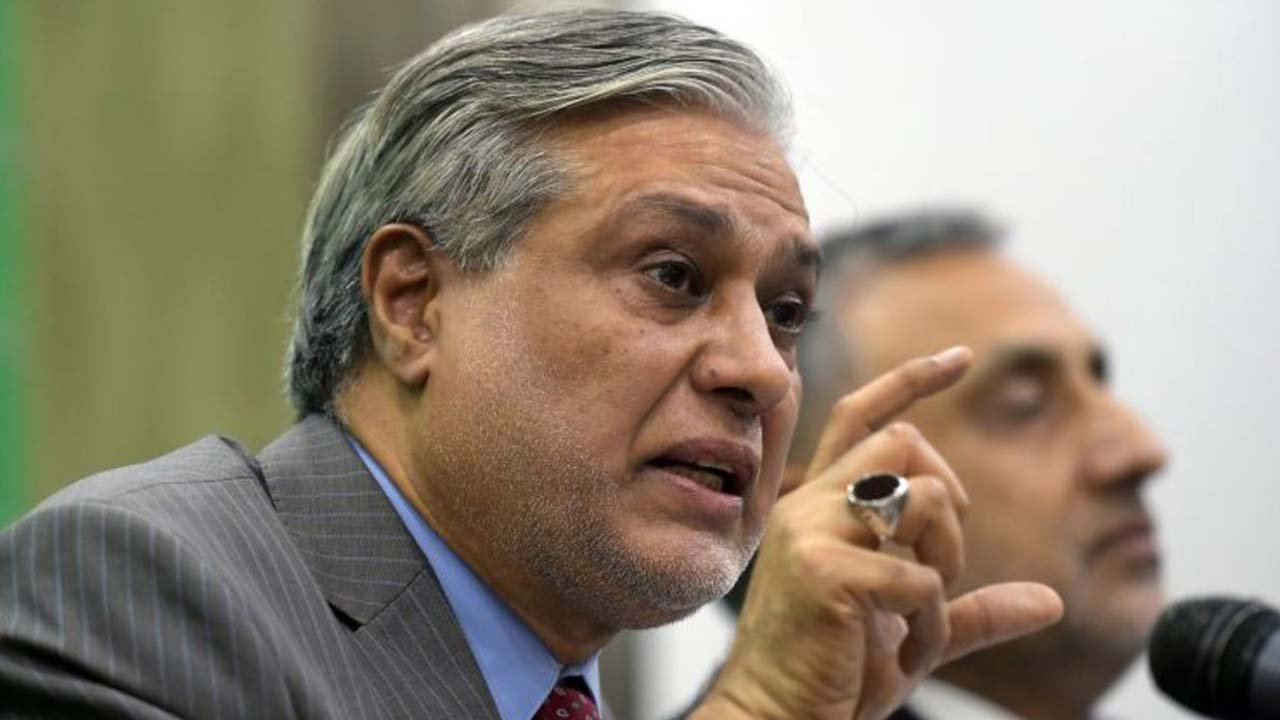
    Finance Minister Ishaq Dar has reaffirmed his team’s commitment to completing Pakistan’s $7 billion Extended Fund Facility programme with the International Monetary Fund (IMF).

    Speaking at a seminar organised by the Finance Ministry in Islamabad, Dar acknowledged the need for swift implementation of measures to reach an agreement with the IMF as the country has reserves barely sufficient for three weeks of essential imports.

    He noted that the government had inherited an economy that was “in a shambles” and that it had decided to honour the commitments made by the previous administration, despite a serious trust deficit with the lender.

    According to Dawn, the minister also confirmed that Pakistan was “very close” to signing a staff-level agreement with the IMF, which would unlock inflows from friendly countries and lead to a disbursement of $1.2 billion. The prerequisites by the lender are aimed at ensuring Pakistan reduces its fiscal deficit before its annual budget around June. The country has already taken most of the other prior actions, including hikes in fuel and energy tariffs, the withdrawal of subsidies in export and power sectors, and generating more revenues through new taxation in a supplementary budget.

    Furthermore, Dar highlighted the need for all stakeholders to contribute to overcoming the challenges facing the country, including the implementation of austerity measures. These measures, which include cabinet members forgoing their salaries, paying their own bills, banning the purchase of luxury vehicles from 2024, and slashing current expenditure by 15 per cent, have already been implemented and notified to the Finance Ministry.

    Dar also noted that Pakistan’s economic difficulties were compounded by the devastating 2022 floods, which affected 33 billion people and caused physical and economic losses of nearly $30 billion.

    Despite fiscal constraints and limitations, Dar pledged that the federal and provincial governments had jointly allocated Rs452 billion for relief and rehabilitation work of flood affectees. International agencies have calculated that around $16 billion would be required for reconstruction and rehabilitation work in Pakistan in the next two years, half of which will be met by Pakistan from its own resources.

  • Ministry of Finance halts clearing of bills including salaries due to deteriorating financial condition

    Ministry of Finance halts clearing of bills including salaries due to deteriorating financial condition

    The Ministry of Finance and Revenue has instructed the Accountant General Pakistan Revenues (AGPR) to stop clearing bills, including salaries, due to the current economic crisis and the deteriorating financial situation of the country. The ministry has also directed the halt of clearings of attached departments until further notice.

    According to The News, official sources have confirmed that operational cost-related releases have faced difficulties due to the economic hardships of the country. However, attempts to obtain a comment from Finance Division officials were unsuccessful, and the Minister for Finance Ishaq Dar promised to respond after confirming the report’s accuracy, which he had not done by the time of the report’s filing.

    Sources who went to the AGPR office for clearance of their outstanding bills were informed that the Ministry of Finance had directed them to stop clearing all bills, including salaries, due to the prevailing financial difficulties. The reasons for the immediate stoppage of the clearance of bills were not ascertained.

    The lingering financial difficulties are considered to be a significant reason for this move. However, salaries and pensions of defence-related institutions have already been cleared for the following month.

    During a meeting with a delegation of M/s Rothschild & Co on February 22, Finance Minister Ishaq Dar said that the government is committed to steering the economy towards stability and growth, and completing the International Monetary Fund (IMF) programme, and fulfilling all international obligations.

    To this end, on February 20, the National Assembly unanimously approved the Finance (Supplementary) Bill 2023, or ‘mini-budget’, which is mandatory for seeking the $1.1 billion tranche of the IMF. The bill increases sales tax from 17 to 25 per cent on imports ranging from cars and household appliances to chocolates and cosmetics, while a general sales tax was raised from 17 per cent to 18 per cent.

    As the bill was passed, the minister told the lower house of parliament that the prime minister would unveil austerity measures in the next few days, adding, “we will have to take difficult decisions.”

    UPDATE:

    The Finance Ministry has rejected the rumours that the government has instructed to stop payment of pay and pension.

    The ministry stated in a press release, “There are rumours floating around that Government has instructed to stop payment of pay, pension, etc. This is completely false as no such instructions have been given by Finance Division, which is the concerned federal ministry. AGPR has confirmed that pay and pension have already been processed and will be paid on time. Further, other payments are being processed as per routine.”

  • SBP-held forex reserves increase by $66 million as Pakistan seeks critical IMF loan tranche

    SBP-held forex reserves increase by $66 million as Pakistan seeks critical IMF loan tranche

    The State Bank of Pakistan (SBP) has reported a minor increase in its foreign exchange reserves, as the nation desperately seeks to unlock a critical tranche of funding from the International Monetary Fund (IMF).

    The central bank stated that its reserves had risen by $66 million to $3,258.5 million as of the week ended February 17, providing an import cover of around three weeks. The net foreign reserves held by commercial banks were reported to stand at $5,468.0 million, $2,209.5 million more than the SBP, taking the total liquid foreign reserves to $8,726.5 million.

    China development bank approves $700 million facility for Pakistan

    Finance Minister Ishaq Dar has announced that the forex reserves are expected to receive a significant boost in the coming week, as the Board of China Development Bank has approved a $700 million facility for Pakistan. The funds could be deposited into the SBP’s account this week.

    Pakistan takes austerity measures in a bid to resume IMF programme

    In a bid to resume the delayed IMF programme and avoid default, the Pakistani government has taken a series of steps in the past two months. These measures include adding new taxes, increasing energy prices, and loosening its control on the rupee.

    Parliament approved a supplementary finance bill that increases sales tax from 17 per cent to 25 per cent on imports ranging from cars and household appliances to chocolates and cosmetics. People will also have to pay more for business-class air travel, wedding halls, mobile phones, and sunglasses. A general sales tax was raised from 17 per cent to 18 per cent.

    Prime Minister Shehbaz Sharif also unveiled cost-cutting measures to save $764 million annually, stating that austerity, simplicity, and sacrifice are the need of the hour.

    Concerns over Pakistan’s debt and dollar crunch

    Fitch Ratings, a global credit ratings agency, has downgraded Pakistan’s $350 billion economy twice in four months, citing dwindling foreign reserves. Bloomberg data shows that Pakistan has coupon repayments of $542.5 million this year.

    In all, the country has $8 billion in dollar bonds debt due by 2051, with the next payment of $1 billion due in April of next year. Most of the nation’s external debt of about $100 billion is sourced from concessional multilateral and bilateral sources.

    Pakistan also faces a dollar crunch that tests its external stability, and supply disruptions caused by flooding, food shortages, and IMF preconditions for rescue may push inflation above 30 per cent for the first time on record, according to Bloomberg Economics.