Tag: Automotive industry

  • Car sales in Pakistan hit 15-year low in FY 2023-24: PAMA data

    Car sales in Pakistan hit 15-year low in FY 2023-24: PAMA data

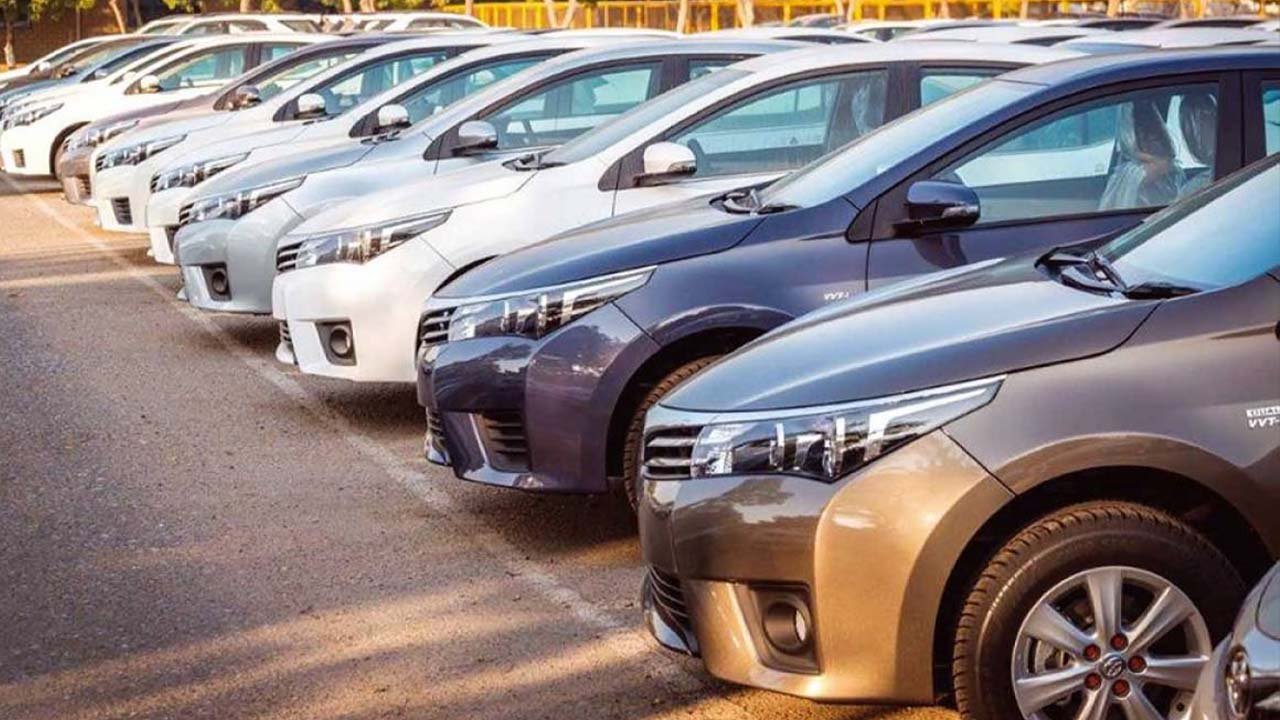
    Car sales in Pakistan plummeted to their lowest level in 15 years during the fiscal year 2023-24, as reported by the Pakistan Automotive Manufacturers Association (PAMA).

    The data reveals that sales of cars, including light commercial vehicles (LCVs), vans, and jeeps, declined by 18.2 per cent year-on-year, amounting to 103,826 units by the end of the fiscal year on June 30, 2024.

    This marks the lowest sales figures since FY 2009.

    In comparison, 126,878 units were sold in the previous fiscal year, while the average sales over the past five years stood at 188,030 units.

    Furthemore, passenger car sales decreased by 15.7 per cent year-on-year to 81,577 units during the fiscal year, compared to 96,811 units recorded in the previous year.

    Total production of passenger cars was 79,573 units in FY24, a 22.0 per cent decline from the 101,984 units produced last year.

    The PAMA data also highlighted that the highest number of passenger car sales occurred in the ‘Below 1000cc’ category, with 38,657 units sold in FY24.

    Within this segment, Suzuki Alto led with 35,883 units sold, followed by Suzuki Bolan with 2,774 units.
  • Suzuki eyes biogas plant in Karachi to strengthen its presence in Pakistan

    Suzuki eyes biogas plant in Karachi to strengthen its presence in Pakistan

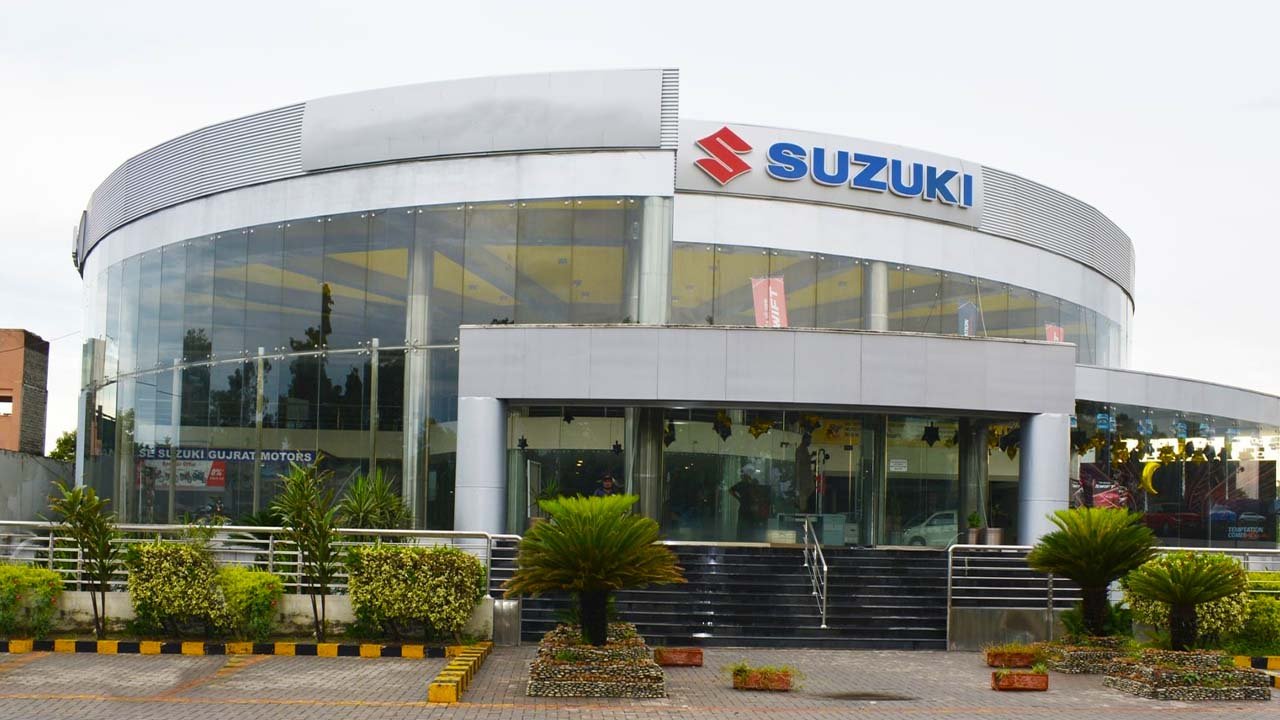
    Suzuki Motor Corporation is poised to bolster its footprint in Pakistan with plans to establish a biogas plant in Karachi.

    This strategic move was articulated by Kenichi Ayukawa, the Global Vice President of Suzuki Motor Corporation, during a high-level meeting held in Islamabad on Thursday. The meeting convened Ayukawa and Rana Tanveer Hussain, the Federal Minister for Industries and Production.

    Hailing the delegation, Minister Hussain underscored the pivotal role of the automotive industry in Pakistan’s economic landscape. He highlighted its substantial contributions spanning employment generation, economic expansion, technology infusion, and industrial advancement.

    Notably, the government is steadfast in its commitment to fortifying the local automotive sector, extending tax exemptions and other inducements to automakers, and investing in research and development initiatives.

    Furthermore, to foster the adoption of cutting-edge technologies, incentives are being extended for Electric Vehicles (EVs) and Hybrids, encompassing duty-free import privileges for plant and machinery essential for establishing EV manufacturing facilities.

    This proactive stance has already yielded tangible results, with 43 companies securing manufacturing certificates for the local production of EV 2/3 wheelers.

    Suzuki’s envisaged biogas plant in Karachi aligns with the broader strategy to enhance sustainability and operational efficiency while contributing to the nation’s energy diversification efforts.

    This development signals a promising trajectory for Suzuki’s endeavors in Pakistan, reflecting a shared commitment to economic prosperity and environmental stewardship.

  • Tesla cancels affordable electric car, shifts focus to Robotaxis

    Tesla cancels affordable electric car, shifts focus to Robotaxis

    Tesla has made a significant shift in its strategy, announcing the cancellation of its long-awaited affordable electric car, a move that has left investors and consumers stunned.

    The decision, revealed by three reliable sources familiar with the matter and corroborated by company messages obtained by Reuters, marks a departure from Tesla’s earlier mission of bringing affordable electric vehicles to the masses.

    The automaker, instead, will pivot its resources towards the development of self-driving robotaxis, utilizing the same small-vehicle platform, according to insiders. This strategic redirection signifies a significant deviation from Tesla CEO Elon Musk’s previous commitments and vision outlined in the company’s initial “master plan” in 2006.

    Musk, who has often emphasized the goal of making electric cars accessible to a broader audience, had initially promised investors and consumers an affordable vehicle following the success of luxury models. However, despite repeated assurances from Musk, including as recent as January, wherein he outlined plans for production at Tesla’s Texas factory by the second half of 2025, those aspirations have been dashed.

    Tesla’s cheapest model currently available, the Model 3 sedan, comes with a price tag of approximately $39,000 in the United States. The now-scrapped entry-level vehicle, often referred to as the Model 2, was anticipated to be priced around $25,000.

    In response to inquiries, Tesla remained silent, offering no official comment on the matter. However, Musk took to social media platform X to dispute the Reuters report, without specifying any inaccuracies, leading to a momentary fluctuation in Tesla’s stock prices.

    Following Musk’s online intervention, where he hinted at an upcoming Tesla Robotaxi unveiling, the company’s shares experienced a rebound in after-hours trading. This abrupt change in direction comes amidst mounting competition in the global electric vehicle market, particularly from Chinese manufacturers offering vehicles at significantly lower price points.

    The decision to prioritize the development of self-driving robotaxis, though potentially lucrative, poses considerable engineering challenges and regulatory hurdles, as highlighted by industry experts.

    Leaks reveal that the decision to scrap the Model 2 was communicated to employees in a meeting held in late February, further underscoring Tesla’s strategic pivot in the face of evolving market dynamics.

  • Car sales increase in Pakistan despite high prices, economic challenges

    Car sales increase in Pakistan despite high prices, economic challenges

    In a surprising turn of events, the soaring prices of cars in Pakistan have not deterred buyers, as car sales experienced a notable uptick in February 2024.

    According to data released by the Pakistan Automotive Manufacturers Association (PAMA), car sales edged up by 1.94 per cent, reaching 7,953 units, compared to 7,802 units recorded in January 2024.

    This positive momentum follows a robust performance in the preceding month, where car sales hit their highest mark since December 2022.

    Analysts attribute this continued growth to the momentum generated by the new year, which has carried over into February.

    Year-on-year comparisons reveal a substantial increase, with car sales spiking by 2.18 times compared to February 2023, when only 3,642 units were sold.

    However, despite this recent surge, cumulative sales for the first eight months of fiscal year 2024 stand at 46,417 units, marking a 40.93 per cent decline from the same period last year.

    Similarly, the production of passenger cars has witnessed a significant downturn, with 8MFY24 recording 48,402 units, reflecting a 40.84 per cent decrease compared to the previous fiscal year.

    In February alone, production plummeted by 16.77 per cent month-on-month, totaling 8,002 units, down from 9,614 units in January 2023.

    Nonetheless, on a year-on-year basis, production saw a remarkable surge of 69.97 per cent, indicating a shift in manufacturing trends.

    Despite these fluctuations, the automotive landscape faces challenges, notably with Pak Suzuki Motor Company announcing two price hikes within a span of ten days in response to increased sales tax.

    The repercussions of these adjustments on sales are anticipated to unfold in the coming weeks, as the market adapts to the new pricing structure.

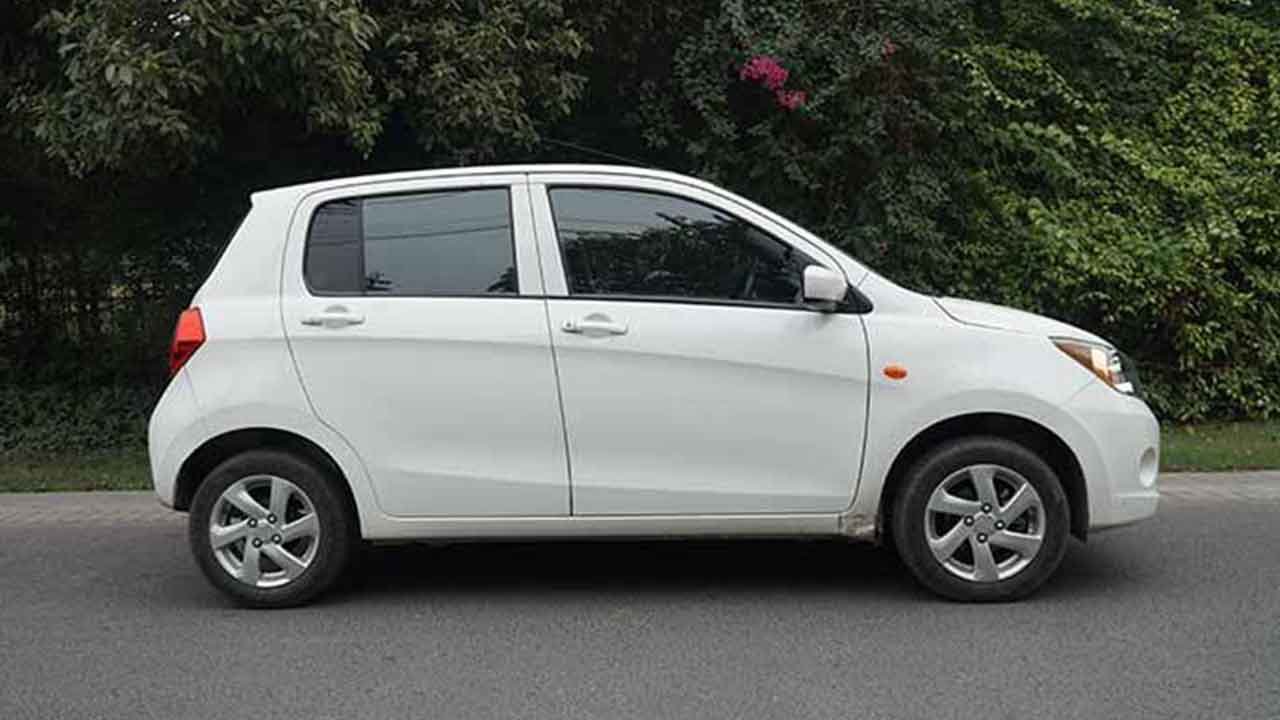
  • Pak Suzuki hikes prices, Cultus AGS now priced above Rs4.5 million

    Pak Suzuki hikes prices, Cultus AGS now priced above Rs4.5 million

    In response to inflationary pressures and rising overhead costs, Pak Suzuki has announced a significant hike in car prices, impacting models across the range.

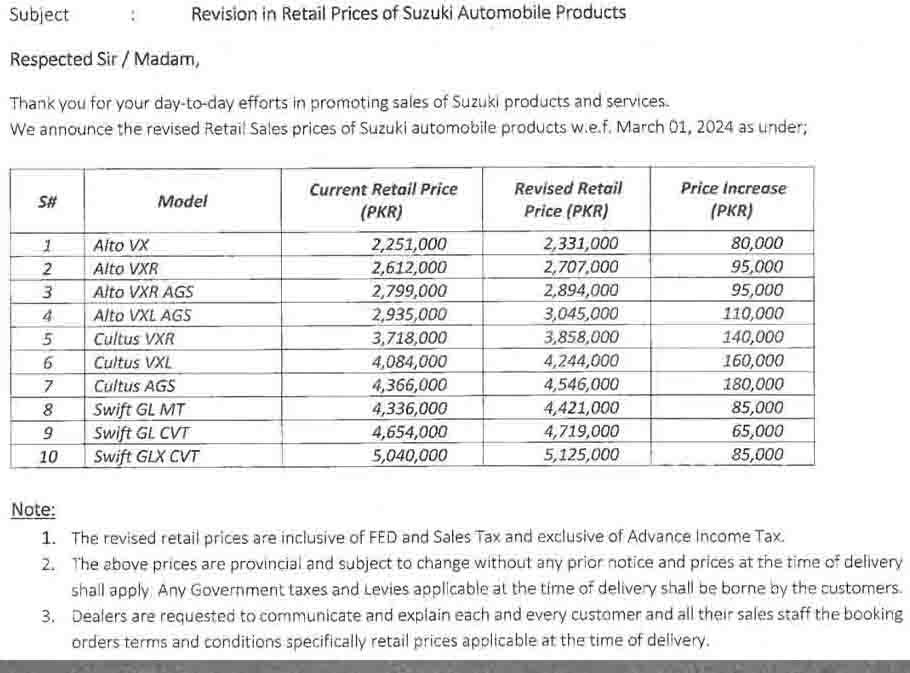
    The adjustments, ranging from Rs80,000 to Rs180,000, are set to take effect on March 1, 2024.

    Shafiq Ahmed Shaikh, Head of Corporate Affairs at Pak Suzuki, explained the rationale behind the decision, citing factors such as inflation, increased overhead expenses, higher international raw material and accessory costs, and elevated shipment and freight charges.

    The latest adjustments mean that the top-of-the-line model, Alto VXL AGS, will now be available at Rs3.045 million, reflecting a price increase of Rs110,000.

    However, the most significant surge is observed in the Cultus AGS, with its new price set at Rs4.546 million, following an increase of Rs180,000.

    This move by Pak Suzuki aims to navigate the challenges posed by the current economic landscape, ensuring the sustainability of operations amid various cost escalations.

    Customers will experience the impact of these changes as they come into effect, marking a new pricing structure for Suzuki vehicles in Pakistan.

    Here are the new prices for all Suzuki cars:

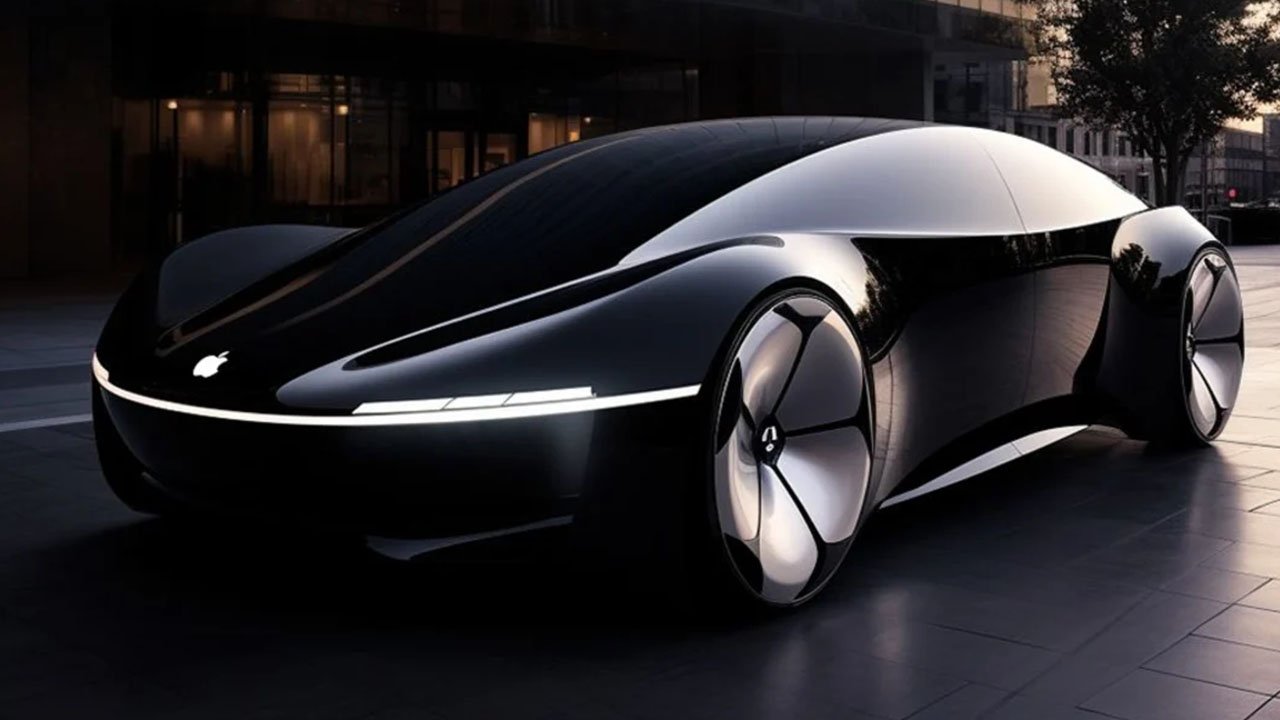
  • Apple abandons electric car project, shifts focus to AI

    Apple abandons electric car project, shifts focus to AI

    In a surprising turn of events, Apple has officially terminated its ambitious electric car project, according to a reliable source informed about the matter.

    The decision, revealed on Tuesday, marks the end of a decade-long effort initiated by the tech giant to venture into the electric vehicle industry.

    The abandoned project aimed to propel Apple into a new sector, potentially mirroring the triumphs of its iconic iPhone.

    However, the venture faced challenges and inconsistent progress throughout its existence.

    The cancellation aligns with a broader trend in the automotive industry, where global players are scaling back investments in electric vehicles amid a substantial drop in demand.

    Reportedly, several team members previously engaged in the electric car project will be reassigned to Apple’s artificial intelligence (AI) division.

    This strategic move aligns with Apple’s commitment to bolstering its presence in AI, a domain where it has been comparatively reserved.

    Apple has refrained from significant AI initiatives, contrasting sharply with industry giants like Alphabet and Microsoft, which seized an early advantage in integrating this transformative technology.

    Concerns have arisen that Apple’s cautious approach may leave it lagging behind in infusing AI into its product lineup.

    Ben Bajarin, CEO of Creative Strategies, commented, “If it is true, Apple will put more focus on GenAI, and that should give investors more optimism about the company’s efforts and ability to compete at a platform level on AI.”

    Last year, Apple experienced the smallest share gain among the so-called Magnificent Seven stocks, reflecting apprehensions about its stance on AI.

    Microsoft recently surpassed Apple as the world’s most valuable company, underscoring Apple’s struggle with weakening demand for its key products, particularly in significant markets like China.

    Simultaneously, the electric vehicle industry faces a slowdown in demand due to elevated interest rates, leading to job cuts and reduced production.

    Apple’s shift in focus to AI reflects a strategic pivot in response to market dynamics and underscores the company’s commitment to staying at the forefront of technological innovation.

    Apple has chosen to adapt its trajectory in a rapidly evolving landscape, signalling a nuanced strategy that aligns with emerging industry trends.

  • Quality concerns prompt Toyota’s production line suspension

    Quality concerns prompt Toyota’s production line suspension

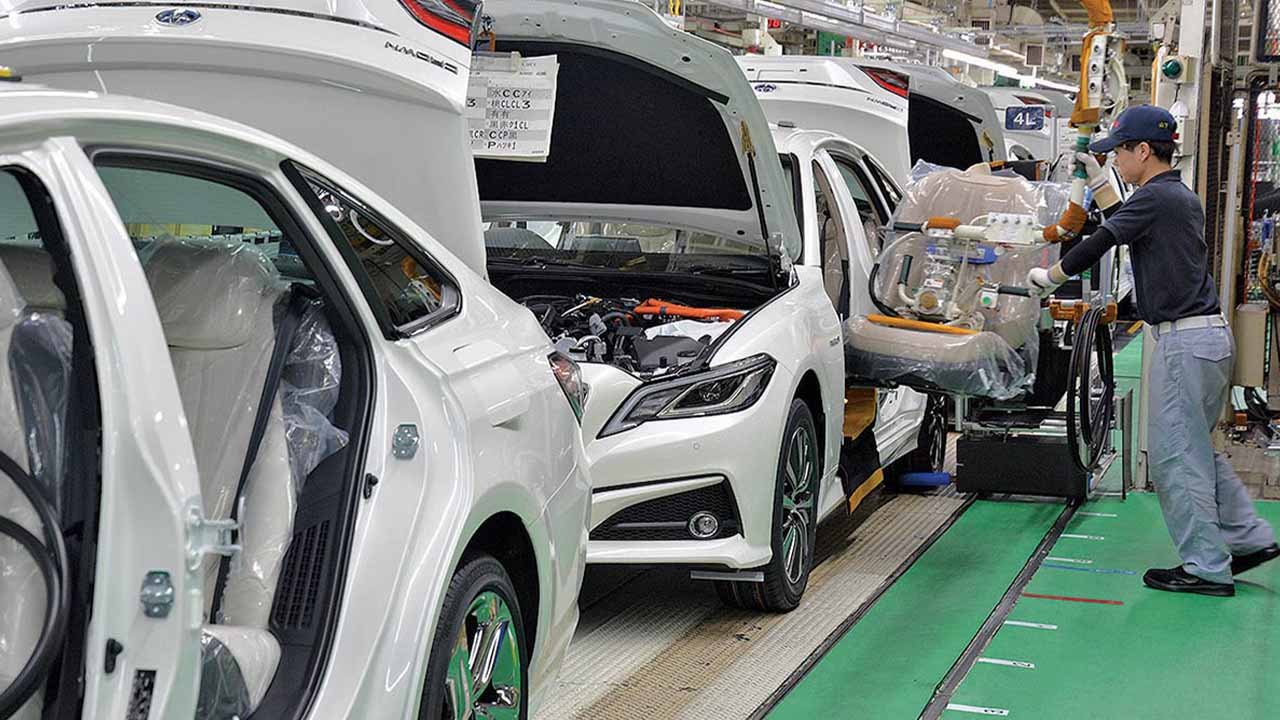
    In response to the discovery of irregularities in certification tests for diesel engines developed by affiliate Toyota Industries, Toyota Motors has announced the extension of the shutdown of two prominent production lines at manufacturing plants operated by Toyota group companies in Japan.

    The production lines, which were initially suspended on January 29, will now remain halted until March 1. Toyota Motors is set to make a crucial decision on March 1 regarding whether to reopen the production lines from Monday, March 4.

    The affected lines include one at Toyota Auto Body’s Inabe plant in Mie prefecture, known for producing the Alphard and Vellfire minivans.

    Additionally, one line at Gifu Auto Body’s main plant in Gifu prefecture, responsible for manufacturing the HiAce van, will also continue to be suspended.

    The decision to extend the shutdown comes as Toyota Motors is addressing the irregularities in certification tests, underlining its commitment to maintaining the highest standards of quality and compliance.

    The company aims to thoroughly investigate and rectify the issues before considering the resumption of production.

    This development has significant implications for the automotive industry, as Toyota Motors is a major player in the global market.

    Stakeholders and industry observers await the decision on March 1, as it will shed light on the company’s strategy to address the challenges posed by the certification test irregularities.

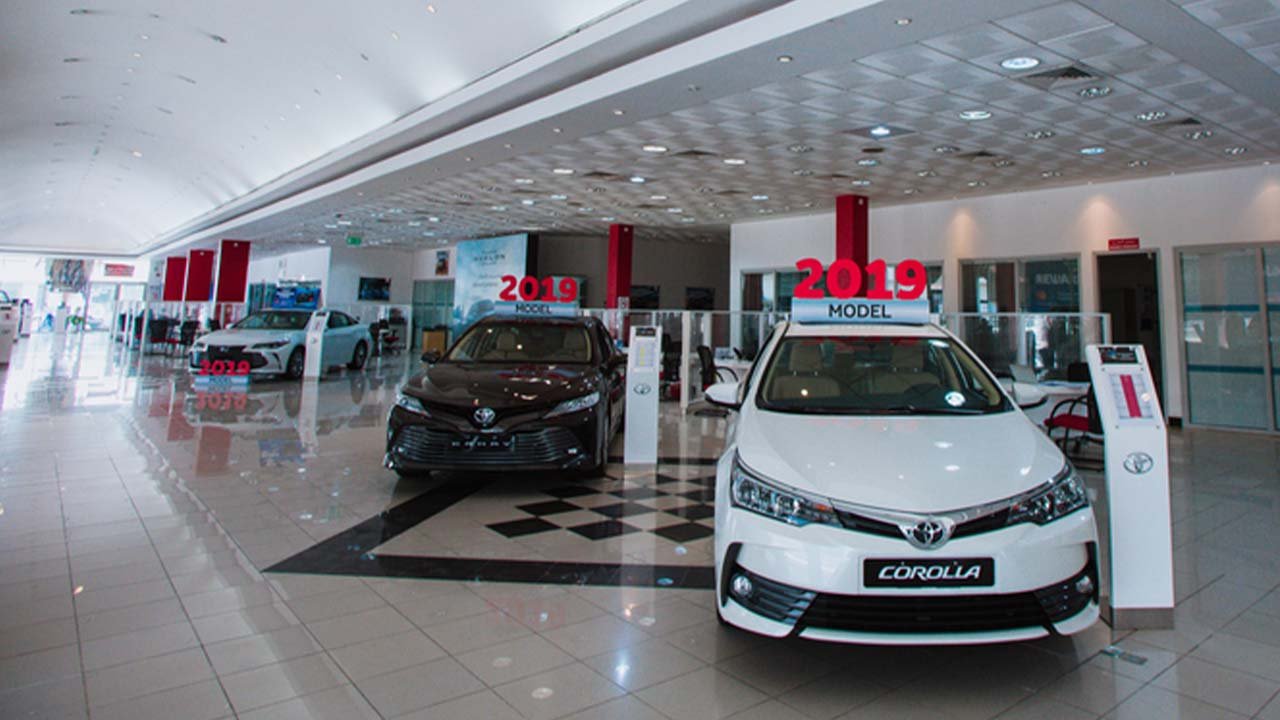
  • Toyota IMC unveils locally-made Toyota Corolla Cross Hybrid in Pakistan

    Toyota IMC unveils locally-made Toyota Corolla Cross Hybrid in Pakistan

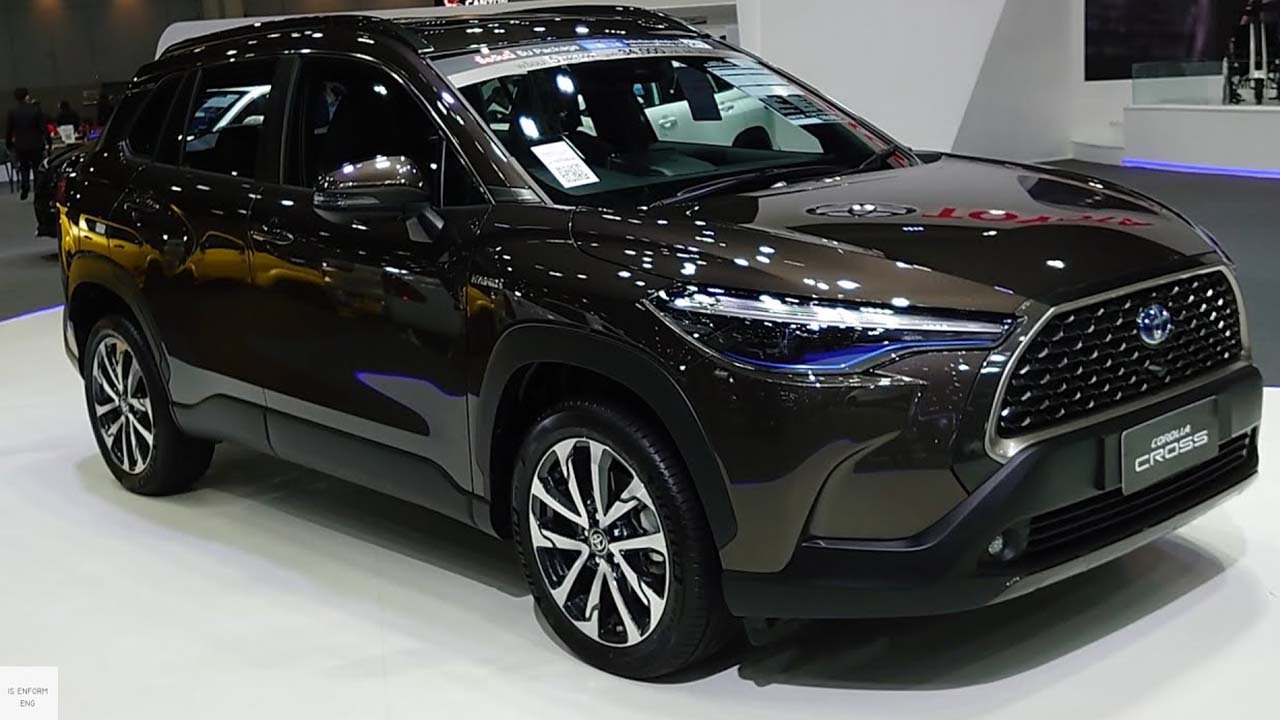
    Indus Motor Company (IMC) celebrated the launch of the 4th generation Toyota Corolla Cross Hybrid Electric Vehicle (HEV) at its manufacturing facility in Karachi.

    This marks a significant achievement for IMC, emphasising the ‘Made in Pakistan’ initiative and showcasing the strong bond between Japan and Pakistan. Notable figures present at the ceremony included Federal Secretary Asad Rehman Gilani, Toyota’s top leadership and the Japanese Ambassador to Pakistan, Mitsuhiro Wada. 

    Yoshiyuki Takai, expressing optimism about the Corolla Cross HEV’s reception in Pakistan, highlighted the environmental benefits of increased hybrid vehicle adoption.

    Gilani, on behalf of the government, congratulated IMC and reiterated the commitment to support hybrid and electric technologies, aligning with the Auto Policy 2021–26. IMC’s CEO, Ali Asghar Jamali, emphasised the company’s dedication to sustainability, revealing an investment exceeding $100 million in manufacturing the first locally produced HEV.

    The Corolla Cross HEV boasts a smooth and efficient 1800-cc engine with hybrid and gasoline options. Jamali also outlined IMC’s contribution to the local automobile sector, encompassing a comprehensive value chain, part manufacturers, authorised dealerships, and a substantial workforce of over 450,000 people.

  • BYD, global electric vehicle leader, explores investment in Pakistan’s EV sector

    BYD, global electric vehicle leader, explores investment in Pakistan’s EV sector

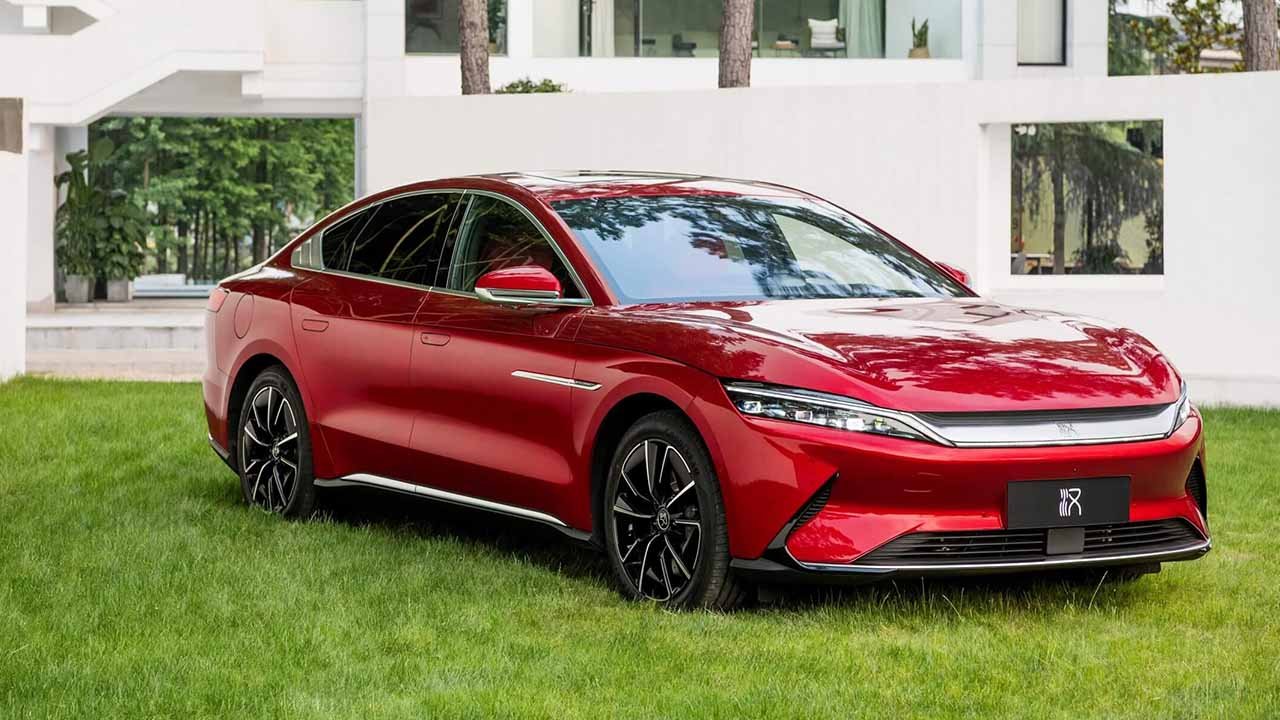
    BYD, the prominent Chinese automotive conglomerate renowned as the world’s foremost electric vehicle (EV) manufacturer, engaged in discussions regarding the potential of Pakistan’s EV sector.

    This revelation surfaced through a modified series of posts released by the Board of Investment (BoI) on Thursday. Initial posts hinted at BYD’s enthusiastic interest in investing in Pakistan’s EV sector, but these posts have since been removed.

    The development follows a meeting between a delegation from BYD Company China, featuring Cai Xiao Xu, Head of the Dealer Division (South Asia), Lei Jian, Country Head (Pakistan), and Sohail Rajput, Secretary at BoI.

    In a statement shared on X, formerly Twitter, the Fortune 500 company and global EV manufacturing leader BYD Company highlighted its substantial presence in key industries, including automobiles, rail transit, new energy, and electronics.

    The ongoing exploratory visit to Pakistan by the BYD delegation, facilitated by BoI, includes pivotal discussions with potential local partners.

    Secretary BOI, during the meeting, warmly welcomed the company’s interest, underscoring the significance of EVs in Pakistan.

    He reassured the BYD delegation of the Government of Pakistan’s steadfast commitment to facilitating foreign investors.

    BYD, recognised as the world’s largest EV manufacturer, produces a diverse range of vehicles, including battery-electric and hybrid cars, buses, and trucks, as well as battery-powered bicycles, forklifts, solar panels, and rechargeable batteries.

    In the previous month, Dr Gohar Ejaz, the Caretaker Minister for Commerce and Industries, disclosed that BYD is actively considering investment opportunities in Pakistan.

    During this period, the caretaker minister briefed the BYD delegation on government policies and the Special Investment Facilitation Council (SIFC), offering unequivocal support for their new ventures.

    This move aligns with Pakistan’s strategic goal to expand its presence in the renewable energy sector, curtail its energy import expenditure, and fulfil climate change objectives.

    Caretaker Prime Minister Anwaar-ul-Haq Kakar has separately extended an invitation to Chinese businesses to invest in Pakistan’s solar parks.

  • Honda Civic sales in Pakistan drop by 72.36%

    Honda Civic sales in Pakistan drop by 72.36%

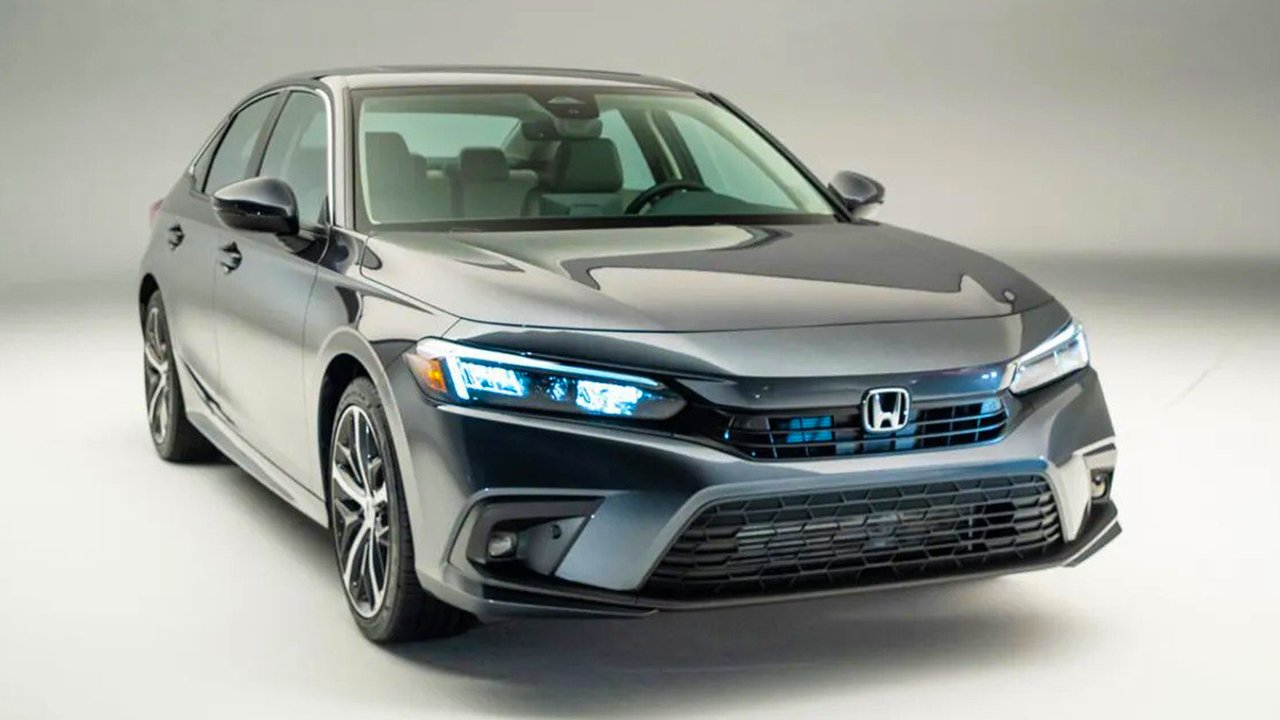
    Sedan car sales experienced a significant downturn, particularly notable in Honda Civic sales, which suffered a substantial decline of 67.33 per cent in October 2023 on a month-over-month basis and 72.36 per cent on a year-over-year basis in Pakistan. 

    This decline can be attributed to production interruptions, elevated car prices, and a reduction in car financing. 

    Specifically, Honda Atlas Cars Limited reported the sale of only 379 Civic units in October 2023, a notable drop from the 1371 units sold in October 2022.

    In contrast, Toyota Corolla sales exhibited a relatively better performance, with a 24.19 per cent decrease on a month-over-month basis and a 56.69 per cent decrease on a year-over-year basis in Pakistan. 

    To provide precise figures, Toyota Indus Motor Company sold 796 Corolla units in October 2023, as opposed to the 1838 units sold in October 2022.