Tag: automotive sector

  • Toyota manufacturer in Pakistan halts car production amid parts shortage

    Toyota manufacturer in Pakistan halts car production amid parts shortage

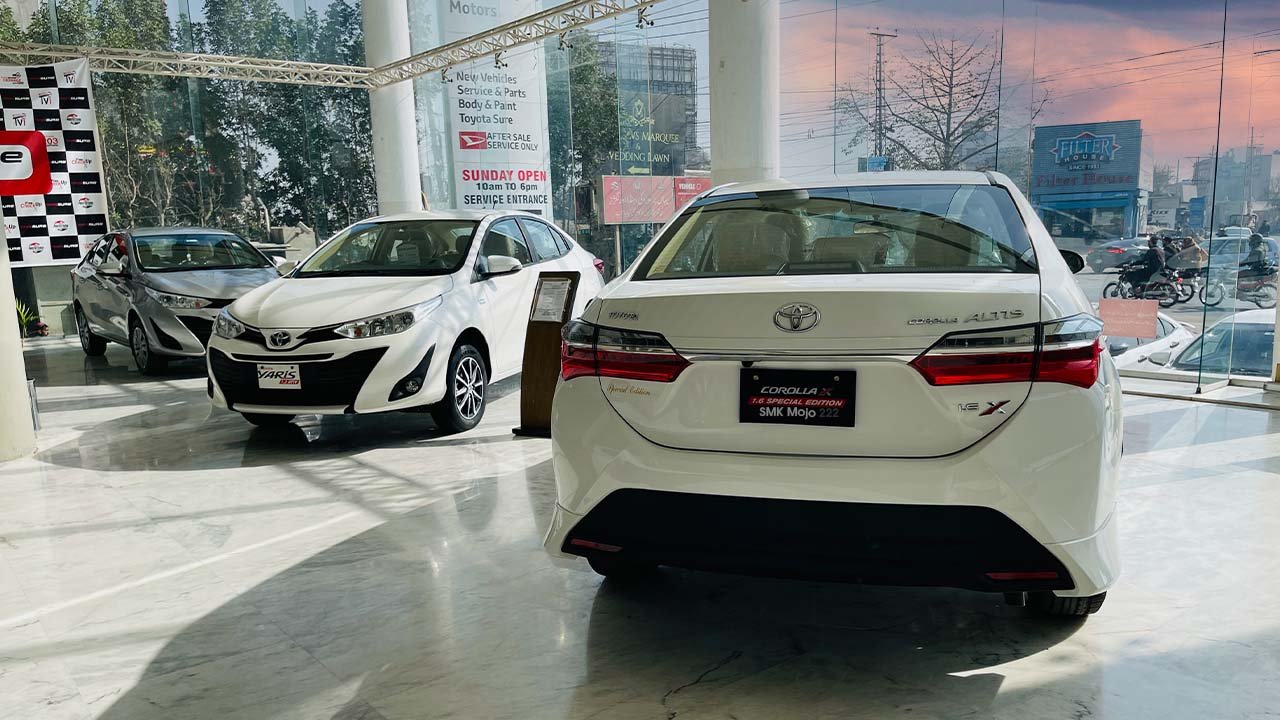
    Indus Motor Company (IMC), the manufacturer of Toyota vehicles in Pakistan, has declared a temporary shutdown of its production plant for a duration of six days.

    The decision stems from the company’s concern over low inventory levels and a shortage of essential components, as disclosed in a formal notice submitted to the Pakistan Stock Exchange (PSX).

    The notice specified, “Based on the current low level of inventory of manufactured vehicles and the shortage of parts and components for vehicle manufacturing, due to supply chain challenges, the company has decided to close its production plant from March 6th, 2024, to March 11th, 2024 (both days inclusive).”

    Pakistan’s automotive sector is grappling with various challenges, including the nation’s sluggish economic growth, surging inflation rates, and elevated borrowing costs, all of which are contributing to a decline in vehicle sales.

    To address these challenges, Indus Motor Company recently announced its board’s approval of an investment of approximately Rs3 billion.

    This investment aims to enhance the localization of production, a crucial step in the company’s broader strategy to consistently increase the localization of parts and components in locally manufactured vehicles. 

    This temporary shutdown underscores the broader challenges facing the automotive industry in Pakistan and reflects IMC’s proactive approach to managing its production in response to current market conditions.

  • Chery Pakistan increases Tiggo 4 Price to Rs7 million

    In the face of mounting economic uncertainty, import restrictions, and complications surrounding Letter of Credit (LC) transactions, Chery Pakistan has been forced to implement a significant price hike on one of its popular crossover SUVs.

    According to Pakwheels, the Chery Tiggo 4, a favoured choice among Pakistani car enthusiasts, will now come with a heftier price tag, soaring from Rs6,399,000 to Rs6,999,000, reflecting an increase of Rs600,000. This move comes as Chery Pakistan grapples with the multifaceted challenges posed by a volatile economic landscape and supply chain disruptions, as the company revealed in an official statement.

    The surge in pricing has been attributed to the prevailing precarious economic conditions and the stifling supply constraints that have been a constant thorn in the side of numerous industries, including the automotive sector. Nevertheless, Chery Pakistan aims to mitigate the impact on its customers by extending a price lock guarantee to all new bookings for the Chery Tiggo 4, providing a semblance of stability amidst the tumultuous market fluctuations.

    The price escalation, while not entirely unexpected, underscores the current tribulations faced by Pakistan’s local auto industry. As a sector heavily reliant on imported components, particularly critical vehicle parts, the domestic car manufacturing industry is inherently susceptible to the ripple effects of foreign exchange rate fluctuations.

    Compounding the challenges are the import restrictions introduced by governmental authorities, leading to a cascade of delays and, in some instances, complete production standstills for various car manufacturers.

    The predicament has been further exacerbated by the non-issuance of LCs by the State Bank of Pakistan (SBP), casting a darker shadow over an already beleaguered landscape. Industry experts predict that the situation is poised to persist for the foreseeable future, with a grim timeline of at least 2–3 years for the auto sector to regain its footing.

    The intertwining of persistent economic woes with a backdrop of political instability paints a disheartening picture, further clouding the prospects of a swift recovery.

  • Toyota Indus Motor Company suspends car production until August 3

    Toyota Indus Motor Company suspends car production until August 3

    Indus Motor Company Limited has recently made the difficult decision to close its production plant temporarily. The interruption is set to last for two weeks, as the company faces significant challenges in importing essential raw materials, leading to disruptions in its supply chain.

    The root of the problem lies in the difficulties the company and its vendors are encountering in importing raw materials and clearing consignments. These issues are primarily attributed to the struggles with opening letters of credit (LCs) and supply chain problems from certain foreign vendors. Unfortunately, this has left the company with insufficient inventory levels to maintain its production activities.

    The company’s secretary addressed these concerns in a statement released to the Pakistan Stock Exchange, outlining the seriousness of the situation. Indus Motor’s production plant experienced a brief shutdown the previous month due to similar issues with raw material imports. However, the current circumstances have exacerbated the problem, forcing the company to take this temporary production halt.

    Commencing from July 21, 2023, and extending until August 3, 2023, the plant’s complete shutdown is expected to have implications beyond Indus Motors itself. Other major players in the automotive sector, such as Pak Suzuki Motors and Honda Cars, have also faced similar challenges and implemented several shutdown days in recent months.

    The automotive industry, along with other sectors dependent on imported raw materials, has been struggling due to a shortage of foreign exchange reserves in Pakistan. The complications surrounding LCs have severely impacted the supply chain’s seamless functioning, leading to significant disruptions in production activities.

    Indus Motors holds a significant position in Pakistan’s automobile industry and has notably invested $100 million in local production of hybrid electric vehicles (HEVs). Furthermore, the company plays a crucial role in the local automotive ecosystem, with over 50 part manufacturers contributing to the value chain by producing parts worth over Rs250 million every working day.

    Additionally, the company has established 53 independently owned authorised dealerships that provide aftersales service, generating substantial employment opportunities for over 450,000 people directly and indirectly across the country.

    The temporary closure of the production plant presents various challenges for Indus Motors, its employees, and the overall automobile industry. The company’s management is likely to be exploring potential solutions to address the scarcity of raw materials and resume operations as soon as the situation allows.

    As analysts point out, finding lasting solutions may require collaboration between the government and relevant stakeholders to ensure a stable supply of raw materials for the automotive industry and other affected sectors. Swift action and strategic measures will be vital to mitigate the economic impact of these closures and preserve the growth trajectory of Pakistan’s automotive sector.