Tag: Ayub Khan

  • Hammad Azhar resigns from PTI Punjab President post

    Hammad Azhar resigns from PTI Punjab President post

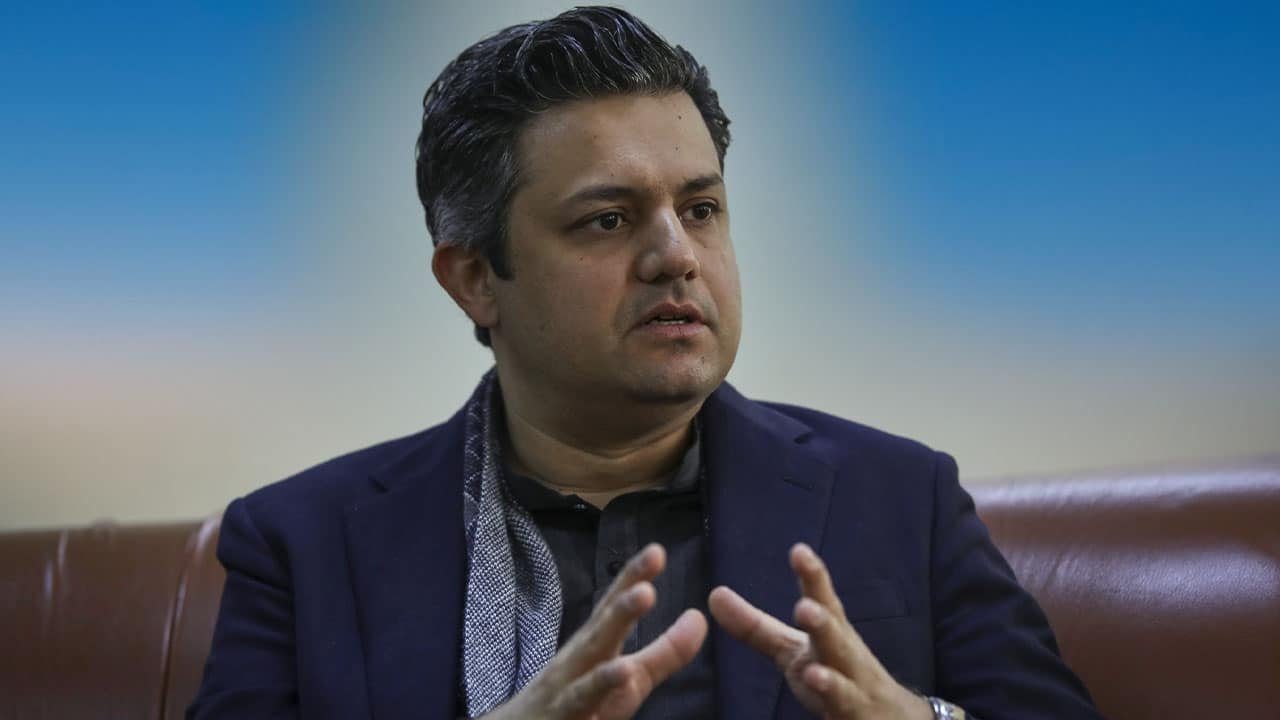
    Hammad Azhar, senior leader of Pakistan Tehreek-e-Insaf (PTI), voluntarily resigned from his roles as acting Punjab President and General Secretary on Wednesday, citing legal cases and the challenges the party is currently facing as the reason for the surprise decision.

    The politician, who was once a federal minister during the PTI regime, submitted his resignation letter to PTI Chairman Gohar Ali Khan and Secretary-General Omar Ayub Khan. He said that he’s staying underground because of cases and raids, and he believes the party would benefit more from leadership that’s actively present on the ground.

    “It has been an honour, but it would be selfish of me to continue while I am still in hiding and unable to represent the party even on television. In my opinion, at this stage, the party would be best served by a leadership in Punjab that is able to be present on the ground and lead from the front,” he stated in the letter.

    Leadership ought to have the opportunity to be on television and directly meet the founding chairman, Imran Khan, Hammad observed, pointing out that he lacks this access and permission.

  • Army gets more land for ‘agriculture’

    Army gets more land for ‘agriculture’

    The Pakistan Army is set to start agriculture farming on 41,000 acres of land in South Waziristan’s Zarmalam area.

    Peshawar Corps Commander Lieutenant General Sardar Hasan Azhar Hayat has said that the army was determined to increase agricultural farming in Khyber Pakhtunkhwa, as per Geo News.

    Lt Gen Hayat said the army has prepared a farming plan on 41,000 acres of land that had been barren for years.

    The officer was of the view that there is a vast opportunity for investment in minerals, hydropower, agriculture, and tourism in KP that can help boost the province’s resources.

    The three-star officer said the army has worked together with the civil government to bring investment in minerals, agriculture, hydropower, and tourism to the province, which is yielding positive results.

    The Pakistan Army’s decision has sparked mixed reactions among locals and experts, with some expressing concerns over the potential implications for the region.

    The move, which involves the cultivation of 41,000 acres of land, has raised questions about the long-term impact on the area’s ecosystem and implications for local communities.

    Critics argue that the project’s scale could lead to significant land and water resource depletion, impacting the livelihoods of communities dependent on the land.

    Additionally, there have been concerns about the army’s increasing involvement in civilian sectors, with some experts cautioning against potential overreach and the need to ensure civilian oversight in such initiatives.
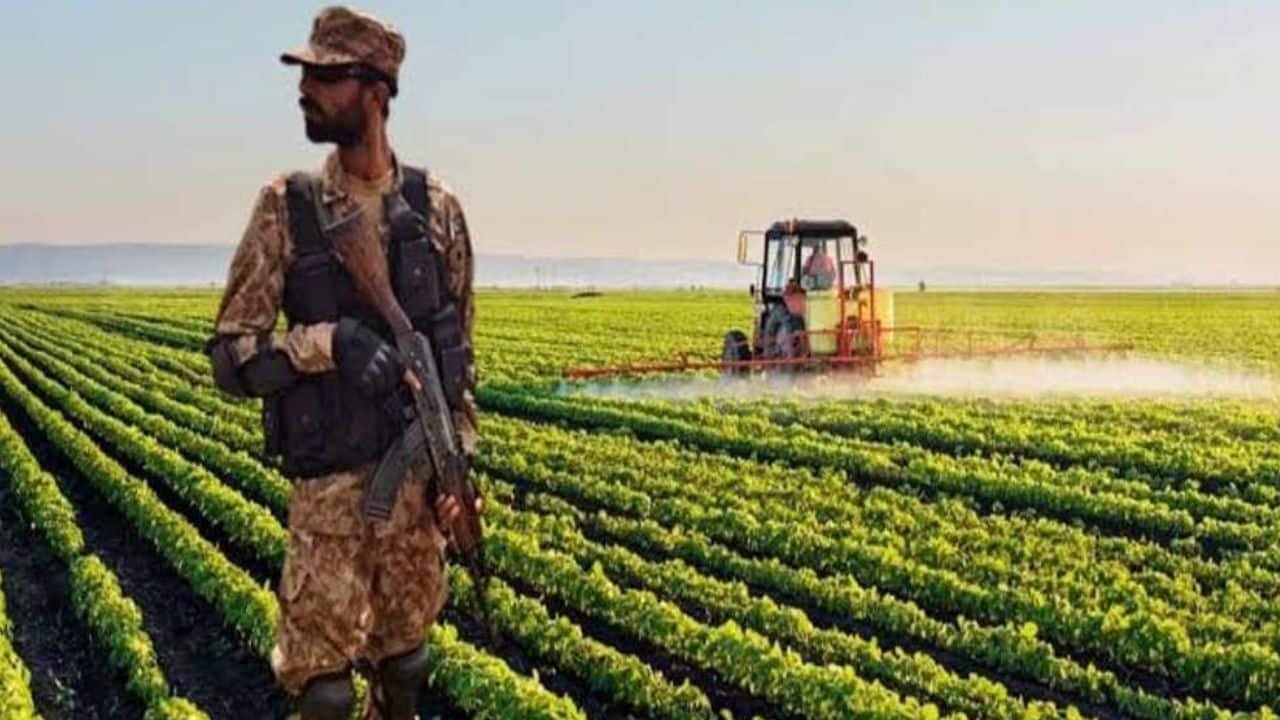
    On October 1st this year, The Pakistan Army launched the first agriculture project under the Special Investment Facilitation Council (SIFC) to make barren lands cultivable in South Waziristan.

    The pilot project launched in the Zarmalam district of South Waziristan oversaw 1,000 acres of barren land made suitable for cultivation.

    The Pakistan Army’s decision has sparked mixed reactions among locals and experts, with some expressing concerns over the potential implications for the region.

    The move, which involves the cultivation of 41,000 acres of land, has raised questions about the long-term impact on the area’s ecosystem and the implications for local communities.

    Critics argue that the project’s scale could lead to significant land and water resource depletion, impacting the livelihoods of communities dependent on the land.

    Additionally, there have been concerns about the army’s increasing involvement in civilian sectors, with some experts cautioning against potential overreach and the need to ensure civilian oversight in such initiatives.
  • ‘Second green revolution’ promised by PM Shehbaz through Green Pakistan Initiative 

    ‘Second green revolution’ promised by PM Shehbaz through Green Pakistan Initiative 

    After a series of moves aimed to protect Pakistan’s failing economy, including securing a crucial IMF deal, Prime Minister Shehbaz Sharif has now set his sights on supporting what he calls the backbone of Pakistan’s economy: the agricultural sector.

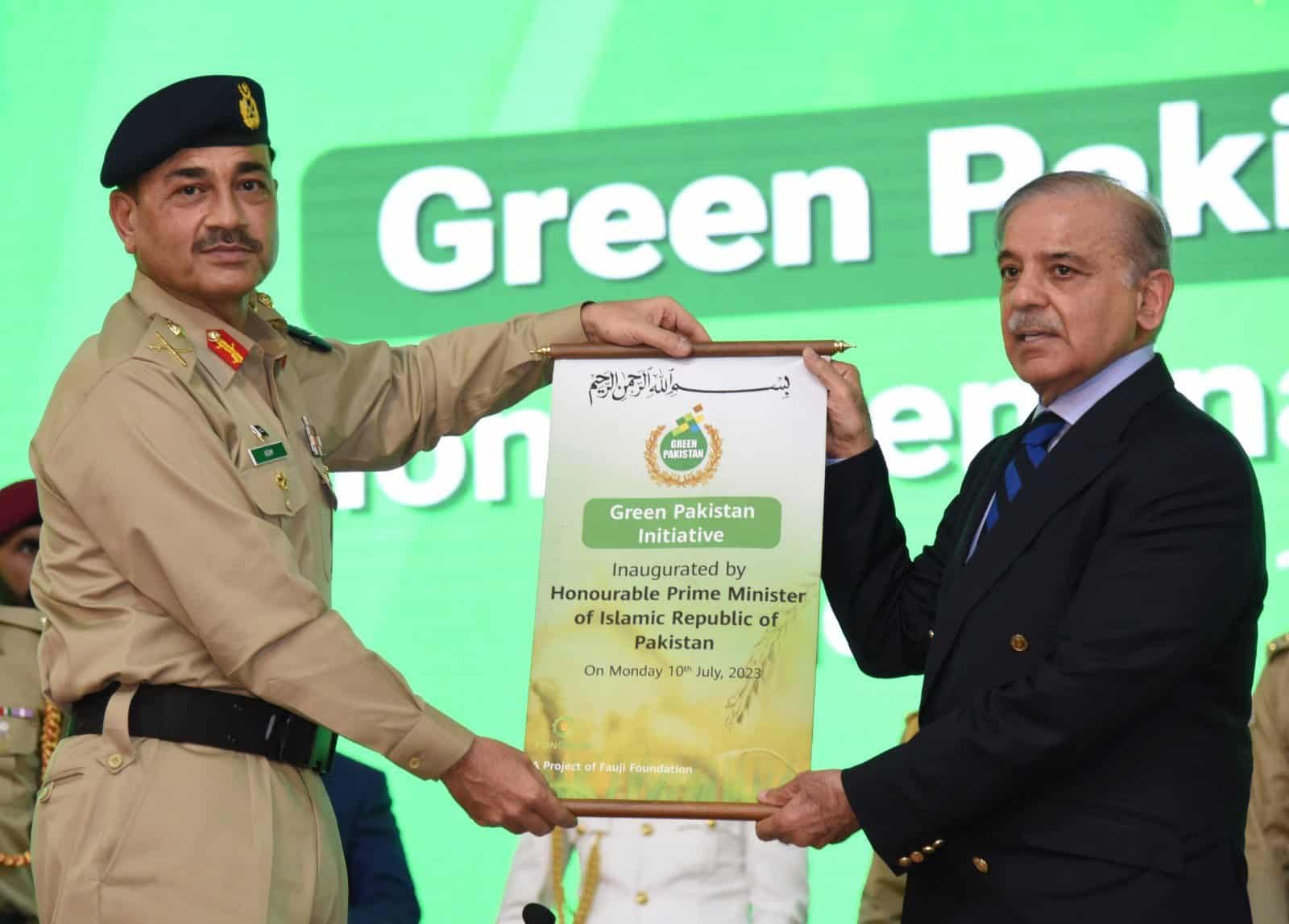
    Through his Green Pakistan Initiative, inaugurated on Monday, July 10, PM Shehbaz says 4 million jobs will be created in the agricultural sector. He also said the Green Pakistan Initiative would likely attract $50 billion in investments in the next five years.

    According to PM Shehbaz, the newly inaugurated initiative is bound to propel Pakistan into its ‘second green revolution’. In fact, the initiative follows similar schemes as those present in Ayub Khan’s regime, such as incentivising farmers by providing them with more profits for their production and providing standard seeds and fertilizers to farmers, along with equipping them with the latest technology.

    It is true that Ayub Khan’s Green Revolution changed the economic fate of the adolescent country. And a revolution of sorts is very much needed: according to PM Shehbaz, state-owned agricultural enterprises are losing PKR 600 billion annually. He noted that Pakistan imports $4.5 billion worth of palm oil, a burden on the national economy.

    At the inauguration ceremony, PM Shehbaz said that gulf countries were ready to invest in the agriculture sector and export modern machinery to Pakistan, in order to boost the production of crops in the country.

    According to The News, PM Shehbaz stated, “It is [a] demand of our national security that the country’s food security and economic security should be strengthened.”

    The inaugural seminar was attended by federal ministers, provincial chief ministers of Punjab and Sindh, chief secretaries of provincial governments, agricultural experts, and farmers from all the provinces.

    Chief of Army Staff General Asim Munir also attended the seminar as the guest of honour. He pledged the Pakistan Army’s full support for all the initiatives that fall under the Special Investment Facili­tation Council, one of which is the Green Pakistan Initiative.

    According to The News, agriculture experts and farmers highly appreciated the landmark initiative, praising the focus on promoting modern technology, the collaboration of public and private sectors, as well as trickling down dividends to local farmers in order to alleviate poverty.

  • ‘My grandfather laid foundation of CPEC,’ PTI minister claims

    ‘My grandfather laid foundation of CPEC,’ PTI minister claims

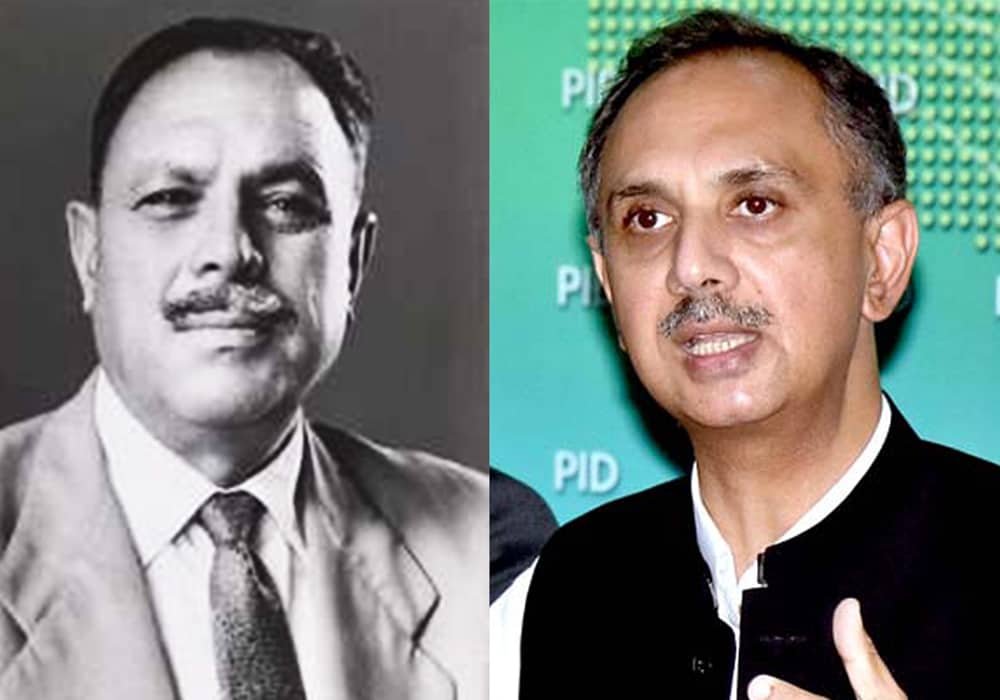
    Minister for Power Division Omar Ayub Khan has said his grandfather and former president of Pakistan, Ayub Khan, had “laid the foundation of China-Pakistan Economic Corridor (CPEC)”.

    Taking the floor of the National Assembly on Wednesday, Omar Ayub said, “Former president of Pakistan Ayub Khan had laid the foundation of CPEC by starting work on the Karakoram Highway.”

    He further said that the Prime Minister (PM) Imran Khan-led government was determined to achieve the set target of Rs5,500 billion in the financial year 2019-20.

    The minister added that the country had to pay billions of rupees as interest on the loans taken by the Pakistan Muslim League-Nawaz (PML-N) and Pakistan People’s Party (PPP) governments.

    CPEC:

    CPEC is a collection of infrastructure projects that are currently under construction throughout Pakistan with China’s help. Originally valued at $46 billion, the value of CPEC projects is worth $62 billion as of 2017.

    The project is expected to generate employment and boost the country’s economy in the years to come.