Tag: Azam Nazeer Tarar

  • Azam Nazeer Tarar again takes charge as law minister

    Azam Nazeer Tarar again takes charge as law minister

    Senator Azam Nazeer Tarar on Wednesday once again took charge as the federal law minister.

    Tarar assumed charge once more at the request of Prime Minister (PM) Shehbaz Sharif, after stepping down from the post last month citing “personal reasons”.

    PM Shehbaz asked federal ministers to ask Tarar to continue serving as the law minister and that he would not accept his resignation.

    On Tuesday, a delegation of the ministers — including Ayaz Sadiq, Rana Sanaullah, Khawaja Saad Rafique, Marriyum Aurangzeb, and Ishaq Dar — met the senator at his residence and gave him the prime minister’s message.

  • PML-N’s Ayaz Sadiq appointed as the new law minister

    PML-N’s Ayaz Sadiq appointed as the new law minister

    Ayaz Sadiq, Pakistan Muslim League-Nawaz (PML-N) senior leader and incumbent federal minister for Economic Affairs, has been appointed as the new Federal Minister of Law and Justice.

    In an official allocation notice, it is stated, “In terms of rule 3(4) of the Rules of Business, 1973, the Prime Minister has been pleased to allocate the portfolio of Law and Justice to Sardar Ayaz Sadiq, the federal Minister for Economic Affairs, with immediate effect.”

    The development has come a week after the unexpected and dramatic resignation of Azam Nazeer Tarar as the law minister.

    Sadiq began his career with Pakistan Tehreek-e-Insaf (PTI) and joined PML-N in 2001. He has been elected twice for the slot of National Assembly (NA) speaker. He was also the acting President of Pakistan in 2014.

    Azam Nazeer Tarar steps down as law minister, citing ‘personal reason’

    On October 24, Federal Law and Justice Minister Azam Nazeer Tarar resigned from his post for “personal reasons”.

    In his resignation letter, addressed to President Dr Arif Alvi, Tarar wrote: “I have had the great honour and privilege to serve my country as the Federal Minister for Law and Justice under the leadership of Mian Muhammad Shehbaz Sharif, Prime Minister of the Islamic Republic of Pakistan.”

    Citing the reason for his resignation, the PML-N leader said, “Due to personal reasons, I am unable to discharge my duties as the federal minister”.

    “Therefore, in terms of Clause (3) of Article 92 of the Constitution of the Republic of Pakistan, I hereby resign from my office,” his resignation letter added.

    Prior to this, Tarar supported Chief Justice (CJ) Umar Ata Bandial’s nominations of junior judges for elevation to the Supreme Court on the instructions of the federal government.

    However, it was being speculated that he was not comfortable with the government’s decision, therefore, he decided to tender his resignation, reports Express Tribune.

    Supreme Court Bar Association (SCBA) President Ahsan Bhoon welcomed Tarar’s resignation. He said that Tarar showed loyalty to the party by following the government’s instruction, but he stood with the bar by resigning.

    Moreover, some media reports said that some powerful circles were upset at the sloganeering during the Asma Jahangir Conference the other day, in his presence. This resignation is seen in the context of that episode.

    Tarar is a senior PML-N leader, a lawyer, and a bar representative who assumed the responsibilities of Federal Minister for Law and Justice in April 2022.

  • ‘Our state institutions have carried out an exercise to secure PMO’: Tarar

    ‘Our state institutions have carried out an exercise to secure PMO’: Tarar

    Law Minister Azam Nazeer Tarar has said that state institutions have taken steps to secure the Prime Minister’s Office (PMO) and changed some standard operating procedures (SOPs).

    “Our state institutions have carried out an exercise to secure the PMO and ensure [security],” he stated.

    “Some SOPs have been changed which I think is a government responsibility as oftentimes many sensitive matters are discussed in such places and there should be an environment where you are 100 per cent satisfied that you’re making national decisions in a secure environment,” he told reporters.

    He explained that basic SOPs were already in place for “sensitive buildings”, adding that further orders have been issued to make security measures effective and
    “It will be an effort to introduce a culture and environment, not just in the PMO, but in all departments where you can ensure that sensitive information will not be leaked.”

    These steps were taken after several audio leaks surfaced of PM Shehbaz and former PM Imran Khan.

    Pakistan Tehreek-e-Insaf (PTI) leader Fawad Chaudhry said that Chief of Army Staff (COAS) General Qamar Javed Bajwa had informed Imran Khan multiple times that the PM House is unsafe for important conversations.

    “The army chief told Imran Khan that the points that what we discuss here is recorded and leaked later on,” he said, adding that, “General Bajwa had said Nawaz Sharif stepped out of PM House when he wanted to talk to him about some vital issue.”

    The PTI leader said that it is unacceptable for PM Office to be hacked, regardless of who is premier — whether Nawaz Sharif, Shehbaz Sharif or Imran Khan.

  • Govt spends Rs20 million per month on Khan’s security: IG Islamabad

    In a meeting of the Senate Standing Com­mittee on Interior chaired by Pakistan Tehreek-e-Insaf’s (PTI) Senator Mohsin Aziz, Inspector General of Police (IGP) Isla­mabad Dr Akbar Nasir Khan revealed that 266 personnel have been deployed for PTI Chairman and former Prime Minister Imran Khan’s security, which costs the government Rs20 million per month.

    The meeting took place on Wednesday, in which IGP Islamabad also admitted that there are reports of threats to Khan’s life.

    IGP Nasir provided these details in the form of a report sought by Committee Chairman Mohsin Aziz, who took a suo moto notice on reports of withdrawal of Khan’s security.

    He was asked about the reasons for the withdrawal of Khan’s security and revoking of private security companies’ licenses that were deployed for his protection. In reply, the IGP said that besides the two private security companies, 266 personnel from Khyber Pakhtunkhwa (KP), Islamabad, Gilgit-Baltistan (GB) police, Frontier Consta­bulary and Rangers have been deployed for PTI Chairman’s security.

    He added that the said licenses were revoked by the Interior Ministry, however, they are still performing security duties.

    Chairman Committee Aziz observed that Interior Minister Rana Sanaullah was invited eight times for this meeting, but he did not come to attend the meeting once.

    Senator Shahadat Awan remarked that instead of calling a meeting, the committee chairman could have directly asked the IGP about the issue.

    “An hour-long meeting costs Rs15 lakh from the national exchequer”, he pointed out.

    Federal Minister of Law and Justice, Azam Nazeer Tarar, said that despite concerns for flood victims, Imran Khan’s rallies were being held and abuses were being hurled. “This forum is not for discussing such matters,” he said.

    On Thursday, Imran Khan’s counsel, Babar Awan, informed the Anti-Terrorism Court (ATC) that Khan’s life is under threat.

    “IGP and Deputy Inspector General (DIG) Operations will be responsible if something happens to my client,” warned Babar.

  • ‘No reappointment or extension’: NA passes bill to amend NAB Laws

    ‘No reappointment or extension’: NA passes bill to amend NAB Laws

    The joint session of Parliament that took place on Thursday passed the National Accountability (Second Amendment) Bill 2021 with a majority in National Assembly (NA).

    The bill will be presented in the Senate today for approval. Once passed from the Upper House, the bill will apply to all cases, being probed by NAB since 1999. The key points of the bill are as follows:

    1- The NAB chairperson’s term has been reduced from four years to three years and will not be eligible for reappointment or an extension.

    2- Consultation for the chairperson of NAB will begin two months prior to the retirement of the previous chairperson.

    3- If the leader of the House and Opposition do not agree on a name for a chairperson, then the matter will go to a parliamentary committee. That too is now time-bound and the committee has 30 days to recommend a name.

    4- A closed inquiry cannot be reopened without permission from the courts and all inquiries by NAB have to now be completed within six months.

    5-People who initiate false or fabricated cases will now be punished with imprisonment of either five years or a fine.

    Federal Minister of Law and Justice Azam Nazeer Tarar presented this bill. Speaking about the NAB law, he said it had been used to influence politicians, adding that “judges had also said that the NAB was used to corner politicians”.

    Supreme Court asks how cabinet members make amendments to law for own benefits

    Following the news of amendments in the NAB law and Election Act taking place in the House, the Supreme Court of Pakistan (SCP) took notice of the situation.

    The apex court inquired how could federal cabinet members make amendments benefitting themselves and directed the government to present the details of the cabinet members whose names have been removed from the Exit Control List (ECL).

    The Chief Justice of Pakistan (CJP) Umar Ata Bandial asked Attorney General of Pakistan (AGP) Ashtar Ausaf, “At whose behest did the Cabinet amend the rules pertaining to people involved in corruption and defaulters. Did the federal Cabinet approve the amendment in rules?”

    Responding to it, AGP Ausaf said that he would present the minutes of the Cabinet meeting for approval.

    Similarly, SC Justice Mazhar Naqvi was of the view that the cabinet members benefited from the amendment they approved.

    The AGP maintained that he would find out if the members who were on the no-travel list were part of the committee that approved the amendments or not.

    Justice Mazhar also observed how a minister facing allegations could make amendments to benefit himself.

    No electronic voting machines will be used in elections: Assembly passes bill

    The NA also passed the Elections (Amendment) Bill 2022 on Thursday with a majority, seeking to remove the use of Electronic Voting Machines (EVMs) in the upcoming general elections.

    Parliamentary Affairs Minister Murtaza Javed Abbasi presented the bill, which was only opposed by Grand Democratic Alliance (GDA). The bill is expected to be sent to the Senate today.

    GDA lawmaker Ghous Bakhsh Mehr said that Pakistan should at least try using EVMs. “If not the whole country, then use them in some areas,” he said.

    Under the new bill, two amendments were being made to Sections 94 and 103 of the Election Act:

    1- In Section 94, the Election Commission of Pakistan (ECP) may conduct pilot projects for voting by overseas Pakistanis in by-elections to ascertain the technical efficacy, secrecy, security, and financial feasibility of such voting and shall share the results with the government, which shall, within 15 days from the commencement of a session of a house after the receipt of the report, lay the same before both houses of parliament.

    2- In Section 103, the ECP may conduct pilot projects for the utilisation of EVMs and biometric verification system in the by-elections.

    Azam Nazeer Tarar said that these amendments will ensure free, fair, and transparent elections. He added that ECP had also raised objections to the use of EVMs.

    About the matter of Overseas Pakistanis’ vote, the federal minister said, “Overseas Pakistanis are a precious asset of the country and the government does not believe in snatching their right to vote.”

    Similarly, Pakistan People’s Party (PPP) argued that the amendments will not deprive Overseas Pakistanis of their voting right.

    Prime Minister (PM) Shehbaz Sharif’s Focal Person on Digital Media Abubakar Umer also issued a clarification via Twitter on the matter. He said, “The overseas Pakistanis voting right remains intact. Only voting through EVM has been discarded due to ECP objections on some technical aspects.”

    The details of the expenses for the upcoming general elections were also presented in the NA session. The elections would cost approximately Rs47.41 billion, of which around Rs15 billion would be for ensuring security.
  • Senate Interior Committee passes bill to decriminalise suicide in Pakistan

    Senate Interior Committee passes bill to decriminalise suicide in Pakistan

    The Senate Interior Committee has passed the bill for decriminalising suicide in Pakistan and demanded amendments in section 325 of the Pakistan Penal Code (PPC). The bill was first introduced by Pakistan People’s Party (PPP) member, Senator Shahadat Awan, in the Senate.

    It stated, “Whoever attempts to commit suicide and does any act towards the commission of such offence, shall be punished with simple imprisonment for a term which may extend to one year, or with fine, or with both.”

    Awan said that the families do not take suicide victims to hospitals in fear of police and other legal obstacles.

    The committee also recommended that the government should initiate psychological treatments for victims who take extreme action of attempting to end their lives.

    During the meeting, a senator from Balochistan Awami Party, Sarfaraz Ahmed Bugti, said that suicide is forbidden in Islam but what should be done about those who survive during the suicide attempt.

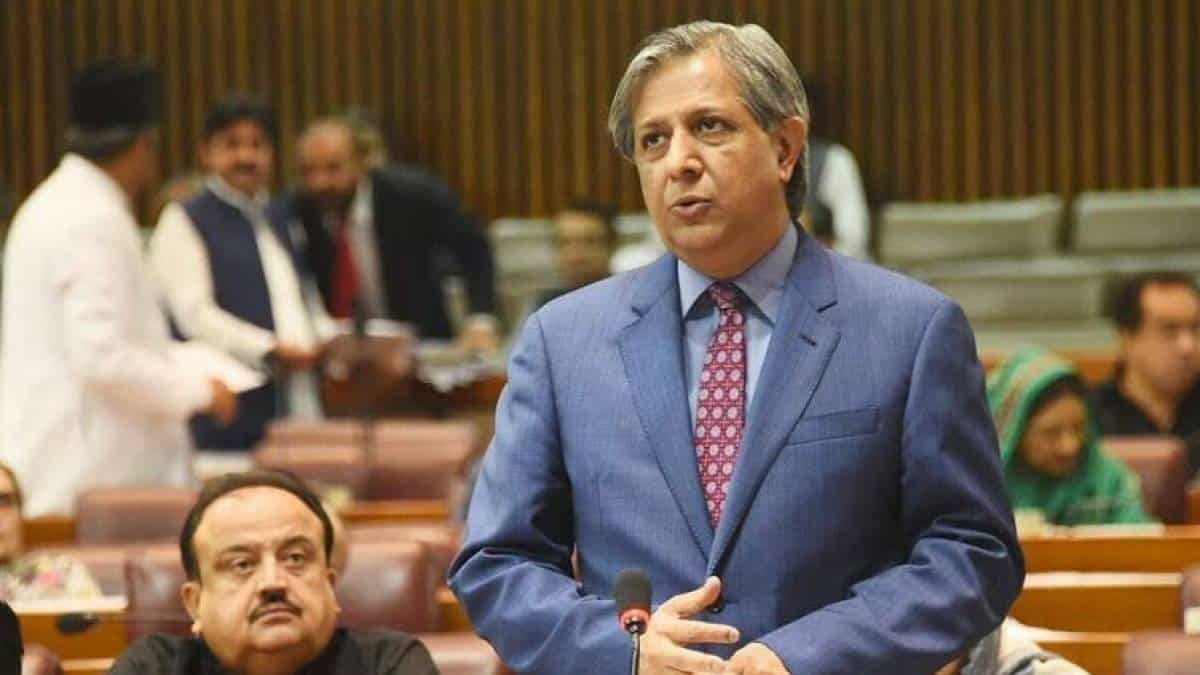
    In response, Azam Nazeer Tarar from Pakistan Muslim League-N (PML-N) said that there are other actions which are forbidden in Islam that are not accountable by law. He added that here we are talking about humanity.