Tag: Bailout

  • US reaffirms support to Pakistan in managing economic crisis

    US reaffirms support to Pakistan in managing economic crisis

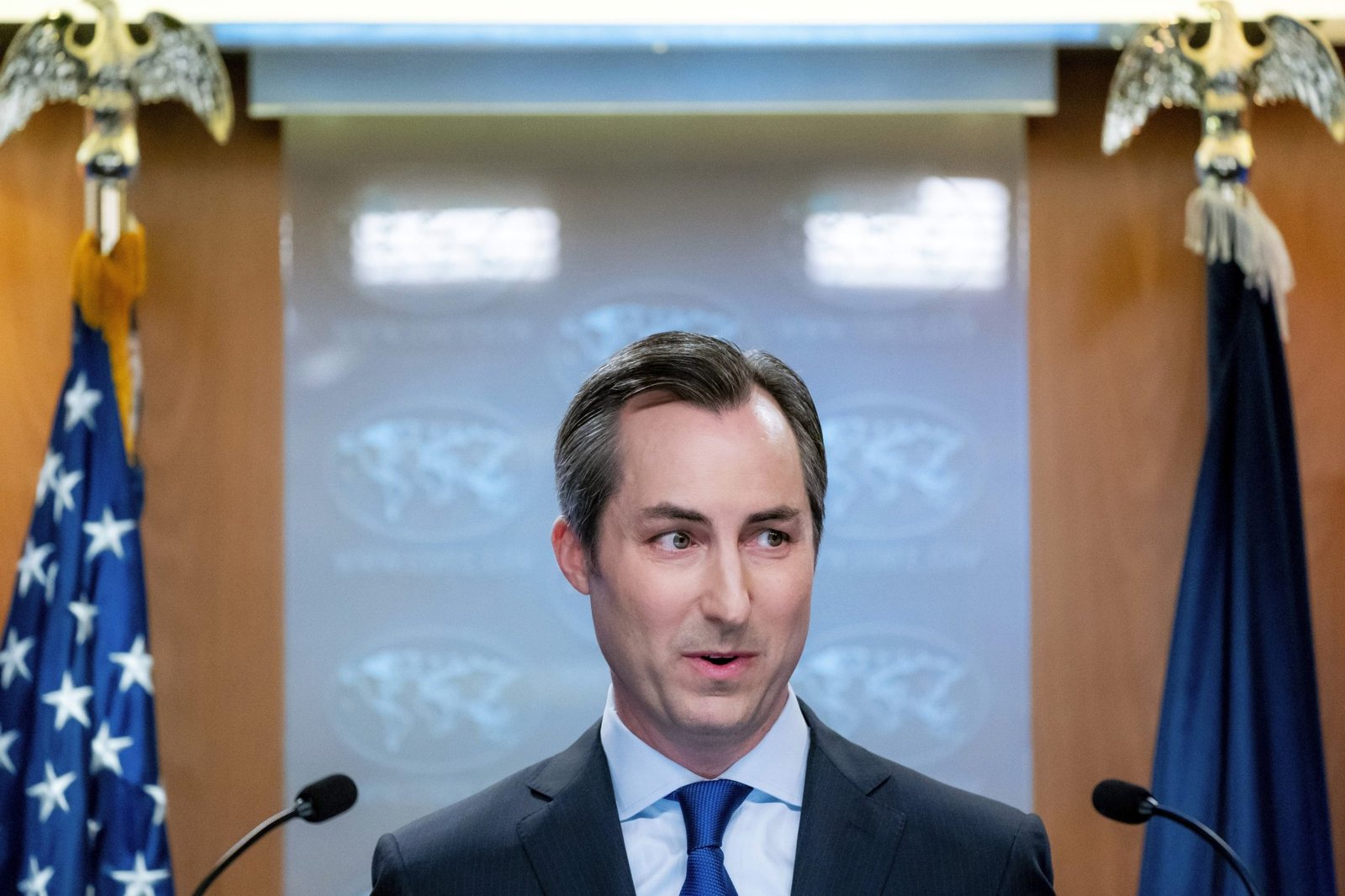
    As Pakistan, yet again, seeks a fresh International Monetary Fund (IMF) bailout package, United States Department of State Spokesperson Matthew Miller has remarked that America fully supports Pakistan in managing its debt crisis.

    “Pakistan has made progress to stabilise its economy, and we support its efforts to manage its daunting debt burden. We encourage the government to prioritise and expand economic reforms to address its economic challenges,” he said addressing a press briefing in Washington.

    He welcomed the recent staff-level agreement reached between the IMF and Pakistan on the second and final review under the $3 billion Stand-By Arrangement, which, if cleared by the IMF’s board, will release about $1.1 billion to the indebted country.

    Finance Minister of Pakistan, Muhammad Aurangzeb, is currently in the US to hold meetings with the IMF for the recent lending package.

    The News reported that Pakistan intends to make a request for augmenting the Extended Fund Facility (EFF) through climate finance, so there is a possibility of securing $6 to $8 billion SBA.

  • SBP expected to hike interest rates by at least 150 bps to control inflation

    SBP expected to hike interest rates by at least 150 bps to control inflation

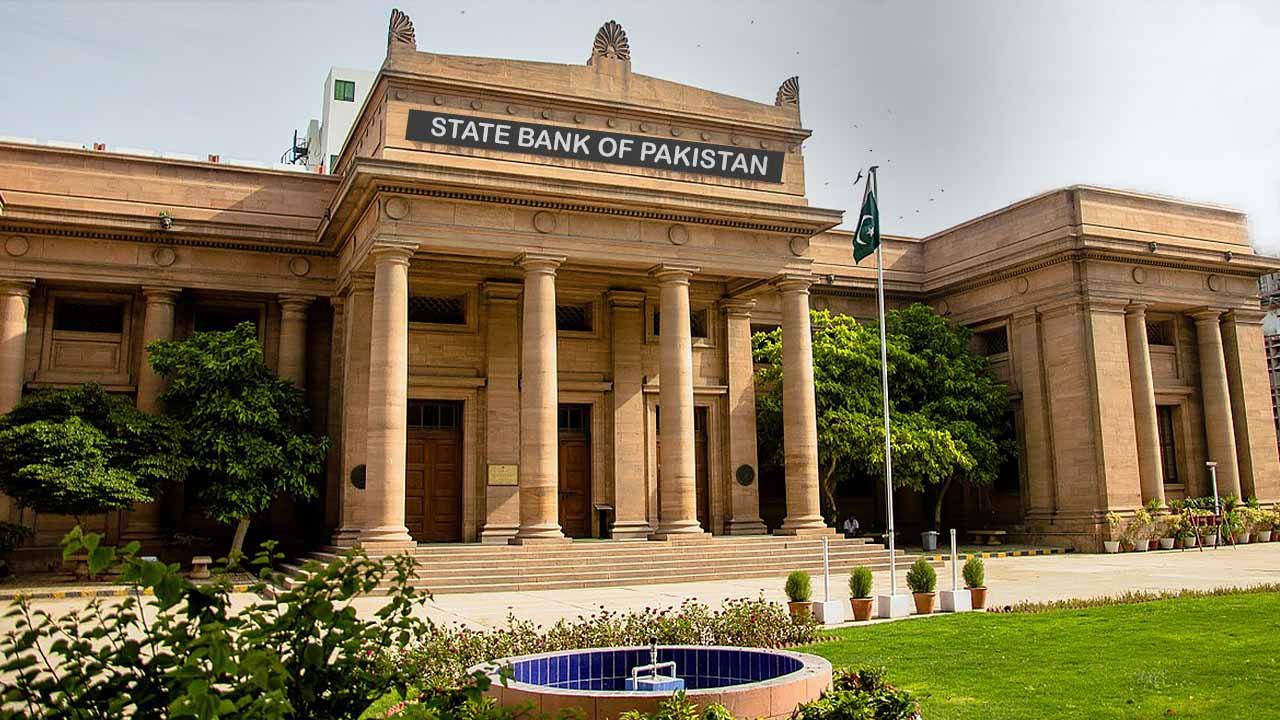
    The State Bank of Pakistan (SBP) is expected to hike interest rates by at least 150 basis points (bps) on Thursday in an effort to curb sky-high inflation and bolster diminished foreign exchange reserves. 

    The central bankas already raised its benchmark rate by 12.25 per cent points to 22 per cent since April 2022, but inflation remains in double digits, at 27.4 per cent in August. The rupee has also depreciated sharply in recent months, reaching an all-time low of 200 rupees per dollar. 

    A Reuters poll of 17 analysts shows that 15 are forecasting a rate hike, with nine predicting an increase of at least 150 bps. The other two analysts expect the rate to remain unchanged. 

    The SBP is under pressure to raise rates in order to cool inflation and attract foreign investment. However, a rate hike could also dampen economic growth, which is already slowing. 

    The central bank is also facing challenges from the International Monetary Fund (IMF), which has set conditions for the release of further tranches of its $3 billion bailout package. One of these conditions is that the SBP must raise interest rates. 

    The SBP is likely to balance these competing considerations when it makes its decision on Thursday. However, it is clear that the bank is under pressure to take action to address the country’s economic challenges. 

    Here are some additional details about the factors that are likely to influence the SBP’s decision: 

    • Inflation: Inflation remains a major concern for the SBP. The latest data shows that inflation fell slightly in August, but it remains in double digits. The SBP has said that it expects inflation to decline over the next 12 months, but it is unclear whether this will happen without further monetary tightening.  
    • Foreign exchange reserves: The SBP’s foreign exchange reserves have been declining in recent months, reaching a critical level of $10.3 billion in August. The SBP needs to bolster its reserves in order to meet its import obligations and avoid a sovereign debt default. A rate hike could help to attract foreign investment and slow the decline in reserves.  
    • IMF conditions: The IMF has set conditions for the release of further tranches of its bailout package. One of these conditions is that the SBP must raise interest rates. The SBP is likely to comply with this condition in order to secure the IMF’s support. 

    The SBP’s decision on Thursday will be closely watched by markets and investors. A rate hike is likely to be welcomed by those who are concerned about inflation, but it could also dampen economic growth. The SBP is facing a difficult balancing act, and its decision will have a significant impact on the country’s economic outlook. 

  • Fitch and Moody’s: IMF loan provides temporary relief for Pakistan, but risks remain

    Fitch and Moody’s: IMF loan provides temporary relief for Pakistan, but risks remain

    Fitch Ratings and Moody’s Investors Service issued warnings on Monday regarding Pakistan’s financial sustainability, despite the recent acquisition of a much-needed $3 billion lifeline from the International Monetary Fund (IMF).

    Last week, Pakistan signed a short-term (nine-month) loan programme worth $3 billion with the IMF, as the previous $7 billion programme was prematurely ending on the same day.

    The objective of the new loan programme is to provide the necessary foreign exchange to reopen imports, support listed companies in gradually resuming partially closed production, and stimulate economic activities within the country.

    Additionally, this programme serves as a signal to other donor agencies and friendly nations, which had pledged $9 billion at a Geneva meeting in January 2023, to extend new financing to Islamabad.

    However, the two global rating agencies caution that risks persist for Pakistan’s economy, particularly as the government faces a daunting $25 billion debt repayment challenge in the upcoming year starting in July.

    Krisjanis Krustins, Fitch’s Director of Sovereigns for APAC, emphasised that Pakistan will require significant additional financing beyond IMF disbursements to meet its debt obligations and support an economic recovery.

    While the IMF likely sought and received assurances for such financing, there remains a risk that it could prove insufficient, especially if current account deficits widen again.

    In order to secure the initial agreement with the IMF, Pakistan had to implement measures such as tax increases, spending cuts, and raising its primary interest rate to a historical peak.

    Although the markets responded positively to this initial agreement, leading to a significant surge in stocks and improved performance of dollar bonds, it still awaits approval from the IMF Executive Board.

    Moody’s analyst Grace Lim, based in Singapore, expressed doubts about Pakistan’s ability to secure the full $3 billion IMF financing during the stand-by period of the loan programme. Lim stated that it remains uncertain whether the Pakistani government will be able to secure the complete amount.

    Furthermore, she highlighted that the government’s commitment to implementing ongoing reforms will be tested as the country approaches elections scheduled for October 2023.

    It is worth noting that Pakistan had previously obtained a $1.1 billion loan in August, which was subsequently halted due to Islamabad’s failure to comply with certain stipulated conditions.

    According to Moody’s, the towering $25 billion debt repayment comprises both principal and interest, amounting to nearly seven times Pakistan’s foreign exchange reserves.

    Lim further added that only after the elections will it become clear whether the country will be able to enter into another IMF programme.

    Until a new programme is agreed upon, Pakistan’s ability to secure loans from other bilateral and multilateral partners in the long term will be severely limited, she cautioned.

  • Pakistan commits to boost foreign exchange reserves to $11.7 billion by 2024

    Pakistan commits to boost foreign exchange reserves to $11.7 billion by 2024

    Pakistan has made a commitment to the International Monetary Fund (IMF) to significantly increase its gross foreign exchange reserves by $7.65 billion. The goal is to raise the reserves to $11.7 billion by the end of the financial year 2024, up from the current level of $4.056 billion in the financial year 2023. This move is aimed at building a buffer of foreign exchange reserves to protect the national economy from external shocks.

    The assurance was given through a Letter of Intent (LoI) signed by Finance Minister Ishaq Dar and State Bank of Pakistan (SBP) Governor Jameel Ahmed. Under a $3 billion stand-by arrangement (SBA) for nine months, Pakistan assured the IMF and its executive board of its commitment to bolster its foreign exchange reserves.

    If the gross foreign exchange reserves reach $11.7 billion by the end of June 2024, they will be sufficient to meet the country’s import requirements for goods and services for approximately 1.8 months.

    The balance of payment (BoP) chart, agreed upon by the IMF and Pakistan, indicates that projected disbursements of foreign loans during the current financial year 2023-24 are expected to amount to $15.01 billion from multilateral and bilateral creditors. This financial year started on July 1, 2023, and will end on June 30, 2024.

    The analysis of the BoP data suggests that Pakistan needs to secure external financing from multilateral and bilateral creditors during the current fiscal year. Additionally, Pakistan is seeking an additional deposit of $2 billion from the Kingdom of Saudi Arabia and $1 billion from the United Arab Emirates (UAE). The Islamic Development Bank (IsDB) has agreed to provide a $1 billion loan program.

    Furthermore, Pakistan is actively working on program loans and project financing from the World Bank, Asian Development Bank, and Asian Infrastructure Investment Bank (AIIB) to secure a total disbursement of $15 billion from all multilateral and bilateral sources.

    To further strengthen its reserves, Pakistan intends to engage with bilateral partners, especially China, Saudi Arabia, and the UAE, to extend the maturity of their existing deposits, which amount to $2 billion, $3 billion, and approximately $2 billion, respectively, in the current financial year.

    The IMF executive board is scheduled to convene on July 12, 2023, in Washington DC, to review and consider Pakistan’s request for approval of a $3 billion short-term bailout package, including a $1 billion tranche release. Upon approval by the executive board, the $1 billion tranche will be disbursed within a few days.

    The IMF staff has already circulated copies of the Letter of Intent among the executive board members. In this document, Finance Minister Ishaq Dar and the SBP governor have provided assurances regarding the implementation of crucial fiscal and energy reforms to address fiscal challenges. Islamabad has also committed to tackling issues in the energy sector, including measures to control the circular debt problem.

    To address energy sector concerns, the government plans to raise power and gas tariffs in line with the determinations made by the regulators. The National Electric Power Regulatory Authority (NEPRA) will finalise the power tariff, while the facts regarding gas tariffs are being ascertained by relevant officials.

    The Oil and Gas Regulatory Authority (OGRA) has already recommended increasing gas tariffs by 45 per cent and 50 per cent for two major gas utilities. The government has a 40-day timeframe to make a decision on this matter, after which the recommendations will be notified in the second week of July 2023.

    Under the nine-month SBA program, it is anticipated that there will be two reviews conducted by the IMF mission in September and December 2023. Each review is expected to lead to the disbursement of a $1 billion installment.

    Overall, Pakistan is taking significant measures to strengthen its foreign exchange reserves, seek external financing, and implement necessary reforms in order to address its economic challenges and ensure stability.

  • IMF reaches $3 billion stand-by arrangement with Pakistan, averting impending default

    IMF reaches $3 billion stand-by arrangement with Pakistan, averting impending default

    The International Monetary Fund (IMF) and Pakistan have reached a staff-level agreement on a stand-by arrangement worth $3 billion, announced the lender. This decision has been eagerly anticipated by Pakistan, a South Asian nation that is on the verge of default.

    The approval of the IMF board, expected in July, is required to finalise the deal. After an eight-month delay, this agreement brings some relief to Pakistan, which is currently grappling with a severe balance of payments crisis and dwindling foreign exchange reserves.

    The funding of $3 billion, which will be disbursed over a period of nine months, surpasses initial expectations. Pakistan had been awaiting the release of the remaining $2.5 billion from a $6.5 billion bailout package that was initially agreed upon in 2019, and which expired on Friday. As a result, the country’s stock and currency markets remained closed on that day.

    According to IMF official Nathan Porter, the new stand-by arrangement builds upon the 2019 programme. Porter acknowledged the significant challenges faced by Pakistan’s economy in recent times, including devastating floods last year and rising commodity prices following the war in Ukraine.

    He stated, “Despite the authorities’ efforts to reduce imports and the trade deficit, reserves have declined to very low levels. Liquidity conditions in the power sector also remain acute.” Porter further emphasised that the new arrangement would serve as a policy anchor and a framework for financial assistance from both multilateral and bilateral partners in the foreseeable future.

    Porter also highlighted the acute liquidity conditions in the power sector, characterised by mounting arrears and frequent power outages. Reforming the energy sector, which has accumulated a debt of nearly 3.6 trillion Pakistani rupees ($12.58 billion), has been a pivotal aspect of the discussions between Pakistan and the IMF.

  • Pakistan commits to IMF bailout deal without fuel subsidy scheme

    Pakistan commits to IMF bailout deal without fuel subsidy scheme

    Pakistan has informed the International Monetary Fund (IMF) that it will not be implementing a fuel subsidy programme during ongoing negotiations for a $1.1 billion bailout for the country.

    The IMF has stated that it will continue to engage with the government on the loan, despite increasing political tensions.

    Prime Minister had previously proposed a fuel subsidy scheme in March, which would charge higher rates to affluent consumers to subsidise prices for the poor who have been hit hard by inflation.

    However, the government has now committed not to implement this programme in the current fiscal year or beyond. Instead, it will not introduce new tax exemptions and will allow a market-based exchange rate for the rupee currency.

    The IMF has said that Pakistan needs significant additional financing to complete the long-delayed ninth review of its bailout package.

    Obtaining commitments of significant additional financing is essential before the IMF approves the release of pending bailout funds that are crucial for Pakistan to resolve an acute balance of payments crisis.

    According to Dawn, the State Bank of Pakistan’s reserves fell to $4.38 billon on Thursday, which is barely a month’s worth of imports. The IMF has emphasised that Pakistan faces stagflation, large financing needs, and has been affected by several shocks, including severe floods.

  • Pakistan’s history of IMF bailouts: A look at 75 years of economic challenges

    Pakistan’s history of IMF bailouts: A look at 75 years of economic challenges

    Pakistan is currently facing yet another economic crisis, a recurring issue that has caused the country to repeatedly seek help from the International Monetary Fund (IMF) for financial assistance.

    Unfortunately, most of the previous 13 bailouts granted since the late 1980s were left unfinished, as Pakistan failed to implement any meaningful structural changes to rein in government spending or boost revenue.

    The country’s current government, led by Prime Minister Shehbaz Sharif, is currently in talks to revive its latest $6.5 billion loan programme as a result of the ongoing economic downturn, exacerbated by last year’s devastating floods and continued political instability. However, the implementation of the necessary belt-tightening measures may prove to be challenging, given the upcoming national elections planned for later this year.

    Pakistan and the IMF had agreed to a $6 billion bailout program in 2019, but disputes over monetary policies have prevented the release of over $1 billion. Furthermore, donors and lenders have demanded structural reforms before providing any further financial aid to Pakistan.

    Pakistan’s traditional partners have made it clear that their assistance is conditional upon the revival of the IMF program and the successful implementation of reforms, including the expansion of tax collection.

    Based on the prevailing Special Drawing Rights (SDR), also known as XDR, rates, the International Monetary Fund (IMF) has approved loans totaling $31.629 billion for Pakistan.

    It is worth noting, however, that not all of the approved funds have been disbursed, with only one out of 22 loans having been fully transferred to Pakistan. This highlights the complex political and economic dynamics that underlie IMF programs.

    Pakistan’s history of borrowing from the IMF

    Pakistan has a history of borrowing from the International Monetary Fund (IMF), which can be divided into four distinct periods. The early years of borrowing spanned from 1950 to 1988, followed by the Benazir and Nawaz Sharif era from 1988 to 1999. The third period was marked by the Musharraf and Zardari administrations from 2000 to 2013. The current period is led by Nawaz Sharif and Imran Khan.

    During these periods, each government worked with the IMF differently, especially in the past two decades. While the Benazir and Nawaz Sharif administrations alternated in seeking IMF programs in the 1990s, the Musharraf government, despite experiencing substantial foreign currency inflows, also had to turn to Washington for financial assistance.

    The Zardari administration, on the other hand, abandoned the largest-ever IMF program when it deemed it expedient to do so. This trend illustrates how Pakistan’s borrowing from the IMF has been characterised by inconsistency and shifting priorities.

    2013-2022

    Pakistan’s recent history of borrowing from the IMF has been marked by different governments seeking assistance in their own unique ways. While the Imran Khan government initially refused to seek assistance from the IMF, it eventually sought an Extended Fund Facility (EFF) loan worth SDR4.268 billion in July 2019. This was due to the country’s financial deterioration and instability, which had eroded the stability gains made since late 2016.

    Under Imran Khan’s government, the IMF disbursed a total of SDR3,159.5 million to Pakistan in four tranches. However, talks for the fourth tranche proved challenging and the government sought help from the US Assistant Secretary of State Donald Lu. Despite receiving SDR750 million in February 2022, then-Prime Minister Imran Khan announced a subsidy on petrol and diesel, effectively breaking the agreement with the IMF. As a result, the IMF suspended Pakistan’s $6 billion loan programme in March 2022.

    Negotiations for the revival of the fund facility did not commence until May, when Shehbaz Sharif of the PML-N took over the government. Talks on reviving the fund facility were concluded in late June, but only after the government took some harsh decisions, including withdrawing tax relief for salaried individuals. The next tranche will only be released after the IMF Executive Board takes up the combined 7th and 8th reviews.

    2000-2013

    During Pervez Musharraf’s government, Pakistan received significant foreign aid in the form of military and civil assistance, resulting in a low reliance on IMF loans for financial support. However, Pakistan did receive two IMF loans in the first two years of Musharraf’s regime, totaling SDR520 million. The first loan was a stand-by arrangement of SDR465 million, of which SDR150 million were disbursed, and the second was an extended credit facility of SDR1.033 billion, of which only SDR315 million were disbursed. Pakistan did not require IMF assistance from 2001 to 2008, as foreign aid prevented a balance of payment crisis.

    However, the aid failed to boost Pakistan’s forex reserves, which experienced a sharp decline between 2006 and 2008. In 2008, the Pakistan Peoples Party government negotiated with the IMF for the largest-ever loan of SDR7.235 billion, also the largest stand-by arrangement. Only SDR5.2 billion were disbursed between 2008 and 2010 in three tranches. Afterward, the PPP government did not complete the program as it received funds under the Kerry-Lugar program until 2013, when the United States ceased funding. The PPP government was unable to implement tough reforms demanded by the IMF due to impending elections.

    1989-1999

    During the 1990s, Benazir Bhutto and Nawaz Sharif sought eight bailouts from the IMF due to the consequences of the Soviet-Afghan war and political instability in Pakistan. In 1988, Bhutto signed up for two IMF packages, totaling SDR655 million. The IMF made two payments of SDR122.4 million and SDR189.5 million in 1991 and 1992. In 1993, Nawaz Sharif negotiated a loan of SDR265.4 million, with the IMF paying SDR88 million that year.

    Bhutto’s government signed three IMF programs of SDR379 million, SDR606 million, and SDR562 million between 1994 and 1995, with lower disbursements of SDR123 million, SDR133 million, and SDR107 million before being removed in 1996. Sharif then negotiated two loans in 1997 of SDR682.4 million and SDR454.9 million, respectively, with SDR250 million disbursed before his government was toppled in 1999. Bhutto negotiated a total of five programs of SDR2.2 billion, receiving SDR676.26 million, while Sharif signed up for three programs of SDR1.4 billion, with Pakistan receiving only SDR608 million. The instability of the government prevented the implementation of IMF reforms, which often led to increased tariffs and taxes, causing a negative perception of the IMF in the country.

    1958-1988

    The Zia-ul-Haq government received the largest amount of foreign aid from the International Monetary Fund in Pakistan’s history, surpassing the sum of all seven previous programs approved since 1958. In 1980, the IMF granted SDR1.268 billion to the government, followed by another program of SDR919 million in 1981. The Zia-ul-Haq administration received SDR1.079 billion out of the total SDR2.187 billion approved by the IMF.

    Before that, Zulfikar Ali Bhutto signed four loan programs with the IMF between 1972 and 1977 for a total of SDR330 million, of which SDR314 million was withdrawn. In 1958, Ayub Khan initiated Pakistan’s first loan from the IMF, seeking only SDR25 million, and in 1968 and 1969, two more programs of SDR37.5 million and SDR75 million were approved, respectively. The Ayub government received SDR112 million of the total SDR137.5 million approved.

    Pakistan has received a total of SDR23.656 billion in IMF-approved programs, of which SDR14.189 billion was disbursed. Pakistan was offered three long-term Extended Credit Facilities, five medium-term Extended Fund Facilities, at least 12 short-term Standby Arrangement loans, and one Structural Adjustment Facility over 63 years.

    This news story was created by compiling information from various news platforms as well as the IMF website.
  • Dar says assurance of funding from friendly countries is the final hurdle in securing IMF deal

    Dar says assurance of funding from friendly countries is the final hurdle in securing IMF deal

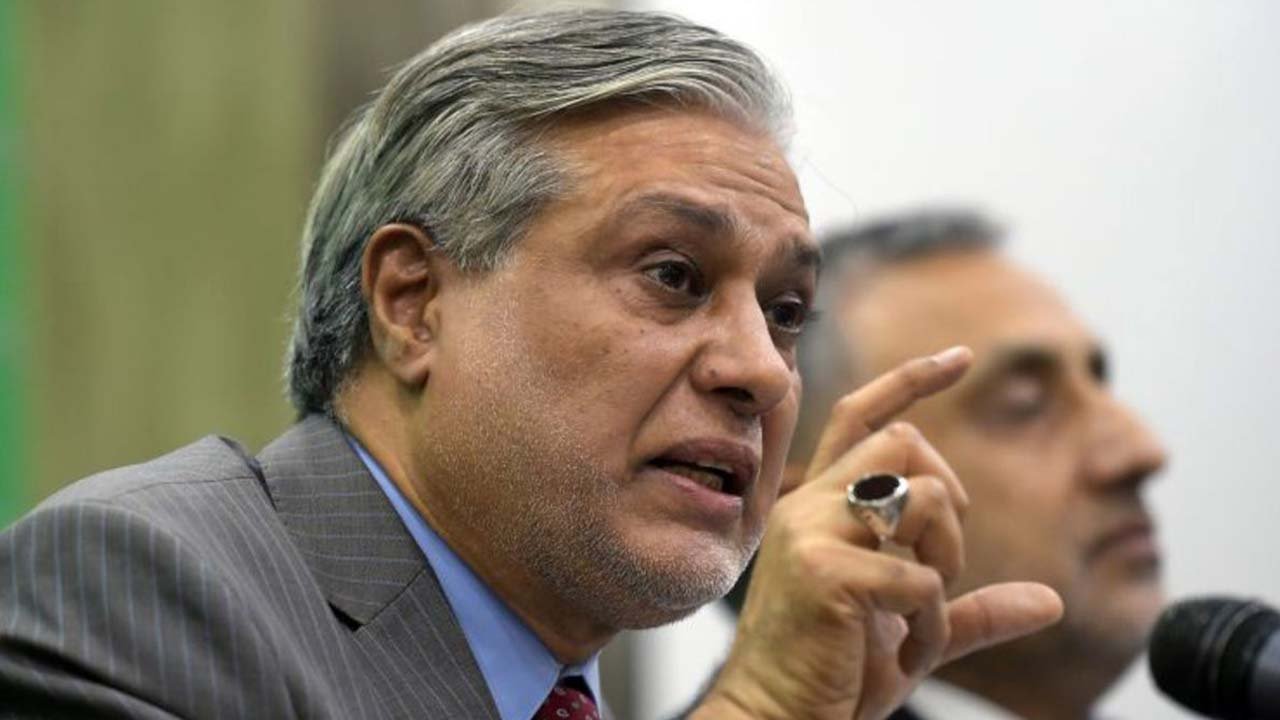
    On Thursday, Finance Minister Ishaq Dar announced that the assurance of funding from “friendly countries” was the final obstacle to securing an IMF deal that would provide critical support to Pakistan’s struggling economy and prevent an economic crisis.

    During a session of the country’s upper house of parliament, Dar revealed that several countries had previously made commitments to support Pakistan during IMF reviews, and the IMF was now requesting that these commitments be fulfilled.

    The delay in securing the deal, which involves a $1.1 billion bailout package from the IMF, has been ongoing since November due to issues surrounding fiscal policy adjustments. The package is part of a larger $6.5 billion bailout approved by the IMF in 2019, which is crucial for Pakistan to avoid defaulting on external payment obligations.

    The deal would also allow Pakistan to access other financing avenues to bolster its foreign exchange reserves, which currently only cover four weeks’ worth of imports.

    The IMF has asked Pakistan to secure assurance of up to $7 billion to cover this year’s balance of payments gap, while Dar believes that $5 billion would suffice.

    An IMF mission has been present in Islamabad since February to negotiate a set of policy measures for Pakistan’s struggling economy, ahead of the annual budget due in June.

    Prime Minister Shehbaz Sharif stated that all of the IMF’s conditions had been met, and expressed hope that a staff level agreement would be reached soon.

  • PM Shehbaz expresses concern over IMF conditions burdening people

    PM Shehbaz expresses concern over IMF conditions burdening people

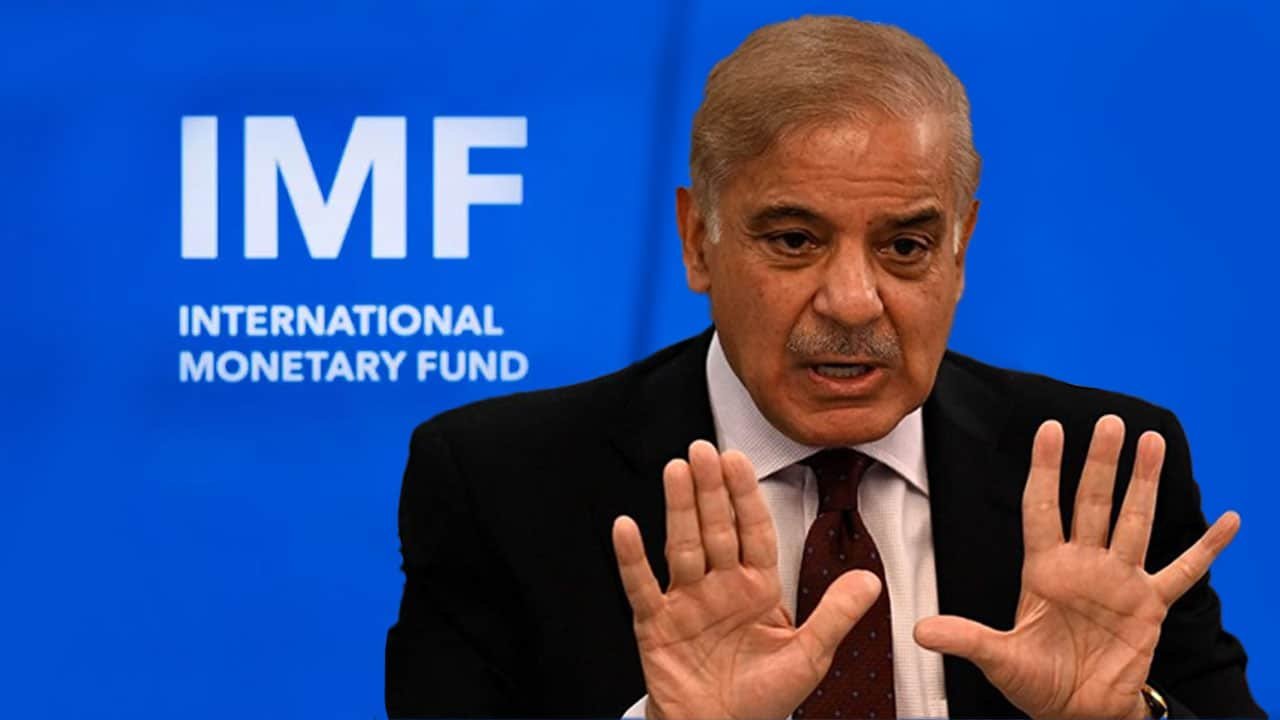
    The Prime Minister, Shehbaz Sharif, has shown worry that the terms set by the International Monetary Fund (IMF) will result in an increased burden on the citizens.

    During an appearance on the Geo News program Capital Talk, the Prime Minister attributed the stringent conditions to the previous government, alleging that they had breached their commitments to the IMF.

    Consequently, the IMF is insisting that Pakistan fulfills all of the conditions regardless of the cost, according to the Prime Minister. He acknowledged that many people in Pakistan are having trouble putting food on the table, purchasing medication, and paying for their children’s education.

    The Prime Minister claimed that former Prime Minister Imran Khan almost defaulted on Pakistan and damaged the country’s relations with numerous friendly countries. However, he stated that his government had provided relief to underprivileged individuals through the Benazir Income Support Program.

    He further stated that inflation was caused by the increased cost of imported goods as commodity prices rose due to the Russia-Ukraine conflict. In Pakistan, inflation is expected to reach its highest level in nearly 50 years.

    Additionally, Pakistan is struggling to obtain funding from friendly nations, resulting in a delay in the IMF bailout. The IMF Managing Director, Kristalina Georgieva, recently urged Pakistan to increase tax revenues and distribute subsidies only to those who truly require them. She emphasized that the IMF is dedicated to protecting the impoverished people of Pakistan.

  • China’s $700 million loan to boost Pakistan’s foreign exchange reserves

    China’s $700 million loan to boost Pakistan’s foreign exchange reserves

    Pakistan’s Finance Minister Ishaq Dar has announced that the Board of China Development Bank has approved a credit facility of $700 million for Pakistan, and all formalities have been completed.

    This announcement was made through a tweet, and the loan is expected to be received by the State Bank of Pakistan this week, which will help to boost the country’s forex reserves.

    According to Reuters, the credit facility, provided by the state-owned China Development Bank, will increase Pakistan’s forex reserves by about 20 per cent. This comes at a time when the country is in talks with the International Monetary Fund (IMF) to unlock funds from a $6.5 billion bailout. The loan is in addition to other facilities that China has already extended to Pakistan, and a finance ministry official has stated that the money could arrive as early as Thursday.

    China Development Bank did not respond to a faxed request for comment. Currently, China is Pakistan’s largest creditor, and its commercial banks hold approximately 30 per cent of the country’s external debt.