Tag: bailout program

  • IMF meetings schedule excludes Pakistan till June 29 amidst pending 9th review

    IMF meetings schedule excludes Pakistan till June 29 amidst pending 9th review

    In a setback for Pakistan, the International Monetary Fund (IMF) Executive Board has excluded the country from its upcoming meetings, raising concerns about the completion of the 9th review under the Extended Fund Facility (EFF) programme. The IMF’s executive board calendar reveals that Pakistan is not on the agenda for the scheduled meetings until June 29, leaving little time to restart the $6.7 billion bailout programme before the end of the current financial year on June 30, 2023.

    Pakistan is currently facing challenges in securing fresh loans to bridge its $6 billion refinancing gap. Despite the impending expiration of the current programme, the Finance Ministry is still striving to reach an agreement with the IMF. However, the lender has raised concerns about Pakistan’s budget for the fiscal year 2023-24, particularly regarding non-tax revenue and the need to broaden the tax base.

    Last week, the IMF questioned the credibility of Pakistan’s budgetary numbers, which has cast a shadow of doubt over the country’s ability to meet the conditions for the bailout programme. In response, the Ministry of Finance issued a press statement on Friday, attempting to address these concerns. However, the statement failed to dissipate the doubts surrounding Pakistan’s economic situation.

    The IMF and Pakistan may now consider combining the pending ninth review with the tenth review in the new fiscal year. Such a move would likely require Pakistan to implement more stringent tax collection measures in exchange for a larger bailout package.

    The delay in completing the 9th review and the exclusion of Pakistan from the upcoming IMF Executive Board meetings have intensified the challenges faced by the country’s economy. As the June 30 deadline approaches, the Pakistani government and the IMF will need to work diligently to resolve their differences and pave the way for the resumption of the bailout programme.

    Pakistan’s ability to secure the IMF’s support is crucial for stabilising its economy, attracting foreign investments, and addressing the refinancing gap. The outcome of the negotiations and the subsequent decisions taken by both parties will have far-reaching implications for Pakistan’s financial stability and economic growth in the coming months.
  • ‘No need to panic’: PM Shehbaz hopes Pakistan and IMF will sign deal this month

    ‘No need to panic’: PM Shehbaz hopes Pakistan and IMF will sign deal this month

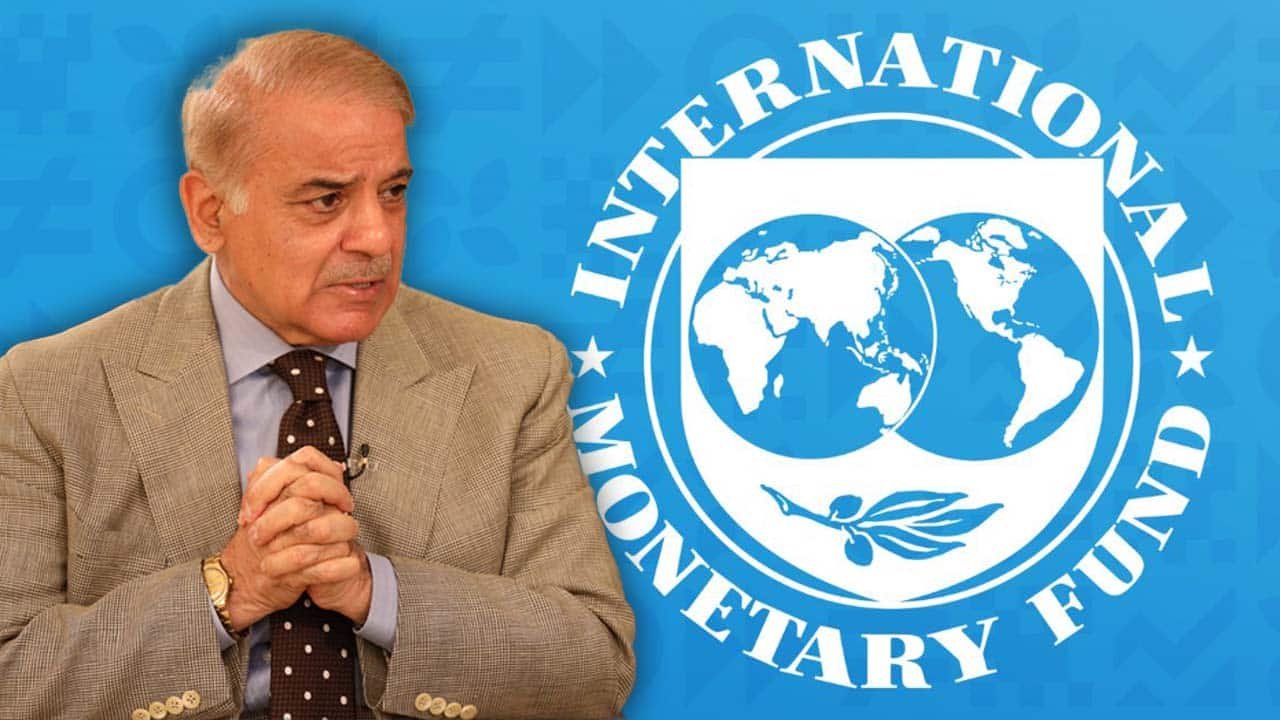
    Prime Minister Shehbaz Sharif reiterated on Sunday that Pakistan has successfully fulfilled all the prerequisites set by the International Monetary Fund (IMF) to revive the halted bailout program. He expressed confidence that no obstacles remain in finalising a staff-level agreement between the nation and the IMF, emphasising that Pakistan is committed to resolving its financial challenges.

    During the inauguration of the Sabzazar Sports Complex in Lahore, Prime Minister Shehbaz hinted at a contingency plan, stating, “If there are further delays in reaching an agreement with the IMF, I will address the situation.” He urged the public not to panic, assuring them that Pakistan will be safeguarded by the divine will of Allah. He expressed hope that the government and the IMF will achieve a staff-level agreement within the current month.

    Highlighting the significance of political stability, the Prime Minister emphasised its crucial role in ensuring economic stability. He pledged to bring about economic prosperity in the country under the leadership of PML-N supremo Nawaz Sharif.

    In strong criticism of the former ruling party, Prime Minister Shehbaz held deposed Prime Minister Imran Khan responsible for the events of May 9 and vowed to bring all those involved in the violent protests and attacks on civil and military installations to justice.

  • Minister of State for Finance and Revenue criticises IMF for interfering in Pakistan’s internal affairs

    Minister of State for Finance and Revenue criticises IMF for interfering in Pakistan’s internal affairs

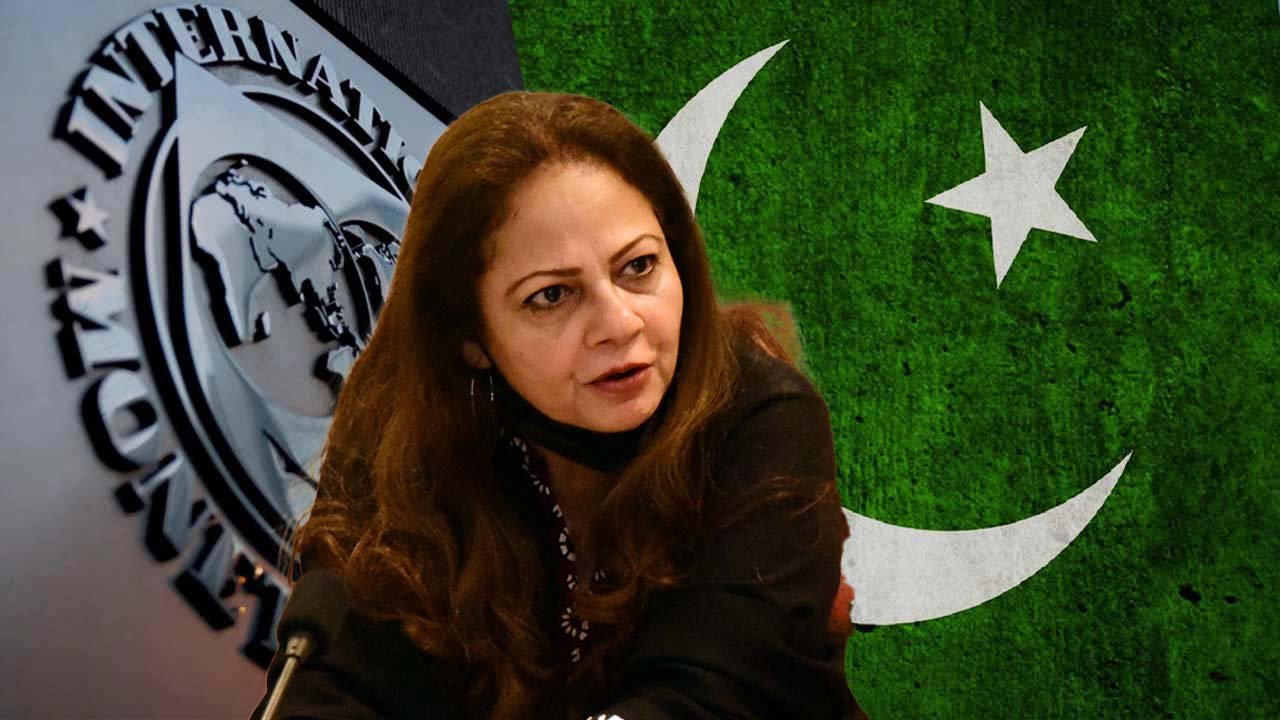
    In a strong rebuke to the International Monetary Fund (IMF), State Minister for Finance and Revenue Aisha Ghaus Pasha criticised the international lender for what she called “intervening” in Pakistan’s internal affairs.

    Speaking on Wednesday, the state minister asserted that Pakistan’s actions were within the boundaries of the law, dismissing the statement made by IMF Mission Chief for Pakistan, Nathan Porter, as “extraordinary.”

    While the IMF typically refrains from commenting on domestic politics, Porter had expressed the hope that Pakistan would find a peaceful way forward in line with the Constitution and the rule of law. The state minister expressed her dissatisfaction with the IMF’s involvement in Pakistan’s political situation, emphasising that the delay in reaching a staff-level agreement was detrimental to both Pakistan and the Fund.

    Dr Pasha confirmed reports that Prime Minister Shehbaz Sharif had reached out to IMF Managing Director Kristalina Georgieva. In their conversation, the prime minister assured the IMF chief that Pakistan would fulfill all its obligations.

    On May 27, Prime Minister Shehbaz had contacted Georgieva, requesting her assistance in revitalising the stalled $6.5 billion facility. It is believed that the prime minister urged her intervention to facilitate the completion of the pending ninth review, which would unlock $1.1 billion in financing for the cash-strapped nation.

    Negotiations between the coalition government and the IMF have been ongoing since November to revive Pakistan’s bailout program, with the financing gap being a major hurdle. Approximately $2.7 billion remains to be disbursed from the $6.5 billion program, which is set to expire next month.

    Responding to a question regarding Pakistan’s contingency plan if it fails to convince the IMF before the program’s expiry on June 30, the state minister stated that while there is always a “Plan B,” the Ministry of Finance’s priority is to revive the IMF program.

    With the federal budget announcement scheduled for June 9, both sides are hopeful of reaching a staff-level agreement before then. The successful conclusion of the agreement would provide a much-needed boost to Pakistan’s economy and help address its financial challenges.

    As the negotiations continue, the Pakistani government remains committed to meeting its obligations and finding a way forward to revive the IMF program, while asserting its sovereignty and independence in internal affairs.

  • ‘When will Pakistan meltdown?’ Question shocks Pak minister, might approach China for help

    ‘When will Pakistan meltdown?’ Question shocks Pak minister, might approach China for help

    Pakistan is actively exploring alternative measures to prevent a full-fledged eruption of its balance of payment crisis, as the International Monetary Fund (IMF) continues to prolong the revival of the already-delayed $6.5 billion bailout programme.

    According to The News, Pakistan may have no choice but to turn to China to devise a mechanism for rescuing its ailing economy.

    “Amid the deepening political and economic crisis in the country, the IMF has adopted a wait-and-see policy, but this approach cannot be sustained indefinitely,” sources informed the publication. “Either the IMF programme must be revived through the completion of the ninth review, or the programme will be abandoned. We will not share any further data with the IMF until the ninth review is completed,” the sources asserted.

    Multiple reports indicate that Pakistan has already urged the Fund staff to conclude the review, warning that the budgetary framework for 2023-24 will not be shared otherwise.

    Sources recounted an incident where a diplomat from a Western capital questioned a minister about the expected economic meltdown in Pakistan. “This direct question from the dignitary shocked the minister, who assured the visiting diplomat that Pakistan would never default,” the sources narrated.

    It is noteworthy that the diplomatic community has also begun inquiring about “domestic political affairs.”

    Considering these developments, independent economists are now recommending that the government make last-ditch efforts to revive the IMF programme or turn to China for a potential bailout to support the struggling economy.

    Renowned economist Dr Hafiz A Pasha, a former finance minister, expressed that if the IMF fails to make progress, Pakistan would have no alternative but to request China’s assistance in devising a mechanism to avert a full-fledged crisis. He suggested utilizing the Asian Infrastructure Investment Bank (AIIB) as a potential instrument to aid Islamabad in navigating the balance of payment crisis, acknowledging that it falls outside the AIIB’s mandate but emphasizing the need for an institution to assume the role of an Asian IMF.

    When approached, Dr Khaqan Najeeb, a former finance ministry adviser, acknowledged the efforts taken by the country to achieve macro stabilization and pave the way for the completion of the ninth review. However, he pointed out the IMF’s cautious stance due to Pakistan’s weak State Bank reserves, which currently stand at just $4.38 billion, and the precarious balance of payment position. The IMF is taking extra care to ensure that financing needs are more than adequately met, despite efforts by authorities to convince the lender in this regard.

    Dr Najeeb also highlighted the relaxation of imports, with the IMF keen for Pakistan to build reserves and ease administrative restrictions. Notably, Pakistan’s imports in April (year-on-year) have been halved to $2.9 billion, as reported by the Pakistan Bureau of Statistics.

    “The advisable solution is for the IMF to show consideration, as a staff-level agreement can facilitate commercial and multilateral inflows,” Najeeb commented, adding that Pakistani authorities could do more to ensure a robust financing plan.

    He concluded that if an agreement is not reached, the country would have to persist with heightened import restrictions, a constrained economy, and borrowing and rollovers from friendly countries wherever possible. “This is not Pakistan’s preferred option to sustain a thriving economy,” he emphasised.

  • US expresses confidence in Pakistan’s economic policies and offers support for bilateral relations

    US expresses confidence in Pakistan’s economic policies and offers support for bilateral relations

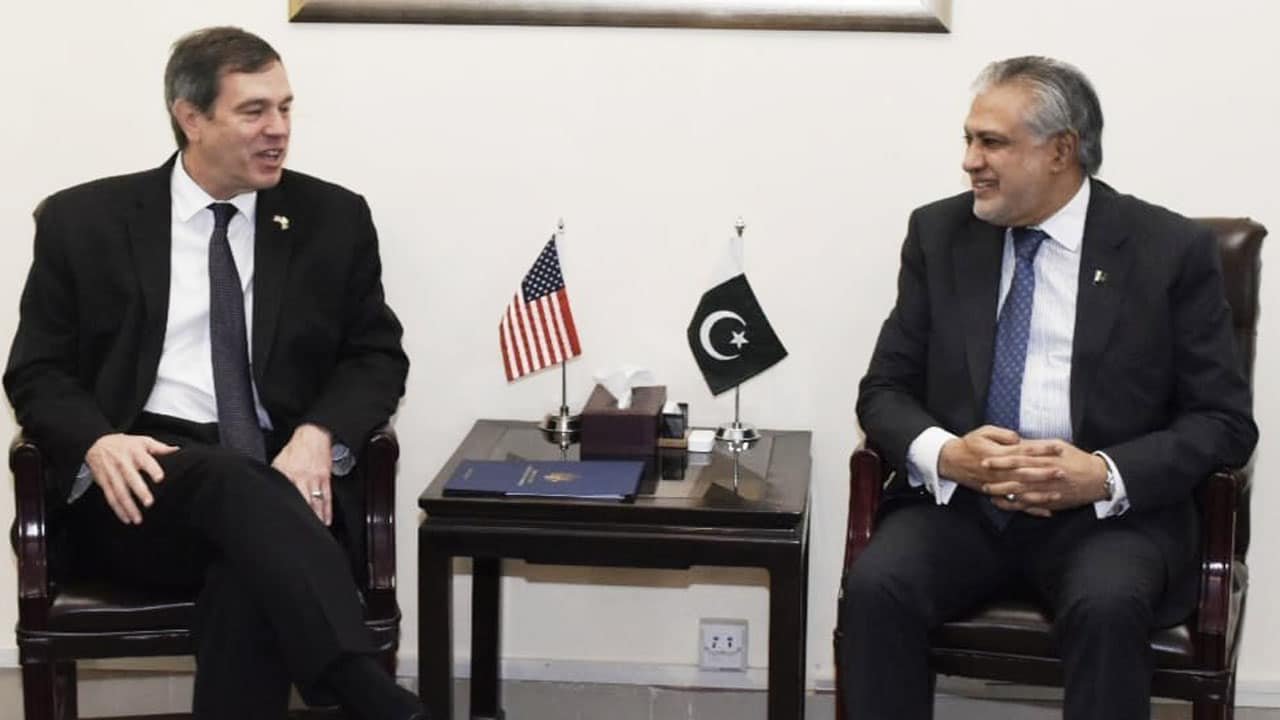
    On Wednesday, Finance Minister Senator Ishaq Dar reaffirmed the federal government’s commitment to the International Monetary Fund (IMF) programme during a meeting with US Embassy Charge’d Affaires Andrew Schofer at the Finance Division.

    Dar informed Schofer about the ongoing programme and assured him that the government was dedicated to completing it. Schofer expressed his confidence in Pakistan’s economic policies and programs and offered his support to strengthen economic and trade relations between the two nations.

    The finance minister also discussed the current economic challenges and policy decisions taken by the government to stabilize and promote sustainable and inclusive growth. Both parties exchanged their views on the notable bilateral relations between the US and Pakistan.

    Dar thanked the US Charge’d Affaires and reiterated the government’s desire to expand bilateral trade and investment ties. The meeting followed a report published by The News that stated the IMF and Pakistani authorities were holding each other responsible for the delay in reviving the stalled programme.

    It is still uncertain how Pakistan will proceed to accomplish the current IMF programme, which expires on June 30, 2023.

  • Proposed cross-fuel subsidy plan fails to impress IMF, causing delays in bailout program

    Proposed cross-fuel subsidy plan fails to impress IMF, causing delays in bailout program

    In a bid to fulfil promises made to the International Monetary Fund (IMF), the Ministry of Finance is prepared to strongly oppose a draft summary proposed by the Ministry of Petroleum on the provision of cross-fuel subsidy.

    The proposed subsidy would involve increasing petroleum product prices by Rs75 per litre for all vehicles with engines of 1,000cc or more, in order to subsidize petrol for vehicles of 800cc and motorbikes. The draft summary was circulated among different ministries for comments before the upcoming Economic Coordination Committee meeting.

    An official from the finance ministry stated that the petrol scheme was still at the draft stage, and the ministry was preparing its comments and consulting with the IMF. The official recalled that a similar scheme had been proposed during the Pakistan Tehreek-e-Insaf (PTI) government but could not be implemented.

    Former finance minister Miftah Ismail had also allocated Rs48 billion on account of the Sasta Petrol Scheme in the last budget, but these resources were diverted towards flood-affected areas. The official added that such a scheme could not be implemented transparently in Pakistan, and the ministry would send its official comments soon.

    In March, Prime Minister Shehbaz Sharif announced the government’s plans for fuel pricing. While economists warned the decision could hinder a crucial IMF payout needed to prevent economic collapse, the government said that it was a scheme, not a subsidy.

    The IMF officials were quick to share that the Pakistani government did not consult the global lender on its petrol subsidy for low-income groups before the announcement. The Fund has asked the Pakistani authorities to provide more details about the petrol relief package causing more delay in the signing of the staff-level agreement.

    Pakistan has been trying to convince the Washington-based lender to release the next tranche of the bailout programme since the IMF funding stalled in November, hit by snags over fiscal policy adjustments after officials of the lender visited Islamabad in February for talks. They formed part of a ninth review exercise on a bailout package of $6.5 billion agreed upon in 2019 whose resumption is critical for Pakistan to avoid risking default on external payment obligations.

  • IMF receives assurance of $1 billion from UAE to support Pakistan’s economy

    IMF receives assurance of $1 billion from UAE to support Pakistan’s economy

    In a significant development towards reviving the stalled bailout programme, the authorities in the United Arab Emirates (UAE) have pledged to provide $1 billion in bilateral support to Pakistan, according to Finance Minister Ishaq Dar.

    Dar tweeted, “UAE authorities have confirmed to the IMF for their bilateral support of $1 billion to Pakistan.” He also stated that the State Bank of Pakistan is currently in the process of completing the necessary documentation to receive the deposit from the UAE authorities.

    Pakistan was required to provide assurance that its balance of payments deficit is fully financed for the remaining period of the IMF programme, which has been stalled since November last year. Last month, the IMF’s Director of Strategic Communications, Julie Kozack, emphasised that “timely financial assistance from external partners will be critical to support the authorities’ policy efforts and ensure the successful completion of the review [with Pakistan].” She added, “Ensuring that there is sufficient financing to support the authorities is the paramount priority. A Staff Level Agreement (SLA) will follow once the few remaining points are closed.”

    Earlier this month, Saudi Arabia also pledged to provide a $2 billion loan to Pakistan, according to Pakistan’s Minister of State for Finance Aisha Ghaus Pasha. The country’s economic situation has been further exacerbated by months of political and economic turmoil, crippling floods last year and record inflation. Pakistan has been grappling with a debt crisis and foreign exchange reserves have fallen to less than four weeks of imports.

    In an effort to ease the situation, China has agreed to refinance $2 billion, of which $1.7 billion has already been credited to Pakistan’s central bank. China also rolled over a $2 billion loan last month, providing relief during Pakistan’s acute balance of payments crisis. However, talks with the IMF for a delayed $1.1 billion loan tranche, part of the bailout agreed in 2019, have been ongoing.

  • Donald Blome assures Pakistan of US cooperation on IMF deal

    The US Ambassador to Pakistan, Donald Blome, expressed hope for a deal between Pakistan and the International Monetary Fund (IMF), stating that Washington was prepared to support the country’s efforts to resume its stalled $6.5 billion bailout program.

    Speaking at an event on Tuesday, Blome assured journalists that the IMF bailout package for Islamabad would take its final shape in a couple of days. He added that the United States was ready to cooperate with Pakistan to help address the issue and expressed a willingness to help Islamabad with its ongoing terrorism challenges.

    Blome recently visited important cities in Pakistan to meet with groups from different walks of life and noted that there had been significant progress in diplomatic relations between the two countries.

    Pakistan and the IMF have been in discussions regarding a stalled bailout package since late last year, with the country seeking a $1.1bn tranche to address its worsening balance of payments crisis and to enable friendly affluent capitals to provide assistance to overcome ongoing financial complexities.

    Both sides are engaged in negotiations to reach a mutually agreeable package that would help the cash-strapped nation come out of its ongoing economic turmoil.

    Interestingly, Finance Minister Ishaq Dar had previously stated that Pakistan would strike a staff-level agreement (SLA) with the IMF in a few days, as the government remained committed to completing the loan program signed in 2019.

    However, after failing to convince the lender, Dar had reportedly contacted the US envoy earlier this week to get “lenient treatment” from the Fund, which has been persistent with its demands.