Tag: Bailout programme

  • Will Pakistan secure IMF’s bailout? Decision expected within 48 hours

    Will Pakistan secure IMF’s bailout? Decision expected within 48 hours

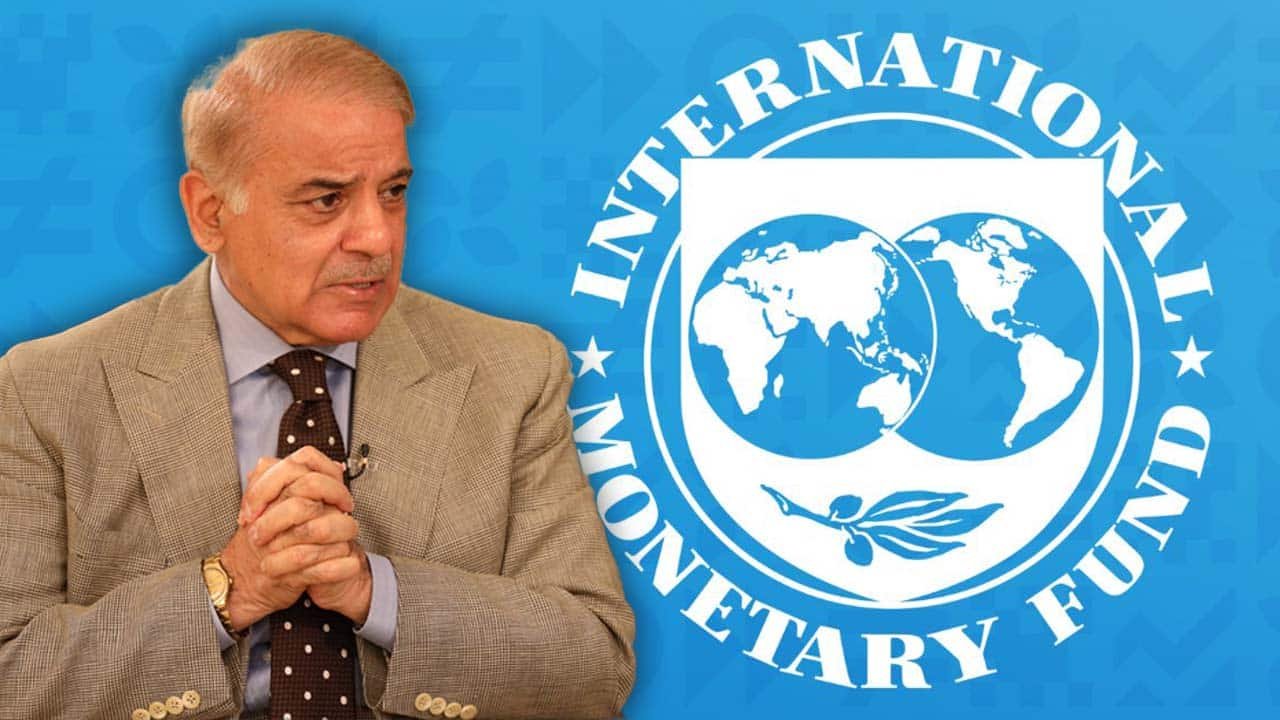
    Prime Minister Shehbaz Sharif engaged in a telephonic conversation with Kristalina Georgieva, the Managing Director of the International Monetary Fund (IMF), on Tuesday.

    During the discussion, Prime Minister Shehbaz Sharif expressed his optimistic outlook, anticipating that a decision regarding the bailout programme would be reached within the next day or two.

    In an official statement issued by the Prime Minister’s Office (PMO), it was highlighted that the premier and IMF MD delved into various matters pertaining to the IMF programme. The statement further indicated that the efforts of the finance minister and his team were duly acknowledged by the IMF MD.

    The statement continued to convey the Prime Minister’s expectation that the coordination efforts on finer details would culminate in an IMF decision in the coming days. Additionally, Shehbaz reiterated his commitment to achieving the shared goal of improving the economic situation through collaborative endeavors.

    Last week, Prime Minister Shehbaz Sharif held a meeting with Georgieva during the Summit for a New Global Financial Pact in Paris, wherein he provided a comprehensive briefing on Pakistan’s economic outlook. The Prime Minister expressed hope that the critical funds would be disbursed as a result.

    Pakistan is currently engaged in a race against time to revive its halted bailout programme, which is set to conclude on June 30. Experts emphasise the significance of resuming the IMF bailout, which has been at a standstill since November of the previous year.

    The cash-strapped South Asian economy is grappling with a balance of payment crisis, making the expected funding of $1.1 billion from the international lender crucial. This funding would also pave the way for additional inflows from Pakistan’s multilateral and bilateral partners, effectively reducing the risks associated with a potential default, as per expert opinion.
  • Pakistan reaffirms commitment to $6.5 billion IMF bailout, dismissing rumors of retraction

    Pakistan reaffirms commitment to $6.5 billion IMF bailout, dismissing rumors of retraction

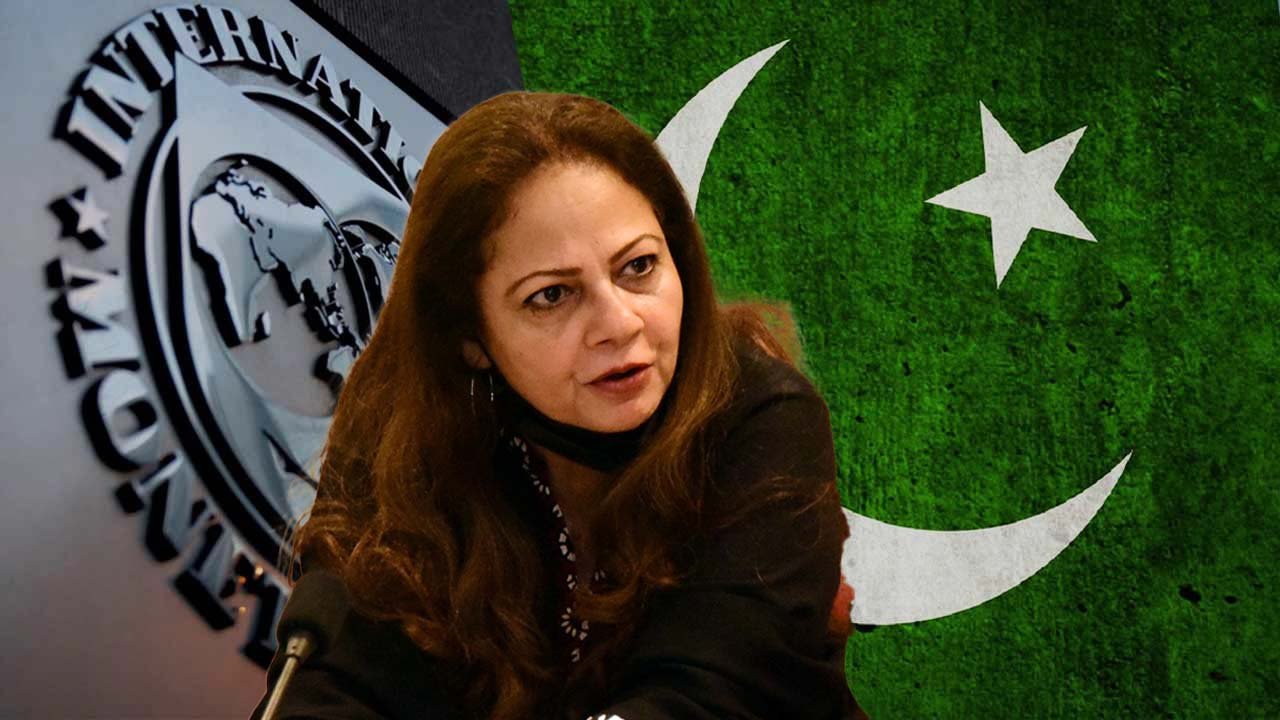
    On Wednesday, Minister of State for Finance and Revenue, Dr Aisha Ghaus Pasha, dismissed rumours of Pakistan retracting from the anticipated $6.5 billion bailout programme with the International Monetary Fund (IMF).

    According to Geo, Pasha clarified that discussions were ongoing between the Federal Board of Revenue (FBR) and the Finance Division, emphasising that Pakistan remained engaged with the IMF. Speculation arose when reports suggested that Pakistan had taken a firm stance against the IMF and refused to share details of the upcoming budget.

    This led to concerns that the financially strained nation was reneging on the deal originally agreed upon by the Imran Khan-led Pakistan Tehreek-e-Insaf (PTI) government.

    Pasha expressed the government’s commitment to continuing the IMF programme, acknowledging the political sacrifices made by the coalition government to meet the Fund’s conditions. Negotiations with the IMF have been aimed at restarting the $6.5 billion bailout programme, which is crucial for Pakistan to avert default.

    During a meeting with journalists after the Senate Standing Committee on Finance, Pasha revealed that the coalition government would present its second budget in the first week of June, marking the second year since assuming power in April. The Finance Bill 2023-24 is scheduled to be presented in the National Assembly on June 9, while the Economic Survey 2022-23 will be released on June 8, according to sources.

    Assuring the public during the briefing, Pasha affirmed that the government would strive to alleviate the burden on the masses amidst these challenging times, as the budget figures were being finalized. However, she cautioned that the situation would remain difficult until the tax-to-GDP ratio reached double digits, emphasizing the necessity of expanding the tax base.

    The state minister disclosed the Ministry of Finance’s plan to transition from indirect taxes to direct taxes, stating that such a shift would reduce the burden on the general population. She reiterated the government’s intention to introduce direct taxes in the upcoming budget for the fiscal year 2023-24, expressing concern over the negative impact of tax concessions on the economy.

    Meanwhile, FBR Chairman Asim Ahmed briefed the committee on the capital value tax, disclosing that the revenue generated from this tax during the current financial year amounted to Rs9 billion.

    Addressing the concerns of senators regarding the implementation of capital valuation tax on domestic and foreign assets, Ahmed clarified that this measure aimed to include the wealthier individuals in the tax net. He also noted that the revenue board was registering new individuals with foreign assets while maintaining records of those already registered.

  • Pakistan’s IMF bailout programme revival delayed: blame game between Pakistani authorities and IMF

    Pakistan’s IMF bailout programme revival delayed: blame game between Pakistani authorities and IMF

    Pakistani authorities and the International Monetary Fund (IMF) are blaming each other for the delay in reviving the IMF bailout programme. The IMF approved a $6.5 billion bailout package for Pakistan in 2019, of which $1.1 billion is still outstanding.

    However, issues related to fiscal policy adjustments have delayed the release of the funds since November. The delay has raised concerns as Pakistan has less than a month’s worth of foreign exchange reserves and needs the IMF package to avert defaulting on external payment obligations.

    With the expiry of the existing IMF programme on June 30, 2023, Pakistan’s options for reviving the IMF programme are shrinking with every passing day.

    While Pakistani authorities argue that the IMF is playing politics, IMF sources say they are still waiting for confirmation on the remaining $2 billion from the World Bank and Asian Infrastructure Investment Bank, as well as seeking commercial loans from banks.

    According to Geo, Dr Khaqan Najeeb, former adviser Ministry of Finance, has called for short-term measures, such as funding from friendly countries, the revival of the IMF programme, clarity on programme completion dates, and work on the budget for 2023-24 to be undertaken to avoid Pakistan being near the brink of default.

  • IMF team to visit Pakistan in 2-3 days to finalise ninth review

    IMF team to visit Pakistan in 2-3 days to finalise ninth review

    A delegation from the International Monetary Fund (IMF) will visit Pakistan in two to three days to “undertake and complete” the key ninth review, according to Prime Minister (PM) Shehbaz Sharif.

    PM Shehbaz said that he spoke to IMF Managing Director Kristalina Georgieva and stressed that Pakistan will complete the IMF bailout programme.

    “I told her to ease the terms of the deal because I cannot burden the common man any further. We have imposed taxes on the rich strata of the society. I requested her to send a delegation for the ninth review and she replied that a team will visit Pakistan in 2-3 days.”

    “After inquiring about Pakistan’s relations with China and Saudi Arabia, she also told me that China had urged IMF to support Pakistan,” he said.

    The IMF programme is currently stalled, with experts suggesting that the government is reluctant to implement some of the lender’s conditions over their effect on political capital in a year when elections are scheduled to take place.

    PM Shehbaz said that Pakistan was trying to mend its ties with friendly countries as well. “We should appreciate friendly countries for supporting Pakistan over the past few years but the previous government slapped allegations of corruption on Chinese firms and jeopardised the China-Pakistan Economic Corridor (CPEC).”

    He stated that the former leadership “had angered friendly nations”, adding that the contribution of Saudi Arabia, UAE and China to Pakistan’s economy is priceless.

    Pakistan needs the IMF programme to restart due to its declining rupee, shrinking reserves, and worse macroeconomic indices.

    The State Bank of Pakistan’s (SBP) foreign exchange holdings dropped by another $245 million on Thursday, down to a critically low level of $5.58 billion. Since April 2014, SBP-held reserves have never been this low.

    At the same time, the government has also been unable in obtaining crucial support from allies.

    The challenge has left Pakistani authorities scurrying to set up foreign exchange amid increased concerns over the country’s capacity to pay its debts and fund imports.

    Additionally, there are market rumours that Pakistan could possibly default, but the Pakistani government is still confident that Saudi Arabia would provide essential assistance for the country’s foreign exchange reserves.