Tag: Baloch

  • Should Baloch Civil leaders condemn the Baloch Liberation Army? Attacks leave social media divided

    Should Baloch Civil leaders condemn the Baloch Liberation Army? Attacks leave social media divided

    Update

    Days after the deadly Sunday militant attacks in Balochistan, social media called on Baloch human rights activists to condemn the senseless and horrific violence committed against innocent people on August 26.

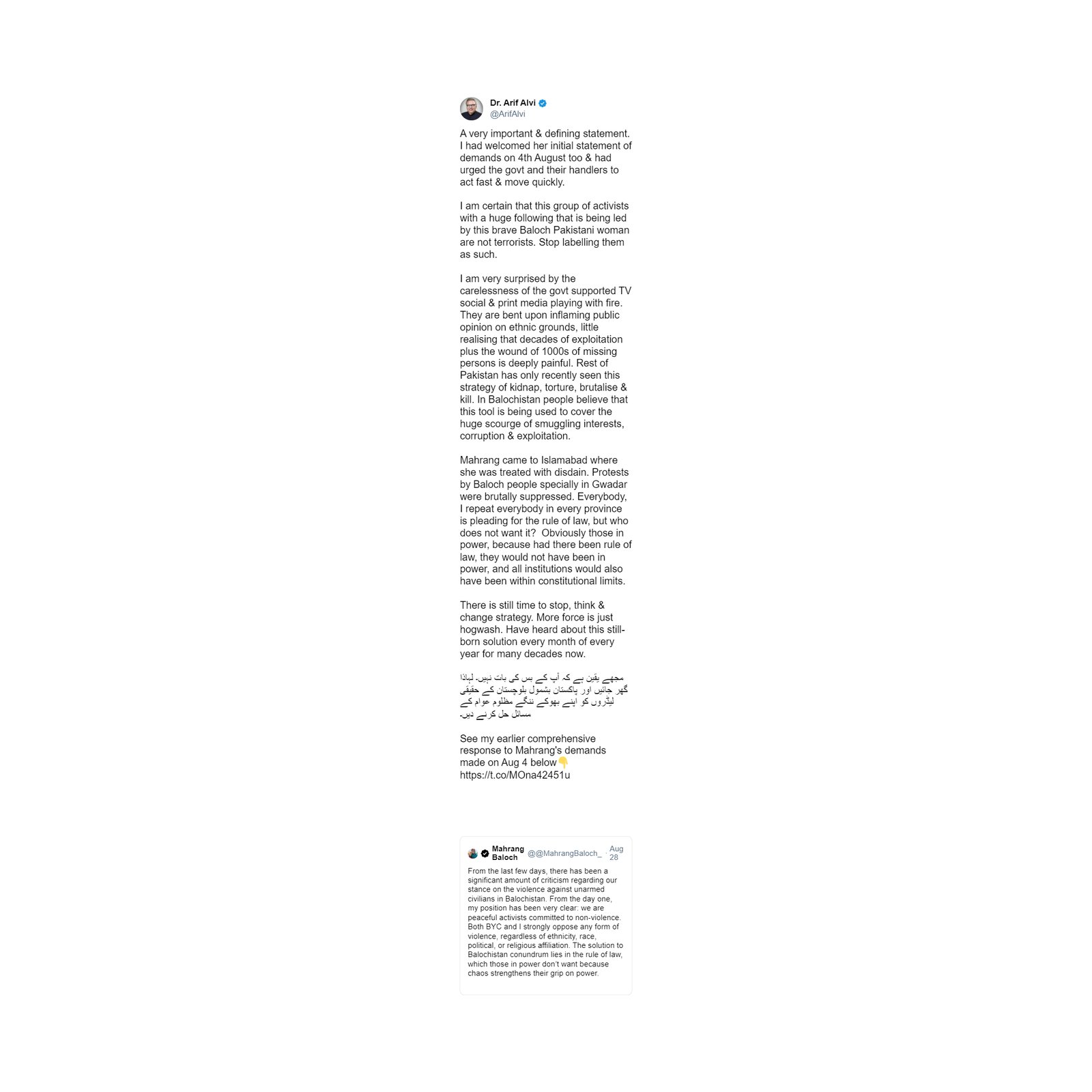
    Mahrang Baloch, the chief organiser of the human rights movement Baloch Yakjehti Committee (BYC), took to social media to announce that she “opposes any form of violence, regardless of ethnicity, race, political, or religious affiliation.”
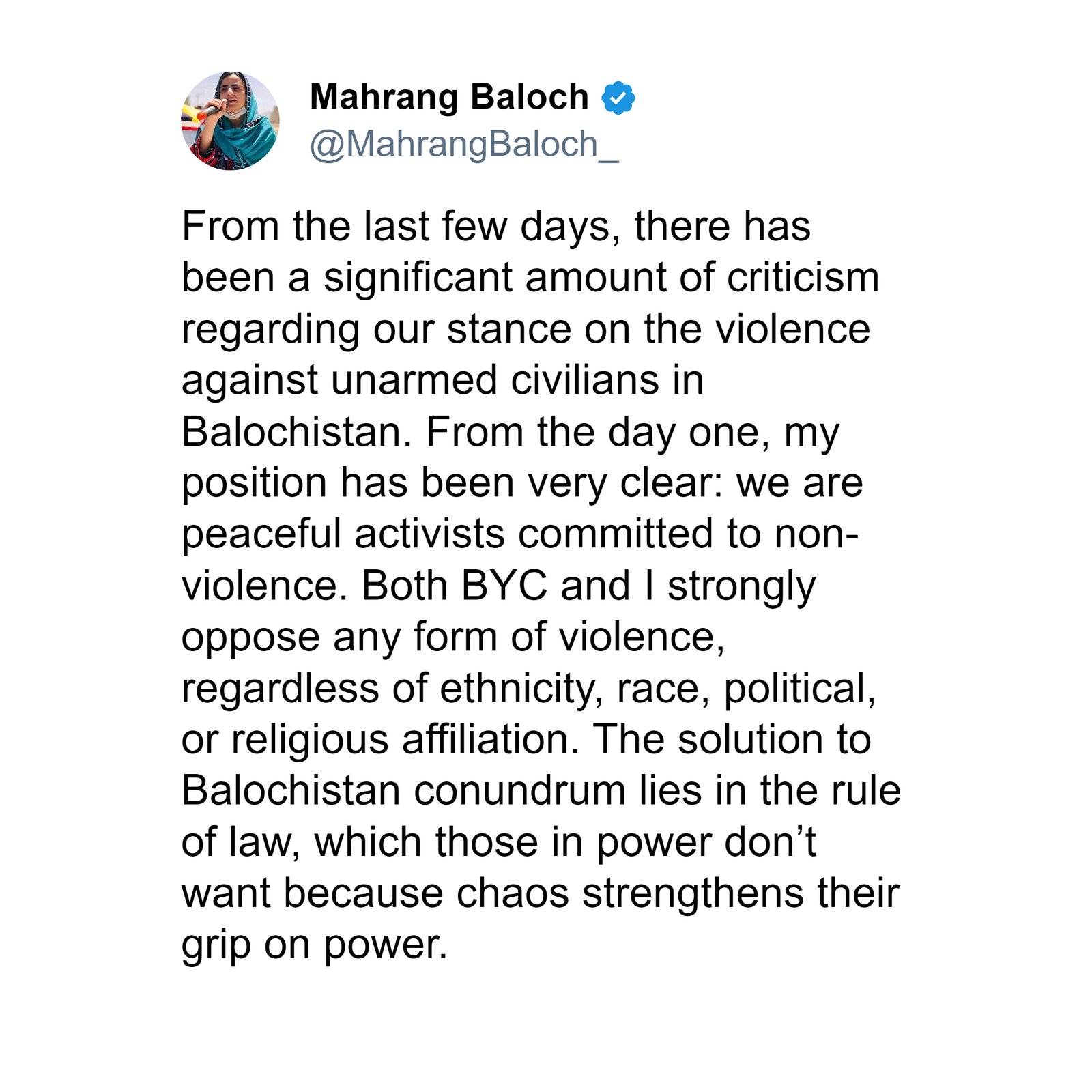
    Social media is divided on Mahrang’s post, with some pointing out that she did not name the Balochistan Liberation Army (BLA), the terrorist group responsible for killing innocent people.
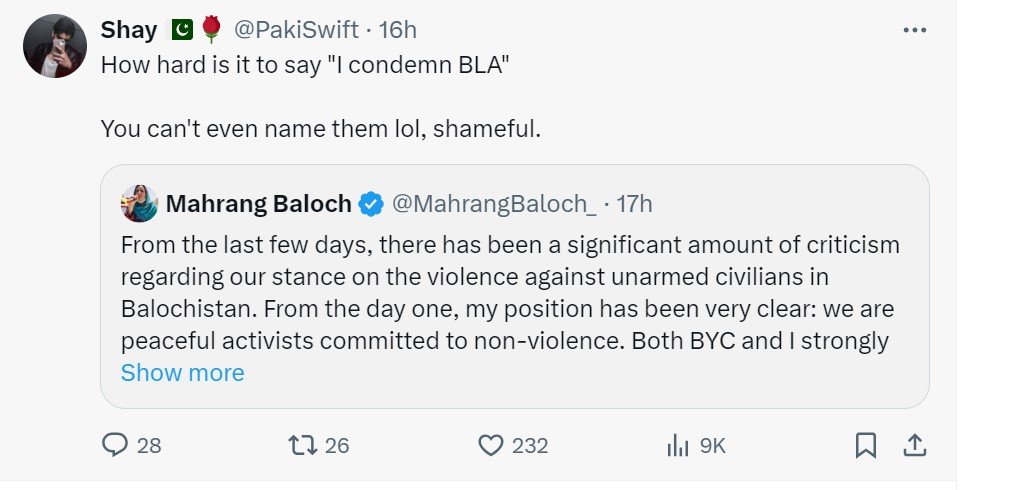
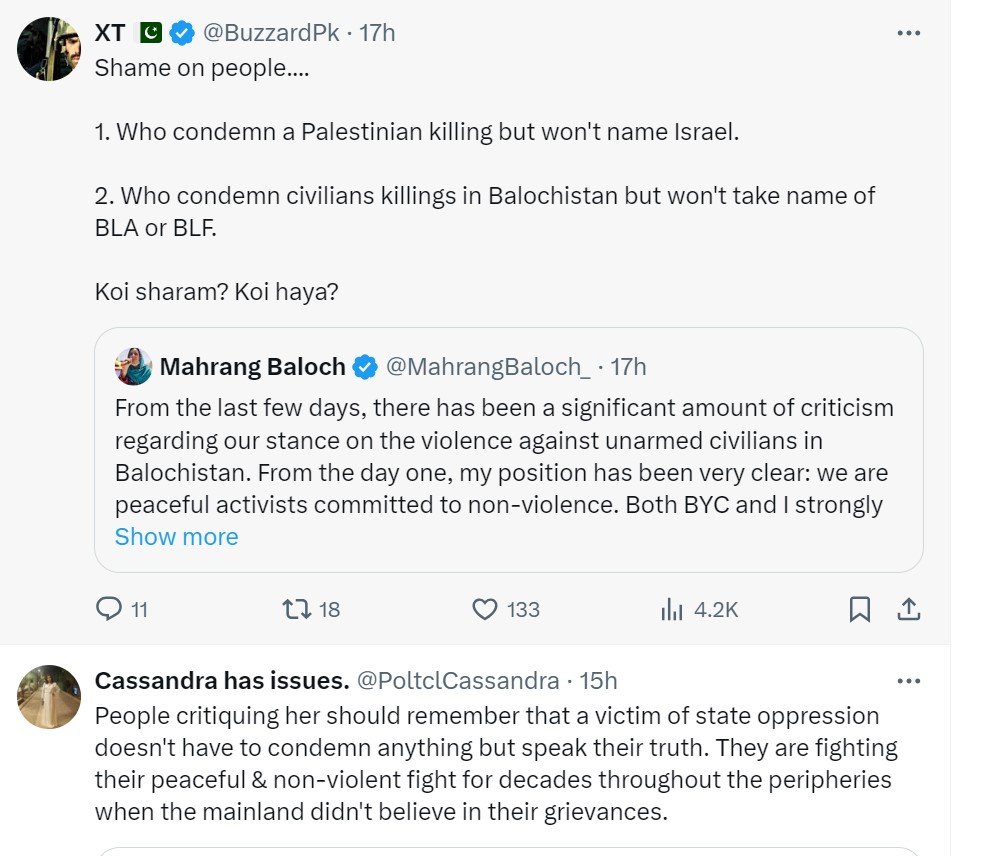
    However, many social media users also applauded her position calling it “brave and extremely responsible.”
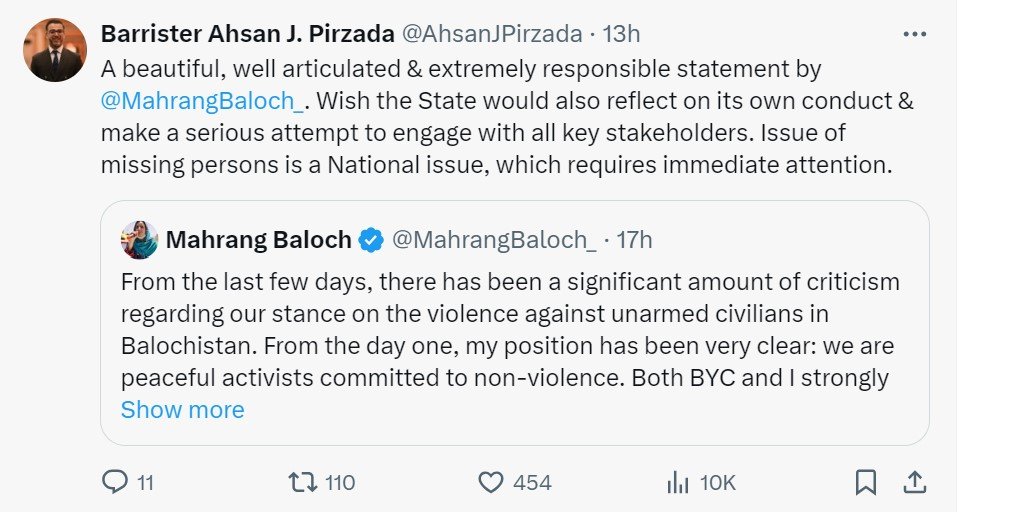
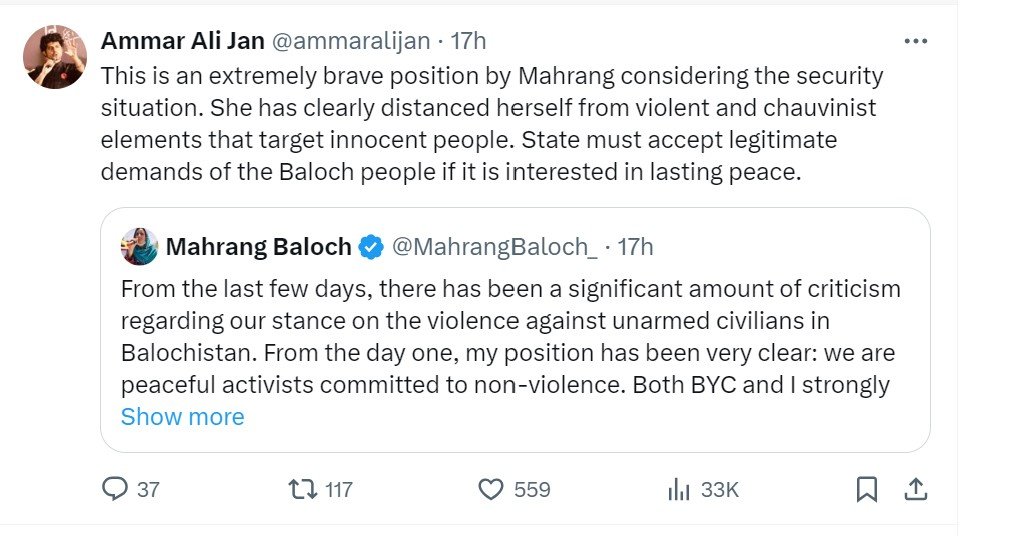
    Interestingly, former President Arif Alvi took to X, formerly Twitter, to write a comprehensive note welcoming Mahrang’s position: “I am certain that this group of activists with a huge following that is being led by this brave Baloch Pakistani woman are not terrorists. Stop labelling them as such.”
    It should be highlighted when Pakistan Tehreek-e-Insaf was in power, then-Prime Minister Imran Khan drew widespread criticism in 2021 when he stated that he wouldn’t be “blackmailed into coming to Quetta” after the Hazara community refused to bury their loved ones killed in a terrorist attack.

    Previous

    As Balochistan reels from a series of coordinated attacks across the province, which left more than 45 civilians and security personnel dead, a debate erupted among netizens on the matter of condemnation.

    Social media wants condemnation of the terrorist organisation Baloch Liberation Army (BLA) from Baloch human rights activists and organisations for the senseless and brutal killing of citizens.

    Many have called out the double standards of followers of Baloch human rights movements as terrorist groups like BLA continue to execute innocent citizens based on their ethnicity.

    At least 23 people, mainly from Punjab, were killed in the Musakhel district of Balochistan early on Monday morning after armed men checked the identities of victims on buses and trucks, shooting them to death.

    Imaan Zainab Mazari, a human rights lawyer, took to X (formerly Twitter) to chastise those demanding condemnation from Baloch rights activists. “Why would their peaceful efforts for human rights be undermined by actions of a group that has nth to do w/ them? This is exactly what the State wants – it wants to continue targeting peaceful dissidents because it clearly cannot (or does not want to) fight grps like BLA.”

    Social media users pointed out that those who lost their lives to terrorism belonged to low-income groups and had left their homes in search of livelihood.

    Senior journalist Abbas Nasir defended Mahrang Baloch – a prominent Baloch human rights activist, writing, “Those demanding Mahrang Baloch condemn yesterday’s bloodletting should first return her father to her and then make the demand by all means. Why should the onus of condemnation be on one woman struggling peacefully for her and her people’s rights.”

    One X user posted an alleged picture of one of the victims, saying, “This is one of the victims. He was there to sell fruits as a lot of people from South Punjab go to these areas to sell fruits, but of course, the privileged aunties who are living outside Pakistan or living in their 2-3 kanal houses in their AC room in DHA would not know about them.”

    Another social media user by the handle @bluemagicboxes said that labourers from Punjab travelling to remote Balochistan is ‘weird’ because it made no sense to leave their own communities with a constant threat to their lives.

    The majority of people criticised this point of view, with one user writing, “Pakistani ‘Punjabi’ labour can’t leave their province for work-often compelled by political and economic realities- but Afghans should be allowed everywhere in the country, and their deportation is cruel. Make it make sense people. We can all see through your bias.”

    Another user pointed out that the majority of labourers killed in Balochsitan were Saraikis, from South Punjab, an area with more poverty than the rest of the province.

    Similarly, one social media user criticised this perspective by writing, “My father, a Kashmiri born in Nowshera and raised in different parts of Punjab, worked in Balochistan for three years. Do you think that his presence from one part of Pakistan to another part of Pakistan was “a little weird”? You aren’t fooling anyone.”

    Muhammad Ismail, the father of prominent human rights activist Gulalai Ismail, took a relatively insensitive perspective on the incident, posting, “Why do these Punjabi barbers go to Balochistan in such large numbers?”

    This tweet was about yet another dreadful incident in May of this year when seven barbers who belonged to Punjab were killed by unknown gunmen in a targeted attack.

    The terrible incidents in Balochistan have struck the social fabric of Pakistani society, fueling divisions based on ethnicity and provincialism.

    The human rights problems, including the missing persons issue, in Balochistan are genuinely concerning and must be addressed by authorities.

    However, militant organisations targeting ordinary citizens after checking their identities deserve collective condemnation.
  • Writer Mohammed Hanif returns Sitara-e-Imtiaz to protest against Baloch persecution

    Writer Mohammed Hanif returns Sitara-e-Imtiaz to protest against Baloch persecution

    A Case of Exploding Mangoes and Red Birds famed writer and journalist Mohammed Hanif has returned the prestigious civilian award, Sitara-e-Imtiaz, in protest against this week’s crackdown on Baloch protestors by Islamabad police.

    In a post on X, Hanif shared the video of a Baloch girl stating her demands and wrote, “In protest, returning my Sitara e Imtiaz, given to me by a state that continues to abduct and torture Baloch citizens.”

    He went on to mention two female Baloch activists Sammi Baloch and Mehrang Baloch, writing that journalists of his generation have seen these young women grow up in protest camps. “Ashamed to witness a new generation being denied basic dignity,” Mohammed Hanif lamented.

    Hanif’s literary genius was recognized by the government of Pakistan back in 2018 when one of the highest national laurels, Sitara-e-Imtiaz, was conferred upon him.

    Along with being a journalist and novelist, Hanif is also a playwright and writes for the BBC.

    His novel A Case of Exploding Mangoes was long-listed for the Booker Prize, shortlisted for the Guardian First Book Award, and won the Commonwealth Prize for Best Book. His second book, Our Lady of Alice Bhatti, won the Wellcome Book Prize.

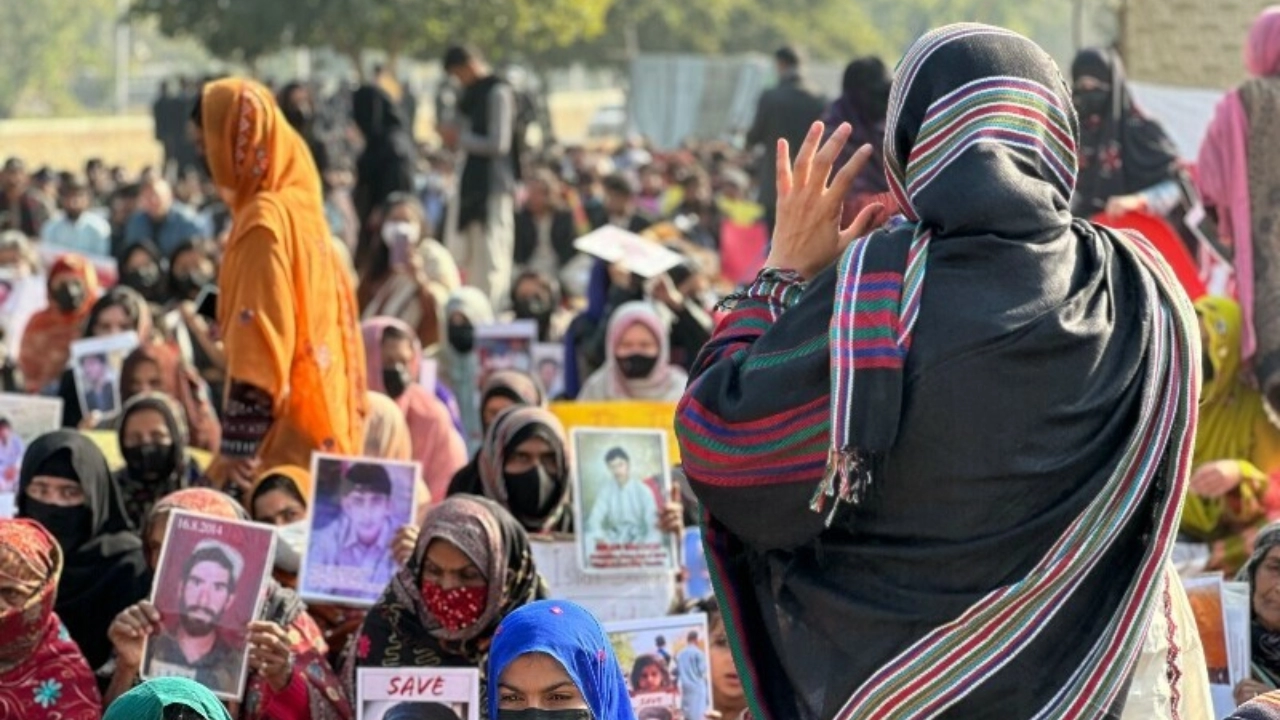
    Baloch protesters are on roads demanding the release of all “missing persons” and an end to “extrajudicial killings” in Balochistan under the leadership of activist Dr Mahrang Baloch and Baloch Yakjehti Committee (BYC).

  • ANP leader Arbab Ghulam Muhammad Kasi found dead in Kuchlak area

    ANP leader Arbab Ghulam Muhammad Kasi found dead in Kuchlak area

    Arbab Ghulam Muhammad Kasi, a senior leader of the Awami National Party (ANP), was found dead on Tuesday in the Kuchlak area of Balochistan.

    The SHO of the new Kuchlak police station has said that the body of the senior leader was found in the village of Sheikh Jamal Atuzai in the Kuchlak area. Official authorities have taken custody of the body.

    According to the initial report, a gunshot wound on the right temple is visible, while a bullet casing was also found at the crime scene.

    Police and other official authorities are still investigating whether the incident was murder or suicide.

    The body of the ANP leader has been transferred to Quetta Civil Hospital for a post-mortem.

  • Professor Kirmani and Amna Baloch arrested during protest outside Karachi Press Club

    Professor Kirmani and Amna Baloch arrested during protest outside Karachi Press Club

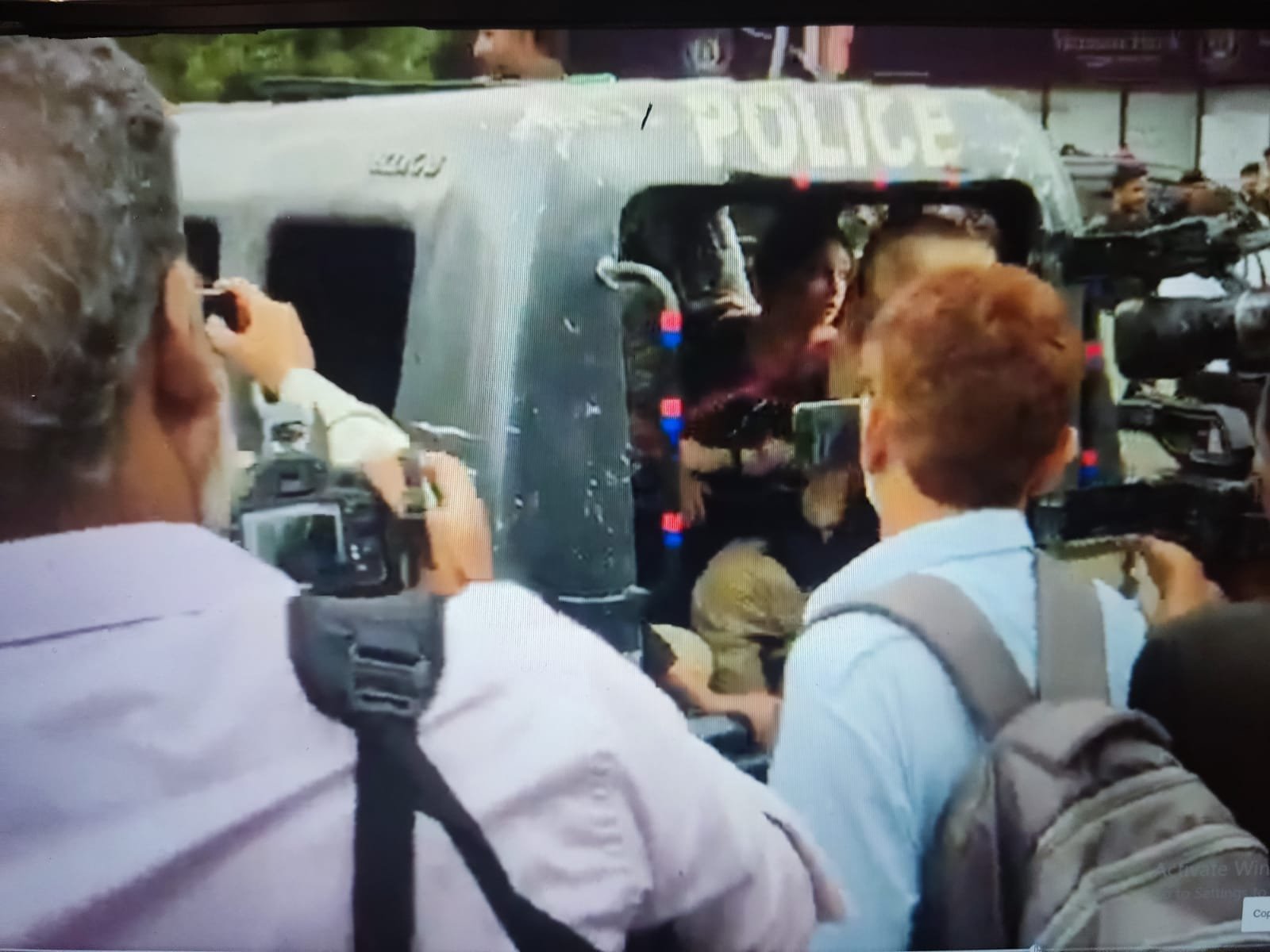
    Visuals of a Professor at LUMS and a feminist activist, Nida Kirmani are being shared online, in which she is being severely manhandled by the Sindh Police.

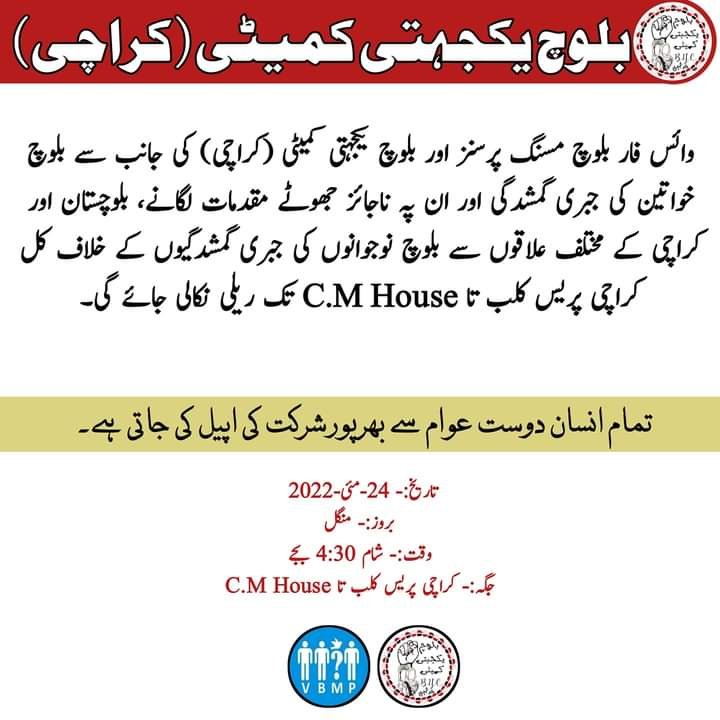
    These visuals are from a protest outside Karachi Press Club, organized at 4:30pm today by the families of Baloch missing persons, where Professor Kirmani and others joined in support. Baloch Yakjehti Committee and Voice For Baloch Missing Persons organized the protest and attendees included activist Baloch Amna Baloch, Zareena Baloch, the wife of still missing Sharif Baloch and others.

    Invitation for the protest on May 24 at 4:30 pm – March from Karachi Press Club to C.M House

    The protesters demanded an explanation of the increased enforced disappearances ever since Pakistan’s first female suicide bombing took place inside the University of Karachi campus on April 26. Since then, several Baloch female students have been abducted in Karachi and Balochistan.

    The police reached ahead of time and since the beginning of the protest, kept the whole area under heavy surveillance, interrogating the press until eventually they arrested a bunch of protesters and took them into custody.

    Murtaza Wahab, Adviser to the Chief Minister Sindh and Aseefa Bhutto Zardari also tweeted in support of the protesters.

    On Tuesday, the Sindh government had imposed Section 144 across the province for at least 20 days. The police action today was taken in justification of keeping up that law. Eventually those arrested were released as well. Journalist Zia ur Rehman spoke to Team Current, and explained the rising unrest in Karachi following the multiple enforced disappearances ever since the University of Karachi suicide bombing.

    Professor Kirmani tweeted a selfie from inside the police station, as those in custody wait to be given their phones back.

    In conversation with activist Sammi Deen Baloch, it was emphasised that when the initial arrests were made only two women were at the venue with some young students. The police also included lady constables who manhandled and dragged the women to the police van. After the arrests were made some protesters including Sammi Deen Baloch stood their ground outside the Karachi Press Club demanding their release. The police took pictures of every one and tried to make some activists sign what Sammi Deen called a “fake statement” which claimed that the police had mistakenly made the arrest but the protesters refused to sign and it was reported that the police’s behaviors softened when they realized that Professor Kirmani was one of the women.