Tag: ban

  • Restaurant bans customers from using smartphones while dining

    A Japanese ramen restaurant has announced that it will not allow customers to use their phones while dining.

    The restaurant’s owner, Kota Kai, put the ban in place last month after observing that patrons who were using their phones to view videos took the longest to begin eating.

    He claims that the thin, millimetre-wide noodles in his restaurant can rapidly turn mushy. According to Kai, even a quick film could cause a discernible impact in the ramen’s flavour.

    “It’s painful for me to see the ramen that I put my soul into making get ruined right before my eyes,” he said.

    Kai stated that he likes to deal with the clients directly as opposed to displaying posters about the phone restriction.

    “When the seats are full and I see people stopping eating while staring at their smartphones, I tell them (to stop),” he added.

  • ‘Modest dress code’: Peshawar university bans wearing jeans on campus

    ‘Modest dress code’: Peshawar university bans wearing jeans on campus

    The Shaheed Benazir Bhutto Women University (SBBWU), Peshawar has introduced a new “modest” dress code for its students by banning them from wearing jeans and tights on the campus.

    The university’s registrar office issued a formal notification in which students have been asked to strictly adhere to the new dress code.

    “Students have to wear knee-length kurtas, shalwars, and white dupattas, which has been made compulsory for them as per the new dress code,” the notification read.

    The university directed students to wear their cards on university premises, warning them that the new code had been introduced after approval from the registrar office and violators would be fined Rs1,000.

    In March 2021, the Kohat University of Science and Technology (KUST) also introduced a dress code, asking girl students to wear abaya.

    In a notification issued on March 9, the KUST administration directed its male students to either wear white shalwar kameez or grey dress pants with black shoes.

    Female students had been asked to wear white shalwar with any kameez of full sleeves, scarf, dupata, chaddar, black abaya and black shoes. In the winters, they had to wear black sweaters, coats or plain jackets with black abayas.

  • LHC suspends PEMRA order banning Imran Khan’s speeches

    LHC suspends PEMRA order banning Imran Khan’s speeches

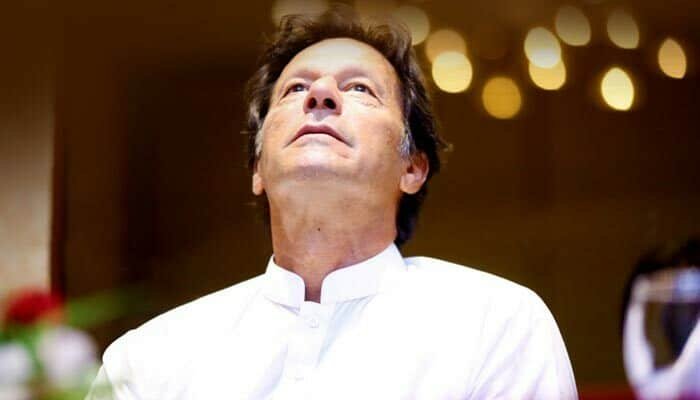
    The Lahore High Court (LHC) has suspended an order of the Pakistan Electronic Media Regulatory Authority (PEMRA) which banned the broadcast of Pakistan Tehreek-e-Insaf Chairman Imran Khan’s speeches on TV.

    Justice Shams Mehmood Mirza announced the suspension of the order in a verdict he had reserved earlier today.

    Khan’s lawyer informed the court that an earlier ban imposed by PEMRA was also suspended by the Islamabad High Court (IHC).

    The ban was imposed after Khan lashed out at former army chief General (retired) Qamar Javed Bajwa for what he called “protecting incumbent rulers in their corruption cases”.

    PEMRA again bans IK’s speeches on TV after he lashed out at Bajwa

    On March 6, PEMRA imposed a ban on the broadcast of speeches, talks or public addresses of Khan and barred news television channels from airing them.

    It is pertinent to mention that this is the third ban on Khan’s speeches and press talks on all satellite TV channels.

    Meanwhile, the Human Rights Commission of Pakistan (HRCP) condemned PEMRA’s ban and demanded it to be lifted immediately.

    Earlier in the day, the PTI chief dodged arrest as Islamabad Police showed up at his Zaman Park residence in Lahore with a court summons to take him into custody for his persistent absences from Toshakhana court hearings.

    However, when the police reached Khan’s residence, they were met by a large number of PTI workers, who gathered outside his residence on Fawad Chaudhry’s call. 

    The police were informed that the PTI chief was “unavailable”. With PTI workers outnumbering the police contingent, and despite the Islamabad Police chief earlier saying that they won’t go back empty-handed, the arrest could not be made. Eventually, the Islamabad Police left Imran’s residence.

    Later, in the evening Khan addressed its supporters from his Zaman Park residence where he said that there is no security risk, adding that “they” wanted to “remove” him.

    He also said that he was being dragged into courts in fake cases while demanding that he should be allowed to attend the hearing of the Toshakhana case via video link.

    Khan, reportedly also moved Islamabad sessions court seeking cancellation of his non-bailable arrest warrant in the Toshakhana case.

  • Malala Yousafzai: ‘Activism needs to go beyond just working with an NGO’

    Malala Yousafzai: ‘Activism needs to go beyond just working with an NGO’

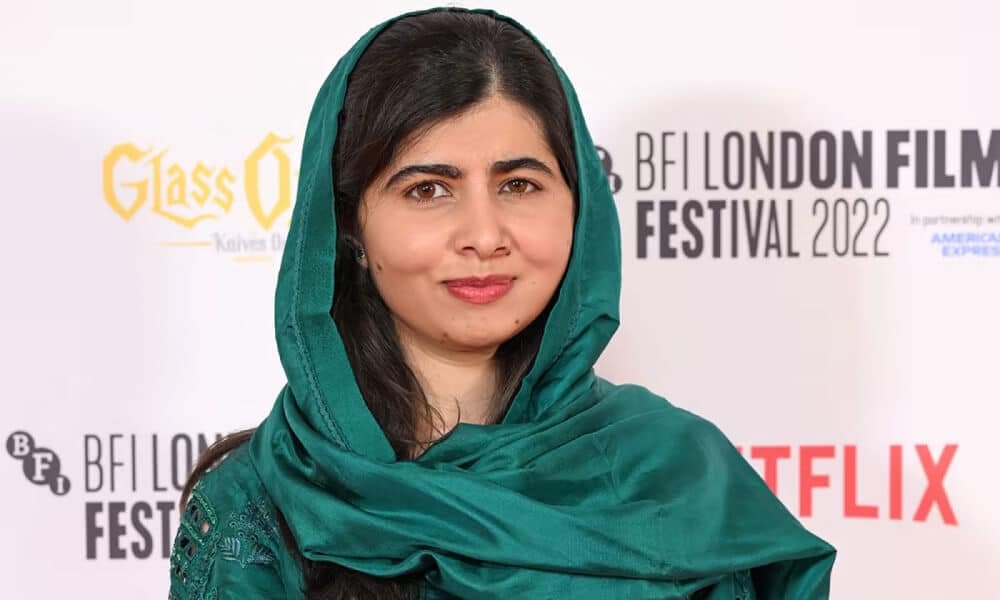
    Social activist and film producer Malala sat down with Joyland screenwriter and director Saim Sadiq for an interview on Sky News, where she spoke about the reason that prompted her to become a producer for the film. The Nobel Prize winner revealed that storytelling was an important part of activism:
    “In my next phase of activism, I have to look at other means of storytelling as well. Activism needs to go beyond just working with an NGO. We need to find other ways in which we challenge the social norms that deny women their basic rights.”

    Yosafzai also reflected on why it was important that the main character of the film, Biba, was played by the trans actress Alina Khan, so that the story could accurately reflect the plights of the trans community.

    “The screen helps us to connect with people and really helps us to be more tolerant with others. I was so grateful that Saim made sure that the trans role is played by a trans woman. This was critical. Everyone’s story is important and it deserves to be told by them. And a trans person should be given the rights that everyone else is given,” she said.

    The Nobel laureate said that it was unfortunate that we don’t want people to talk about issues and don’t want these stories to make it to the screen. “I hope we can challenge that,” she stated.

    The ban on ‘Joyland’ came up in the discussion when director Saim Sadiq reflected back on how the film ‘‘turned out to be a big act of resistance.”
    “I realised when the film was being released, that there are a lot of people who are very uncomfortable with just the existence of this film,” he said.

    “Banning the film is perhaps the fastest way to make activism work and to get everybody to talk about the issues we want them to talk about.”

  • ‘It was misunderstood’: Ranbir Kapoor clarifies statement about Pakistani filmmakers after backlash

    ‘It was misunderstood’: Ranbir Kapoor clarifies statement about Pakistani filmmakers after backlash

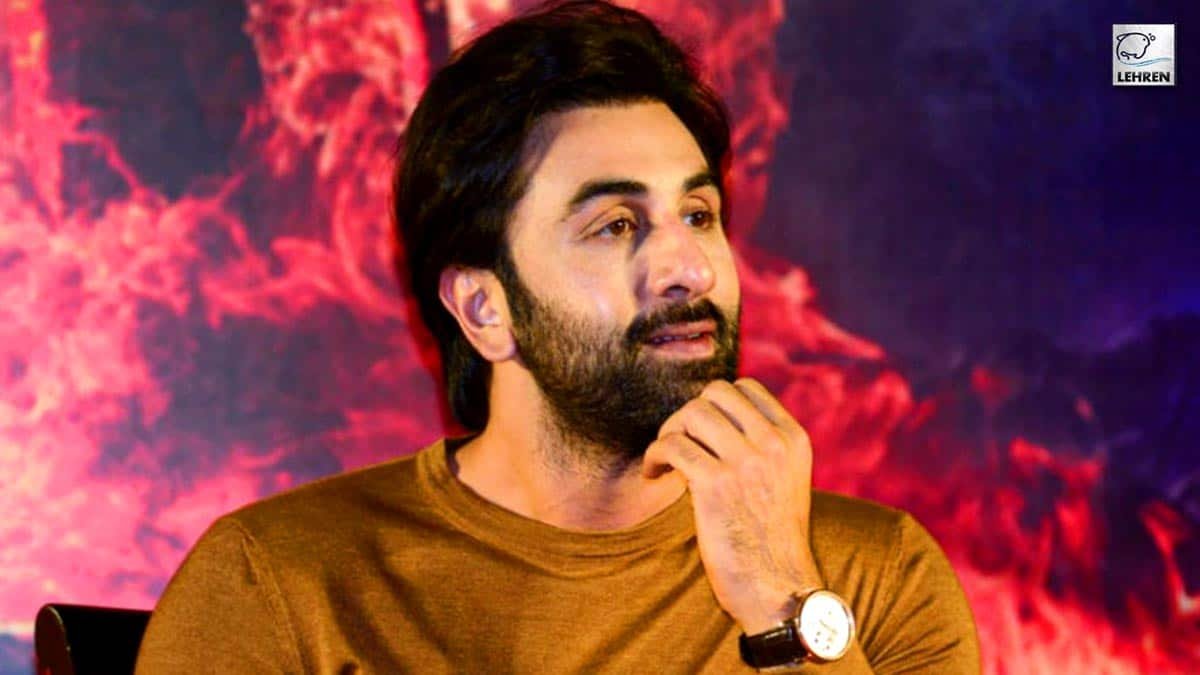
    Bollywood actor Ranbir Kapoor has addressed backlash from Indian fans after he was called ‘unpatriotic’ for saying that he would love to work with Pakistani actors, and that art has no boundaries.
    The incident took place last year at the Red Sea International Festival as shown by Diva Pakistan.

    The Indian Express reports that the ‘Tamasha’ actor addressed the controversy while at a promotion event for his upcoming film ‘Tu Jhooti Mein Makkar’ where he said: I think my statement was misconstrued. I had gone to a film festival and there were a lot of Pakistani filmmakers asking me this question, ‘If you’ve got a good subject would you do it?’ So, I didn’t want it to be controversial in any way.’
    Furthermore, Kapoor said he had previously worked with Pakistani actors like Fawad Khan and didn’t think that art should have any boundaries:
    I don’t think it was such a big controversy. But, for me, films are films, art is art. I have worked with Fawad (Khan) in Ae Dil Hai Mushkil. I have known a lot of artists from Pakistan. Rahat (Fateh Ali Khan) and Atif Aslam are such great singers who used to contribute to Hindi cinema. So, cinema is cinema. I don’t think cinema sees boundaries.”

  • Wikimedia Foundation requests PTA to unblock Wikipedia

    Pakistan Telecommunication Authority (PTA) announced on Friday that it was blocking access to Wikipedia on grounds of refusal to remove sacrilegious content, after restricting the website for 48 hours.
    Now, Wikimedia Foundation has released a statement on their official Twitter account, giving their side of the story.

    “On 1 February, we received a notification from the Pakistan Telecommunication Authority stating “the services of Wikipedia have been degraded for 48 hours” for failure to remove content deemed “unlawful.” As of 3 February, our data shows this has extended into a full block.”

    The Foundation emphasized that the right to access to knowledge was for everyone, and in restricting Wikipedia, PTA was denying a country with the 5th largest population in the world that right. They urged the Pakistani government to remove the block and allow Wikipedia to function freely within Pakistan.

    “We believe that access to knowledge is a human right. A block of @Wikipedia in Pakistan denies the 5th most populous nation in the world access to the largest free knowledge repository. If it continues, it will also deprive everyone access to Pakistan’s history and culture. We hope that the Pakistan government joins us in a commitment to knowledge as a human right and restores access to @Wikipedia and Wikimedia projects promptly, so that the people of Pakistan can continue to receive and share knowledge with the world.”

  • Donald Trump to return to Facebook, Instagram after two-year ban

    Donald Trump to return to Facebook, Instagram after two-year ban

    Donald Trump will be allowed back on to Facebook and Instagram after Meta announced it would be ending its two-year suspension of his social media accounts.

    The ban will end “in the coming weeks,” Meta said. In a statement, Nick Clegg, Meta’s president of global affairs, said the public “should be able to hear what their politicians are saying.”

    The former US president was indefinitely suspended from Facebook and Instagram after the Capitol riots in 2021.

    The social media giant had acted following Trump’s “praise for people engaged in violence at the Capitol,” Clegg said. “The suspension was an extraordinary decision taken in extraordinary circumstances,” he added.

    Clegg said a review had now found that Trump’s accounts no longer represented a serious risk to public safety. However, owing to Trump’s past, he would now face intensified penalties for any offences in the future.

    Meta’s Oversight Board, a body it set up to review moderation rulings, said that the decision to reinstate Trump on its platforms “sat with Meta alone; the board did not have a role in the decision.”

    The board had already informed Meta that a review of Trump’s suspension was necessary.

    It encouraged Meta to be open and to offer more details about new laws protecting public figures so that it could assess how they were being applied.

  • ‘Joyland’ to release in India

    ‘Joyland’ to release in India

    After more than a decade, Joyland is set to become the second Pakistani film to release in theatres across India.

    Speaking to Express Tribune, the ‘Joyland’ team confirmed the report that the Oscar-shortlisted film is set to release in India and other countries as well.
    This news comes on the heels of the cancellation of the Indian release of The Legend of Maula Jatt after the film faced opposition by BJP politicians. Joyland will be the second Pakistani film to release in India, nearly a decade after Shoaib Mansoor’s Bol was released in the country.

    Despite the ban in Punjab and backlash from religous clerics, the film is among the shortlisted films for the ‘Best International Film’ category for the Academy Awards. The final list of nominations will be announced on 24th January, with the final ceremony to be held on 12th March.

    Speaking to CNN, Sadiq said that films like Joyland were important because they provided a realistic depiction of Pakistan:

    “What’s different in Joyland than perhaps all the other Pakistani films is that it is the most realistic depiction of our society without romanticising any aspect of it. It’s not something that people are used to seeing, that is, a reflection of yourself – that can be haunting but also uncomfortable.” 

    The filmmaker added, “For me, seeing a film set in Pakistan about patriarchy and gender roles and the impact of those on human beings was important.”

  • New Zealand passes world’s first tobacco law to prevent future generations from smoking

    New Zealand passes world’s first tobacco law to prevent future generations from smoking

    As part of its attempts to become smoke-free by 2025, New Zealand has passed new regulations. The newest legislation prohibits anyone under the age of 14 from ever being able to legally purchase cigarettes. The decision to ban smoking for the next generation would be a first in the world.

    According to associate health minister Ayesha Verrall, “Thousands of people will live longer, healthier lives and the health system will be $5bn better off from not needing to treat the illnesses caused by smoking, such as numerous types of cancer, heart attacks, strokes, amputations.”

    The laws passed their final reading on Tuesday evening and will come into force in 2023. The number of stores legally allowed to sell cigarettes will be reduced to a tenth of their existing levels – from 6,000 to just 600 countrywide.

    Tobacco will not be sold to anyone who was born on or after January 1, 2009, in New Zealand, which will be the first country in the world to specify the age for smoking that increases every year.

    The amount of nicotine that is legally allowed to be present in tobacco products will be drastically reduced, and instead of being sold in corner stores and supermarkets, they will have to only be sold through specific tobacco stores, according to The Guardian.

    These laws will also be accompanied by a number of other initiatives to make smoking more expensive and less accessible.

  • LHC sends notification to Punjab Govt to submit reply on ‘Joyland’ ban

    In response to a petition challenging a ban on the screening of the movie Joyland in the province, the Lahore High Court on Wednesday sent notices to the Punjab government and the film censor board.

    The petition was filed by the Distribution Club (Pvt.) Limited and film’s co-producer Sana Zahra while advocate Usama Khawar is representing the petition.

    Khawar claimed that both the national and provincial film censor boards had initially given the movie the go-ahead for nationwide release in Pakistan in August 2022.

    He said that the challenged prohibition order was a prime example of a non-speaking order because the respondent provincial government did not apply any thought or reasoning to it, and no justifications were given.

    Justice Muzamil Akhtar Shabbir heard the arguments made by the attorney before sending notifications to the respondent requesting that they submit their responses by December 13.