Tag: ban

  • Punjab: a joy-less land

    Punjab: a joy-less land

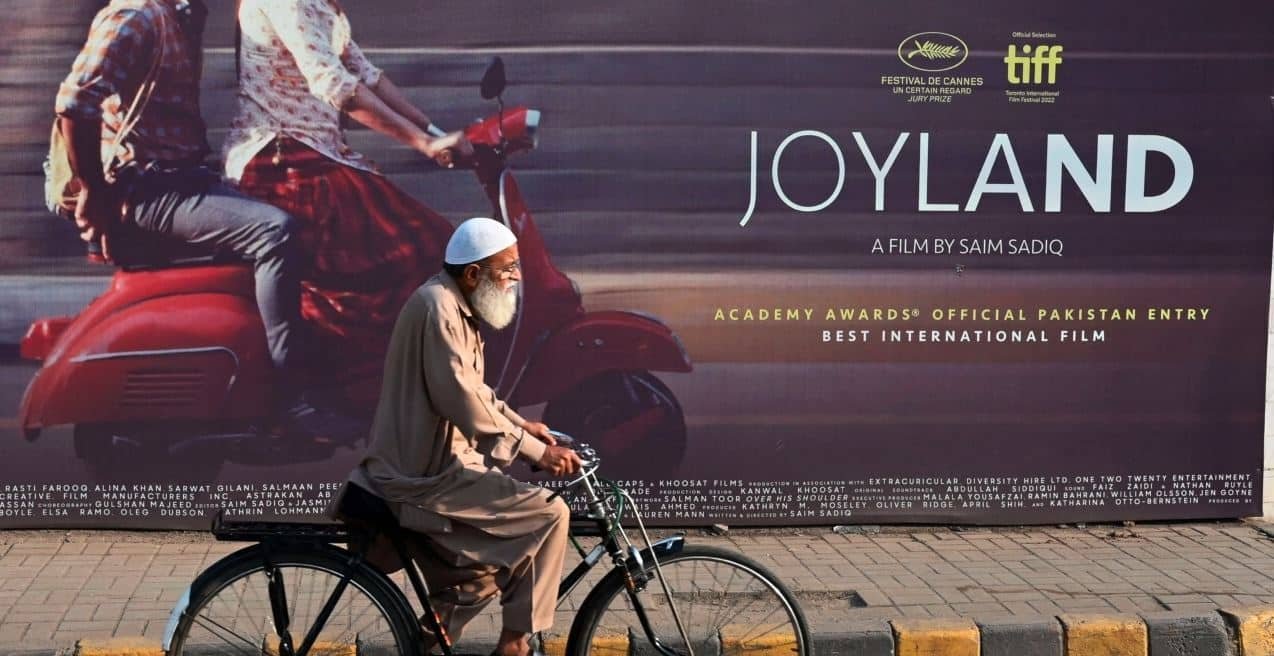
    Under pressure from conservatives, the federal government banned Saim Sadiq’s Joyland a few days before its countrywide release. After severe backlash on social media and mainstream media, the federal government finally reconsidered its decision and lifted the ban on Joyland. Less than 24 hours after the federal government decided to lift the ban, the Punjab government of issued a notice to the film’s producer, Sarmad Khoosat, saying that they cannot exhibit the film in the jurisdiction of Punjab province. Joyland is the country’s official entry for the Oscars, paving the way for Pakistan to make a name at the Academy Awards, with a bright chance to bring the Oscar home.

    So how did a film promising to spread joy, receiving a 10-minute standing ovation from the august audience at the prestigious Cannes Film Festival, ended up getting banned in its own country and the very province it was filmed in, Punjab. Set in the eastern city of Lahore, Joyland tackles issues of gender and sexuality – taboo topics in Pakistan – through the story of a married man who falls in love with a transgender dancer, played by transgender actress Alina Khan. From what we understand, the story is about love, acceptance and tackling issues in relevance to gender. So the problem is basically because of the love between a transgender and a man in the movie.

    Any marginalised community in a country goes through struggles and challenges of its own. From their right to live to their right to freedom, their existence revolves around many obstacles. Pakistan is no different. The transgender community in Pakistan is a marginalised community that on a daily basis is ridiculed, harassed, abused, and given life threats. And this has been a pattern for many years. So the treatment with “Joyland” has been no different.

    The question is: what are we scared of? Does the representation of a marginlised community make us weak as a nation or does it make us stronger? How is upholding the ban in the wake of no real logic correct? How is Joyland a threat to the country’s cultural and social fabric? Pakistani cinema was in need of a moment like Joyland, until the bans which took away the joy from the land where transgenders are only laughed at, mocked, abused and not to forget, killed. It is acceptable to show transgenders being made fun of, but once they are shown as normal persons, living normal lives, it somehow becomes problematic and against social values. Isn’t it hypocritical of us? Joyland was one way people could understand and learn the pain and troubles the trans community goes through. But systems in Pakistan work and behave differently for the ones who are ‘different’. So here we are banning a film on a transgender and barring them an existence in fiction. Now imagine their existence in the real world. What is peculiarly interesting about the public outcry for the ban on “Joyland” is from people who are up in arms against a movie they haven’t seen.

    We as a nation want to see the cinema and film industry thrive — but look at what we do to people who are the reason that art, film and Pakistan can flourish. We are habitual haters of a thriving society. We just hope that Punjab, which has significantly become a “joyless land” learns from the provinces next to it, remembers to laugh, be okay to experiment and above all, becomes a joyland.

  • FIFA World Cup 2022: Female fans banned from wearing revealing clothes, could face jail term in Qatar

    FIFA World Cup 2022: Female fans banned from wearing revealing clothes, could face jail term in Qatar

    The FIFA World Cup 2022 is approaching and fans cannot wait for the first match on November 20 between hosts Qatar and Equador, which will serve as the event’s catalyst. Even though the hosts have received criticism for hosting the competition for a variety of reasons, there is a lot of excitement surrounding the World Cup.

    The major football World Cup is being hosted for the first time by Qatar, but it won’t be the last as several countries in the Middle East are vying to host it following the 2022 edition.

    The number of fans arriving in Doha for the FIFA World Cup 2022 would be staggering since 32 countries will be competing.

    However, there is some unfavourable news for fans, particularly the female ones from the UK, USA, and other nations. The female fans must refrain from donning too-revealing attire. They should be aware of the regulations in Qatar, where wearing revealing clothing is prohibited. Although FIFA’s website states that fans can wear whatever they want, they must respect local laws and cover any exposed body parts.

    The World Cup website states: “People can generally wear their clothing of choice. Visitors are expected to cover their shoulders and knees when visiting public places like museums and other government buildings.” The Sun reported that women travelling in Qatar are banned from wearing tight clothes and flashing their cleavages. It is also important to note that if the fans remove their shirts due to excessive heat, they can be spotted by the special cameras installed in the stadiums. 

    Chief technology officer Niyas Abulrahiman said: “We have high-resolution special cameras to zoom in on a particular seat and clearly see the spectator. It’s being recorded, so that will help us in any post-event investigation.”

    Those who disregard the clothing code are promised severe punishment, and serious violations may even result in jail time, according to The Sun.

    As alcohol importation is prohibited, supporters should refrain from buying duty-free alcohol, according to Daily Mail.

    During the FIFA World Cup 2022, a “sin tax” has been imposed on all alcoholic beverage sales.

    Swearing, public displays of love, and alcohol use outside of fan zones are all punishable by fines and arrests.

  • No Pakistani Rooh Afza in India: Indian High Court bans the product permanently

    No Pakistani Rooh Afza in India: Indian High Court bans the product permanently

    Delhi High Court in India has permanently restricted the e-commerce platform Amazon from adding the Pakistan-manufactured Rooh Afza to its platform and has restricted them from selling any products under the name of ‘Rooh Afza’’.

    The high court in its Wednesday order said, “‘Rooh Afza’ is a product which has been consumed by the Indian public for more than a century now, and its quality standards have to comply with the applicable regulations prescribed by the Food Safety and Standards Act and Legal Metrology Act.” The court wondered how an imported product was being sold on Amazon without complete details about the manufacturer being disclosed.

    “The listings of infringing ‘ROOH AFZA’ products on the website not originating from the Plaintiffs (Hamdard National Foundation) shall be removed within 48 hours,” said the court in its order.

    The order dated September 5 also said that when one clicks on the link ‘Visit the Hamdard Store’, which is provided next to the product listing of Golden Leaf — the seller of imported Rooh Afza on Amazon – the consumer is taken to the webpage of Hamdard Laboratories India.

    “Thus, any consumer or user on the platform is likely to confuse the ‘ROOH AFZA’ product originating from Hamdard Laboratories (Waqf), Pakistan as being connected or originating from the Plaintiffs..,” said the court.

    The court instructed the e-commerce platform to submit an affidavit clarifying whether such details are mentioned on the Rooh Afza product listings, invoices, and product labels.

  • PFA issues warning notices to 28 eateries in Lahore for selling sub-standard food

    PFA issues warning notices to 28 eateries in Lahore for selling sub-standard food

    During a province-wide inspection of food outlets, the Punjab Food Authority (PFA) inspected 1,200 food points, issued improvement warning notices to 28 restaurants, and disposed of a significant amount of unwholesome food.

    Mudassar Riaz Malik, the Director General of the PFA, stated that a PFA team visited a well-known restaurant in Gulberg and found expired food products.

    Various cuisine dishes were being prepared using out-of-date items. According to him, the owner of the food establishment also neglected to provide the raiding team with the required documentation and maintain a clean working environment.

    Similarly, PFA seized 7,000 kg of beef last week that was about three years old.

    The meat was retrieved from a hotel’s cold storage unit and was imported from elsewhere.

    After looking into the matter, the food authority’s directorate general concluded that it is unknown if the stale meat is halal or haram. The meat was taken away and burnt by the authorities after the investigation.

  • Here’s how to use a SIM in a non-PTA approved phone

    Here’s how to use a SIM in a non-PTA approved phone

    Owing to import limitations and costly PTA approval fees, consumers are forced to choose non-PTA mobile phones as smartphone prices have increased dramatically in Pakistan.

    PTA approval for phones was not an idea back then, and Pakistanis could purchase any phone they wanted without any hassles. But now, it’s all different.

    A phone may use any SIM card for two months after it is imported into Pakistan, after which the PTA will disable the device. Due to store owners’ lack of concern for investing additional funds for PTA clearance and their decision to leave it up to customers whether they wish to pay the high cost of PTA approval for using a SIM, Pakistani mobile marketplaces are currently overrun with non-PTA phones.

    People use a different phone to keep their sim active because the sim on these phones stops working after the two-month period. Few individuals are aware that non-PTA phones still support SIM cards.

    Users can purchase a SIM card of a mobile network called SCOM and activate their number.

    For those who don’t know, SCO introduced the first GSM mobile services under the name SCOM in Azad Jammu Kashmir and Gilgit Baltistan in 2004.

    Read more: Latest government jobs in Pakistan

    In over 450 major cities, towns, and villages in Azad Jammu & Kashmir and Gilgit Baltistan, SCOM offers the area’s largest network coverage with an equal footprint in rural and urban terrain, but it may also be utilised across the entire nation.

    However, there is one disadvantage for residents of other parts of Punjab because SCOM SIM is not offered everywhere. There are many people selling SCOM connections online, so you can search OLX or visit SCOM’s official website to order a sim online.

    People purchase non-PTA phones, such as iPhones and other flagship models from Samsung, One Plus, Sony, Xiaomi, and other manufacturers, since PTA-approved phones are now quite expensive. People are forced to carry an additional phone to keep their sim active because the sim on these unapproved phones stops working after the two-month period.

    It is important to keep in mind that although these phones may appear to be less expensive at the time of purchase, adding the PTA approval charge makes them way more expensive.

  • WhatsApp bans 2.4 million Indian accounts due to violations

    WhatsApp bans 2.4 million Indian accounts due to violations

    WhatsApp banned 2.39 million Indian accounts in July, the most this year, according to a monthly report released by the Meta-owned popular instant messaging platform.

    Owing to the Asian country’s tighter IT legislation, huge internet platforms are required to produce compliance reports every month.

    According to Reuters, draft guidelines issued in June recommended establishing a panel to review user appeals and stated that major social media messaging platforms must allow identity of the primary creator of material if ordered to do so by courts.

    1.42 million accounts were “proactively blocked” before any reports from users.

    According to the social media platform, some accounts were blocked based on complaints received through the company’s grievances channel and the techniques and resources it utilises to detect such infractions. WhatsApp received a total of 574 complaints in July.

    The messaging app, which has previously been chastised for spreading false news and hate speech in India and throughout the world, deactivated 2.21 million accounts in India in June.

  • ‘Neutrals ka pressure tha’: Imran Khan blames the establishment for crackdown on PTI

    ‘Neutrals ka pressure tha’: Imran Khan blames the establishment for crackdown on PTI

    Pakistan Tehreek-e- Insaf (PTI) Chairman Imran Khan blamed the ‘neutrals’ for the crackdown against his party.

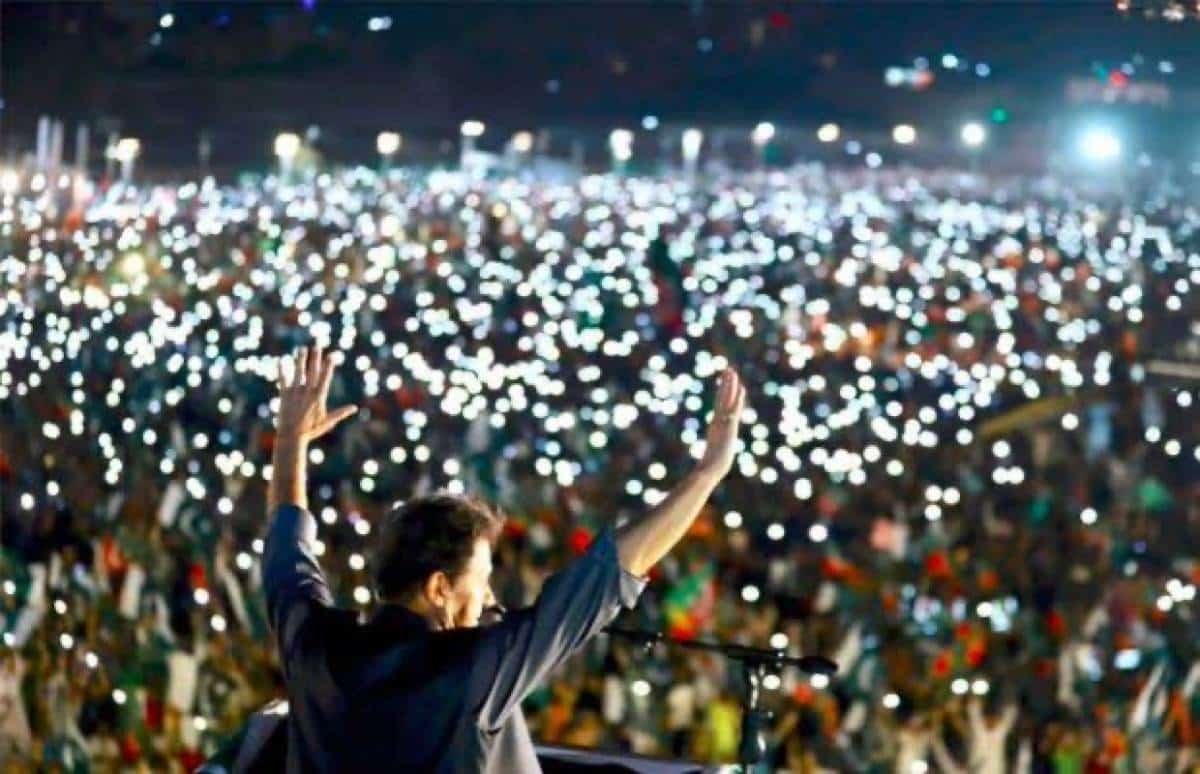
    Addressing a political gathering at Rawalpindi’s Liaquat Bagh on Sunday (August 21), Khan said that according to the reports he had received, the neutrals were responsible for the crackdown against his party.

    “On May 25, when the police used violence against us, I was told by insiders that the police were ordered from above, which means that neutrals pressurised them to give PTI workers a thrashing,” said Khan. 

    “The chief election commissioner is giving every decision against us … [He] is fully trying to disqualify me. I got information from the inside that he [the CEC] was not doing anything on his own but there was pressure of the boot.”

    Khan further accused the authorities of harassing visitors to Bani Gala, his residence in Islamabad, and said the people who came to meet him “received calls from the intelligence agencies” and are asked why did they go there.

    “People who come to visit my home, police outside my house takes off their shoes. Police is not doing all this. They tell us that we have orders from neutrals.”

    “So I ask you, whether you are neutral or not? If you stand with these people [PDM government], will the nation stop thinking of them as thieves? And now that you are standing with them, will they start considering them pious?”

    YouTube blackout

    After Pakistan Electronic Media Regulatory Authority (PEMRA) imposed a ban on the live telecast of speeches of PTI Chairman Imran Khan after he threatened the police, bureaucracy, and Additional District and Sessions Judge (ADSJ) Zeba Chaudhry, YouTube services in parts of the country reportedly faced disruptions during Imran Khan’s speech at Rawalpindi’s Liaquat Bagh.

    NetBlocks, which tracks network disruptions and shutdowns, confirmed reports of YouTube being “briefly” blocked on multiple internet providers during Khan’s speech on Sunday.

    “Real-time network data show the disruption in effect on some but not all mobile and fixed-line internet providers in Pakistan during the live-streamed speech. Access was restored after the speech concluded. The study is taken from a sample size of 100 measurements from 14 vantage points across Pakistan,” a statement issued by the watchdog read.

  • PEMRA imposes ban on live telecast of Imran Khan’s speeches

    PEMRA imposes ban on live telecast of Imran Khan’s speeches

    The Pakistan Electronic Media Regulatory Authority (PEMRA) has imposed a ban with immediate effect on the live telecast of speeches of Pakistan Tehreek-e-Insaf (PTI) Chairman Khan after he threatened the police, bureaucracy, and Additional District and Sessions Judge (ADSJ) Zeba Chaudhry.

    PEMRA issued a six-page notification stating it has been observed that Imran Khan is continuously levelling baseless accusations in his speeches and statements against national institutions and spreading hatred in his speeches.

    According to PEMRA, the ban has been put in place under Section 27 of the PEMRA Ordinance 2002. PEMRA also warned news channels of strict action if the directives were not followed. 

    According to various news reports, the government has lodged a first information report (FIR) against Khan under the Anti-Terrorism Act (ATA) for threatening a judge and two top police officials during his speech yesterday (August 20). 

    Be ready, we will take action against you: Khan

    On August 20, addressing a party rally in the federal capital’s F-9 park to express solidarity with Shahbaz Gill, Khan threatened Additional District and Sessions Judge (ADSJ) Zeba Chaudhry.

    “Zeba! Be ready, we will take action against you.”

    ADSJ Zeba Chaudhry had approved Gill’s two-day physical remand at the request of the capital police.

    Khan threatened that he would “not spare” Islamabad’s inspector-general (IG), deputy inspector general (DIG).

    “IGP and DIG! We will not spare you.” 

    He further said that if a case can be registered against Gill, then Fazlur Rehman, Nawaz Sharif, and Rana Sanaullah will also face judicial proceedings.

    “They [coalition government] are trying to scare us by torturing Gill,” he said, adding that this is a “decisive moment” for the people of the country.

    We did nothing: Police tells Khan

    Khan again called on the “neutrals” (military establishment) to stand with the nation rather than the “gang of thieves”, in reference to the ruling coalition. He said he wanted to ask the neutrals if they were “really neutral”. He also alleged that the Islamabad police was taking orders for action against his party leaders from ‘someone’.

    “When I asked the police to tell me what did they do to Shahbaz Gill’ they said: ‘We did nothing, we got a boot from behind to follow orders’,” Khan said while announcing to move the Supreme Court against the alleged torture of Gill.

  • Govt lifts import ban on luxury goods with heavy duties

    Govt lifts import ban on luxury goods with heavy duties

    On the recommendation of the International Monetary Fund (IMF), the Federal Minister for Finance and Revenue, Miftah Ismail, announced lifting of the ban on the import of luxury and non-essential goods on Thursday. He added, however, that the Regulatory Duties (RDs) would be increased significantly to deter the import of such items.

    “It is requirement of the international community that there should be no ban so we are lifting ban on all products. But simultaneously the duties I am going to impose would not let these commodities to enter into Pakistan as finished goods,” according to Finance Minister.

    According to the minister, RDs would be increased three times, or to the highest degree conceivable, and may potentially increase by up to 400 to 600 per cent or more.

    Keeping in view his duty to offer basic and vital goods to the nation’s citizens, he said that the prime minister was against the importation of luxury goods, according to APP.

    To comply with the IMF, international agreements, and World Trade Organization, he claimed the restriction had been lifted. Although import taxes would be applied on expensive food, clothing, and other items, anyone still wishing to import is free to do so.

    He said that the available resources will be used to give the people of the country grain, wheat, cotton, and edible oil rather than iPhones or fancy cars. He claimed that Pakistan did not have a lot of money to spend on the import of opulent things.

    The finance minister stated in response to a question that the levies on completely built-up (CBU) automobiles, appliances, imported meat and salmon, as well as other luxuries, would increase. He explained that the government’s goal was to limit imports while adhering to the requirements of the International Monetary Fund (IMF) and other international accords, not to promote the import of such goods.

    On the other hand, since the Completely Knocked Down (CKD) kits are not considered luxury items, their import will resume without any caveats. However, its positive impact on the sales figures will be seen after a few months.

    According to the finance minister, Pakistan and the fund have been in lengthy negotiations. The IMF board is due to convene on August 29 and will decide whether to accept Pakistan’s programme because it has already complied with all requirements and performed all necessary preliminary steps.

    He said that friendly nations like Saudi Arabia, Qatar, and the United Arab Emirates helped arrange the $4 billion cash for strengthening the nation’s foreign exchange reserves. China also agreed to roll over $2 billion in loans, and Saudi Arabia agreed to roll over its own assets. According to him, the finance need has been satisfied.

    According to the minister, the requirement for the electricity tariff has also been met, thus there won’t be any non-funding subsidies.

    In addition, he said that the government was expected to get Rs42 billion from retail tax, but when the decision was reversed, the objective was cut to Rs27 billion, and the Rs15 billion shortfall will be filled by increasing the tax on tobacco and cigarettes.

    Moreover, taxes on tobacco and cigarettes will bring in Rs36 billion. Tier-2 cigarettes’ tax will rise from Rs1,850 to Rs2,050 per 1,000 cigarettes, while Tier-1 cigarettes’ tax would rise from Rs5,900 to Rs6,500 per 1,000 cigarettes. The green leaf Cess has also been raised from Rs10 per kg to Rs380.

    According to Bloomberg’s report, the Pakistani Rupee was the best performing currency in the world during August, and the Pakistan Stock Exchange continued to be the top performing stock market in the world, therefore the minister believed that the country’s economy was strengthening.

    The minister stated that the government was implementing a policy of self-reliance in order to stay within its means, reduce the fiscal deficit, and raise imports to a level equal to exports plus remittance in order to control the current account deficit.

  • ITP special squads to take action against tinted windows

    ITP special squads to take action against tinted windows

    Special squads have been formed by the Islamabad Traffic Police (ITP) to deal with motorists in the capital city that have tinted windows or black papers.

    Senior Superintendent of Police (SSP) Traffic, Dr Syed Mustafa Tanveer, stated that the officers’ and Jawans’ efforts had drastically reduced the incidence of fatal accidents. He stated that more similar measures are needed to safeguard the safety of citizens’ lives and to make Islamabad an accident-free city.

    Despite repeated warnings from the ITP, numerous vehicles with tinted windows can be spotted on key roads and highways in the federal capital.

    SSP Tanveer also stated that the ITP intends to implement a zero-tolerance policy in the future since it is a moral responsibility to raise awareness about road safety while enforcing regulations. Similarly, the behaviour of persons on the road reflects societal norms, he continued.

    He was of the view that ITP personnel have had extensive training and have been instructed to treat civilians with compassion, sincerity, and humility. He believed that breaking traffic regulations causes accidents. In an appeal to citizens.

    SSP Traffic stated that the involvement of citizens in ensuring smooth traffic is also very crucial. Obeying road rules can save your life as well as the lives of others; thus, never disobey traffic laws and be responsible and patriotic citizens.