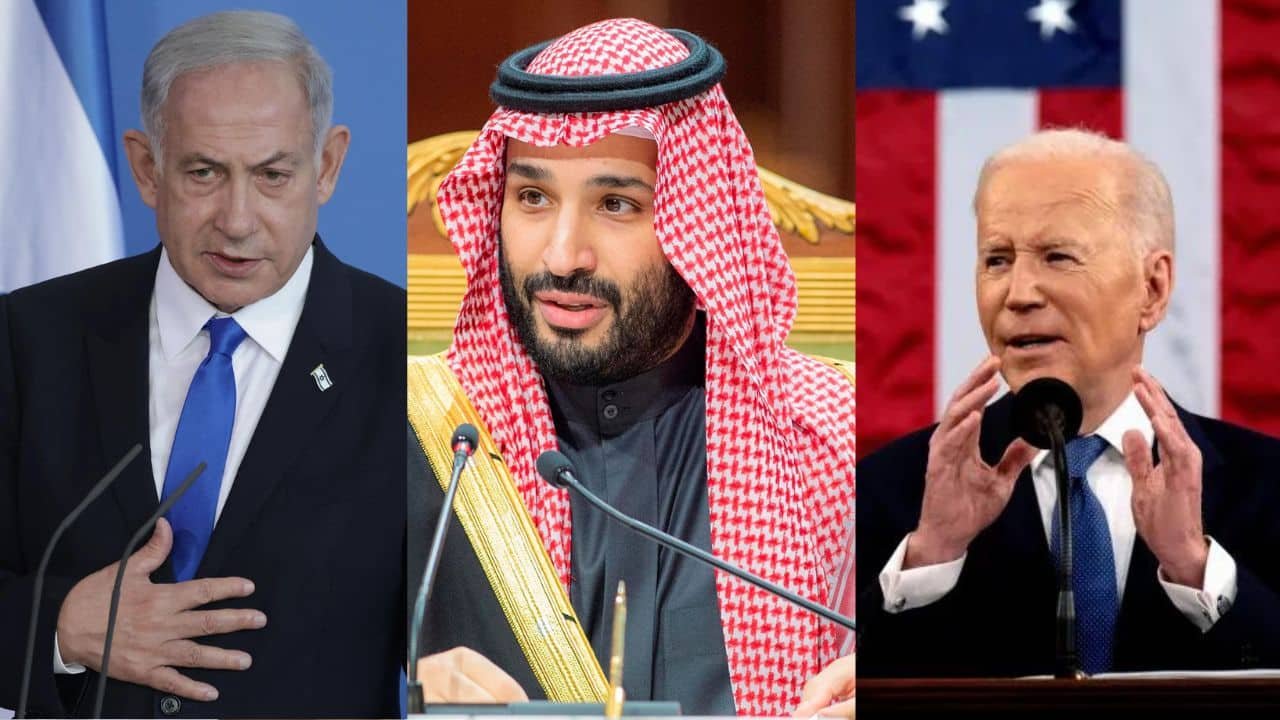
Bangladesh’s former Prime Minister (PM) Shiekh Hasina has accused the US of being involved in the regime change in Bangladesh. According to NDTV, before leaving the country, Hasina wanted to address the nation but couldn’t because protestors stormed her official residence.
Hasina shared details of her undelivered speech with close associates in India. A letter accessed by NDTV reveals, “I resigned so that I did not have to see the procession of dead bodies. They wanted to come to power over the dead bodies of students, but I did not allow it’’. Hasina wrote that she could have remained in power if she had “surrendered the sovereignty of Saint Martin Island and allowed America to hold sway over the Bay of Bengal.”
“I beseech the people of my land, please do not be manipulated by radicals.”
It also further added: “Maybe if I had stayed in the country, more lives would have been lost. I have removed myself. You were my strength and did not want me, so I left. I have lost, but the people of Bangladesh have won, the people for whom my father and my family died’’.
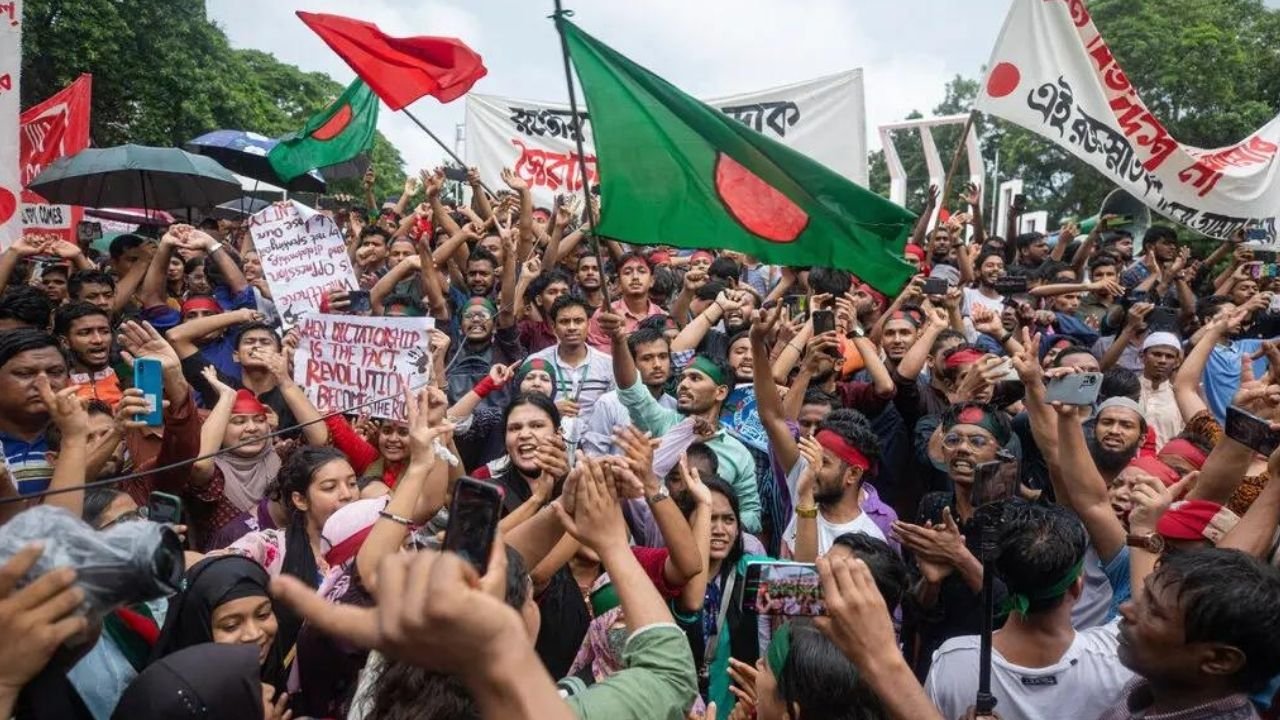
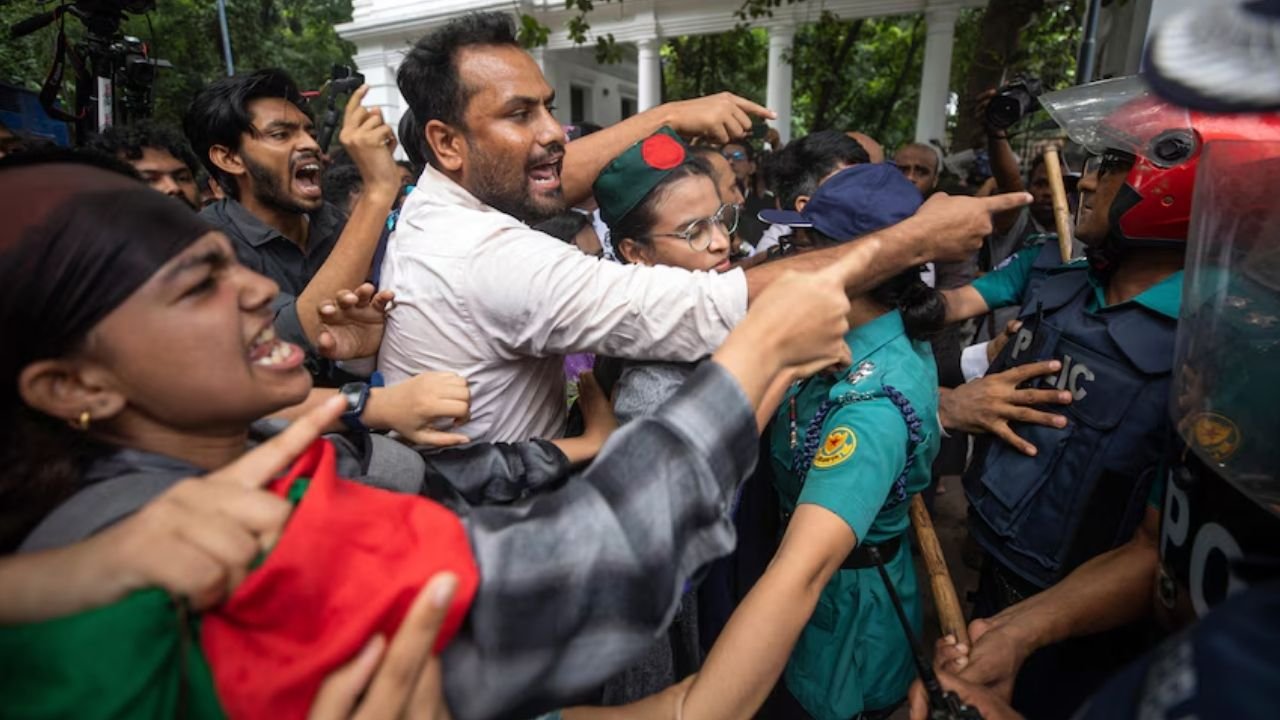
Hundreds of thousands of Bangladeshi protesters demanding Prime Minister Sheikh Hasina resign, clashed with government supporters on Sunday, with dozens killed in one of the deadliest days since demonstrations began.
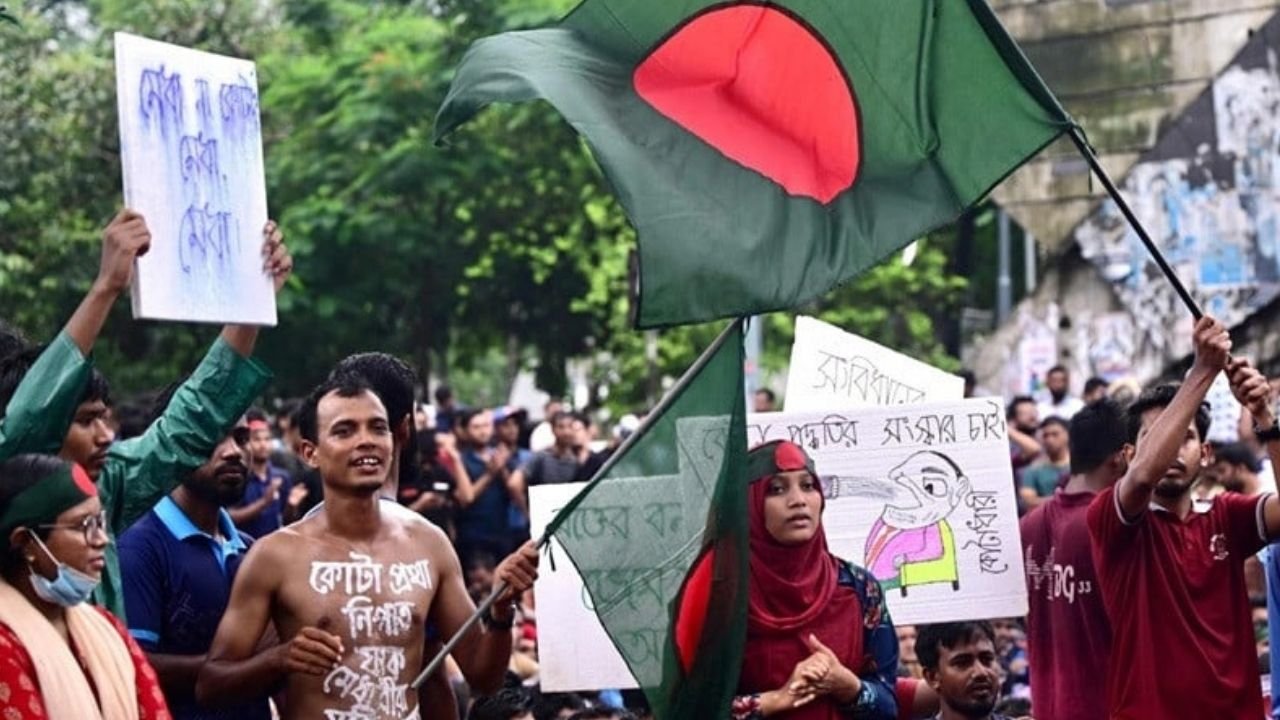
Rallies that began last month against civil service job quotas have escalated into some of the worst unrest of Hasina’s 15-year rule and shifted into wider calls for the 76-year-old to step down.
At least 91 people were killed on Sunday alone, including 14 police officers, with the rival sides battling with sticks and knives and security forces firing rifles, taking the total killed since protests began in July to at least 261.
Police said protesters attacked their officers, including storming a station in the town of Enayetpur.
“The terrorists attacked the police station and killed 11 policemen,” said Bijoy Basak, a deputy inspector general.
AFP journalists reported hearing sustained crackles of gunfire after dark on Sunday, with protesters defying a nationwide curfew.
Mobile internet was tightly restricted.
‘Final protest’
In several cases, soldiers and police did not intervene to stem the protests, unlike the past month of rallies that repeatedly ended in deadly crackdowns.
Demonstrators in the capital Dhaka, surrounded by a tightly packed and cheering crowd, waved a Bangladeshi flag on top of an armoured car as soldiers watched.
Asif Mahmud, one of the main leaders in the civil disobedience campaign, called on supporters to march on Dhaka on Monday. “Prepare bamboo sticks and liberate Bangladesh,” he wrote on Facebook on Sunday. “The time has come for the final protest,” he said.
Brought to justice
Vast crowds of protesters packed into Dhaka’s central Shahbagh Square on Sunday, with street battles in multiple sites.
“There were clashes between students and the ruling party men,” police inspector Al Helal said, adding two young men were killed in Dhaka’s Munshiganj district.
“One of the dead was hacked in his head and another had gunshot injuries.”
Another policeman, who asked not to be identified, said “the whole city has turned into a battleground”.
Two people were killed in the city of Kishioreganj, where protesters torched a ruling party office, police said.
Some former military officers have joined the student movement and ex-army chief Gen Ikbal Karim Bhuiyan turned his Facebook profile picture red in a show of support.
“We call on the incumbent government to withdraw the armed forces from the street immediately,” Bhuiyan told reporters on Sunday alongside other ex-officers, condemning “egregious killings, torture, disappearances and mass arrests”.
“Those who are responsible for pushing people of this country to a state of such an extreme misery will have to be brought to justice,” he said.
No longer about job quotas
Current army chief Waker-uz-Zaman told officers at the military headquarters in Dhaka on Saturday the “Bangladesh Army is the symbol of trust of the people”.
“It always stood by the people and will do so for the sake of people and in any need of the state,” he said, according to a statement, which did not say explicitly whether the army backed the protests.
The demonstrations attracted people from all strata of Bangladeshi society. Rap songs calling for people’s support have spread widely on social media.
“It is no longer about job quotas,” said Sakhawat, a young female protester who gave only one name, and called Hasina a “killer”.
A group of 47 manufacturers in the economically vital garment sector said they stood in “solidarity” with the protesters.
Obaidul Quader, general secretary of the ruling Awami League, has called on party activists to gather “in every district” nationwide to show their support for the government.
The unrest began in July over the reintroduction of the quota scheme, which reserved more than half of all government jobs for certain groups. It has since been scaled back by the country’s top court.
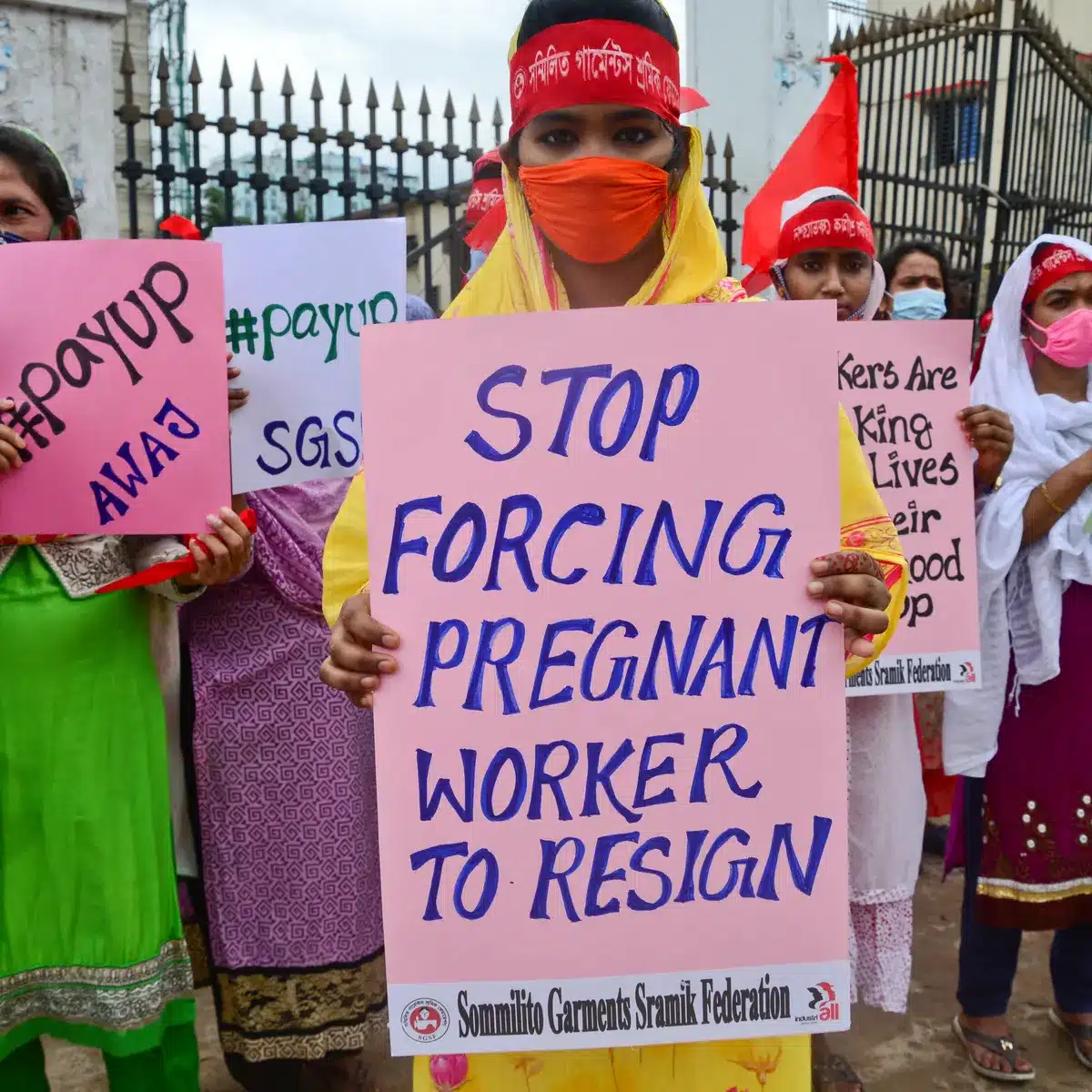
Up to 25,000 garment workers clashed with police in Bangladesh on Thursday, officials said, as protests rejecting a government-offered pay rise forced the closure of at least 100 factories outside Dhaka.
A government-appointed panel raised wages on Tuesday by 56.25 percent for the South Asian nation’s four million garment factory workers, who are seeking a near-tripling of their monthly wage.
Bangladesh’s 3,500 garment factories account for around 85 percent of its $55 billion in annual exports, supplying many of the world’s top brands including Levi’s, Zara and H&M.
But conditions are dire for many of the sector’s four million workers, the vast majority of whom are women whose monthly pay starts at 8,300 taka ($75).
Police said violence broke out in the industrial towns of Gazipur and Ashulia outside the capital after more than 10,000 workers staged protests in factories and along highways to reject the panel’s offer.
“There were 10,000 (protesting) workers at several spots. They threw bricks and stones at our officers and factories, which were open,” Mahmud Naser, Ashulia’s deputy industrial police chief, told AFP.
“One of our officers was injured. We fired rubber bullets and tear gas to disperse the workers,” Naser said.
He said more than 100 factories were shut down in Ashulia and surrounding areas.
Thousands of workers also clashed with the elite Rapid Action Battalion (RAB) and police at Konabari and Naujore in Gazipur, with police using batons and tear gas to drive them into alleys, AFP correspondents at the scene said.
“Some 15,000 workers blocked the road at Konabari, and vandalised vehicles and other properties. We had to disperse them to maintain law and order,” Gazipur municipality administrator Sayed Murad Ali told AFP.
At least two injured workers were taken to hospital, police said.
Intimidation
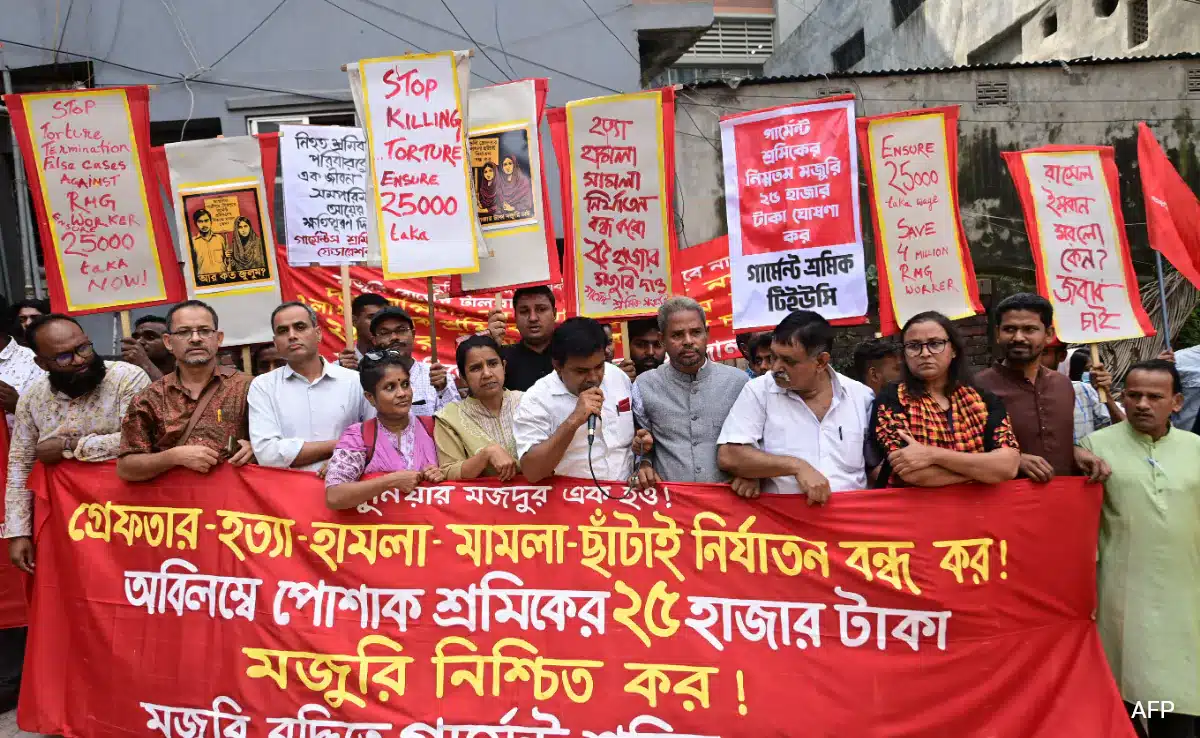
The workers are seeking a wage rise to 23,000 taka and unions representing them have rejected the panel’s increase as “farcical”.
Police say at least three workers have been killed since the wage protests broke out in key industrial towns last week, including a 23-year-old woman shot dead on Wednesday.
At least six police officers have also been injured in the protests.
Unions say the panel’s wage increase fails to match soaring prices of food, house rents and schooling and healthcare costs.
They have also accused the government and police of arresting and intimidating organisers.
“Police arrested Mohammad Jewel Miya, one of the organisers of our unions. A grass-roots leader… was also arrested,” Rashedul Alam Raju, the general secretary of the Bangladesh Independent Garment Workers Federation (BIGWUF), told AFP.
Another union leader, speaking on condition of anonymity, said at least six union leaders had been arrested and unions were being threatened by police to call off the protests and accept the wage offer.
There was no immediate comment from police about the arrests.
The United States has condemned violence against protesting Bangladeshi garment workers and “the criminalisation of legitimate worker and trade union activities”.
In a statement, State Department spokesman Matthew Miller urged the panel “to revisit the minimum wage decision to ensure that it addresses the growing economic pressures faced by workers and their families”.
Thea Lee, the US Department of Labor’s deputy undersecretary for international affairs, called for the release of BIGWUF organiser Miya.
The Netherlands-based Clean Clothes Campaign, a textile workers’ rights group, has also dismissed the new pay level as a “poverty wage”.
The minimum wage is fixed by a state-appointed board that includes representatives from the manufacturers, unions and wage experts.
Bangladesh raised the minimum monthly pay for the country’s four million garment workers by 56.25 percent on Tuesday, a decision immediately rejected by unions seeking a near-tripling of the figure.
The South Asian country’s 3,500 garment factories account for around 85 percent of its $55 billion in annual exports, supplying many of the world’s top fashion names including Levi’s, Zara and H&M.
But conditions are dire for many of the sector’s four million workers, the vast majority of whom are women whose monthly pay starts at 8,300 taka ($75).
Workers have gone on strike to demand a near-tripling of their wages, with violent scenes in recent days, while employers offered 25 percent.
The minimum wage is fixed by a state-appointed board that includes representatives from the manufacturers, unions and wage experts.
“The new minimum monthly wage for garment factory workers has been fixed at 12,500 taka ($113),” Raisha Afroz, the board secretary, told AFP.
The figure was immediately rejected by unions, which have been demanding a 23,000 taka minimum.
Unions say their members have been hard hit by persistent inflation, which in October reached nearly 10 percent, and a cost of living crisis partly triggered by the taka depreciating about 30 percent against the US dollar since early last year.
“This is unacceptable. This is below our expectations,” said Kalpona Akter, head of the Bangladesh Garment and Industrial Workers Federation.
Hundreds of workers staged an angry protest just yards from the labour ministry after the announcement.
“I reject this new monthly minimum wage,” said garment worker Sajal Mia, 21.
“It is an injustice to us. The authorities didn’t take the situation of the market into the account. They’re only concerned about their own interests,” he added.
The panel normally sits every five years and in 2018 raised the basic minimum from 5,000 taka to 8,000. Garment workers also get at least 300 taka per month as an attendance fee.
Earlier Tuesday, police fired tear gas at thousands of workers who set a bus on fire outside Dhaka, as tensions rose ahead of the announcement.
Police said violence broke out in the industrial city of Gazipur as about 6,000 workers walked out of their plants and staged protests.
“They torched a bus. We fired tear gas to disperse them,” Gazipur industrial police unit chief Sarwar Alam told AFP.
Police said around 600 factories that make clothing for many major Western brands were shuttered last week and scores were ransacked as the worst wage protest in a decade hit major industrial areas and a suburb of the capital.
Four factories were torched and at least two workers were killed in the violence, with tens of thousands of workers blocking highways and attacking factories.
There was no comment from top brands who source tens of billions of dollars of clothing from Bangladesh and for whom South Asian factories are a vital part of their supply chains.
But last month brands including Gap, Levi Strauss, Lululemon, and Patagonia wrote to Prime Minister Sheikh Hasina calling for a “successful conclusion” to wage negotiations.
“The consultations should seek to raise the minimum wage to a level that corresponds with a wage level and benefits that are sufficient to cover workers’ basic needs and some discretionary income,” they said.
The protests have coincided with separate violent demonstrations by opposition parties demanding the resignation of Hasina ahead of elections due in January.