Tag: Bangladesh Student protest

  • Ousted Bangladeshi leader becomes diplomatic headache for India

    Ousted Bangladeshi leader becomes diplomatic headache for India

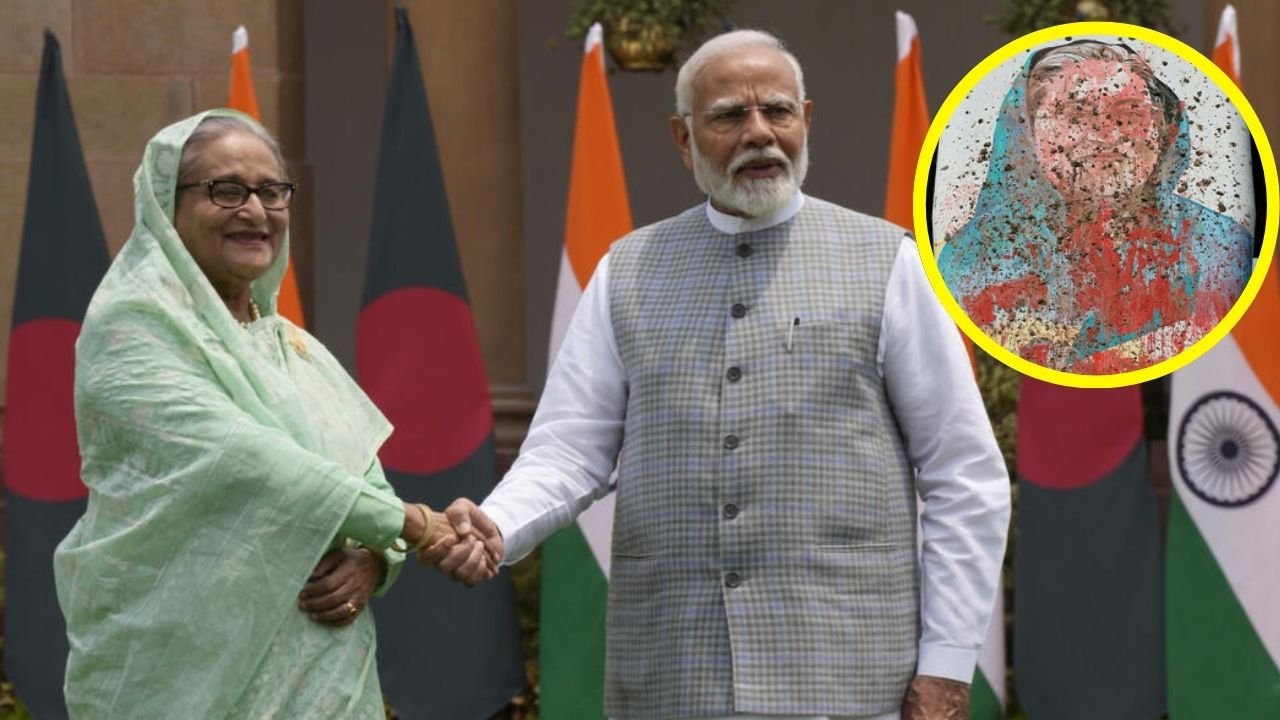
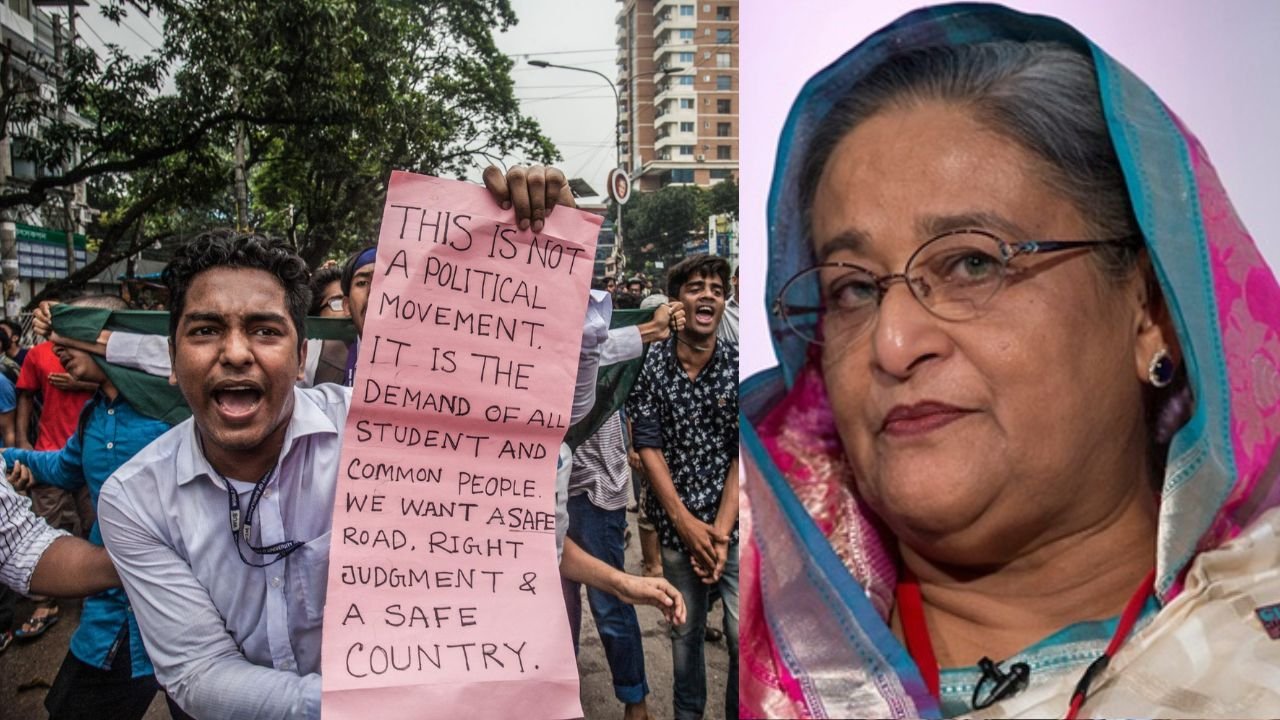
    Four weeks after ex-premier Sheikh Hasina fled Bangladesh by helicopter during a student-led revolution, analysts say she has become a diplomatic headache for her hosts in India.

    Hasina’s iron-fisted tenure came to an end last month as protesters marched on her palace in Dhaka after 15 years characterised by rights abuses and opposition crackdowns.

    Bangladeshi students who led the uprising are demanding she return from India, her biggest benefactor before her ouster, to be tried for the killing of protesters during the revolt.

    But sending the 76-year-old back risks undermining India’s standing with its other neighbors in South Asia, where it is waging a fierce battle for influence with China.

    “India is clearly not going to want to extradite her back to Bangladesh,” said Thomas Kean of the conflict resolution think-tank International Crisis Group.

    “The message that would send to other leaders in the region who are close to New Delhi would not be a very positive one… that ultimately, India will not protect you,” he told AFP.

    New Delhi last year saw its preferred presidential candidate in the Maldives lose to a rival that immediately tilted the strategically placed luxury tourism destination toward Beijing.

    Hasina’s toppling lost India, its closest ally in the region.

    Those who suffered under Hasina in Bangladesh are openly hostile to India for the abuses committed by her government.

    That hostility has smouldered through megaphone diplomacy waged by Hindu-nationalist Indian Prime Minister Narendra Modi and directed toward Bangladesh’s caretaker administration.

    Modi has pledged support for the government that replaced Hasina, led by 84-year-old Nobel Peace Prize laureate Muhummad Yunus.

    But Modi, who has made championing the Hindu faith a key plank of his tenure, has also repeatedly urged Yunus’s administration to protect Bangladesh’s Hindu religious minority.

    Hasina’s Awami League was considered to be more protective of Bangladesh’s Hindu minority than the Bangladesh Nationalist Party (BNP).

    Modi used his annual Independence Day address from atop the 17th century Red Fort to suggest Bangladeshi Hindus were in danger and later raised the matter with US President Joe Biden.

    Some Bangladeshi Hindus and Hindu temples were targeted in the chaos that followed Hasina’s departure in attacks that were condemned by student leaders and the interim government.

    But wildly exaggerated accounts of the violence were later reported by pro-government Indian news channels and sparked protests by Hindu activist groups loosely affiliated with Modi’s party.

    Fakhrul Islam Alamgir, a top leader of the BNP, said India had put “all its fruit in one basket” by backing Hasina and did not know how to reverse course.

    “The people of Bangladesh want a good relationship with India, but not at the cost of their interests,” Alamgir, one of thousands of BNP members arrested during Hasina’s tenure, told AFP.

    “The attitude of India unfortunately is not conducive to creating confidence.”

    Diplomatic issue

    Such is the atmosphere of distrust, when deadly floods washed through both countries in August some Bangladeshis blamed India for the deaths that resulted.

    Bangladesh’s interim government has not publicly raised the issue of Hasina taking refuge in India with New Delhi — her last official whereabouts is a military air base near the capital — but Dhaka has revoked her diplomatic passport, preventing her from traveling onwards.

    The countries have a bilateral extradition treaty first signed in 2013 which would permit her return to face criminal trial.

    A clause in the treaty, however, says extradition might be refused if the offense is of a “political character.”

    India’s former ambassador to Bangladesh, Pinak Ranjan Chakravarty, said that the bilateral relationship is too important for Dhaka to sour it by pressing for Hasina’s return.

    “Any mature government will realize that making an issue out of Hasina staying in India is not going to give them any benefits,” he told AFP.
  • Bangladesh students call for nationwide civil disobedience; seek Hasina’s resignation

    Bangladesh students call for nationwide civil disobedience; seek Hasina’s resignation

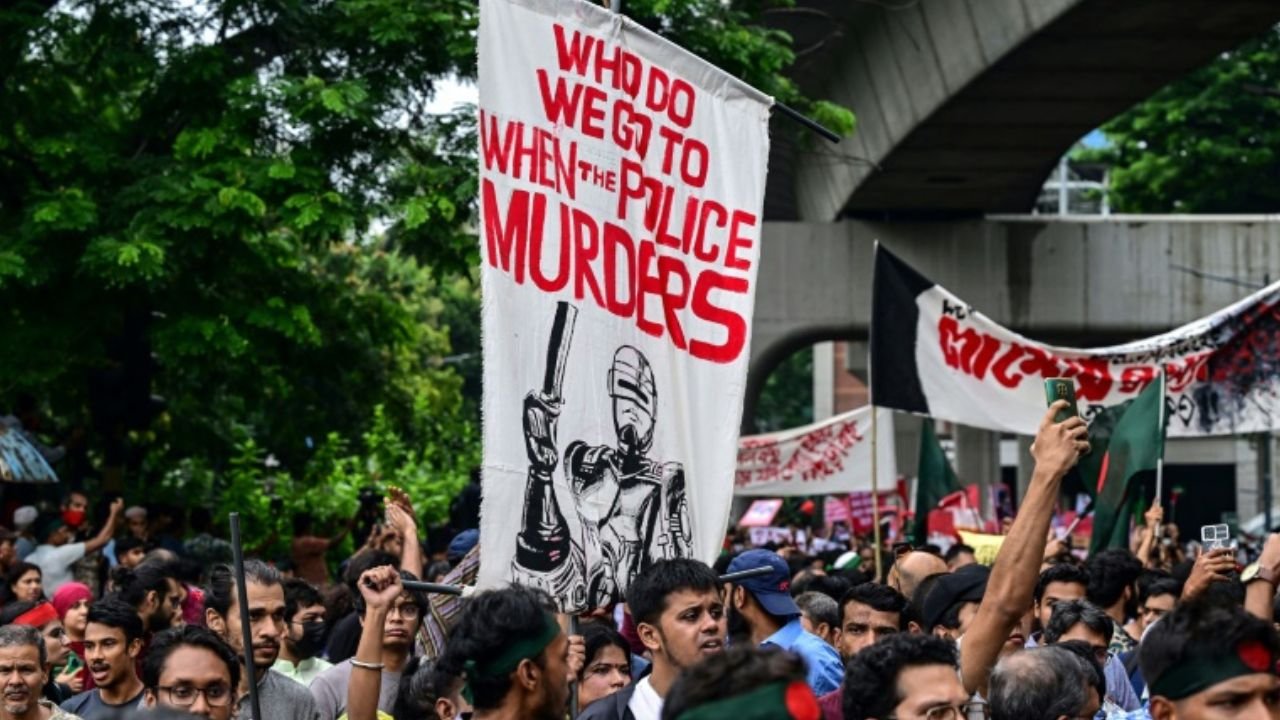
    Student leaders rallied Bangladeshis on Saturday for a nationwide civil disobedience campaign as Prime Minister Sheikh Hasina’s government weathered a worsening backlash over a deadly police crackdown on protesters.

    Rallies against civil service job quotas sparked days of mayhem last month that killed more than 200 people in some of the worst unrest of Hasina’s 15-year tenure.

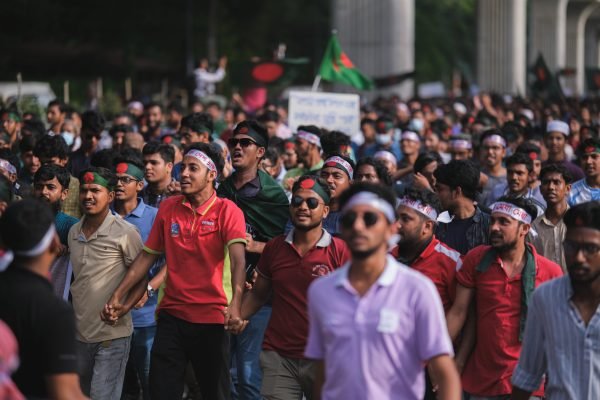
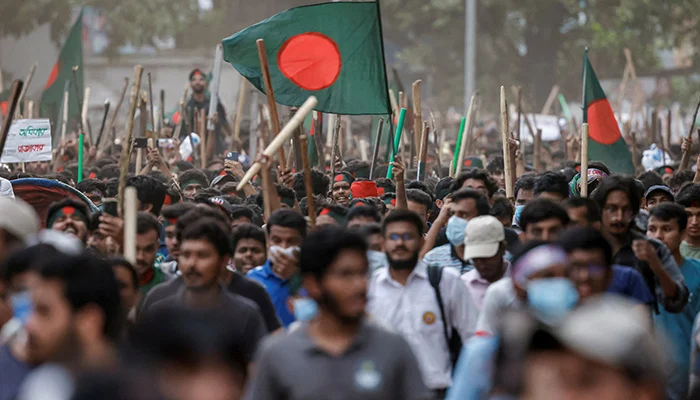
    Troop deployments briefly restored order, but crowds hit the streets in huge numbers after Friday prayers in the Muslim-majority nation, heeding a call by student leaders to press the government for more concessions.

    Students Against Discrimination, the group responsible for organising the initial protests, urged their compatriots to launch an all-out non-cooperation movement from Sunday.

    “This includes non-payment of taxes and utility bills, strikes by government workers and a halt to overseas remittance payments through banks,” the group’s Asif Mahmud told AFP.

    Mahmud’s fellow student leaders also said another round of nationwide rallies would be staged on Saturday.

    “Please don’t stay at home. Join your nearest protest march,” Mahmud wrote on Facebook.

    Students are demanding a public apology from Hasina for last month’s violence and the dismissal of several of her ministers.

    Read more: 195 killed, 4000 arrested amid police crackdown in Bangladesh

    They have also insisted that the government reopens schools and universities around the country, all of which were shuttered at the height of the unrest.

    Crowds on the street have gone further, chanting demands for Hasina to leave office.

    Hasina, 76, has ruled Bangladesh since 2009 and won her fourth consecutive election in January after a vote without genuine opposition.

    Her government is accused by rights groups of misusing state institutions to entrench its hold on power and stamp out dissent, including the extrajudicial killing of opposition activists.

    Demonstrations began in early July over the reintroduction of a quota scheme — since scaled back by Bangladesh’s top court — that reserved more than half of all government jobs for certain groups.

    With around 18 million young Bangladeshis out of work, according to government figures, the move upset graduates facing an acute employment crisis.

    The protests had remained largely peaceful until attacks on demonstrators by police and pro-government student groups.

    Hasina’s government eventually imposed a nationwide curfew, deployed troops and shut down the nation’s mobile internet network for 11 days to restore order.

    Foreign governments condemned the clampdown, with European Union foreign policy chief Josep Borrell this week calling for an international probe into the “excessive and lethal force against protesters”.

    Home Minister Asaduzzaman Khan told reporters last weekend that security forces had operated with restraint but were “forced to open fire” to defend government buildings.

    At least 32 children were among those killed last month, the UN said Friday.

  • Six killed, hundreds injured as student protests rage across Bangladesh

    Six killed, hundreds injured as student protests rage across Bangladesh

    Bangladesh ordered schools across the country on Tue­sday to close indefinitely after six students were killed as protests over quotas for coveted government jobs turned into deadly clas­hes, prompting the mobilisation of paramilitaries to keep order.

    Following escalating demonstrations against civil service hiring policies, every high school, Islamic seminary, and vocational education institute in the country was told to remain shut until further notice.

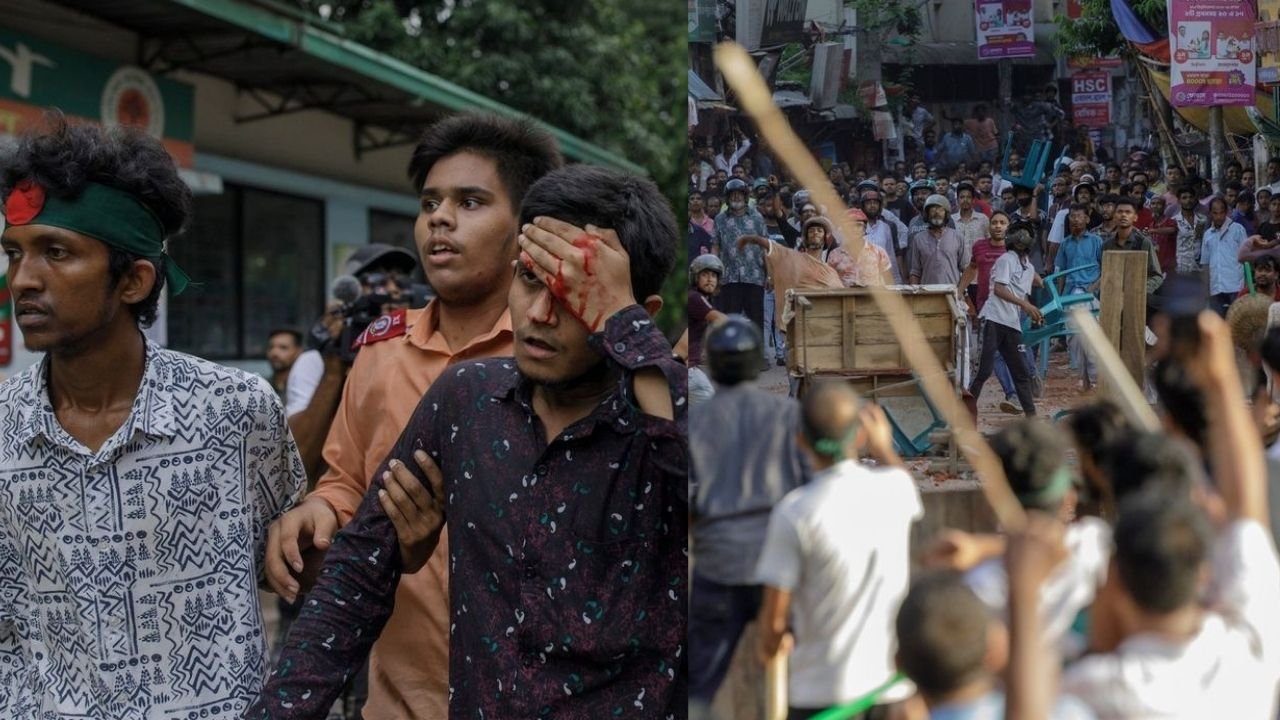
    Tuesday saw a significant escalation in violence as protesters and pro-government student groups attacked each other with hurled bricks and bamboo rods, and police dispersed rallies with tear gas and rubber bullets. Demonstrators mobilised in cities, defying earlier calls by Prime Minister Sheikh Hasina and the Supreme Court to return to class.

    Three died in Chittagong and had signs of “bullet injuries”, hospital director Mohammad Taslimuddin said, adding that another 35 had been injured during clashes in the port city.

    Border security force deployed in Dhaka, Chittagong and three other cities as protesting students demand end to job quota system

    Another two died in Dhaka, where rival student groups threw bricks at each other and blocked roads in several key locations that ground traffic to a halt in the megacity of 20 million.

    Police inspector Bacchu Mia confirmed the deaths to AFP, saying one had succumbed to head injuries, while at least 60 people were also injured.

    In the northern city of Rangpur, police commissioner Mohammad Moniruzzaman said a student had been killed in clashes there. He did not give details as to how the student died, but said police had fired rubber bullets and tear gas to disperse protesters.

    Rangpur Medical College hospital director Yunus Ali said the “student was brought dead to the hospital by other students”.

    Tauhidul Haque Siam from Rokeya University told AFP that ruling party supporters had attacked anti-quota protesters, while police fired rubber pellets from shotguns. “Police opened fire from their shotguns on the protesters,” Siam said, adding he had been injured.

    He said the dead student had been “killed in the firing”. But it was not possible to independently verify his account.

    As the day wore on and with some key highways around the country blocked by the protesters, authorities deployed the paramilitary Border Guard Bangladesh (BGB) force in five major cities, including Dhaka and Chittagong.

    They had been tasked with controlling “the law and order situation in view of the quota protests”, a BGB spokesman said.

    ‘Violence against peaceful protesters’

    Tuesday clashes came a day after confrontations between anti-quota demonstrators and members of the ruling Awami League’s student wing that left over 400 people injured in Dhaka.

    “We are not here to do violence,” said a protester in Dhaka who declined to give their name for fear of reprisal. “We simply want our rights. But the ruling party goons are attacking our peaceful protests.”

    Near-daily marches this month have demanded an end to a quota system that reserves more than half of civil service posts for specific groups.

    Critics say the scheme benefits children of pro-government groups that back PM Hasina, 76, who won her fourth consecutive election in January after a vote “without genuine opposition”.

    Amnesty International afterwards urged Bangladesh to “immediately guarantee the safety of all peaceful protesters”.

    US State Department spokesman Matthew Miller also denounced the “violence against peaceful protesters”, prompting a rebuke from Bangladesh’s foreign ministry.