Tag: bangladesh

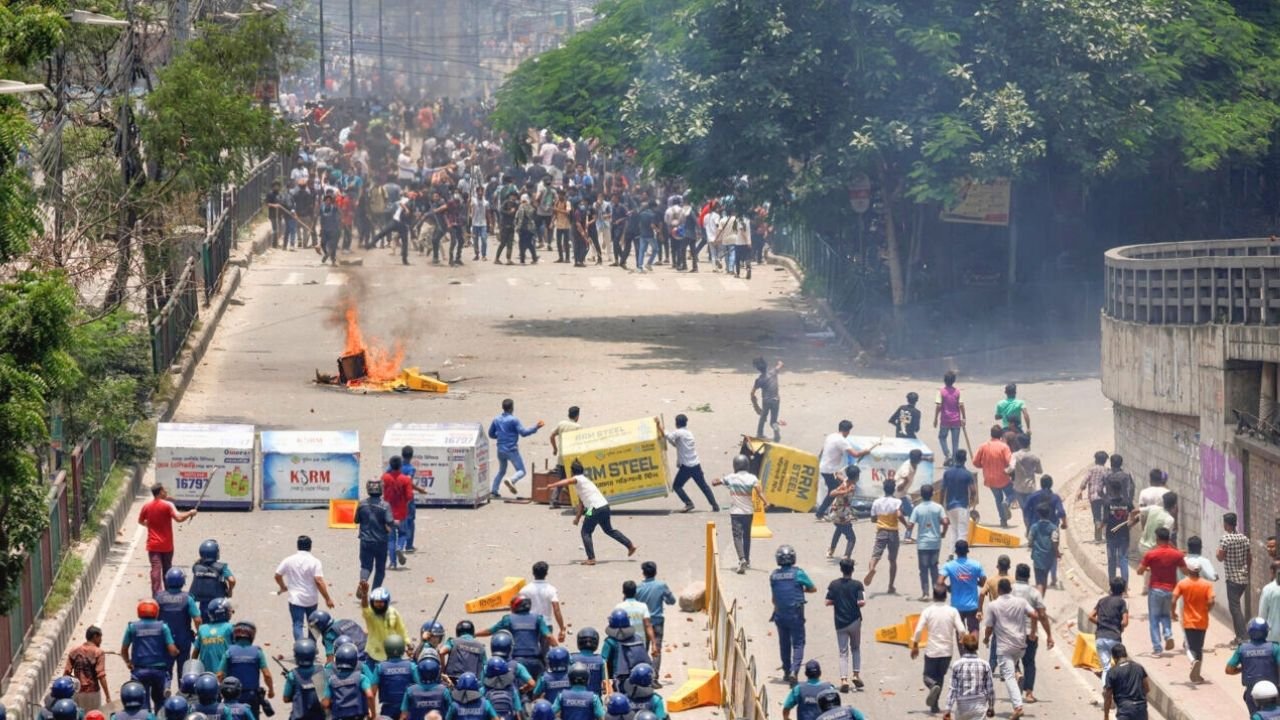
  • At least 174 killed, more than 2,500 arrested amid Bangladesh protests

    At least 174 killed, more than 2,500 arrested amid Bangladesh protests

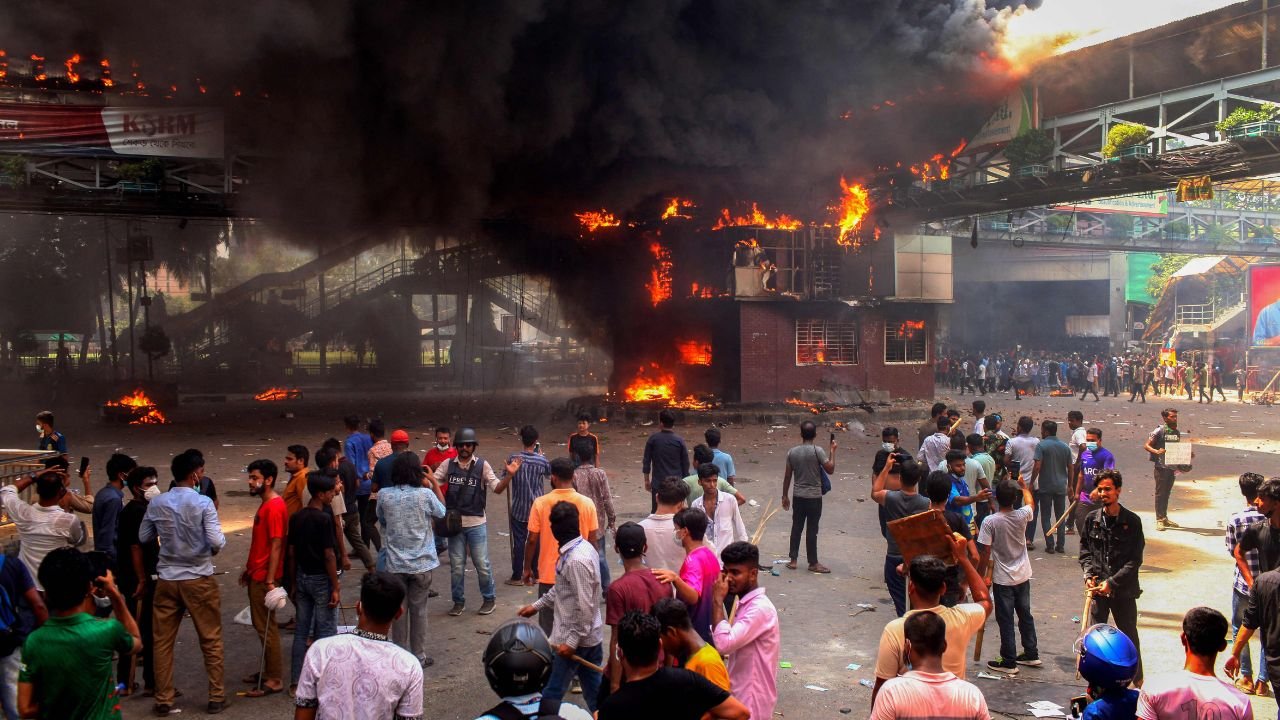
    The number of arrests in days of violence in Bangladesh passed the 2,500 mark in an AFP tally on Tuesday, after protests over employment quotas sparked widespread unrest.

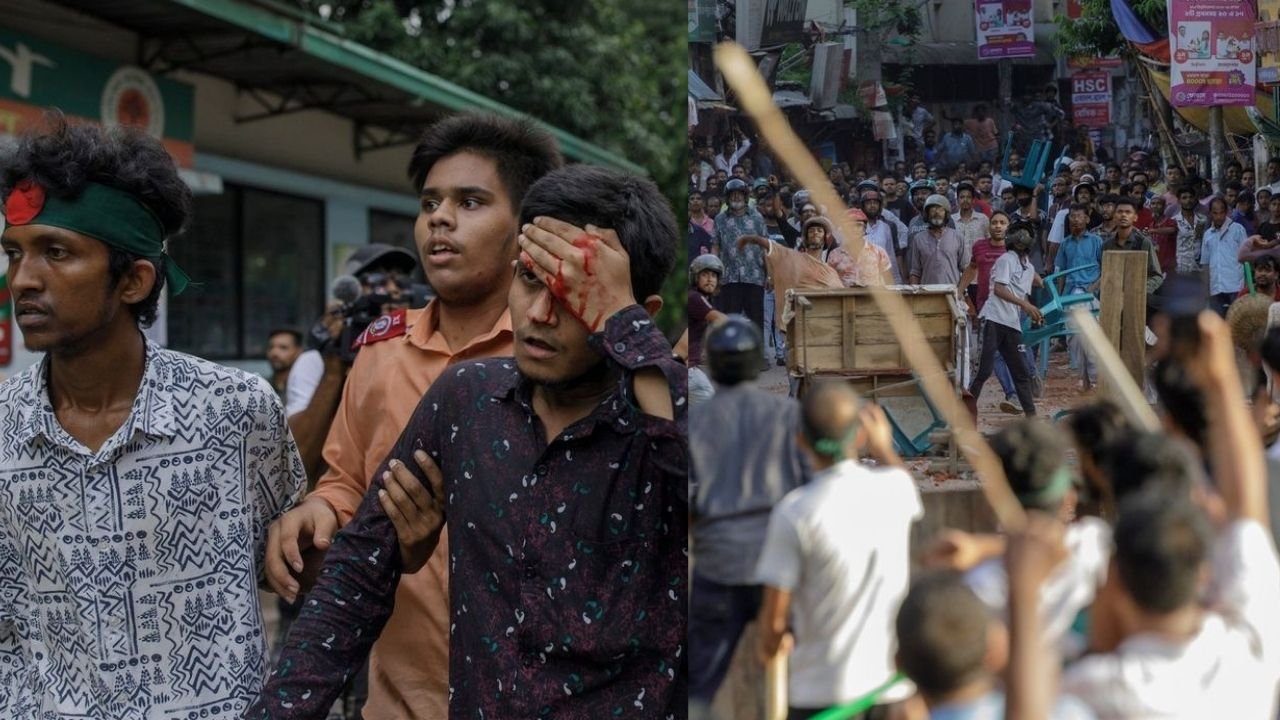
    At least 174 people have died, including several police officers, according to a separate AFP count of victims reported by police and hospitals.

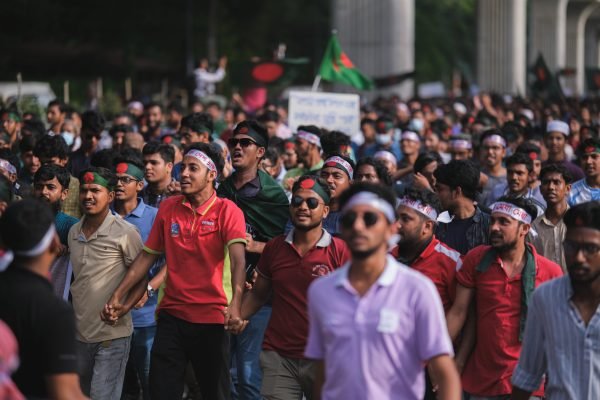
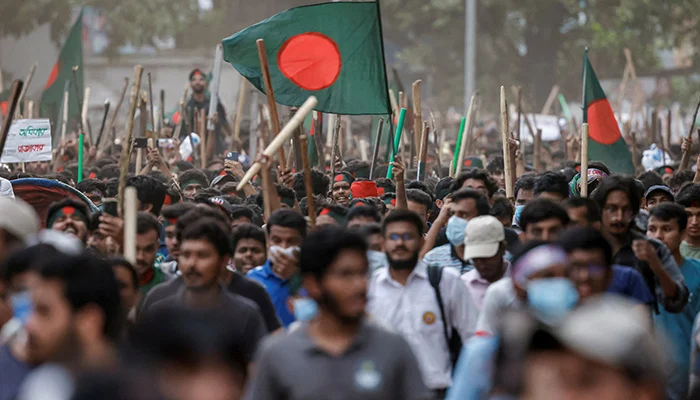
    What began as demonstrations against politicised admission quotas for sought-after government jobs snowballed last week into some of the worst unrest of Prime Minister Sheikh Hasina’s tenure.

    A curfew was imposed and soldiers deployed across the South Asian country, and a nationwide internet blackout drastically restricted the flow of information, upending daily life for many.

    On Sunday, the Supreme Court pared back the number of reserved jobs for specific groups, including the descendants of “freedom fighters” from Bangladesh’s 1971 liberation war against Pakistan.

    The student group leading the demonstrations suspended its protests Monday for 48 hours, with its leader saying they had not wanted reform “at the expense of so much blood”.

    The restrictions remained in place Tuesday after the army chief said the situation had been brought “under control”.

    There was a heavy military presence in Dhaka, with bunkers set up at some intersections and key roads blocked with barbed wire.

    But more people were on the streets, as were hundreds of rickshaws.

    “I did not drive rickshaws the first few days of curfew, But today I didn’t have any choice,” rickshaw driver Hanif told AFP.

    “If I don’t do it, my family will go hungry.”

    The head of Students Against Discrimination, the main group organising the protests, told AFP in his hospital room Monday that he feared for his life after being abducted and beaten, and the group said Tuesday at least four of its leaders were missing, asking authorities to “return” them by the evening.

    ‘Killed at random’

    The authorities’ response to the protests has been widely criticised, with Bangladeshi Nobel Peace Prize laureate Muhammad Yunus urging “world leaders and the United Nations to do everything within their powers to end the violence” in a statement.

    The respected 83-year-old economist is credited with lifting millions out of poverty with his pioneering microfinance bank but earned the enmity of Hasina, who has accused him of “sucking blood” from the poor.

    “Young people are being killed at random every day,” Yunus told AFP. “Hospitals do not reveal the number of wounded and dead.”

    Diplomats in Dhaka also questioned the government’s actions, with US Ambassador Peter Haas telling the foreign minister he had shown a one-sided video at a briefing to diplomats.

    Government officials have repeatedly blamed the protesters and opposition for the unrest.

    More than 1,200 people detained over the course of the violence — nearly half the 2,580 total — were held in Dhaka and its rural and industrial areas, according to police officials who spoke to AFP.

    Almost 600 were arrested in Chittagong and its rural areas, with hundreds more detentions tallied in multiple districts across the country.

    ‘Sheikh Hasina never flees’

    With around 18 million young people in Bangladesh out of work, according to government figures, the June reintroduction of the quota scheme — halted since 2018 — deeply upset graduates facing an acute jobs crisis.

    With protests mounting across the country, the Supreme Court on Sunday curtailed the number of reserved jobs from 56 percent of all positions to seven percent, mostly for the children and grandchildren of “freedom fighters” from the 1971 war.

    While 93 percent of jobs will be awarded on merit, the decision fell short of protesters’ demands to scrap the “freedom fighter” category altogether.

    Late Monday, Hasina’s spokesman told AFP the prime minister had approved a government order putting the Supreme Court’s judgement into effect.

    Critics say the quota is used to stack public jobs with loyalists to Hasina’s ruling Awami League.

    Hasina, 76, has ruled the country since 2009 and won her fourth consecutive election in January after a vote without genuine opposition.

    Her government is also accused by rights groups of misusing state institutions to entrench its hold on power and stamp out dissent, including by the extrajudicial killing of opposition activists.

    bur-sa/slb/

    © Agence France-Presse
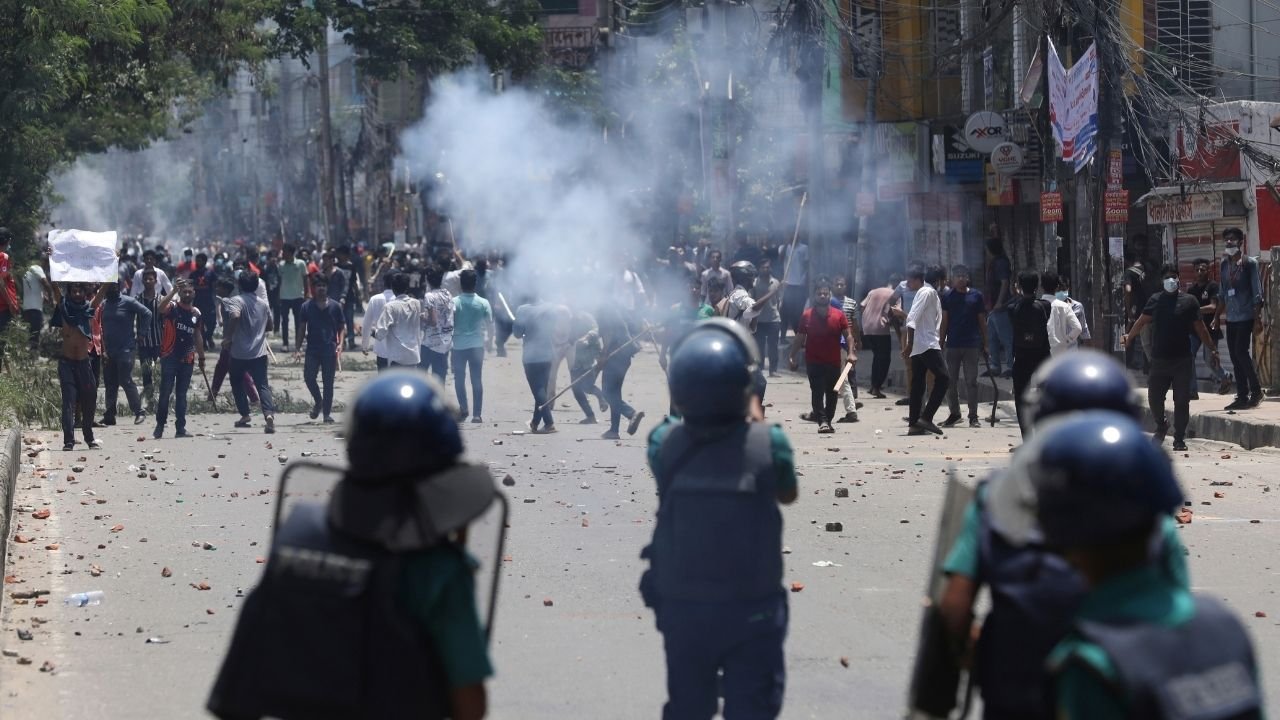
  • More than 500 arrested in Bangladesh capital over violence: police

    More than 500 arrested in Bangladesh capital over violence: police

    More than 500 people, including some opposition leaders, have been arrested over days of clashes in the Bangladesh capital Dhaka sparked by protests against job quotas, police said Monday.

    “At least 532 people have been arrested over the violence,” Dhaka Metropolitan Police spokesman Faruk Hossain told AFP.

    “They include some BNP leaders,” he added, referring to the opposition Bangladesh National Party.

    The detainees included the BNP’s third-most senior leader Amir Khosru Mahmud Chowdhury and its spokesman Ruhul Kabir Rizvi Ahmed, he said.

    A former national football captain turned senior BNP figure, Aminul Huq, was also held, he added.

    Mia Golam Parwar, the general secretary of the country’s largest Islamist party, Jamaat-e-Islami, was also arrested, Hossain said.

    He said at least three policemen had been killed during the unrest in the capital and about 1,000 injured, at least 60 of them critically.

    BNP spokesman A.K.M Wahiduzzaman told AFP that nationwide, “several hundred BNP leaders and activists were arrested in the past few days”.

    sa/slb/sco

    © Agence France-Presse

  • Bangladesh imposes curfew, calls in military after deadly unrest

    Bangladesh imposes curfew, calls in military after deadly unrest

    Bangladesh on Friday announced the imposition of a curfew and the deployment of military forces after police failed to quell days of deadly unrest that has spread throughout the country.

    This week’s clashes between student demonstrators and police have killed at least 105 people, according to an AFP count of victims reported by hospitals, and pose a momentous challenge to Prime Minister Sheikh Hasina’s autocratic government after 15 years in office.

    “The government has decided to impose a curfew and deploy the military in aid of the civilian authorities,” Hasina’s press secretary Nayeemul Islam Khan told AFP.

    He added that the curfew would take immediate effect.

    Police in the capital Dhaka earlier took the drastic step of banning all public gatherings for the day — a first since protests began — in an effort to forestall more violence.

    “We’ve banned all rallies, processions and public gatherings in Dhaka today,” police chief Habibur Rahman told AFP, adding the move was necessary to ensure “public safety”.

    That however did not stop another round of confrontations between police and protesters around the sprawling megacity of 20 million people, despite an internet shutdown aimed at frustrating the organisation of rallies.

    “Our protest will continue,” Sarwar Tushar, who joined a march in the capital and sustained minor injuries when it was violently dispersed by police, told AFP.

    “We want the immediate resignation of Sheikh Hasina. The government is responsible for the killings.”

    Student protesters stormed a jail in the central Bangladeshi district of Narsingdi and freed its inmates before setting the facility on fire, a police officer told AFP on condition of anonymity.

    “I don’t know the number of inmates, but it would be in the hundreds,” he added.

    ‘Shocking and unacceptable’

    At least 52 people were killed in the capital on Friday, according to a list drawn up by the Dhaka Medical College Hospital and seen by AFP.

    Police fire was the cause of more than half of the deaths reported so far this week, based on descriptions given to AFP by hospital staff.

    UN human rights chief Volker Turk said the attacks on student protesters were “shocking and unacceptable”.

    “There must be impartial, prompt and exhaustive investigations into these attacks, and those responsible held to account,” he said in a statement.

    The capital’s police force earlier said protesters had on Thursday torched, vandalised and carried out “destructive activities” on numerous police and government offices.

    Among them was the Dhaka headquarters of state broadcaster Bangladesh Television, which remains offline after hundreds of incensed students stormed the premises and set fire to a building.

    Dhaka Metropolitan Police spokesman Faruk Hossain told AFP that officers had arrested Ruhul Kabir Rizvi Ahmed, one of the top leaders of the main opposition Bangladesh Nationalist Party (BNP).

    ‘Symbol of a rigged system’

    Near-daily marches this month have called for an end to a quota system that reserves more than half of civil service posts for specific groups, including children of veterans from the country’s 1971 liberation war against Pakistan.

    Critics say the scheme benefits children of pro-government groups that back Hasina, 76, who has ruled the country since 2009 and won her fourth consecutive election in January after a vote without genuine opposition.

    Hasina’s government is accused by rights groups of misusing state institutions to entrench its hold on power and stamp out dissent, including by the extrajudicial killing of opposition activists.

    Her administration this week ordered schools and universities to close indefinitely as police stepped up efforts to bring the deteriorating law and order situation under control.

    “This is an eruption of the simmering discontent of a youth population built over years,” Ali Riaz, a politics professor at Illinois State University, told AFP.

    “The job quotas became the symbol of a system which is rigged and stacked against them by the regime.”

    ‘Nation-scale’ internet shutdown

    Students say they are determined to press on with protests despite Hasina giving a national address earlier this week on the now-offline state broadcaster seeking to calm the unrest.

    Nearly half of Bangladesh’s 64 districts reported clashes on Thursday, broadcaster Independent Television reported.

    London-based watchdog NetBlocks said Friday that a “nation-scale” internet shutdown remained in effect a day after it was imposed.

    “Metrics show connectivity flatlining at 10% of ordinary levels, raising concerns over public safety as little news flows in or out of the country,” it wrote on social media platform X.

    sa/gle/sst

    © Agence France-Presse

  • Six killed, hundreds injured as student protests rage across Bangladesh

    Six killed, hundreds injured as student protests rage across Bangladesh

    Bangladesh ordered schools across the country on Tue­sday to close indefinitely after six students were killed as protests over quotas for coveted government jobs turned into deadly clas­hes, prompting the mobilisation of paramilitaries to keep order.

    Following escalating demonstrations against civil service hiring policies, every high school, Islamic seminary, and vocational education institute in the country was told to remain shut until further notice.

    Tuesday saw a significant escalation in violence as protesters and pro-government student groups attacked each other with hurled bricks and bamboo rods, and police dispersed rallies with tear gas and rubber bullets. Demonstrators mobilised in cities, defying earlier calls by Prime Minister Sheikh Hasina and the Supreme Court to return to class.

    Three died in Chittagong and had signs of “bullet injuries”, hospital director Mohammad Taslimuddin said, adding that another 35 had been injured during clashes in the port city.

    Border security force deployed in Dhaka, Chittagong and three other cities as protesting students demand end to job quota system

    Another two died in Dhaka, where rival student groups threw bricks at each other and blocked roads in several key locations that ground traffic to a halt in the megacity of 20 million.

    Police inspector Bacchu Mia confirmed the deaths to AFP, saying one had succumbed to head injuries, while at least 60 people were also injured.

    In the northern city of Rangpur, police commissioner Mohammad Moniruzzaman said a student had been killed in clashes there. He did not give details as to how the student died, but said police had fired rubber bullets and tear gas to disperse protesters.

    Rangpur Medical College hospital director Yunus Ali said the “student was brought dead to the hospital by other students”.

    Tauhidul Haque Siam from Rokeya University told AFP that ruling party supporters had attacked anti-quota protesters, while police fired rubber pellets from shotguns. “Police opened fire from their shotguns on the protesters,” Siam said, adding he had been injured.

    He said the dead student had been “killed in the firing”. But it was not possible to independently verify his account.

    As the day wore on and with some key highways around the country blocked by the protesters, authorities deployed the paramilitary Border Guard Bangladesh (BGB) force in five major cities, including Dhaka and Chittagong.

    They had been tasked with controlling “the law and order situation in view of the quota protests”, a BGB spokesman said.

    ‘Violence against peaceful protesters’

    Tuesday clashes came a day after confrontations between anti-quota demonstrators and members of the ruling Awami League’s student wing that left over 400 people injured in Dhaka.

    “We are not here to do violence,” said a protester in Dhaka who declined to give their name for fear of reprisal. “We simply want our rights. But the ruling party goons are attacking our peaceful protests.”

    Near-daily marches this month have demanded an end to a quota system that reserves more than half of civil service posts for specific groups.

    Critics say the scheme benefits children of pro-government groups that back PM Hasina, 76, who won her fourth consecutive election in January after a vote “without genuine opposition”.

    Amnesty International afterwards urged Bangladesh to “immediately guarantee the safety of all peaceful protesters”.

    US State Department spokesman Matthew Miller also denounced the “violence against peaceful protesters”, prompting a rebuke from Bangladesh’s foreign ministry.

  • Chahat’s hit ‘Bado Badi’ gets a fresh twist with Abrarul Haq’s version

    Pakistani social media sensation and singer Chahat Fateh Ali Khan’s latest song, ‘Bado Badi,’ has taken the internet by storm. Renowned Pakistani bhangra and pop singer Abrarul Haq has joined the trend.

    Released just last month, Chahat’s cover of the classic has quickly gained 21 million views on YouTube, becoming a viral hit in South Asia and beyond. ‘Bado Badi’ has connected with audiences in India, Pakistan, Bangladesh, and other countries, making it a cross-border success.

    Adding to the song’s fame, Abrarul Haq has released his version of ‘Bado Badi’ after popular TikTok personality Sid Mr. Rapper asked the ‘Billo’ singer to lend his voice to the hit track. Abrar’s rendition has been well-received, adding even more popularity to the beloved song.

    Interestingly, ‘Bado Badi’ is not a completely new song. The legendary Madam Noor Jahan originally performed it for the 1973 film ‘Banarsi Thug,’ starring Firdous, Ejaz, and Munawar Zarif, with music composed by Bakhshi Wazeer Sahib. Chahat Fateh Ali Khan’s version has breathed new life into the classic, making it enjoyable for a new generation of listeners.

    The viral success of ‘Bado Badi’ shows the power of music and social media in bringing people together. As celebrities like Abrar join the trend, the song continues to win hearts and entertain millions across borders.

  • Deadly Bangladesh cyclone one of longest seen

    Deadly Bangladesh cyclone one of longest seen

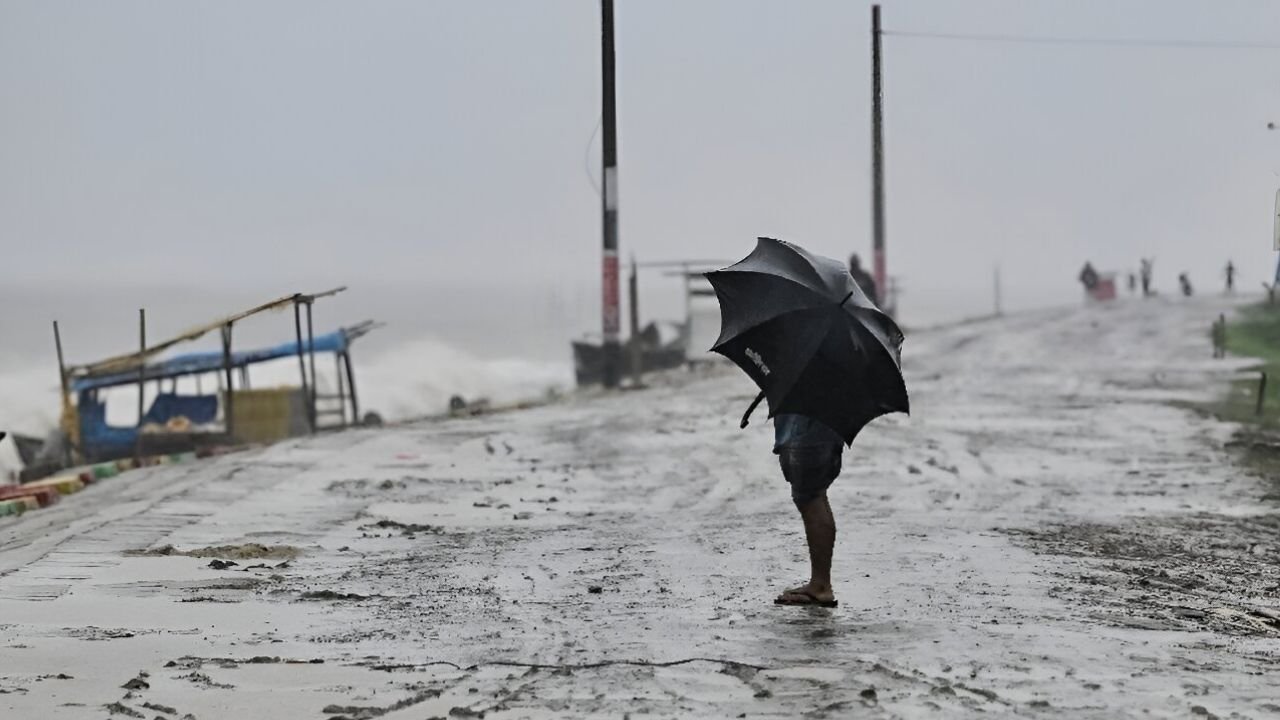
    Bangladeshi weather experts said Tuesday that a deadly cyclone that carved a swathe of destruction was one of the quickest-forming and longest-lasting they’d experienced, blaming climate change for the shift.

    Cyclone Remal, which made landfall in low-lying Bangladesh and neighbouring India on Sunday evening with fierce gales and crashing waves, left at least 23 people dead, destroyed thousands of homes, smashed seawalls and flooded cities across the two countries.

    “In terms of its land duration, it is one of the longest in the country’s history,” Azizur Rahman, director of the state-run Bangladesh Meteorological Department told AFP, adding it had battered the country for more than 36 hours.

    In contrast, Cyclone Aila, which hammered Bangladesh in 2009, lasted around 34 hours.

    Cyclones have killed hundreds of thousands of people in Bangladesh in recent decades, and the number of superstorms hitting its densely populated coast has increased sharply, from one a year to as many as three, due to the impact of climate change.

    Slow-moving — and therefore longer-lasting — storms bring greater destruction.

    “I’ve seen many storms in my life but nothing like this cyclone”, said Asma Khatun, an 80-year-old widow who lives with her son, a fisherman in Bangladesh’s hard-hit coastal town of Patuakhali.

    “Before, the storm came and went away… now it doesn’t seem to go away. The incessant pouring and heavy wind kept us stuck for days”.

    Rahman said the cyclone triggered massive rains, with some cities receiving at least 200 millimetres (7.9 inches).

    Storm surges breached multiple embankments, meaning seawater flooded into farmland, damaged freshwater fish farms common along the coast, or corrupted drinking water.

    Bangladesh’s state minister for disaster Mohibbur Rahman said 3.75 million people had been affected by the cyclone,  more than 35,000 homes were destroyed, and another 115,000 damaged.

    “We don’t know where to go,” said Setara Begum, 75, surveying the wreckage of her home after its tin roof was ripped off.

    Azizur Rahman said the cyclone formed more quickly than almost all the cyclones they have monitored in recent decades.

    “Of course, quick cyclone formation and the long duration of cyclones are due to the impact of climate change,” Rahman said.

    “It took three days for it to turn into a severe cyclone from low pressure in the Bay of Bengal… I’ve never seen a cyclone formed from a low pressure in such a quick time,” he said.

    “Usually, a cyclone is formed in the south and southwest of the Bay of Bengal, then takes seven to eight days to turn into a severe cyclone.”

    But while scientists say climate change is fuelling more storms, better forecasting and more effective evacuation planning have dramatically reduced death tolls.

    Around a million people in Bangladesh and neighbouring India fled inland seeking safety — but many people preferred to stay put to guard their homes.

    In Bangladesh, Cyclone Remal killed at least 17 people, according to the disaster management office and police, who reported Tuesday the additional deaths of a husband and wife, “crushed under stacks of bricks” when their house collapsed.

    Some drowned. Others were killed by debris, falling trees or electrocuted by falling power lines.

    Thousands of electricity poles were torn down, and power is out across large areas, said Biswanath Sikder, chief engineer of the Bangladesh Rural Electrification Board.

    “More than 20 million people are without electricity,” Sikder told AFP. “We are working hard to bring around 50 percent of these affected people by Tuesday evening.”

    In India, six people died, West Bengal state officials said.

    But the worst impact was stemmed by the expansive Sundarbans mangrove forest straddling Bangladesh and India — where the Ganges, Brahmaputra and Meghna rivers meet the sea, Bangladesh’s state weather department said.

    The crucial sea-water coastal forests help dissipate the violence of such storms.

    The International Union for Conservation of Nature (IUCN) warned this month that half of the world’s mangrove ecosystems are at risk of collapse due to climate change, deforestation and pollution.

  • April temperatures in Bangladesh hottest on record

    April temperatures in Bangladesh hottest on record

    Bangladesh last month saw the hottest average April temperatures since the country began keeping weather records in 1948, a senior forecaster told AFP on Wednesday.

    “2024 was the hottest April since 1948 in terms of hot days and area coverage in the country,” Bangladesh Meteorological Department senior forecaster Muhammad Abul Kalam Mallik said.

    Bangladesh remains in the grips of a suffocating heatwave that prompted authorities to close schools nationwide, with temperatures not expected to moderate until Thursday.

    “This year the heatwave covered around 80 percent of the country. We’ve not seen such unbroken and expansive heatwaves before,” Mallik said.

    Mallik said the 30-year average daily temperature for April between 1981 and 2010 was 33.2 degrees Celsius, but this year weather stations around the country recorded temperatures of between two and eight degrees higher.

    He added that Bangladesh had not seen the usual pre-monsoon April thunderstorms which normally cools the South Asian nation ahead of summer.

    “Bangladesh gets an average 130.2 millimetres of rain in April. But this April we got an average of one millimetre of rain,” he said.

    Mallik said the bureau was checking data to confirm whether this year marked record low rainfalls for April.

  • Imran Khan does not want to get out of Adiala Jail, says Shandana Gulzar

    Imran Khan does not want to get out of Adiala Jail, says Shandana Gulzar

    During a talk show with Nadir Gurmani at Dawn News, Pakistan Tehreek-e-Insaf (PTI) leader Shandana Gulzar remarked that Imran Khan does not want to come out of Adiala jail because he is safe under the supervision of jail authorities.

    When the anchor asked Shandana Gulzar about the lack of unity of party leadership on a one-point agenda that Imran Khan must get out of jail, she replied that the former Prime Minister does not believe in this agenda.

    “Only Imran Khan can set an agenda, nobody else. Khan has a three-point agenda; the first is to give us back our stolen mandate, the second is to release all PTI workers who have been arrested without any valid reasons and the third is to get our workers free from illegal military trials,” she stated.

    She said that Shehryar Afridi told Khan that they wanted him to get free, to which he replied “I don’t want to get out of jail. My priority is Pakistan so it does not disintegrate like Bangladesh.”

    “After God, Khan’s life is in the hands of jail authorities,” she said on the show, expressing concerns that there would be no guarantee of his safety if he gets shifted to sub-jail.

  • Bangladesh opens mosque for transgender hijra community

    Bangladesh opens mosque for transgender hijra community

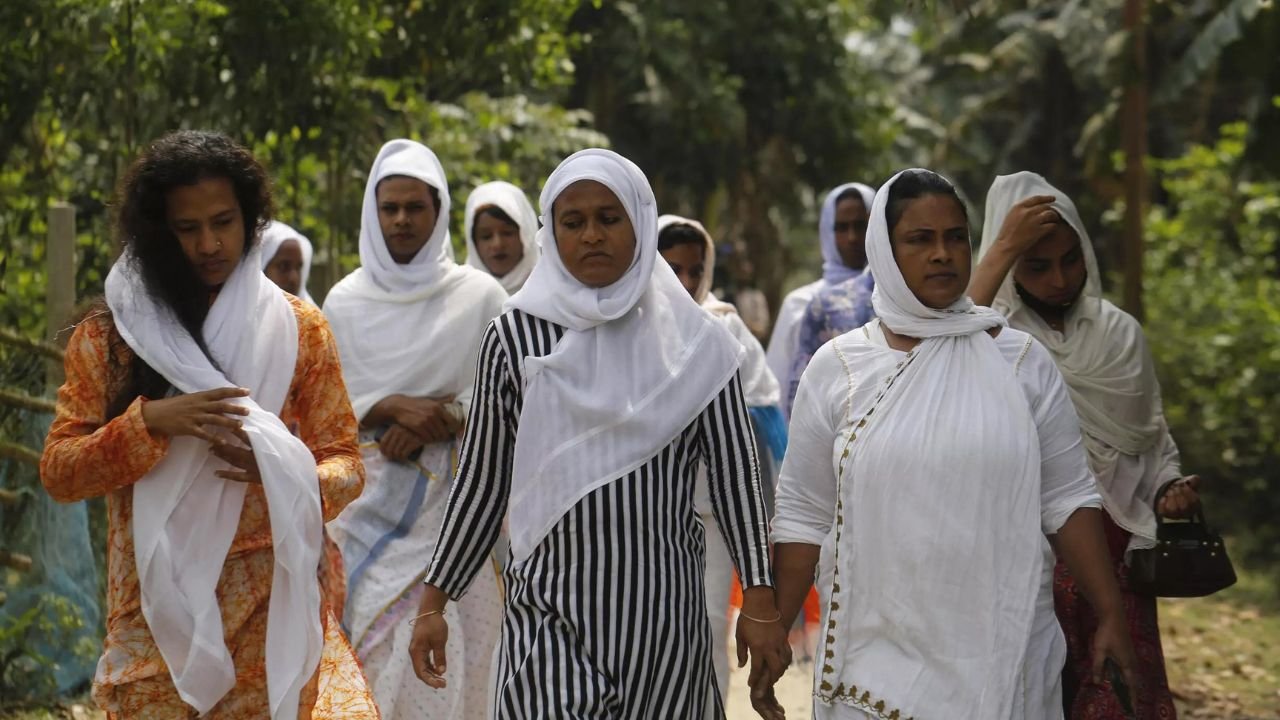
    Mymensingh (Bangladesh) (AFP) – Kicked out of other prayer services, members of Bangladesh’s transgender hijra community have been welcomed at a new mosque in the Muslim-majority nation with the promise of worship without discrimination.

    The humble structure — a single-room shed with walls and a roof clad in tin — is a new community hub for the minority, who have enjoyed greater legal and political recognition in recent years but still suffer from entrenched prejudice.

    “From now on, no one can deny a hijra from praying in our mosque,” community leader Joyita Tonu said in a speech to the packed congregation.

    “No one can mock us,” added the visibly emotional 28-year-old, a white scarf covering her hair.

    The mosque near Mymensingh, north of the capital Dhaka on the banks of the Brahmaputra river, was built on land donated by the government after the city’s hijra community were expelled from an established congregation.

    “I never dreamt I could pray at a mosque again in my lifetime,” said Sonia, 42, who as a child loved to recite the Koran and studied at an Islamic seminary.

    But when she came out as hijra, as transgender women in South Asia are commonly known, she was blocked from praying in a mosque.

    “People would tell us: ‘Why are you hijra people here at the mosques? You should pray at home. Don’t come to the mosques,’” Sonia, who uses only one name, told AFP.

    “It was shameful for us, so we didn’t go,” she added. “Now, this is our mosque. Now, no one can say no.”

    ‘Like any other people’

    Hijra have been the beneficiaries of growing legal recognition in Bangladesh, which since 2013 has officially allowed members of the community to identify as a third gender.

    Several have entered Bangladeshi politics, with one transgender woman elected mayor of a rural town in 2021.

    But hijra still struggle for basic recognition and acceptance, lacking property and marriage rights.

    They are also often discriminated against in employment and are much more likely to be victims of violent crime and poverty than the average Bangladeshi.

    Hardline Islamist groups have also lashed out at the recognition of transgender Bangladeshis in school textbooks, leading rallies to demand the government abandon its push to include them in the curriculum.

    Mufti Abdur Rahman Azad, founder of a hijra charity, told AFP that the new mosque was the first of its kind in the country.

    A similar endeavour planned in another city was stopped last month after a protest by locals, he added.

    Dozens of local hijra women donated time and money to build the Dakshin Char Kalibari Masjid for the Third Gender, which opened this month.

    It also has a graveyard, after a local Muslim cemetery last year refused to bury a young hijra woman inside its grounds.

    The mosque’s imam, Abdul Motaleb, 65, said that the persecution of the hijra community was against the teachings of his faith.

    “They are like any other people created by Allah”, the cleric told AFP.

    ‘No one can be denied’

    “We all are human beings. Maybe some are men, some are women, but all are human. Allah revealed the Holy Koran for all, so everyone has the right to pray, no one can be denied.”

    Motaleb said that other Bangladeshis could learn from the faith and strength of the hijra.

    “Since I have been here at this mosque, I have been impressed by their character and deeds,” he said.

    The new mosque is already tackling prejudice. Local resident Tofazzal Hossain, 53, has offered Friday prayers there for a second week in a row.

    He said living and praying with the hijra community has changed his “misconceptions” about them.

    “When they started to live with us, many people said many things,” he told AFP.

    “But we’ve realised what people say isn’t right. They live righteously like other Muslims”.

    Tonu hopes to expand the simple mosque to be big enough to cater for more people.

    “God willing, we will do it very soon,” she told AFP.

    “Hundreds of people can offer prayers together.”

  • Do you know what were the top three most polluted countries in 2023?

    Do you know what were the top three most polluted countries in 2023?

    IQAir, a Swiss air monitoring organisation, published its World Air Quality Report on Tuesday revealing troubling details of the world’s most polluted countries, territories, and regions in 2023.

    “IQAir’s annual report illustrates the international nature and inequitable consequences of the enduring air pollution crisis. Local, national, and international effort is urgently needed to monitor air quality in under-resourced places, manage the causes of transboundary haze, and cut our reliance on combustion as an energy source,” states Aidan Farrow, Sr. Air Quality Scientist, Greenpeace International.

    “In 2023, air pollution remained a global health catastrophe. IQAir’s global data set provides an important reminder of the resulting injustices and the need to implement the many solutions that exist to this problem.”

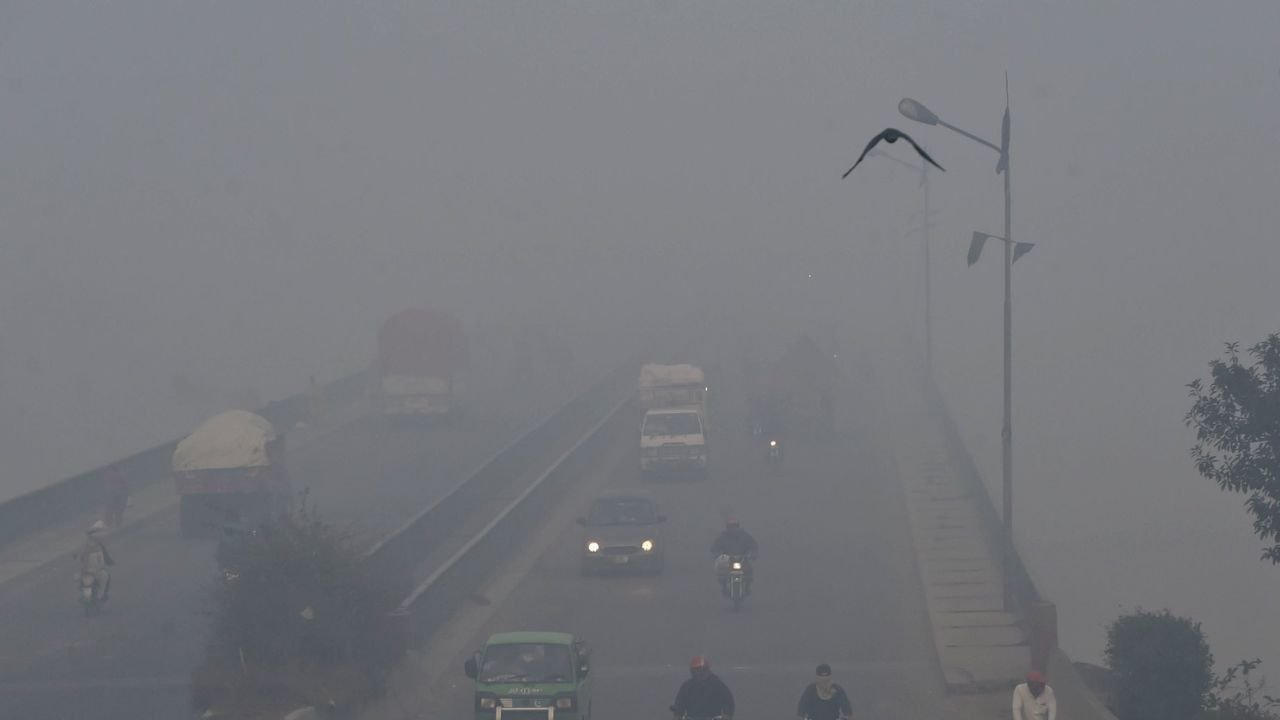
    The report revealed that Pakistan, alongside Bangladesh and India, remained among the top three countries with the highest levels of air pollution, particularly concerning particulate matter, in 2023.

    The concentrations of PM2.5, harmful airborne particles detrimental to respiratory health, surpassed recommended levels by a staggering margin, as indicated by the World Health Organization (WHO).

    In Bangladesh, the average concentration of PM2.5 reached 79.9 micrograms per cubic meter, while in Pakistan, it stood at 73.7 micrograms per cubic meter. These figures starkly contrast with the WHO’s guideline of no more than 5 micrograms per cubic meter.

    “Because of the climate conditions and the geography (in South Asia), you get this streak of PM2.5 concentrations that just skyrocket because the pollution has nowhere to go,” said Christi Chester Schroeder, air quality science manager at IQAir.

    “On top of that are factors such as agricultural practices, industry and population density,” she added. “Unfortunately, it really does look like it will get worse before it gets better.”

    In 2022, Bangladesh was ranked fifth for its air quality, with India in the eighth position. Approximately 20% of premature deaths in Bangladesh are attributed to air pollution, with related healthcare costs accounting for a substantial portion of the country’s GDP, according to Md Firoz Khan, an air pollution expert at Dhaka’s North South University.

    India also witnessed an escalation in pollution levels in 2023, with PM2.5 levels exceeding the WHO standard by about 11 times. Notably, New Delhi emerged as the worst-performing capital city, recording a PM2.5 level of 92.7 micrograms.

    China experienced a 6.3% increase in PM2.5 levels in 2023, marking a departure from five consecutive years of decline. Conversely, only a handful of countries, including Australia, Estonia, Finland, Grenada, Iceland, Mauritius, and New Zealand, met the WHO standards for air quality.

    The IQAir report, based on data from over 30,000 monitoring stations across 134 countries and regions, highlighted significant gaps in air quality monitoring, particularly in countries where the health impacts of pollution are most severe.

    Christa Hasenkopf, director of the Air Quality Life Index at the University of Chicago’s Energy Policy Institute, said 39pc of countries have no public air quality monitoring.

    “Considering the large potential benefits and relatively low cost, it’s stunning that we don’t have an organised global effort to deploy resources to close these data gaps, especially in places where the health burden of air pollution has been largest,” she said.