Tag: banks

  • Pak Suzuki increases motorcycle prices for all models

    Pak Suzuki increases motorcycle prices for all models

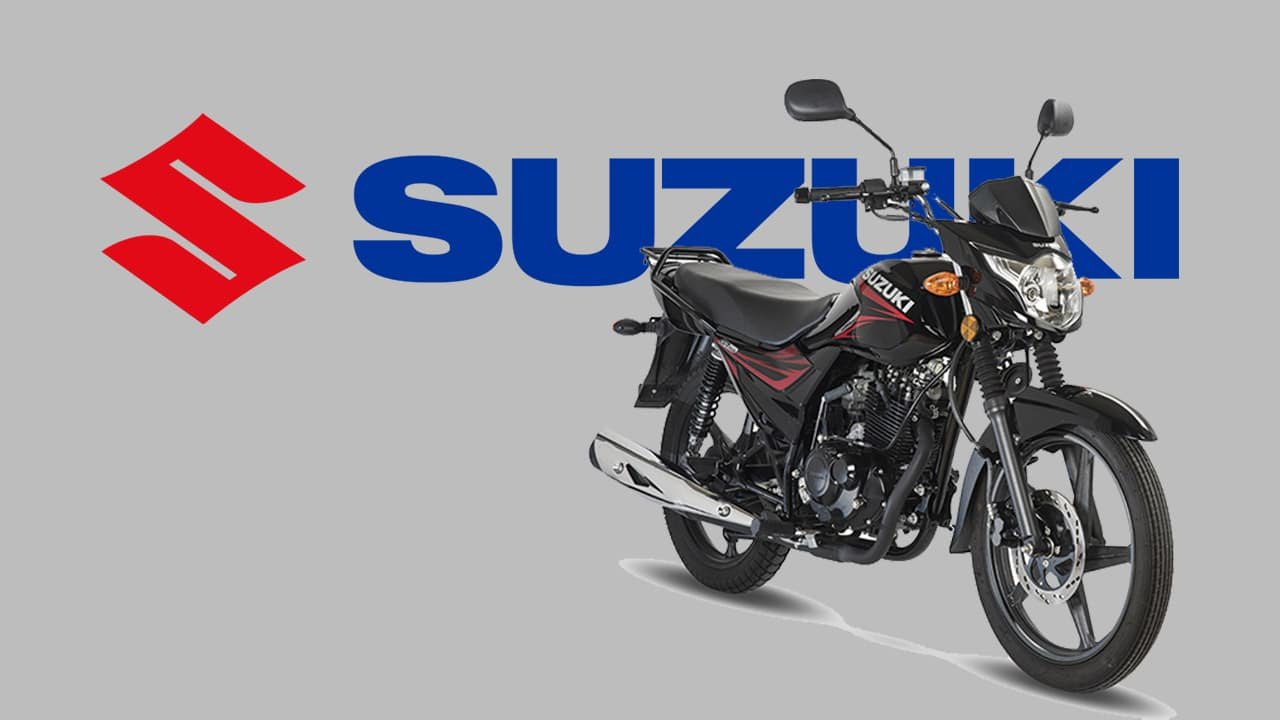
    Pak Suzuki has once again announced a rise in prices across the board due to the depreciation of the Pakistani rupee (PKR), much like all of its two-wheeler rivals in the Pakistani market.

    The majority of motorcycle consumers are no longer able to afford the motorcycles due to price increases. Unfortunately, the only option left for the locals is the Chinese bike, which has become more expensive and of lower quality.

    Here are Suzuki motorcycles’ most recent prices:

    Variant Old Invoice New Price Increase
    Suzuki GD-110S Rs219,000 Rs229,000 Rs10,000
    Suzuki GS-150 Rs239,000 Rs251,000 Rs12,000
    Suzuki GS-150 SE Rs256,000 Rs271,000 Rs15,000
    Suzuki GR-150 Rs349,000 Rs365,000 Rs16,000
    Pak Suzuki Motorcycles Latest Price List August 2022

    In comparison to its earlier price of Rs349,000, the Suzuki GR-150 150cc model saw the largest price increase of Rs16,000; the bike now costs Rs365,000.

    It’s important to note that since the start of the year, Pak Suzuki has announced four price increases. In addition to motorbikes, Pak Suzuki also announced a price rise for its car lineup.

    Many assemblers have reported running out of production-critical materials, which the majority of automakers have mostly attributed to the ongoing decline of the Pakistani rupee versus the US dollar.

  • ADB projects Pakistan’s economy to ‘recover slightly’ in FY23

    ADB projects Pakistan’s economy to ‘recover slightly’ in FY23

    In FY2023, Pakistan’s Gross Domestic Product (GDP) growth is expected to modestly improve due to structural changes, according to the Asian Development Bank (ADB).

    According to the bank’s most recent Asian Development Outlook Supplement, Pakistan’s GDP growth is predicted to decrease in FY22 (which ends on June 30, 2022), as a result of fiscal tightening measures taken to control rising demand pressures and contain external and fiscal imbalances.

    As the country’s inflation surged from 12.3 per cent in December 2021 to 21.3 per cent in June 2022, the bank slightly lowered Pakistan’s inflation for FY22 and dramatically for FY23.

    “In addition to the effects of elevated global energy and food prices, the government’s efforts to revive the stalled International Monetary Fund (IMF) programme has meant raising power tariffs and withdrawing subsidies in the oil and power sectors,” said ADB.

    In comparison to Sri Lanka, which boosted its policy rate by 950 basis points over the previous six months, the State Bank of Pakistan (SBP) has upped interest rates by 525 basis points since January 1. This also makes it one of the most active central banks in the region.

    The ADB also reduced its 2022 growth prediction for Asia and issued a warning that things could become worse as a result of the conflict in Ukraine and supply chain disruptions that are expected to drive up costs.

    Read more: Pakistani rupee plunges to Rs227 against US dollar at midday trading

    Although Covid-19’s effects had subsided, the region was now dealing with the consequences of Russia’s invasion of Ukraine, lockdowns in China, and aggressively raised interest rates, according to the Manila-based lender.

    The bank reduced its 2022 growth prediction to 4.6 per cent to reflect the decline in developing Asia, which runs from Kazakhstan in Central Asia to the Cook Islands in the Pacific.

    South Asia’s economy is anticipated to grow less than the projected rate of growth in the Asian Development Outlook 2022.

  • Banks increase charges for ATM withdrawals from other banks

    Banks increase charges for ATM withdrawals from other banks

    For cash withdrawals at ATMs from banks other than the account’s host bank, some commercial banks have increased the per transaction cost from Rs18.50 to Rs23.44.

    Some banks have already begun charging their clients, while others are expected to do so within the coming weeks.

    The details indicate that commercial banks, including United Bank Limited (UBL), Askari Bank, Bank Al Habib, Meezan Bank, Bank of Punjab (BOP), Telenor Microfinance Bank, and National Bank of Pakistan (NBP), updated their schedule of charges and increased the fees on cash withdrawals made by customers of various banks through their ATMs.

    Banks like Bank Alfalah, MCB Bank, and Habib Bank Limited did not change the fees for cash withdrawals made through the Link 1 changeover. On the same account, these banks charge between Rs18.50 and Rs18.75 every transaction.

    These fees make up a substantial portion of 1-Link Switch as well as a small portion of a bank that operates an ATM that is utilised by clients of other banks to conduct transactions.

    Not all banks will necessarily use the same strategy. However, the majority of banks, are expected to gradually impose or increase the fees.

  • SBP shortens car loan tenure to deflate import bill

    SBP shortens car loan tenure to deflate import bill

    The State Bank of Pakistan (SBP) decreased the consumer lending duration for vehicles on May 24, bringing it to a maximum of three years for cars with engine displacements greater than 1,000cc and five years for those with engine displacements less than 1,000cc.

    “The maximum tenure of auto finance facility is reduced from five (5) years to three (3) years for vehicles above 1,000 cc engine displacement and from seven (7) years to five (5) years for vehicles up to 1,000 cc engine displacement,” read the circular.

    The SBP decided to change the Prudential Regulations for Consumer Financing (PRCF) in its circular Letter No. 19 of 2022:

    Other amendments issued previously, via BPRD Circular Letter No. 29 dated September 23, 2021, will now be applicable on financing for all locally assembled/manufactured vehicles, including financing for vehicles with up to 1,000 cc engine capacity and locally assembled/manufactured electric vehicles, according to the central bank.

    “However, the regulatory treatment of Roshan Apni Car product communicated earlier to RDA participant banks will continue to remain effective,” read the circular.

    “The maximum tenure of auto finance facility is reduced from five (5) years to three (3) years for vehicles above 1,000 cc engine displacement and from seven (7) years to five (5) years for vehicles up to 1,000 cc engine displacement,” read the letter.

    Other amendments issued previously, via BPRD Circular Letter No. 29 dated September 23, 2021, will now be applicable on financing for all locally assembled/manufactured vehicles, including financing for vehicles with up to 1,000 cc engine capacity and locally assembled/manufactured electric vehicles, according to the central bank.

    “However, the regulatory treatment of Roshan Apni Car product communicated earlier to RDA participant banks will continue to remain effective,” read the circular.

  • Federal Govt teachers demand pay raise, promotion

    Federal Govt teachers demand pay raise, promotion

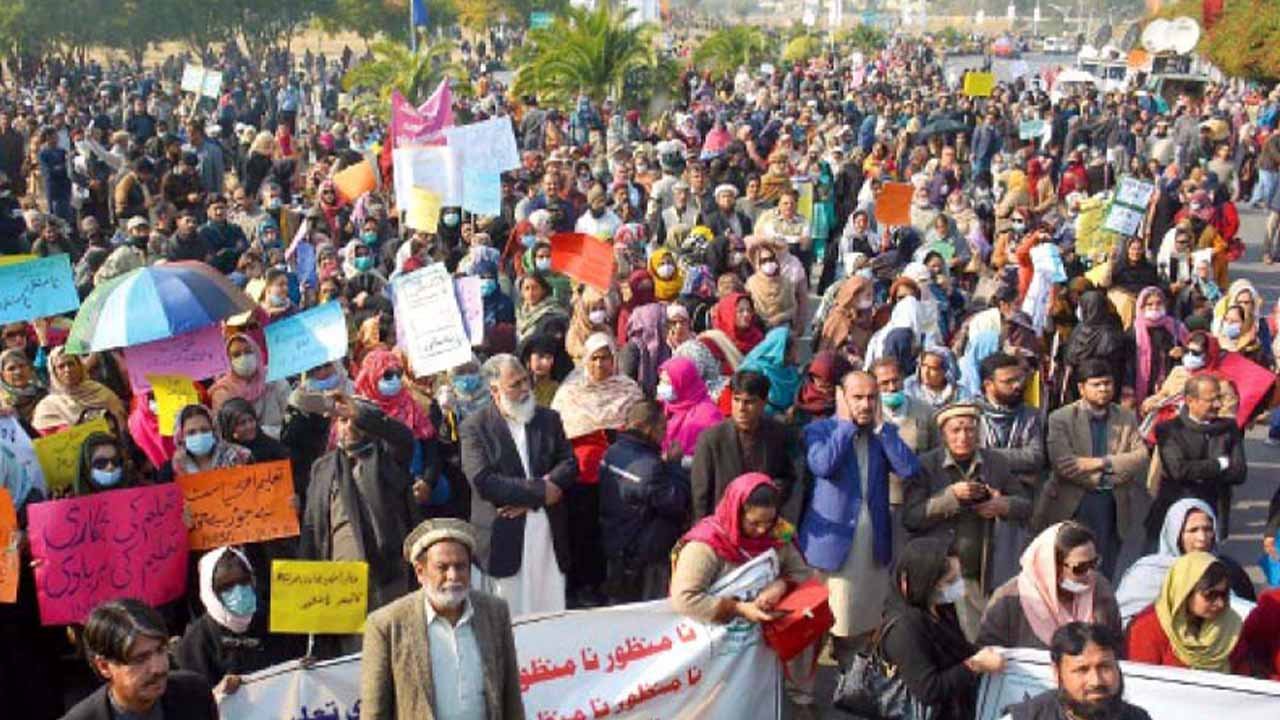
    Federal government employees have warned to hold another sit-in in the federal capital if their demands for salary increments and promotions are not met by May 23.

    They voiced the statement during a rally in front of Parliament House organised by the All-Government Employees Grand Alliance (AGEGA), where a significant number of teachers showed up, responding to the Federal Government College Teachers Association’s call (FGCTA).

    Dr Nazir Ahmed Bhutta, the FGCTA’s General Secretary, urged the government to fulfill its promise made last year in February.

    As per the agreement, all perks or allowances should be combined with basic salaries, employees should be given timely promotion and raise, including pay and pension adjustments should be implemented to minimise wage discrepancy.

    Professor Tahir Bhatti, president of the FGCTA (local unit of H-9 College), demanded the return of the Saturday weekly off for government employees who, he claimed, couldn’t afford to work six days a week due to a large increase in fuel prices in recent months.

    To preserve electricity, he believes the government should proclaim Saturday as a holiday.

    Professor Farhan Azam, senior vice-president of the FGCTA, noted that the remuneration of employees in different departments differed significantly, causing resentment among lesser-paid staff of the same grade. He proposed that professionals of the same status should have the same pay and privileges.

    Rehman Bajwa, AGEGA’s chief coordinator, cautioned that if the employees’ demands were not met by May 23, they would take to the streets after speaking with their management.

  • All banks to remain open this Saturday

    All banks to remain open this Saturday

    State Bank of Pakistan has recently announced that all banks and their branches would be open on Saturday, April 30, 2022.

    In accordance with SBP’s orders incorporated in Banking Policy and Regulations Department (BPRD) Circular Letter No. 11 of 13 April 2022, all banks and their branches will remain open on Saturday, April 30, 2022.

    Following the announcement by the Pakistani government of public holidays on the occasion of Eid-ul-Fitr from May 2 to May 5, the general public is encouraged to conduct their banking transactions on Saturday, April 30, 2022.

    Read more: Pakistan’s forex reserves inch up to $17.05 billion

    Moreover, banks have been advised to make Alternate Delivery Channels (ADCs) such as ATMs, Mobile Banking, and Internet Banking available 24 hours a day, seven days a week during the Eid holidays.

  • Banks to remain closed for public dealing on 4 April

    The State Bank of Pakistan (SBP) and all other banks will be closed for public business on Monday, 4 April, to observe a ‘Bank Holiday’ for Zakat deduction.

    Development Finance Institutions (DFIs), Microfinance banks (MFBs), and all other banks will be closed to the public on Monday.

    On the Bank Holiday, which will be observed as a working day, all of these institutions’ employees will carry out their official tasks except client dealing, in-office, or through work-from-home (WFH), as per the official instructions.

    According to the central bank’s announcement, it will be closed for public trading on Monday, “which shall be observed as Bank Holiday for the purpose of Zakat deduction”.

    “However, all staff of banks, DFIs, and MFBs will report to work on Bank Holiday as a normal working day (except for public trading),” the statement continued.

  • Surprisingly high profitability in corporate sector despite pandemic

    Surprisingly high profitability in corporate sector despite pandemic

    The results for corporate profitability are pleasantly surprising as the aggregate profitability shown by listed companies amounted to Rs 213.9 billion.

    The year-on-year growth rate for the recent quarter is 38 per cent. In sector-wise profitability: commercial banks have contributed to the highest sum of Rs48 billion earning in the quarter.

    The oil and gas exploration and production sector also yields the highest profits and contributed Rs41bn tax for the quarter.

    Furthermore, the sector that has reported surprising growth in profit is technology and communications. Put together the total earnings are Rs5.9bn, which is 27.6 times higher from Rs207m in the same quarter of 2019.

    Software companies like Avanceon Ltd, Systems Ltd, TRG Pakistan and Netsol Technologies saw their share prices grow during the year.

    TRG Pakistan shares were at Rs12.87 on March 25, 2020. It is now trading at Rs143, which is 11 times higher in one year. Netsol Technologies surged from Rs27.16 a share to Rs285, up ten times in one year.

    Analysts said that technology companies even in the United States (US) challenged the worst economic downturn and reported robust financial growth during the pandemic.

    Engineering sectors mainly comprising steel companies also outperformed most sectors with earnings of Rs5.1bn, recording a growth of 18.7 times from Rs257m a year ago.

    The Cement sector has benefitted from the government’s great incentives to the construction industry. They have reported 570 per cent growth, a total profit of Rs11.7bn which was Rs1.7bn in 2019.

    “The strong corporate profitability provides strong support to the market and should be a key driver for the KSE-100 index once political noise dies down,” said Raza Jafri, head of equities at Intermarket Securities.

    The food sector’s earnings were satisfactory but were dragged down by the poor profitability of FrieslandCampina Engro.

  • VIDEOS: Pakistanis, Indians start robbing banks of hand sanitisers

    VIDEOS: Pakistanis, Indians start robbing banks of hand sanitisers

    From wearing masks to cleaning hands with soap and water or sanitiser every hour, people are trying every possible way to protect themselves from falling sick amid the coronavirus outbreak.

    With this leading to a shortage of sanitisers not just in Pakistan but also across the globe, videos showing rather desperate attempts by people to stay healthy in time of COVID-19, have started doing rounds over the internet.

    One such video was recently shared by journalist Naila Inayat, who wrote, “When you think no one is watching you.”

    The 32-second clip is a CCTV footage from March 27 of an ATM. The video shows a man taking out money from the machine. As soon as he puts the money in his pocket, he spots the bottle of hand sanitiser. Instead of pumping it in his hands, he puts the entire bottle inside his jacket and walks out of the vestibule.

    WATCH VIDEO:

    It, however, wasn’t the only video of its sort.

    Here’s another video shared by a user on Facebook last week.

    Meanwhile, similar videos have gone viral from across the border too.

    Have something to add to this story? Let The Current know in the comments.