Tag: basic food items

  • Govt announces Rs5 billion Ramzan Relief Package for poor

    The government of Pakistan has unveiled a Ramzan Relief Package worth Rs5 billion to aid the poor during the holy month of Ramzan. Syed Murtaza Mahmud, Minister for Industries and Production, announced the package during a press conference, stating that the federal government’s first priority is to alleviate hardship and inflation for citizens.

    The package went into effect on March 21 and will run until the end of the holy month. In addition to the five basic food items already being provided at subsidized rates through the Utility Stores Corporation, the Prime Minister has expanded the relief package to include 19 subsidized items such as flour, sugar, ghee, cooking oil, tea, dates, besan, dal mash, dal mong, milk, drinks, and spices.

    The USC official also outlined two types of subsidies: targeted and general. Targeted subsidy is exclusively for users registered under the Benazir Income Support Program (BISP), while general subsidy is accessible to the entire country.

    For example, targeted subsidy flour is priced at Rs400 per 10 kg bag, sugar at Rs70 per kg and ghee at Rs300 per kg, while under general subsidy, a 10 kg bag of flour is available at Rs648, sugar at Rs91 per kg, and ghee at Rs490 per kg. The USC also provides a subsidy of Rs20 on white gram, super basmati rice, sella rice, and broken rice, Rs50 per kg on gram flour, and a 10% discount on spices. Tea, dates, milk, and beverages will also receive subsidies.

    The Prime Minister has also launched a free flour package in collaboration with the distribution points and utility stores established in different areas of Islamabad. Each registered household under BISP will receive one bag of 10 kg as a gift for the first time, and the remaining two bags will be received after 7 days.

    During the entire month of Ramzan, every registered household will receive three bags of flour (10 kg per bag) free of charge. To check eligibility, citizens can SMS their National Identity Card to 8171 or visit the BISP offices. It should be noted that apart from flour, sugar, and ghee, other subsidized items will be provided at the same rate for both general and targeted subsidy users.
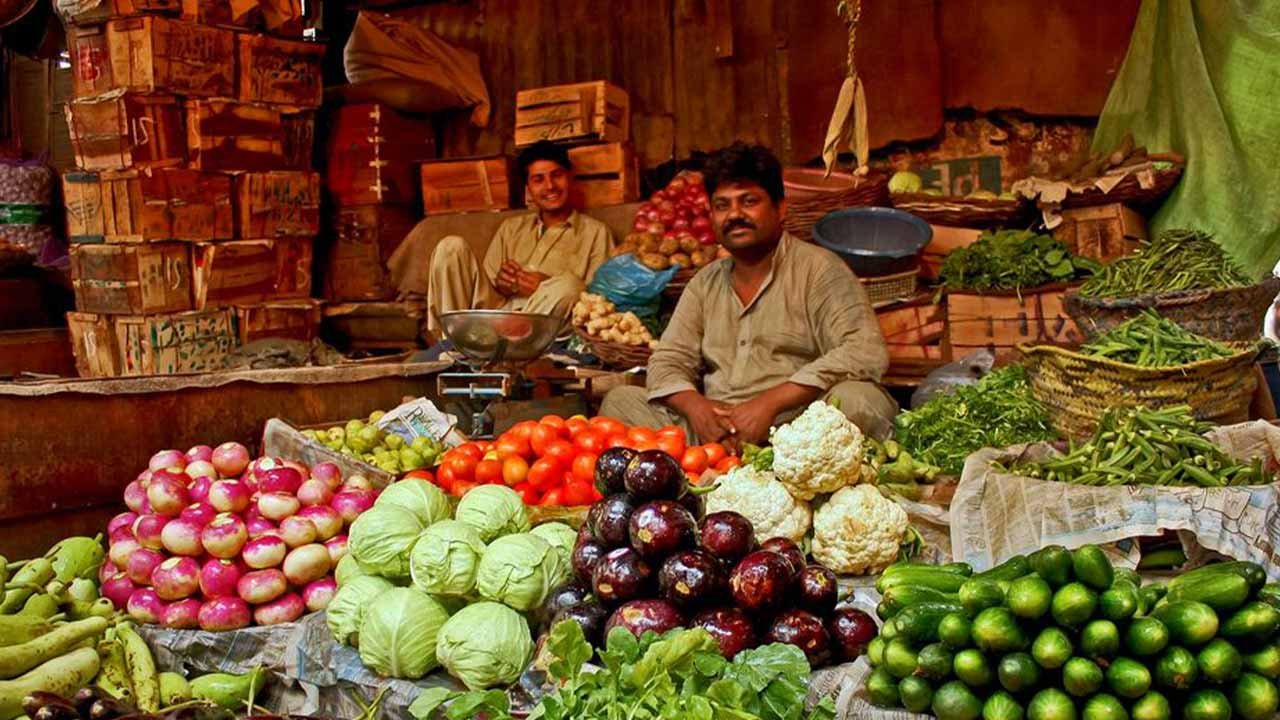
  • Weekly Inflation jumps 34.5% from last year due to petrol and food prices

    Weekly Inflation jumps 34.5% from last year due to petrol and food prices

    According to official statistics released on Friday, prices rose at their fastest pace in more than four months in the outgoing week, mostly due to rises in the cost of food and petroleum.

    Sensitive Price Indicator (SPI) data showed that as a result, short-term inflation increased from the previous week’s 32.6 per cent to 34.5 per cent on an annual basis for the week that ended on February 2, according to the Pakistan Bureau of Statistics (PBS).

    The week-on-week inflation figure also jumped to 2.8 per cent from 0.45 per cent a week ago. Of the 51 items tracked, prices of 32 items increased, one item decreased, whereas those of 18 items remained unchanged.

    The 34.5 per cent surge in prices is the highest increase since the week ending Sept 15, 2022, when the SPI inflation was recorded at 40.6 per cent.

    The items whose prices increased the most compared to the previous year were onions (up 556.36 per cent), chicken (90.9 per cent), eggs (81.7 per cent), diesel (81.4 per cent), petrol (68.8 per cent), tea (63.9 per cent), broken basmati rice (63.4 per cent), rice Irri-6/9 (62.4 per cent), pulse moong (61.1 per cent), bananas (57.4 per cent), gram pulse (53.2 per cent), bread (48.8 per cent), wheat flour (48.4 per cent), powdered salt (48.1 per cent), maash pulse (46.2 per cent), LPG (43.8 per cent), mustard oil (42.1 per cent), and washing soap (42 per cent).

    Prices of tomatoes (62 per cent), powdered chillies (15.3 per cent), electricity (12.3 per cent) and gur (0.27 per cent) dropped.

    On a week-on-week basis, the highest change was noted in the prices of garlic (17.1 per cent), gram pulse (7.1 per cent), bananas (4.8 per cent), chicken (4.4 per cent), mash pulse (3.9 per cent), masoor pulse (3.9 per cent), mustard oil (3.5 per cent), eggs (3.4 per cent), moong pulse (2.3 per cent), sugar (2.3 per cent), vegetable ghee (2.13 per cent), and broken basmati rice (2.12 per cent), LPG (17.6 per cent), petrol (16.2 per cent), and diesel (15.3 per cent).

    The SPI increased by 1.71 per cent for the lowest-income group (i.e. people earning below Rs17,732 per month) and by 3.3 per cent for the group with a monthly income of more than Rs44,175, according to the PBS.