Tag: BBC Hardtalk

  • It’s “undeclared martial law” in Pakistan: Imran Khan

    It’s “undeclared martial law” in Pakistan: Imran Khan

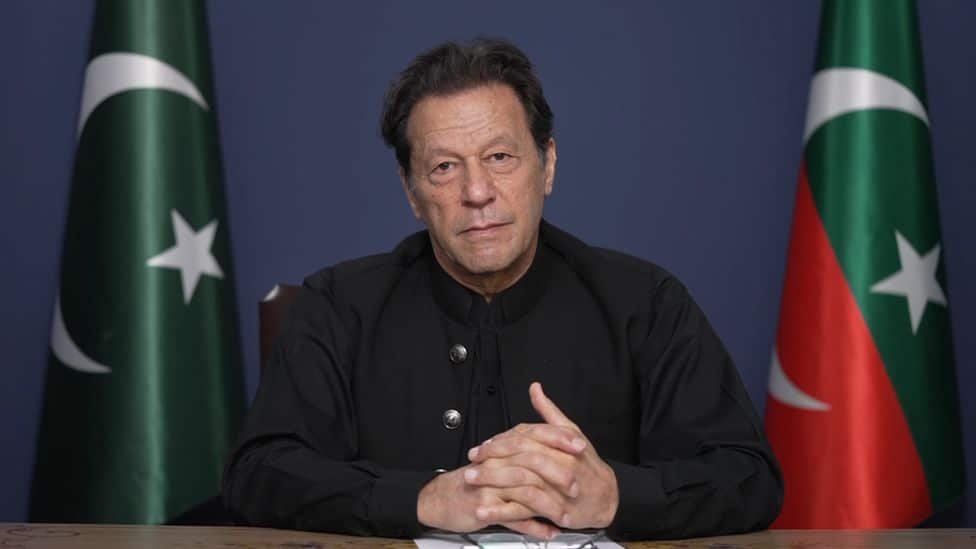
    Former Prime Minister of Pakistan Imran Khan has said while talking to BBC HARDtalk that there is “undeclared martial law” in Pakistan, adding that “fascists” are leading the country and taking it into “dark ages”.

    Imran was elected in 2018 and ruled the country for four years. He was removed from office with a parliamentary no-confidence vote last year.

    According to Imran Khan, a free and fair election is the only solution for political stability in Pakistan.

    Stephen Sackur, the presenter, asked Imran Khan if it was true that there was the involvement of the army in the 2018 election.

    In response, Imran Khan said that it’s not true, asking that if there was involvement of the army establishment, then how did Pakistan Tehreek-e-Insaf (PTI) clean sweep in by-elections.

    “How come, despite the establishment openly going against us, trying to dismantle us, how come after we are out of government, we won 30 out of 37 by-elections?”

    He also said that the establishment thinks that my removal from the government can weaken my party, “Normally, it happens when you’re out of power for quite a while. But instead, what happened was that the party’s popularity kept growing”.

    He also stated that PTI workers were not involved in the violent protests of May 9 and that there should be a fair investigation into this matter.

    Imran Khan also said, “They have tried everything. They have put 10,000 people in jail, including women and peaceful protesters.”

    He repeated that “The only solution to Pakistan is free and fair elections. That’s the only way we will get out of this mess.”

  • ‘No one can dare undermine me,’ Fawad Chaudhry burns BBC HARDTalk

    ‘No one can dare undermine me,’ Fawad Chaudhry burns BBC HARDTalk

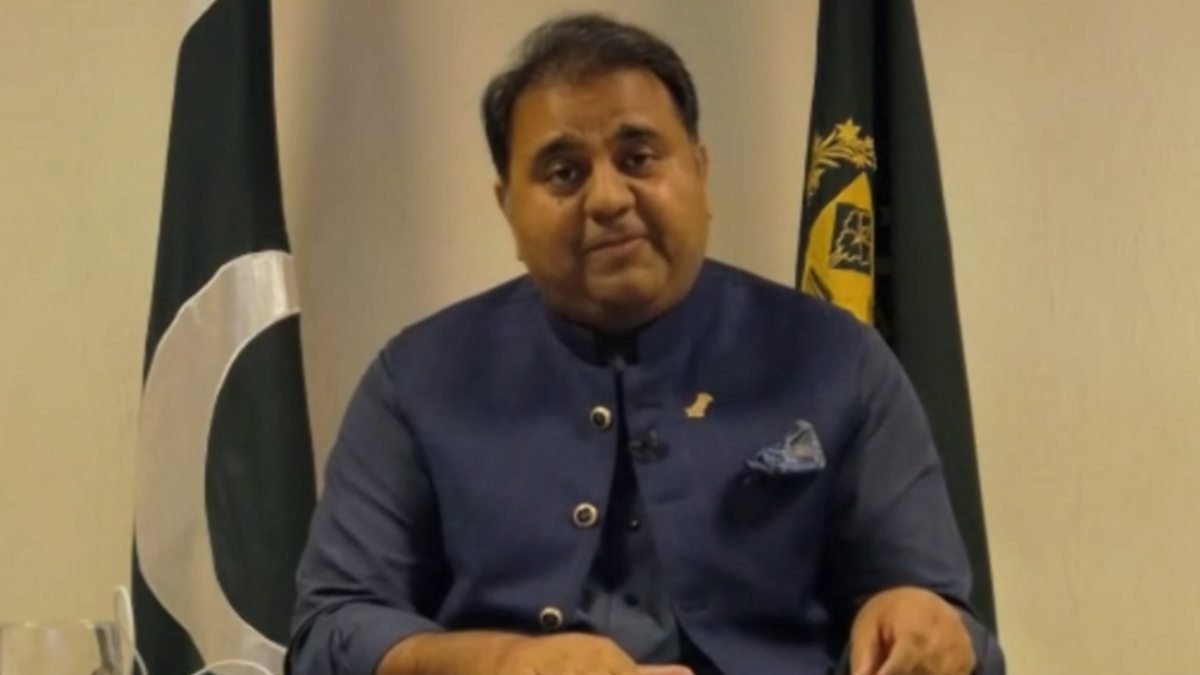
    Federal Minister for Information and Broadcasting Fawad Chaudhry talked on the protection of journalists, the involvement of the establishment within the state, the economy of Pakistan, missing persons, popularity of Prime Minister Imran Khan, Covid stituation and many other issues in an interview given to BBC host Stephen John Sackur on BBC HARDtalk.

    Journalists Protection

    The host opened the interview by asking what is the government and Fawad Chaudhry being the Information Minister doing to protect the journalists of the country. Sackur mentioned the recent attack on journalist Asad Ali Toor, who was severely beaten up by unidentified assailants in his apartment. Sackur further mentioned how a senior journalist and former Chairman of Pakistan Electronic Media Authority (Pemra), Absar Alam, was shot in Islamabad. To which Fawad Chaudhry replied, “Individual incidents do happen. The situation is not only dangerous for journalists but it has been for all the citizens of Pakistan. We have faced the worst terrorism. When we were fighting our war against terrorism, we lost a lot of field journalists and many civilians.”

    “Benazir Bhutto too got killed due to terrorism. We have been dealing with tough times,” replied Fawad.

    Stephen Sackur asked what the state was doing about the involvement of state agencies in such incidents.

    “It’s a bit fashionable for the western media to accuse ISI (Inter-Services Intelligence)
    when such incidents happen. When you name any organisation or Pakistani intelligence agency, you are bound to produce evidence of their involvement as well,” replied the minister. “The two specific incidents which you have mentioned, the investigation is still under process, I still don’t know under what pretext have you concluded that the state must be involved in any of this.”

    Direct State Interference

    BBC host asked Chaudhry about freedom of speech in Pakistan. He said that media censorship has increased during Imran Khan’s tenure. Chaudhry replied, “We have about 112 private channels, 43 international channels, with this kind of mass media we have, how do you expect the state to intimidate the media? How can the state be accused of intimidating the media?”

    Censorship

    “I am the Information Minister of the world’s fifth-largest state. I am the Information Minister of one of the world’s seven nuclear states of the world. No one can dare to undermine me. I am here with full authority and I decide in Pakistan what will and what is happening,” answered Fawad when told by Sackur that Chaudhry has no real power or control.

    PTI government’s comparison with previous government’s

    The host compared the working of the Pakistan Tehreek-e-Insaf (PTI) with previous governments.

    “This may be a perception of some Indian-influenced think tanks, not ours. This is not the perception of the people in general. Imran Khan is the most popular prime minister,” said Fawad.

    “As said, don’t undermine the elected government of Pakistan. Imran Khan has received nearly 200 million votes. This is not a joke. He is the prime minister of a nuclear state. He takes the decisions, the cabinet takes the decisions,” added Fawad.

    Relation with establishment

    Fawad Chaudhry said that we have a very good relationship with the ‘so-called establishment’ “as you term it so often. They are part and parcel of our system. We have huge respect for them, but the decision-making rests with the prime minister and the cabinet.”

    Missing Persons

    The BBC host asked about missing persons the security establishments, and the deep state?

    “ISI and army respect human rights just as any other civilian government will do. They are the most civilised army of the world, they are the most responsible army of the world. People in Pakistan respect them for their role,” said Fawad.

    “Least number of missing persons were reported in Imran Khan’s government. We are the only government that has just passed a law against disappearance. We are the only ones who have made illegal confinement a criminal offense. And now the bill has been passed and will go to the parliament,” added Fawad

    Imran Khan’s pledge to deliver

    The show host said that PM Khan’s promises have not been delivered to the people of Pakistan.

    “Unfortunately, I do not agree with your conclusion. Right now Pakistan’s growth rate is 3.94 per cent, which is one of the highest in the whole world despite all the Covid crises,” said Fawad.

    Fawad added, “People who have voted for Prime Minister Imran Khan and PTI are still ardent fans. In the next elections, PM Imran Khan will be elected again.”

    Covid situation

    Sackur asked why only one per cent of Pakistan’s population has been vaccinated.

    “As far as Covid is concerned Pakistan is a great success story. The partial lockdown story that Prime Minister Imran Khan implemented in Pakistan was a great success story,” replied Chaudhry.
  • Ishaq Dar ‘enjoyed intense interview’, believes BBC HARDtalk host

    Stephen Sackur, the host of the BBC News HARDtalk show, said that Pakistan Muslim League-Nawaz (PML-N) leader Ishaq Dar “appeared to enjoy and appreciate the intense conversation at times” during the show that many say had left Dar ‘redfaced’.

    Dar had appeared on the BBC show last month, where he was grilled by the show host for allegedly owning assets beyond means. He had failed to give straight answers, a fact celebrated by the government officials.

    BBC Urdu interviewed Sackur, who told them that he “enjoyed” interviewing the former finance minister of Pakistan. “I was delighted that Ishaq Dar wanted to be on the show. We are making conscious efforts to cover Pakistan more thoroughly on HARDtalk,” the journalist told BBC Urdu.

    According to Sackur, his show is “supposed to be an intense interview” and Dar was no exception,” he added. Sackur said he has enough experience to ensure that high-profile figures don’t dodge the questions. “The trick is you ask the same question so many times to get the straight answer,” he said.

    The BBC anchorperson said HARDtalk was not a “boxing match where he treated the interviewee like an opponent”.

    He also praised Dar for being a “direct speaker”.

    DAR ON HARDTALK:

    Last month, Dar, who is in a self-imposed exile after corruption cases were filed against him, appeared on BBC News to talk about corruption charges, PML-N’s fight against the government, and NAB.

    During the show, the host asked Dar: “Is it your contention that the National Accountability Bureau (NAB) has no integrity? To this, Dar responded that NAB has lost its integrity. “It is an institution that has been used against political opponents.”

    Dar said the prime allegation in the Panama Papers Joint Investigation Team report on which the Supreme Court directed NAB to file a reference against him was that he didn’t file his tax returns in Pakistan for 20 years i.e. 1981-2001. Dar said as a chartered account, he had never missed filing his tax returns while living in the UK and North America, as he called these “blatant allegations”.

    At this the host asked Dar about the number of properties owned by his family. The PML-N leader responded, “It’s all in my tax returns.”

    Upon the insistence of the host, he said: “I have my main residence in Pakistan which has been taken over by this regime… I haven’t got too many properties.”

    “How many properties do you and your family own,” the host asked him again. At this, Dar said: “One.” At this, the show host asked him about the news reports in the Pakistan press that claim that the former PML-N minister owned multiple properties in and outside Pakistan. “You are sitting in London and you don’t own anything here,” the host asked Dar.

    Dar responded that he doesn’t own any property in London or anywhere else as claimed by the media reports.

    However, he went on to admit that his sons recently acquired a villa in Dubai. “They are adult and are in the business for the past 17 years,” he clarified.

    Dar, 69, is currently in London, “undergoing medical treatment”. He is absconding from several cases in Pakistan since 2017 and has been declared a proclaimed offender by the courts. He is facing charges of accumulating assets beyond known sources of income.