Tag: Bilawal

  • ‘PPP not in favour of Governor Raj, but…’; Bilawal Bhutto leaves option open

    ‘PPP not in favour of Governor Raj, but…’; Bilawal Bhutto leaves option open

    Chairman of the Pakistan Peoples Party (PPP) Bilawal Bhutto Zardari on Friday said that his party is not in favour of imposing Governor Raj in Khyber Pakhtunkhwa (KP), but the option could be considered following the deteriorating security situation in KP.

    Talking to journalists after attending a National Assembly (NA) session, former Foreign Minister Bilawal Bhutto stated, “PPP is generally not in favour of Governor Rule. There are very limited circumstances for it.”

    He remarked that the 18th Amendment to the Constitution made sure that if a governor rule is imposed anywhere, the provincial assembly has the authority to ensure it is not imposed for a longer period.
    Responding to the security situation in Balochistan and KP, he remarked that CM KP is struggling in his own village.

    He said, “The Centre and provincial government must deal with this situation together. For the first time, it is visible that it’s not just a question of national security but also there is a threat to the establishment of peace.”

    Responding to questions about nineteenth constitutional amendment, Bhutto said that it would be made with the representative’s consensus of all parties in the committee.

  • PPP MNA raises questions about party’s Punjab chapter

    PPP MNA raises questions about party’s Punjab chapter

    Makhdoom Jamiluzzaman, a Pakistan Peoples Party (PPP) affiliated Member of the National Assembly (MNA) has expressed disappointment over his party’s performance in Punjab.

    ‘’Bilawal Bhutto Zardari cannot become Prime Minister (PM) with Sindh votes only,” he said at the ceremony at a local hotel on his father’s 85th birth anniversary.

    ‘’Punjab PPP leaders have been holding essential party positions yet failing to help Bilawal. Therefore, they must step down or be removed,’’ he stated.
    Jamiluzzaman, the son of the late PPP stalwart Amin Fahim observed that the same people vote for Chief Minister (CM) Punjab Marium Nawaz and former Prime Minister Imran Khan—but not for Bilawal Bhutto. He questioned his party ‘’Why do these votes not go to Bilawal? Why is the Punjab PPP sleeping? Why are Punjab people holding important positions?”

    He also hinted at leading a delegation to meet party leadership to reactivate PPP in Punjab.

  • PM vows to uphold 18th Amendment

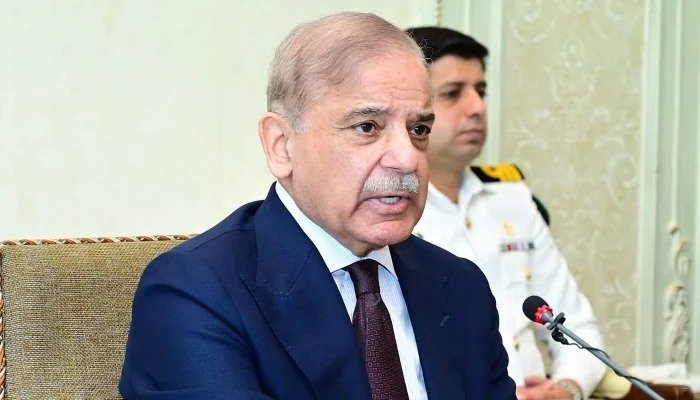
    PM vows to uphold 18th Amendment

    Agreeing with Pakistan Peoples Party (PPP) Chairman Bilawal Bhutto-Zardari’s remarks, Prime Minister Shehbaz Sharif vowed to transfer all relevant ministries and departments back to provinces – which are constitutionally under the purview of provinces.

    The Prime Minister stated that the federation will strengthen the provinces by devolving all relevant ministries under the 18th Amendment and national expenditures will be minimized to cut loss.

    During the campaign for the general elections, Bilawal suggested that if his party were elected, then the federation would eliminate 17 federal ministries to save the taxpayers’ Rs.300 billion.

    Similarly, the former foreign minister has suggested that 17 federal ministries should be devolved to provincial authorities.

    The 18th Amendment, passed on April 8, 2010, was a landmark bill that gave provinces autonomy. It devolved multiple federal ministries and powers to provinces. It divested the president of all his executive authority and made him a ceremonial head of the state.

  • ‘Getting teary-eyed upon mention of my mother is my trauma response’, Bilawal opens up about mental health

    ‘Getting teary-eyed upon mention of my mother is my trauma response’, Bilawal opens up about mental health

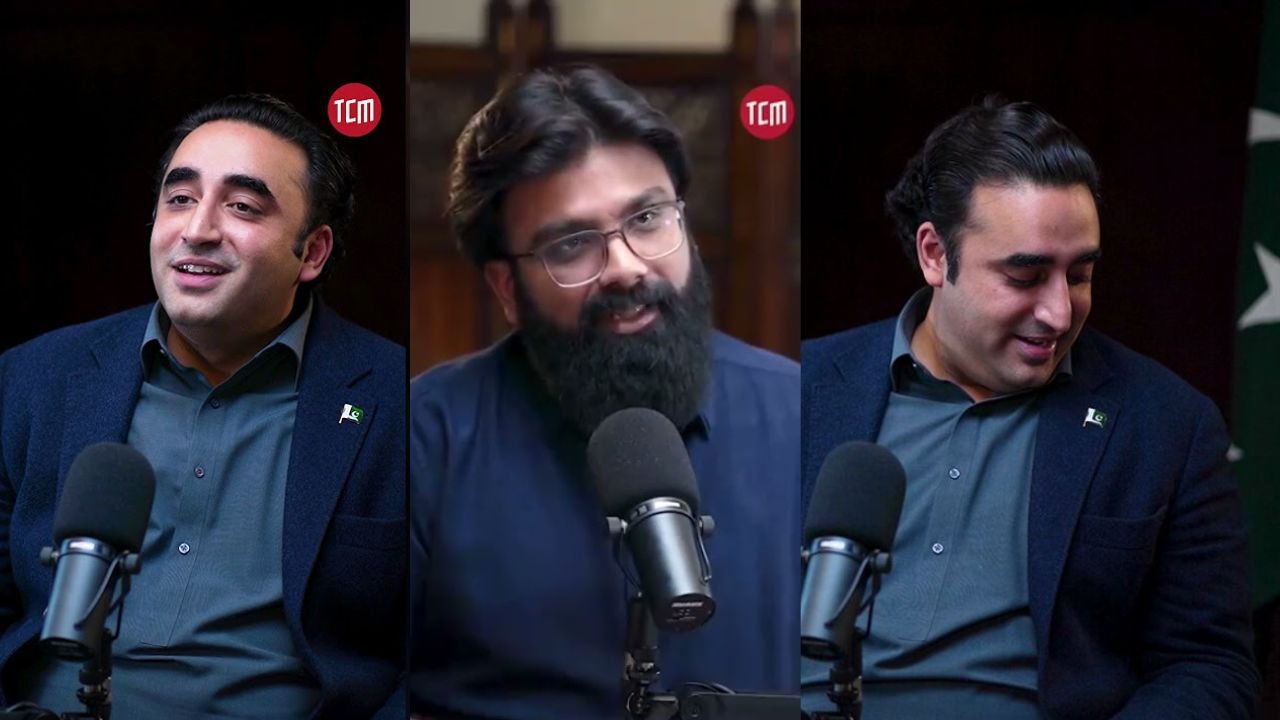
    Chairman Pakistan People’s Party (PPP) Bilawal Bhutto-Zardari talked about mental health, climate change, politics and other issues in The Centrum Media’s podcast with Talha Ahad. Bilawal’s conversation about mental health and climate change was the most relatable by any Pakistani politician.

    When asked how he copes with the trauma of losing so much, especially his mother Benazir Bhutto who was assassinated, and if it has had any impact on his mental health, Bilawal responded candidly. He related the events that unfolded on December 27, 2007. He was in Dubai for his winter break from Oxford when his mother went to Pakistan for the election campaign. He was in Dubai with his father Asif Ali Zardari and his siblings when he heard the news about the attack on television. He was shocked and afraid. It was traumatic. He said he doesn’t even remember the conversation he had with his sisters about this.

    Bilawal Bhutto said that mental issue is a real issue but we do not take it seriously like we do with other diseases. “Your mind is just like any other part of your body,” he emphasised.

    Bilawal said he never went to seek therapy or even talked to a counsellor after having lost so much. He moved on from it like a traditional Pakistani, thinking he should just ‘man-up’ and face it without seeking help. He acknowledged that it was years later that he started reading and understood what he was going through. It was partially because of the “macho” attitude of a typical Pakistani.

    Bilawal admitted he feels the loss of his mother every day but he has learned to make this feeling of loss his strength instead of a shortcoming.

    Bilawal went on to explain his vision for dealing with mental health issues in Pakistan. He wants an “update” in the system. He wants to set up facilities through public-private partnership if he comes in power after elections.

    When asked if he meditates, Bilawal admitted that he tried it but hasn’t done it consistently because he lacks consistency. He watches Netflix shows in his free time. When asked when was the last time he cried, Bilawal said he does not remember.

  • ‘Pakistan’s economy performed best under Nawaz Sharif’: Bloomberg

    ‘Pakistan’s economy performed best under Nawaz Sharif’: Bloomberg

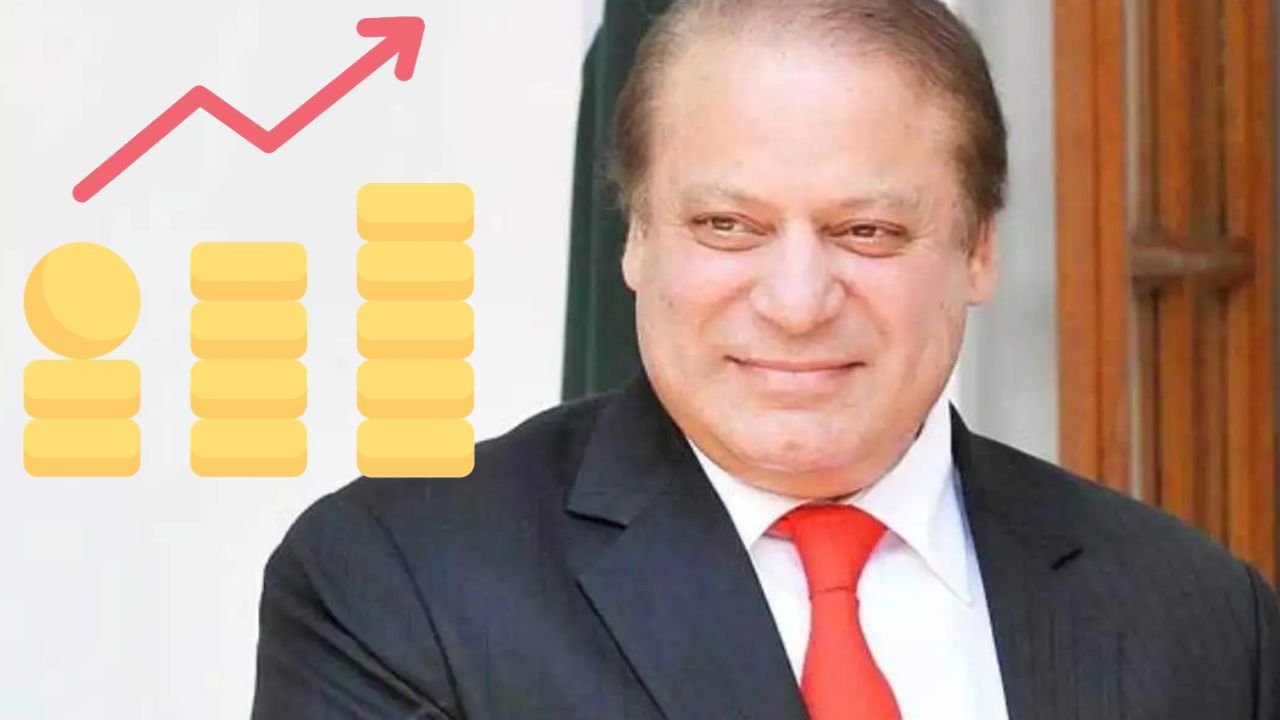
    An analysis by Bloomberg Economics reveals that Pakistan’s economy witnessed its best performance in the past three decades under the leadership of Nawaz Sharif, who served as Prime Minister thrice.

    The report compares economic indicators during Sharif’s tenure with those of his rivals, including Imran Khan’s Pakistan Tehreek-e-Insaf (PTI) and Bilawal Bhutto Zardari’s Pakistan Peoples Party (PPP), using a misery index that combines inflation and unemployment rates.

    According to Bloomberg Economics, the analysis utilized an average of the misery index values over the years when each major political party ruled Pakistan since 1990.

    The results indicate that Sharif’s Pakistan Muslim League (PML-N) outperformed both PTI and PPP in managing economic challenges.

    With general elections scheduled for February 8, Bloomberg suggests that Nawaz Sharif seems poised to return to power for the fourth time, especially as Imran Khan faces legal issues and incarceration.

    Despite Khan’s popularity, with a 57% approval rating according to a recent Gallup poll, Sharif has experienced a surge in popularity from 36% to 52% in the past six months.

    The past three decades saw the PML-N rule Pakistan four times under Sharif and his younger brother Shehbaz Sharif. The PPP under the Bhutto dynasty has held power three times, while Khan was in office for a four-year term ending in April 2022 when he was ousted from power in a parliamentary no-trust vote.

    “Bloomberg Economics used an average of the index values over the respective years when each of the major political parties ruled the country since 1990. A higher value indicates more economic hardship for citizens,” the publication said, explaining its conclusions.

    Bloomberg Economics Misery Index Results for Pakistan showed the Pakistan Muslim League scored 14.5 percent, Pakistan Tehreek-e-Insaf 16.1 percent, and the Pakistan Peoples Party 17.2 percent.

    Pakistan is currently grappling with economic challenges, including seeking a financial bailout from the International Monetary Fund (IMF).

    Inflation is close to 30 percent in Pakistan, the currency was Asia’s worst performer last year and foreign exchange reserves have slumped.

    The incoming government, as per IMF conditions, will need to implement potentially unpopular policies such as withdrawing subsidies and raising taxes. The IMF forecasts a 2% growth in Pakistan’s economy for the current fiscal year after experiencing a contraction in the previous year.

    Despite the positive economic indicators during Sharif’s governance, the report underscores the formidable tasks awaiting the new government in addressing the country’s economic hardships.

  • Bilawal to contest on two, Zardari on one NA seat

    Bilawal to contest on two, Zardari on one NA seat

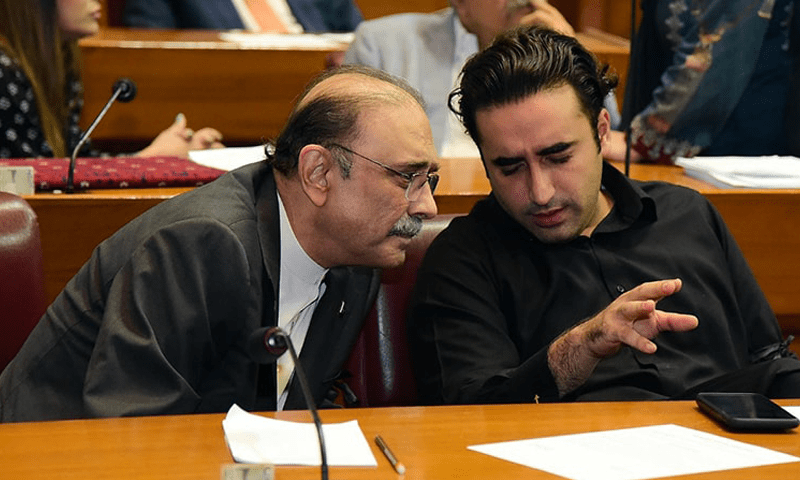
    Bilawal Bhutto-Zardari, the Chairman of the Pakistan Peoples Party (PPP), is set to run for two National Assembly seats in the upcoming general elections, while his father, co-chairman, Asif Ali Zardari will contest from one National Assembly seat from Sindh, as reported by The News on Saturday.

    According to a list of participating candidates from Sindh and Balochistan announced by the PPP (Parliamentarians), the former foreign minister will run for NA-194 in Larkana-I and NA-196 in Qambar Shahdadkot-I, while former president Zardari will contest elections from NA-207 in Shaheed Benazirabad-I.

    The party released its list a day earlier, revealing the candidates’ names and constituencies in Sindh who are going to participate in a significant political competition scheduled for the upcoming month, aiming to secure positions in both the National and Sindh assemblies.

    Other prominent names that the party has fielded for contesting the much-awaited elections for a seat in the lower house from the southern province, include Syed Khursheed Ahmed Shah from NA-201 (Sukkur-II), Nafisa Shah from NA-202 (Khairpur-I), Shazia Atta Marri from NA-209 (Sanghar-I), Pir Aftab Shah Jeelani from NA-211 (Mirpurkhas-I), Mir Munawar Ali Talpur from NA-212 (Mirpurkhas-II), Syed Naveed Qamar from NA-221 (Tando Muhammad Khan), Nabeel Gabol from NA-239 (Karachi South-I) and Abdul Qadir Patel from NA-243 (Karachi Keamari-II), among others.

  • More than 60 government officials close to PPP added to stop list

    More than 60 government officials close to PPP added to stop list

    The names of more than 60 Sindh government officials close to the Pakistan People’s Party (PPP) have been out on the stop list, Azaz Syed has reported for The News. The name of Mukesh Chawla, a PPP leader and former provincial minister, is also on the list.

    According to the report, the National Accountability Bureau (NAB) is conducting an investigation against Sindh PPP leader Mukesh Chawla, asking that he be added to the stop list.

    These officials will be investigated by NAB Karachi, Azaz Syed has said.

    On the other hand, according to a report filed by Hasnaat Malik in The Express Tribune, the gap between PPP and the security establishment has grown after the dissolution of Sindh Assembly.
    PPP was unhappy to see that government officials on prominent posts were being transferred during the caretaker government, the report said.

  • Chronology of Events Leading to No-Confidence Motion Vote

    Chronology of Events Leading to No-Confidence Motion Vote

    Despite the PTI-led government’s efforts to make the no-confidence motion against Imran Khan unsuccessful, the vote occurred on April 10, aligning with the Supreme Court’s orders.

    However, the voting on the motion wasn’t a sudden decision made shortly after an opposition leader’s move. It comprised months of extensive planning to set the motion against the Prime Minister into reality.

    By the end of 2021 — PPP begins convincing PML-N leader Nawaz Sharif to initiate a vote of no confidence against PM Imran Khan.

    November 28, 2021 — PPP’s Khursheed Shah hints at a possible internal shift within the Parliament, stating that the opposition would possess sufficient numerical strength to remove Imran Khan from office.

    December 24, 2021 — Ayaz Sadiq, a leader of PML-N, also endorses that the opposition is inpreparations for an internal shift in power.

    January 11, 2022 — Khawaja Asif, a leader of PML-N, maintains that the government had lost its majority, indicating that a change within the legislature was about to happen.

    January 18, 2022 — PPP chairman Bilawal Bhutto-Zardari states that a vote of no confidence against the senate chairman wouldn’t result in the power shift. He emphasizes that the opposition intends to bring change in leadership at the highest level by aiming to remove the Prime Minister from his office.

    January 21, 2022 — Ayaz Sadiq remarks that the opposition is prepared for a vote of no confidence against the PM, and the timing of this action will be determined at a later stage.

    February 7, 2022 — PML-N and PPP formally consult on a motion of no-confidence against the Prime Minister. PML-N president Shahbaz Sharif assures the party’s readiness for this step under the guidance of Nawaz Sharif. Subsequently, both parties initiate communication with other opposition groups and government allies.

    February 8, 2022 — Shahbaz Sharif introduces the idea of a vote of no confidence against the Prime Minister to MQM-P; Amir Khan, leader of MQM-P, declares to present the proposal to the party’s committee for further discussion.

    February 11, 2022 — Maulana Fazlur Rehman, the chief of the Pakistan Democratic Movement (PDM), speaking on behalf of the opposition, declares the intention to initiate a vote of no confidence against the Prime Minister.

    In the middle of these developments, the government remained dismissive of the risk and openly challenged the opposition to formally present the no-confidence motion.

    February 14, 2022 — Foreign Minister Shah Mahmood Qureshi shares the intention of the government to counter the no-confidence motion through political means, emphasizing the impartiality of the process as the “umpire” is also neutral.

    February 18, 2022 — PMLQ leader Pervaiz Elahi, who was the Speaker of the Punjab Assembly at the time, and MQM-P leader Amir Khan meet to jointly announce their decision to remain aligned with the government and not withdraw their support.

    February 22, 2022 — Interior Minister Sheikh Rasheed challenges the opposition, daring them to gather the support of 172 Members of the National Assembly (MNAs) in their ranks.

    February 23, 2022 (When the Prime Minister departed for his visit to Russia) — Defense Minister Pervez Khattak expresses confidence that the supposed no-confidence motion would not be presented, stating that it was a challenging task to have PTI MNAs in favor of it.

    Assessing the statements, one can conclude that the government did not take the no-confidence motion with a substantial level of seriousness.

    March 8, 2022 — The opposition tables a no-confidence motion against Prime Minister Imran Khan.

    March 9, 2022 — Prime Minister Imran Khan remarks that PPP co-chairman Asif Ali Zardari is hin “gun’s crosshairs”, expressing eagerness for the opposition to bring forth a no-confidence motion against him.

    March 10, 2022 — Bilawal responds to PM Imran Khan’s warning towards Zardari, describing it as “intolerable” and warning the Prime Minister to prepare for the potential repercussions.

    March 10, 2022 — Information Minister Fawad Chaudhry states that the armed forces are aligned with the government.

    March 10, 2022 — Islamabad police starts an operation in Parliament Lodges, resulting in the arrest of over a dozen Ansar-ul-Islam workers and two Members of the National Assembly (MNAs).

    March 11, 2022 — After the release of JUI-F workers and leaders, the party’s leader Fazlur Rehman cancels nationwide protests.

    March 11, 2022 — Sheikh Rasheed announces that the security of Parliament House and Parliament Lodges will be under paramilitary Rangers and Frontier Corps (FC) on the day of the National Assembly vote regarding the no-confidence motion.

    March 11, 2022 — Prime Minister Imran Khan verbally attacks three prominent opposition figures – Fazl, Zardari, and Shahbaz.

    March 12, 2022 — Nawaz Sharif and aggrieved PTI leader Aleem Khan discuss the no-confidence motion in London.

    March 12, 2022 — Sheikh Rasheed and PML-Q leader Moonis Elahi get into verbal exchanges, highlighting growing tensions within the government’s coalition as signs of division become apparent.

    March 13, 2022 — Key ally MQM-P states that they are considering all possible “options” regarding the no-confidence motion.

    March 14, 2022 — PPP and MQM-P reach an agreement to collaborate and work together for the country’s “greater interest.”

    March 15, 2022 — PM Imran Khan declares that the nation is willing to face challenges alongside him instead of endorsing what he referred to as the “three stooges,” indicating someopposition leaders.

    March 16, 2022 — Speaker of the Punjab Assembly, Pervaiz Elahi, asserts that 10-12 lawmakers from the government are under the “safe custody” of the opposition.

    March 18, 2022 — It comes to light that approximately 24 members of the PTI were residing at the Sindh House. The PTI declares it will issue show-cause notices to the dissenting MPs. In response, PTI supporters engaged in violent behavior, forcefully entering Sindh House premises.

    March 21, 2022 — The government submits a reference to the Supreme Court seeking clarification on the interpretation of Article 63(A).

    March 27, 2022 — PM Imran Khan alleges that the opposition’s motion of no-confidence is part of a “foreign-funded conspiracy” designed to remove him from power. These claims were made at a PTI-organized rally in Islamabad.

    March 28, 2022 — The leader of the Opposition in the National Assembly, Shahbaz Sharif, officially tables a no-confidence resolution against PM Imran Khan.

    March 28, 2022 — PTI secures assurance of support from PML-Q as Usman Buzdar steps down, making way for Pervaiz Elahi to be the new chief minister. Meanwhile, the government’s ally BAP sides with the opposition.

    March 28, 2022 — Independent Member of the National Assembly (MNA) from Balochistan, Mohammad Aslam Bhootani, resigns from the ruling coalition and aligns with the opposition.

    March 30, 2022 — PTI’s majority in the National Assembly significantly reduces as MQM-P announces its decision to discontinue its alliance with the government.

    March 31, 2022 — The National Assembly session scheduled for the no-confidence motion against PM Imran Khan postpones till April 3rd.

    March 31, 2022 — PM Imran Khan mentions the US as the sender of a “threatening letter” during a speech to the nation, which he later clarifies as “a slip of the tongue.”

    April 1, 2022 — Both the State Department and the White House jointly reject PM Imran Khan’s allegations.

    April 2, 2022 — On the eve of the no-confidence motion, PM Imran Khan appeals to the youth to demonstrate against what he considers as a “foreign conspiracy.”

    April 3, 2022 — NA Deputy Speaker Qasim Suri dismisses the no-confidence motion, statingit to be “unconstitutional,” and concludes the proceedings. President Arif Alvi dissolves the National Assembly based on PM Imran Khan’s orders. The Supreme Court initiates suo motu notice of the political situation. PM Imran Khan attributes the “threat letter” to US Assistant Secretary of State for South and Central Asian Affairs Donald Lu.

    April 7, 2022 — The Supreme Court reinstates the National Assembly, ruling that the government’s dissolution of the assembly and Qasim Suri’s decision were unconstitutional. The court directs NA Speaker Asad Qaiser to convene a session of the assembly on Saturday.

    April 8, 2022 — Just a day before the scheduled vote on the no-confidence motion, the Prime Minister states that he wouldn’t tolerate the establishment of a “foreign government” and would seek public support if any such thing happens.

    April 9-10, 2022 — PTI’s elected speaker, Asad Qaiser, convenes the session for the vote on the no-confidence motion at 10:30 am. PTI attempts to hinder the vote proceedings throughout the session. However, moments before midnight, Qaiser resigns from his position and passes the speaker’s seat to Ayaz Sadiq, who then presides over the session for the no-confidence motion. Following Sadiq’s assumption of the speaker’s role, 174 members of the opposition cast their votes in favor of the motion, resulting in the removal of Imran Khan from the position of Prime Minister.
  • Bilawal Bhutto expresses sorrow over death of former Italian Prime Minister Silvio Berlusconi

    Foreign Minister Bilawal Bhutto-Zardari has expressed sorrow over the death of Italian Prime Minister Silvio Berlusconi.
    “Saddened to learn that former Italian Prime Minister Silvio Berlusconi has passed away. I extend my sincere condolences to his family, loved ones and the people of Italy.” wrote Bilawal.

    Silvio Berlusconi passed away on Monday at the age of 86. As per CNN, he was long regarded as Italy’s most colorful public figure. He was elected prime minister three times and served for a total of nine years, longer than anyone since fascist dictator Benito Mussolini.

    He was nicknamed “Il Cavaliere” (The Knight). He has been involved in different political, financial and personal scandals which landed him in court.

  • Indian Congress leader called out for requesting journalists to not give ‘platform’ to Bilawal

    Senior Congress leader and Supreme Court advocate Abhishek Manu Singhvi is being called out by Indian journalists for requesting Indian media to not give any space on their platforms to dignitaries visiting from neighbouring countries.

    The Indian leader was referring to Pakistan Foreign Minister Bilawal Bhutto Zardari’s interview conducted by different news outlets.

    “Would request my friends in the media to not give any prime time space to the dignitaries visiting from our neighbouring country who constantly call for the break up of our country from foreign soil. They don’t deserve a platform here,” the tweet by Singhvi read.

    Indian Journalist, Smita Sharma who mostly reports on foreign affairs, called out Singhvi for his advice saying that foreign leaders are not supposed to get government’s clearance before interviewing foreign leaders.

    “Our ministers should give I/Vs to Foreign press/critical publications to make their case instead of turning a Foreign Policy event into a domestic poll campaign. Journos are not supposed to get govt clearance before interviewing Foreign leaders who are not on some sanctions list,” she wrote.

    Suhasini Haidar who also interviewed Bilawal Bhutto in a tweet called the request “bizarre logic”. “Absolutely bizarre logic-Govt of India invites leaders to a conference, extends full hospitality and courtesies to them, but journalists covering the event must not do their job, must not try and interview the leaders invited?” she wrote.

    Amit Malviya, Bharatiya Janata Party (BJP) IT cell chief Amit Malviya called the journalists who interviewed BBZ “serviceable” by Pakistan.
    “Bilawal Bhutto Zardari wanted to use the opportunity (SCO) to speak directly to the Indian people through our press and seemed to have asked to specifically meet two or three journalists considered by Pakistan to be ‘serviceable’,” he said.
    Suhasini Haider, while replying to the accusation said, “Not sure what you mean by “serviceable”, Mr. Malviya, but your personal attacks on Indian journalists is unwarranted, and doesn’t behoove the IT cell chief of the ruling party of a proud democracy like India.”

    Bilawal Bhutto Zardari went to India last week to attend a moot of the Foreign Ministers of the Shanghai Cooperation Organization (SCO) being held in Goa today (Thursday).