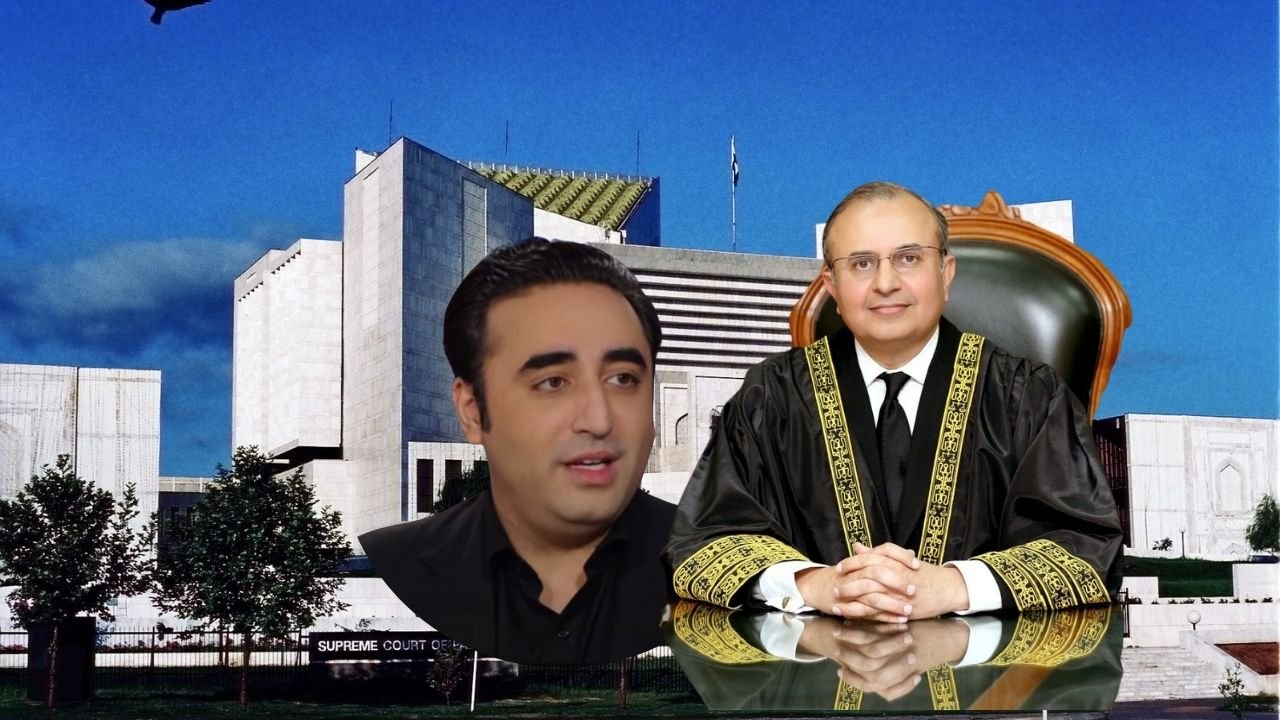
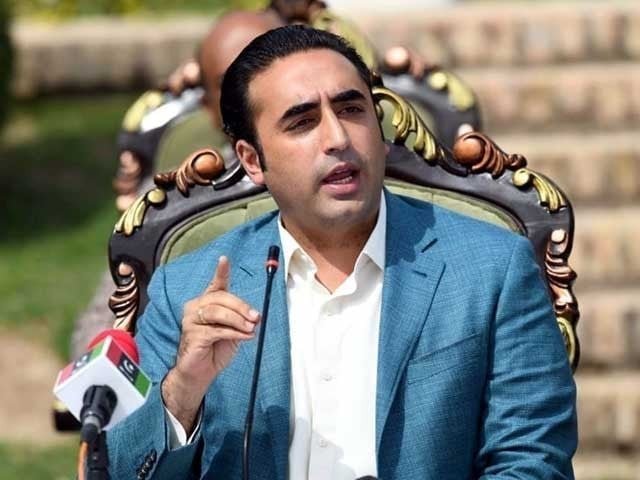
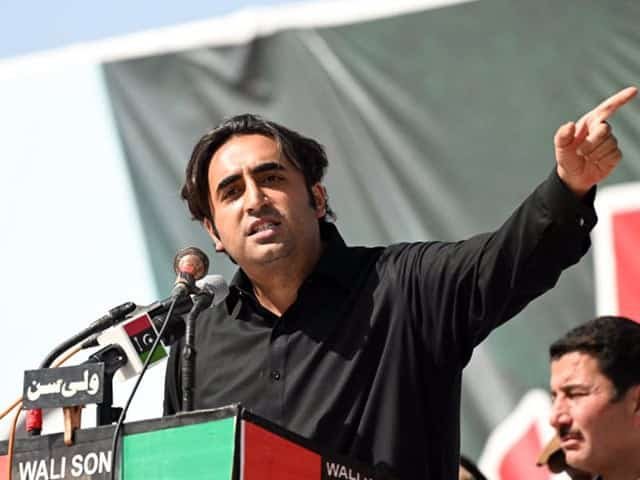
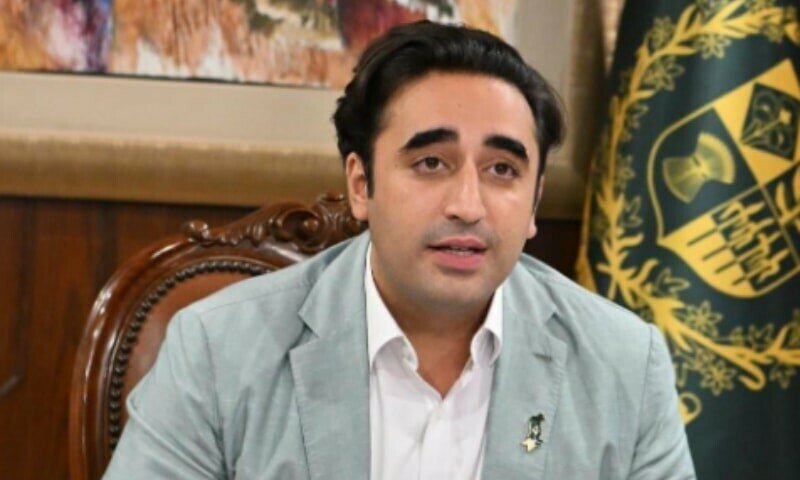
Chairman Pakistan Peoples Party (PPP) Bilawal Bhutto Zardari has stated that Justice Mansoor Ali Shah will replace Chief Justice Pakistan (CJP) Qazi Faez Isa as the country’s next apex judge.
Speaking to ARY News, the former Foreign Minister said, “On October 26, Justice Mansoor will become the next chief justice — no doubt.”
Responding to the formation of the Federal Constitutional Court (FCC), Chairman PPP said that the Supreme Court’s workload is so heavy that it affects the judiciary’s performance.
He added, “We waited almost 50 years for justice in Shaheed [Zulfiqar Ali] Bhutto’s murder case.”
Expecting a constructive role from Pakistan Tehreek-e-Insaf (PTI) over the twenty-sixth amendments, Bhutto said, “It is difficult for [the government] to discuss constitutional amendments with PTI along with its input.”
On the same day, appearing in the Geo News programme Capital Talk, Bhutto clarified that Jamiat Ulema-e-Islam Fazl (JUI-F) was crafting its amendments draft.
“PPP will prepare its draft regarding the formation of the constitutional court and will share it with Maulana Fazlur Rehman,” he concluded.
Chairman of the Pakistan Peoples Party (PPP) Bilawal Bhutto Zardari on Friday said that his party is not in favour of imposing Governor Raj in Khyber Pakhtunkhwa (KP), but the option could be considered following the deteriorating security situation in KP.
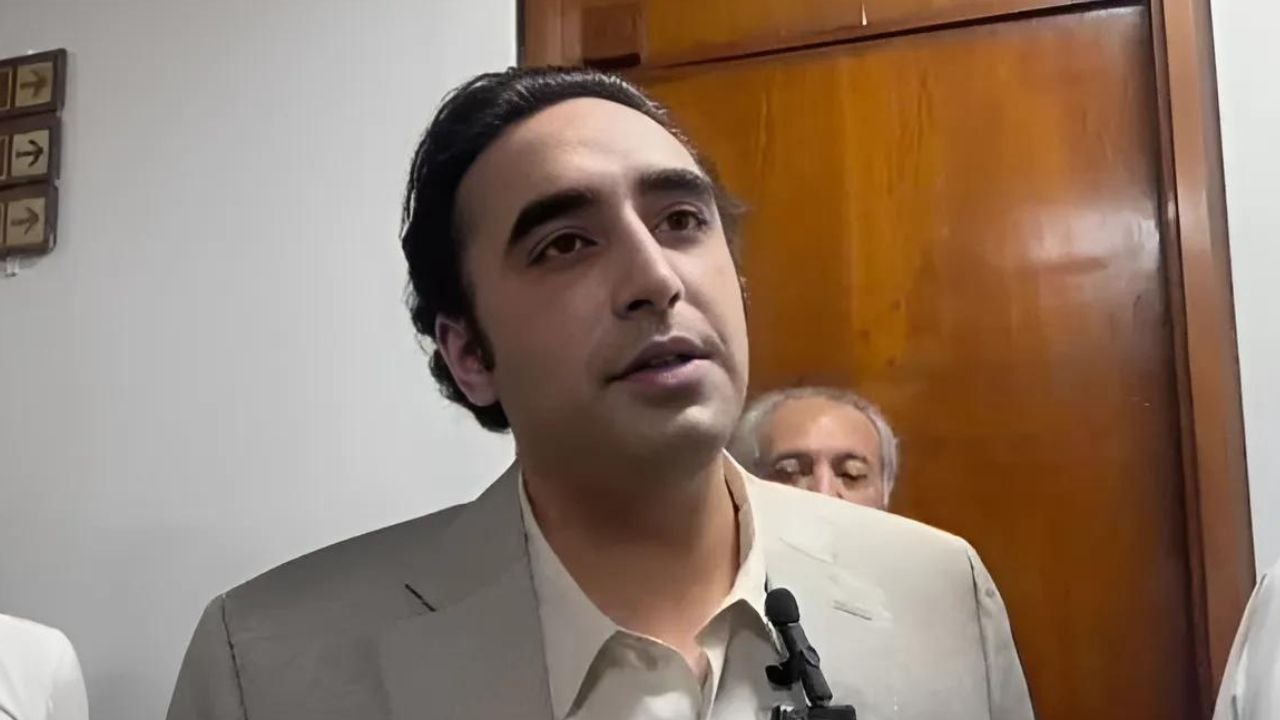
Talking to journalists after attending a National Assembly (NA) session, former Foreign Minister Bilawal Bhutto stated, “PPP is generally not in favour of Governor Rule. There are very limited circumstances for it.”
He remarked that the 18th Amendment to the Constitution made sure that if a governor rule is imposed anywhere, the provincial assembly has the authority to ensure it is not imposed for a longer period. Responding to the security situation in Balochistan and KP, he remarked that CM KP is struggling in his own village.
He said, “The Centre and provincial government must deal with this situation together. For the first time, it is visible that it’s not just a question of national security but also there is a threat to the establishment of peace.”
Responding to questions about nineteenth constitutional amendment, Bhutto said that it would be made with the representative’s consensus of all parties in the committee.
Discussion at the National Assembly (NA) turned heated following the arrest of Pakistan Tehreek-e-Insaf (PTI) lawmakers from the Parliament premises. At the same time, chairman PTI Barrister Gohar Khan announced a boycott of the NA proceeding.
Commenting on the First Information Report (FIR) registered against PTI lawmakers based on a new Public Order Act, Barrister Gohar said that no other country has a law to register complaints against the delay of a rally.
He cleared that complaints had been lodged against him for carrying a gun and pistols alongside him, raising the question of FIR authenticity.
He stated that the rally was delayed amid road blockages, which prevented the Chief Minister (CM) of Khyber Pakhtunkhwa (KP), Ali Amin Gandapur, from reaching the Sangjani area for the rally.
Recording a party protest, Barrister stressed, “Except nine to ten PTI lawmakers, no other MNA would attend the NA proceedings until the September 10 inquiry.”
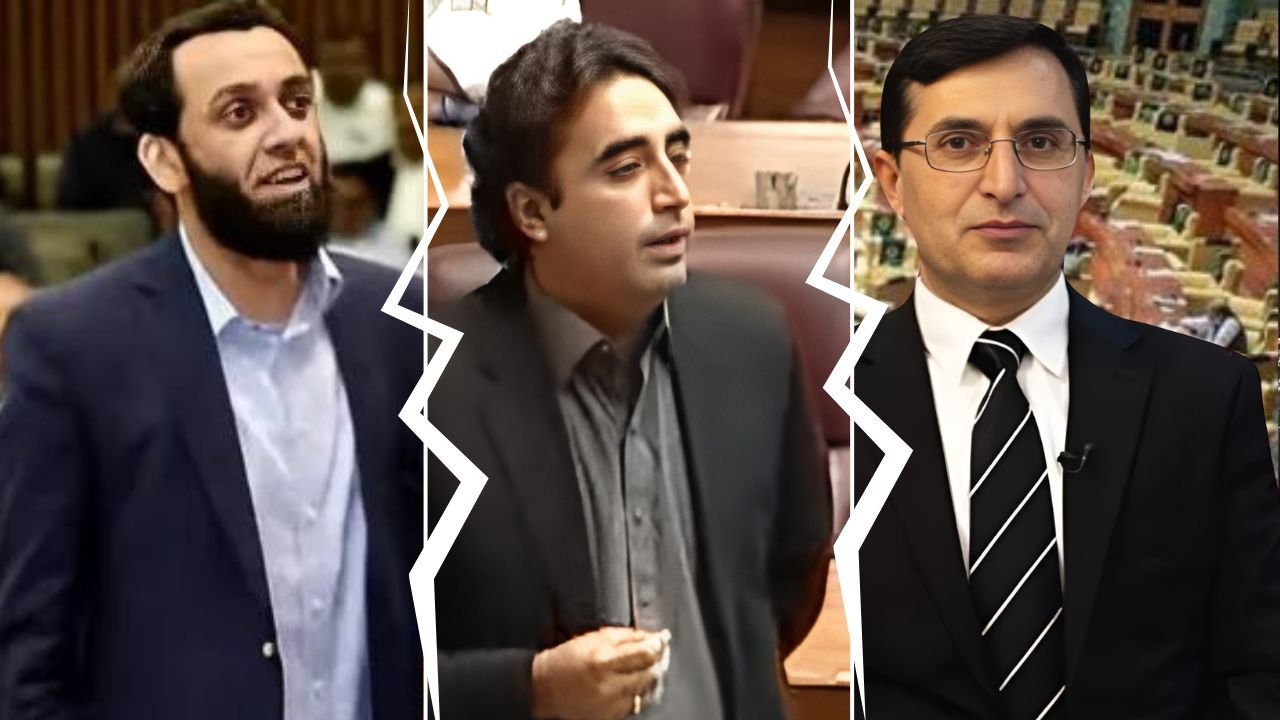
Responding to Chairman Pakistan People’s Party (PPP) Bilawal Bhutto’s concerns about the PTI’s lawmaker resignation from Parliament, Gohar clarified: “Under no circumstance would the PTI resign from the parliament or any assembly, nor have we announced as such.”
Federal Minister for Information and Broadcasting Atta Tarar has claimed that CCTV footage evidence shows no Member National Assembly (MNA) were arrested from parliament premises by federal capital police, which the opposition vehemently rejected.
Responding to the MNA’s arrest from parliament premises, Bilawal said, “If the government functions only to plan who to arrest today, don’t be happy; we (all lawmakers) are next in the queue.”
“Opposition shining his politics by the harsh language against journalists and judges,” he said.
He said the PTI’s leadership can fight the case for Imran Khan but, in parliament, serve the people of Pakistan.
“Constructively criticise the incumbent government instead of abusing,” he further advised.
Defence Minister Khawaja Asif remarked, “No MNA would have been apprehended if CM KP Gandapur hadn’t used controversial language.”
“Pakistan Muslim League (PML-N) and Pakistan People’s Party (PPP) leaders have been imprisoned in the past to save democracy, but why is there so much drama on Khan’s arrest?” he concluded.
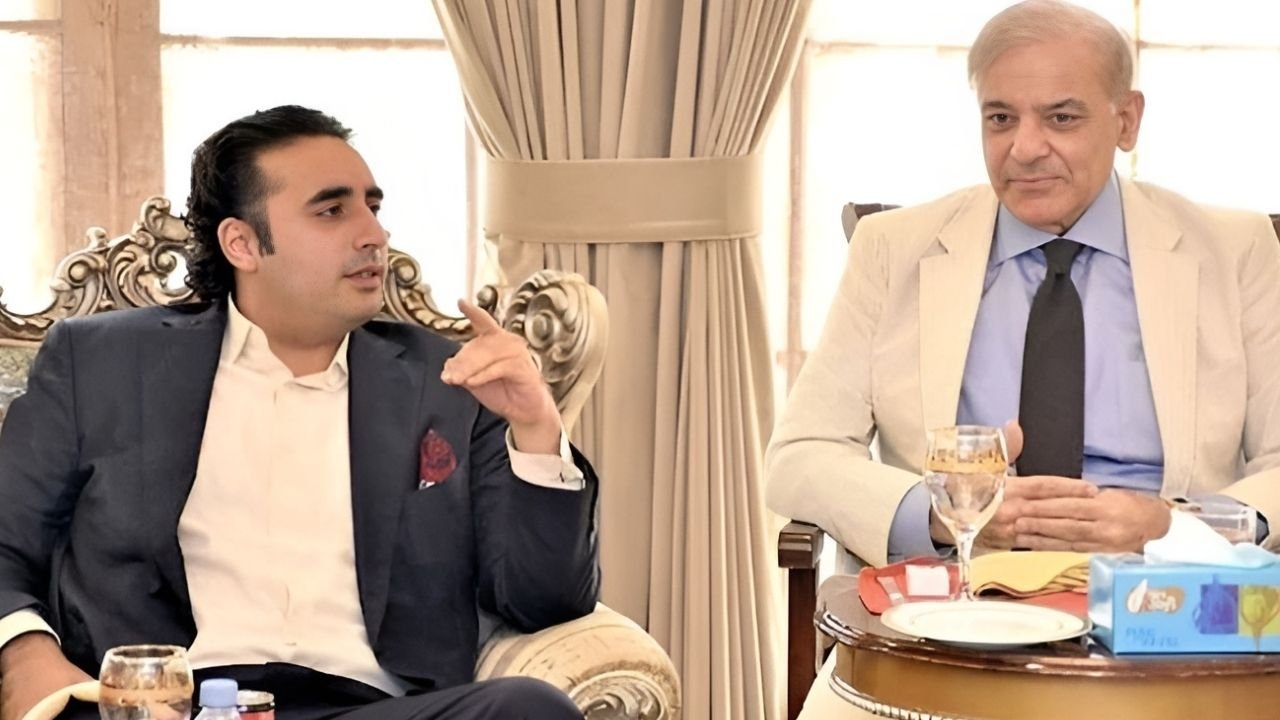
Inside details of the meeting between Pakistan Prime Minister (PM) Shahbaz Sharif and the Chairman of Pakistan Peoples Party (PPP) Bilawal Bhutto Zardari have been unveiled.
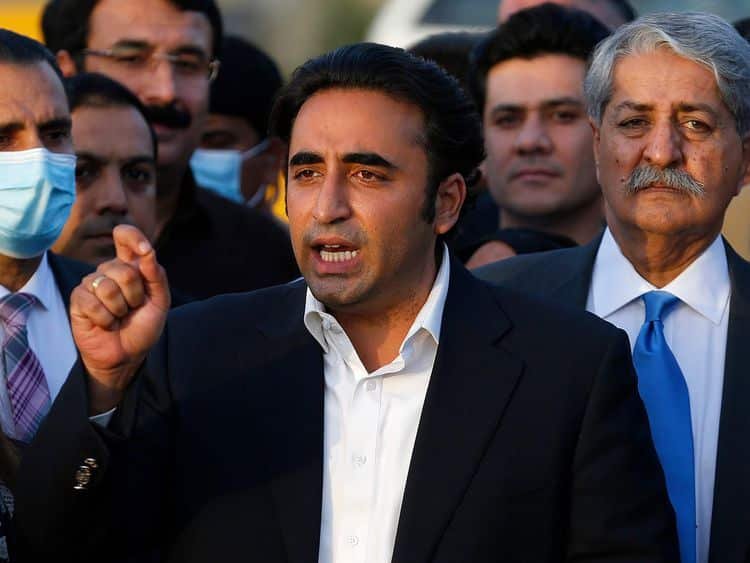
The incumbent government has taken a PPP delegation, including former diplomat Sherry Rahman, former Prime Minister Pakistan Raja Parvez Ashraf, and Naveed Qamar, in confidence regarding legislation to be presented in the National Assembly on Monday.
Pakistan Muslim League Nawaz (PML-N) members included the Prime Minister’s Special Assistant for Political Affairs Rana Sanaullah and Foreign Minister Ishaq Dar.
PPP complained to the government that they were being neglected in Punjab.
Rehabilitation and relief activities for flood victims in Sindh was also discussed during the meeting.
Chairman Pakistan People’s Party (PPP) Bilawal Bhutto Zardari addressed a press conference yesterday in Khyber Pakhtunkhwa (KP) Governor House, criticising former Prime Minister Imran Khan for “whining so much” about his incarceration.
“Shouldn’t the law be the same for everyone in the country? Who was that person who used to say, ‘If NAB files a case against me, I’ll fight it myself,’” said Bilawal, referring to Imran Khan.
“When he’s [Khan] in power, he tries to catch everyone, but when you [Khan] yourself are caught [in legal cases], then you make so much of a hue and cry that we can hear your cries from the USA to Pakistan,” remarked the PPP Chairman.
Bhutto argued that there isn’t a politician in Pakistan, from Union Council members to prominent political party leaders, that haven’t faced legal cases but “Nobody has whined as much as your Qaidi 804.”
Pakistan Peoples Party (PPP) Chairman Bilawal Bhutto-Zardari on Tuesday emphasised the need for a national consensus over a “Charter of Economy” to solve the country’s financial problems.
In his speech, Bhutto criticised the “babus”, euphemism for the bureaucracy, for not knowing the ground realities of the country.
“Without political input, the budget will be by the babus, for the babus and of the babus. And we want to end this tradition,” said the PPP chairman.
The PPP, which is the main ally of the Pakistan Muslim League-Nawaz (PML-N), continued to raise objections for not taking it into confidence regarding the federal budget.
The party initially boycotted the session on the economic budget, but both parties have since held several rounds of talks.
Bilawal further said, “A politician would never suggest taxing milk or stationary in a country with a 40 percent stunting rate and 26 million out-of-school children, but this would be a “babu’s” suggestion.”
The head of PPP also said the abolishment of anti-corruption body National Accountability Bureau (NAB) is necessary because “NAB and the economy cannot go together.”
Jamiat Ulema-e-Islam-Fazl (JUI-F) Senator Talha Mahmood has joined the Pakistan Peoples Party (PPP) on Tuesday, announcing his joining at a press conference in Islamabad.
Talha Mahmood said that Pakistan is going through a crisis, and the PPP always tried to do better for the country.
While shedding light on his tenure, he said that he had been a member of the Ministry of Interior’s cabinet committee for nine years, and was elected as the chairman of the Senate’s largest committee, the Standing Committee on Finance, in 2021 for three years.
On the other hand, PPP leader Faisal Karim Kundi has said that the party will strengthen after the inclusion of Senator Talha Mahmood. He also said multiple politicians from Khyber Pakhtunkhwa (KP) are in contact with the PPP to join the party.
Bilawal Bhutto-Zardari, Chairman of the Pakistan Peoples Party (PPP), has greenlighted Senate election candidates from Sindh.
As per details, Kazim Shah, Ashraf Jatoi, and Masroor Ahsan will be the party candidates for the general seats. Meanwhile, Nadeem Bhutto, Sarfraz Rajar, and Dost Ali will also be candidates for general seats.
Anny Marri and Rubina Qaimkhani will be candidates for female seats.
Barrister Zamir Ghumro and Sarmad Ali will be the candidates for the technocrat seats.
However, the PPP and Jamiat Ulema-e-Islam-Fazl (JUI-F) will help each other in senate polls. As per the report of SAMAA, PPP will support JUI-F in Balochistan,Bilawal Bhutto approves names of candidates from Sindh for senate polls
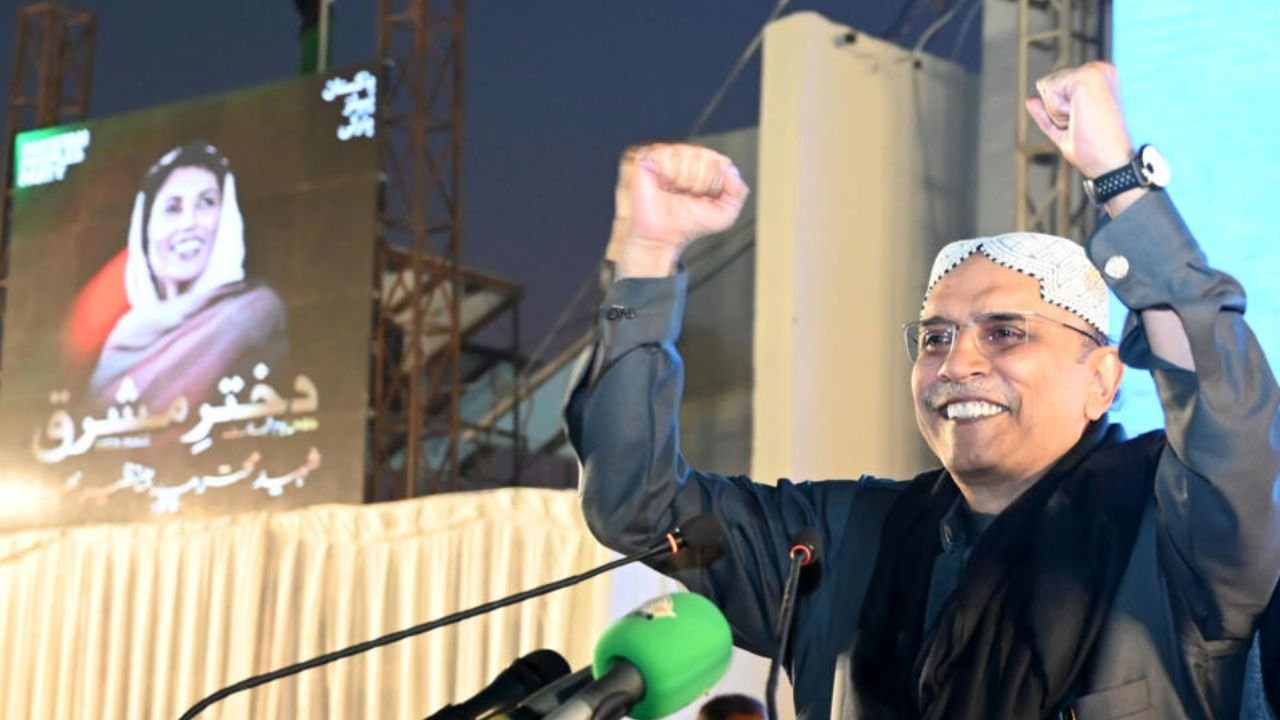
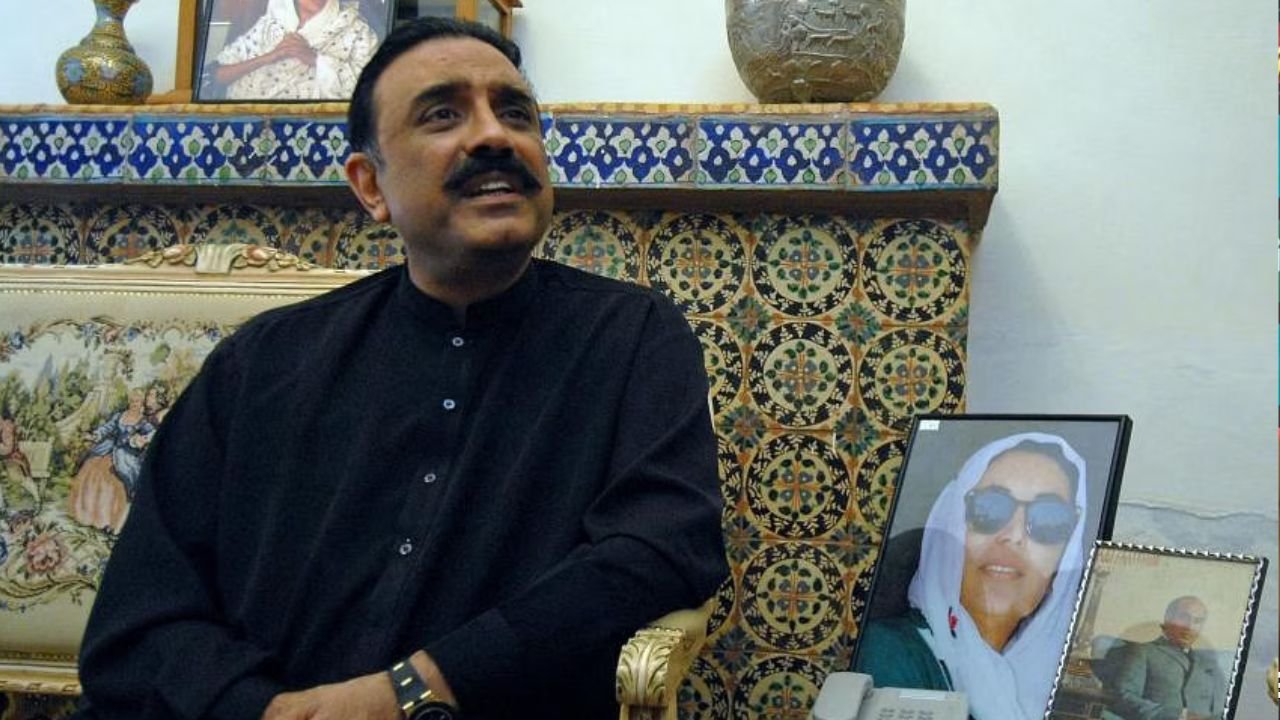
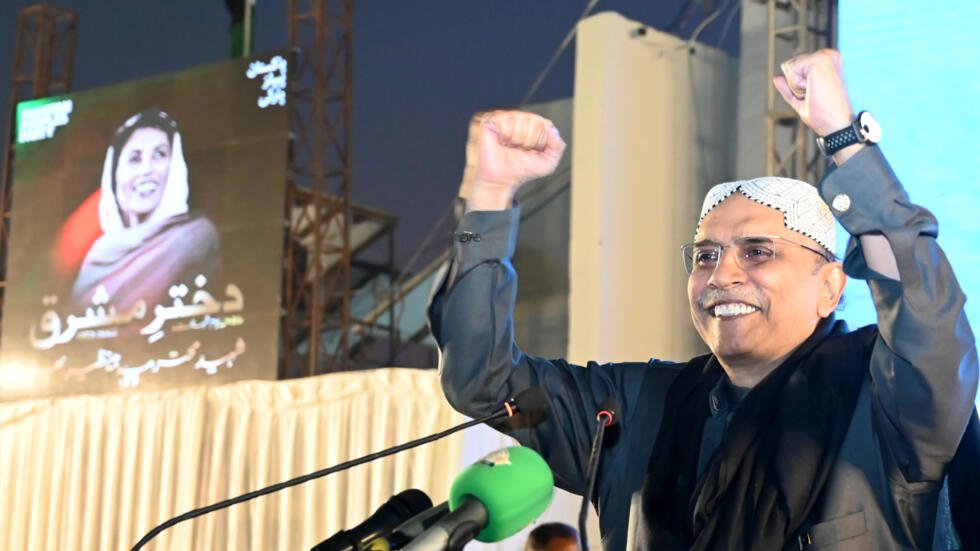
Asif Ali Zardari, the widower of Pakistan’s slain first female premier Benazir Bhutto who has had a life storied equally by tragedy and farce, is set to become president for a second time on Saturday.
Initially a background character as Bhutto’s consort, Zardari was stained by a bevy of corruption and other allegations, including absurd kidnapping plots and taking kickbacks lavished on hoards of jewellery.
Despite a reputation as “Mr. Ten Percent” — the alleged cut he took for rubber-stamping contracts — a sympathy vote propelled him to office when his wife was assassinated in a 2007 bomb and gun attack.
Between 2008 and 2013, he ushered in constitutional reforms rolling back presidential powers, and the 68-year-old’s second term will see him steer a largely ceremonial office.
He has spent more than 11 years in jail, a long time even by the standards of Pakistani politicians, with a wheeler-dealer’s talent for bouncing back after scandals.
Back in 2009, the New York Times said he had a knack for “artful dodging” — “maneuvering himself out of the tight spots he gets himself into”.
Newly sworn-in lawmakers were set to vote him in under the terms of a coalition deal brokered after February 8 elections marred by rigging claims.
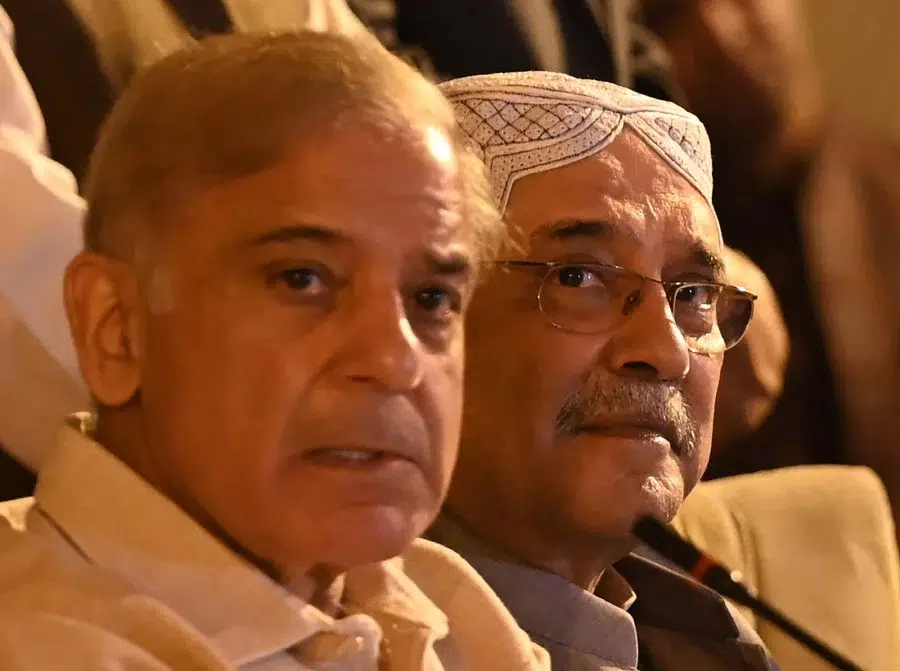
Under that deal, Zardari’s Pakistan Peoples Party (PPP) will take the presidency, while its historic rivals the Pakistan Muslim League-Nawaz (PML-N) party secured the prime minister’s position for Shehbaz Sharif, who was officially sworn in on Monday.
Zardari was born in 1955 into a land-owning family from the southern province of Sindh.
“As a child, I was spoilt by my parents as an only son,” he said in a 2000 interview with the Guardian newspaper. “They indulged my every whim.”
He expressed only limited political ambitions as a young man — losing a 1983 local government election.
It was his 1987 arranged marriage with PPP leader Benazir Bhutto that earned him a spot in the political limelight.
Their union — brokered by Bhutto’s mother — was considered an unlikely pairing for a leader-in-waiting from one of Pakistan’s major political dynasties.
Bhutto was an Oxford and Harvard graduate driven by the desire to oust then-president Mohammad Zia-ul-Haq, who forced her father from the prime minister’s office and had him executed.
Zardari was a university dropout with a reputation for brawling, partying and romancing women at a private disco in his family home.
On the eve of their wedding, Bhutto’s team issued a formal statement denying he was “a playboy who plays polo by day and frequents discos at night”.
Their nuptial celebrations were dubbed the “people’s wedding” — doubling as a political rally in the megacity of Karachi, where a crowd of 100,000 fervently chanted PPP slogans.
Initially, Zardari pledged to keep out of politics.
Bhutto served as prime minister from 1988 to 1990 — the first woman to head a democratic government in a Muslim country — and again from 1993 to 1996.
PPP insiders regarded Zardari as a liability, considering him likely to embarrass her leadership.
Their fears were perhaps well-founded. In 1990, he was embroiled in accusations of an absurd plot to extort a businessman by tying a bomb to his leg.
He was jailed for three years on extortion and kidnapping charges but was elected to the national assembly from behind bars.
In Bhutto’s second term, he served as investment minister.
A bombshell New York Times investigation detailed how he tried to engineer vast kickbacks on military contracts over this period while lavishing huge sums on jewellery.
After Bhutto’s government fell in 1996, Zardari was back behind bars within half an hour.
In December 2007, Bhutto was assassinated while on the campaign trail for a third term in office.
Her killing shook the nation to its core, a wave of sympathy carrying the PPP to victory in 2008. The party nominated Zardari as president.
In 2010, he was widely criticised for continuing a European holiday when the nation was devastated by floods that killed almost 1,800 and affected 21 million.
He was also head of state when US commandos trespassed onto Pakistani soil for the 2011 assassination of Osama Bin Laden, an episode that humiliated many compatriots.
He did, however, usher in constitutional reforms rolling back the sweeping powers of the presidency and bolstering parliamentary democracy that had been undermined by three decades of military rule since 1947.
In 2013, Zardari became the first Pakistani president to complete his full term.
He was jailed once again over money laundering charges in 2019 but was released months later.
Zardari and Benazir had three children, including Bilawal Bhutto Zardari, the current chairman of the PPP.
Pakistan Peoples Party (PPP) Chairman Bilawal Bhutto Zardari has said that his party will vote for Pakistan Muslim League-Nawaz (PML-N) “on our own terms.” “Progress [in talks] can only be made if ‘someone’ is willing to change their position […] We stand by our position and will not change it,” Bilawal said without naming PML-N.
He spoke to the media outside the Supreme Court (SC) on Tuesday afternoon after attending the hearing of a presidential reference challenging the death sentence of his grandfather, former Prime Minister Zulfikar Ali Bhutto.
Bilawal’s remarks come as the coordination committees of the PML-N and PPP are set to hold a sixth meeting today to reach an agreement over the formation of the future government after both parties failed to secure National Assembly (NA) seats in sufficient numbers to form their government in the Centre.