Tag: birds

  • Extreme Rainfall Increases Exponentially With Global Warming: Study

    State-of-the-art climate models drastically underestimate how much extreme rainfall increases under global warming, according to a study published Monday that signals a future of more frequent catastrophic floods unless humanity curbs greenhouse emissions.

    It comes as countries prepare to meet at the COP28 summit in Dubai beginning later this week, amid fears it could soon be impossible to limit long-term warming to the 1.5 degrees Celsius scientists say is necessary to curb the worst effects of human-caused climate change.

    Researchers from the Potsdam Institute of Climate Impact Research (PIK) looked at the intensity and frequency of daily precipitation extremes over land in 21 “next generation” climate models used by a UN body in its global assessments.

    They then compared the changes projected by the models with those observed historically, finding that nearly all climate models significantly underestimated the rates at which increases in precipitation extremes scaled with global temperature rise.

    “Our study confirms that the intensity and frequency of heavy rainfall extremes are increasing exponentially with every increment of global warming,” said Max Kotz, lead author of the paper published in the Journal of Climate.

    The changes track with the Clausius-Clapeyron relation in physics, which established that warmer air holds more water vapor. This finding underpinned the fact that temperature and not wind dominate the global change in extreme rainfall events, according to the authors.

    Stronger increases in rainfall intensity and frequency were found across the tropics and high-latitudes, like in Southeast Asia or Northern Canada, according to the study.
  • Climate Change causing bird populations to deplete in Pakistan

    Climate Change causing bird populations to deplete in Pakistan

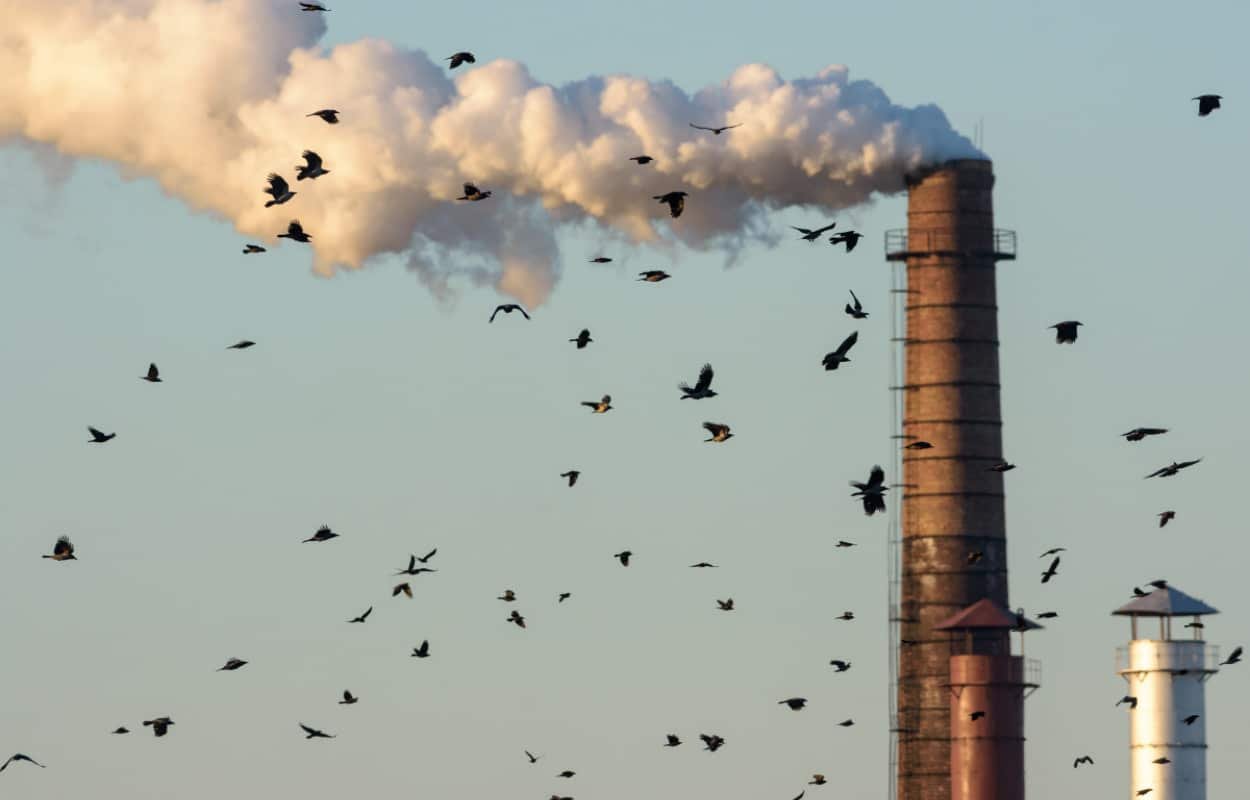
    In the tragic saga of climate change in Pakistan, it is not just humans but birds too that are affected.

    While the avian population has nothing to contribute to the phenomenon of climate change, they are paying the price for it with their lives. According to a State of the World’s Birds report, nearly half of all bird species are in decline with more than one in eight at risk of extinction.

    The situation is not any better in Pakistan. Not just the indigenous species are at risk but the ones migrating to the plains of Pakistan are severely decreasing as well. The research by wildlife expert Dr Azhar has come out at a time when the world is fighting with a challenge as magnanimous as global warming. Scientists have warned that if the temperature increases 3.5 degrees above the current one by 2100, almost 600-900 species would be killed off.

    A significant decrease in the number of birds in tropical regions has been noticed, including the endangered northern snowbird. Even the number of common sparrows is plummeting as declared by the International Convention for Conservation of Nature. For instance, a loss of three billion birds in North America alone posing a threat to biodiversity. Simultaneously, sparrows are being put on a ‘Red List’ in Greater London after a loss of 70 per cent of sparrows was recorded between 1994 and 2001.

    The reason it has not been done in Pakistan, as expressed by renowned ornithologist Mahmood Akhtar Cheema, is because nobody has actually attempted to count the number of these birds at present, implying that they are surely less than before. He warned that it is going to be even worse in the future because of the scarcity of food, changes in habitat, earlier egg-laying time, higher rate of disease transmission and frequent season changes.

    It is explicitly clear that birds’ populace is an indicator of the environmental health around us. The staggering decrease is alarming on many levels. It also demands extensive research and policy making to protect biodiversity. The areas may include the changing weather patterns disturbing the timing of migration to egg-laying and sizes and controlling extreme urbanization to provide for their natural habitats.

  • Birds outsmart humans, incorporate anti-bird spikes into nests

    Birds of the Corvidae type, including magpies and crows, have been observed incorporating anti-bird spikes into their nests in Scotland, Holland and Belgium, effectively repurposing the hostile architecture designed to prevent them from perching.

    A recent study published by Auke-Florian Hiemstra, the lead author of the study, highlights the remarkable behavior.

    The metal spikes provide structural support to the nests, creating dome-like roofs, and also serve as a defense mechanism against predators. Hiemstra’s study, featured in the online journal Deinsea, suggests that birds may be seeking evolutionary advantages by utilizing human-made objects for nest construction.

    The findings have astounded researchers and shed light on the cognitive abilities of the clever birds.

    While anti-bird spikes are commonly used in various urban settings to deter birds from perching, it appears that birds are turning the tables on humans and repurposing these materials to their advantage. Jim Reynolds, an ornithology and animal conservation expert, believes that this adaptive behavior is an effective strategy for birds that inhabit urban environments.

    Furthermore, the presence of shiny and spiky nest materials may serve as a signal to potential mates, indicating the quality of the nest and the suitability of the bird as a partner.

  • WATCH: Birds take over Lahore airport

    WATCH: Birds take over Lahore airport

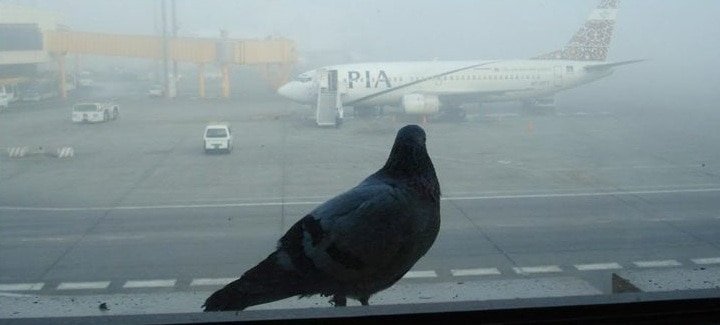
    Flight operations at Allama Iqbal International Airport were severely disrupted after a large flock of birds took over the Lahore airport. Videos from the airport show the birds flying around the runaway.

    WhatsApp-Video-2019-07-17-at-14.42.02

    According to details, seven flights expected to land at the Lahore Airport were diverted to land in other cities due to the situation. A PIA flight coming from Paris was made to land at the Sialkot airport while PIA’s Jeddah-Lahore flight was diverted to Multan airport. An international flight coming from Doha was returned to its origin.

    PIA’s spokesperson told the media that flights were diverted due to safety concerns and efforts are underway to end the bird strike.

    The Lahore airport is surrounded by wedding halls, where leftover food is thrown in nearby areas. Birds gather to have a feast but they pose a substantial threat to planes.

    Meanwhile, Federal Minister for Aviation Ghulam Sarwar Khan has directed the Civil Aviation Authority (CAA) to reduce the price of luggage plastic wrapping to Rs 50 at all airports across the country.

    Previously, rates of double wrapping were Rs400 while for the single wrapping, the airport authorities used to charge Rs200. CAA has made plastic wrapping of luggage mandatory for passengers travelling abroad.