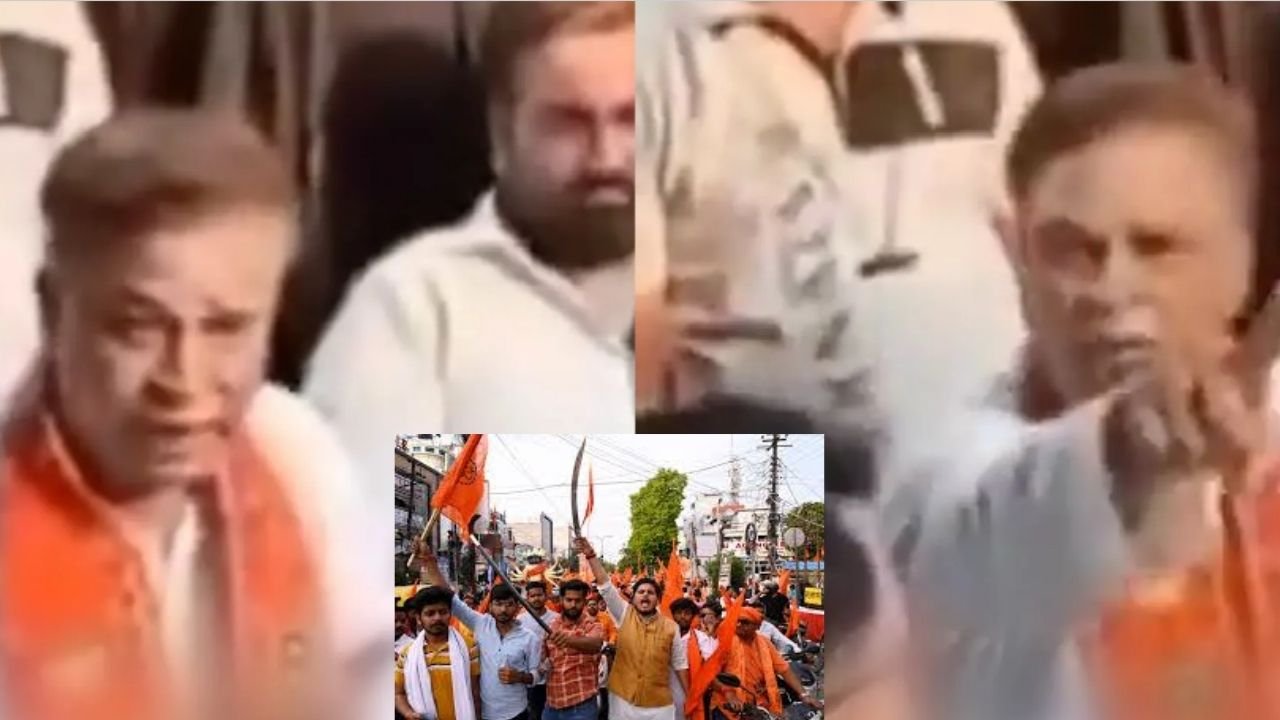
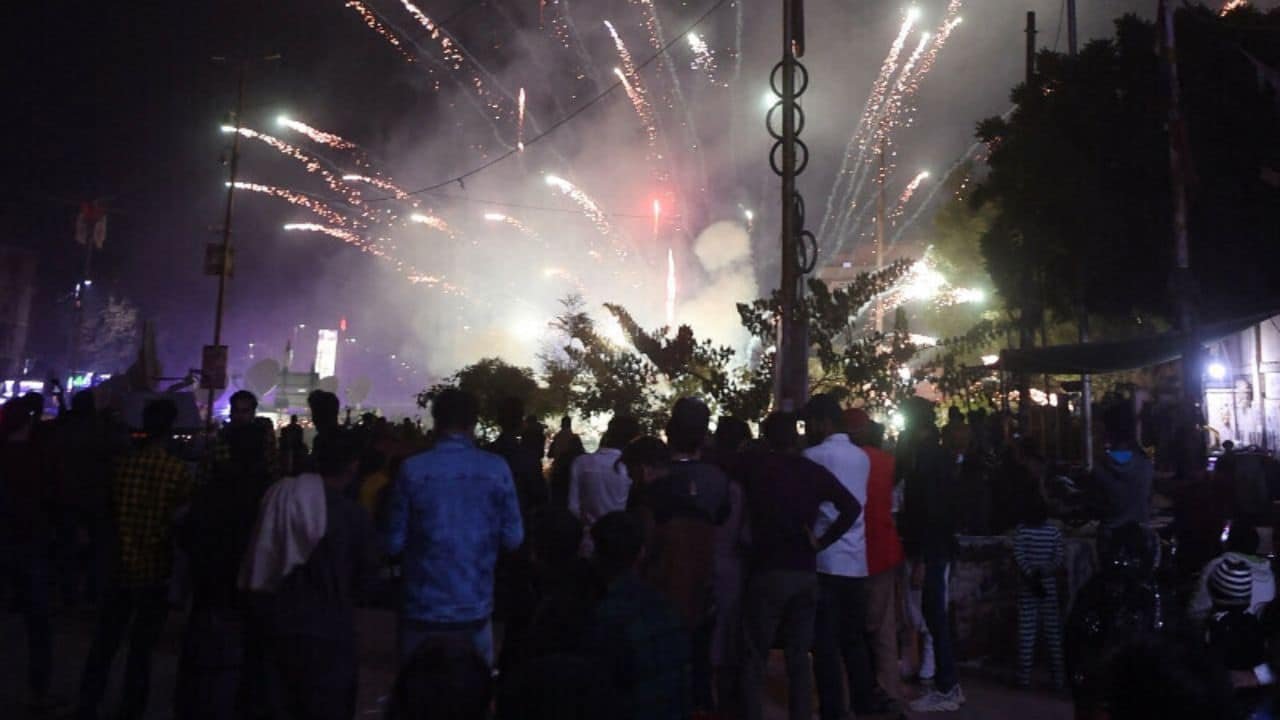
Bhartiya Janata Party (BJP) member Karnell Singh was caught on camera threatening Muslims after an incident involving a cow’s head near a Hindu temple in New Delhi.
In a viral video circulating online, Singh is seen issuing a chilling threat to “slaughter 200,000 Muslims” in the vicinity if the culprits are not arrested. He can be seen warning an officer that he (the officer) has 48 hours only to solve the issue, or else he “will hand a sword in the hands of Hindus”, and Muslims will not be spared.
His comments have escalated tensions amidst communal sensitivities, drawing widespread condemnation from various quarters.
The incident underscores ongoing communal tensions in India, where issues related to cows, considered sacred in Hinduism, often ignite debates and occasionally lead to violent riots.
Elections in 2024 are surprising, to say the least. Many polls across the globe have given a jolt to political pandits, dismantling their expectations. Be it in Pakistan or in neighbouring India; the results sent a shock wave among observers. In India, particularly, the result defied exit polls and set a precedent of what is called the power of vote.
While the expected Leader of the Opposition, Rahul Gandhi, was on a country-wide tour titled “Bharat Joro Yatra,” Prime Minister Narendra Modi and the leading party, BJP, were conniving for a change in the constitution. Campaigning for a third time in the office, “400 paar” was the slogan Modi chanted all along. With more than 65 percent voter turnout and a six-week-long grueling process of polls amid the heatwave, the climax showcased the fruit of the exhaustive exercise. The total number of seats won by the ruling party was 240, far behind the magic number of 272, and it lost 63 seats compared to the election of 2019. Economist and author Parakala Prabhakar called this “a very clear tight slap on PM’s face,” but what led to the results?
In the span of the last five years, the BJP government led by Narendra Modi outrightly showed hate against minorities, especially Muslims, and promoted the saffron-tainted movement of Hindutva. It started off with the revocation of the Special Status of Kashmir, followed by the Citizen Amendment Act, and culminated with the inauguration of Ram Mandir.
303 seats in 2019 enabled BJP to strip Kashmiris of their statehood on August 5, 2019, because it was seen as the biggest hurdle in the drive for development in the region. However, in the garb of this modernization, the aim was to alter the disputed area’s demographics eventually.
With CAA, the Modi government further pushed Muslims to the periphery. This “fundamentally discriminatory” piece of law endangered the citizenship of a large number of Muslims in the country. It declared them illegal immigrants, but the Modi government remained unfazed in the face of all criticism.
The mishandling of the pandemic, coupled with the high unemployment rate of eight percent, proved to be a catalyst, but it was the largest farmer’s protest in Punjab that turned out to be a major blow. Millions on the road, the police crackdown on protestors, and the rigidity of the government made headlines all across the globe. Resultantly, Congress dominated the polls in Punjab with a high voter turnout of 62.80 percent.
Islamophobic rhetoric, anti-Dalit sentiment, a spiraling economy, and unconstitutional motives of the sitting government resulted in the BJP’s defeat in Uttar Pradesh and Maharashtra, the two most significant states.
The party of “saffron parakeets” kept on ignoring the pulse of the nation and inaugurated Ram Mandir with glitz and glamour in Ayodhya, above the ruins of the demolished Babri Masjid. Modi proudly claimed that the Mandir will be a “temple of national consciousness”. The voters ironically consciously rejected him. Though the BJP will again form the government under the umbrella of the National Democratic Alliance, this will be a coalition government, weak at its core and unable to execute the idea of changing the system of governance from Parliamentary to Presidential.
Although it is true to democratic traditions, the credit for this stupendous result goes to the voices of reason, who relentlessly stood in the way of Modi’s aim to establish his “taana shahi”. YouTuber Dhruv Rathee, who has been named by renowned publications as one of the “factors,” made it his mission to create awareness of all the inconsistencies in the election process, scandals in Modi’s governance, and the wildly objectionable things Modi has said and done. His videos were watched by a whooping number of 476 million people, got screened in some areas while he flexed as the “power of the common man”. Some journalists like Rana Ayuub and Karan Thapar and writers like Arundhati Roy chose to call a spade a spade and will go down in history for being on the right side.
With the coalition government in place, will there be a new more introspective Modi or a rather aggressive one? It is yet to be seen, but he surely wouldn’t be the same as he was in the last five years.
Indian Prime Minister Narendra Modi will remain in office but with a substantially reduced mandate, confounding expectations of a resounding victory forecast by analysts and exit polls.
Modi’s Bharatiya Janata Party (BJP) failed to secure an outright majority for the first time since the Hindu nationalist leader swept to power a decade ago, and will instead rely on coalition allies to govern.
AFP takes a look at the reasons why Modi and his party failed to achieve a third successive landslide win:
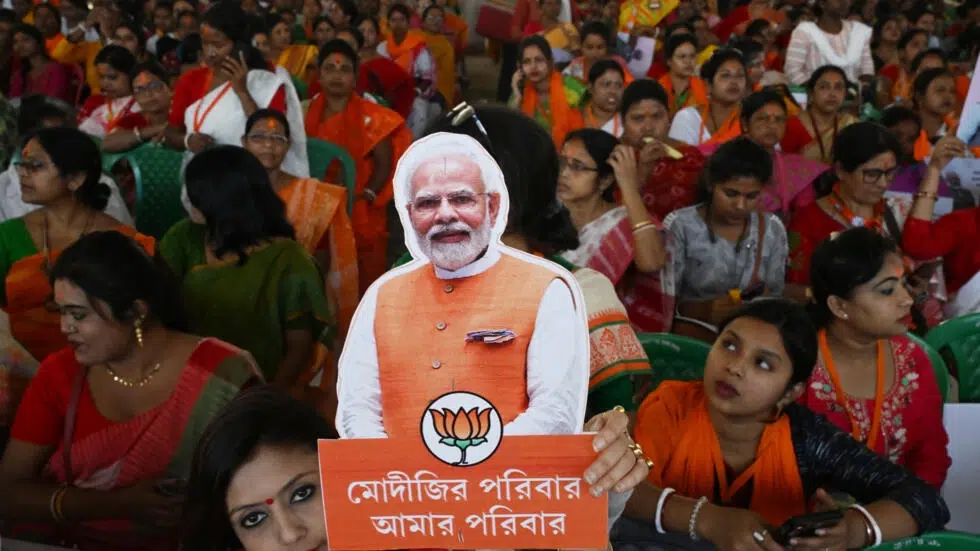
Critics and rights groups accused Modi of ramping up rhetoric against Muslims to unprecedented levels during his campaign in a bid to mobilise the Hindu majority.
At his rallies, he referred to Muslims as “infiltrators”, and claimed the main opposition Congress party would redistribute the nation’s wealth to Muslims if it won.
But the strategy failed to galvanise Hindu voters behind the BJP, while also solidifying minority communities’ support for the opposition.
The BJP’s vote share dropped nearly one point to 36.6 percent from the last election five years ago, translating in India’s electoral system into a drop from 303 to 240 seats in the 543-member parliament.
Numerous voters over the course of the election told AFP that they were more concerned with India’s chronic unemployment problem than with the government’s ideological agenda.
“People were concerned about livelihood, unemployment, price rises,” Nilanjan Mukhopadhyay, the author of a Modi biography, told AFP.
“They did not relate to what Modi and the BJP were saying.”
For the first time in 15 years, Modi’s party failed to win the most seats in Uttar Pradesh, India’s most populous state and a bellwether for national elections.
Uttar Pradesh is the heartland of India’s majority faith, with widespread support for Modi’s Hindu-nationalist agenda, and had for the past decade formed the bedrock of the BJP’s parliamentary strength.
But an alliance of opposition parties who had competed against each other in past polls saw BJP candidates face stronger rivals, who ultimately won more than half of the state’s seats.
Modi won his seat in the state, representing the Hindu holy city of Varanasi, by just 152,000 votes — compared to a victory margin of nearly half a million votes in 2019.
Spectacularly, the BJP’s candidate lost in the constituency representing Ayodhya, despite Modi in January inaugurating a divisive Hindu temple built on the grounds of a razed mosque there.
“The opposition managed to put a sword back to him and Uttar Pradesh has shown resistance to his brand of politics,” political scientist Ramu Manivannan of the University of Denver told AFP.
The BJP’s electoral strategy was premised on increasing its parliamentary majority by gaining ground in India’s wealthier and better-educated southern states.
Modi made repeated whistlestop tours through the south where he affirmed his “topmost respect” to local culture.
He also embarked on a 48-hour meditation ritual in the southern coastal town of Kanyakumari last week when the vote was nearly over.
But the premier’s relentless campaigning did not translate into significant gains where they were needed.
The party failed to win a single seat in Tamil Nadu state — almost as populous as Germany with 84 million people — and won just one constituency in neighbouring Kerala, with a population of 35 million.
Manivannan said that “ideological resistance in the south” had played its part in the BJP’s lacklustre result.
Southern voters have typically backed regional parties strongly rooted in appeals to social justice policies and opposed to the BJP, and Modi’s muscular Hindu-first ideology has held little appeal.
India’s main opposition party on Thursday condemned Prime Minister Narendra Modi for anti-Muslim comments in election campaign speeches that have heightened concerns over sectarian tensions in the world’s biggest democracy.
Modi remains popular across much of India and his Hindu-nationalist Bharatiya Janata Party (BJP) is widely expected to win this general election when it concludes in early June.
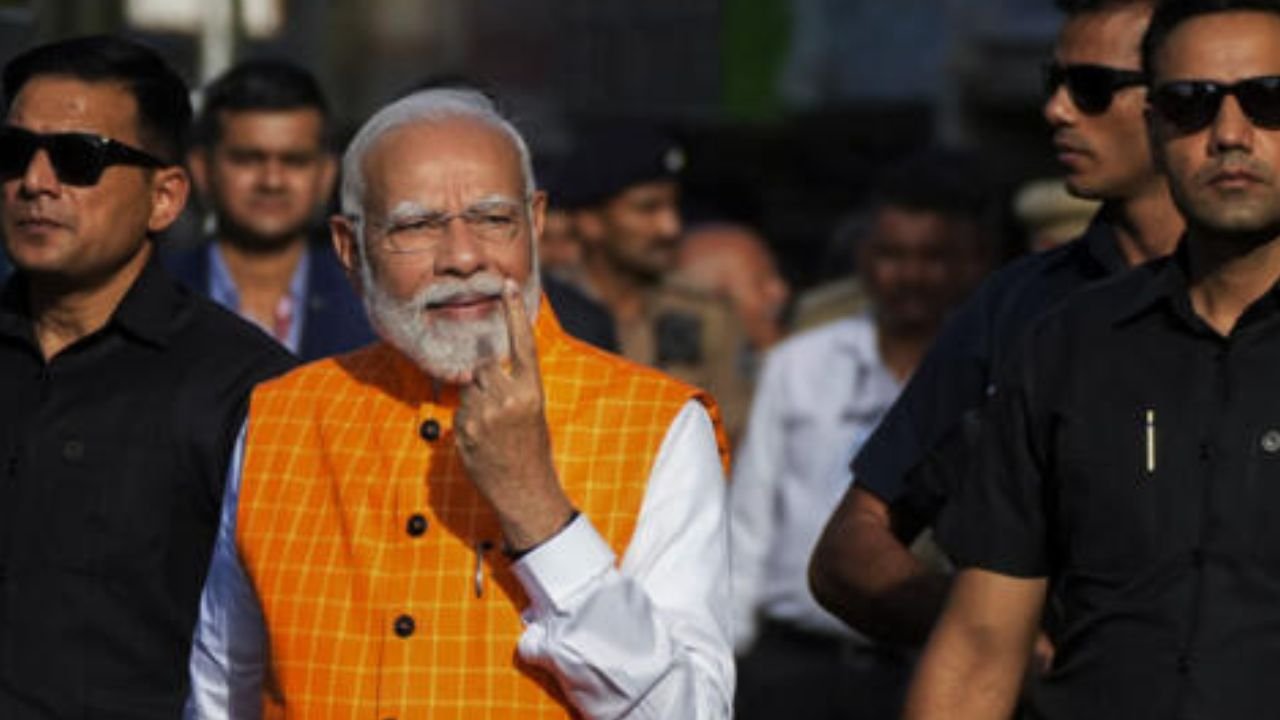
Since voting began last month, the 73-year-old premier has stepped up his rhetoric targeting India’s main religious divide in a bid to rally voters.
He has referred in campaign rallies to Muslims as “infiltrators” and claimed the main opposition Congress party would redistribute the nation’s wealth to Muslims if it won.
P. Chidambaram, a former Indian finance minister and senior lawmaker for Congress, said Thursday that Modi was playing “his usual game of dividing Hindus and Muslims”.
“The world is watching and analysing the Indian prime minister’s statements, and they do not bring glory to India,” he added.
After Modi suggested that a former prime minister from Congress had planned for a separate “Muslim budget”, the party’s general secretary Jairam Ramesh condemned his statements as “nonsensical”.
“This is typical Modi bombast and bogusness,” he said Wednesday on social media platform X.
Since he swept to power a decade ago, Modi has sought to align India’s politics more closely with its majority faith, in defiance of the country’s officially secular constitution.
His cultivated image as a champion of Hinduism has made him roundly popular but has left many among the country’s 200-million-plus Muslim minority uneasy about their status and anxious about their futures.
Modi on Tuesday denied stoking religious tensions in a television interview with broadcaster News18.
“The day I start talking about Hindu-Muslim (divisions) will be the day I will lose my ability to lead a public life,” Modi said.
‘Vote jihad’
But at a campaign rally the following day, Modi accused Congress of planning to commit “vote jihad”, an implied suggestion that his opponents were rallying Muslims to vote against him.
India’s poll code prohibits sectarian campaigning and opposition parties lodged a complaint about an earlier Modi speech last month with the election commission, which has yet to announce any sanctions against the premier.
Other members of Modi’s party have been accused of matching his rhetoric and unfairly targeting Muslims during the election.
A BJP candidate in Hyderabad, Madhavi Latha, was widely condemned on social media Monday for demanding veiled Muslim women remove their facial coverings at a polling station so she could personally check that their appearances matched their identity documents.
Police in the southern city announced an investigation into the incident.
The third and most important phase of the Indian elections is over where citizens of 11 states and union territories participated, locking the fate of 52 per cent of the 543 parliament seats in the parliament.
Elections were held in 94 seats spread over 12 states on Tuesday, including all 26 seats in Gujarat where Modi and his home minister cast their votes. The day’s contests included five seats in Bihar, four in West Bengal, 11 in Maharashtra, seven in Chhattisgarh, 10 in Uttar Pradesh, 14 in Karnataka, and nine in Madhya Pradesh, where Congress defector and BJP candidate Jyotiraditya Scindia was in the race. Of these states, Karnataka and West Bengal are ruled by the opposition.
The fate of 285 seats is now sealed.
The Election Commission of India (ECI) ordered X, formerly Twitter, to take down an anti-muslim animated video posted by BJP Karnataka but avoided directly sending a notice to the BJP.
The video features caricatures of Congress leaders Rahul Gandhi and Mallikarjun Kharge, advancing the party’s recent messaging that Congress is diverting funds and resources away from lower caste Hindus towards Muslims.
Set back in Haryana
In a setback to the ruling BJP in Haryana amid the Lok Sabha election, three independent MLAs have withdrawn their support to the Nayab Singh Saini-led government in the state, quotes Dawn in a report.
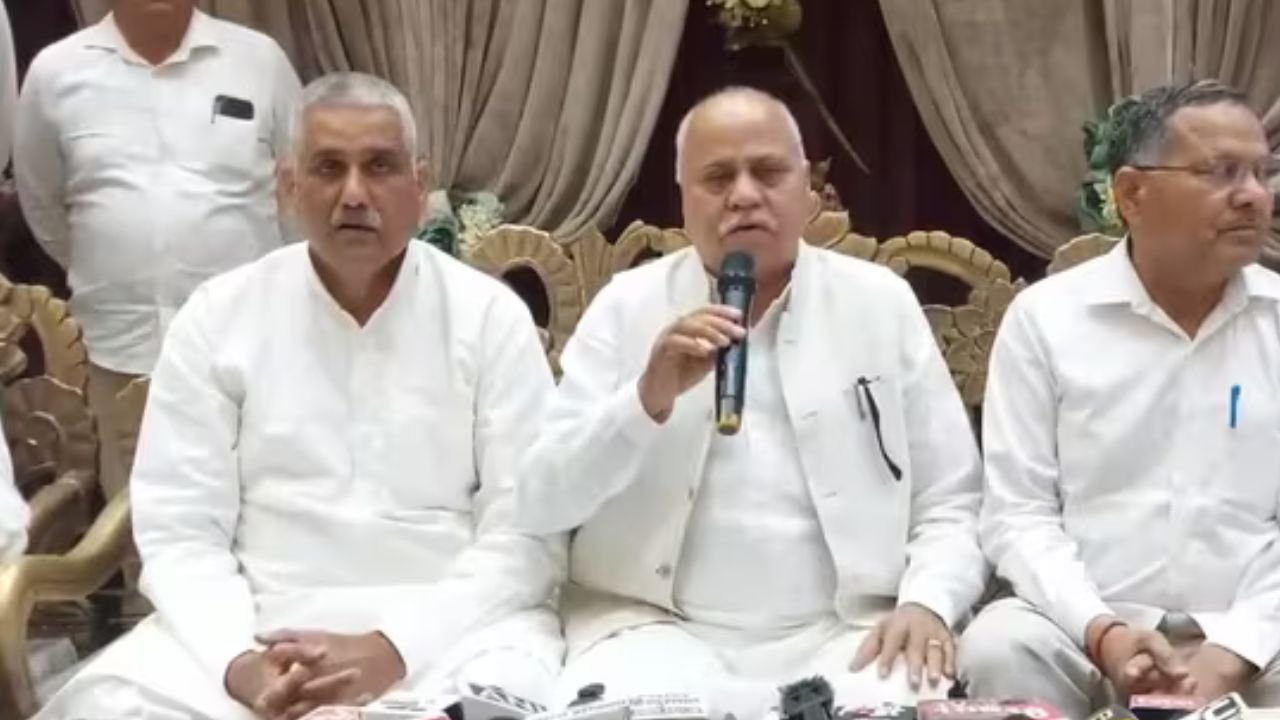
The three MLAs — Sombir Sangwan, Randhir Gollen and Dharampal Gonder — made the announcement at a press conference in the presence of senior Congress leader and former Haryana chief minister Bhupinder Singh Hooda and Haryana Congress chief Udai Bhan.
Anti-muslim campaign
There were reports of police chasing away Muslim voters from polling booths in a constituency in BJP-ruled Uttar Pradesh. Elsewhere, names of some voters had allegedly disappeared from the voters’ list.
Dip in the stock market
Indian stock market has been experiencing strong episodes of uncertainty in recent sessions, leaving investors confided, reports claimed. Analysts were reading the turbulence at the stock exchanges as a sign of difficulties for Prime Minister Narendra Modi.
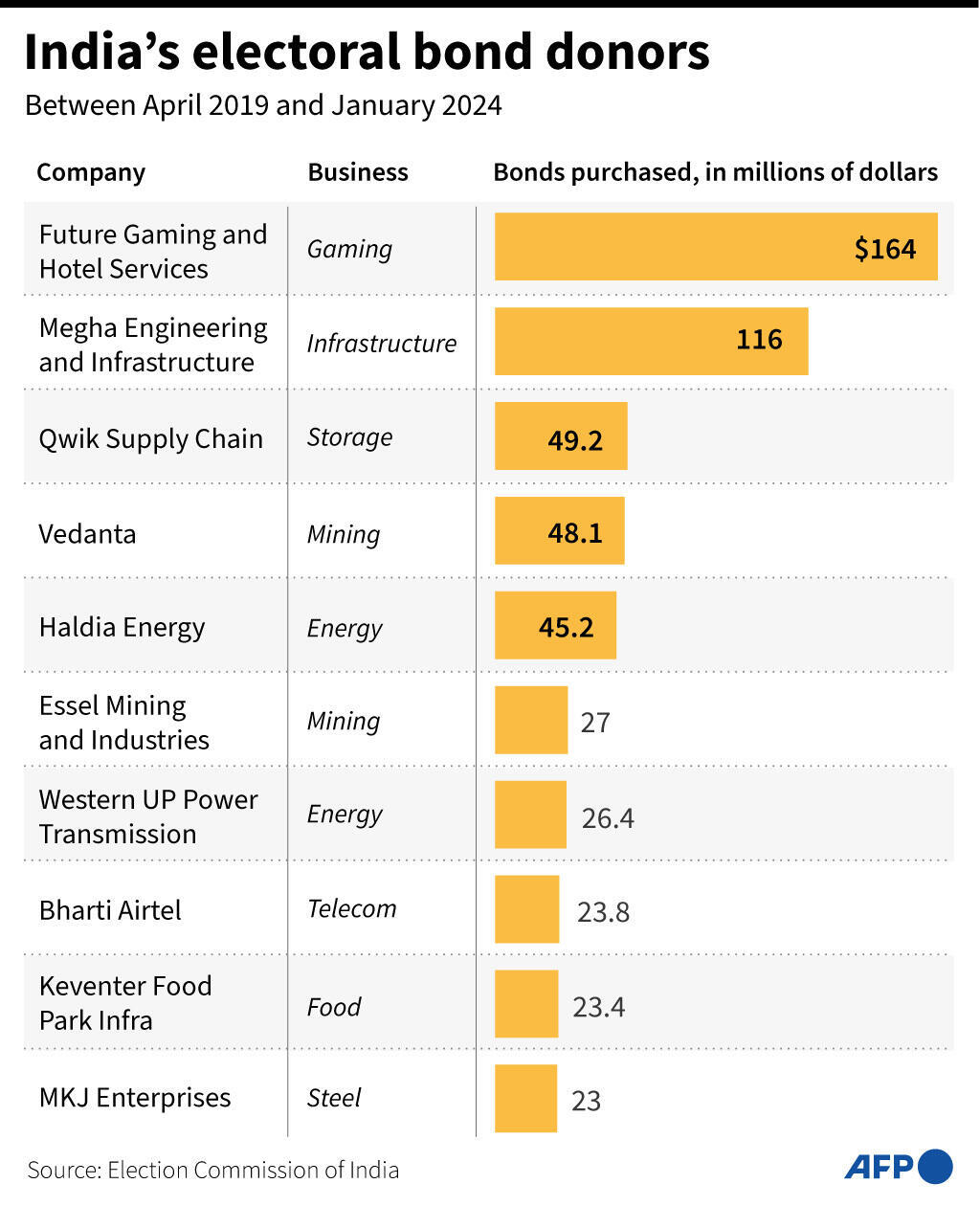
Last week, India’s election commission published a list detailing buyers of electoral bonds, a contentious funding scheme that has helped Prime Minister Narendra Modi’s party build an immense campaign war chest dwarfing rivals.
Electoral bonds account for more than half of all political donations and were anonymous until India’s top court ruled them illegal weeks before the start of national elections next month.
An AFP review of the list found that of the $1.5 billion donated through the scheme, at least $94 million was donated by 17 companies after they faced — either directly or through their subsidiaries — investigations for tax evasion, fraud or other corporate malfeasance.
“The electoral bond scheme was sinful in conception, faulty in design and intended to prevent transparency,” lawmaker Abhishek Singhvi of the opposition Congress party told AFP.
“Each of these vices stand exposed… by the huge disclosures tumbling out of the closets.”
‘Knocked at their doors’
Opposition party lawmakers claim the electoral bonds list shows that firms were donating to Modi’s ruling Bharatiya Janata Party (BJP) in the hopes of influencing the outcome of criminal probes.
The BJP was far and away the single biggest beneficiary of the scheme, receiving $730 million or around 47 percent of total bonds cashed since April 2019.
Its main competitor Congress received around $171 million over the same period.
Among the companies named as donors are Hero MotoCorp, the country’s biggest motorbike maker by sales. It donated $2.4 million to the BJP seven months after confirming its finances were being investigated by the tax department.
Glenmark Pharmaceuticals, a top drug firm, bought $1.17 million worth of electoral bonds for the BJP eight months after Indian media reported an investigation for alleged tax evasion.
Indian miner Vedanta, whose parent company was once listed on the London Stock Exchange, donated more than $40 million spread across half a dozen parties over the past five years.
Local media reported in 2022 that the country’s main financial crime agency began investigating the company in 2018 for allegedly paying bribes to facilitate Indian visas for Chinese technicians.
Hero, Glenmark and Vedanta did not respond to requests for comment.
No definitive proof of such a quid pro quo has surfaced. Authorities have also not publicly announced whether investigations against donor companies have been closed or withdrawn.
Nirmala Sitharaman, Modi’s finance minister, said last week that any allegation of a link between criminal investigations and political donations was based on “huge assumptions”.
“What if the companies gave the money, and after that, we still went and knocked at their doors?” she told a panel hosted by television channel India Today.
The BJP was not the only party to receive electoral bonds from companies facing legal investigation.
Among the several parties funded by lottery company Future Gaming — the biggest single donor under the scheme with a spend of $164 million — were the government and opposition of southern Tamil Nadu state.
Future Gaming has since 2011 been the subject of several investigations on suspicion of unpaid income tax, money laundering and fraud, according to media reports.
‘Black money’
Ties between corporate India and the country’s political class have previously blown up into public scandal — including to the benefit of Modi, who was swept to office a decade ago on a wave of public discontent over corruption.
Modi made hay from a number of corporate bribery accusations directed against his opponents, including allegations that ministers and bureaucrats had taken money from telecom companies in return for favourable licensing deals.
His government introduced electoral bonds in 2017, pledging the scheme would clear up the illicit “black money” donated to parties in return for political favours.
But the new scheme did not close off other avenues of funding, including anonymous cash donations or tax-deductible electoral trusts in which multiple companies can pool money together for parties without public scrutiny.
Indian media also identified several other irregularities with the electoral bond scheme, reporting that several companies donated amounts far in excess of their annual profit or revenue.
Others were loss-making or had been freshly incorporated, suggesting they had been used as front companies to make donations on behalf of an unidentified third party.
Milan Vaishnav, of the Carnegie Endowment for International Peace, said the donation list vindicated the election commission’s objections to the scheme when it was first unveiled.
“This is precisely what the EC had warned, (that) the creation of this opaque instrument could allow for shell companies, foreign firms, and unknown third parties to give to parties without detection or outside scrutiny.”
New Delhi, India – A top Indian opposition politician appeared in court Friday to fight his arrest in a case supporters say is aimed at sidelining challengers to Prime Minister Narendra Modi before next month’s election.
Arvind Kejriwal, chief minister of the capital Delhi and a key leader in an opposition alliance formed to compete against Modi in the polls, was detained on Thursday in connection with a long-running corruption probe.
He is among several leaders of the bloc under criminal investigation and one of his colleagues described his arrest as a “political conspiracy” orchestrated by the ruling Bharatiya Janata Party (BJP).
Kejriwal was escorted into a courtroom in the capital by officers from the Enforcement Directorate, India’s main financial crimes agency, to petition for bail while the case proceeds.
His legal team had originally sought to challenge the legality of his detention in the Supreme Court but Shadan Farasat, a lawyer for Kejriwal, told AFP they would instead contest his remand in a lower court.
Hundreds of supporters from Kejriwal’s Aam Aadmi Party (AAP) took to the streets on Friday to condemn the leader’s arrest, with police breaking up one crowd of protesters who attempted to block a busy traffic intersection.
Several demonstrators were detained including Delhi education minister Atishi Marlena Singh and health minister Saurabh Bhardwaj, according to an AFP journalist at the scene.
Small rallies in support of Kejriwal were held in several other cities around India.
Kejriwal’s government was accused of corruption when it implemented a policy to liberalise the sale of liquor in 2021 and give up a lucrative government stake in the sector.
The policy was withdrawn the following year, but the resulting probe into the alleged corrupt allocation of licences has since seen the jailing of two top Kejriwal allies.
Kejriwal, 55, has been chief minister for nearly a decade and first came to office as a staunch anti-corruption crusader. He had resisted multiple summons from the Enforcement Directorate to be interrogated as part of the probe.
Singh, the education minister, said Thursday that Kejriwal had not resigned from his office.
“We made it clear from the beginning that if needed, Arvind Kejriwal will run the government from jail,” she told reporters.
‘Decay of democracy’
Tamil Nadu chief minister M.K. Stalin, a fellow member of the opposition bloc, said Kejriwal’s arrest “smacks of a desperate witch-hunt”.
“Not a single BJP leader faces scrutiny or arrest, laying bare their abuse of power and the decay of democracy,” he said.
Modi’s political opponents and international rights groups have long sounded the alarm on India’s shrinking democratic space.
US democracy think-tank Freedom House said this year that the BJP had “increasingly used government institutions to target political opponents”.
Rahul Gandhi, the most prominent member of the opposition Congress party and scion of a dynasty that dominated Indian politics for decades, was convicted of criminal libel last year after a complaint by a member of Modi’s party.
His two-year prison sentence saw him disqualified from parliament for a time until the verdict was suspended by a higher court, but raised further concerns over democratic norms in the world’s most populous country.
Kejriwal and Gandhi are both members of an opposition alliance composed of more than two dozen parties that is jointly contesting India’s national election running from April to June.
But even without the criminal investigations targeting its most prominent leaders, few expect the bloc to make inroads against Modi, who remains popular a decade after first taking office.
Many analysts see Modi’s reelection as a foregone conclusion, partly due to the resonance of his assertive Hindu-nationalist politics with the members of the country’s majority faith.
The police in the Indian state of Karnataka has arrested a Bharatiya Janata Party (BJP) worker for raising ‘Pakistan Zindabad’ slogans over a year ago. The man was taken into custody one day after the arrest of three Congress workers on similar charges, reports Indian media.
The BJP worker, identified as Ravi, 40, in a case registered against him for raising a pro-Pakistan slogan during a December 2022 protest, when the BJP was in government in the state.
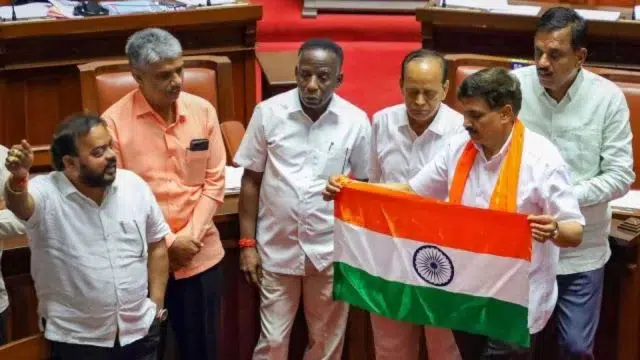
BJP and JD(S) MLCs protest over the alleged sloganeering of ‘Pakistan Zindabad’ after Congress leader Naseer Hussain won the Rajya Sabha election, in Council hall during the Budget session of Karnataka Assembly, in Bengaluru. (PTI)
The Indian Express has reported that the BJP protest was called against the remarks of the then Pakistani foreign minister Bilawal Bhutto Zardari against Indian Prime Minister Narendra Modi. While at the United Nations, Bilawal had called Modi the ‘Butcher of Gujarat’ – a reference to 2002 killing of Muslims when he was Chief Minister of the state. A video of the protest showed Ravi saying “Pakistan Zindabad” even as another person behind him attempted to close his mouth, it added. However, the local chapter of the BJP criticised Ravi’s arrest as “political vendetta”.
The president of BJP’s Mandya district unit was quoted by the Indian Express as saying that Ravi was a farmer and he did not know any language other than his native Kannada and did not know the meaning of the words he spoke.
The arrest came a day after three Congress workers were arrested for raising pro-Pakistan slogans in the Karnataka assembly on February 27 when party candidate Syed Naseer Hussain was elected to the Rajya Sabha. In a video shared by India Today, many congress leaders in the assembly have claimed that the exact words were actually Nasir Hussain Zindabad and not Pakistan Zindabad.
Karnataka Home Minister G. Parameshwara said on Tuesday that pro-Pakistan slogans were raised twice. “We identified the suspects and arrested them. The law will take its course,” he said, according to the Indian Express report.
The police said that the three Congress workers have been identified as Iltaz, from Delhi, Mohammad Nashipuri, a native of Haveri district of Karnataka and Munnawar, a resident of the state capital of Bengaluru on Monday. They remain in police custody, they added.
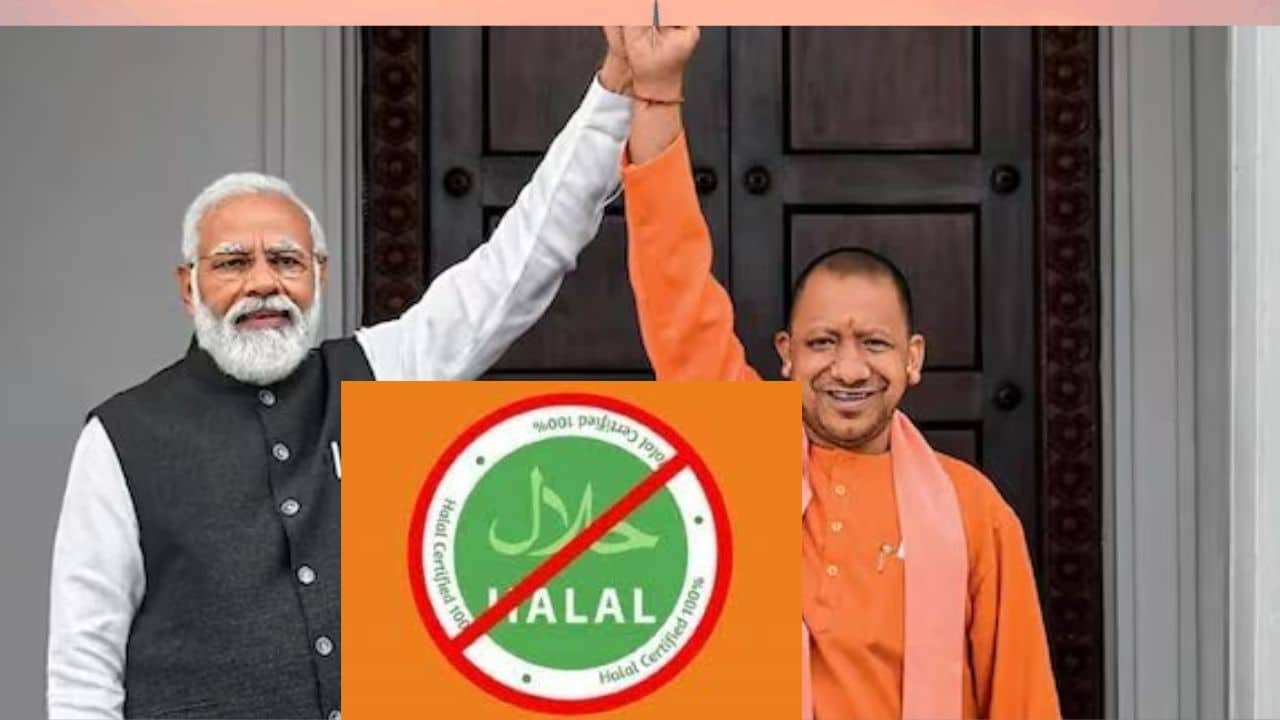
Authorities in India’s most populous Indian state Uttar Pradesh have banned the distribution and sale of Halal-certified products. These include dairy products, garments and medicines. A notificaton from the state government proclaims that the halal certification of the products is illegal.
Uttar Pradesh, or UP as it is commonly called, is ruled by firebrand right-wing Hindu monk Yogi Adityanath, a member of Prime Minister Narendra Modi’s Bharatiya Janata Party.
UP Govt. banned sale of Halal Certified products in the state.Several organisations issuing #HalalCertification for financial gains & exploiting religious sentiments of a particular community in country. We request Central Govt. to ban Halal in whole country.#Yogi_Against_Halalpic.twitter.com/iAwUxUFrBn
“Halal certification of food products is a parallel system which creates confusion regarding the quality of food items,” the notification said.
The Food Safety and Standards Authority of India (FSSAI) is the country’s apex body in charge of determining standards for most food products sold in the country and determines the standards food products should meet, the notification said.
Officials have conducted inspections all around the state.
After the ban on Halal products by BJP-ruled Uttar Pradesh Government,a team of Food Safety and Drug Administration officials conducted an inspection of food items at Sahara Mall. Lucknow,Uttar Pradesh #HalalBanInUP | #HalalCertification | #Indiapic.twitter.com/gpGgRt1TW0
Extremists from the right wing are appreciating the step as a way to curb “jihad”, alleging that it is funded by the sale of halal products.
Halal Money funds Jihad..period!! On the #HalalCertification ban in UP, I applaud the decision by Yogiji and ask – What do the Muslims actually want? They want personal laws, Halal food, madarssas and then they complain about not being mainstream ♂️
“Religion should not be brought into food. There were many items such as garments, sugar, etc which were being branded as Halal, which is against the law,” state BJP spokesperson Rakesh Tripathi said on Monday.
Ahead of the statement given by Israeli Ambassador to India, Naor Gilon, about being “overwhelmed” by the unprecedented response he has received from the country, Indians have become an active part of the Israeli propaganda team all across social media.
In his interview to The Economic Times, Gilon stated that with this kind of support from Indians, he believes “he could have another IDF with the (Indian) volunteers” because everyone is calling him to offer help. He goes on to elaborate that “the closeness India and Israel has is understandable but cannot be explained, It’s something very unique.”
The Ambassador also posted messages of solidarity by spectators in the Pak vs India match and as recently as some hours ago posted about Hamas being the culprit behind the bombing of Al-Ahli Baptist Hospital. Indian media quotes him as their official resource as Gilon retweets journalists and media houses propagating the false narrative.
#BREAKING: Israel’s Ambassador to India @NaorGilon confirms that Gaza hospital was hit by a misfired rocket by Palestinian Islamic Jihad terror group killing civilians. Asks Hamas to release the Israeli and foreign hostages and not act as cowards hiding inside tunnels. pic.twitter.com/HeO4lQ3JHT
There are a number of accounts on social media titled Indians for Israel or India stands with Israel. Added to that are fake accounts posing as Palestinians, even Al Jazeera reporters (Farida Khan) spreading Anti-Hamas and Pro-Israeli narrative. A number of tweets were found and reported to have similar content.
ALERT
INDIANS ARE MAKING FAKE ACCOUNTS ACTING AS PEOPLE IN GAZA, GIVING FALSE INFORMATION AND DOING ISRAELI PROPAGANDA
Al-Jazeera has reported about the virality of disinformation caused by the blue-ticked accounts terming them “disinfluencers” with budding Islamophobic conspiracy theories. The article takes a closer look at the “BJP IT Cell” to which most Islamopobic content and trolling is likely to be attributed to. Author and Journalist Marc Owen Jonas has revealed many instances of fake-news including a video circulating on social media, mostly shared by Indians, gaining millions of impressions and retweets about girls becoming sex-slaves for Hamas. A closer look shows them to be happily chatting and using phones.
This video claiming to show Israeli girls taken as sex slaves by Hamas has gone viral with thousands of retweets. There is zero context, they look like they’re happy chatting on their phones. And even if in Palestine looks like Jerusalem. Lots of Indian accounts sharing it pic.twitter.com/kHtBmuuH4L
However, there are some voices of dissent too, which get rebuked but stand tall in their stance. Ravi Nair, an esteemed journalist, not just voiced his opinion on India’s growing inclination towards right-wing but also exposed the original supporters of Zionism. In one of his tweets he said, “Hello, Israel, we Indians don’t support right-wing criminals whether Zionists or Hindutavaadis.”
Hello @Israel, we Indians don’t support right-wing criminals, whether Zionists or Hindutvavaadis.
It is the right-wing criminals of India supporting you.
To which he got hate from American Hindu Republican Renee Lynn in these words, “If you want to support Terrorists because you are brainwashed and want to shout Allahu Akbar then go away. You are not the majority in India”.
You idiot, India stands with Israel, even Modi. If you want to support Terrorists because you are brainwashed and want to shout Allahu Akbar then go away. You are not the majority in India. Go tend your goats.! bakrichod chutia..!! https://t.co/MJ4C95KEX0
Pratik Sinha associated with ALT News, a credible fact checker resource has said, “With India now exporting its disinformation actors in the Indian mainstream media and on social media in support of Israel, hopefully the world will now realise how the Indian right-wing has made India the disinformation capital of the world”.
With India now exporting its disinformation actors in the Indian mainstream media and on social media in support of Israel, hopefully the world will now realise how the Indian right-wing has made India the disinformation capital of the world. The disinformation originating from…