Tag: block

  • Interior Ministry ordered banning of Twitter in Pakistan

    Interior Ministry ordered banning of Twitter in Pakistan

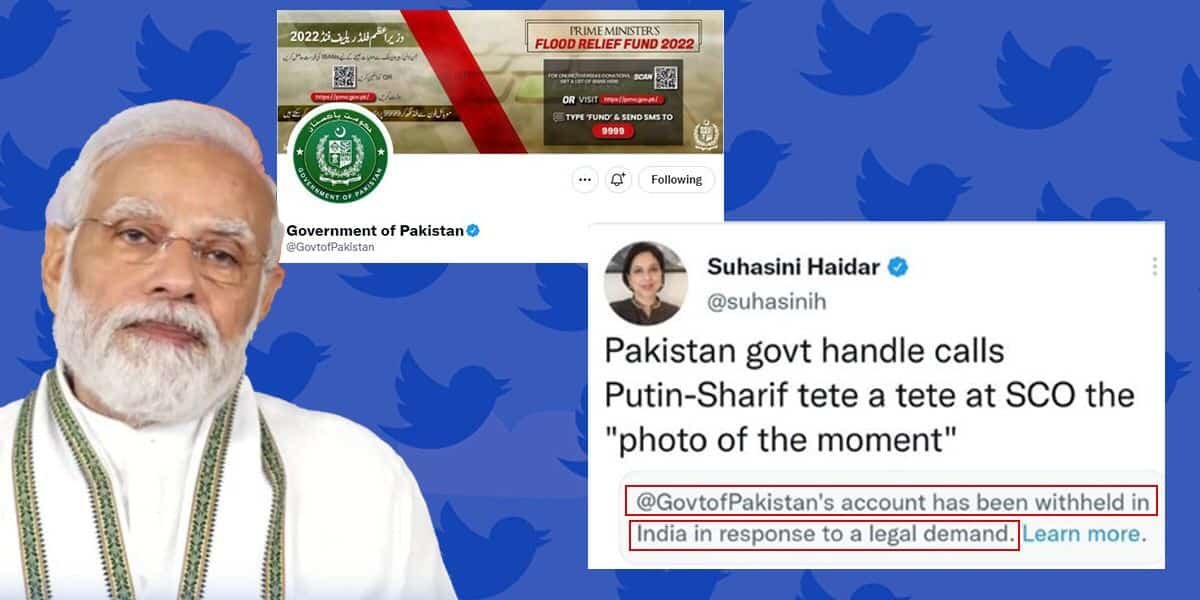
    The Ministry of Interior, headed by Mohsin Naqvi, has accepted that it directed Pakistan Telecommunication Authority (PTA) to ban X, formerly Twitter. The Ministry revealed this information in a reply to the Islamabad High Court (IHC), after the court had asked why the social media platform had been shutdown.

    In its reply to the IHC, the Ministry quoted the controversial 2021 social media rules stating that Twitter had not registered itself in Pakistan nor signed any MoU with the government of Pakistan.

    The reply to IHC said, “As a foreign entity operating in Pakistan, Twitter/X is subject to the regulatory framework of the country, including the compliance with legal directives issued by the Government of Pakistan.”

    It further said, “The ban on Twitter/X serves as a necessary step to address this regulatory vacuum and compel the platform to respect the sovereignty and legal jurisdiction of Pakistan.”

    The Ministry’s reply also said that the Federal Investigation Agency (FIA) has forwarded numerous requests to Twitter/X through PTA to block those accounts involved in a defamatory campaign against CJP Qazi Faez Isa and criticized the lack of cooperation from Twitter/X.

    It also mentioned that TikTok was also banned for a while by Pakistan, after which the company signed an MoU to abide by local laws, address content moderation issues, and enhance cooperation with Pak authorities.

    Meanwhile, the Sindh High Court (SHC) also directed the Ministry of Interior to revoke its letter regarding the suspension of X within one week.

    “What are you [interior ministry] achieving via shutting down trivial things […] The world must laugh at us,” said SHC Chief Justice Aqeel Ahmed Abbasi.

    As of now, X/Twitter has been inaccessible in Pakistan for the last two months.
  • Silence unknown callers: WhatsApp introduces solution to spam and scam calls

    Silence unknown callers: WhatsApp introduces solution to spam and scam calls

    WhatsApp, the messaging app owned by Meta, has introduced two new updates for its Android and iOS users. These updates offer enhanced privacy and control over incoming calls, as well as improved options for protecting user information.

    One of the updates is the “Silence Unknown Callers” feature, which automatically screens out unwanted calls from unknown or suspicious numbers. It helps users avoid spam, scams, and calls from people they don’t know. Instead of ringing on the phone, these calls will be listed in the call log, allowing users to check them later in case they are from important contacts. To enable this feature, users can go to their WhatsApp account privacy settings and select the “Silence Unknown Callers” option in the calls section.

    The second update is the “Privacy Checkup” feature, which assists users in navigating and configuring important privacy settings. By taking users through a step-by-step process, it helps them understand and choose the appropriate level of protection for their messages, calls, and personal information. By accessing the Privacy settings and selecting “Start checkup,” users can explore various privacy options and strengthen the security of their WhatsApp account.

    WhatsApp has taken innovative measures to spread awareness about these updates on a global scale. Emphasising the significance of secure communication, the app encourages users to connect with friends and family through private messaging, where they can freely express themselves. These updates aim to provide a safer and more private experience for WhatsApp users.

  • WhatsApp bans 2.4 million Indian accounts due to violations

    WhatsApp bans 2.4 million Indian accounts due to violations

    WhatsApp banned 2.39 million Indian accounts in July, the most this year, according to a monthly report released by the Meta-owned popular instant messaging platform.

    Owing to the Asian country’s tighter IT legislation, huge internet platforms are required to produce compliance reports every month.

    According to Reuters, draft guidelines issued in June recommended establishing a panel to review user appeals and stated that major social media messaging platforms must allow identity of the primary creator of material if ordered to do so by courts.

    1.42 million accounts were “proactively blocked” before any reports from users.

    According to the social media platform, some accounts were blocked based on complaints received through the company’s grievances channel and the techniques and resources it utilises to detect such infractions. WhatsApp received a total of 574 complaints in July.

    The messaging app, which has previously been chastised for spreading false news and hate speech in India and throughout the world, deactivated 2.21 million accounts in India in June.

  • Twitter sues Indian government over content removal directives

    Twitter sues Indian government over content removal directives

    Twitter has sued the Indian government to challenge some of its takedown orders, a source familiar with the matter revealed, further escalating the tension between the American social giant and India.

    In its lawsuit, filed Tuesday in Karnataka High Court, Twitter alleges that New Delhi has abused its power by ordering it to remove several tweets from its platform.

    The lawsuit follows a rough year and a half for Twitter in India, a key overseas market for the firm, where it has been asked to take down hundreds of accounts and tweets, many of which critics argue were objected because they denounced the Indian government’s policies and Prime Minister Narendra Modi.

    Twitter partially complied with the requests but sought to fight back against many challenges. Under India’s new IT rules, which went into effect last year, Twitter has little to no room left to individually challenge the takedown orders.

    The tension between the two was apparent on May 24 last year, when Delhi police, controlled by India’s central government, visited two offices of Twitter — in the national capital state of Delhi and Gurgaon, in the neighboring state of Haryana — to seek more information about Twitter’s rationale to label one of the tweets by ruling partly BJP spokesperson as “manipulated media.”

    Delhi police said it had received a complaint about the classification of the spokesperson’s tweet and visited the offices to serve Twitter India’s head a notice of the inquiry. In a statement, the police said Twitter India’s managing director’s replies on the subject had been “very ambiguous.”

    Twitter at the time described the episode as “intimidation.”

    The company has “concerns with regards to the use of intimidation tactics by the police in response to enforcement of our global Terms of Service, as well as with core elements of the new IT Rules,” it said.

    Twitter India managing director resigned from the firm last year.

    Twitter is not the first tech giant to sue the Indian government. WhatsApp sued New Delhi last year, challenging new regulations that could allow authorities to make people’s private messages “traceable,” and conduct mass surveillance.

    It’s unclear if the new lawsuit will impact Twitter’s proposed acquisition by Elon Musk.