Tag: border

  • Pakistan-Afghan Border Crossing Reopens After Negotiations

    Pakistan-Afghan Border Crossing Reopens After Negotiations

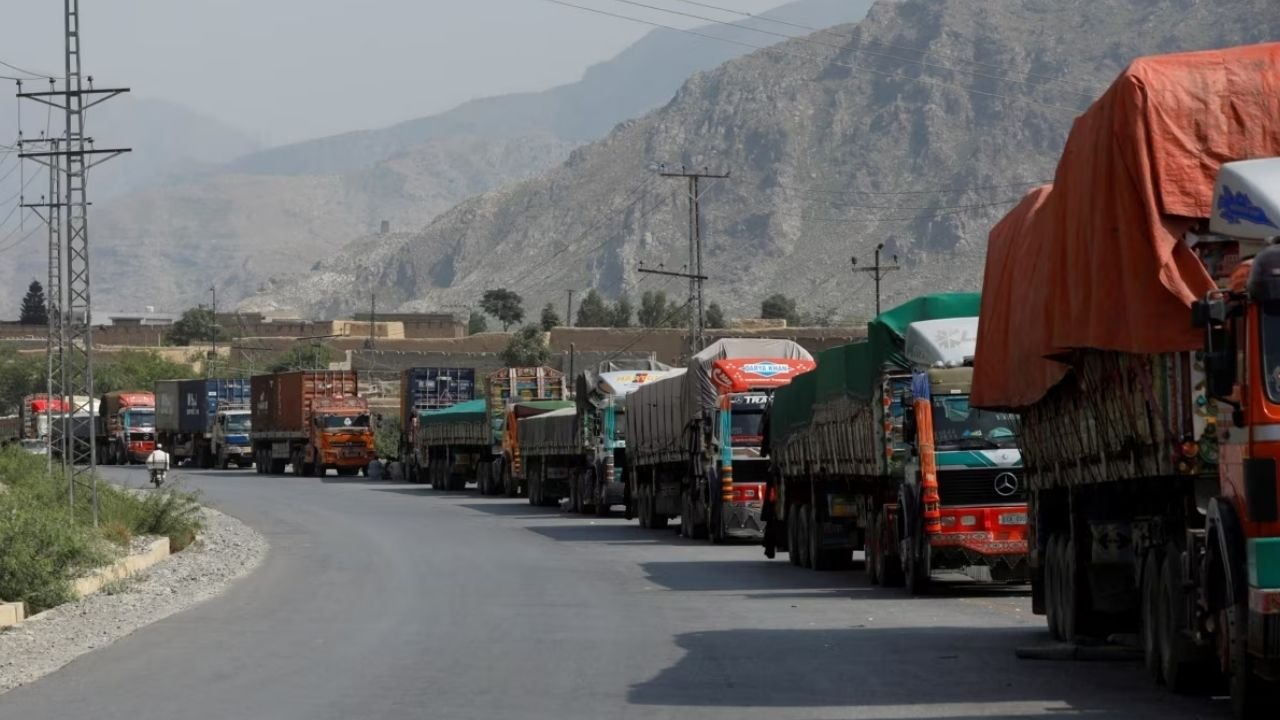
    Pakistan and Afghanistan reopened a key trade crossing on Tuesday, officials on both sides said, after a row over travel papers as Islamabad cracks down on cross-border movements.

    The Torkham border closure since 12 January came after Islamabad imposed tighter controls requiring drivers from both sides to have visas and passports — documents many Afghans do not have.

    Ties between the two countries have increasingly frayed in recent months, with Islamabad accusing the Taliban government of failing to root out militants staging attacks in Pakistan from their soil.

    Kabul has always rejected the allegations.

    A Pakistan border official, who asked not to be named, confirmed the reopening to AFP after negotiations between Islamabad and Kabul, allowing hundreds of waiting trucks to cross.

    “It was agreed during the discussions that until 31 March, Pakistani and Afghan drivers can cross the border without a visa and passport,” he said.

    “However, starting on 1 April, both a visa and passport will be mandatory.”

    Afghan Torkham official Abdul Jabbar Hikmat confirmed lorries were allowed to cross again on Tuesday “without the need for passports and visas”.

    Pakistan’s casualties from armed groups hit a six-year high in 2023 with more than 1,500 civilians, security forces and militants killed, according to Islamabad’s Center for Research and Security Studies.

    The biggest militant threat to Pakistan is its domestic chapter of the Taliban movement, known as Tehreek-e-Taliban Pakistan (TTP).

    Pakistan officials said tighter restrictions on trade and on-off border closures are a pressure tactic to get the Taliban government to work with Pakistan on security.

    “Pakistan desires Afghanistan to adopt a tough stance against the TTP,” a senior provincial government official in Peshawar city who asked not to be named told AFP.

    “If they do not, the trade route will be intermittently closed for various reasons.”

    Islamabad has also recently forced out hundreds of thousands of undocumented Afghans living in Pakistan.

    More than 500,000 Afghans fled in the four months since Islamabad imposed a deadline ordering 1.7 million Afghans it says are living in the country illegally to leave or risk arrest and deportation.

    Millions of Afghans escaping conflict poured into Pakistan in past decades, including around 600,000 since the Taliban ousted the US-backed government and imposed its harsh interpretation of Islamic law.

    Some of the Afghans crossing into Afghanistan as a result of Islamabad’s eviction scheme were entering the country for the first time, having lived their whole lives in Pakistan.

    Upon arrival, migrants have received only modest assistance from the government and NGOs in a country contending with one of the worst humanitarian crises in the world.
  • Exclusive: Afghan parents struggle for five days to take son’s body back to country

    Exclusive: Afghan parents struggle for five days to take son’s body back to country

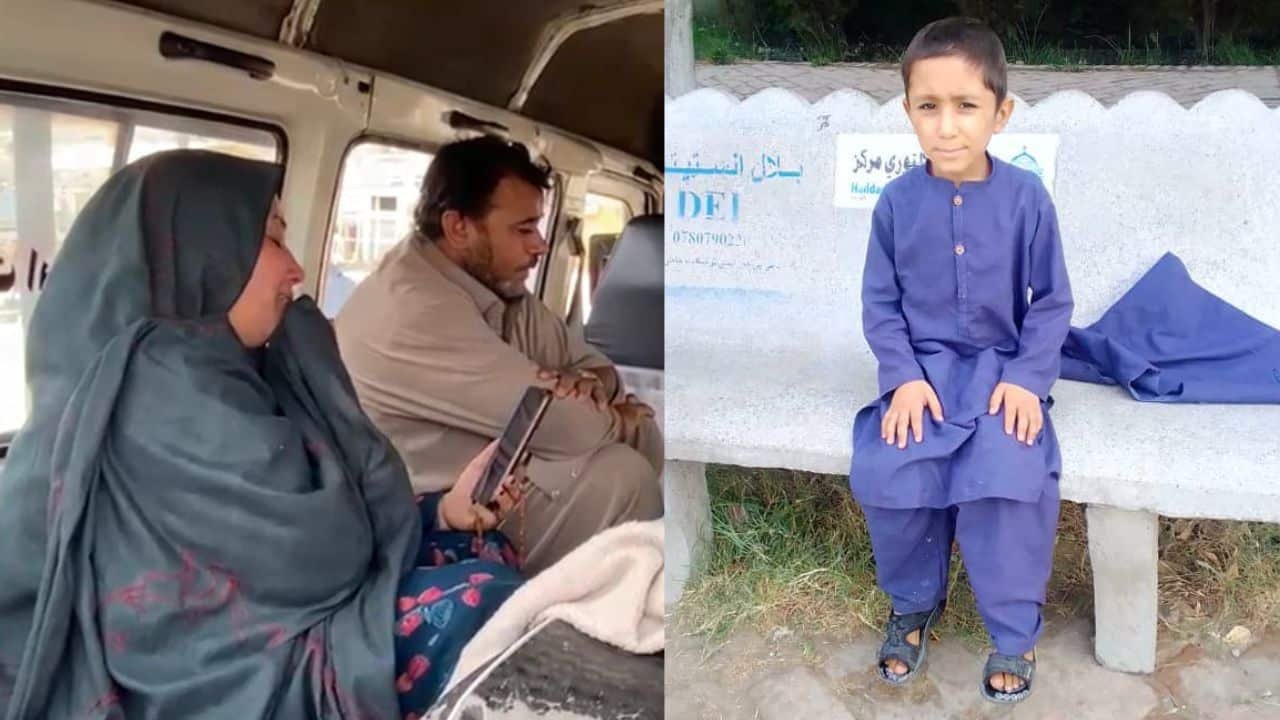
    A recent post on X (formerly Twitter) about Afghan parents unable to take their son’s body back to their country for burial has gone viral. In a photo, the parents can be seen crying beside their deceased son’s body in an ambulance in Peshawar.

    The family had come from Afghanistan to Peshawar for their son’s cancer treatment after he was diagnosed with a brain tumor. However, eight-year-old Muhammad Yasin passed away of the disease. The parents then wanted to return to their hometown in Afghanistan for the burial, but their route via the Torkham border had been closed due to Pak-Afghan security conflict.

    The Current reached out to Tahir Khan, the journalist who posted the picture, for an update on the case.

    Yaseen was the only brother to eight sisters, Tahir Khan said, adding that the child’s father, Gul Muhammad, drives a rickshaw in Jalalabad, Nangarhar province, Afghanistan.

    Around a year ago, Yaseen was diagnosed with brain cancer in Jalalabad. The doctors there recommended to the parents that they take him to Peshawar for his treatment.

    Despite his low income and hardships, Gul Muhammad did everything in his capacity to get his son treated.

    The family frequently travelled to Peshawar and back. The son and father received a pass which made it convenient for them to cross borders.

    In Peshawar they were always hosted by their hometown fellow who had been working as a farmer.

    Yaseen had undergone treatment at the IRNUM cancer hospital as well as Peshawar Hayatabad Complex.

    The tumor in his brain was successfully removed, with the child almost recovering. But all of a sudden, on September 4, Yaseen started feeling unwell while in Jalalabad. The parents brought him to Peshawar Hayatabad Complex where on September 7, Yaseen passed away.

    Now, the parents wanted to take their son’s body back to their hometown for burial but on September 6, Pakistan closed its Torkham border with Afghanistan after two people, including a Frontier Corps (FC) official, were injured in an encounter between Pakistan and Afghan border forces.

    According to the officials, Afghanistan has also started the construction of a checkpoint on their side of the border in a prohibited area “without discussing it with the Pakistani side”, despite an already existing checkpoint, the Larram Post.

    The conflict between the two countries complicated the situation for the grieving family whose route back home was via the Torkham border. They went up to the border twice since the passing of their son, but were sent back.

    Tahir Khan shared their concern on X (formerly Twitter) in hopes that higher authorities would take notice and help the family cross the border.

    They were contacted by an unknown man a couple of days back, who called the family around 2:30 am, promising to help them cross the border, but after that one call, Gul Muhammad was never able to contact the unknown caller and potential helper again since he never picked up his call.

    And so, with no help received from the officials, and with their deceased son’s body lying in the hospital since five days, the family decided to take the longer way back home.

    They are currently on their way to Jalalabad via Kurram border. While Peshawar to Jalalabad takes only three hours via Torkham border, it can take the family approximately half a day or more to travel via the Kurram border.

  • Pakistan and Afghanistan to launch luxury bus service in August

    Pakistan and Afghanistan to launch luxury bus service in August

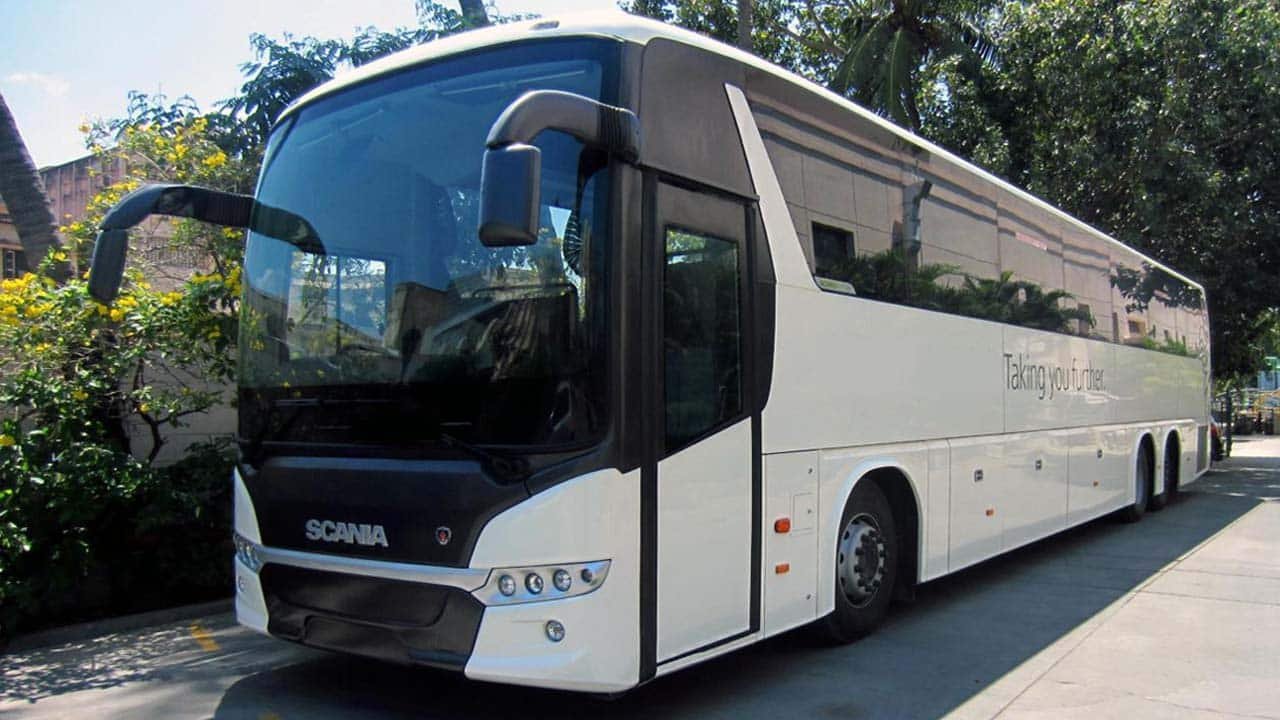
    Pakistan and Afghanistan will launch a luxury bus service between Peshawar and Jalalabad, as well as Quetta and Kandahar, by the end of August.

    During the visit of Pakistan’s official delegation to Kabul, the two nations have also agreed to boost bilateral trade by allowing unrestricted travel for trucks and other goods-carrying vehicles. Meetings were held between the delegation and other top Afghan officials, including the temporary ministers of foreign and commerce.

    In a joint statement released at the conclusion of three days of talks between Pakistani and Afghan officials (July 18–20), both sides committed to continuing their efforts to remove obstacles through mutual cooperation and coordination.

    The delegation from Pakistan was led by Commerce Secretary Muhammad Sualeh Ahmad Faruqui and included businessmen as well as senior members of various ministries. The delegation from Afghanistan was led by Nooruddin Azizi, the minister of trade and industry, and Amir Khan Muttaqi, the acting foreign minister.

    In order to ensure prompt clearance of trade and transit traffic and to address bottlenecks and obstacles on a priority basis, the official also agreed to make border crossing points more efficient.

    In an effort to further boost trade between the two nations, the two sides approved the implementation of the Temporary Admission Document (TAD), which permits free movement of vehicles engaged in bilateral trade but prohibits the loading and unloading of cargo at border crossing points.

    Additionally, all crossing points, particularly Torkham, Kharlachi, Ghulam Khan, and Chaman-Spin Boldak, will have longer operating hours, according to the authorities.

    The bilateral discussions were still centred on trade. Both parties concentrated on enhancing bilateral trade, transit, and accessibility as well as taking the necessary actions to facilitate trade and address issues faced by importers, exporters, traders, and business owners in Pakistan and Afghanistan.

    In parallel, a delegation from the Afghan business community headed by Khan Jan Alokozai, co-chairman of the Pak-Afghan Joint Chamber of Commerce and Industry (PAJJCCI), arrived in Pakistan on Thursday to take part in a roundtable of Pak-Afghan trade stakeholders. Members of the PAJCCI as well as senior business figures from the Kunar and Nangarhar Chambers of Commerce and Industry make up the delegation.

    Zubair Motiwala, chairman of the PAJCCI, lauded the efforts of the commerce chamber in setting up visits to Chaman, Torkham, and Swat for joint discussions on bilateral and transit trade, exploring new trade avenues, removing trade barriers, and aiding governments in formulating policy.

  • Customs seizes smuggled liquor worth Rs6.48 million in Karachi

    Customs seizes smuggled liquor worth Rs6.48 million in Karachi

    During a raid on the outskirts of Karachi on Thursday, Pakistan Customs personnel recovered a massive quantity of imported liquor worth millions of rupees.

    According to a Customs spokesman, monitoring was increased at the Moachko checkpoint after the Customs Enforcement Collectorate got information that alcohol was being smuggled to Karachi from Quetta under the cover of official vehicles.

    When a car with a government license plate and an armed guard was sighted at the checkpoint, customs anti-smuggling personnel signaled the driver to pull up, but the driver instead sped away.

    When the officials gave chase, the driver of the car purposefully began hitting customs vehicles, and the guard resorted to firing. Because the road was packed and there was a threat to public safety, customs officers refrained from firing fire.

    According to a spokesman, when they were around Shershah Chowk, the driver and guard hopped out of the vehicle and fled, taking advantage of a traffic jam on the other side of the road. During a check of the vehicle, 348 liquor bottles worth Rs6,480,000 were seized, along with other items discovered.

    Read more: PTA to take action against advertising of illegal housing societies on social media

    The entire estimated value of the products and car was Rs10,480,000. An FIR has been filed, and a manhunt has been initiated to find the suspects.

  • Pak-China trade to resume through Khunjerab pass after 2-year hiatus

    A lucrative trade route connecting Pakistan and China, the Khunjerab Pass will finally reopen for trade activities on April 1, 2022 after more than a 2-year hiatus. The pass was closed in November 2019 as a preventive measure against the spread of COVID-19.

    As per a credible resource, Chinese authorities sent Pakistan a letter requesting the reopening of the border, in reference to the agreement made in May 2013 between the neighboring countries.

    Port authorities on the Chinese side have been advised to take all preventive measures related to the COVID-19 outbreak.

    Likewise, the Pakistani border authorities have also been instructed to take all necessary precautions to prevent the spread of coronavirus spread.

    The Khunjerab Pass was temporarily opened for less than two weeks from July 29, 2020 to August 10, 2020 to allow the passage of stranded containers filled with goods. The prolonged closure of Khunjerab Pass had caused severe financial hardships to the local business community.

  • India accuses China of preparing attack on border troops

    India accuses China of preparing attack on border troops

    India has accused Chinese troops of meticulously preparing an attack on its soldiers on the treacherous Himalayan border, claiming they erected a tent on the Indian side, dammed a river, brought in machinery and then lay in wait with stones and batons wrapped in barbed wire, The Guardian reported.

    The incident on Monday night, in which 20 Indian soldiers died and 76 were injured, was the worst violence between India and China in 45 years. China has not said whether it sustained any casualties.

    Ten Indian soldiers who were reportedly captured by Chinese troops during the attack were back in India on Thursday night. China said it had not seized any Indian personnel.

    Both sides continue to blame the other for the clash. China is now claiming sovereignty over the Galwan valley in Ladakh, where the attack happened, and has accused Indian troops of three times crossing into its territory. “The responsibility entirely lies with Indian side,” said Zhao Lijian, a spokesman for the Chinese ministry of foreign affairs.

    India accused China of carrying out a “premeditated and planned action” on its side of the border. Satellite images of the Galwan Valley taken by Planet Labs, an imaging company, in the days before the clash appear to show increased activity on the Chinese side, including the damming of a river and the movement of troops and machinery close to the disputed and poorly defined border.

    The Australian Strategic Policy Institute said its analysis of satellite images found there was “evidence that strongly suggests People’s Liberation Army forces have been regularly crossing into Indian territory temporarily on routine patrol routes”.

    Indian officials said commanders from the Indian and Chinese sides had met on 13 June and agreed to each retreat back two kilometres in the Galwan valley and Pangong Lake area.

    But rather than retreating, the officials said, Chinese troops erected a tent in disputed territory close to what is known as Patrolling Point 14. They said India’s 16 Bihar Regiment, led by Col Santosh Babu, dismantled the structure in an attempt to push back the PLA troops.

    According to accounts given to the Hindu newspaper, when Babu and his troops later approached the Chinese side to challenge the refusal to retreat, they were ambushed by PLA forces on the steep mountain precipice. The Chinese allegedly unblocked the dammed river, releasing a rush of water to destabilise Indian soldiers, and they attacked with stones and makeshift spiked weapons.

    Indian troops retaliated, it was reported, and reinforcements were summoned on both sides until there were upwards of 600 soldiers in hand-to-hand combat in the dark and icy conditions. No shots were fired.

    There were reports that the Indian soldiers were unarmed, but India’s external affairs minister, Subrahmanyam Jaishankar, said: “Let us get the facts straight. All troops on border duty always carry arms, especially when leaving post. Those at Galwan on 15 June did so.”

    Due to the treacherous conditions, many of the bodies of the Indian soldiers could not be retrieved until the next morning, by helicopters working with troops and border police. The injured were taken to hospitals in the Ladakh city of Leh.

    India and China have agreed to continue the process of disengagement that was first agreed on 6 June, and discussions are ongoing through political and diplomatic channels. Army generals from both sides have also had three days of talks at Patrolling Point 14. However, the Indian army and air force in Ladakh remain on high alert.

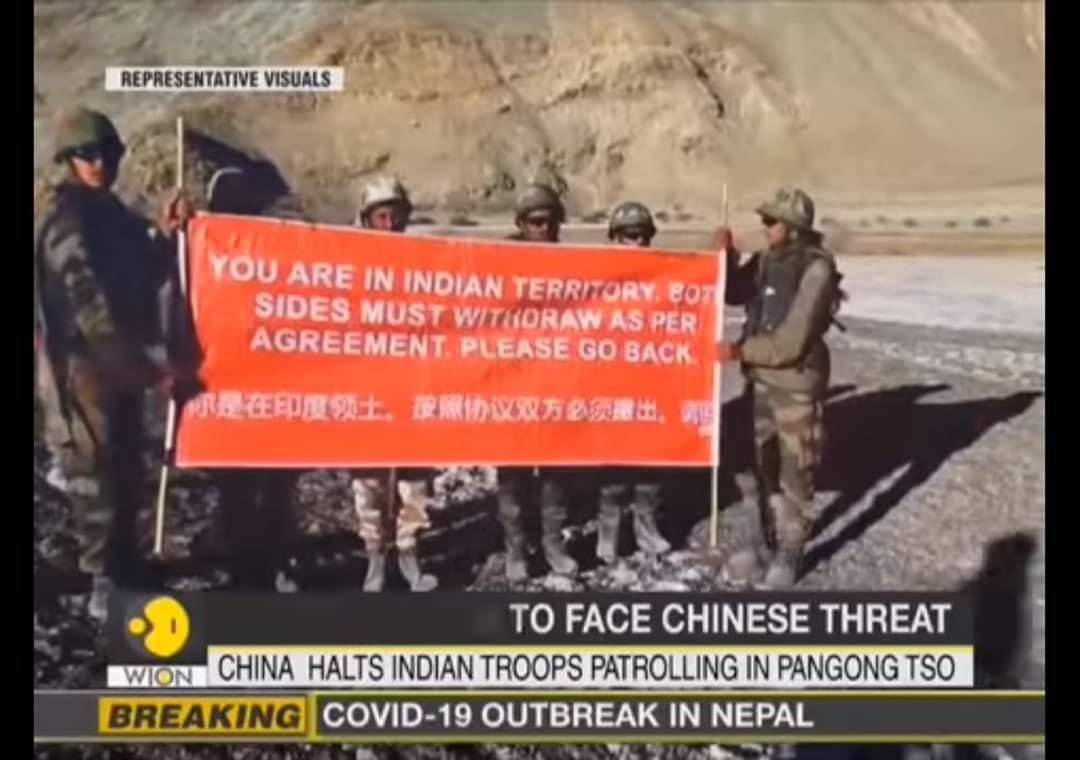
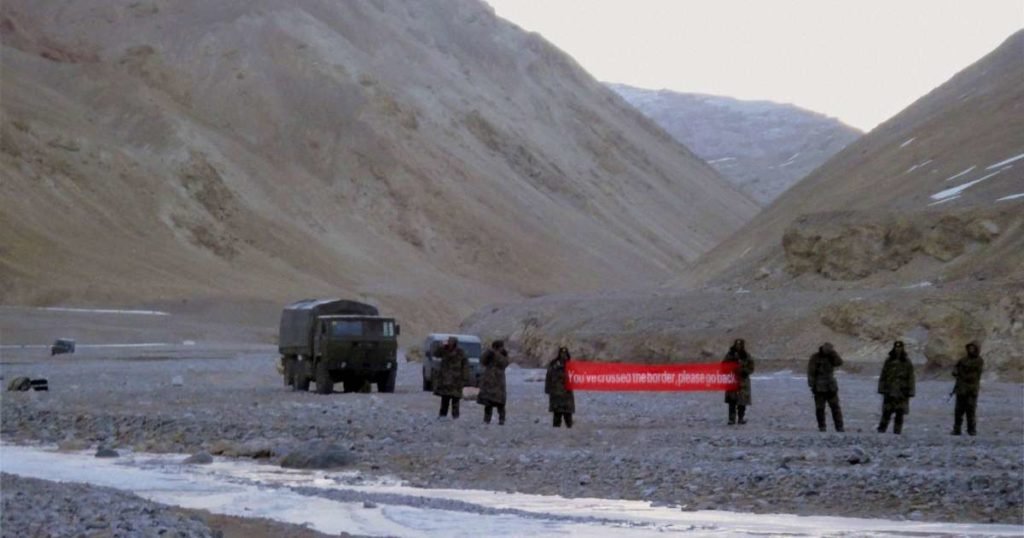
  • ‘You have crossed the border, please go back,’ Indian army to Chinese soldiers

    ‘You have crossed the border, please go back,’ Indian army to Chinese soldiers

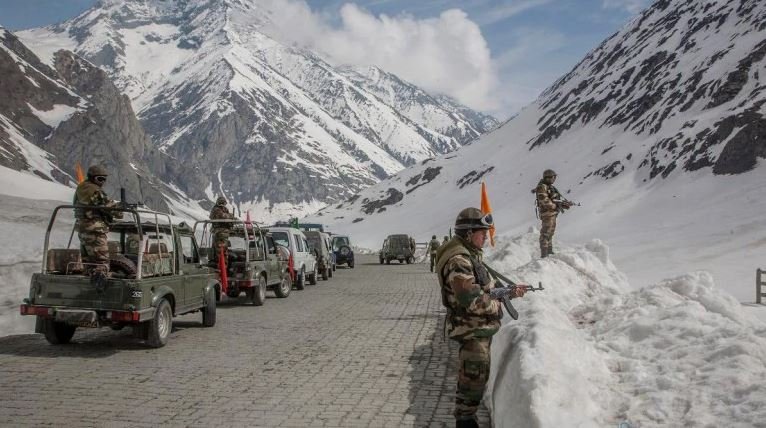
    A Himalayan border standoff between old foes India and China was triggered by India’s construction of roads and airstrips in the region as it competes with China’s spreading Belt and Road Initiative (BRI), Indian observers said on Tuesday.

    Soldiers from both sides have been camped out in the Galwan Valley in the high-altitude Ladakh region, accusing each other of trespassing over the disputed border, the trigger of a brief but bloody war in 1962.

    About 80 to 100 tents have sprung up on the Chinese side and about 60 on the Indian side where soldiers are billeted, Indian officials briefed on the matter in New Delhi and in Ladakh’s capital, Leh, said.

    Both were digging defences and Chinese trucks have been moving equipment into the area, the officials said, raising concerns of a long faceoff.

    “China is committed to safeguarding the security of its national territorial sovereignty, as well as safeguarding peace and stability in the China-India border areas,” the Chinese Foreign Ministry spokesperson’s office said in a statement.

    “At present, the overall situation in the border areas is stable and controllable. There are sound mechanisms and channels of communication for border-related affairs, and the two sides are capable of properly resolving relevant issues through dialogue and consultation.”

    There was no immediate Indian foreign ministry comment. It said last week Chinese troops had hindered regular Indian patrols along the Line of Actual Control (LAC).

    But interviews with former Indian military officials and diplomats suggest the trigger for the flare-up is India’s construction of roads and airstrips.

    “Today, with our infrastructure reach slowly extending into areas along the LAC, the Chinese threat perception is raised,” said former Indian foreign secretary Nirupama Rao.

    “Xi Jinping’s China is the proponent of a hard line on all matters of territory, sovereignty. India is no less when it comes to these matters either,” she said.

    After years of neglect Prime Minister Narendra Modi’s government has pushed for improving connectivity and by 2022, 66 key roads along the Chinese border will have been built.

    One of these roads is near the Galwan valley that connects to Daulat Beg Oldi airbase, which was inaugurated last October.

    “The road is very important because it runs parallel to the LAC and is linked at various points with the major supply bases inland,” said Shyam Saran, another former Indian foreign secretary.

    “It remains within our side of the LAC. It is construction along this new alignment which appears to have been challenged by the Chinese.”

    China’s BRI is a string of ports, railways, roads and bridges connecting China to Europe via central and southern Asia and involving Pakistan, China’s close ally and India’s long-time foe.