Tag: Brent Futures

  • PKR gains ground against US dollar, closes at Rs283.26

    PKR gains ground against US dollar, closes at Rs283.26

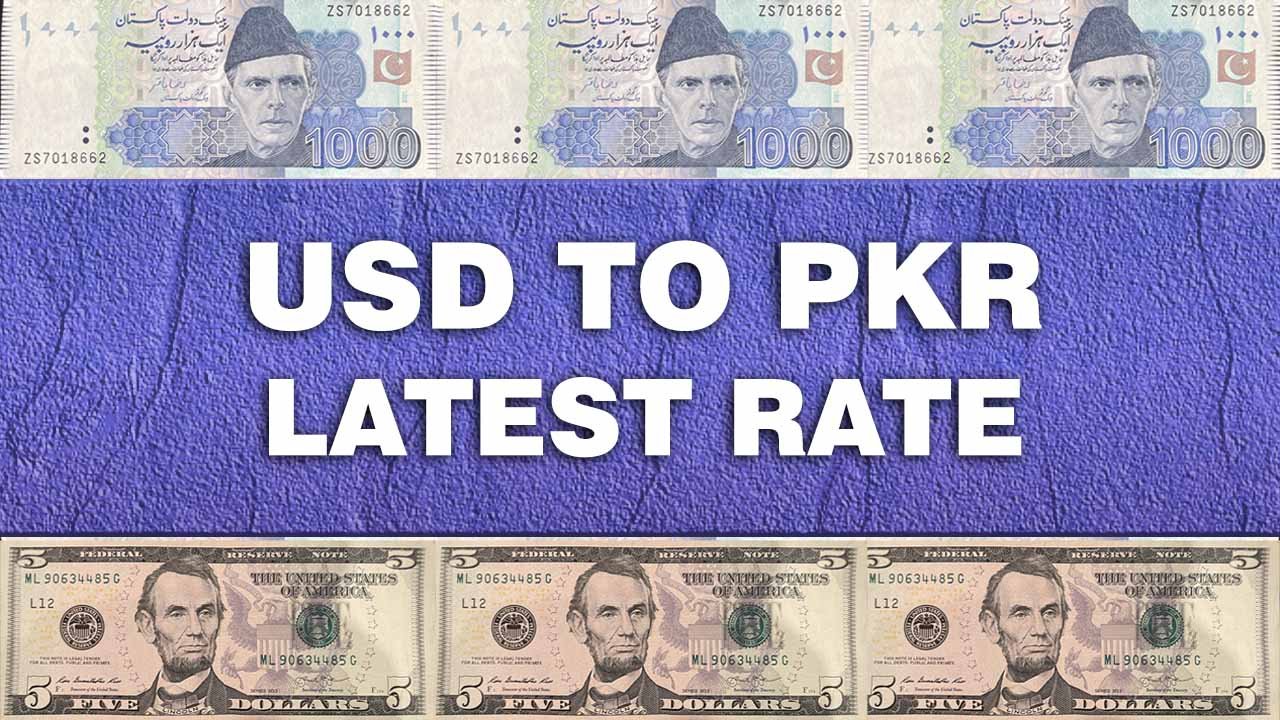
    The Pakistani rupee (PKR) continued its positive trajectory against the US dollar (USD) for the fourth consecutive session, appreciating by 0.09 per cent in the inter-bank market on Friday.

    According to the State Bank of Pakistan (SBP), the rupee concluded at Rs283.26, reflecting an increase of Re0.25.

    Thursday witnessed a marginal gain in the rupee, settling at Rs283.51 against the US dollar.

    The ongoing optimism is buoyed by the recently released trade figures for November, revealing a noteworthy 13.16 per cent month-over-month (MoM) and a substantial 31.72 per cent year-over-year (YoY) reduction in the trade deficit, amounting to $1.89 billion.

    Export figures exhibited a robust 7.66 per cent YoY surge, reaching $2.57 billion, while imports saw a YoY decline of 14.47 per cent, totaling $4.46 billion.

    On the global front, the US dollar remained near four-month lows on Friday, influenced by the increasing likelihood of US interest rate cuts in the coming year.

    Conversely, the euro and pound found support as their respective central banks reiterated the necessity for sustained higher interest rates.

    Amid an eventful week for central banks, clarity emerged regarding the potential timing of interest rate cuts following Federal Reserve Chair Jerome Powell’s statement during Wednesday’s meeting.

    Powell suggested that the tightening of monetary policy is likely concluding, with discussions about cuts coming “into view.”

    The Fed’s projections imply a 75-basis-point cut next year from the current level, leading to a broad decline of the greenback against its counterparts.

    The dollar index stands at 102.05, not far from the four-month low of 101.76 observed on Thursday, marking a 1.9 per cent decrease and its most significant weekly decline since July.

    Oil prices, a pivotal indicator of currency dynamics, saw an increase on Friday, set to achieve their first weekly rise in two months.

    This positive shift is attributed to a bullish forecast from the International Energy Agency (IEA) regarding oil demand for the upcoming year, coupled with a weaker dollar.

    Brent futures rose by 21 cents to $76.82 a barrel at 0918 GMT, while US West Texas Intermediate (WTI) crude also experienced a 21-cent climb, reaching $71.79.
  • Petrol price reduced by Rs18.50 per liter, Diesel by Rs40.54 per liter

    Petrol price reduced by Rs18.50 per liter, Diesel by Rs40.54 per liter

    In an attempt to provide relief to the masses and share the advantages of falling crude prices on the global market, the price of petrol has been slashed by Rs18.50 per liter.

    The price reductions for petroleum products were announced by the Prime Minister, Shehbaz Sharif, in an address to the nation.

    Diesel will now cost Rs236 per liter, while gasoline will now be sold at Rs230.24 per liter. The new prices for petroleum products, according to the Prime Minister, will take effect from midnight.

    He went on to explain why, after taking office, his government had to raise the price of gasoline. He continued, “We had raised fuel prices to meet the demands made by the International Monetary Fund (IMF), which were approved by the previous administration.

    “The government has decided to pass on the relief to the people and has therefore reduced the price of petrol and diesel by Rs18.50 and Rs40.54 per liter, respectively,” he continued.

  • Global oil prices rise amid supply concerns

    Global oil prices rise amid supply concerns

    Oil prices increased on April 20, swamped by fears about tightening supply as the European Union (EU) considers a possible ban on Russian oil imports, which would further impede global oil commerce.

    After reaching a high of $109.80, Brent oil futures finished up $1.53 to close at $108.33 a barrel. After earlier reaching a high of $105.42, U.S. West Texas Intermediate (WTI) crude futures ended up $1.60, or 1.6 per cent, at $103.79.

    Consumers also reacted to continued disruptions in Libya, where blockades at major fields and export terminals have resulted in a loss of about 550,000 barrels per day of oil supply.

    Brent has climbed about 8 per cent in the last seven days of trading, but the advance has been calm and steady, unlike the frenzy that surrounded Russia’s invasion of Ukraine in late February and again in mid-March.

    Last week, US crude exports increased to more than 4 million barrels per day, slightly countering Russian crude losses caused by US and European bans.

    Read more: Pakistani rupee plunges by Rs1.05 against the US dollar

    The oil market is still constrained, with the Organization of Petroleum Exporting Countries and its affiliates, led by Russia, striving to achieve output commitments and US crude inventories plunging dramatically in the week ending April 15.

  • Oil prices jump following Russia’s biggest production decline

    Oil prices jump following Russia’s biggest production decline

    Oil prices rose on April 13, after concerns that declining output in sanctions-hit Russia may affect supply, following the Russian announcement that peace negotiations to stop its invasion of Ukraine had reached a stalemate.

    Consequently, Brent crude futures were up 59 cents, or 0.6 per cent, to $105.23 a barrel, while West Texas Intermediate (WTI) crude futures were up 60 cents, or 0.6 per cent, to $101.20 a barrel. The previous session saw both contracts rise by more than 6%.

    On Tuesday, Russian President Vladimir Putin criticised Ukraine for the termination of peace talks and stated that Russia will not abandon its “special operation” to disarm its western neighbor.

    He stated that peace talks with Ukraine are at a stalemate, but that the seven-week operation is going as planned. In a note, ANZ oil experts stated that this raises the threat of the prolonged potential of supply disruptions in the oil sector.

    According to those familiar with the figures, Russian oil and gas extract output declined below 10 million BPD on April 11, the biggest drop since July 2020, as a result of sanctions imposed by numerous nations after Russia invaded Ukraine and logistical difficulties, which hindered business.

    This is quite serious as Russia is the world’s second-largest oil exporter.

    According to reports, Russia’s Energy Minister Nikolai Shulginov said late Tuesday that the government was willing to sell oil and oil products to “friendly countries in whatever price range,” adding that Moscow was focused on guaranteeing the oil sector’s proper functioning.

    Read more: International oil prices declined by 4%, crashing below $100 per barrel

    Meanwhile, indications of a partial relaxation of some of China’s strict COVID-19 restrictions have fueled optimistic sentiment between some market players this week.

  • International oil prices declined by 4%, crashing below $100 per barrel

    International oil prices declined by 4%, crashing below $100 per barrel

    Brent crude slid below $100 for the first time since March 16 amid plans to release huge amounts of petroleum and oil products from strategic storage, and also China’s prolonged coronavirus closure.

    Crude oil was down $4.1, or 3.99 per cent, at $98.68 per barrel. The price of US West Texas Intermediate (WTI) crude fell $4.28 a barrel, or 4.28 per cent, to $94.07 per barrel.

    The International Energy Agency (IEA) recently announced that member countries will release 60 million barrels over the next six months, with the United States matching that amount as part of its 180-million-barrel release announced in March.

    The actions are meant to make up for a shortfall of Russian crude after Moscow was extensively sanctioned for what it claims was a “special military operation” in Ukraine.

    As per JP Morgan analysts, the release of Strategic Petroleum Reserve (SPR) volumes will amount to 1.3 million barrels per day (BPD) over the next six months, enough to cover a 1 million BPD shortfall in Russian oil supplies.

    The release of strategic government oil reserves is projected to relieve some market tightness in the coming months, reducing the likelihood of oil prices rising and re-enforcing near-term supply constraints.

    While this is the largest release since the IEA stockpile was established in 1980, market participants believe it will fail to affect the principles of the oil market and will just delay further increases in production from crucial suppliers.