It was highly anticipated that King Charles will issue a strong apology for the harrowing atrocities of colonialism in the region during his visit to Kenya. Local rights groups were pressing for reparations but instead came a strongly-worded regret. “The wrongdoings of the past are a cause of the greatest sorrow and the deepest regret,” Charles said during a state banquet.
The British King acknowledged the painful struggle of Kenyans as he said, “There were abhorrent and unjustifiable acts of violence committed against Kenyans as they waged… a painful struggle for independence and sovereignty and for that, there can be no excuse.”
The crimes committed by the British colonial forces date back to the time when Kenyans were forced out of their tea lands as the British took over. Their lands are still producing more than 50 percent of tea for the British. Not just that, in the Mau Mau uprising during 1952-1960 a total of 90,000 people were brutally killed and 1,60,000 were detained.
Exactly a decade ago, UK Government announced payments of almost 20 million pounds to more than 5,000 people in what is known as a “a process of reconciliation”. This visit was paramount as Kenya is celebrating its 60th independence anniversary. “It matters greatly to me that I should deepen my own understanding of these wrongs, and that I meet some of those whose lives and communities were so grievously affected,” the King remarked.
While some are greatly disappointed at the lack of a formal apology speculated to be delivered ahead of the visit, President William Ruto has appreciated the courage of the British monarch for shedding light on “uncomfortable truths that reside in the darker regions of our shared experience”.
British royalty speaks publicly on the advice of the cabinet and Rishi Sunak has already rejected the call for an apology.
Prince Harry and Meghan Markle were in a “near catastrophic car chase at the hands of a ring of highly aggressive paparazzi” after attending an event in New York, their representatives have said.
According to People magazine, the spokesperson for the royals revealed that it was the Duke and Duchess of Sussex, and Markle’s mother Doria, were being driven back to a friend’s private residence, where they staying during their visit to New York. Along the way, a dozen cars began chasing after them, running over red lights, and trying to take photographs of the couple and Doria in the car.
“Last night, The Duke and Duchess of Sussex and Ms. Ragland were involved in a near catastrophic car chase at the hands of a ring of highly aggressive paparazzi. This relentless pursuit, lasting over two hours, resulted in multiple near collisions involving other drivers on the road, pedestrians and two NYPD officers. While being a public figure comes with a level of interest from the public, it should never come at the cost of anyone’s safety.”
The two were in New York to attend the Ms. Foundation 2023 Women of Vision Awards: Celebrating Generations of Progress and Power at the Zeigfield Ballroom in Manhattan. Markle had been honoured as this year’s Women of Vision Award.
Prince Harry’s mother, the late Lady Diana, passed away in a car crash in 1997 in Paris, when paparazi were relentlessly chasing after her car.
In a mental health documentary ‘The Me You Can’t See’ , Harry spoke about how trauma from watching his mother’s death is the reason why he chose to step back from his royal role, to prevent his wife Meghan from going down the same path:
“My mother was chased to her death when she was in a relationship with someone who wasn’t white, and now look what’s happened. You’re talking about history repeating itself? They’re not going to stop until she dies.”
It’s incredibly triggering to potentially lose another woman in my life,” Prince Harry added about Meghan.
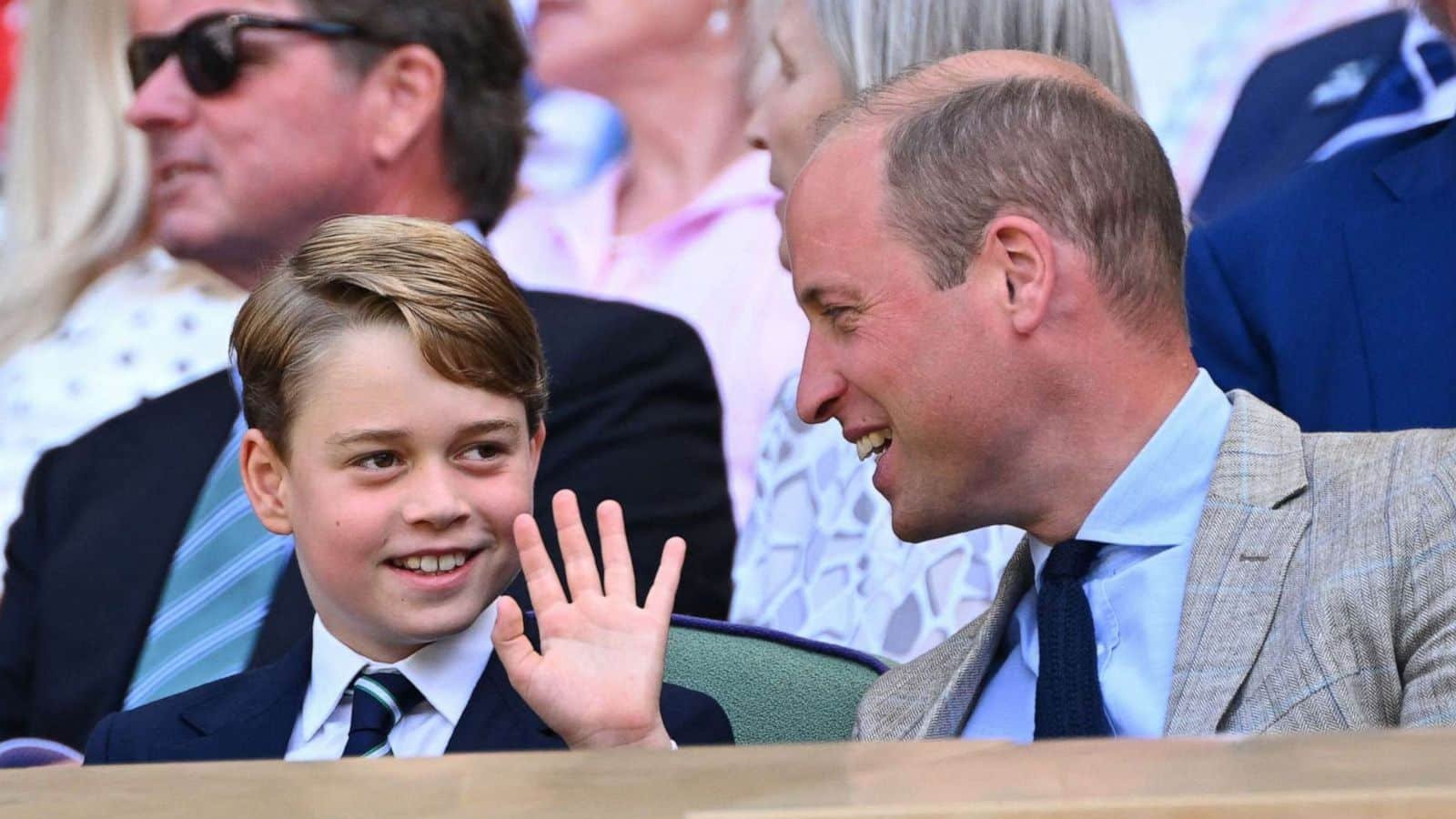
Prince George warned his classmates who were on his bad side that they better “watch out” because his father, Prince William, will one day be king, according to royal author Katie Nicholl.
The Daily Mail reported this incident citing a new book —‘The New Royals — Queen Elizabeth’s Legacy and the Future of the Crown’ by Nicholl.
“William’s aim as a father is to give his son a normal family upbringing, enabling the monarchy to stay relevant and keep up with modern times,” wrote the author of ‘Battle of Brothers’.
Prince George, the eldest grandchild of King Charles III, is second in the line of succession to the British throne behind his father William.
Aside from George, William and Catherine, Princess of Wales also shares two children—Princess Charlotte of Wales and Prince Louis of Wales.
Camilla, Duchess of Cornwall, becomes King Charles’s Queen Consort, in a remarkable journey to public acceptance after she became a hate figure for her perceived role in the break-up of his marriage to princess Diana.
For years, Camilla was vilified as the marriage-wrecker who shattered Britain’s fairy-tale royal love story.
Diana famously complained in a bombshell BBC television interview in 1995 that “there were three of us in this marriage” — her, Charles and Camilla, his long-time lover.
She even reportedly called her love rival a “rottweiler”.
After Diana died in a Paris car crash in 1997, Charles and Camilla gradually began to appear together in public and in time became accepted as a couple.
They married in 2005 and she, over time, won plaudits as the future king’s loyal wife.
The couple were seen side-by-side as they looked at flowers left by mourners for Charles’ father Prince Philip.
The popular Netflix series “The Crown”, charting the lives of Britain’s most famous family, albeit with a heavy dose of artistic licence, rekindled interest in their affair.
Charles was portrayed as very much in the driver’s seat, pursuing the older Camilla, played by Oscar-winning writer, director and actress Emerald Fennell.
In real life Camilla has carved out her own role, participating in the Booker literary prize ceremony and even the final of television ballroom dancing talent contest “Strictly Come Dancing”.
She campaigns to raise awareness of osteoporosis a condition from which her mother, Rosalind, suffered — and has an Instagram book club.
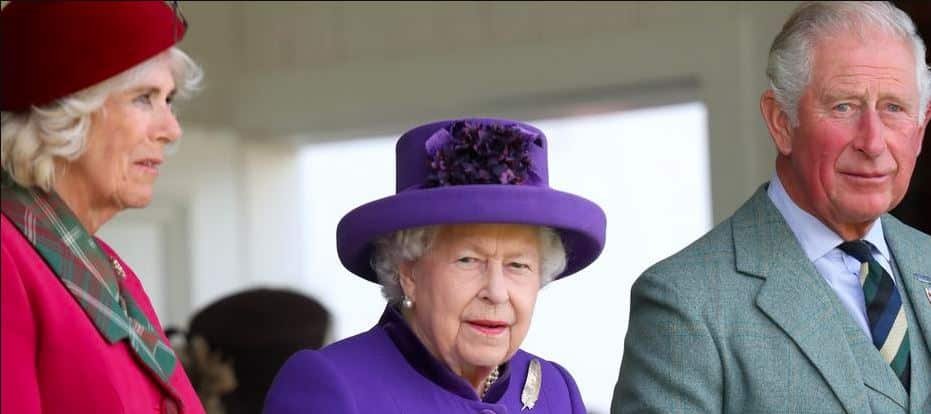
Marking 70 years on the throne earlier this year, the queen announced she hoped Camilla would be known as Queen Consort when Charles becomes king, resolving a long debate over her future title.
A YouGov poll in May 2022 found only 20 percent would like to see her become “queen”, while 39 percent favoured the title of “Princess Consort”.
YouGov ranked Camilla as the eighth most popular royal in the second three months of 2022, with 40 percent viewing her positively.
Born Camilla Rosemary Shand in London on July 17, 1947, Camilla had a traditional upbringing among Britain’s monied upper classes.
The granddaughter of the 3rd Baron Ashcombe, Roland Cubitt, she was educated in London, went to finishing schools in Switzerland and France, and spent her home life on a country estate in Sussex, in southern England.#photo1
Self-confident and attractive, she first met Prince Charles as a young woman at a polo match in the early 1970s, and they later became close.
However, believing Charles would never propose, she married British Army officer Andrew Parker Bowles in 1973. Royal guests included the queen’s sister, princess Margaret, and the monarch’s daughter, princess Anne.
The couple had two children: Tom Parker Bowles, whose godfather is Charles, is now a food writer, while Laura Lopes is an art curator.
Mutual feelings with the prince remained, nonetheless, with Charles allegedly continuing to see Camilla even after his high-profile marriage to Diana at St. Paul’s Cathedral in 1981.
The romance was fully rekindled later that decade as the royal marriage crumbled, which was luridly chronicled in leaked recorded phone conversations to the tabloid press.
Camilla and Andrew Parker Bowles divorced in 1995, a year before Charles and Diana.
After Diana’s death, Charles and Camilla kept their relationship discreet, but it gradually became apparent they were effectively living together as husband and wife.
Following months of careful planning, the couple made their first public appearance together in 1999 and after that became increasingly open about their relationship.
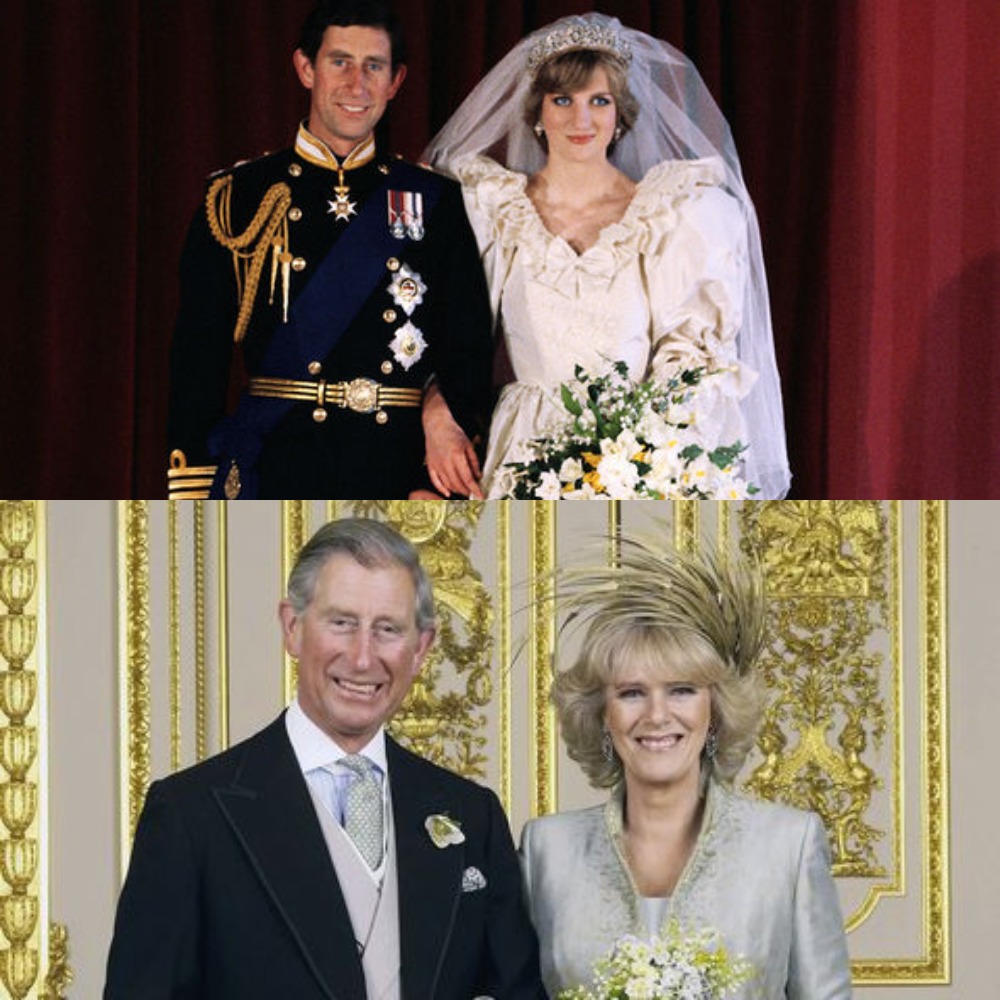
They were married in the royal town of Windsor on April 9, 2005, in a civil ceremony followed by a religious blessing at St. George’s Chapel, with Queen Elizabeth II present.
Both divorced, there was controversy over whether they could have a church wedding, especially given Charles’ future role as supreme governor of the Church of England.#photo2
But the wedding — delayed by a day to allow the prince to attend pope John Paul II’s funeral — drew a cheering crowd of 20,000 into the streets leading to Windsor Castle.
As a married couple, they settled into a life of royal duties, overseas tours and holidays at Balmoral, the royal estate in northeast Scotland.
Camilla — known as the Duchess of Rothesay in Scotland — remained the archetype of the tweed-wearing, horse-loving British country aristocrat.
She has two Jack Russell terriers, rescue dogs Beth and Bluebell, and is a keen flower arranger.
Over time, Camilla has also been widely accepted by the royal family, including Charles and Diana’s two sons, princes William and Harry.
In 2005, Harry rejected the image of her as a “wicked stepmother”, describing her as a “wonderful woman and she’s made our father very, very happy, which is the most important thing.
“William and I love her to bits.”
Prince Charles’s behaviour with the two
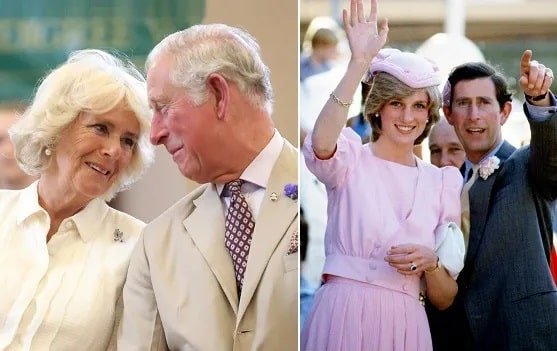
Prince Charles’ relationship with Princess Diana when out in public was noted to be different in comparison to his behaviour with Camilla.
When the Prince of Wales is joined by the Duchess of Cornwall, he is snapped smiling and laughing with her, something which body language expert Inbaal Honigman shared was different when he was with Princess Diana.
Speaking to Express about Charles’ interaction with Camilla verses with Diana she said: “Prince Charles is regularly seen embracing his wife Camilla.
“The pair are often observed with their arms interlocking, looking each other in the eye, smiling full into each other’s faces, and generally seeking each other’s closeness, that the collective consciousness sees him as this guy.
“The warm, tactile, even romantic husband who is devoted to the lady beside him.
“Often photographed facing the same way as each other, or indeed facing one another, the married couple are clearly in love, and feel comfortable in each other’s presence, as they share royal duties, and the odd private moment.”
“A glance back at his photos with his first wife, the late Princess Diana, reveal a very different Prince.
“Official images and some personal press shots from the early years of the young couple’s married life, show a blushing Diana and an often discontent Charles in absolute disarray towards one another.
“There’s always a good few feet of social distancing between them, and they rarely face the same way.
“In the starkest of photographs, they’re facing squarely away from one another, both standing stiff with their arms by their sides.
“But even on the occasions when they’re not searching for something to look at on opposite ends of the room, they are not in harmony – if they both look ahead, it’s never in the same direction.
“Their facial expressions don’t match. They both look like they wished they were elsewhere, with somebody else.
“Partly, this disparity between 80s Prince Charles and his military stance, and modern era granddad Charles, all warm and loving, may be down to social protocols around the royals changing.
“It could be that back in his first marriage, the Prince was under clear instructions to not hold hands, to not look too happy – and during those days, there was no room for flexibility even with his young wife.
“These days now, the royals are accepted as people in their own right, and the Prince shows his spontaneity and natural wit without any negative repercussions.”
Inbaal continued: “Another consideration is maturity – many people only develop their romantic sides as they age.
“There is every chance that the apparent antipathy between Prince Charles and Princess Diana in the early days, expressed in their body language of opposites, was a result of social reasons, not emotional incompatibility,” she added.
Queen Elizabeth II, the longest-reigning monarch in British history, breathed her last on Thursday in Balmoral Castle, United Kingdom (UK) at the age of 96. “The Queen died peacefully at Balmoral this afternoon,” a display message on the official website of the Royal family reads.
“The official website of the Royal Family is temporarily unavailable while appropriate changes are made.”
Who is the new King?
Charles, as the queen’s eldest son, inherited the sovereign title and job as head of the Commonwealth, along with other assets such as land and property.
Charles, 73, is the longest-serving heir in British history after waiting decades to get to the throne. The queen and her late husband, Prince Philip, had four children together, with him being the oldest. He became Britain’s heir apparent at age 3 when his mother succeeded to the throne at the age of 25. Prince of Wales, Duke of Cornwall, Duke of Rothesay, and Earl of Carrick are some of Charles’ titles.
The Prince and Princess of Wales were born after Charles wed Diana Spencer in 1981. William and Harry, two princes, were born to them. Charles and Diana separated in 1992. Charles wed Camilla Parker Bowles, who is now known as the Duchess of Cornwall, in 2005 after Diana passed away in 1997.
Will Camilla become the new Queen?
The title of queen is typically bestowed upon the king’s wife, but in Camilla’s case, this hasn’t always been the case. At the time of Charles and Camilla’s wedding in 2005, it was agreed that she would be referred to as princess consort rather than queen. However, now that he is king, Charles has the option of changing this designation.
What is expected to happen in the next ten days?
Day 1:
Charles will be officially proclaimed King. This happens at St James’s Palace in London, in front of a ceremonial body known as the Accession Council. The same day, in the afternoon, the new king will have audiences with the prime minister and cabinet, the leader of the opposition, the archbishop of Canterbury and the dean of Westminster.
Day 2: The Queen’s coffin will return to Buckingham Palace. Proclamations will be read in the devolved administrations. Tributes are likely to continue in parliament.
Day 3: In the morning, King Charles will receive the motion of condolence at Westminster Hall. In the afternoon, he will embark on a tour of the United Kingdom, starting with a visit to the Scottish parliament and a service at St. Giles Cathedral in Edinburgh.
Day 4: King Charles will land in Northern Ireland, where he will attend a ceremony at St. Anne’s Cathedral in Belfast and receive a further motion of sympathy at Hillsborough Castle. Rehearsals for the funeral will be taking place.
Day 5: On the fifth day, a procession will begin, starting at Buckingham Palace and ending at the Houses of Parliament, then a service will be held at Westminster Hall. The Queen will then be placed on display for three days so that the public can view her coffin.
Day 6: On the fifth day, a procession will begin, starting at Buckingham Palace and ending at the Houses of Parliament, then a service will be held at Westminster Hall.
Day 7: King Charles will travel to Wales to receive another motion of condolence at the Welsh parliament and attend a service at Liandaff Cathedral in Cardiff.
Day 08: Prime ministers and governors general from the countries are anticipated to attend King Charles’ coronation.
Day 09: Charles will extend an invitation to visiting royal families from other countries the night before the funeral. VIP foreign visitors are anticipated at the lying in state.
Day 10: The state funeral itself will be held at Westminster Abbey. There will be a two-minutes’ silence across the nation at midday. Processions will take place in London and Windsor. There will be a committal service in St. George’s Chapel at Windsor Castle, and the queen will be buried in the castle’s King George VI Memorial Chapel.