Tag: Budget 2020

  • An ordinary budget in extraordinary times

    An ordinary budget in extraordinary times

    The federal budget for 2020-21 has been approved amid protests by the opposition and criticism by economic analysts. Is it really that bad a budget? Not at all. In fact, if anything, it might be incrementally better than the previous years’ budgets in many ways.

    For instance, budget 2020-21 can be termed as pro-business as it did not introduce any new taxation measures and instead included a reduction in custom and regulatory duties in a number of areas. In addition, there is no provision for any foreign loan repayment on the account of debt moratorium granted to us by our international lenders. Power and petroleum subsidies have been reduced by more than Rs100 billion, which, if reflected in energy pricing, can very well reduce the financial pressure on the government.

    “Despite all the talk of ‘corona budget’, ‘structural reforms’ and an ‘expansionary fiscal policy’, this was truly an ordinary budget but in extraordinary times, falling short of people’s expectations and exhibiting a meek response to the enormous challenge at hand.”

    Most importantly, for the very first time, the budget included statements on contingent liabilities, fiscal risks and tax expenditure, setting a new standard of information disclosure and budget transparency. These statements might not be perfect and may need substantial improvements, but nevertheless it is the first time any government has opted for such measures in Pakistan.

    The government also restrained from financing its deficit from the State Bank of Pakistan (SBP), albeit under IMF pressure. The development budget does not exhibit the kind of cuts that one would have expected, and last but not the least, the Public Sector Development Programme (PSDP) did not include any unapproved projects, setting a good practice for public investment management.

    If all this is true, then what is the fuss really about? Why are people not appreciating government’s efforts?

    First and foremost, despite all the talk of ‘corona budget’, ‘structural reforms’ and an ‘expansionary fiscal policy’, this was truly an ordinary budget but in extraordinary times, falling short of people’s expectations and exhibiting a meek response to the enormous challenge at hand.

    At a time when the country truly needed a fiscal push through ambitious development spending, the budget ended up sticking to fiscal discipline that is usually required under the International Monetary Fund (IMF) programmes. Perhaps the government could not communicate its domestic priorities to the IMF well. But it is quite clear that in the contest of balancing the preferences, appeasing the IMF won by a wide margin over the goal of stimulating the economy.

    “When history would be written, budget 2020-21 would not be criticised for any excesses but for not doing enough to revive the economy in the wake of COVID-19.”

    Secondly, and even more importantly, it is an unrealistic budget. The Rs4.9 trillion revenue target for the Federal Board of Revenue (FBR) can never be achieved without new taxation measures and is likely to fall short by at least Rs500-600 billion. The Rs242 billion provincial surplus is also quite unrealistic, especially considering that both Sindh and Balochistan have posted a cumulative deficit of more than Rs100 billion. Notwithstanding the windfall gains on the account of interest rate cut leading to reduced markup payments and an increase in fuel prices resulting in an increase in petroleum levy, the overall revenue receipts will fall short of targets, and when that happens, it will happen at the cost of development expenditure.

    READ:Twitter loses it over Rs1.29 trillion budget for defence, Rs83.63 billion for education

    Lastly, a crisis generally brings in the appetite for bold and difficult decisions and a crisis of this unprecedented proportion should have led to a paradigm in our priorities. The next few years are going to be tough, leaving little room for fiscal leakages. If there was ever a time to fix the state-owned enterprises and to privatise them, to take decisions on circular debt and power sector reforms, to put a stop on the relentless expansion in government size, to manage the ballooning pension liabilities, or to create a balance between civil and military spending, that time was now. But unfortunately, none of this could be traced in the budget documents.

    When history would be written, budget 2020-21 would not be criticised for any excesses but for not doing enough to revive the economy in the wake of COVID-19.
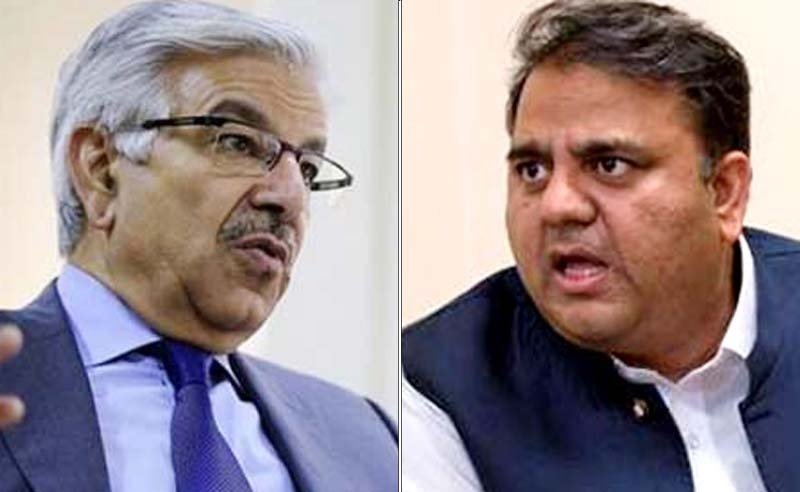
  • VIDEO: Khawaja Asif, Fawad Chaudhry trade barbs in National Assembly

    VIDEO: Khawaja Asif, Fawad Chaudhry trade barbs in National Assembly

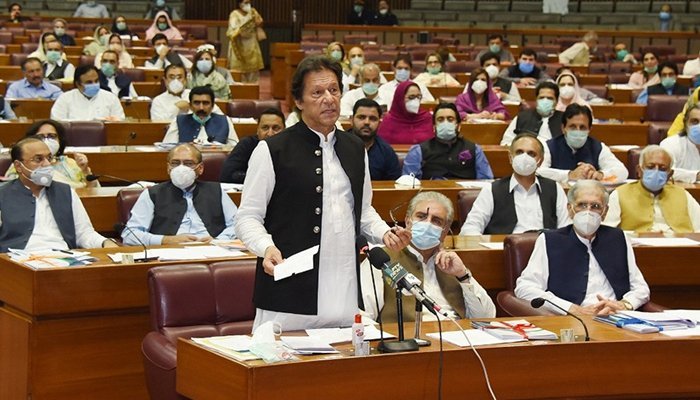
    The National Assembly (NA) on Monday approved the federal budget for the fiscal year 2020-21. The session, however, was yet again marred by an altercation, this time between Pakistan Muslim League-Nawaz (PML-N) leader Khawaja Asif and Federal Minister for Science and Technology Fawad Chaudhry.

    “Sir, bass vee kar deo [sir, please stop]” Fawad was heard as saying as Asif addressed the Lower House of the parliament.

    To this, Asif replied, “Tuvaaday mutalak mai aisiyaan aisiyaan gallaan karaanga, Khuda di qasam tavanu jagaah nayi labnni ais hall ich [I will say such things about you that you will not find a place in this hall].”

    Asif went on to say that for the past few days, Fawad had been “involved in some activities”, to which the federal minister said the PML-N leader would not “find any space in Sialkot — Asif’s hometown — either” and asked him to apologise for his remarks.

    NA Speaker Asad Qaiser kept on asking both the lawmakers to stop.

    “No cross talk please… sit down please. Please, Fawad Sahib. Take a seat. Khawaja Sahib, continue please.”

    “No, how can you let this happen? How can one person say anything and not apologise? How dare he? He must apologise!” Fawad said.

    WATCH VIDEO:

    Speaking to The Current, Fawad said he was discussing something with Deputy Speaker Qasim Suri.

    “Khawaja Asif got upset because we were not paying attention to his speech. Then he made up some lies about me, for which I asked him to apologise.”

  • ‘Unrealistic and meaningless’: Economists react to PTI govt’s second federal budget

    ‘Unrealistic and meaningless’: Economists react to PTI govt’s second federal budget

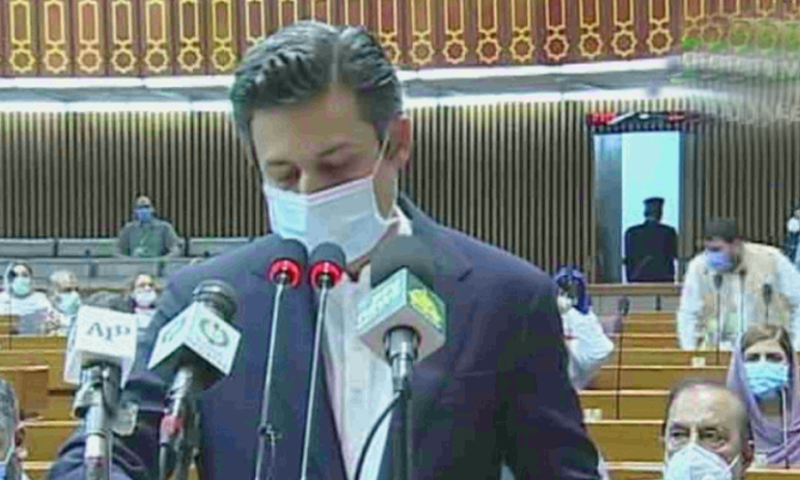
    The Pakistan Tehreek-e-Insaf (PTI) government has unveiled a Rs7.13 trillion budget for the upcoming fiscal year, which was presented before the parliament by Industries Minister Hammad Azhar amid opposition members’ protest against the same for being “anti-people”.

    But while the budget, which Prime Minister (PM) Imran Khan’s team claims will bring relief to the masses in coronavirus times, is drawing mixed reactions from political leaders and the general public, what do economists have to say about it?

    MUZZAMMIL ASLAM:

    “Given the GDP [gross domestic product] projections (2.1%) for next year, it is apparent that the government has failed to provide impetus to the economy. This has highlighted resource constraints the current government is facing. The government is basically relying on the stimulus of 1.2 trillion it provided during COVID-19 and is now consolidating its finances due to [the] IMF [International Monetary Fund] programme.”

    YOUSUF NAZAR:

    “Budget making has been reduced to a meaningless annual ritual given the overall dismal performance in meeting the targets, a performance which had little to do with the pandemic. Given that Pakistan’s economy is contracting for the first time in history, I had hoped that the government will come up with a plan to revive growth. A big near term risk to growth is the locust attack. I don’t see anything in the budget to help the agriculture sector face this threat. On a broader note, the government seems lost and overwhelmed by the economic contraction. I don’t see how it succeed in meeting the revenue target through privatisation when the business confidence is so low and the premier appears to be, honestly, clueless about we need to do to reform the economy, reset spending priorities and revive confidence in the government.”

    FARHAN BOKHARI:

    “It is an unrealistic budget that is based on an unrealistic tax collection target. The budget should have included a bold plan to cut losses in public sector companies and an equally bold plan for tackling losses in the energy sector. Pakistan additionally needs an emergency plan to raise agricultural productivity as agriculture is the only sector of the economy that has recorded some growth. Such big moves require a national political consensus which is missing as the premier refuses to talk to other mainstream political leaders.”

    According to Hammad Azhar, the Federal Board of Revenue (FBR) revenue target for next year has been kept at Rs4.95 trillion, while defence allocations amount to around Rs1.3 trillion.

    READ: Twitter loses it over Rs1.29 trillion budget for defence, Rs83.63 billion for education

    The federal development programme has been budgeted at Rs650 billion to support growth prospects.

    The budget for fiscal year (FY) 2020-21 comes at a time when the country is battling the COVID-19 pandemic that has served a severe blow to the economy. According to reports, it has been formulated considering the impact of the virus and to give relief to the citizens, as part of which no new taxes have been imposed.

    Check out the budget document here.

  • Twitter loses it over Rs1.29 trillion budget for defence, Rs83.63 billion for education

    With the Pakistan Tehreek-e-Insaf (PTI) government unveiling its second budget in the National Assembly (NA) on Friday, Twitterati are losing it over nearly Rs1.3 trillion being allocated for defence against not even Rs84 billion for education in the Rs7.13 trillion budget for fiscal year (FY) 2020-21.

    One trillion equals 1,000 billion.

    DEFENCE BUDGET:

    According to Dawn, the government has proposed Rs1.29 trillion defence allocation for the next fiscal year, representing an 11.8 per cent increase over the original allocation for the outgoing year. Federal Minister for Industries Hammad Azhar, while presenting the budget in the National Assembly, said that defence and internal security have been given adequate attention in the budget.

    The military had last year forgone a major hike because of the economic challenges then facing the country and settled for a raise of 4.74 per cent, but by the end of the year, it had overshot the allocation by 6.33 per cent.

    The original allocation for last year was Rs1.15 trillion, but according to revised figures presented before the lower house of parliament, about Rs1.23 trillion had been spent. It has now virtually become a norm for actual defence spending incurred in a year to be higher than the original allocation.

    EDUCATION BUDGET:

    Meanwhile, the government has earmarked Rs83.363 billion for Education Affairs and Services against the revised allocation of Rs81.253 billion for the current fiscal year, showing an increase of around 2.5 per cent. The country’s public expenditure on education as a percentage to gross domestic product (GDP) is estimated at 2.3 per cent in the fiscal year 2019-20, which, according to reports, is the lowest in the region.

    An amount worth Rs70.741 billion has been allocated for Tertiary Education Affairs and Services in budget 2020-21, which is 84.9 per cent of the total allocation under this head, while Rs2.931 billion have been earmarked for pre-Primary & Primary Education Affairs, Rs7.344 billion for Secondary Education Affairs & Services and Rs1.237 billion for administration.

    Since the federal government only finances higher education after the 18th Amendment when education as a subject was devolved to provinces, the government has increased the budgetary allocation for the higher education sector from Rs59 billion in 2019-20 to Rs64 billion for the next fiscal year. According to the budget documents, Rs29.470 billion have been earmarked for the Higher Education Commission (HEC) under the Public Sector Development Programm (PSDP) for 2020-21.

    TWITTER REACTS:

    With the nearly 1447.62 per cent difference between the spending on defence and education not sitting well with many, here’s how Twitterati are reacting:

    Some also highlighted how the government had allocated only Rs70 billion for combating the coronavirus and other disasters at a time when dozens were losing their lives to the virus across the country every day.

    What do you think of Budget 2020? Let The Current know in the comments.

    You can go through the budget document here.

  • Budget 2019: Things you need to stock up on before they get too expensive

    Budget 2019: Things you need to stock up on before they get too expensive

    The Pakistan Tehreek-e-Insaf (PTI) government on Tuesday announced its first federal budget for the fiscal year 2019-20, which received mixed reactions from people.

    It was presented by Federal Minister for Revenue Hammad Azhar, who delivered his speech while opposition members protested against Prime Minister (PM) Imran Khan and his government.

    Amid all the confusion over the increase in prices of different products, which may follow the budget, here is a list of stuff The Current suggests you stock up on before an inflation bomb is dropped.

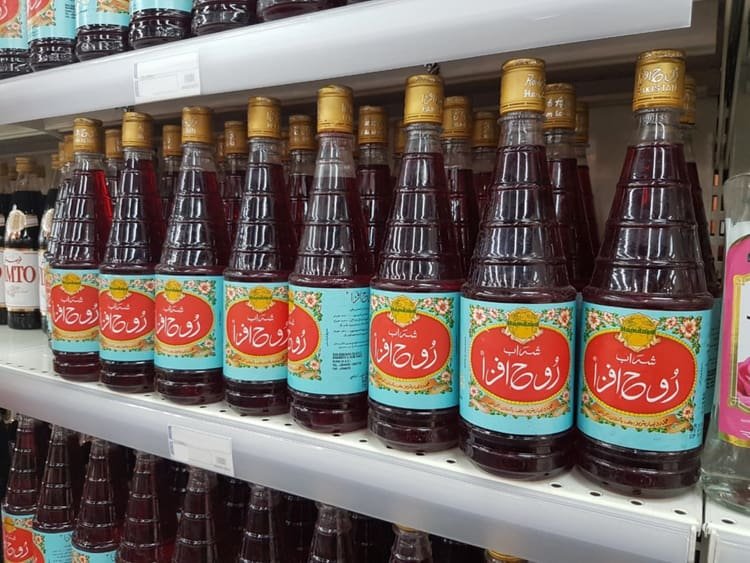
    Rooh Afza

    That was exactly our reaction. But, a new health tax has been proposed on sugary drinks, which will make it costlier to buy sharbat. It’s not just that though…

    Soft Drinks

    You heard that right. Those little soft drink breaks during summers will be costing you more now as the health tax will also be jacking up soda prices. The excise tax on soft drinks has been increased from 11.25 per cent to 13 per cent, which is not too much, but will ultimately affect you.

    The good part? The money will reportedly be used to provide free medical treatment to people using Sehat Cards that offer treatment up to Rs720,000 from a private or government hospital.

    Cooking Oil/Ghee

    Branded cooking oil and ghee prices will also be rising as a 17 per cent sales tax will be imposed. You must be thinking that it doesn’t really affect you much, but you never know how it may or may not affect food prices.

    The good news, however, remains no increase in General Sales Tax (GST) in case you’re planning to dine out.

    Sugar

    The price of sugar is expected to increase by Rs3.60/kg since the government is unhappy with the tax collection from the sector. The new budget recommends increasing sales tax on sugar from 8 per cent to 17 per cent. 

    We don’t endorse the next thing you need to stock up on, but let’s be honest, we know a lot of people who smoke.

    Cigarettes

    The budget has also recommended a federal excise duty of Rs5,200 on every 10,000 cigarettes be imposed, which means every pack of 20 cigarettes you buy will cost you at least Rs10 more.

    Just so you know, tobacco consumption kills nearly 160,000 Pakistanis every year, and a lot of people are supporting the move.