Tag: budget 2021

  • India set to launch its own digital currency, tax crypto assets

    India set to launch its own digital currency, tax crypto assets

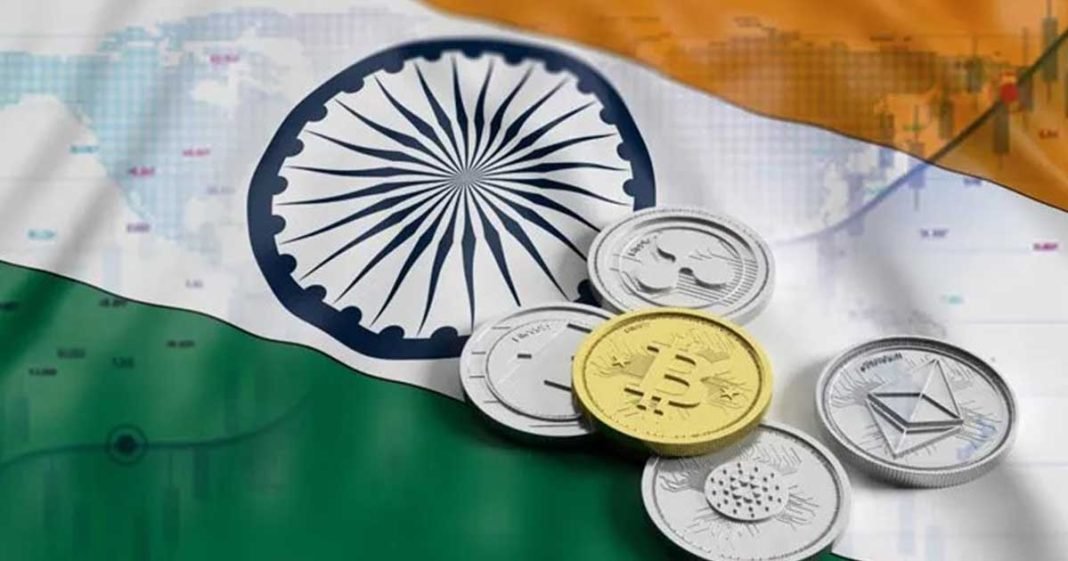
    India’s central bank plans to launch the digital version of the rupee in the coming fiscal year, according to Indian finance minister. The 2022-2023 financial year of India will begin on April 1.

    “Introduction of a central bank digital currency will give a boost, a big boost to the digital economy,” Nirmala Sitharaman said while delivering India’s annual budget. “Digital currency will also lead to a more efficient and cheaper currency management system.”

    The minister did not give any technical details about the currency but said it will involve block chain and other technologies.

    If India launches its digital currency, it will become one of the world’s largest economies to implement Central Bank Digital Currency (CBDC).

    India’s decision comes after China began CBDC experiments in different cities. The United States and the Bank of England are exploring the prospects for their own economies.

    Nirmala Sitharaman also said that India will impose a tax of 30% on income from cryptocurrencies and other digital assets.

  • FY22 Budget passes: Did the Opposition lie?

    FY22 Budget passes: Did the Opposition lie?

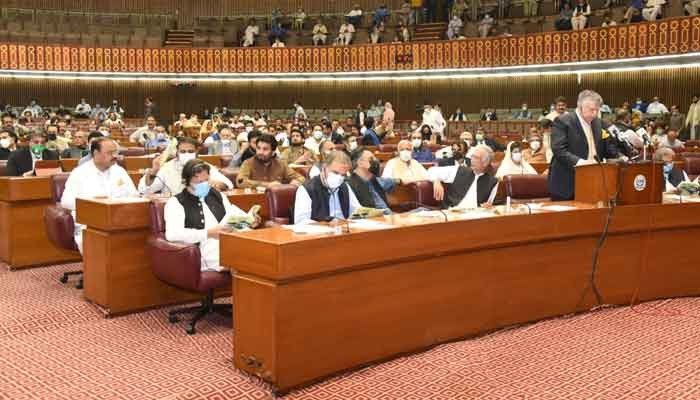
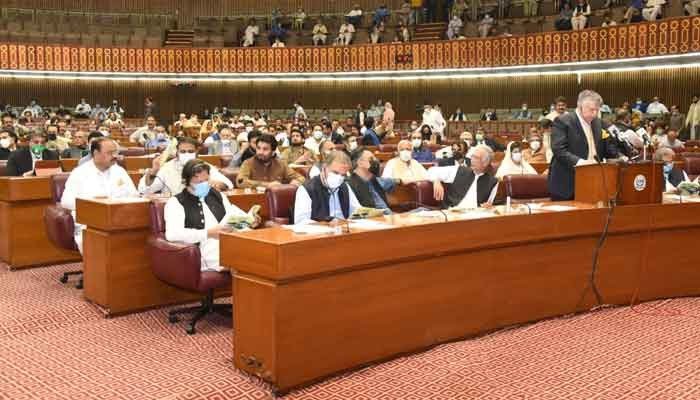
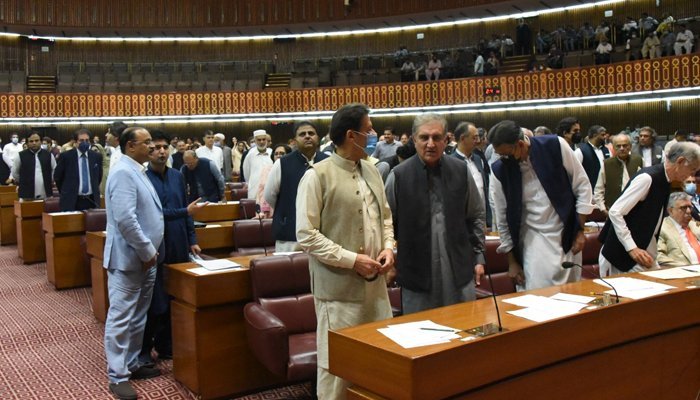
    The National Assembly (NA) on Tuesday passed the budget for the new fiscal year with majority vote amidst the Opposition’s hollow claims of giving the government a tough time.

    Prime Minister Imran Khan was present for today’s session, while former president Asif Ali Zardari and Pakistan People’s Party (PPP) Chairman Bilawal Bhutto-Zardari were also in attendance.

    The Finance Bill 2021-22 was discussed clause by clause in the House. Amendments proposed by treasury members were accepted while those proposed by the Opposition members were rejected.

    After the clause by clause reading was completed, a voice vote was conducted by the NA Speaker and the budget was passed.

    The Opposition did not challenge the voice vote since they did not have the required numbers.

    There were 172 votes in favour of the Finance Bill while 138 votes were against it. Meanwhile, senior Journalist, Hamid Mir claims that the total strength of the Opposition members in NA is 163 members. 25 opposition members were not present in the NA today,12 were from Pakistan Muslim League-Nawaz (PML-N) and13 from other opposition parties.

    Earlier this month, Leader of the Opposition in the National Assembly Shehbaz Sharif and Bilawal Bhutto had rejected the budget and vowed to give a tough time to the government inside the parliament.

  • Seven lawmakers banned from entering National Assembly

    Seven lawmakers banned from entering National Assembly

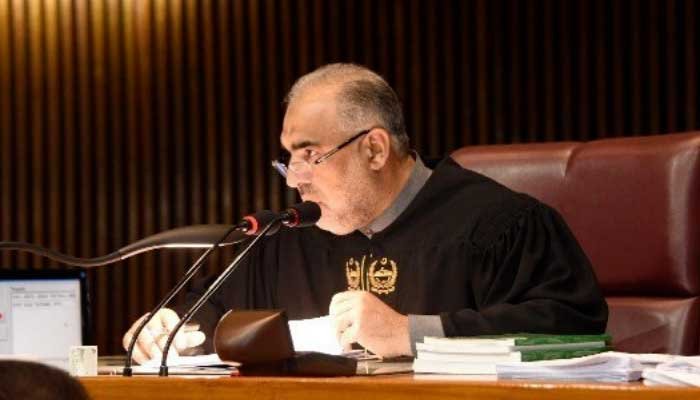
    National Assembly (NA) Speaker Asad Qaiser has banned the entry of seven lawmakers into the Parliament House over the use of foul language during the budget speech of Opposition Leader Shehbaz Sharif.

    The order released by Asad Qaiser stated that, on June 14 and 15, 2021 during the speech of Shehbaz on Budget 2021-22, “the conduct of seven lawmakers was grossly disorderly as they violated the rules despite repeated direction of the Chair, they interrupted proceedings of the House.”

    The seven lawmakers are Ali Gohar Khan Baloch (PML-N), Chaudhry Hamid Hameed (PML-N), Sheikh Rohale Asghar (PML-N), Faheem Khan (PTI), Abdul Majeed Khan (PTI), Ali Nawaz Awan (PTI), and Syed Agha Rafiullah (PPP).

    “These members are required not to enter into the precincts of the Parliament House till further orders,” said the notification.

    Asad Qaiser also said that the “non-parliamentary attitude adopted by members from the government and the Opposition benches and objectionable language used by them is condemnable and disappointing”.

  • Demystifying Budget 2021-22

    Demystifying Budget 2021-22

    This year’s budget held special significance for the Pakistan Tehreek-e-Insaf (PTI) government, as many viewed it as the last opportunity for the incumbent government to show its mettle. The last two to three years were marred by the economic slowdown, the Covid-19 pandemic, and high inflation. If this were to continue, it could take a toll on PTI’s vote bank in the next election and therefore a course correction was in order. But no one expected that such course correction would come in so swiftly. Hafeez Shaikh was let go, apparently on his insistence on electricity tariff increase, and Shaukat Tarin was sworn in as the new finance minister.

    Soon after, this year’s growth estimates took everyone by surprise. Pakistani economy turned out to be much more resilient to the pandemic, but it is hard to ignore the role played by the Covid stimulus package, smart lockdowns and rapid vaccinations. Pakistan is once again back on the growth trajectory.

    While it was critical to sustain this rapid recovery, we were also facing tough IMF conditionalities, which if fully implemented, could very well slow down the economy once again. While no one would disagree on the need for fiscal discipline proposed by IMF, many would question its timing, scale, and modus operandi. 

    More than anyone else, it’s the politicians who clearly did not have time for a long economic cycle to run its course. They knew that they were fast running out of time and would have to go back to their voters in 2023.

    But to give credit where it’s due, the government held its end of the bargain and has come up with an excellent budget, perhaps the best that’s possible within the given constraints. It is interesting to see that so far no one has criticised the direction of the budget, and even the worst of the critique has been about the government’s ability to pull it off.   

    So what’s so great about this budget?

    First and foremost, the budget has introduced a number of proposals to support industry, businesses and investors. In particular, the budget has brought good news for construction, automobile, information technology and a number of other sectors. The budget includes reduction or exemption of duties on raw materials and inputs for various sectors such as electronics, pharmaceutical, textiles, footwear, paints, etc. Export of services for the IT sector have been zero-rated, while zero-rating has also been proposed for local supplies or import of raw materials, components, parts and plant and machinery for registered exporters authorised under Export Facilitation Scheme, 2021.

    The construction sector amnesty scheme has been extended by another six months, which will have a positive impact on cement and all construction-related industries. A number of incentives have been granted on electric vehicles including exemption of sales tax on CKD kits, while sales tax on small domestically assembled cars has been reduced. A number of generous incentives have also been introduced for the planned special technology zones. Lastly, the capital gains tax (CGT) has also been reduced on sale of securities that is likely to further support a rapid stock market recovery. 

    The budget has also introduced a number of incentives for the SMEs, which brings the spotlight on the long-ignored segment. A separate scheme of taxation is proposed for SMEs, giving them flexibility to be taxed either on their profitability or turnover. The threshold for levy of minimum tax (individuals/AOPs) has been enhanced, while the threshold for annual turnover to qualify as cottage industryhas been increased from Rs3 million to Rs10 million. The budget also includes proposals like common bonded warehousing, introducing a one-page tax return for SMEs, etc. that will have a positive impact on the small and medium-sized businesses. 

    One the taxation side, the budget 2021-22 promises to bring a major cultural transformation. After many years, we are again heading back to self-assessments, which will bode well for the businesses and will prevent harassment by tax officials. The budget also includes deletion of 12 withholding taxesincluding that on banking transactions and air travel. Electronic processing and issuance of refunds is also promised to facilitate businesses, whereas the arbitrary powers of the tax officials have been curtailed in many cases. 

    On the development side, the budget has increased the size of public sector development programme (PSDP) by a massive 38% increasing it to Rs900 billion. The national PSDP target is also set at Rs2.1 trillion (about 61 per cent higher than the last year). Such magnitude of increased spending is likely to help stimulate growth.

    Then comes the Ehsaas programme, for which the government has made a generous allocation of Rs260 billion. The government is also planning to give interest-free loans, provide free technical trainings and other initiatives for 4-6 million families at the bottom of the pyramid. The government has also allocated $1.1 billion for Covid-19 vaccination and set an ambitious target of vaccinating 100 million people by June 2022. In addition, the subsidies for power sector have been increased, aiming to minimize the need for tariff increases during the year. 

    All in all, these measures are likely to boost business confidence significantly and will stimulate growth, hopefully beyond the set target of 4.8 per cent. 

    However, there are a few things that need to be kept in mind. First is the ambitious revenue target of Rs5.8 trillion next year, which amounts to 24 per cent increase over this year. Soon after introducing the budget, the government had to retrack its proposal on taxing the cellular calls and internet usage, whichwould take away about Rs100 billion from the estimated revenues and would have to be compensated from elsewhere. In addition, the government foresees about Rs242 billion coming in from administrative measures. Although there is a plan to achieve this target through bringing e-commerce retailers within the tax net, installing POS machines at retailers and providing incentives to general public to demand sales tax receipts, this would need a strong management push throughout the year. Similarly, the public should also expect increase in petroleum prices to meet the Rs610 billion targetfor Petroleum Development Levy. Unless the global oil prices start receding, this would be passed on to the public. 

    The negotiations with IMF is another area which needs some attention. With this ambitious budget, the IMF program is likely to be affected. This in turn may impede our ability access funding from other sources. Therefore, an amicable settlement with IMF, if not immediately then in a few months, is critical. 

    Lastly and most importantly, comes the question of whether this growth is sustainable. While we’ll only get to know thisin due time, there are some good measures in place to support the industry targeting import substitution. Any consequent dip in imports, in the medium term, continued healthy remittance inflow on the back of FATF-action plan, and a realistic exchange rate will definitely help in averting a future balance of payment crisis. 

    For now, it seems that Pakistan is finally out of the woods and the next 2-3 years are going to witness some decent growth.
  • ‘No increase in tax rate of mobile phone calls, SMS, internet’: Shaukat Tarin

    ‘No increase in tax rate of mobile phone calls, SMS, internet’: Shaukat Tarin

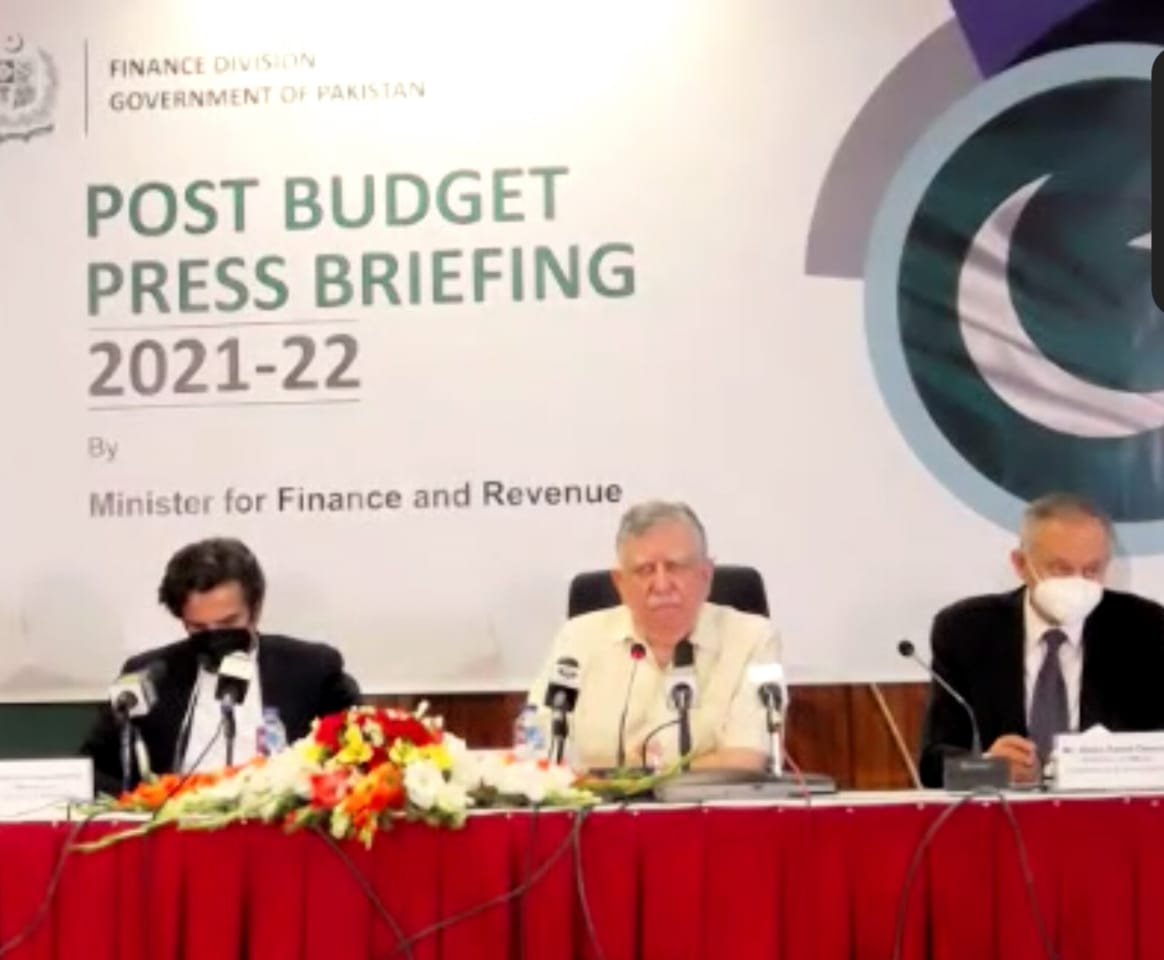
    Addressing a post-budget press conference in Islamabad, Finance Minister Shaukat Tarin said that ” Prime Minister Imran Khan and the cabinet opposed the imposition of tax on mobile phone calls, internet data, and SMS. “Now there will be no increase in the tax rate for all these services.”

    The original decision, if it had been implemented, would have affected over 98 million people.

    Tarin said the government has presented a total growth budget and their challenge is to stabilise growth.

    Tarin said that additional tax of Rs500 billion will be collected in the next financial year. “We have to earn dollars by increasing exports and add an additional tax of Rs500 billion in the next financial year.”

    The finance minister said that Pakistan had to go to the International Monetary Fund (IMF) for help when its position is weak.

    “We need 20 per cent growth in exports. Our savings rate is 15 per cent and our investment rate is up to 16 per cent. If we do not have revenue, how will we achieve growth?”

    Tarin said that the poor in the country have not received loans and training for the last 70 years. Loans up to Rs 2 million will be given to build a roof and loans to poor farmers will go up to Rs 500,000. Pakistan has become a food deficient country and we are now importing what we used to export, Tarin said, adding that the country is importing pulses, wheat, and sugar.

    “We did not pay attention to our crops, but now we will pay attention to it,” he assured.

    “We should not play politics with the poor,” he added.

    Tarin unveiled the Budget 2021-22 yesterday. The total expenditure of the budget had been kept at Rs 8,478 billion and had set the tax collection target at Rs 5,829 billion. 

  • Budget 21-22: Minimum wage is 20,000 and other key announcements

    Budget 21-22: Minimum wage is 20,000 and other key announcements

    Finance Minister Shaukat Tarin on Friday presented the Rs 8.48 trillion federal budget for fiscal year 2021-22 (FY22) in the National Assembly.

    Key announcements during the budget presentation

    Rs 900 billion allocated for federal Public Sector Development Program (PSDP) — 40 per cent increase from last year.

    Minimum wage has been increased to Rs 20,000.

    Rs 12 billion allocated for agriculture sector.

    Rs 118 billion for power distribution.

    Rs 61 billion for Viability Gap Fund.

    Rs 14 billion for Climate Change mitigation projects.

    $ 1.1 billion for vaccines procurement.

    Rs 100 billion for Covid-19 Emergency Fund.

    Rs 12 billion special grant for Sindh.

    For Fiscal Year (FY) 2022, the government had set Gross Domestic Product (GDP) growth target at 4.8 per cent.

    Large-scale manufacturing sector recorded growth after many years and posted 9 per cent growth during FY-21.

    During the fiscal year 2020-21, tax revenue increased and showed 18 per cent growth as tax receipts crossed Rs 4 trillion.

    Exports increased by a significant 14 per cent as a rebate, duty drawback helped the sector flourish.

    Special economic zones (SEZs) will be used to create jobs which will also ensure growth in exports.

    Highlighting PM Imran’s vision of planting trees, he said Rs 14 billion have been allocated for the government’s vision of “One Billion Tree Tsunami.”

    Non-tax revenues to rise by 22 per cent during FY-22, meanwhile federal expenditures to rise 15 per cent.

     The finance minister said no taxes to be applied on salaried class.

    The government decided to reduce sales tax on electric vehicles from 17 per cent to 1 per cent.

    Federal excise duty has been reduced from 17 per cent to 16 per cent, he said adding that the withholding tax (WHT) will be reduced by 40 per cent.

    The finance minister further added that the WHT on mobile phone services has been reduced from 12 per cent to 10 per cent.

    The government plans to further reduce taxes on mobile phone services to 8 per cent.

    If mobile phone call duration exceeds three minutes, one rupee per call in addition to the rates of duty will be charged.

    For SMS service, ten paisa per sms in addition to the rates of duty will be charged.

    Tax on Internet services not approved by the Cabinet. FED reduced to 16 per cent from 17 per cent . IT and IT-enabled services given zero duty regime status. Data storage and Cloud computing included in the definition of IT enabled services .

    Withholding tax on oil field services, warehousing services and collateral services have been reduced to 3 per cent from 8 per cent

    The Telecom sector will be given industrial status in the fiscal year 2021-22.

    The finance minister also announces a one-year customs duty exemption for electric vehicles.

     Pensioners will get 10 per cent rise. Integrated allowance for Grade 1-5 has been raised from Rs 450 to Rs 900.